The Monza has always been one of TAG Heuer’s more unusual racing watches, partly because it was never meant to become a long-running cult object.
For its 50th anniversary, the name returns in a more ambitious form with a forged carbon case, a proper flyback chronograph movement and a launch timed around the Formula 1 Italian Grand Prix at Monza.
It’s a sharp repositioning for a model that began life as a pragmatic celebration of Ferrari’s 1975 Formula 1 success and now sits above the Monaco in TAG Heuer’s contemporary line-up.
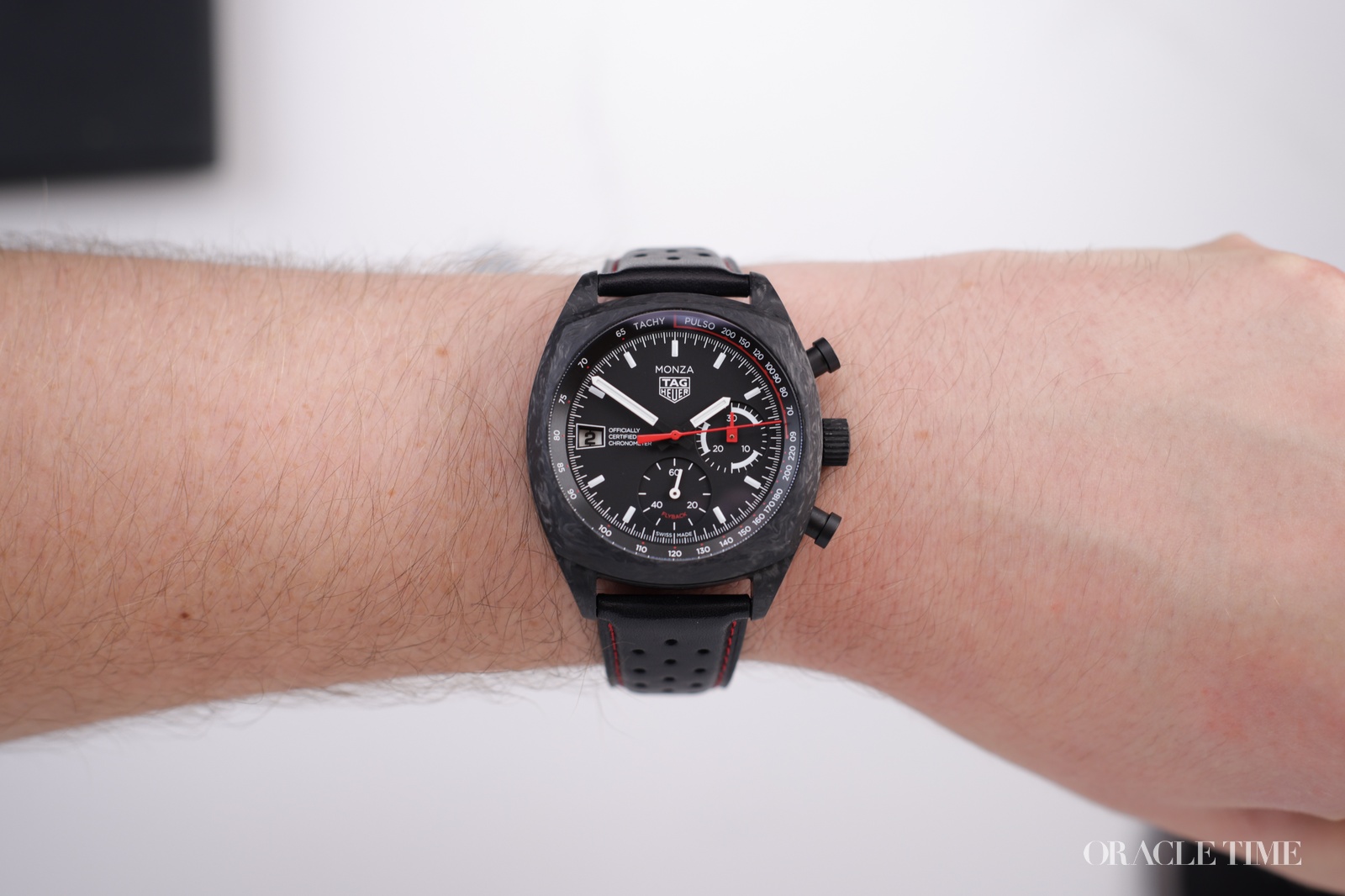
At a glance
- TAG Heuer has introduced the Monza Flyback Chronograph 50th Anniversary Edition as a 500-piece limited edition.
- The watch uses a 42mm forged carbon cushion case and the COSC-certified automatic Calibre TH20-12 flyback chronograph.
- Priced at £11,300, or approximately $15,400, it launches ahead of the Formula 1 Italian Grand Prix at Monza.
A Ferrari-era name with an unlikely beginning
The first Monza emerged after Niki Lauda and Ferrari won both the drivers’ and constructors’ championships in 1975, ending a long title drought for the Scuderia.
Heuer wanted a commemorative chronograph, but the quartz crisis was already putting pressure on the Swiss watch industry.
The solution was deliberately economical, using the case architecture of the Carrera 1153, a simple flat dial without applied markers and a black-coated base-metal case.
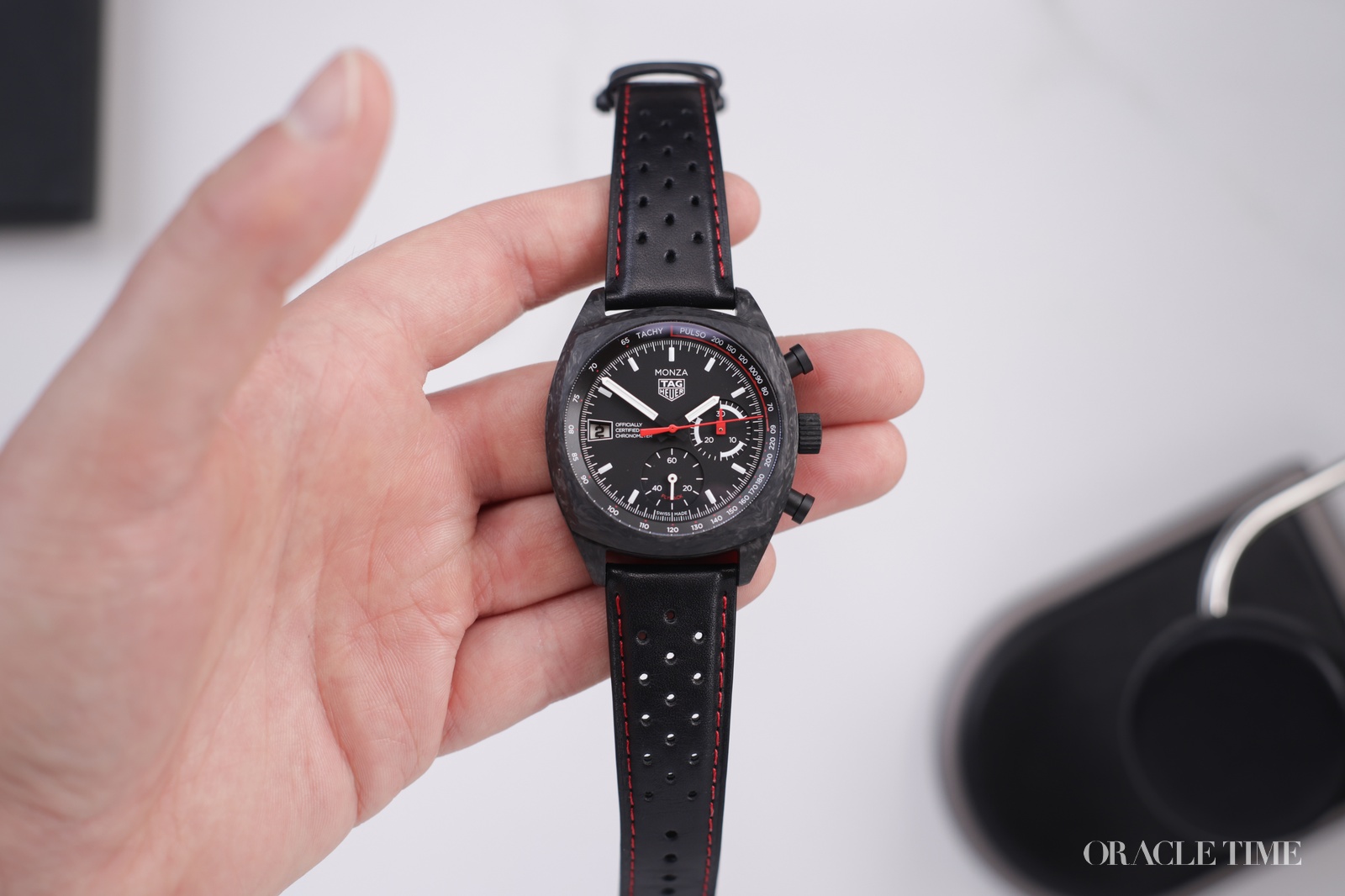
The watch was initially intended to carry the Modena name, after Ferrari’s hometown, before Monza became the better fit.
That choice gave the model a cleaner connection to Italian racing culture and, ultimately, a more enduring identity.
The 2026 anniversary edition turns that early compromise on its head.
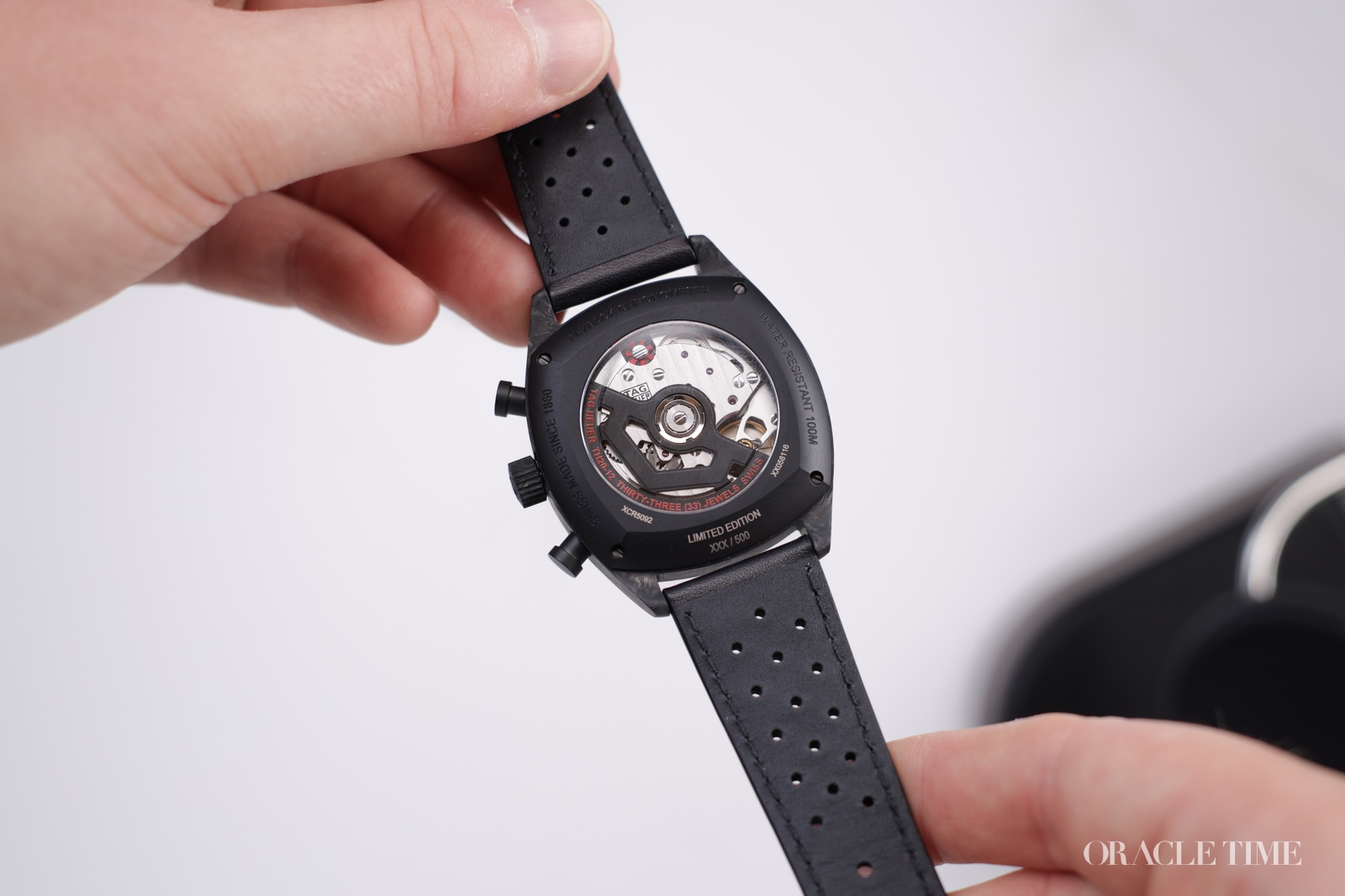
Rather than being the lean, cost-conscious sibling in the collection, the new Monza is now positioned as a higher-spec motorsport chronograph with a contemporary case material and an upgraded movement.
Forged carbon gives the cushion case a new role
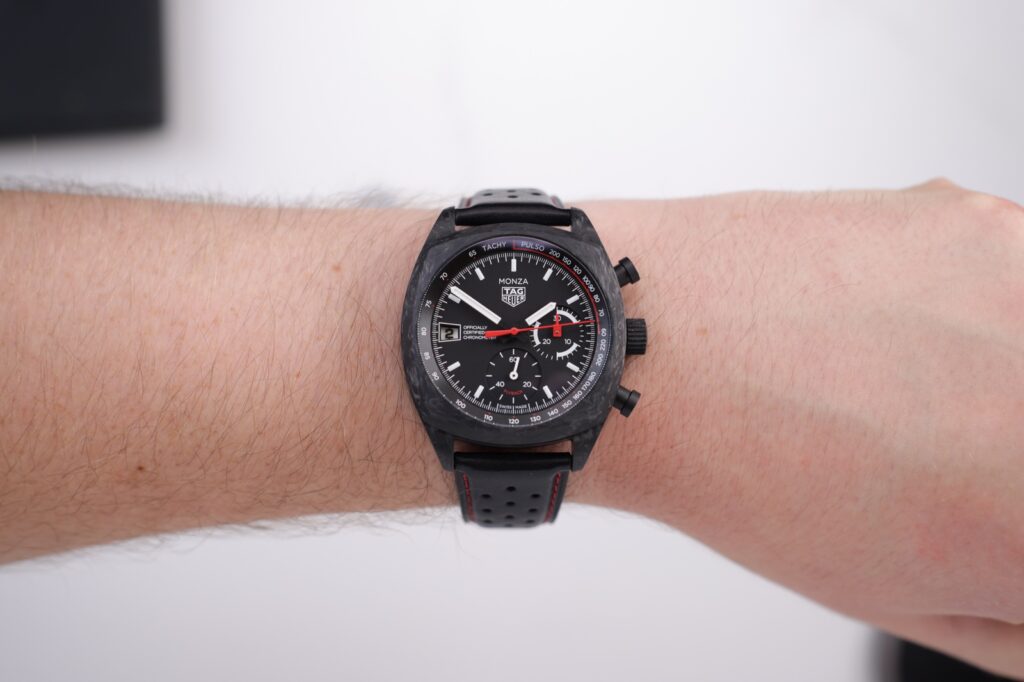
The case is 42mm across and made from forged carbon, a marbled composite material that keeps the watch light while giving each example a subtly different visual pattern.
It keeps the cushion-shaped profile of the modern Monza that returned in 2023, but this anniversary piece takes a more restrained route than the openworked carbon version that preceded it.
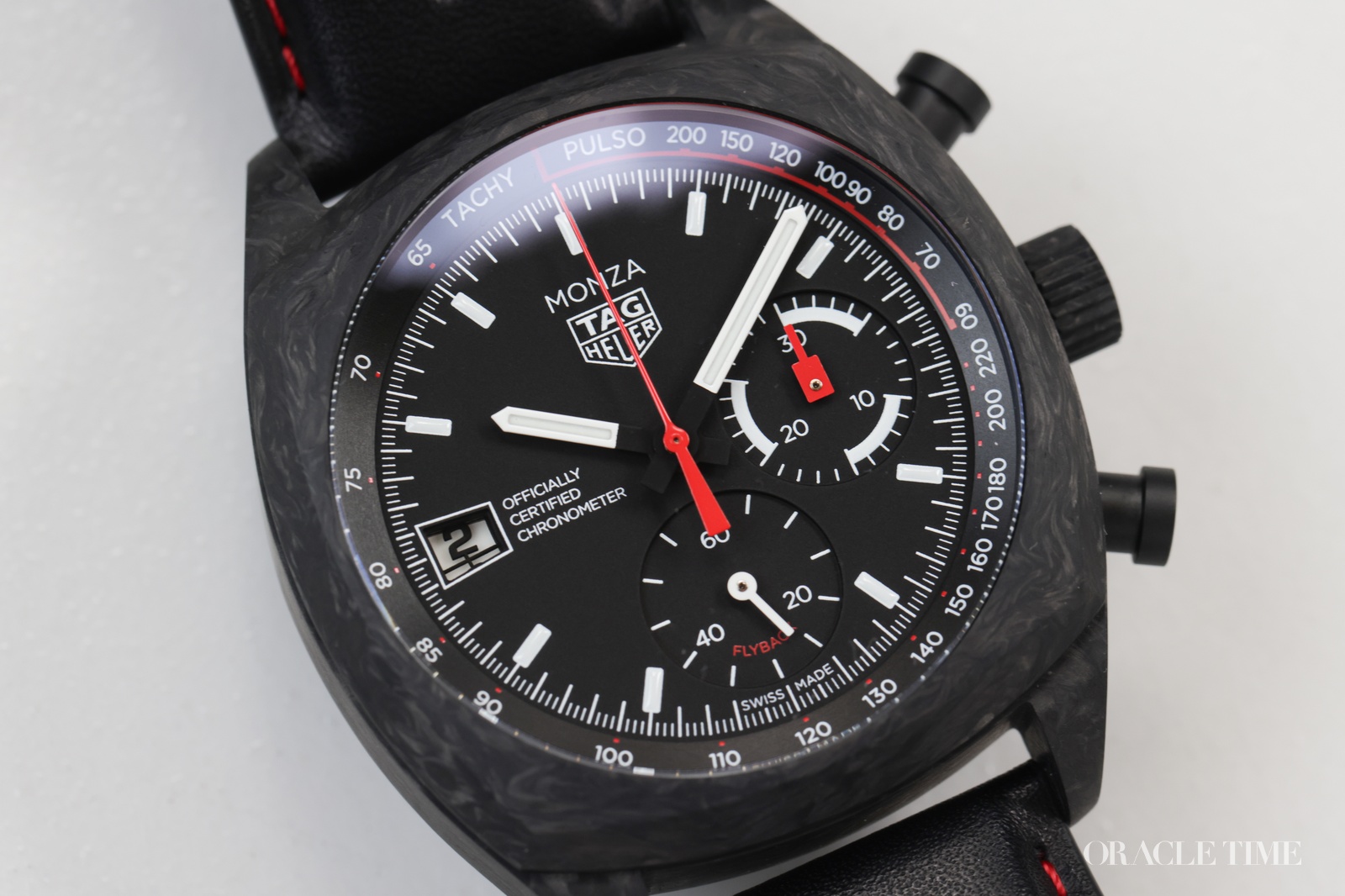
Where the skeletonised model leaned into technical drama, this edition draws more directly from the original black Monza aesthetic.
The result is still modern, but it doesn’t feel like a heritage watch trapped in costume.
The perforated black calfskin strap with red stitching reinforces the racing connection without making the watch look overly literal.
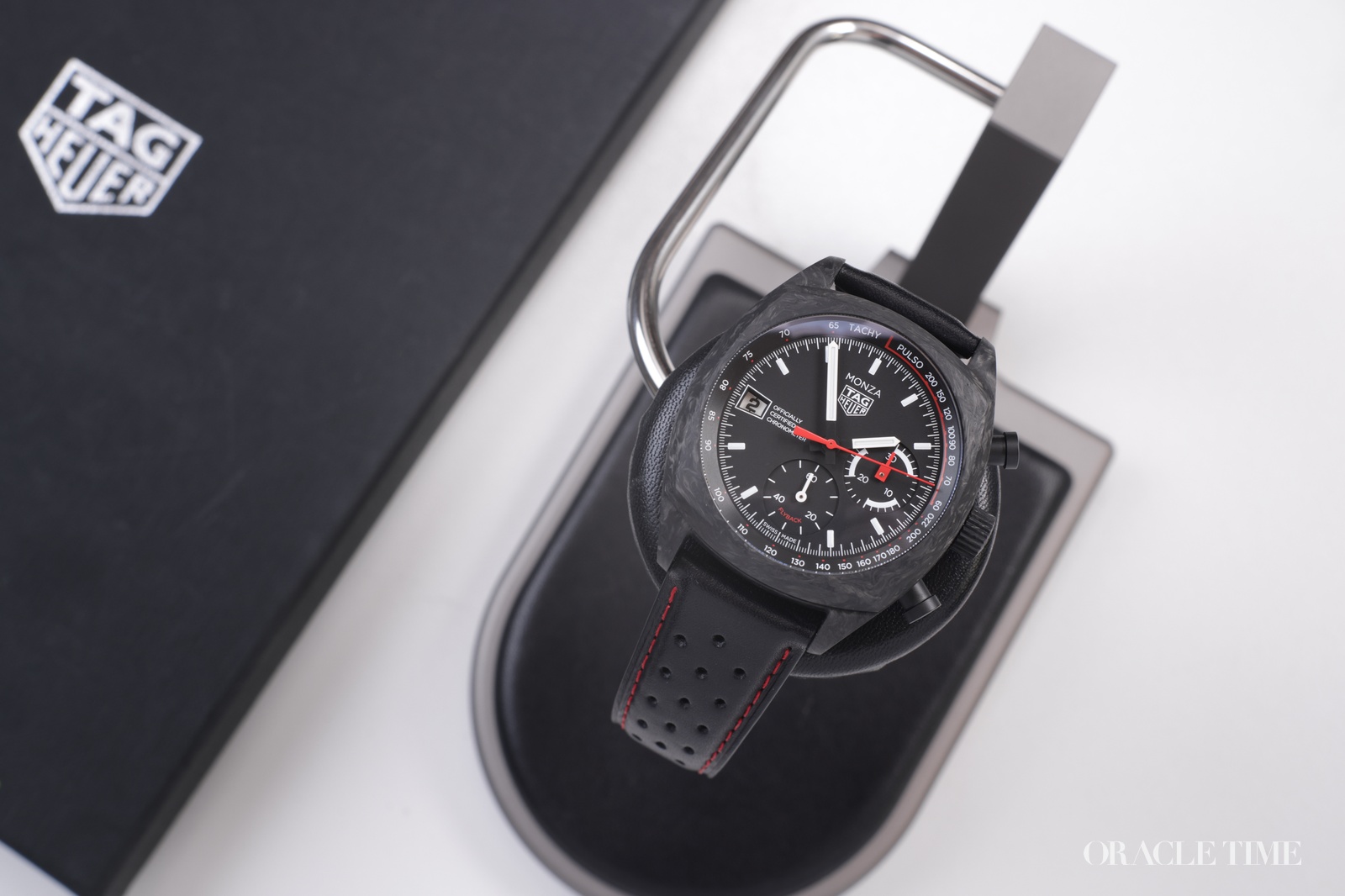
It also suits the dark case and dial, giving the whole piece a cohesive, track-adjacent character.
The flyback movement makes the motorsport link functional
Inside is TAG Heuer’s automatic Calibre TH20-12, an in-house movement with COSC certification, a 4 Hz frequency and an 80-hour power reserve.
The key feature is the flyback chronograph, which lets the wearer stop, reset and restart timing with a single pusher action.
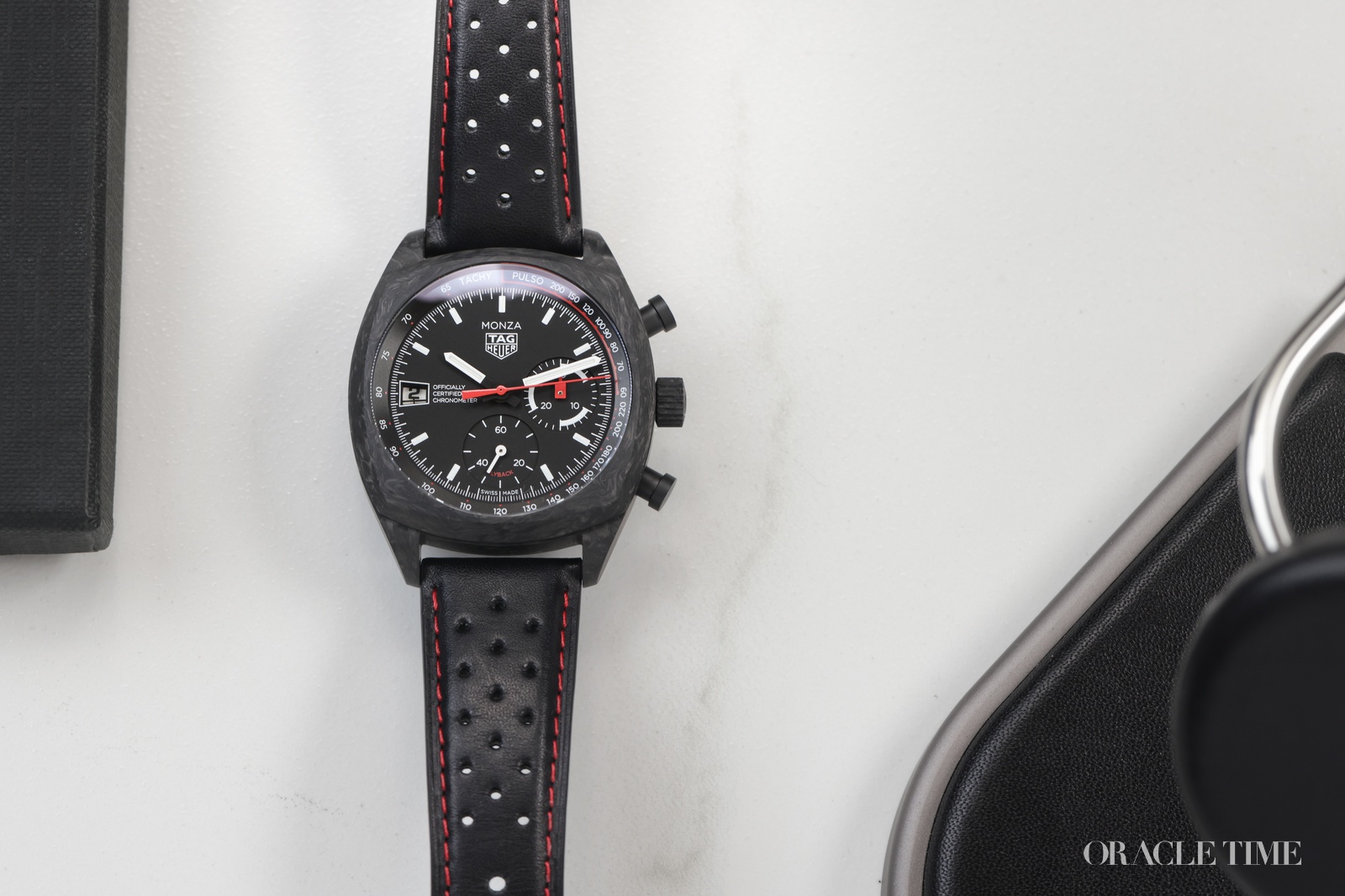
That isn’t just decorative nostalgia.
For a racing chronograph, a flyback function has a clear practical logic because it can be used to time consecutive laps without the usual sequence of stopping, resetting and restarting the chronograph.
The movement also includes a date at 9 o’clock, while the chronograph minutes are placed at 3 o’clock and the running seconds sit at 6 o’clock.
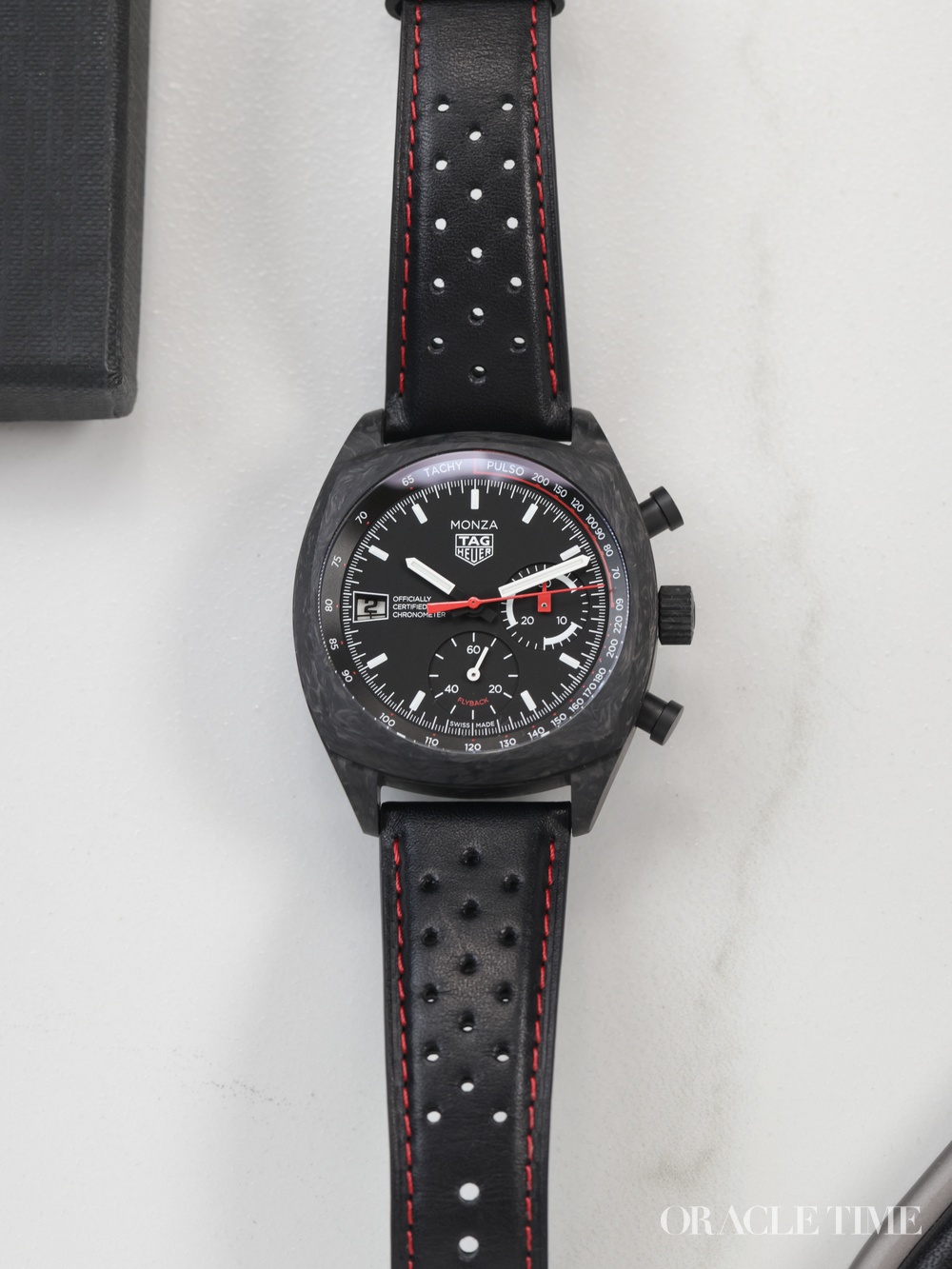
Compared with the original Monza’s modular Calibre 11 construction, the integrated TH20-12 also allows the new watch to feel more coherent in its proportions.
The old left-side crown layout was a product of movement architecture rather than pure ergonomic intent, while the anniversary model is free from those period constraints.
Black dial codes with red period detail
The dial works in layers of black rather than contrast-heavy colour blocking.
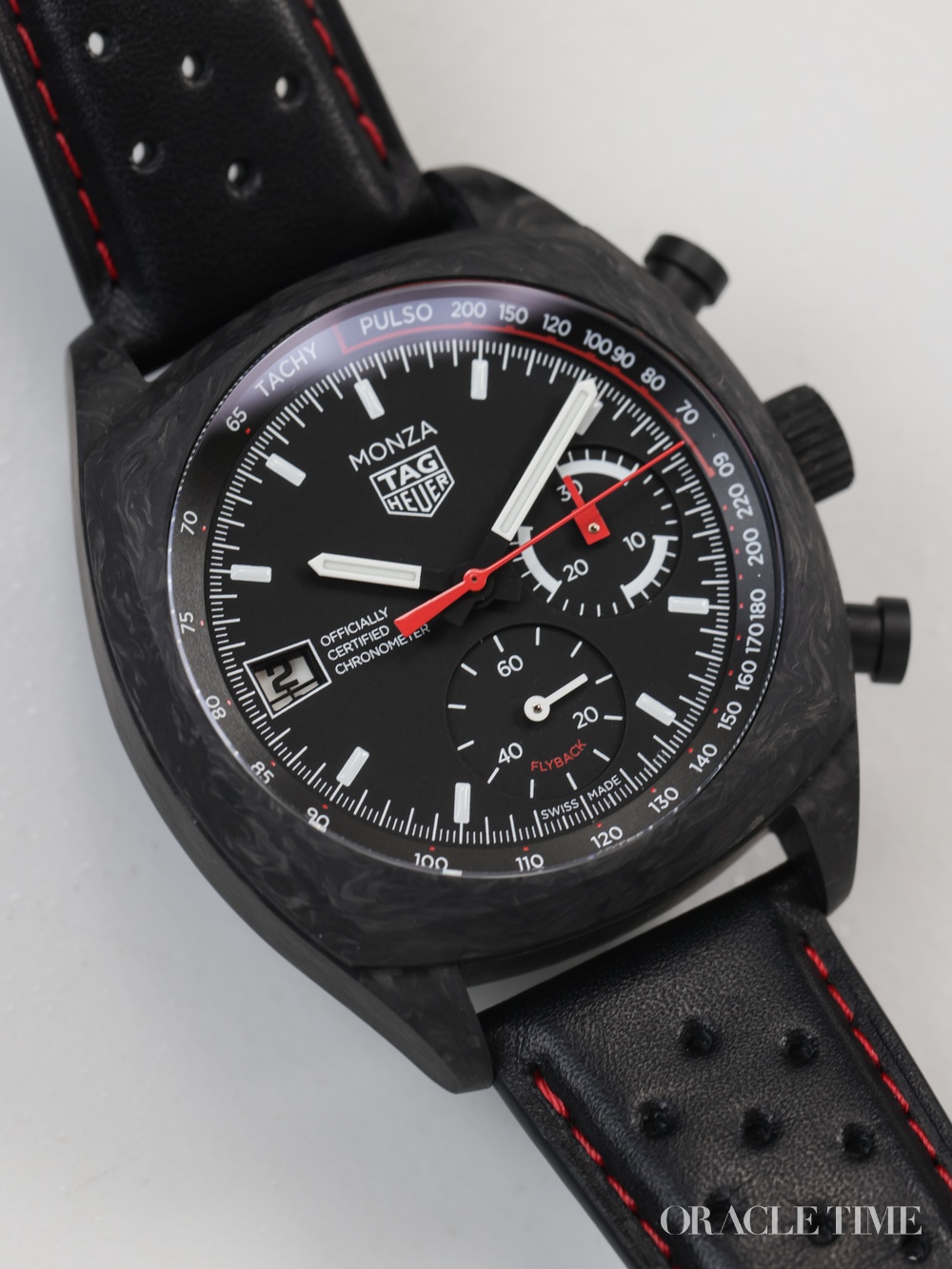
Matte black chronograph counters sit against a glossier main dial, giving the displays separation while preserving the Monza’s stealthier personality.
Red accents connect the watch to the historical colour language of the collection, while rhodium-plated hour and minute hands filled with white Super-LumiNova keep the time display legible.
The flange carries both tachymeter and pulsometer scales, a detail that links back to the 1976 Monza’s dual-scale layout.
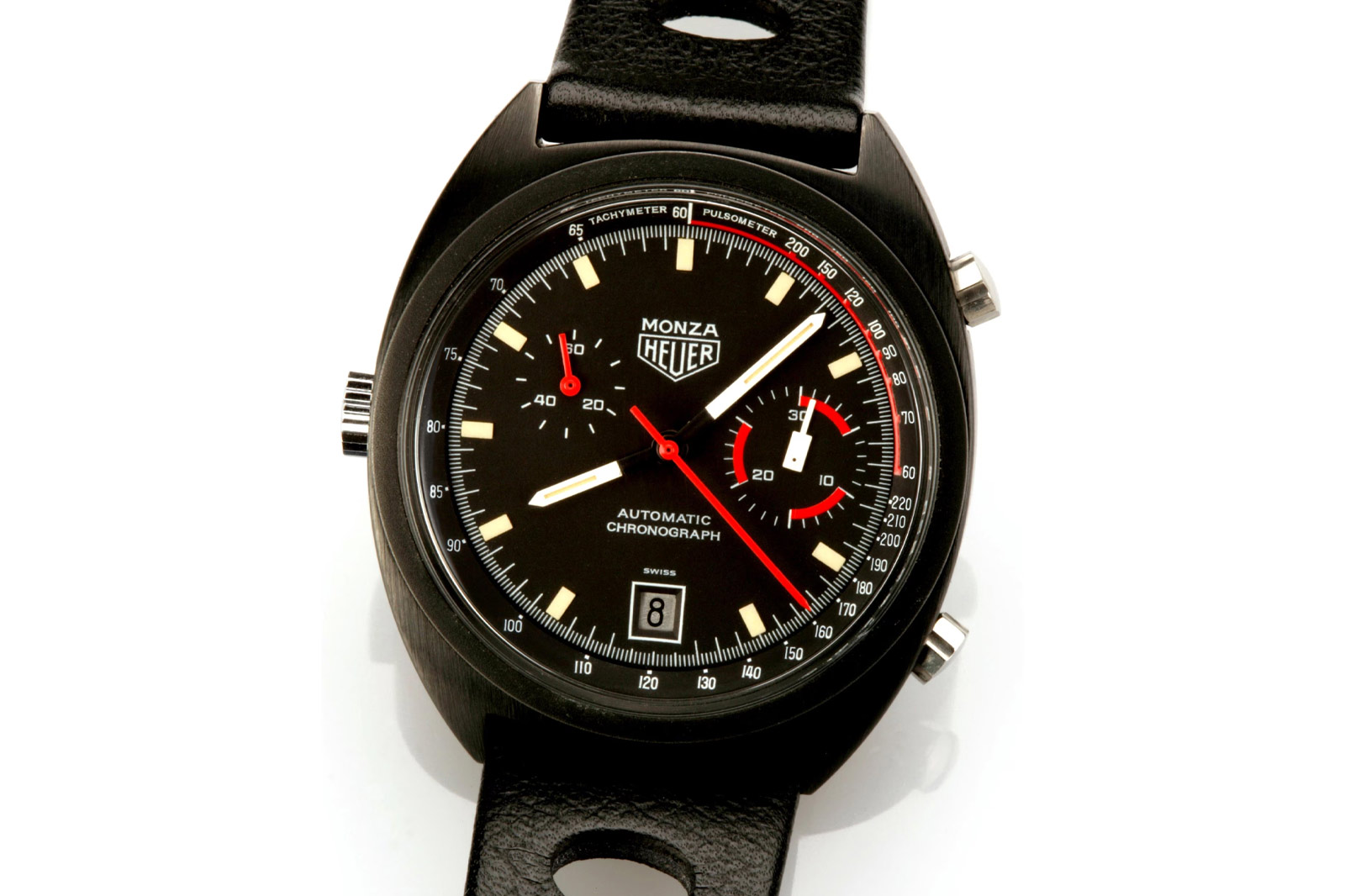
That combination gives the watch a period-correct rhythm without making it feel like a museum reissue.
It’s the kind of detail that rewards closer inspection, especially for collectors who know the Monza has never followed the same tidy trajectory as the Carrera or Monaco.
Details & Specifications
| Brand | TAG Heuer |
|---|---|
| Model | Monza Flyback Chronograph 50th Anniversary Edition |
| Case size | 42mm |
| Case material | Forged carbon |
| Case shape | Cushion |
| Dial | Black with matte black chronograph counters and red accents |
| Movement | TAG Heuer Calibre TH20-12 automatic |
| Certification | COSC-certified |
| Frequency | 28,800 vph, 4 Hz |
| Power reserve | 80 hours |
| Functions | Hours, minutes, seconds, date, flyback chronograph |
| Scales | Tachymeter and pulsometer |
| Water resistance | 100m, 10 bar |
| Strap | Black perforated calfskin with red stitching |
| Production | 500 pieces |
| Price | £11,300, approximately $15,400 |
The Monza remains a fascinating outlier in TAG Heuer’s archive because its appeal comes from imperfection as much as pedigree.

This 50th Anniversary Edition understands that tension, pairing a candidly oddball origin story with a specification that finally gives the model the standing it never had at birth.
For collectors who find the Monaco too familiar and the Carrera too central to the TAG Heuer story, this forged carbon Monza offers a more idiosyncratic route into the brand’s racing history.