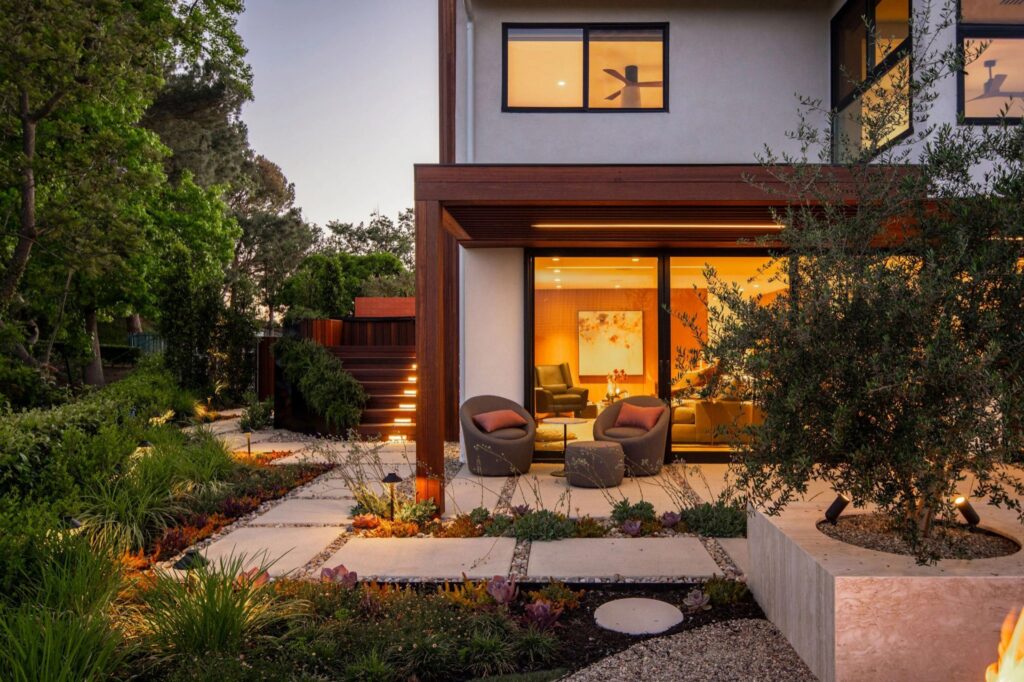
A private backyard can become one of the most useful wellness spaces in a home when it’s designed around real routines.
The goal isn’t to fill the garden with features, but to create a setting that supports relaxation, gentle movement and restorative time outdoors without asking too much of your schedule.
A pool can serve low-impact exercise, a shaded platform can make room for yoga or reading, and a quiet seat near the house can be more valuable than an elaborate corner that rarely gets used.

At a glance
- A backyard wellness sanctuary works best when its layout is shaped around daily habits and easy access.
- Zoning, natural materials, clean water, privacy and layered lighting are the main elements that make the space feel restorative.
- Practical choices matter, from slip-resistant surfaces and shade to pool maintenance, service access and glare-free evening lighting.
Plan the yard around daily rituals
Start with how you want to use the space, then let the layout follow.
If swimming is part of your routine, the pool should sit where it feels connected to the house but separate enough from quiet seating to avoid conflict between activity and rest.
If your ideal morning is ten minutes of stretching with a coffee nearby, a shaded platform close to the door may be more useful than a remote meditation deck at the back of the garden.

Residential wellness architecture is strongest when it links comfort, movement and atmosphere in a way that feels natural to daily life.
That begins with zoning.
Active features such as a swimming area should be placed away from reading chairs, dining spots or contemplative seating.

Planting beds, low hedging and slatted screens can define these zones gently, creating privacy and rhythm without making the garden feel boxed in.
Walking routes deserve the same attention.
A good path should feel intuitive, especially between the house, pool, outdoor shower, shaded seating and any place used after dark.

Convenience matters because a wellness space that takes effort to reach is easier to ignore.
Protection is part of the plan too.
Consider harsh sun, prevailing wind and views from neighboring windows before fixing the final layout.
Shade, screens and planting can make a backyard feel more private without removing the sense of openness that makes outdoor living appealing in the first place.
Choose materials that feel calm and practical
The most successful outdoor wellness spaces use a restrained material palette.
Two or three repeated finishes can create continuity across the pool edge, pathways, seating areas and garden details.
Pale stone around a pool, beneath a bench and along a path can make separate zones feel connected.
Wood screens and linen-colored cushions can then bring warmth without adding too many competing textures.
Underfoot comfort is especially important in a backyard designed for barefoot use.
Textured stone, thermally modified wood and slip-resistant porcelain tile are practical options around pools and outdoor showers because they can handle regular exposure to water.
Samples should be tested in direct sun before ordering.
Dark materials can become uncomfortably hot during summer afternoons, even if they look beautiful in a showroom or on a mood board.
Upkeep should be part of the material conversation from the beginning.
Porous stone may need sealing, wood requires periodic care, and water areas need routine pool maintenance to keep the water clear and equipment working properly.
Easy-care finishes aren’t less luxurious.
In a wellness setting, they’re often the difference between a space that feels restorative and one that quietly becomes another household task.
Keep water visually serene and easy to maintain
Clear water has an immediate calming effect, but that sense of serenity depends on decisions made around the pool as much as in it.
A generous paved border helps keep leaves, soil and lawn clippings out of the water.
Messy plants should sit several feet back from the pool, especially if they drop large debris.
Dense evergreen planting can still provide privacy, while lower grasses can soften hard edges without constantly shedding into the water.
The equipment zone should be planned with the same care as the visible parts of the garden.
Pumps and filters can be concealed behind a ventilated screen or housed within a purpose-built enclosure, provided access remains straightforward for inspections and servicing.
Airflow should never be blocked, and screening should not become an obstacle when maintenance is needed.
For a quieter visual effect, keep the pool palette restrained.
Pale coping, blue-green water and deep foliage work especially well together because each element supports the others rather than competing for attention.
If you add a fountain or spillway, its sound should be measured.
A gentle flow can mask background noise and create atmosphere, but anything too forceful may overwhelm conversation or make evening relaxation feel less peaceful.
Light the garden for evening recovery
Evening is often when a backyard wellness space becomes most valuable.
After sunset, lighting needs to make the area safe without flattening the mood.
Begin with low fixtures along steps, pathways and level changes.
The purpose is to show where you’re walking, so shielded designs that direct light toward the ground are usually more comfortable than exposed fittings that create glare.
Seating zones and water features need a softer approach.
Warm white light around 2700K can help create a relaxed atmosphere, while underwater fixtures should provide even visibility without harsh bright spots.
Separate controls make the space more flexible.
You can brighten the garden for cleaning or practical tasks, then lower the levels for an evening soak or quiet conversation.
Timers and dimmers also help the setting adjust as daylight changes.
Fixtures should not point directly into windows or neighboring properties.
Once the lighting is installed, sit in each main position and check the view from the places you’ll actually use.
The best arrangement lets reflections, foliage and clean water carry the scene rather than turning the backyard into a stage.
A private wellness sanctuary doesn’t need to be large or elaborate to work well.
When the layout supports real habits, the materials feel good underfoot, the water is easy to care for and the lighting softens the evening, the backyard becomes a place you’ll return to every day rather than a design idea reserved for special occasions.