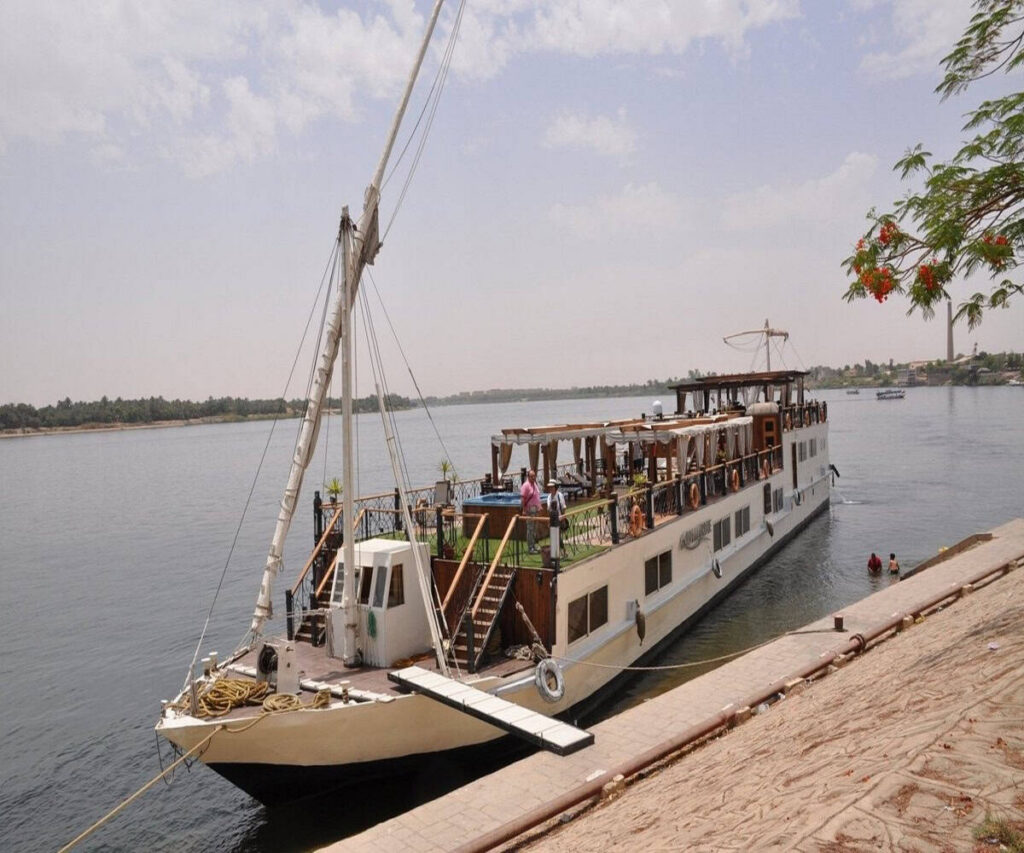
The Nile has a way of slowing the whole idea of travel down.
After Cairo’s traffic and noise, the river between Luxor and Aswan feels calmer, greener and more spacious, with palms along the banks and villages appearing between temple visits.
The real decision isn’t whether the Nile belongs in an Egypt itinerary, but what kind of boat should shape the experience.
At a glance
- A traditional Nile cruise ship offers a structured, hotel-style way to travel between major sites such as Luxor, Edfu, Kom Ombo and Aswan.
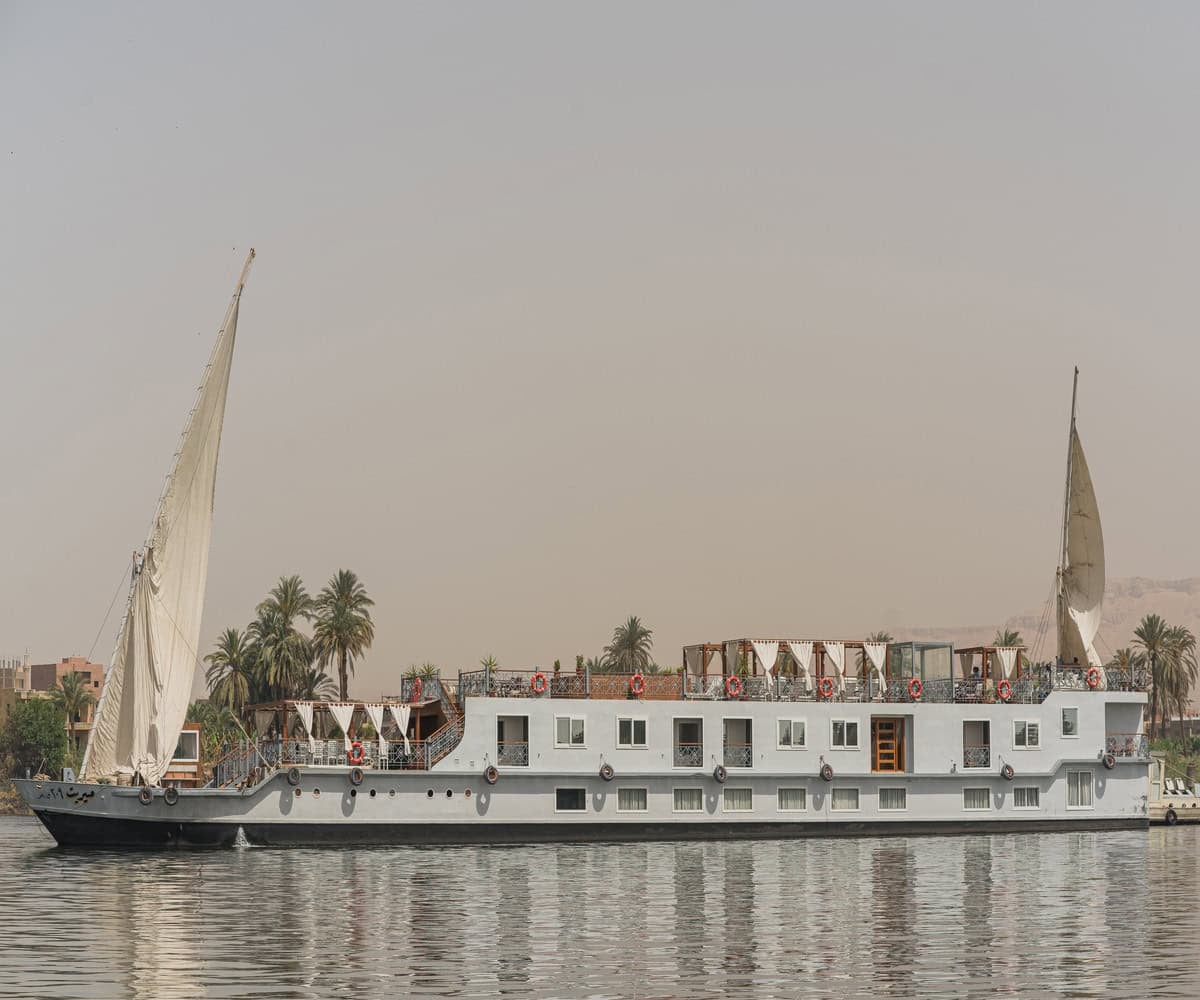
- A dahabiya is a smaller sailing boat with fewer cabins, a slower rhythm and a more intimate feel on the river.
- Cruise ships often suit shorter trips and travellers who want facilities, while dahabiyas tend to appeal to guests prioritising quiet, privacy and atmosphere.
The boat sets the mood before the temples do
A traditional Nile cruise ship is best understood as a floating hotel.
Expect multiple decks, a reception area, restaurant spaces, lounges and usually a pool, with cabins arranged across different categories.
That format works well for travellers who like having everything close at hand, whether that means a bar, a place to sit outside, a dining room with set meal times or other guests to talk to between excursions.
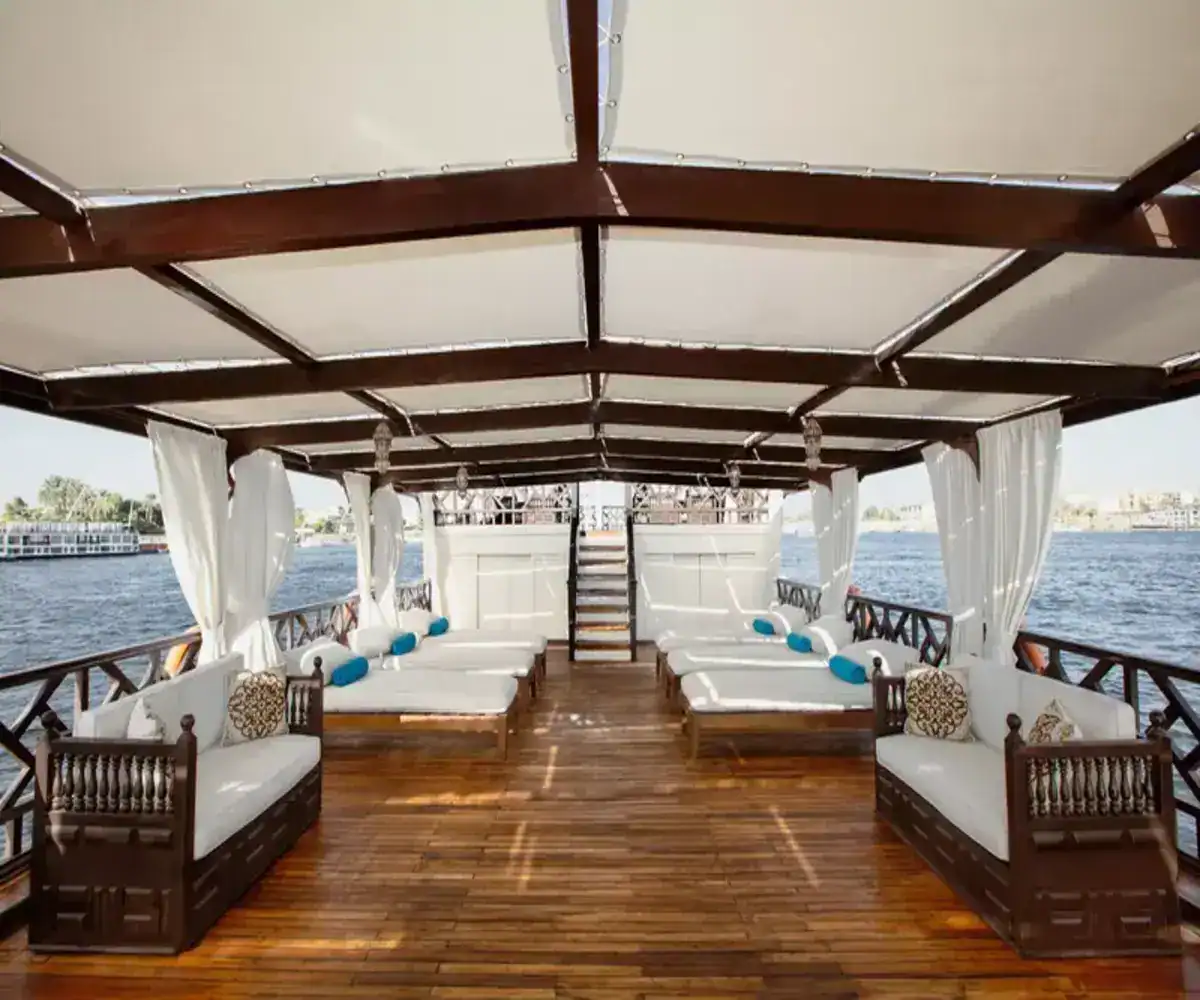
A dahabiya is a different proposition.
These smaller sailing boats are modelled on the elegant vessels once used to travel the Nile, though contemporary examples add modern comforts and boutique interiors.
They usually carry far fewer passengers, so the onboard mood is quieter and more focused on the river itself.
The category alone doesn’t guarantee quality.
Some dahabiyas are beautifully finished with generous suites and thoughtful design, while others are simpler, just as larger ships can range from comfortable mainstream vessels to more polished luxury operations.
The name of the actual boat matters more than the label attached to it.
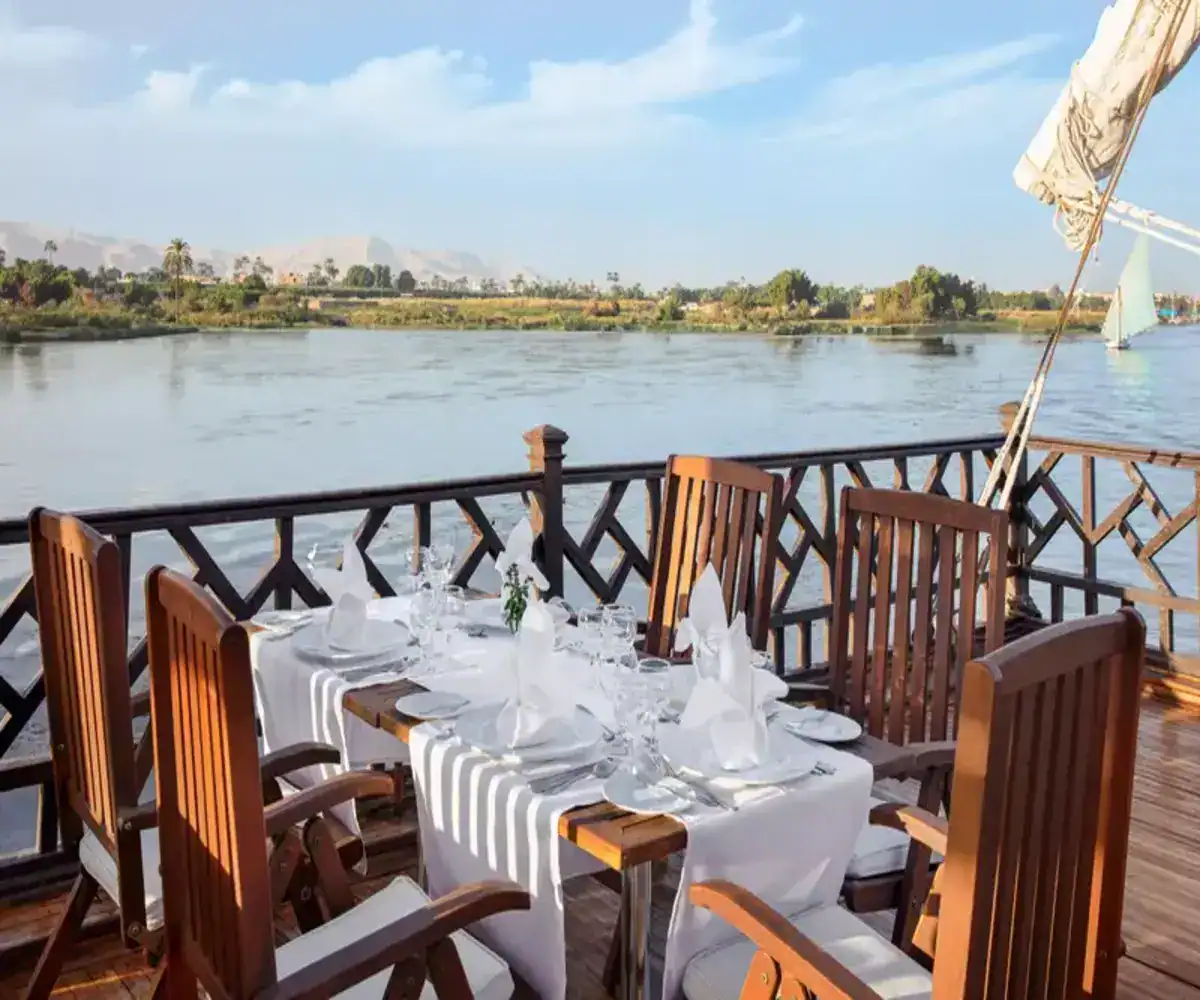
How the Nile days unfold
Pace is the clearest difference between the two experiences.
A cruise ship generally works to a fixed timetable, with sailing times and excursions arranged in a predictable sequence between Luxor and Aswan, or in the other direction.
For first-time visitors, that structure can be reassuring.
It places the major ancient sites in order, reduces guesswork and makes it easier to fold the Nile into a broader Egypt trip when time is limited.
A dahabiya makes the sailing feel less like transport and more like the point of the journey.
Depending on the route, weather and operator, afternoons may be spent tied up along a riverbank or near an island rather than moving from one scheduled stop to the next.
Because dahabiyas are sailing boats at heart, wind plays a role in the rhythm of the trip.
When the wind drops, some boats may use a motor or be towed by a tug, so it’s worth asking exactly how a specific vessel operates.
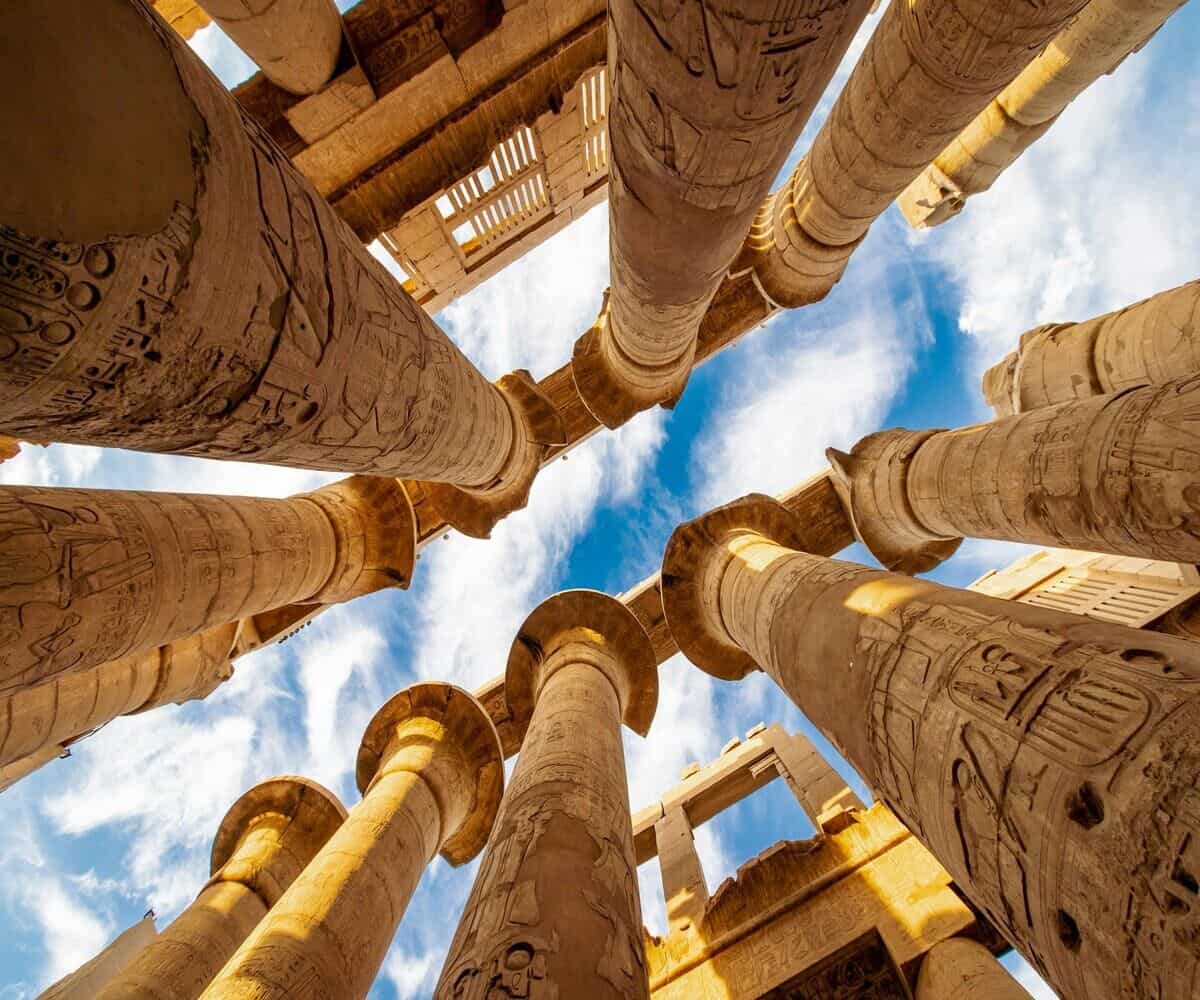
Both styles of boat can include the big Upper Egypt landmarks, including Luxor, Karnak, Edfu, Kom Ombo and sites around Aswan.
The difference is often in how the visits are run.
Larger ships usually coordinate excursions around their sailing schedule, and guests may join a shared group, although some cruises offer private guiding.
Dahabiyas can sometimes add smaller or quieter stops along the river, depending on the route and permissions, but they can’t simply tie up anywhere on request.
Navigation rules, mooring access and weather all matter.
Privacy facilities and life onboard
If privacy is high on the list, the dahabiya has a natural advantage.
Fewer cabins mean fewer people moving through shared spaces, and the atmosphere often suits couples, honeymooners, anniversary trips and travellers who prefer a low-key setting.
Meals are typically more intimate, and days often revolve around the deck, a book, a conversation and the changing riverbanks.
With a smaller passenger count, guests may also feel more connected to the crew, though service quality still depends on the individual boat and its management.
A larger ship gives you more space and more facilities to use.
That can be particularly useful for families or travellers who enjoy a sociable environment, with public areas, a pool deck, lounges and sometimes evening entertainment.
It also gives a trip more hotel-like predictability, which some guests value after long days at archaeological sites.
Food deserves attention on both types of vessel.
Before booking, it’s sensible to ask whether meals are cooked fresh onboard, whether menus include Egyptian and international dishes, and how dietary requirements are handled.
None of those details should be assumed just because a boat is small, expensive or described as luxury.
What to check before booking
The first question should be the vessel’s actual name.
Terms such as luxury cruise and boutique dahabiya are broad descriptions, not proof of a particular standard.
Once the boat is identified, check that the images you’re reviewing show that same vessel, including its cabins, bathrooms and public spaces.
The itinerary needs the same level of scrutiny.
Look at the number of nights onboard, the sites included, the direction of travel and whether excursions are private or shared.
If a personal Egyptologist or private guide is important, get that detail confirmed clearly rather than relying on an informal promise.
Cabin choice can also change the experience.
Size, position, windows, balcony access, bathroom condition and overall upkeep all matter, and differences between cabin categories may feel more pronounced on a smaller boat.
Price comparisons require care.
Most cruise ships run three or four nights between Luxor and Aswan, while dahabiyas often take four or five nights, though programmes vary.
A smaller boat isn’t automatically cheaper.
Some dahabiyas cost more because they have fewer cabins and a more personal style of operation, while larger ships vary widely in level and inclusions.
Meals, drinks, entrance fees, transfers and guiding may be packaged differently, so two trips that look similar at first can feel very different once onboard.
The right choice comes down to how you like to travel.
Choose a dahabiya if you want quiet, a slower rhythm and a closer connection to the river; choose a traditional cruise ship if you want structure, facilities and a more sociable hotel-style journey.
The Nile is the same whichever boat you take, but the way you experience it changes completely with the vessel beneath your feet.