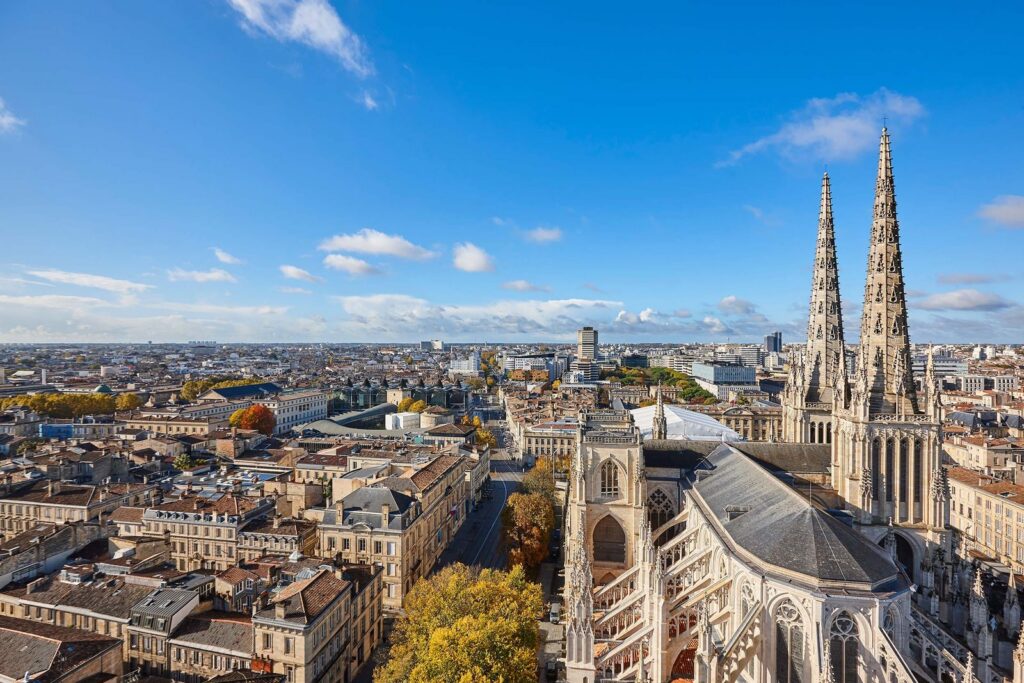
Bordeaux is the kind of city that looks effortless at first glance, all honeyed stone, broad quays and handsome squares.
That ease can be deceptive, because much of what makes the city compelling is hidden in plain sight.
For first-time visitors, a free walking tour can be a practical way to turn a pretty arrival into a more rewarding city break.
At a glance
- A first-day free walking tour can help visitors understand Bordeaux before exploring independently.
- Typical routes take in landmarks such as Cathédrale Saint-André, the Grand Théâtre, Place de la Bourse and the Miroir d’Eau.
- Bordeaux Free Walking Tours runs a daily pay-what-you-wish walk, with a suggested average tip of around €12 to €15 per person.
Bordeaux makes more sense with context
Bordeaux rewards a little orientation.
In 2007, UNESCO inscribed “Bordeaux, Port of the Moon” on the World Heritage List, recognising a city shaped by more than two thousand years of exchange and urban development.
The World Heritage Committee’s decision also notes 347 listed buildings, which explains why a casual walk can feel dense with history even when you’re simply moving between cafés, squares and the river.
That’s the argument for starting with a guide rather than relying only on saved pins and instinct.
Wandering is part of the pleasure of Bordeaux, but a guided walk changes the sequence.
Instead of learning what you missed after the fact, you get the city’s outline early, then return to the streets with a sharper eye.
What a first-day walking route reveals
A useful introductory route usually connects the monuments that explain Bordeaux’s character.
One common starting point is Cathédrale Saint-André, with the Hôtel de Ville nearby, before the walk moves towards the Grand Théâtre.
The Grand Théâtre brings the 18th-century city into focus, not just as a photogenic façade but as a reminder of Bordeaux’s civic ambition.
From there, the route often leads to Place de la Bourse and the Miroir d’Eau, where a thin sheet of water reflects the surrounding architecture.
Those are the postcard stops, but the smaller places can be just as useful.
Porte Cailhau, a medieval gate close to the river, gives a different texture to the city, while the lanes of the Saint-Pierre district bring the scale back down to daily life.
A good guide does more than name buildings.
The better value is in the connective tissue, including why the port mattered, how wine shaped the city’s fortunes, and which restaurants or cafés locals genuinely recommend.
How the pay-what-you-wish model works
The appeal of a free walking tour is partly practical.
You reserve a place online without paying upfront, join a local guide and a group, walk for around two hours, then pay what you feel the experience was worth at the end.
That structure removes some of the risk from trying a tour on the first day of a short break.
If the guide’s style works for you, you can reward it accordingly, and if you’re travelling as a family or group, the format is easy to understand before committing to a more tailored experience.
Bordeaux Free Walking Tours runs a daily pay-what-you-wish walk meeting outside Cathédrale Saint-André.
The guide holds a purple umbrella at the meeting point, a simple detail that helps when you’re arriving in an unfamiliar square.
The walk is described as family-friendly, with small groups, and it goes ahead rain or shine.
Guides lead the standard tour in English and Spanish, and online reservations can be made for up to ten people.
The operator suggests an average tip of around €12 to €15 per person, although the amount is left to each guest.
When a different tour may be the better fit
A general walking tour isn’t the right choice for every traveller.
If your ideal first day is deliberately unstructured, you may prefer to drift through the city alone and save guided time for a more specific subject.
Architecture enthusiasts, wine-focused travellers or returning visitors may get more from a private tour than from a broad introduction.
Bordeaux Free Walking Tours also offers private tours where guests choose the length, pace and starting point.
Private tours can also be arranged in Italian, according to the operator.
For travellers who want to cover more ground without doing everything on foot, van tours are another option.
The operator advises getting in touch in advance if anyone in the group has specific needs.
Wine country is the obvious next layer of the trip.
Vineyard tours are offered as day trips to areas including Saint-Émilion and the Médoc, with winery visits and tastings.
There is also Saint-Émilion bike rental for travellers who want to explore the village and vineyards at their own pace.
Making the most of the first two hours
The smartest way to use a walking tour is to schedule it early, ideally on the first morning of the trip.
That gives the rest of the stay more shape, whether you’re choosing dinner, deciding where to return at sunset or working out which streets deserve a slower second look.
Comfortable shoes matter, as does water, especially if you’re arriving straight from travel mode.
It’s also worth carrying a payment method for the end of the tour and arriving a few minutes before the meeting time.
Because group sizes are limited, booking ahead is the safer move.
During the walk, make quick notes when the guide mentions viewpoints, cafés or neighbourhoods, because those small recommendations often become the most useful part of a short city break.
For most first-time visitors, a free walking tour is a smart opening move in Bordeaux rather than a substitute for independent exploring.
It gives the city a readable frame, leaves room for spontaneity, and helps those elegant streets feel less like a backdrop and more like a place with a story.