Roger Dubuis has taken one of its most theatrical watchmaking ideas and moved it from Arthurian myth to feudal Japan.
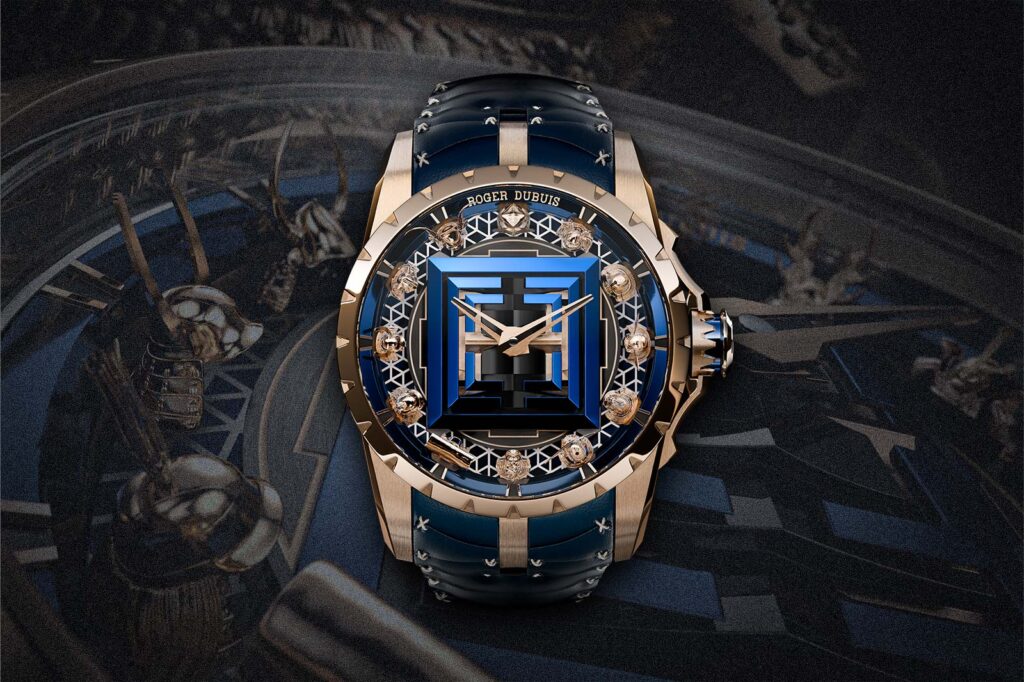
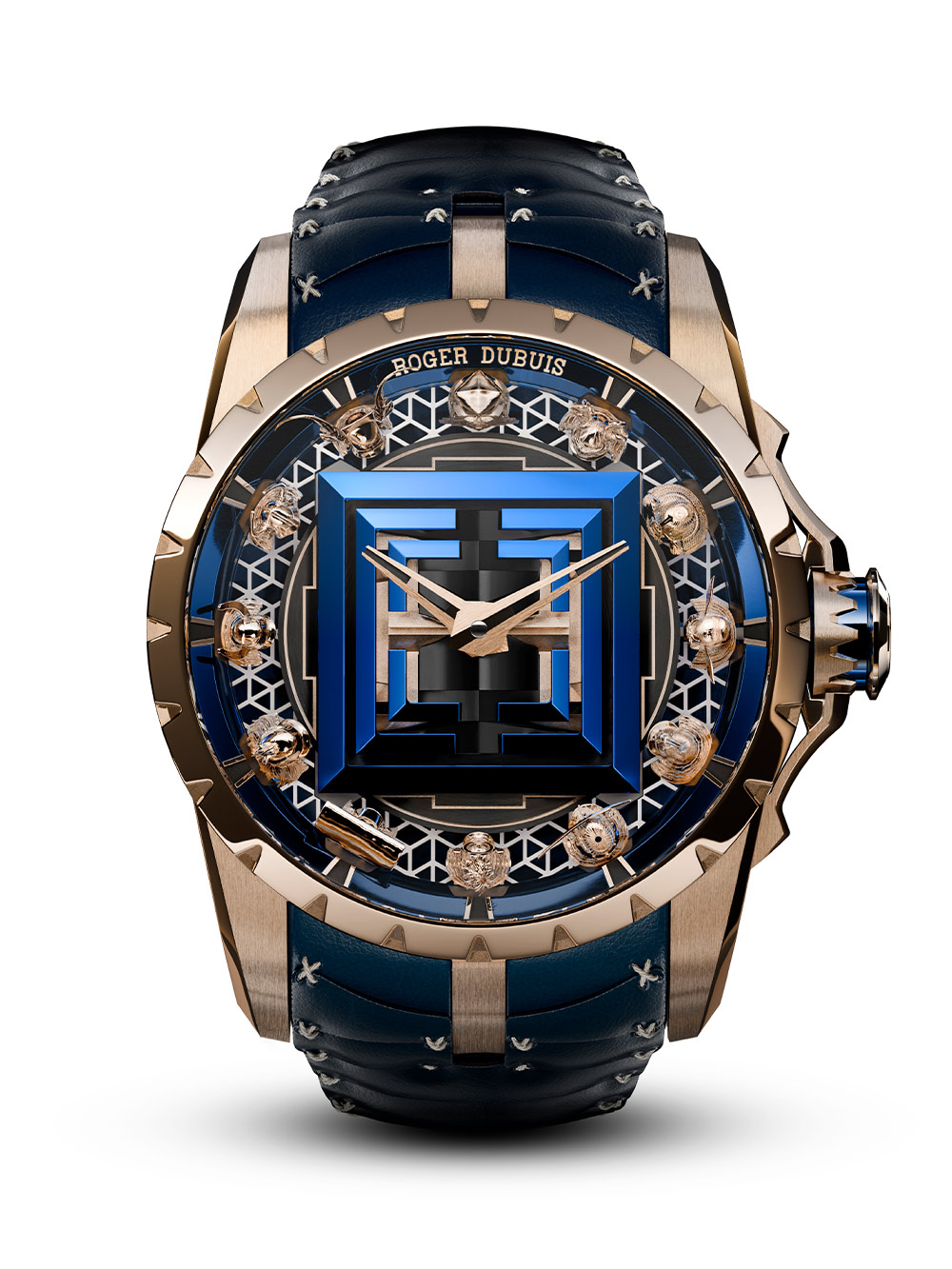
The Excalibur The Kabuto Legacy reimagines the brand’s familiar circle of miniature figures as 12 ceremonial samurai helmets, turning the open dial into a compact lesson in power, clan identity and high-craft decoration.
It’s still unmistakably an Excalibur, but the tone is different this time, with a cleaner architectural centre and a more disciplined use of colour.
At a glance
- Roger Dubuis has introduced the Excalibur The Kabuto Legacy, a 28-piece limited edition inspired by Japan’s samurai commanders.
- The dial features 12 hand-engraved kabuto helmets around a pink gold Edo Castle micro-sculpture with blue CVD and black PVD coatings.
- The 45mm pink gold watch uses the automatic RD821 calibre and is priced on request.
A feudal Japan chapter for Excalibur
The Excalibur Knights of the Round Table has long been Roger Dubuis’ platform for combining sculpture, myth and Geneva watchmaking.
For The Kabuto Legacy, the brand shifts the narrative to the bushō, the samurai commanders whose influence shaped the stability of Japan under the Tokugawa shogunate.
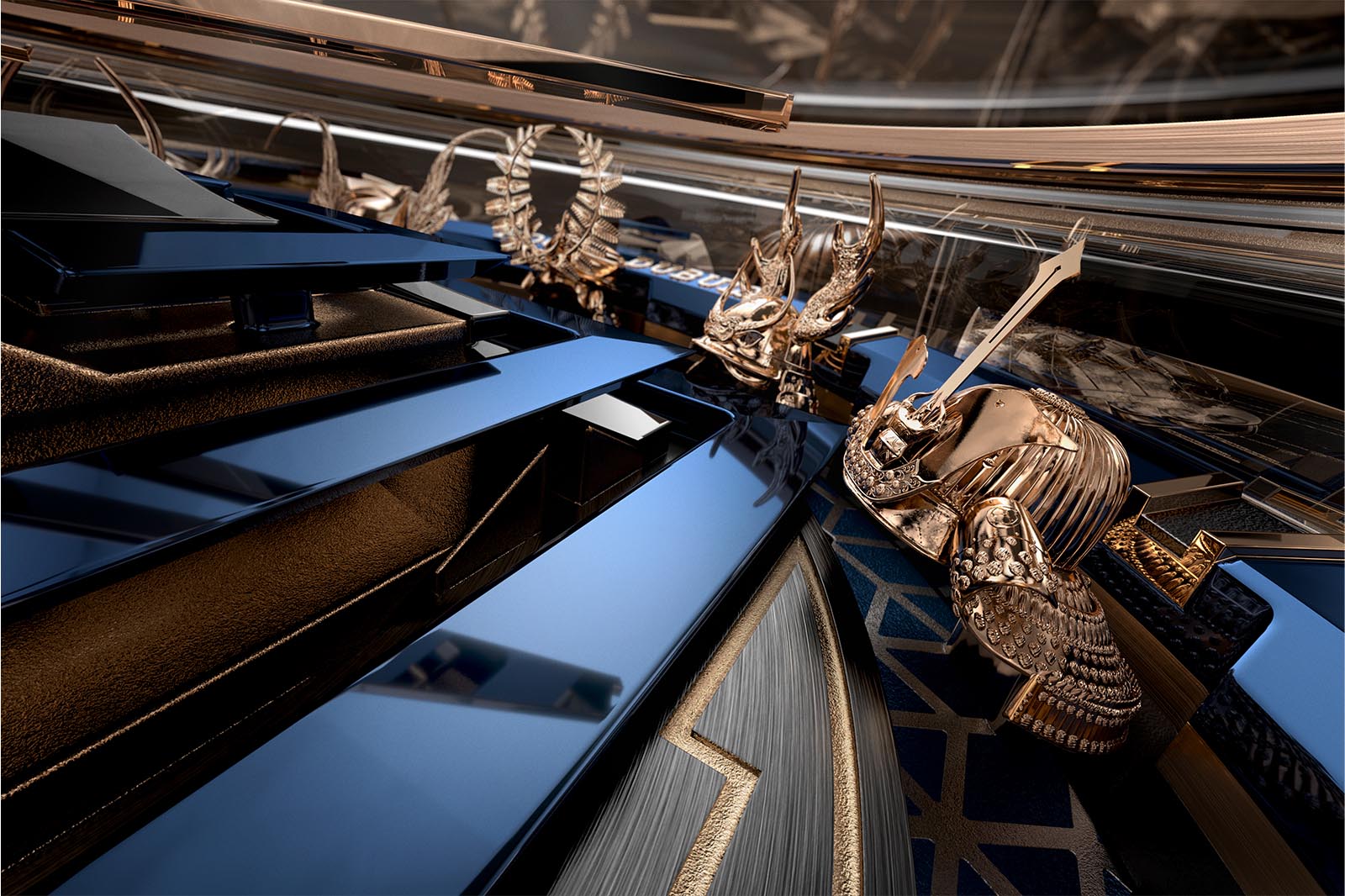
The watch’s central motif is the kabuto, the ceremonial helmet used to signal clan, status and identity.
Roger Dubuis has placed 12 of these helmets around the dial, echoing the circular staging of earlier Excalibur pieces while giving the concept a distinctly Japanese historical setting.
Among the figures represented are Tokugawa Ieyasu at 12 o’clock and the legendary Four Heavenly Kings, including Honda Tadakatsu, Sakai Tadatsugu, Sakakibara Yasumasa and Ii Naomasa.
Frederik Cryns, known for his historical work on FX’s Shōgun series, advised on the cultural and period detail.
Micro-sculpture around Edo Castle
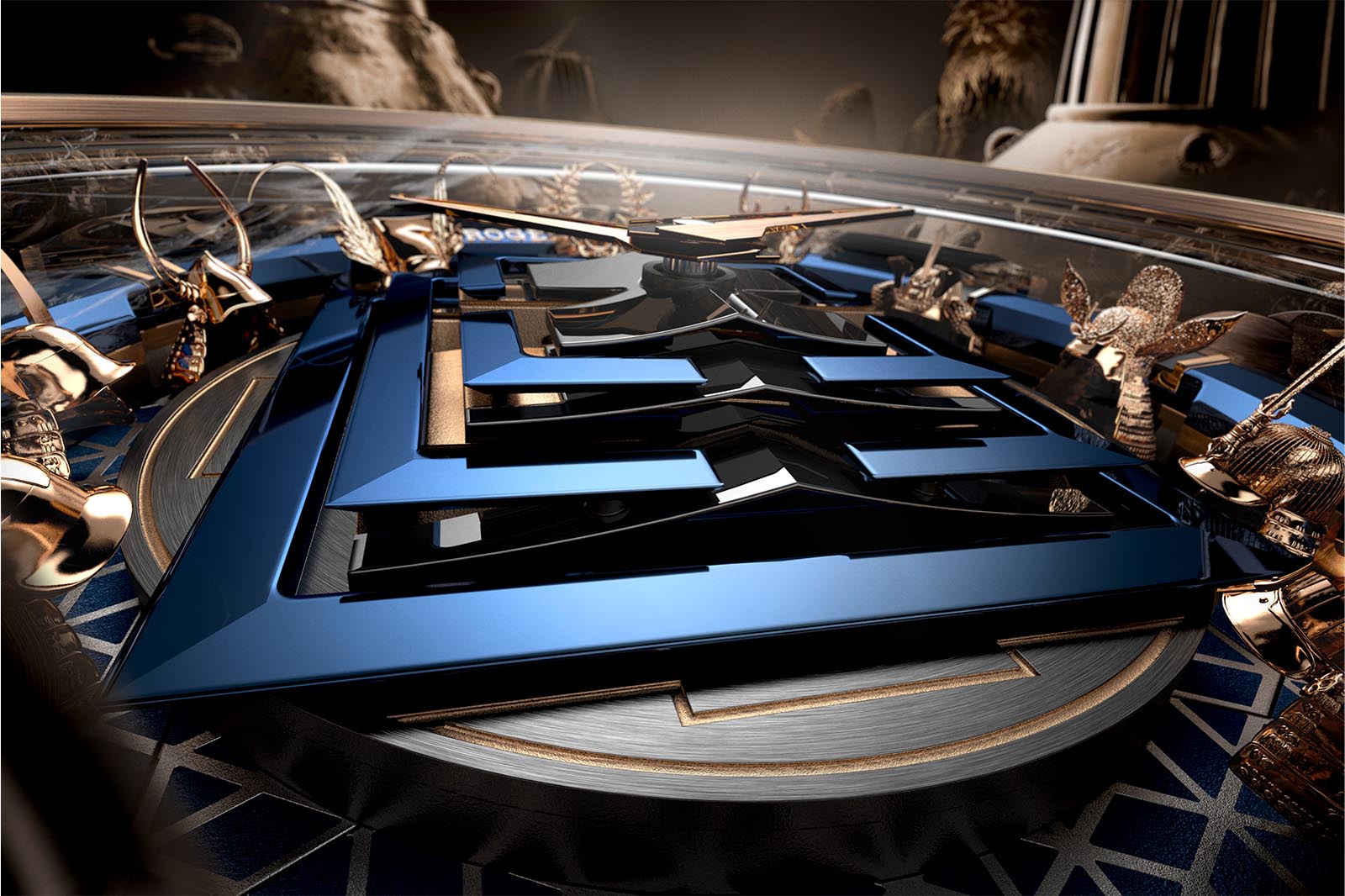
Instead of a round table, the centre of the dial is occupied by Edo Castle.
The fortress is rendered as a pink gold micro-sculpture with blue CVD and black PVD coatings, arranged in concentric squares that suggest the tiered irimoya roof architecture associated with the building.
The indigo tone is particularly effective, giving the watch a cooler and more restrained character than some of the louder Excalibur executions.
Each kabuto is sculpted at Vaucher before being finished in Roger Dubuis’ own workshops.
The appeal is in the scale of the craft, with brushed, polished and engraved surfaces compressed into helmet forms that are small enough to reward close inspection.
The details include clan crests and distinctive helmet shapes, from antlers and sword motifs to tall horns.

The RD821 movement and armour-inspired strap
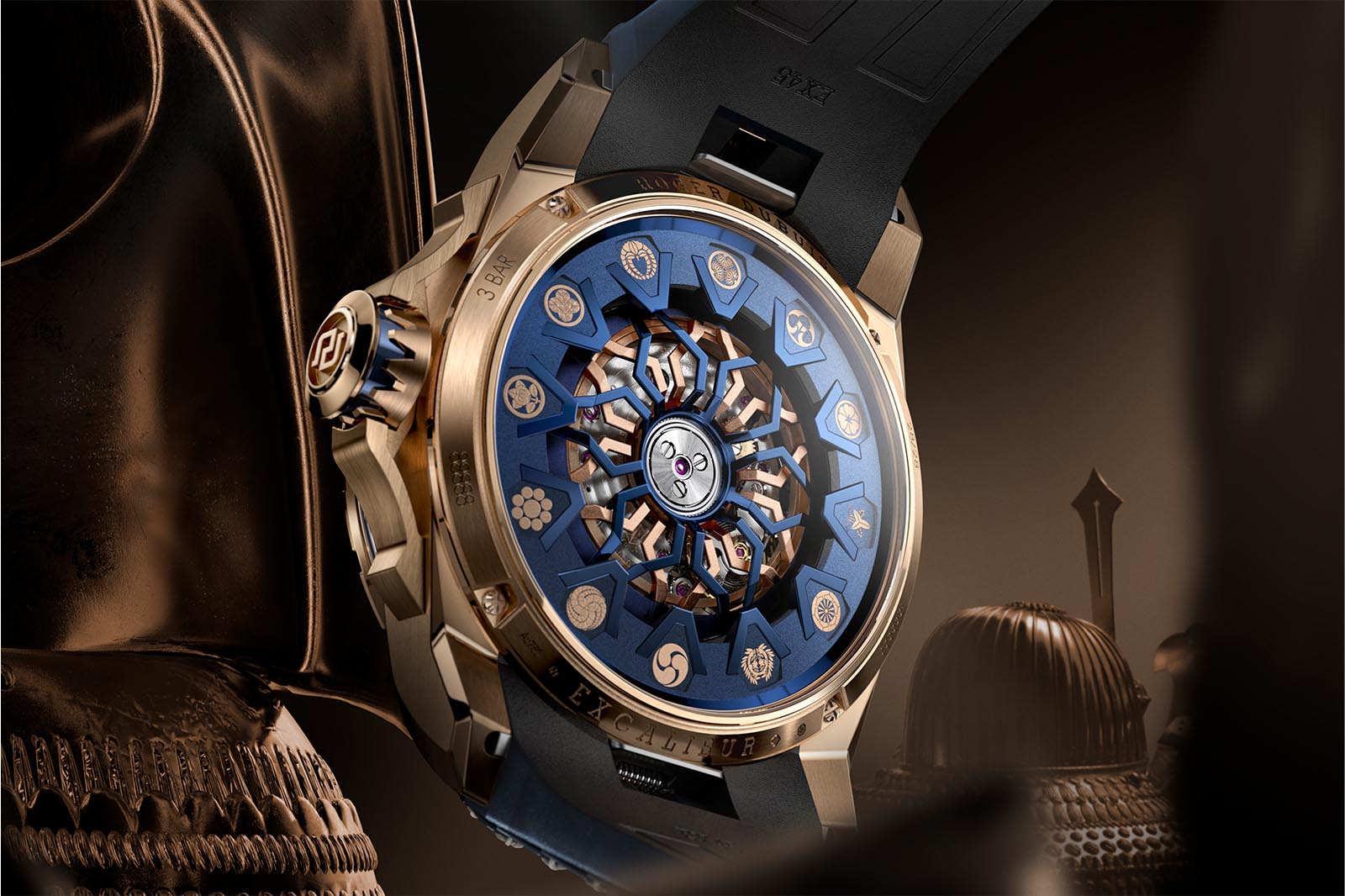
Inside the 45mm pink gold case is the Roger Dubuis calibre RD821, an automatic movement finished to Poinçon de Genève standards.
The movement continues the watch’s visual language with indigo coating and the crests of the 12 clans represented on the dial.
Functionally, this is a time-only watch with hours and minutes, which keeps the mechanical focus on finishing rather than complication.
The strap is calf leather with a patinated finish, built in segmented sections and secured with cross-stitching that recalls samurai armour.
It’s also fitted with a quick-release system and delivered with an additional strap, a practical detail on a watch that otherwise leans heavily into theatre and craft.
Details & Specifications
| Brand | Roger Dubuis |
|---|---|
| Model | Excalibur The Kabuto Legacy |
| Reference | RDDBEX1139 |
| Case size | 45mm diameter x 16.87mm thickness |
| Case material | Pink gold |
| Dial | Pink gold Edo Castle micro-sculpture with blue CVD and black PVD coatings, ring with 12 hand-engraved kabuto helmets |
| Movement | Roger Dubuis calibre RD821, automatic |
| Frequency | 28,800 vph, 4 Hz |
| Power reserve | 48 hours |
| Functions | Hours and minutes |
| Water resistance | 30m, 3 bar |
| Strap | Patinated calf leather with quick-release system, delivered with an additional strap |
| Production | Limited to 28 pieces |
| Price | Price on request |
The Kabuto Legacy works because it doesn’t simply swap one mythology for another.
It gives the Excalibur format a sharper architectural centre, a richer historical vocabulary and enough miniature handwork to remind collectors why this line remains one of Roger Dubuis’ most distinctive expressions of modern haute horlogerie.