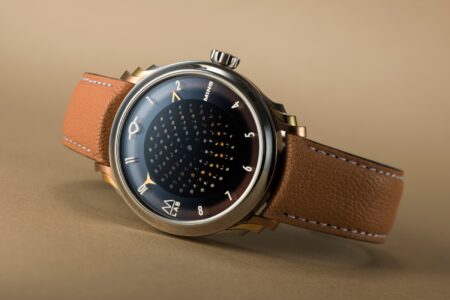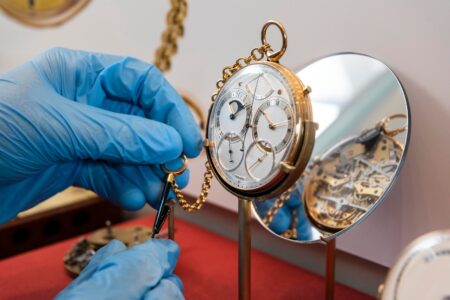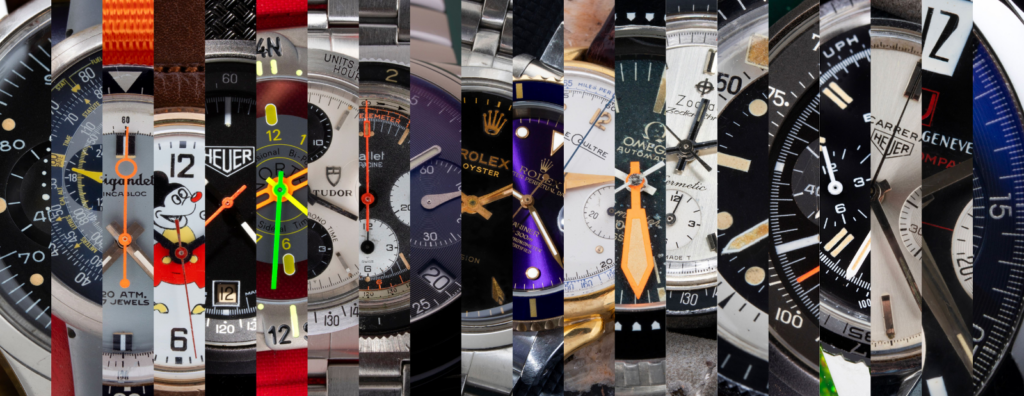
The Patrick Parrish Collection is the kind of watch sale that reminds you collecting doesn’t have to follow the usual script. Across 41 lots at Loupe This, the focus is on peculiar ideas, purposeful forms and watches that treated the wrist as a place for problem-solving. It’s less a greatest-hits list than a personal map of 20th-century experimentation.
At a glance
- The Patrick Parrish Collection brings 41 vintage and neo-vintage watches to Loupe This in a staggered online auction format.
- Highlights include the Yema Bipole Duopoly Titanium, Jaeger-LeCoultre Memovox Speed Beat GT, Omega Seamaster 120 “Deep Blue” and several unconventional chronographs and instrument watches.
- Groups of around eight watches launch daily, with each lot remaining live for seven days and closings beginning the week of Monday 25 May.
The sale reflects Parrish’s long-running interest in objects that sit between design, engineering and culture, rather than watches chosen only for brand hierarchy or conventional rarity.
Presented by Loupe This, the online auction platform co-founded by Eric Ku, the collection feels especially suited to collectors who care about originality, use-case design and the odd corners of watch history that don’t always fit neatly into mainstream taste.

A design dealer’s eye on the wrist
Patrick Parrish is best known as a New York-based design dealer and collector with a career built around unusual, important and sometimes overlooked objects.
Through his gallery and later Patrick Parrish Studio, he championed designers whose work found its way into major institutions including MoMA, Cooper Hewitt and the San Francisco Museum of Modern Art.
That background matters because this isn’t a watch collection arranged like a trophy cabinet.
The through-line is industrial imagination, from aerospace and motorsport to diving, polar exploration and pre-digital technical ambition.
The Yema Bipole makes the case for strange ideas
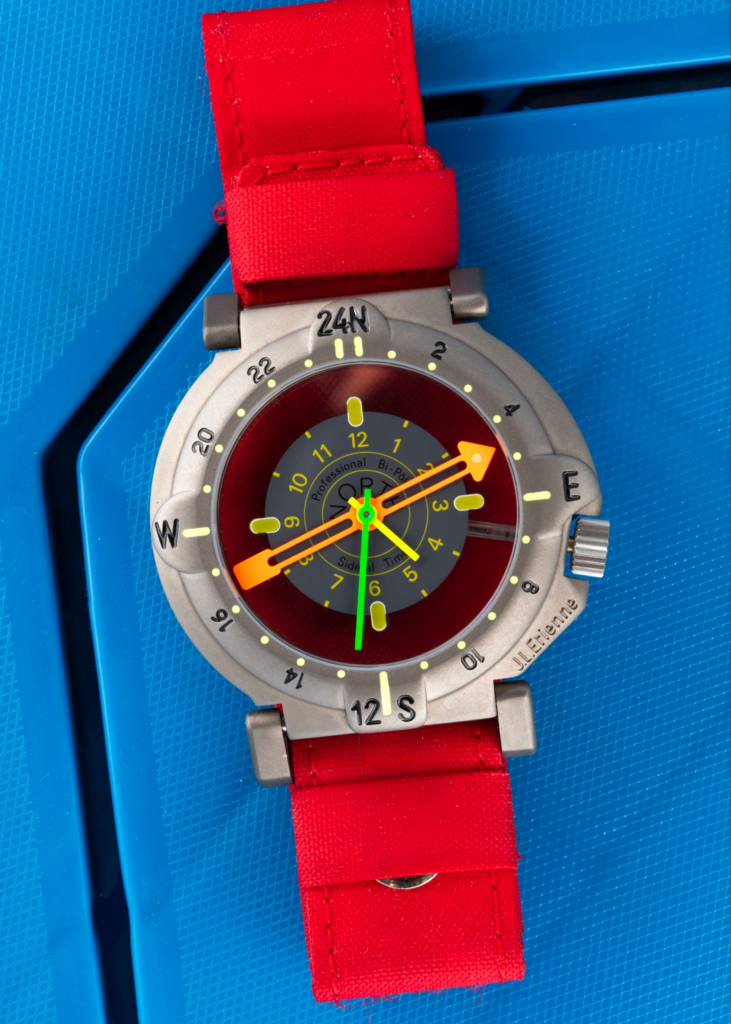
One of the most compelling lots is the Yema Bipole Duopoly Titanium from the early 1990s, a watch designed to be physically flipped for use in the Northern or Southern Hemisphere.
Its polar-operations logic gives it a visual language that feels almost alien beside conventional sports watches, but that is precisely the point.
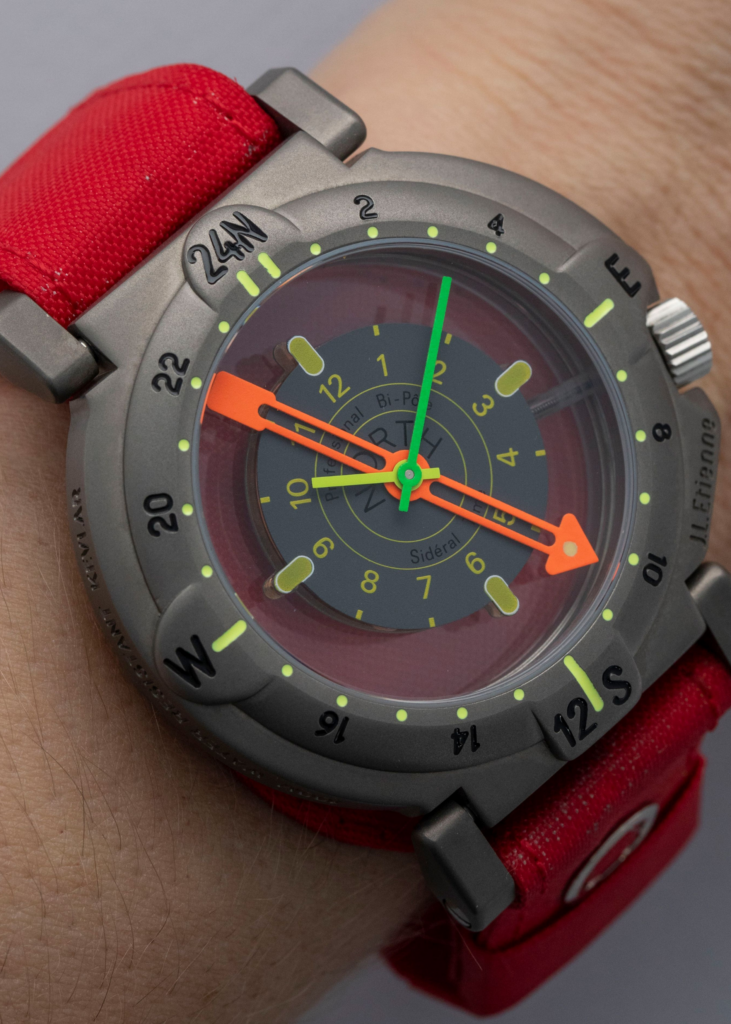
The Bipole is also believed to be the first watch design by Richard Mille, long before his own brand turned advanced materials and architectural cases into a defining signature.
Even without that connection, the watch stands out because it solves a highly specific problem without apologising for the resulting form.
Mechanical ambition before the quartz shock
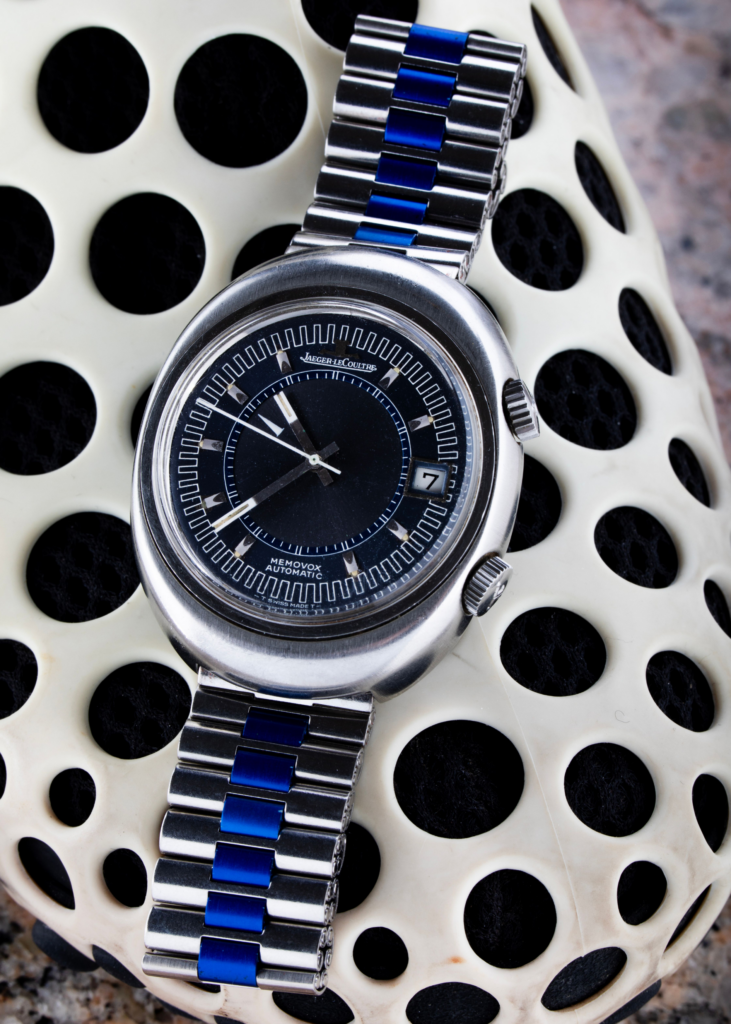
The Jaeger-LeCoultre Memovox “Speed Beat GT” ref. E873 brings a different kind of energy to the sale.
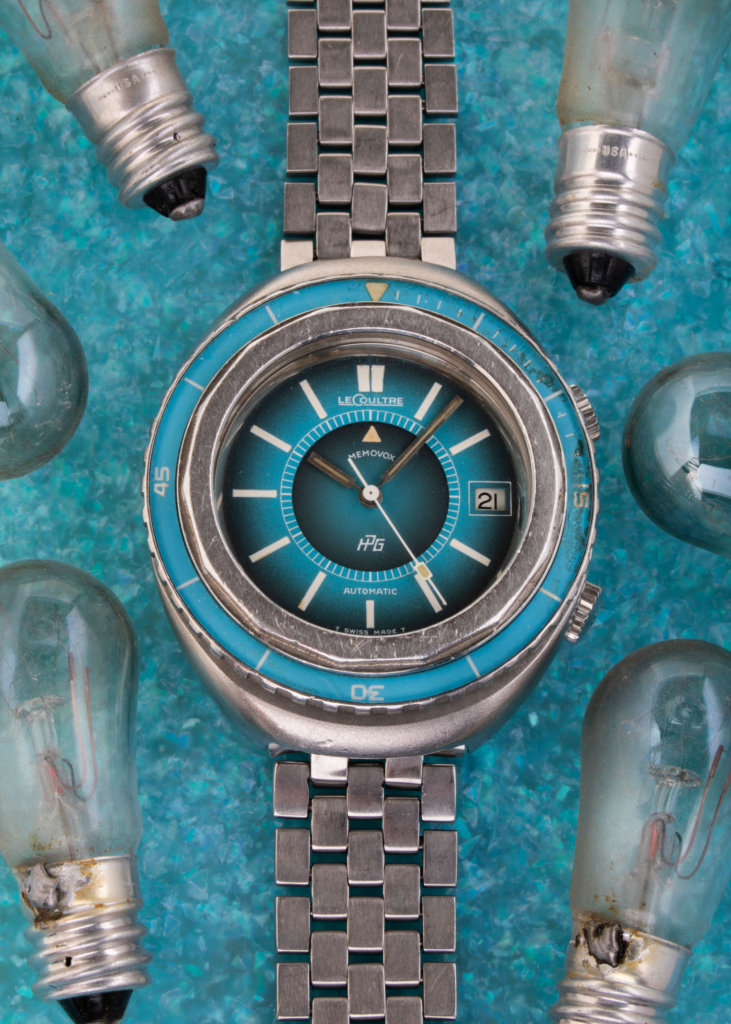
Produced in small numbers in the early 1970s, it belongs to the more adventurous chapter of Jaeger-LeCoultre’s alarm-watch story and uses the high-frequency calibre 825.
Its integrated styling and technical purpose place it in a period when major Swiss brands were still pushing mechanical watchmaking hard, just before quartz technology changed the industry’s priorities.
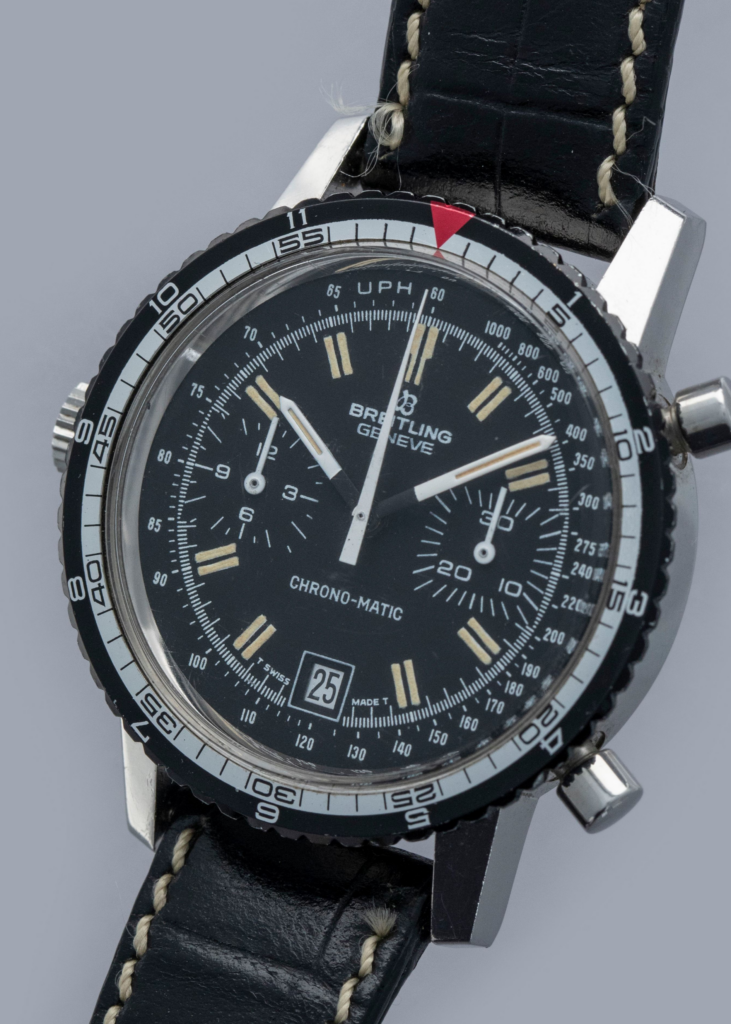
That same sense of invention runs through the broader group, including a Breitling Chrono-Matic from the early automatic-chronograph era, Wittnauer chronographs with NASA-related mythology, and Accutron watches powered by tuning fork movements.
Tool watches that became design objects
The Omega Seamaster 120 “Deep Blue” ref. 166.073 captures the visual confidence of the collection especially well.
Introduced in the late 1960s, it pairs an oversized cushion case with a vivid blue dial and matching Bakelite bezel, giving it the presence of an instrument rather than a dress-coded luxury object.
Its association with the Israeli Defense Forces adds to the broader theme running through the sale, where many of the watches were originally conceived for jobs rather than display.
That utility is also what makes the collection feel current, because collectors are increasingly looking beyond safe icons toward watches with clearer points of view.
Parrish’s selection won’t appeal to anyone seeking only the most obvious vintage names in their most familiar forms, but for enthusiasts drawn to eccentric engineering, forgotten ergonomics and period-specific design courage, it offers something much rarer than uniform perfection.
FAQ