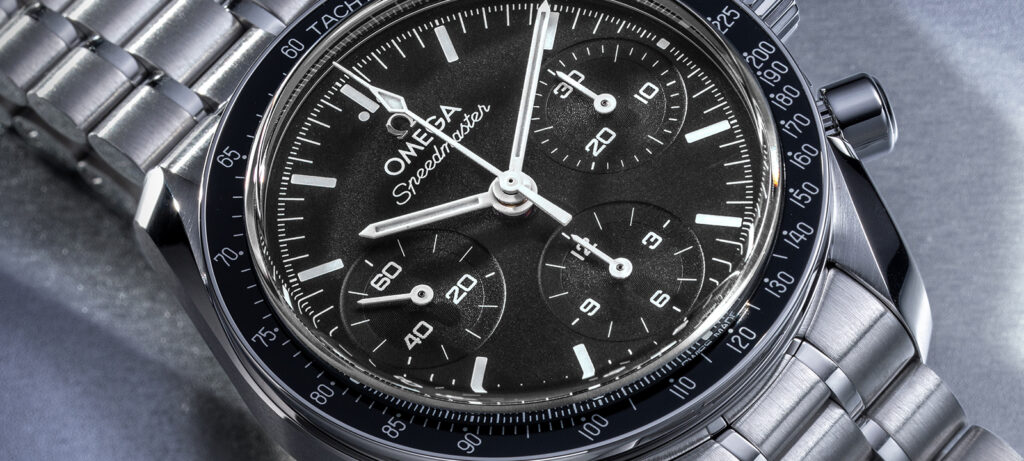
The Speedmaster has never been just one watch, even if the Moonwatch tends to dominate the conversation.
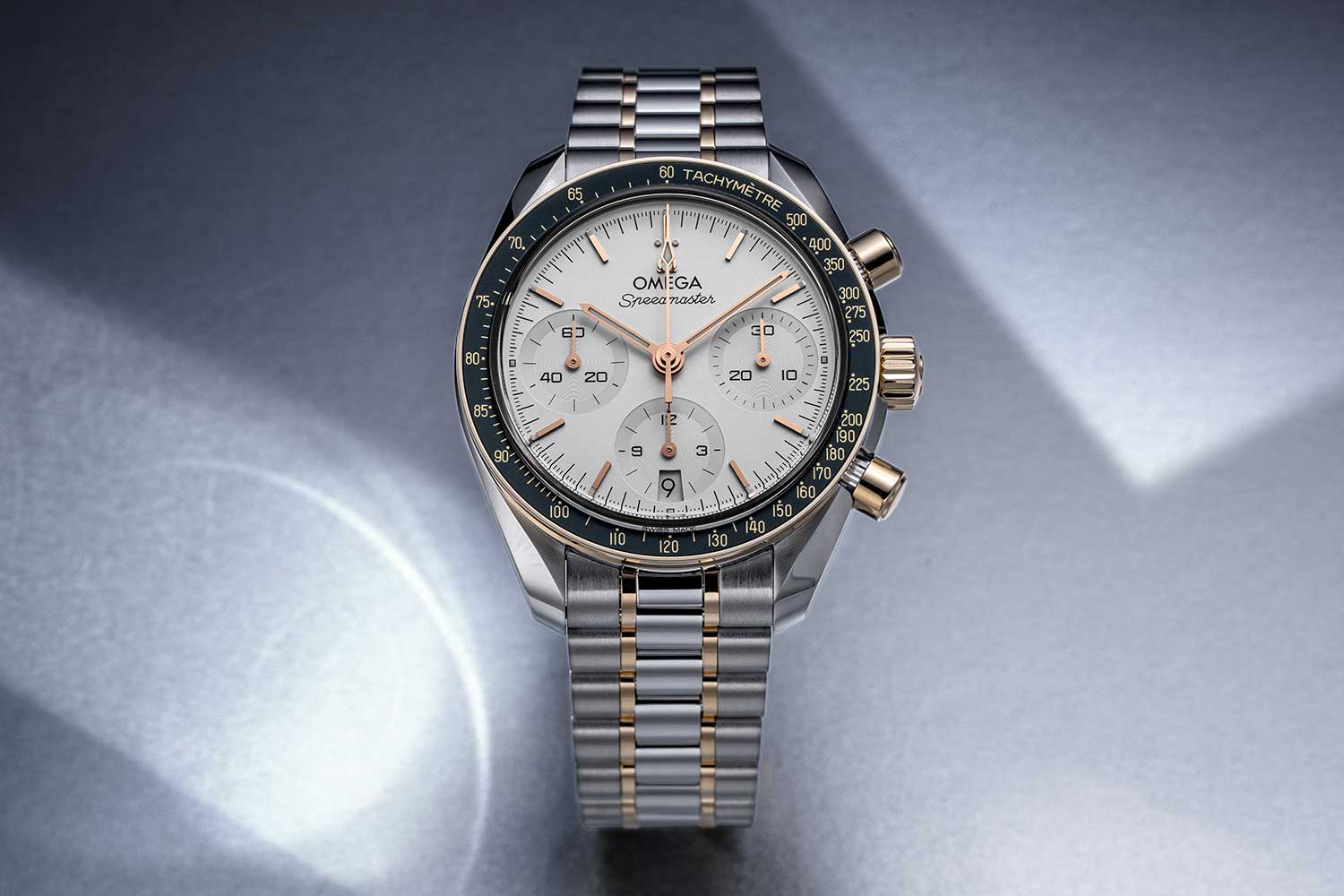
Omega’s latest update to the Speedmaster 38mm gives the smaller automatic chronograph a clearer family resemblance, with seven new references that move it away from its more decorative past and closer to the visual language collectors know so well.
For anyone who likes the Speedmaster idea but not necessarily the 42mm footprint, this is a meaningful shift.
At a glance
- Omega has introduced seven refreshed Speedmaster 38mm references with a more traditional Speedmaster look.
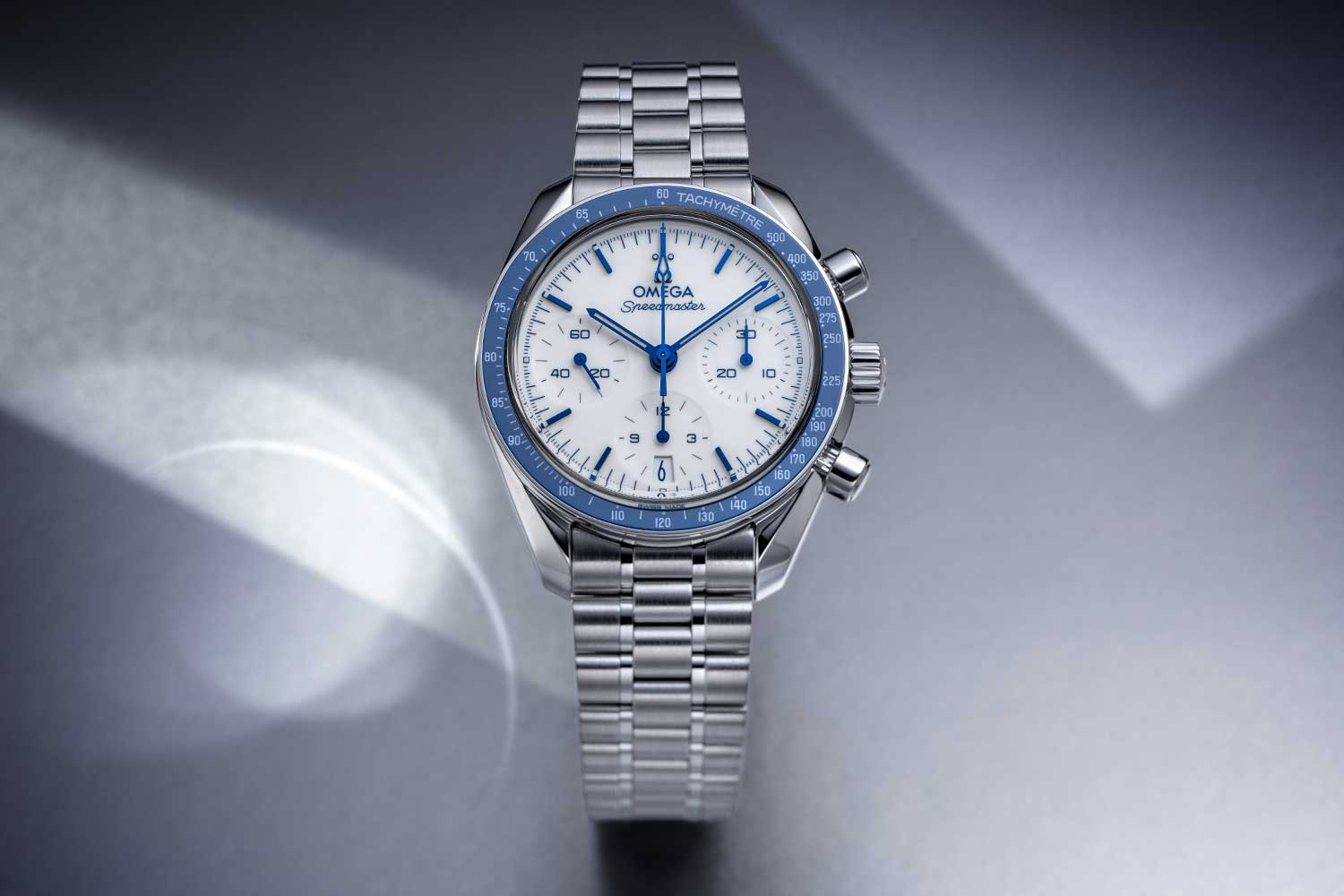
- The collection now uses round subdials, reduced dial text and a broader notch-free tachymeter bezel with the Dot Over Ninety detail.
- Six models use the self-winding Calibre 3330 with a date, while the black dial model uses the no-date Calibre 3332.
A compact Speedmaster with a sharper family resemblance
The Speedmaster 38mm arrived in 2017 as a smaller counterpart to Omega’s larger Speedmaster chronographs, with a personality of its own rather than a scaled-down Moonwatch brief.
Its oval subdials were the clearest point of difference, giving the model a softer and more contemporary look while also leaving room for diamond-set executions.
That distinction has now been dialled back.
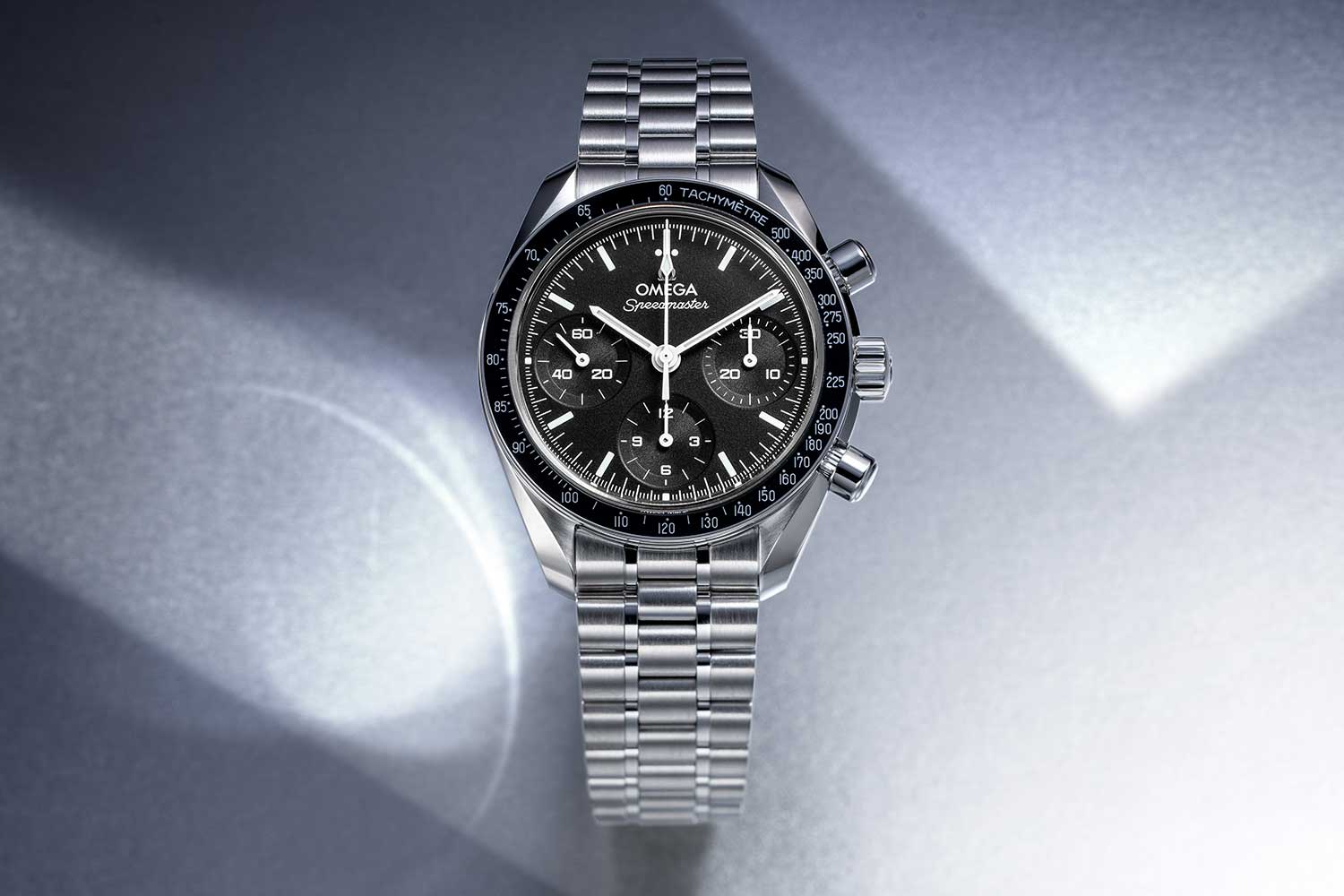
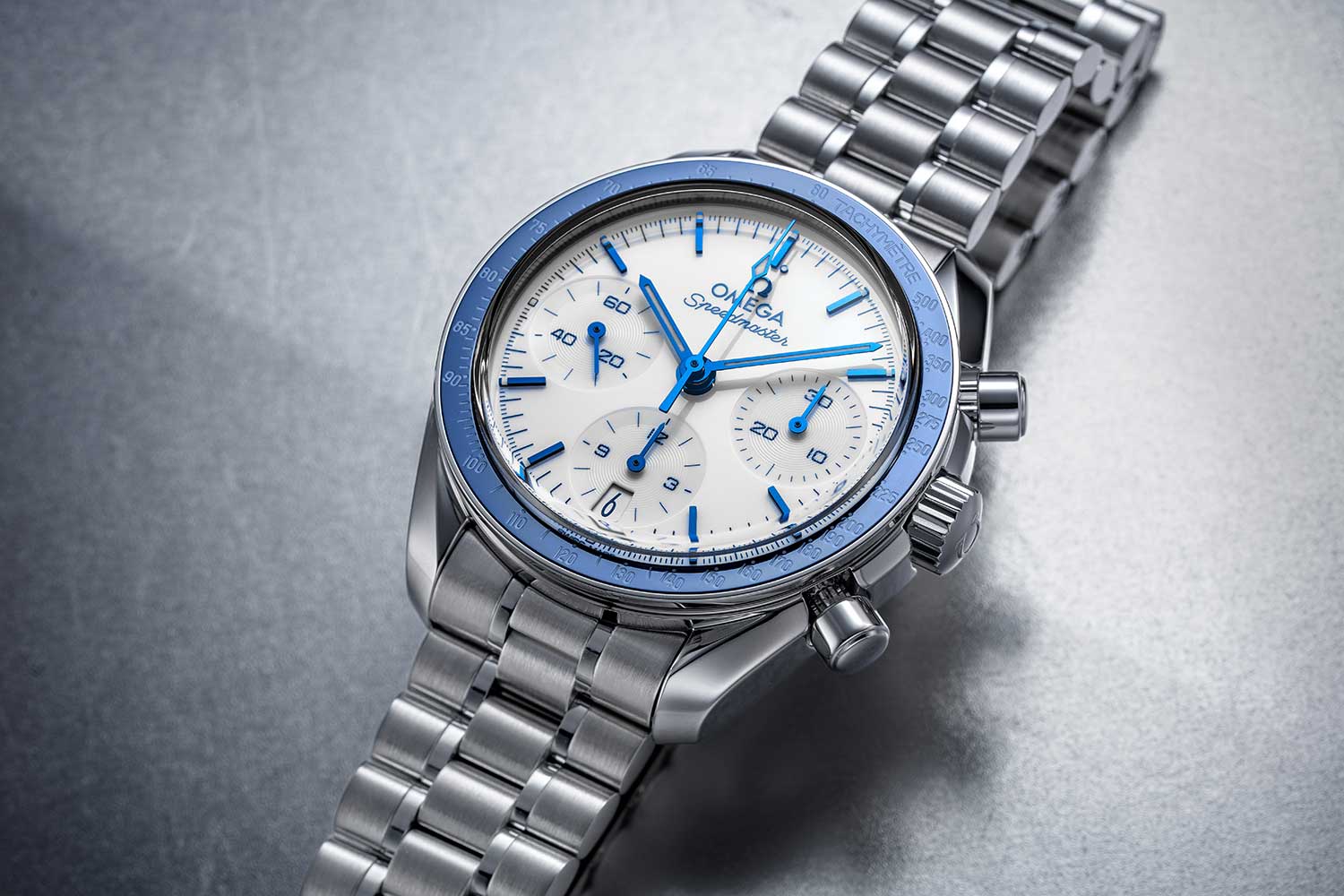
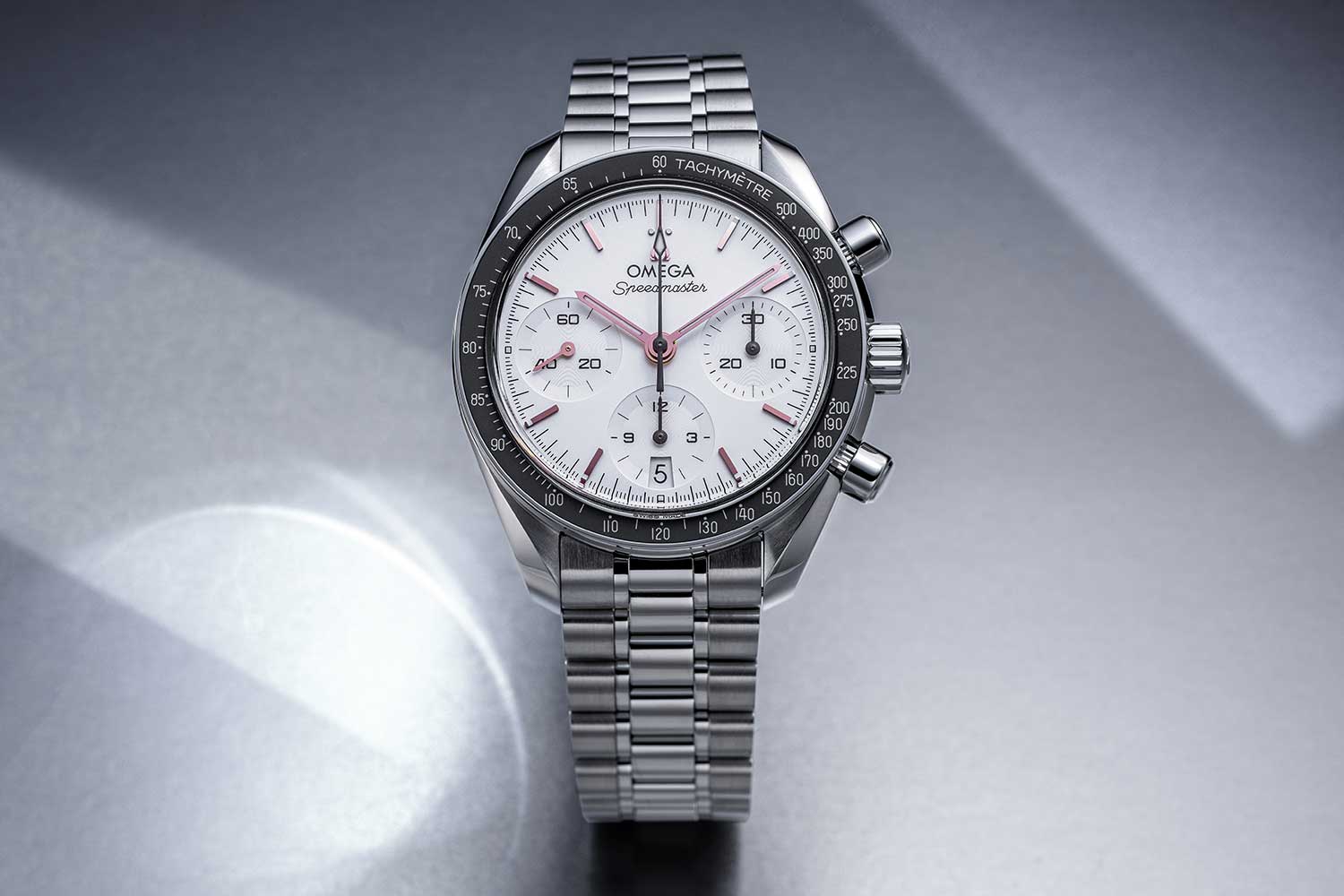
The updated collection adopts round registers, pares back the wording on the dial and uses a wider tachymeter insert without the notched treatment of the earlier 38mm models.
Most importantly for Speedmaster purists, the bezel restores the familiar Dot Over Ninety detail, a small marker with outsized importance in the Moonwatch universe.
The case size remains 38mm, while the thickness is 14.75mm, so this isn’t an ultra-slim chronograph by any measure.
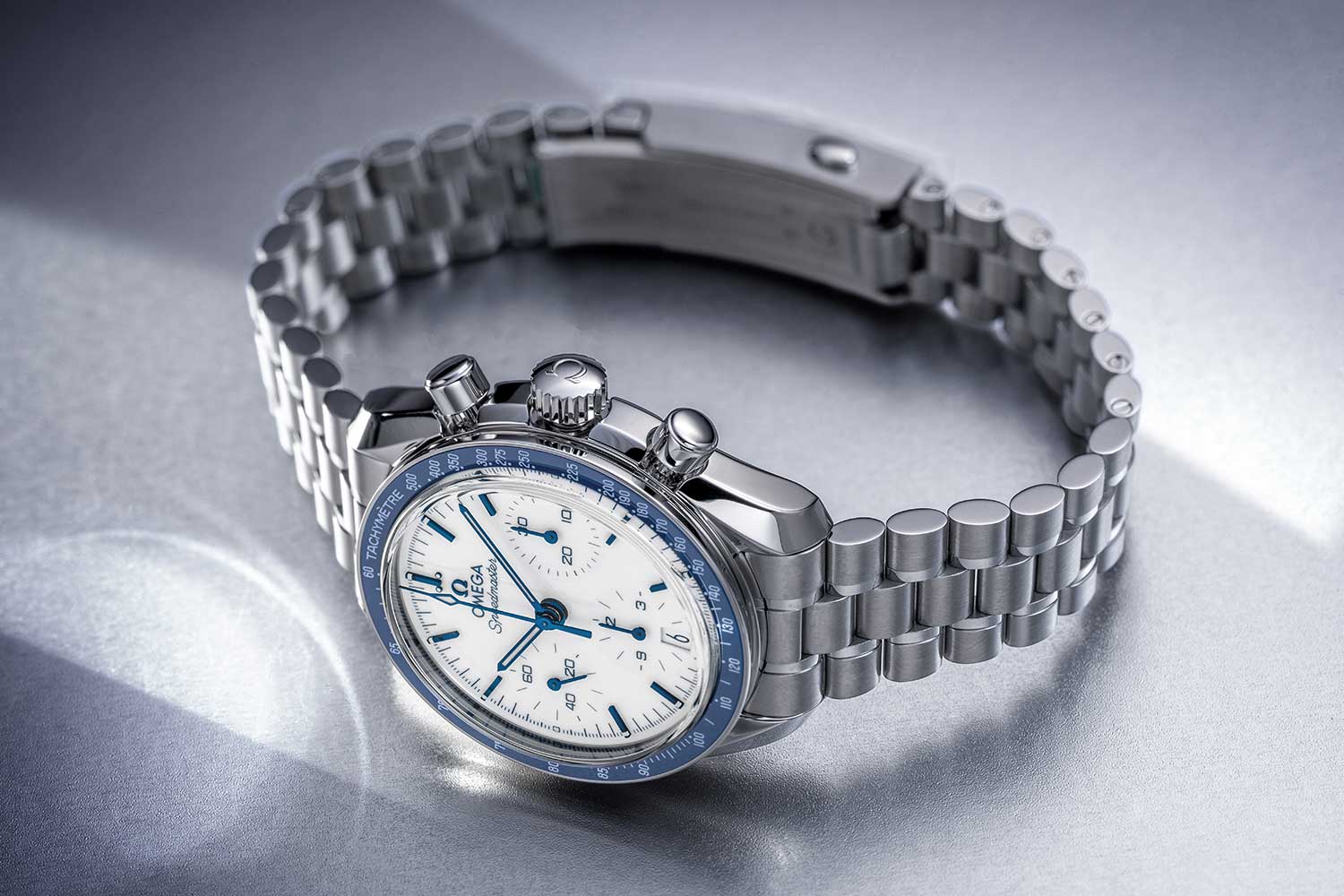
Still, the smaller diameter will make the watch more wearable for wrists that find the 42mm Speedmaster Professional too broad.
The black dial model is the closest to the Moonwatch formula
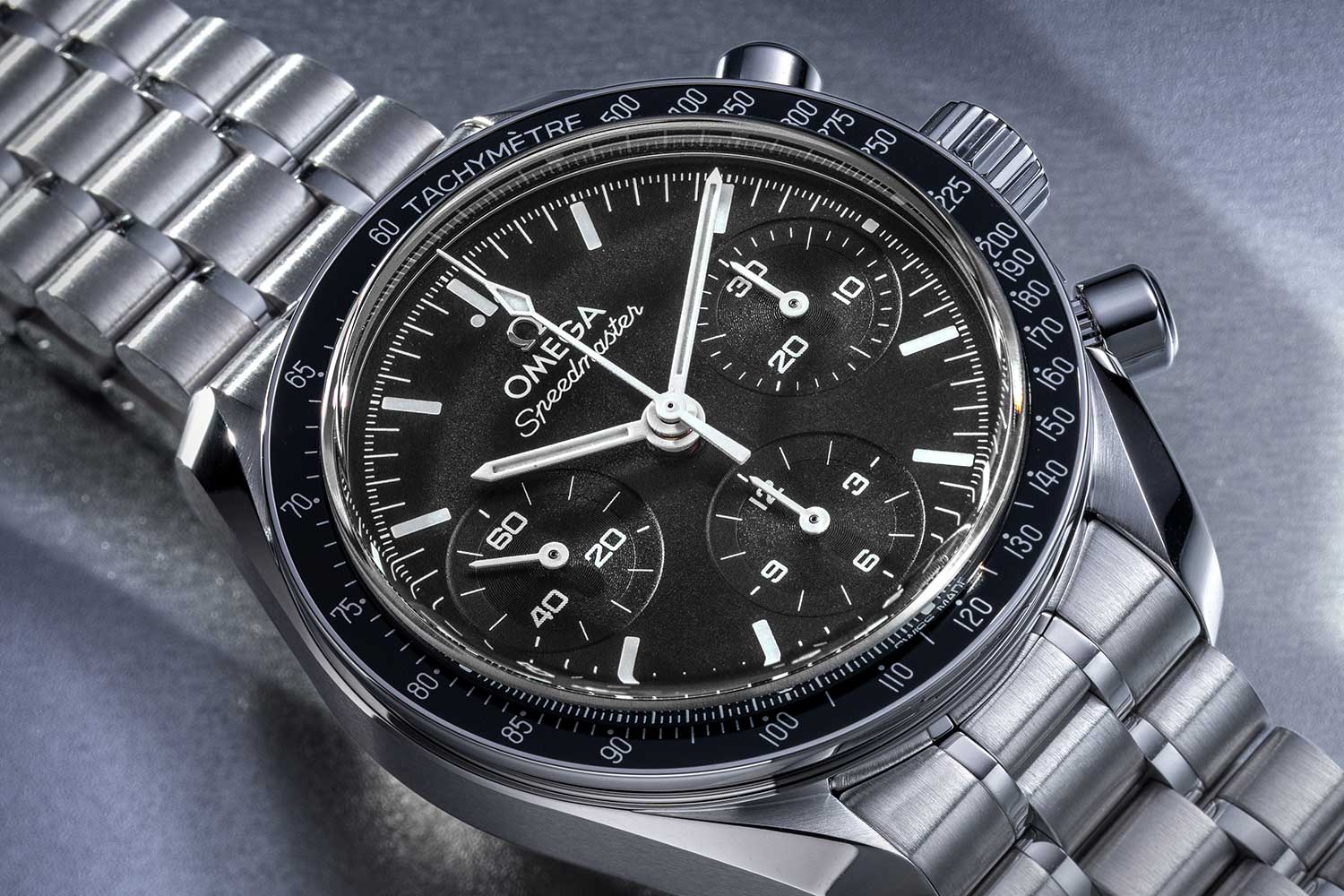
Among the seven new references, the black dial version is the most direct nod to the traditional Speedmaster look.
It pairs a steel case with a black aluminium bezel insert, a black varnished dial and white Super-LumiNova on the hands and indexes.
It also stands apart mechanically, because it uses Omega’s Calibre 3332 and removes the date entirely.
That no-date layout gives the dial a cleaner balance and makes this reference the most Moonwatch-adjacent option in the revised 38mm line.
The other steel models take different routes.
One combines a white lacquered dial with a blue ceramic bezel insert and a white enamel tachymeter scale, with blue CVD-coated hands, indexes and date numerals carrying the palette through the watch.
Another uses a grey aluminium bezel insert with an opaline silvery PVD dial, set off by Sedna Gold PVD hands and indexes for a warmer, less overtly tool-watch character.
Precious-metal accents bring variety without changing the brief
The bi-colour references keep the 38mm Speedmaster in more dressed-up territory.
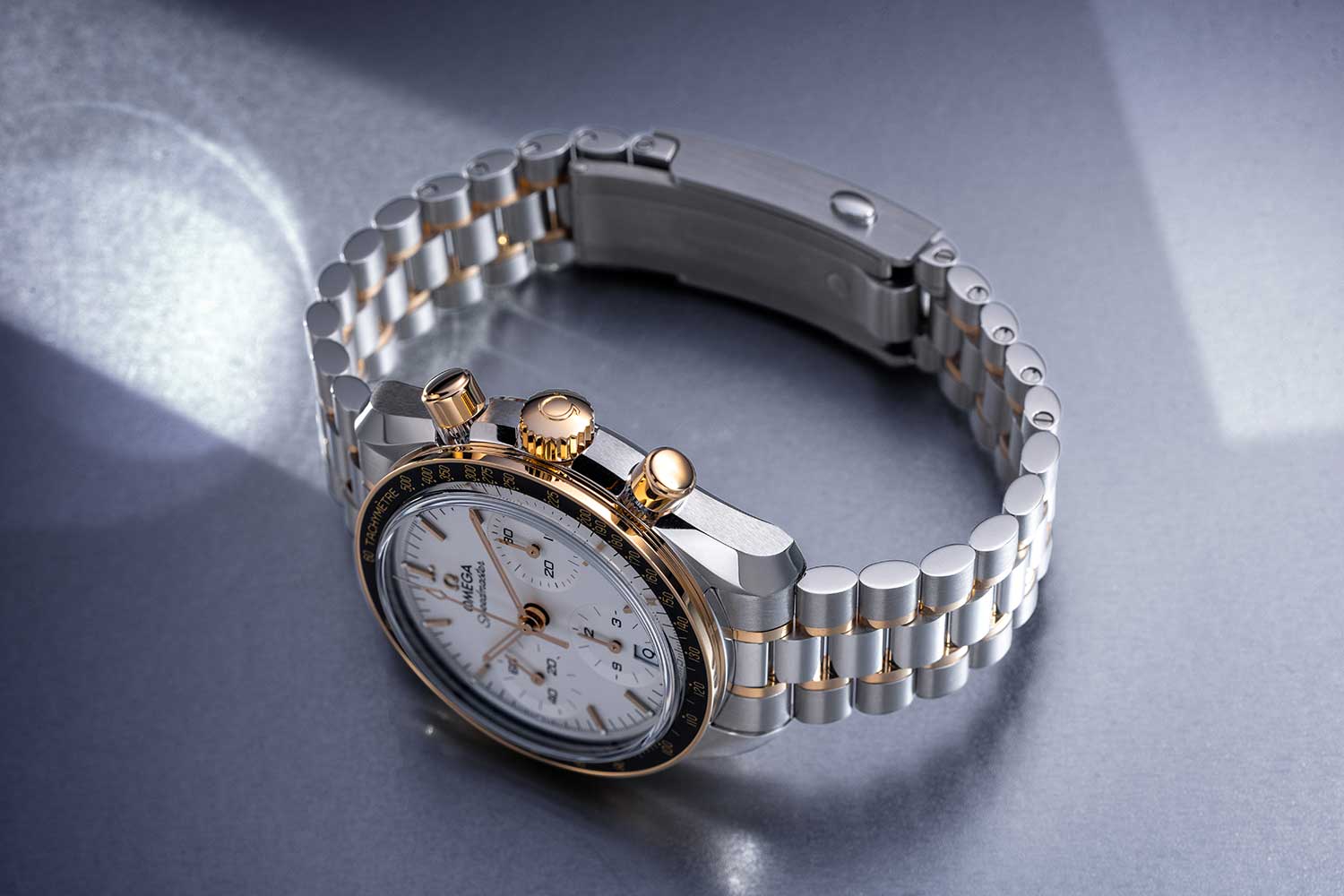
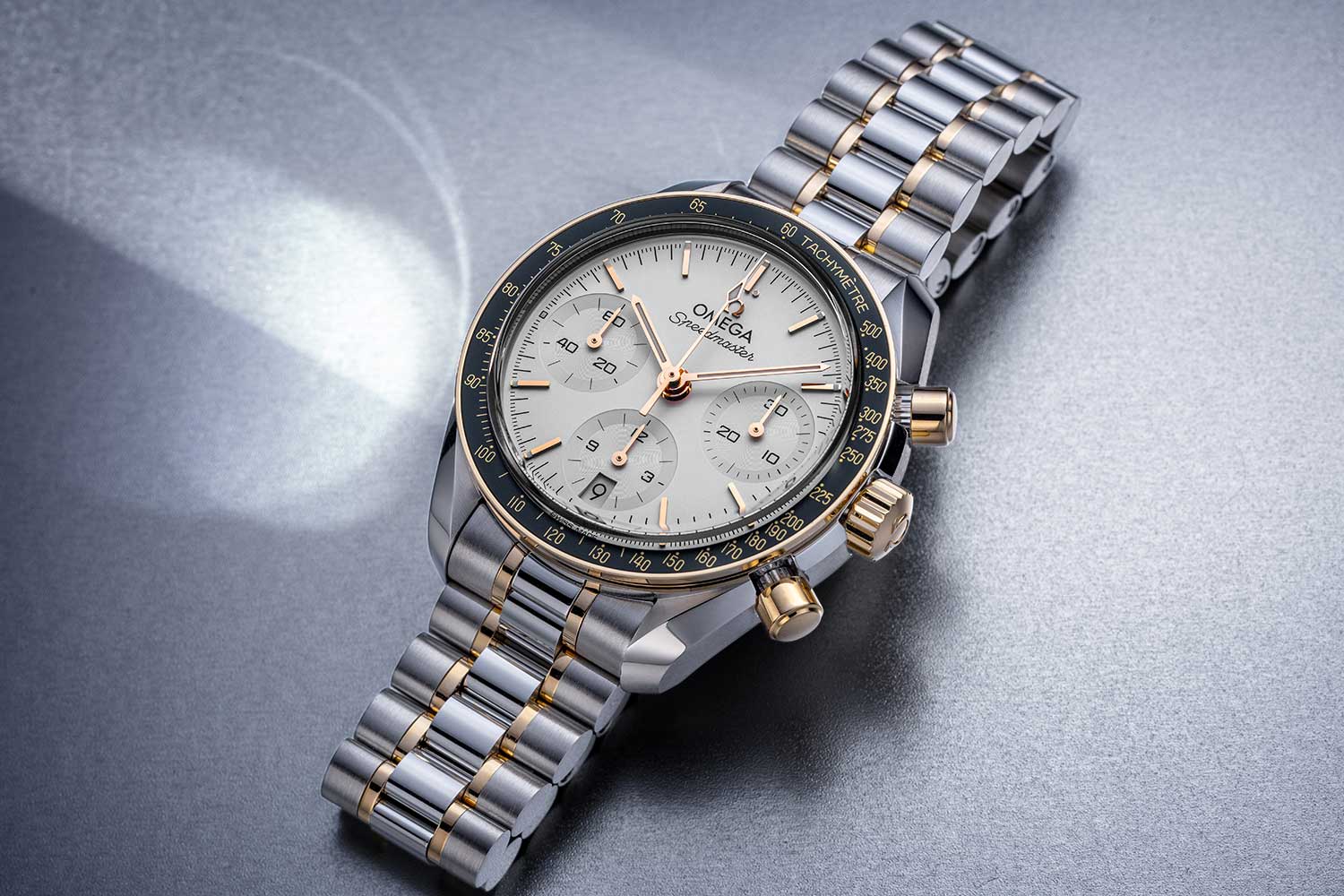
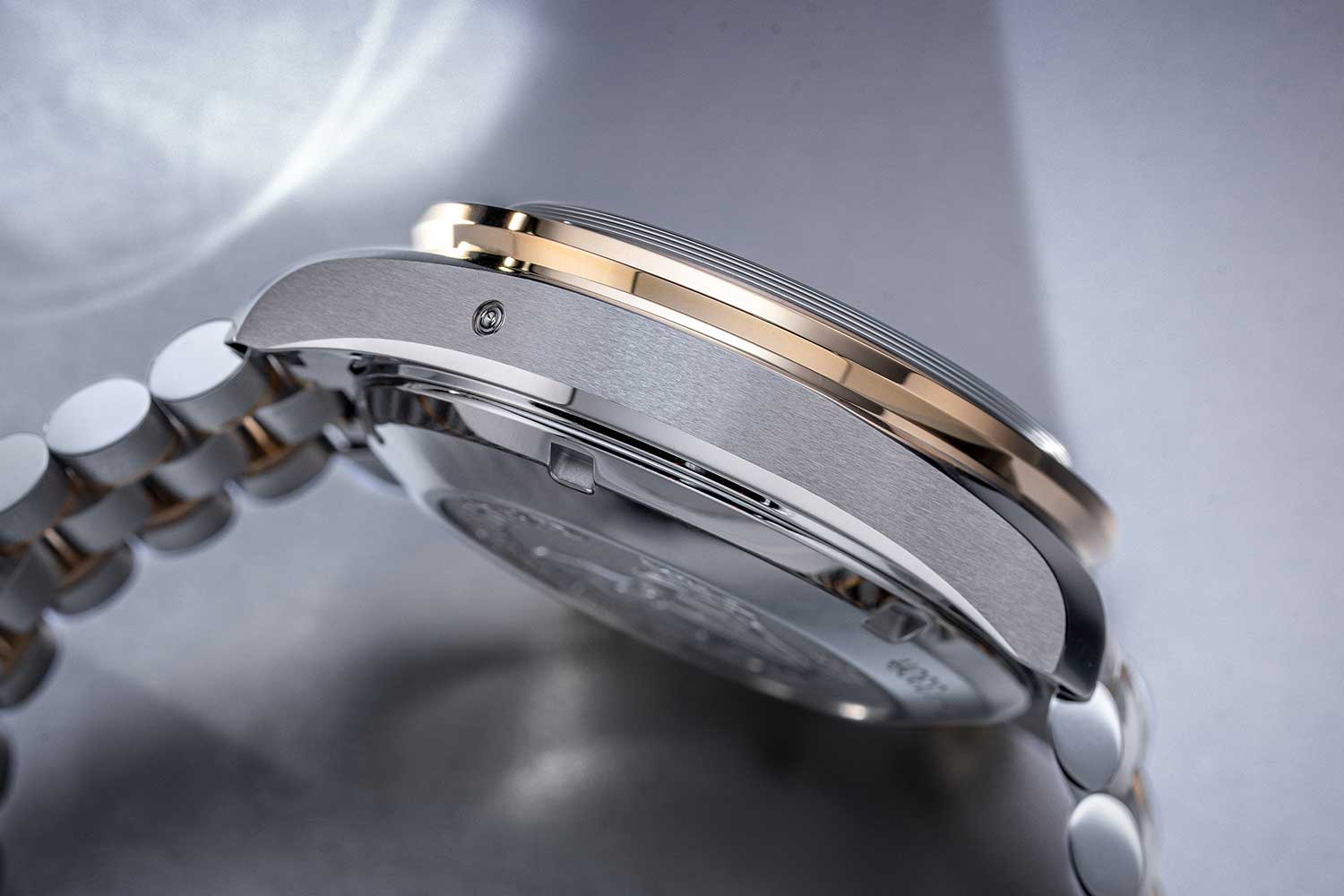
One version combines stainless steel with Moonshine Gold for the bezel, crown, pushers and smaller bracelet links, using a green aluminium bezel insert and a silvery opaline PVD dial.
Moonshine Gold is Omega’s proprietary 18K yellow gold alloy, known for its paler tone and added palladium to help preserve colour stability.
The second bi-colour version returns to the Speedmaster 38mm’s so-called cappuccino theme.
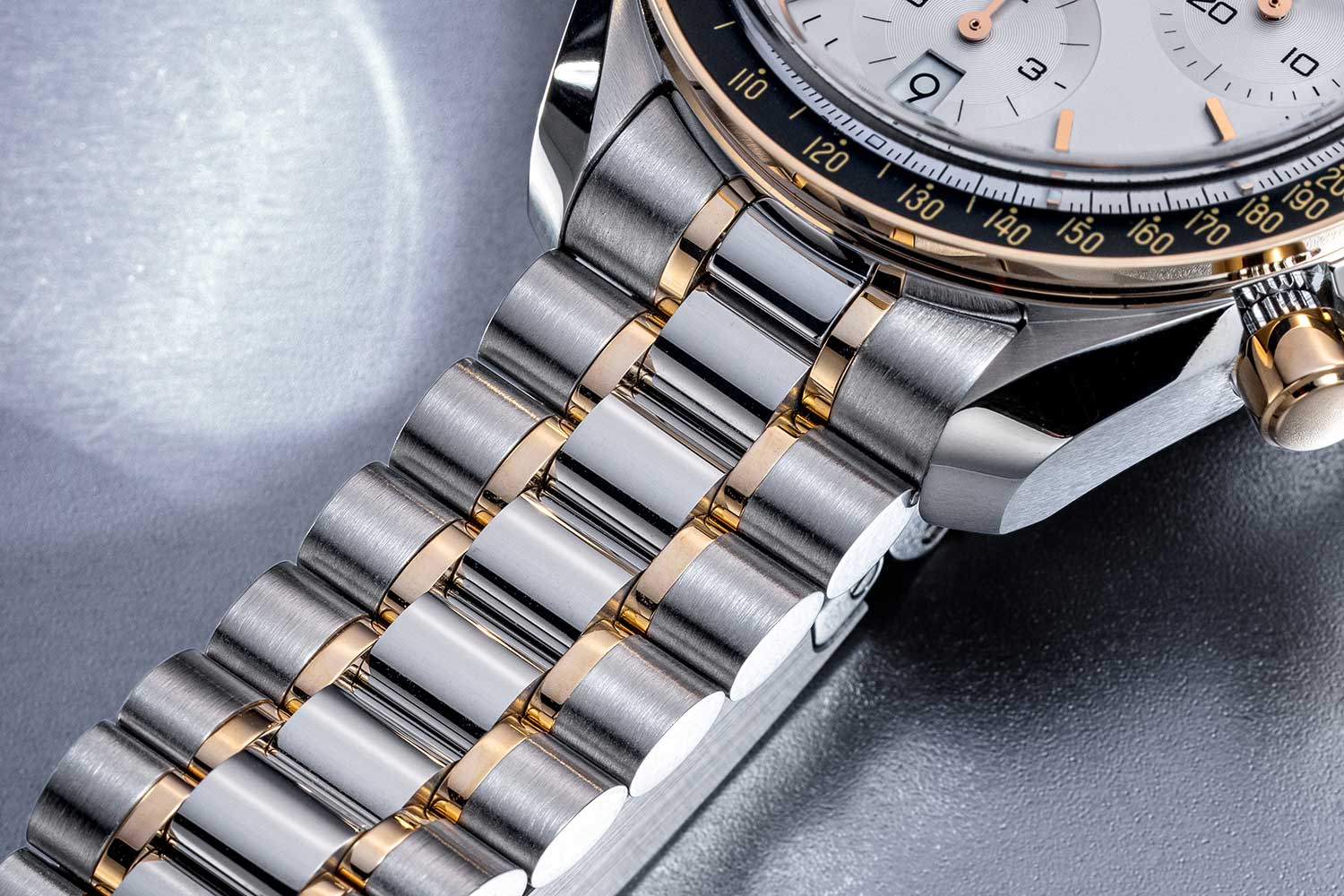
It pairs an ivory dial with brown PVD-coated subdials, a polished Sedna Gold bezel, a brown aluminium insert and matching Sedna Gold crown, pushers and smaller bracelet links.
Across the collection, the bracelet is a five-link Moonwatch-style design with a micro-adjustment extension, though the finishing changes from model to model with different brushed and polished centre-link treatments.
Calibre choices and chronograph hardware
The new Speedmaster 38mm collection is split between two automatic Co-Axial chronograph movements.
Six references use Calibre 3330, which keeps the date aperture at six o’clock, while the black dial model uses Calibre 3332 and deletes the date.
Both movements use a column wheel and an oscillating pinion coupling system.
They trace their architecture to ETA’s A08.L01 chronograph from the Valgranges family, with Omega adapting the platform for its Co-Axial escapement.
Neither movement carries Master Chronometer certification, but the use of a silicon hairspring is still a practical advantage in daily wear because silicon is non-magnetic.
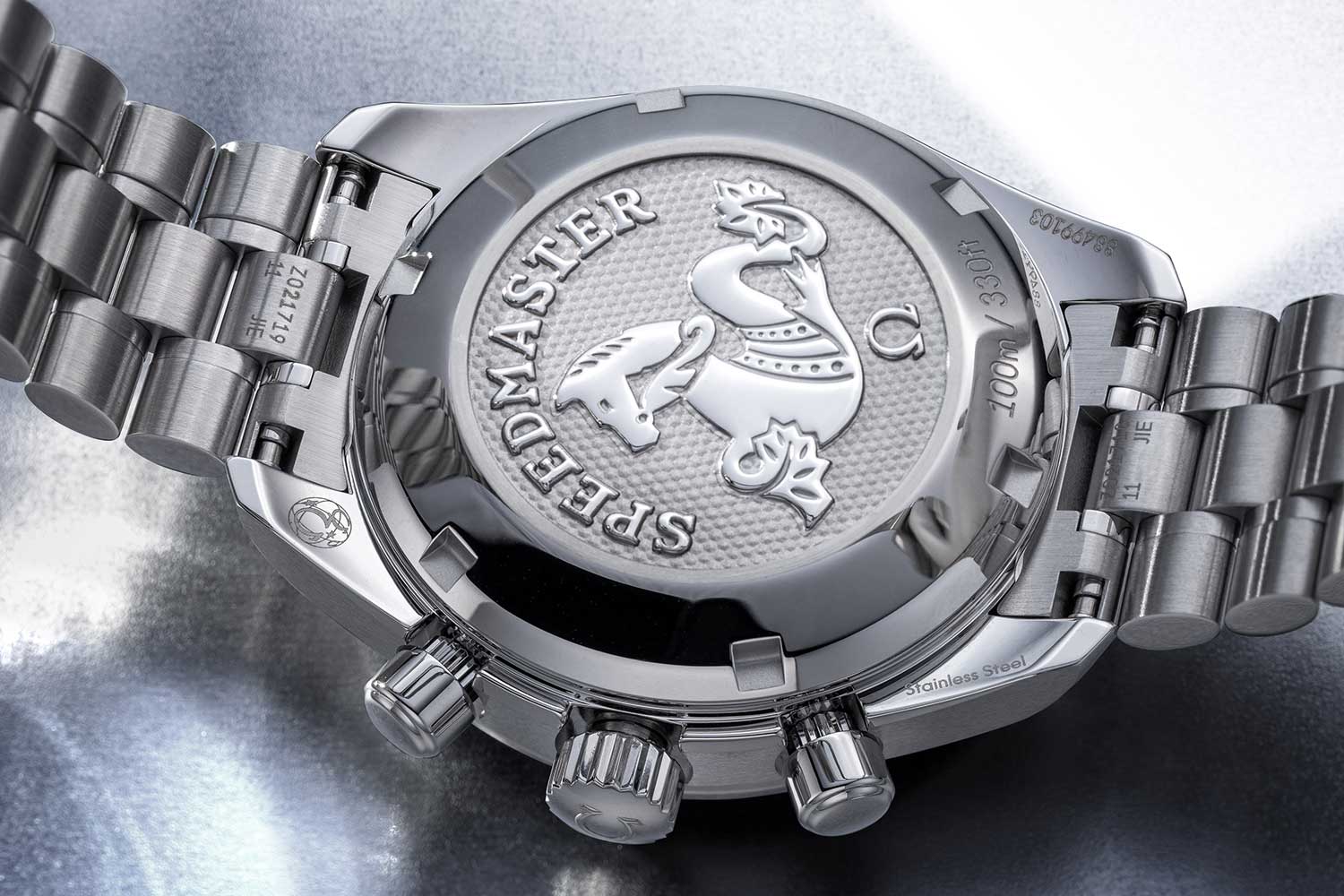
The watches also retain a solid caseback with the classic Hippocampus medallion, keeping the exterior more traditional than exhibition-backed alternatives.
Details & Specifications
| Brand | Omega |
|---|---|
| Collection | Speedmaster 38mm |
| New references | Seven |
| Case size | 38mm |
| Case thickness | 14.75mm |
| Case materials | Stainless steel, stainless steel with Moonshine Gold, stainless steel with Sedna Gold |
| Dial layout | Round chronograph subdials with reduced dial text |
| Bezel | Broader notch-free tachymeter bezel with Dot Over Ninety |
| Movements | Omega Calibre 3330 and Calibre 3332 automatic Co-Axial chronographs |
| Chronograph system | Column wheel with oscillating pinion coupling |
| Date | Date at six o’clock on six references, no date on the black dial reference |
| Hairspring | Silicon |
| Caseback | Solid caseback with Hippocampus medallion |
| Bracelet | Five-link Moonwatch-style bracelet with micro-adjustment extension |
The renewed Speedmaster 38mm doesn’t replace the Moonwatch and doesn’t try to.
Its appeal is more specific than that, offering a smaller automatic Speedmaster with enough familiar cues to feel connected to the family, while still leaving room for colour, metals and a little everyday practicality.