Long before a phone could buzz on a table, time had its own sound.
For Chopard, the chime isn’t a nostalgic party trick or a mechanical flourish added for drama. It sits at the centre of one of the manufacture’s most ambitious modern projects, led through the L.U.C collection by Karl-Friedrich Scheufele and carried forward with the next generation of the family.
That story runs from Fleurier and the first L.U.C 1860 to the Full Strike, a minute repeater that treated sapphire crystal not merely as a window onto the dial, but as part of the instrument itself.

At a glance
- Chopard’s chiming watchmaking journey spans the L.U.C 1860, Strike One and the award-winning L.U.C Full Strike.
- The Full Strike uses sapphire monobloc technology, with gongs and crystal formed as a single component to project a clearer sound.
- The L.U.C Full Strike won the Aiguille d’Or at the 2017 Grand Prix d’Horlogerie de Genève.
Why chiming watches still matter
The idea of an audible time signal predates modern notifications by centuries.
Striking clocks and early chiming timekeepers emerged as practical objects in an age when reading the time wasn’t always easy, especially at night or while travelling.
A pull cord on a clock could announce the hour and quarters in the dark, while some mechanisms added an alarm function for waking.
In that context, sound wasn’t decoration. It was usability, status and engineering wrapped into one object.
Today, a chiming wristwatch has a different purpose, but the appeal remains unusually intimate.
A passing strike marks the hour automatically with a single chime, while a minute repeater gives the time on demand through a sequence of tones for hours, quarters and minutes.

The grande sonnerie sits higher still, striking the time automatically rather than waiting for the wearer to activate it.
It’s one of the most demanding complications in wristwatch form because it combines energy management, acoustic control, miniaturisation and hand-finishing in an extremely small space.
Fleurier and the start of Chopard’s manufacture era
Chopard’s modern chiming ambitions can’t be separated from Fleurier.
In the early 1990s, Karl-Friedrich Scheufele set out to establish Chopard as a manufacture capable of creating its own movements, rather than relying solely on external supply.
Fleurier offered the right conditions for that shift. It was quiet, discreet and removed enough to let a serious movement-making project take shape without unnecessary noise around it.
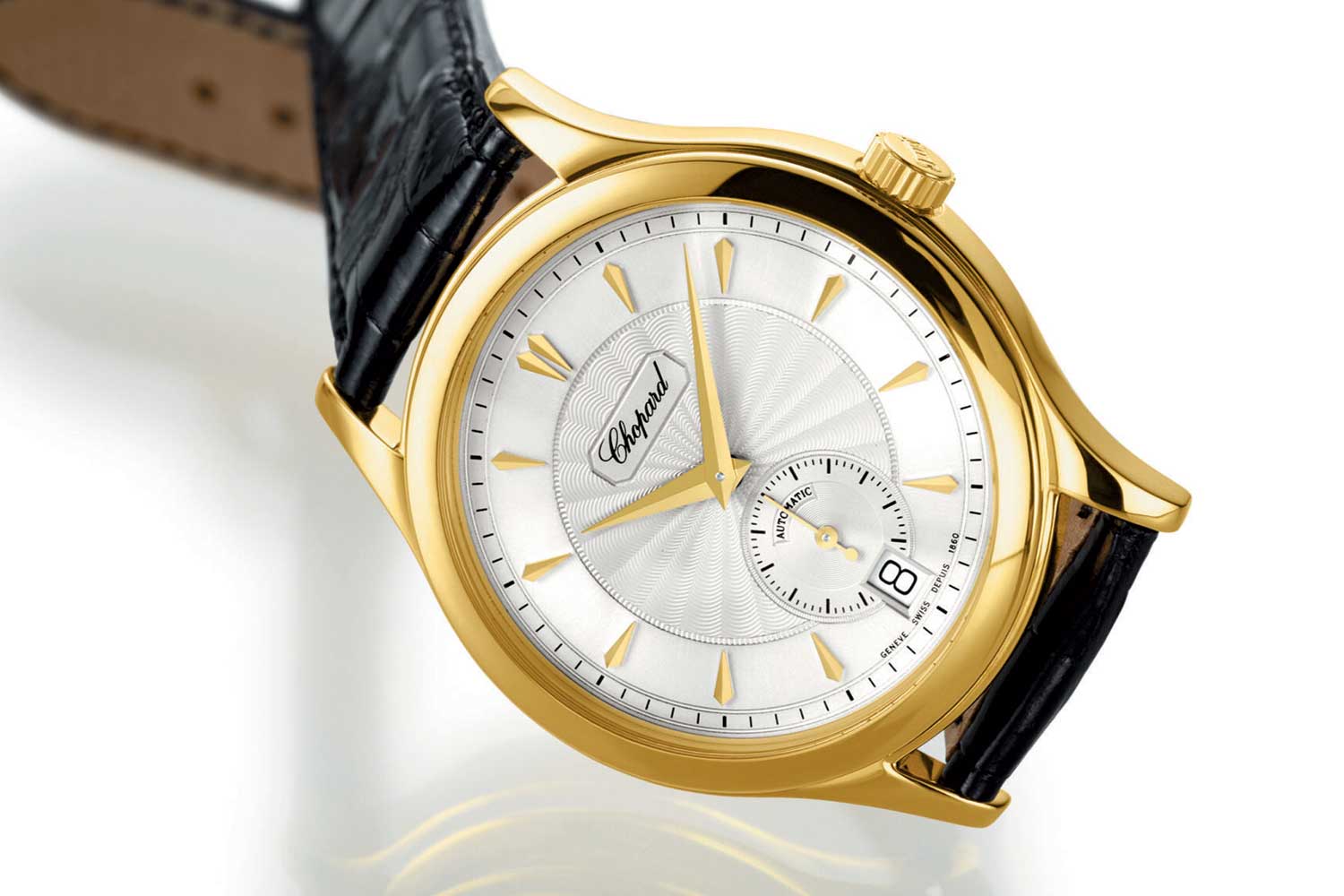
The first major result was the L.U.C 1860, introduced in 1997.
That watch remains important not because it chimed, but because it gave Chopard a foundation on which more complicated L.U.C projects could be built.
For Karl-Fritz Scheufele, it also became a personal entry point into watchmaking, a piece that helped turn childhood proximity to the family business into genuine interest.
From Strike One to the Full Strike
Chopard’s first step into audible watchmaking was the L.U.C Strike One.

It used a sonnerie au passage mechanism, chiming once every hour as the hour passed.
That may sound modest beside a minute repeater, but an automatic hourly strike inside a wristwatch is already a serious mechanical undertaking.
More importantly, it signalled Chopard’s intention to move beyond visual complications and into the emotional territory of sound.
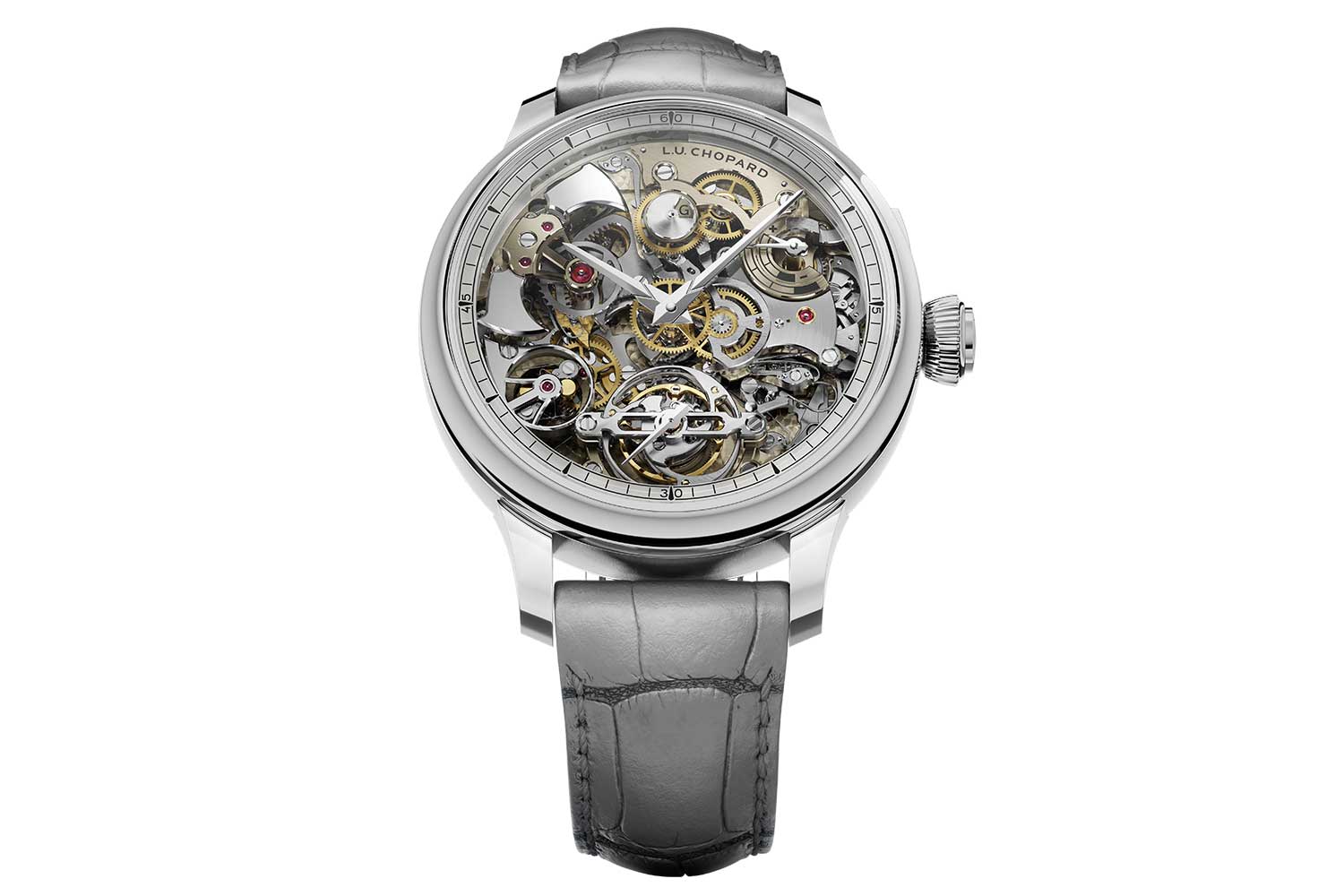
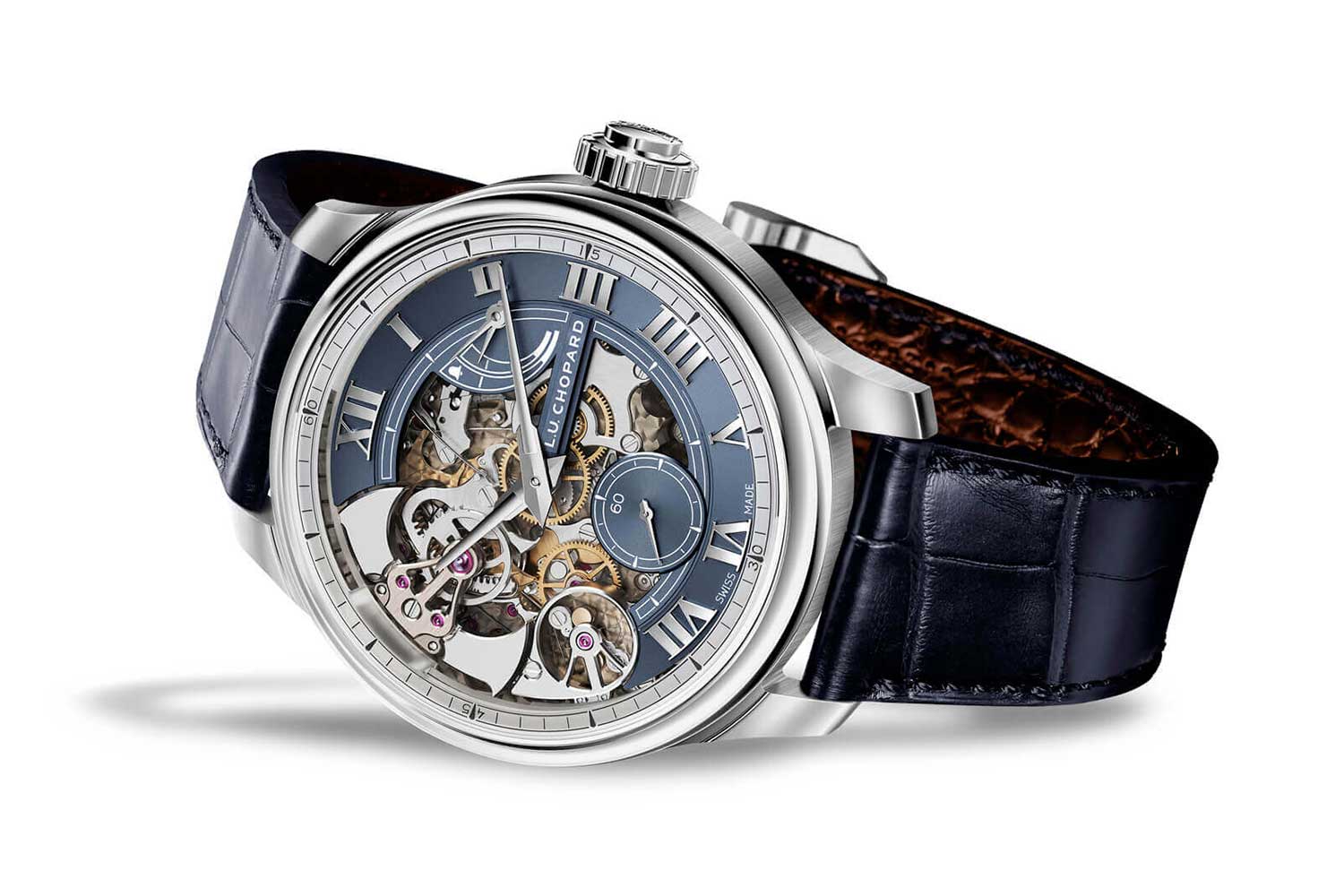
The L.U.C Full Strike pushed that idea much further.
The objective was not simply to make a minute repeater, but to make one with a different acoustic signature.
Karl-Friedrich Scheufele’s guiding image was the sound of a crystal glass being tapped at a dinner table, a clean note that cuts through a room without aggression.

That led Chopard toward a solution centred on sapphire crystal.
In a conventional minute repeater, the case material plays a major role in how sound is transmitted, with gold, platinum, titanium and steel all shaping the result in different ways.
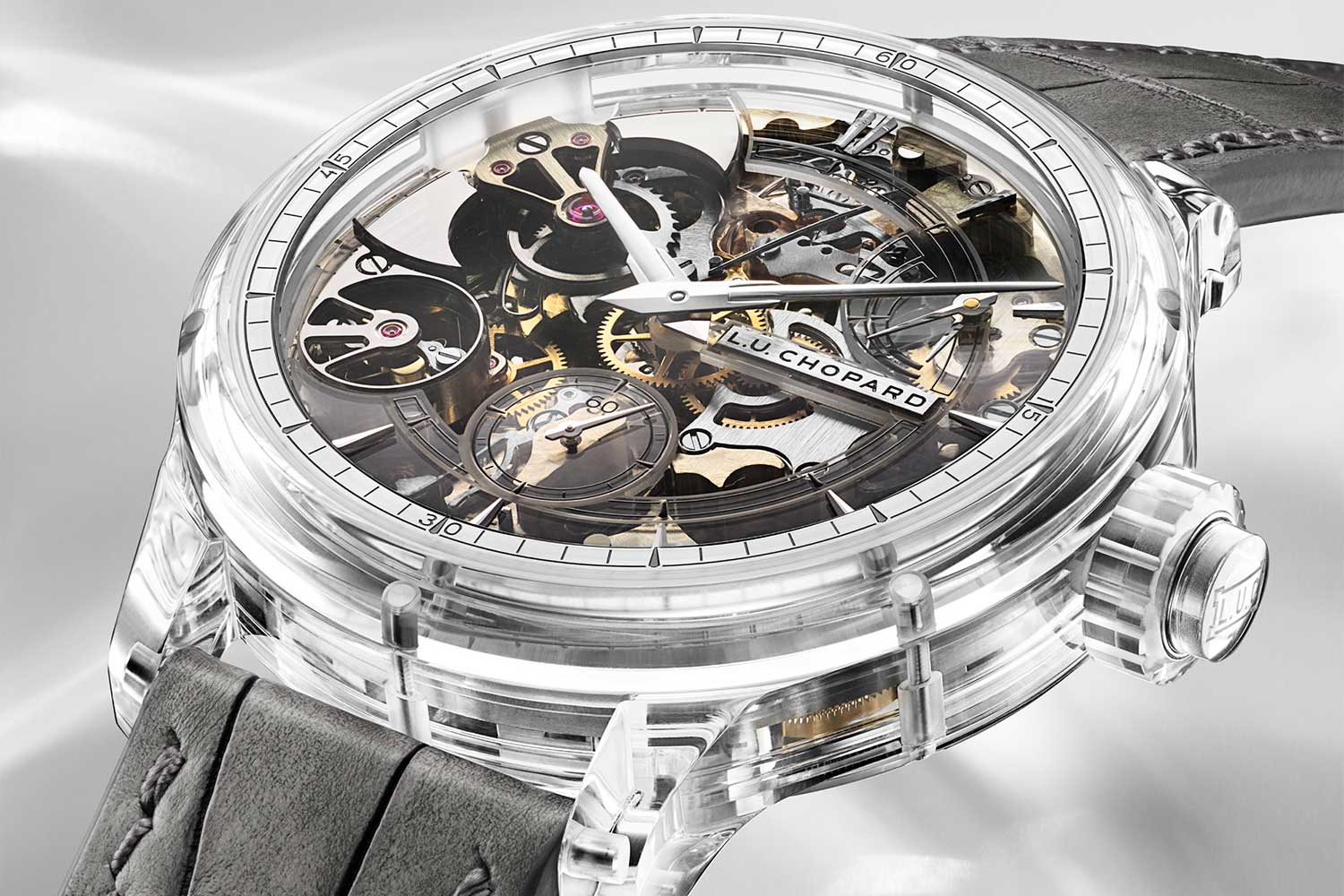
For the Full Strike, Chopard developed sapphire monobloc technology in which the gongs and watch crystal are made as one single piece.
The sound travels through the sapphire crystal and out of the watch, reducing the influence of the case material and giving the chime a clearer, more transparent quality.
It’s a technical idea with a very simple purpose. The watch should not merely strike the time, it should let the wearer hear the material speak.
The acoustic work behind the emotion
Chiming watches are often described in poetic terms, but the development work is rigorously analytical.
Chopard worked with acoustic specialists and tested watches in extremely silent rooms, where tiny differences in tone, volume and duration could be measured and refined.
The position of a hammer, the mass of a component, the shape of a gong and the material around it can all change the final note.
That level of tuning is closer to instrument-making than simple assembly.
It also has to happen inside a movement filled with hundreds of parts, many of them hand-finished and small enough to disappear forever if dropped on a workshop floor.
The L.U.C Full Strike’s achievement was recognised in 2017 when it received the Aiguille d’Or at the Grand Prix d’Horlogerie de Genève.
For Chopard, that prize marked a high point for a project that had demanded years of development and a willingness to rethink how a repeater should resonate.
Details & Specifications
| Brand | Chopard |
|---|---|
| Collection | L.U.C |
| Manufacture location | Fleurier |
| First L.U.C manufacture watch | L.U.C 1860, presented in 1997 |
| First chiming step | L.U.C Strike One with sonnerie au passage |
| Key chiming model | L.U.C Full Strike |
| Complication | Minute repeater |
| Acoustic system | Sapphire monobloc technology with gongs and crystal made as one piece |
| Recognition | Aiguille d’Or at the 2017 Grand Prix d’Horlogerie de Genève |
Chopard’s chiming watches appeal to collectors who want more than mechanical density or rare finishing.
They ask the owner to experience time without looking, through a sound that has been engineered, tuned and shaped by hand.
That makes the Full Strike and its predecessors an important part of the L.U.C story, not just as technical achievements, but as reminders that fine watchmaking can still speak in a voice of its own.