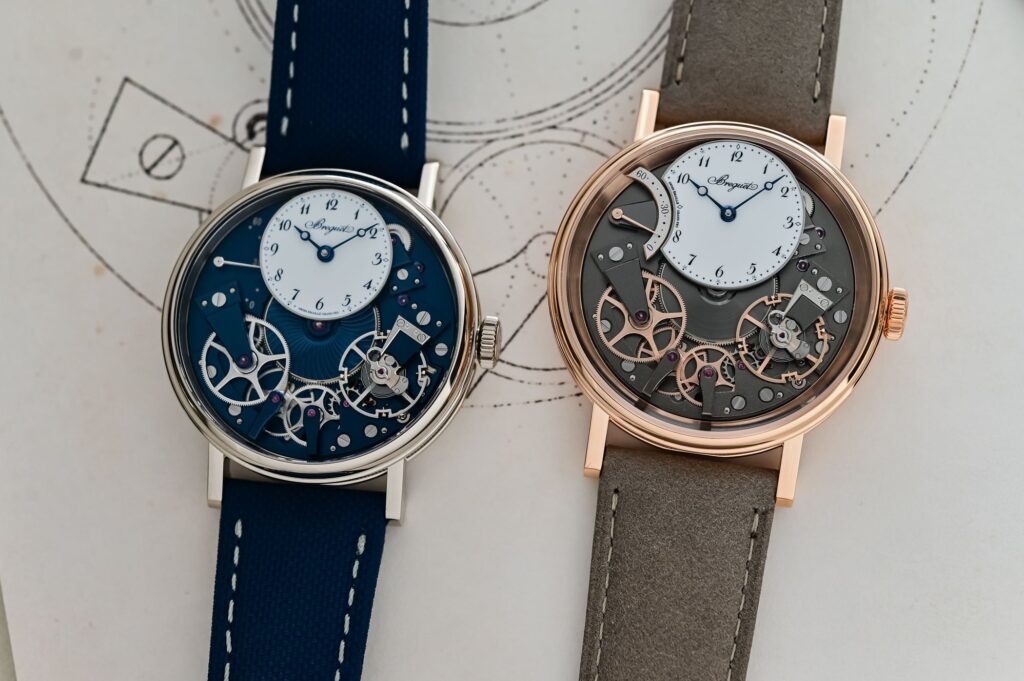
Breguet’s Tradition collection sits in a rare place within modern watchmaking.
It isn’t simply a vintage tribute, and it isn’t just an openworked exercise in mechanical theatre. Introduced in 2005, the collection took the architecture of Abraham-Louis Breguet’s 1796 Souscription watch and reimagined it for the wrist, with the movement’s structure brought to the dial side.
That idea still feels unusually direct today.
At a glance
- Breguet launched the Tradition collection in 2005 with the hand-wound Reference 7027.
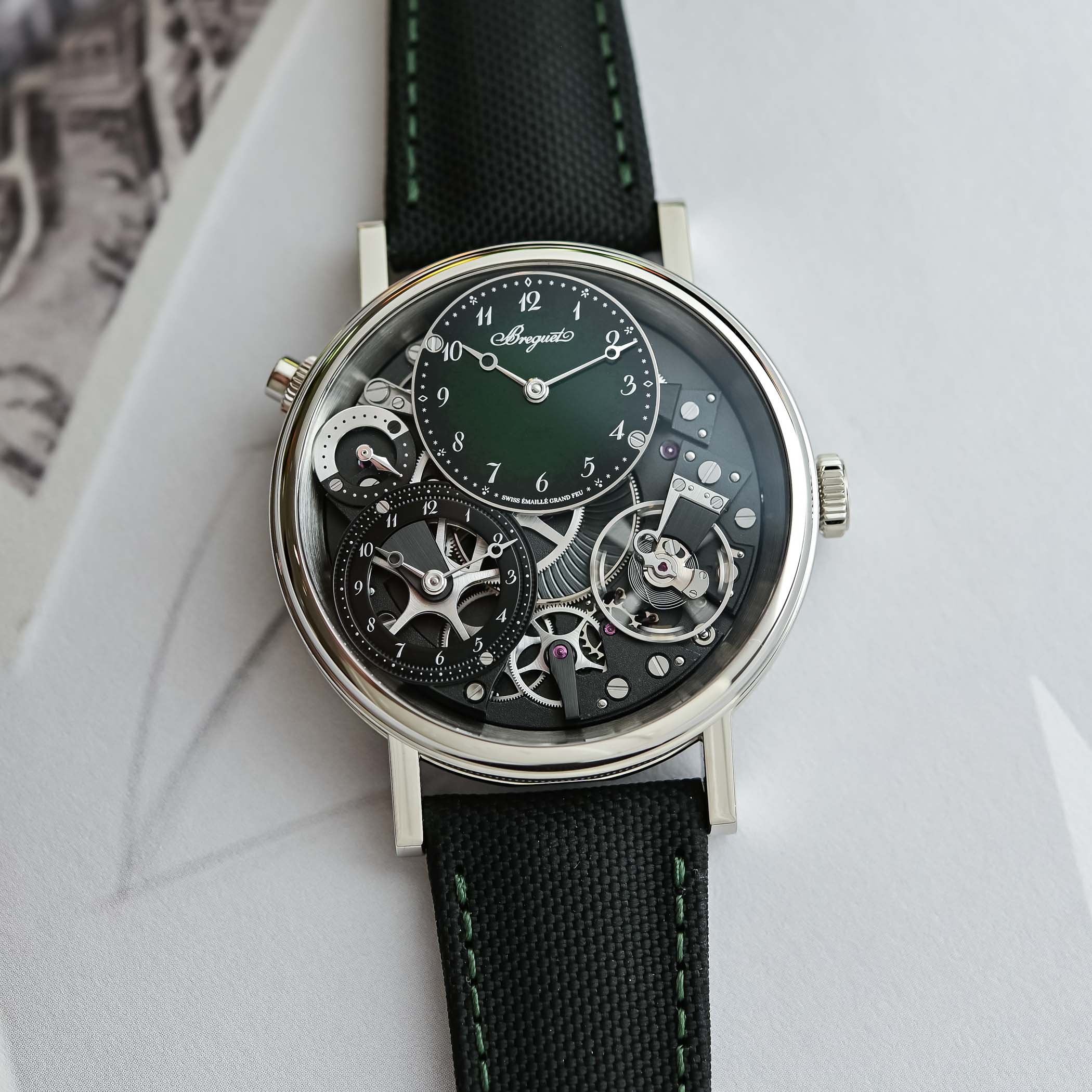
- The design draws from the 1796 Souscription watch, with a central barrel, stepped bridges and a dial-side movement layout.
- Later models expanded the concept with automatic winding, tourbillon architecture, fusée-and-chain transmission and retrograde date displays.
The Souscription idea behind the collection
Abraham-Louis Breguet is often remembered first for the tourbillon, patented in 1801, but his influence went well beyond invention alone.
His 1796 Souscription watch was a commercial and mechanical turning point because it challenged the way fine watches were ordered, built and sold.
At the time, watches and clocks were commonly commissioned by aristocratic clients, with delivery stretching over months, years or longer.
Breguet’s Souscription model worked differently.
Clients registered with a 25 percent down payment, giving the watchmaker capital to produce the watch before collecting the balance at delivery.
The watch itself was deliberately simplified to make this possible.
It used one case style, a white enamel dial with a single hand, and a standardised movement architecture that could be produced in series rather than treated as a one-off commission.
That practical thinking matters because the Tradition collection doesn’t merely borrow old visual codes.
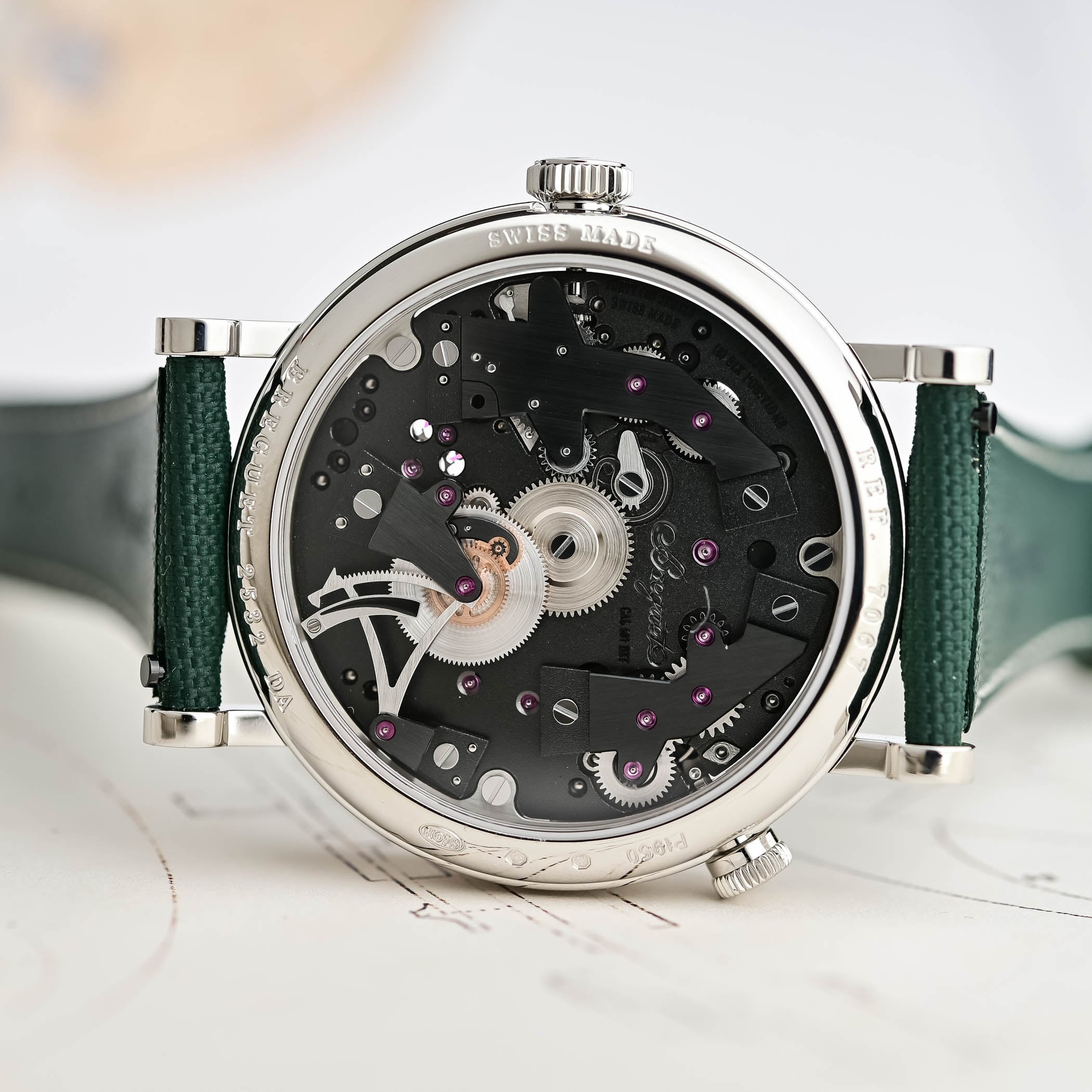
It revives the underlying logic of the Souscription, placing the barrel at the centre and arranging the visible mechanism around it in a way that feels architectural rather than decorative.
A pocket-watch movement brought to the wrist
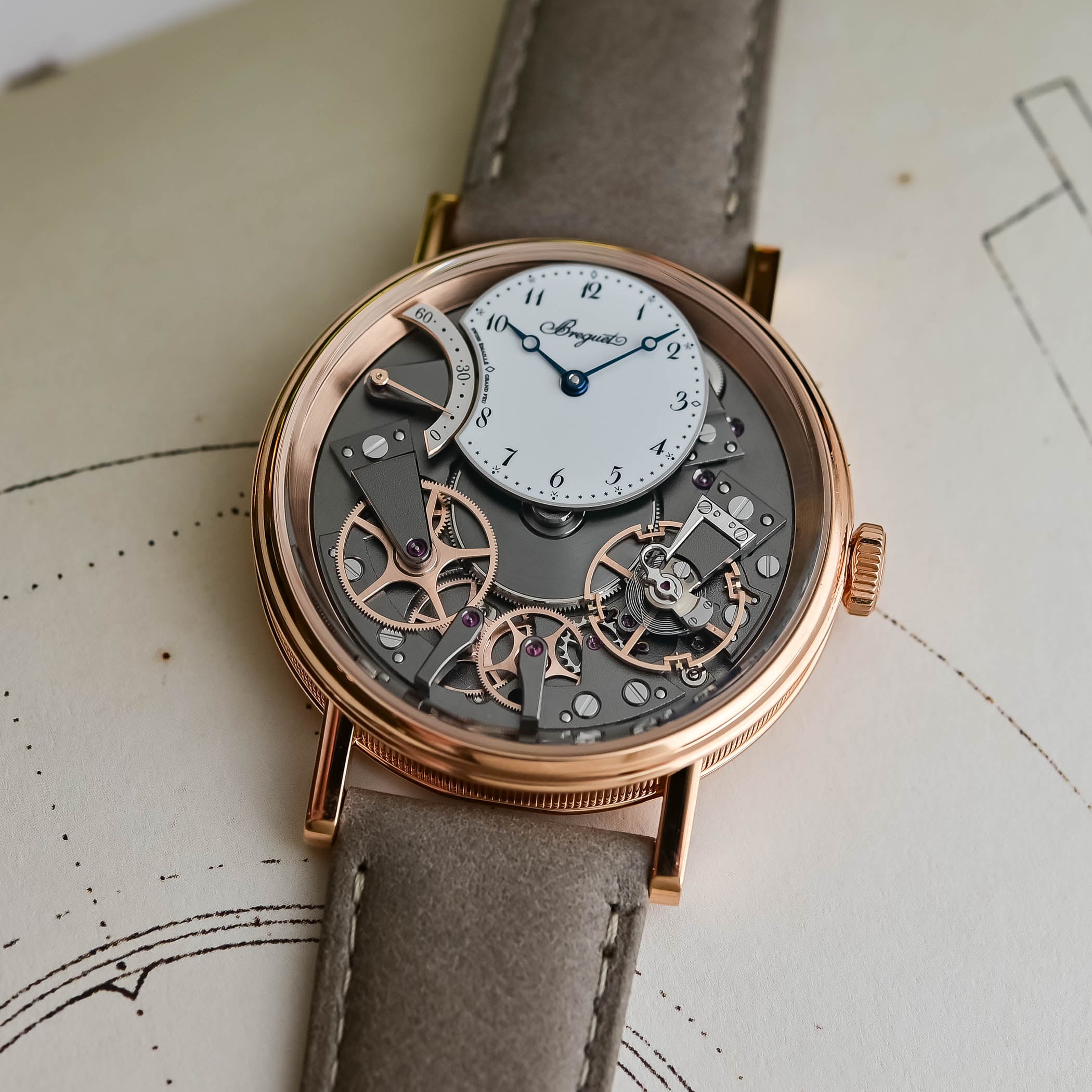
When the Tradition Reference 7027 arrived in 2005, its proposition was strikingly different from most contemporary high-end watch design.
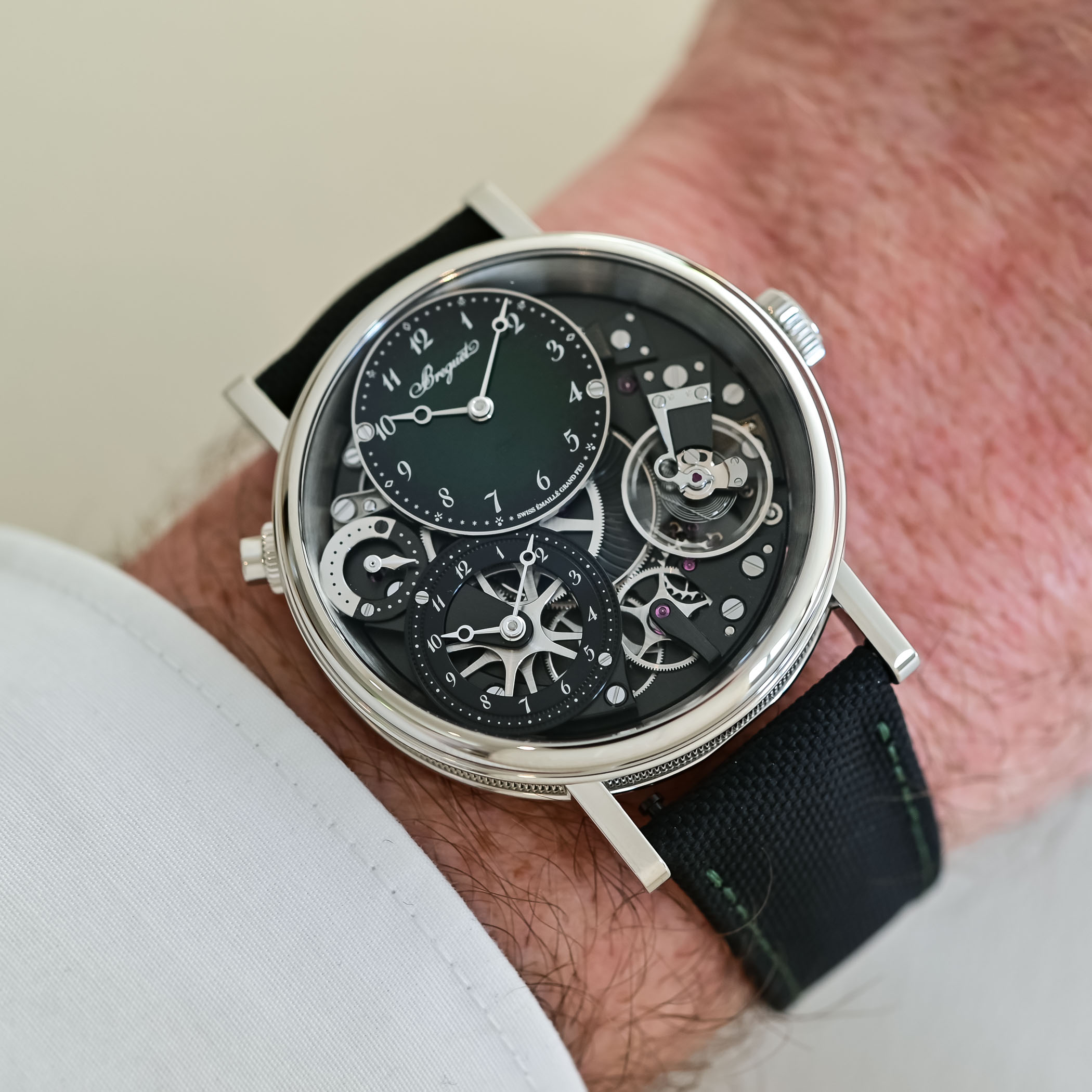
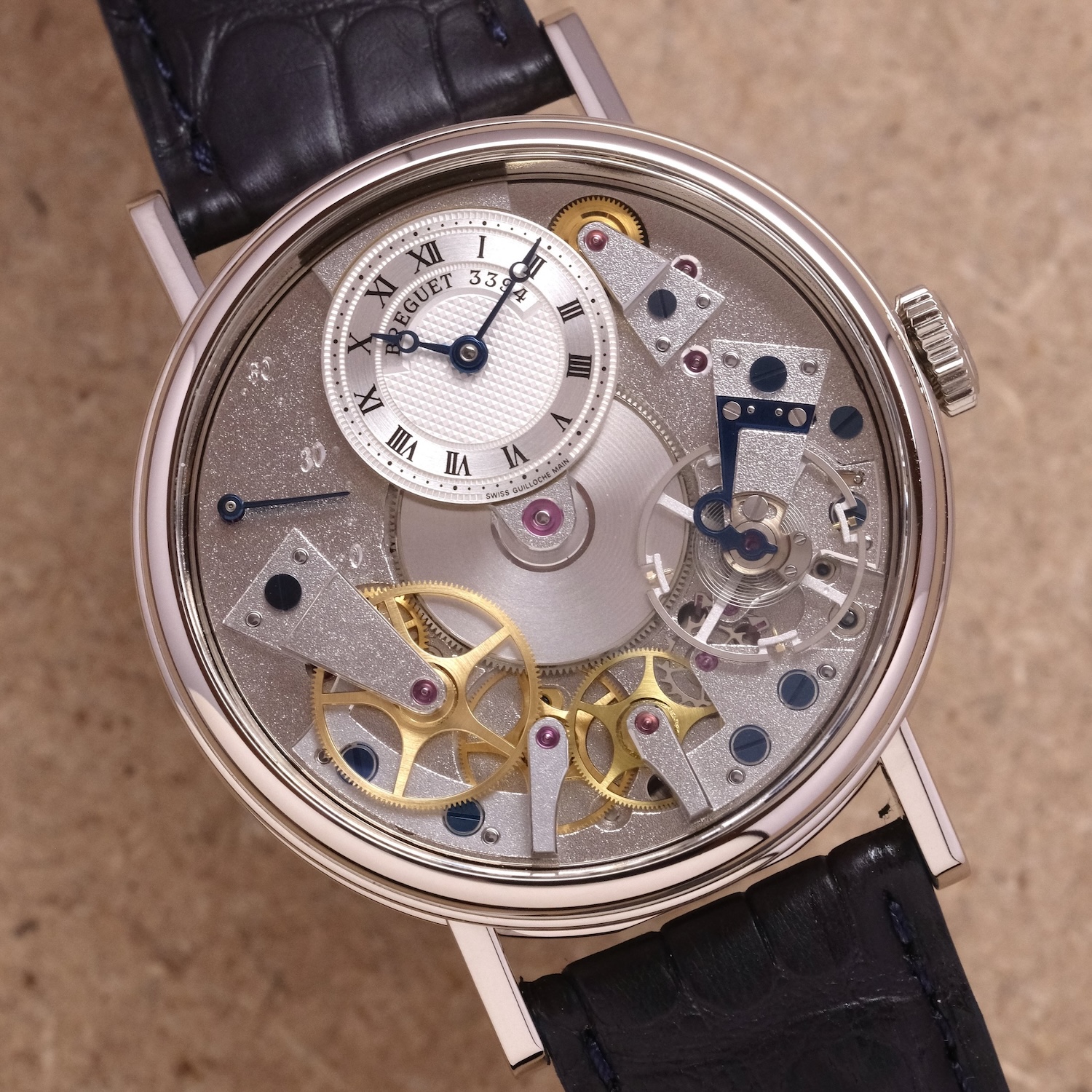
Breguet effectively translated the character of an antique pocket-watch movement into a wristwatch, then placed the mechanical landscape on the front of the watch.
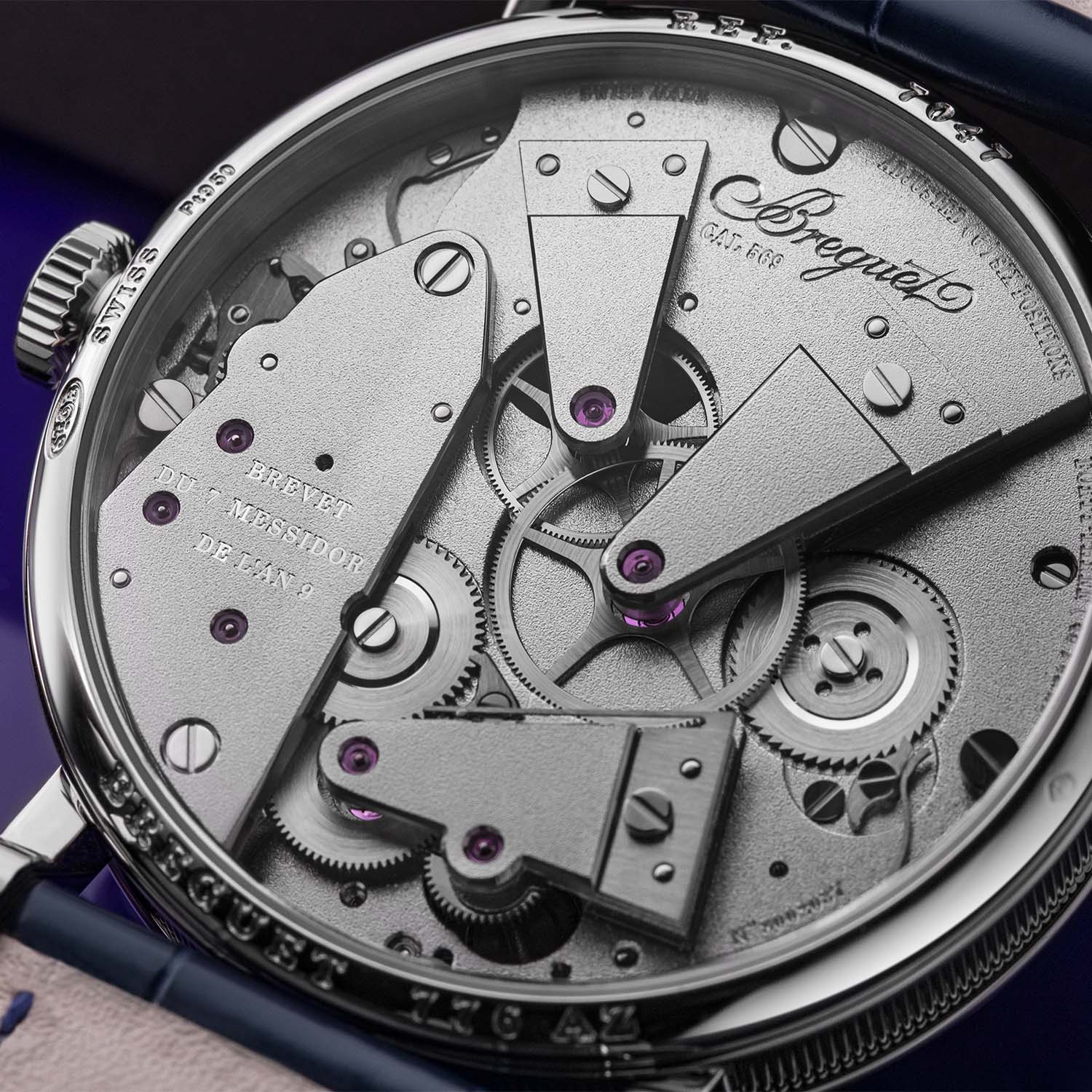
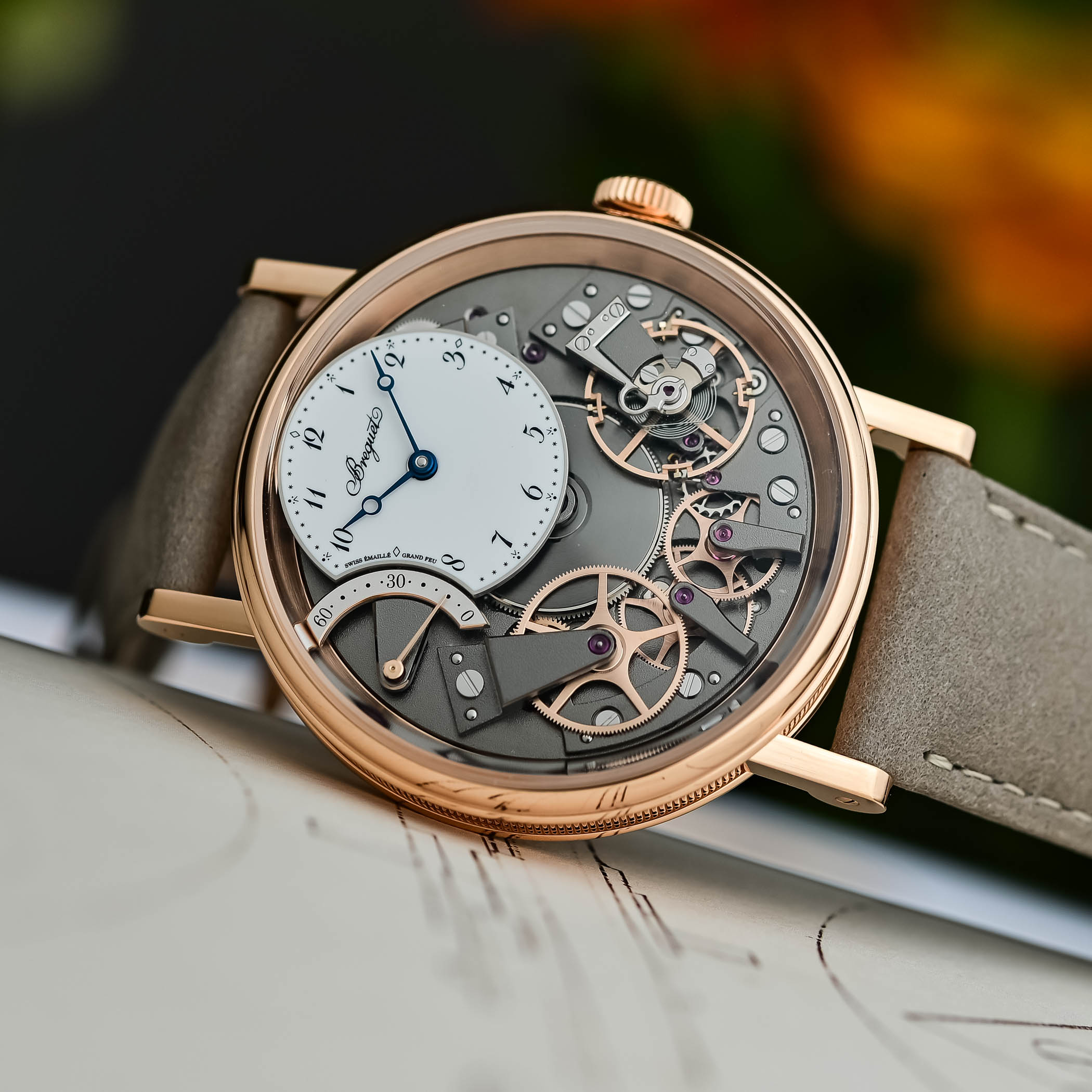
The collection’s visual language is built around the central barrel, triangular stepped bridges and a shock-absorber over the balance staff shaped in the spirit of Breguet’s old para-chute system.
That structure gave the watch its identity immediately.
Instead of treating the dial as a flat stage hiding the mechanics beneath it, the Tradition turns the movement into the composition.
The smaller time display retains familiar Breguet signatures, including guilloché work, the house’s distinctive numerals and the hand shapes closely associated with the brand.
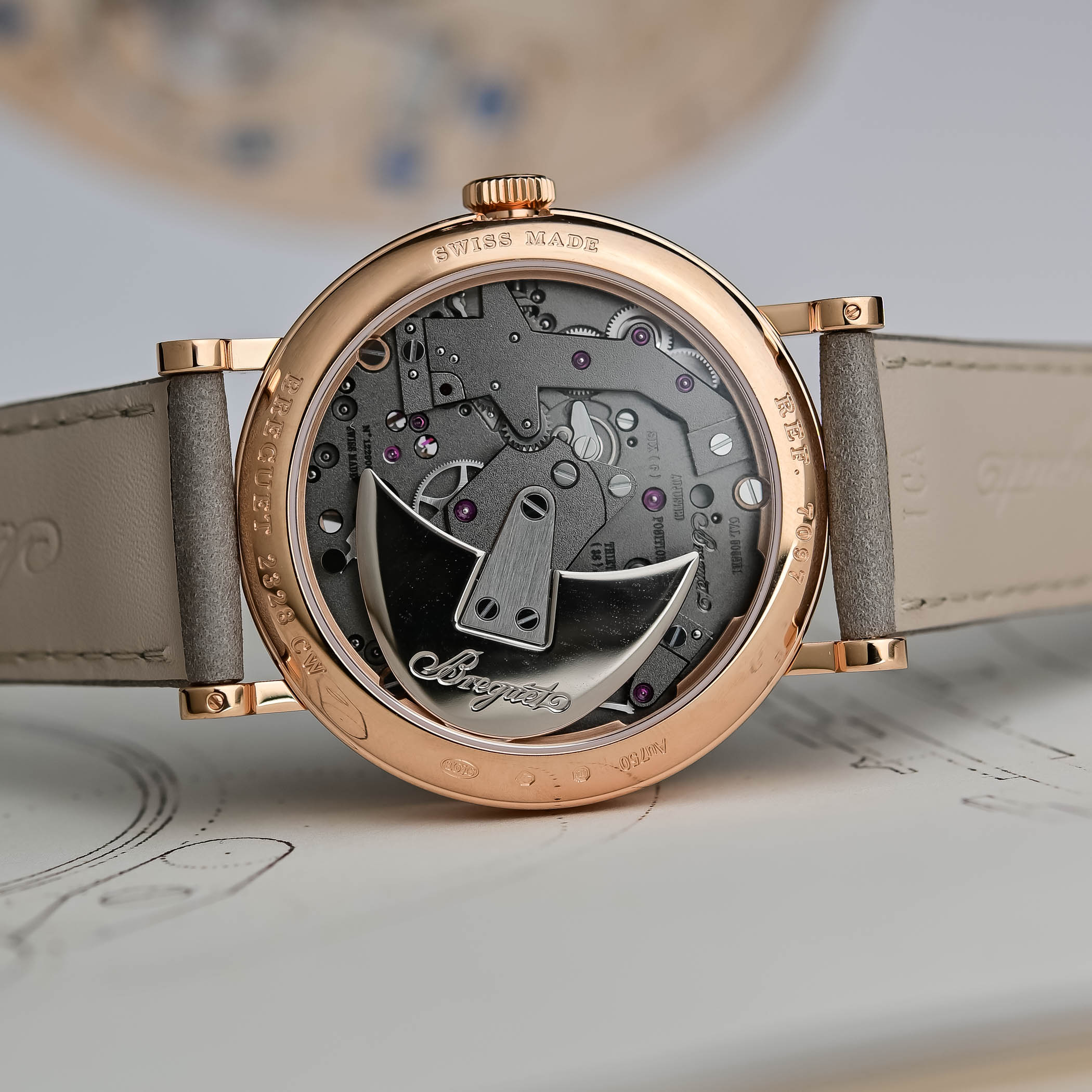
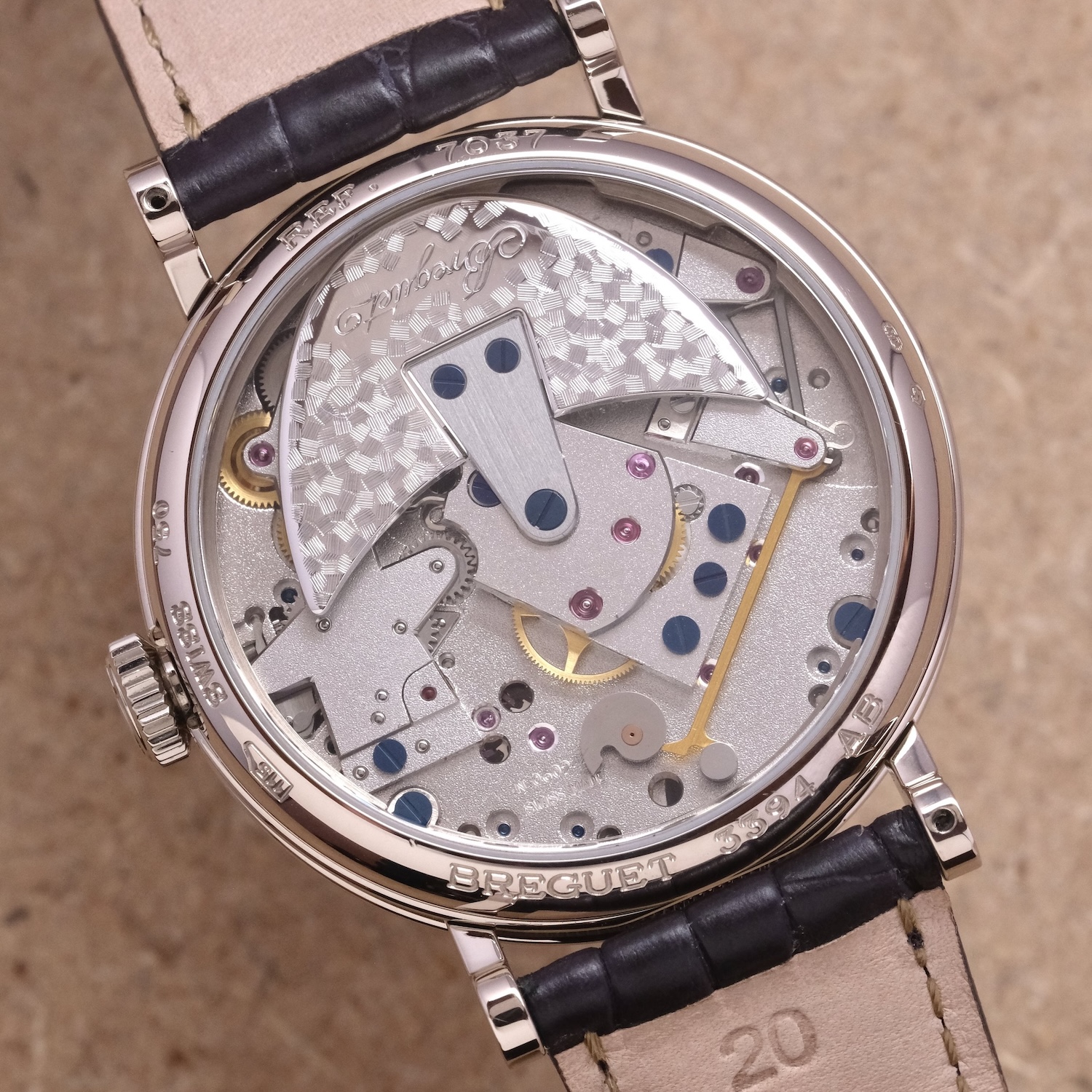
The automatic Reference 7037 followed in 2006 and showed that the idea was not limited to a single hand-wound novelty.
It became a platform, one capable of carrying different complications while preserving the same essential mechanical grammar.
Complications in the Tradition language
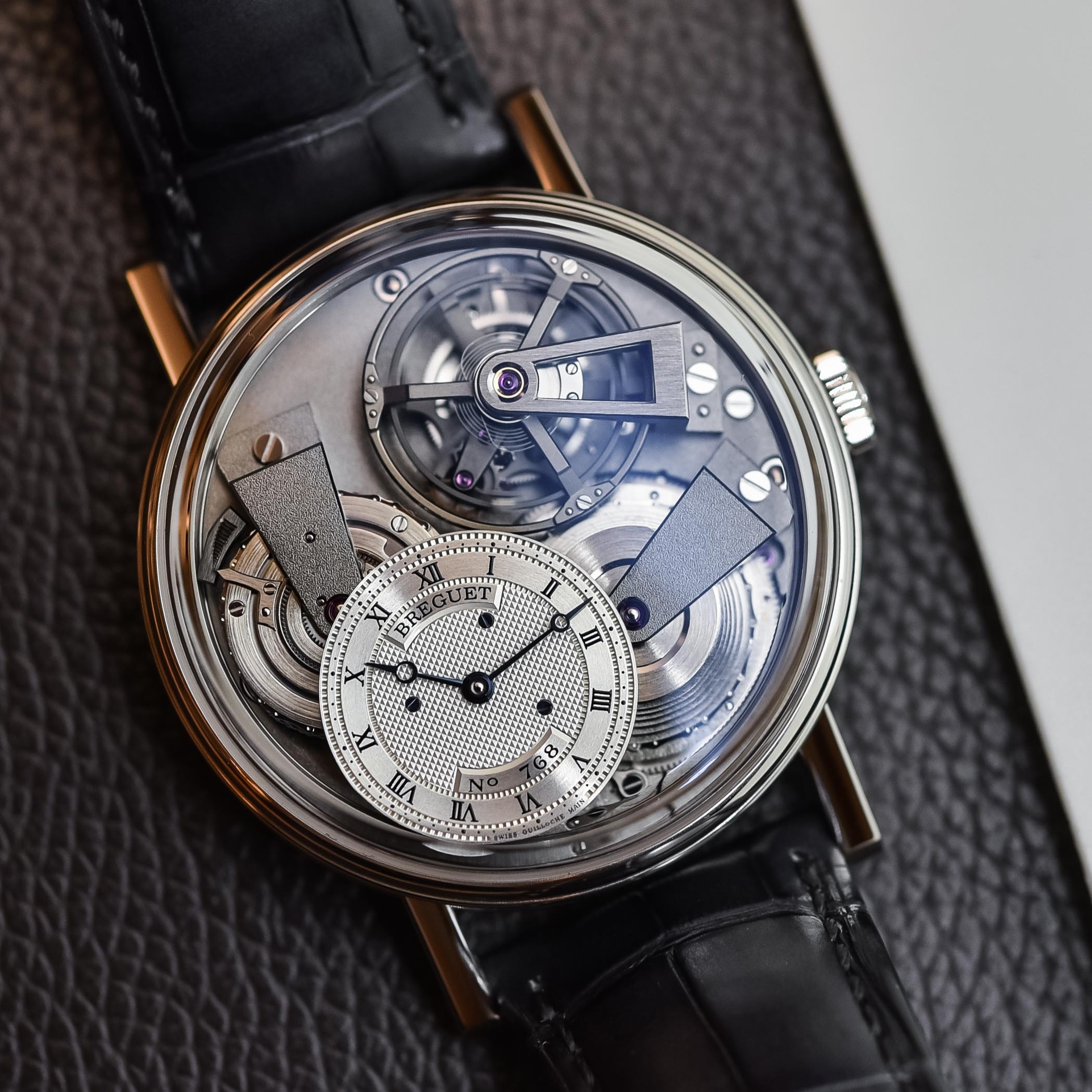
The Tradition Tourbillon 7047 makes a natural connection to Abraham-Louis Breguet’s most famous invention.
Its one-minute tourbillon sits at the upper right of the dial-side construction, held beneath a single stepped bridge.
Below it, the fusée-and-chain mechanism adds another layer of historical watchmaking, using a chain and conical components to help deliver more consistent force across the running time.
Yet the 7047 isn’t a purely nostalgic watch.
The tourbillon escapement incorporates modern materials including titanium and silicon, making the piece a clear example of how the Tradition collection balances historical form with contemporary engineering.
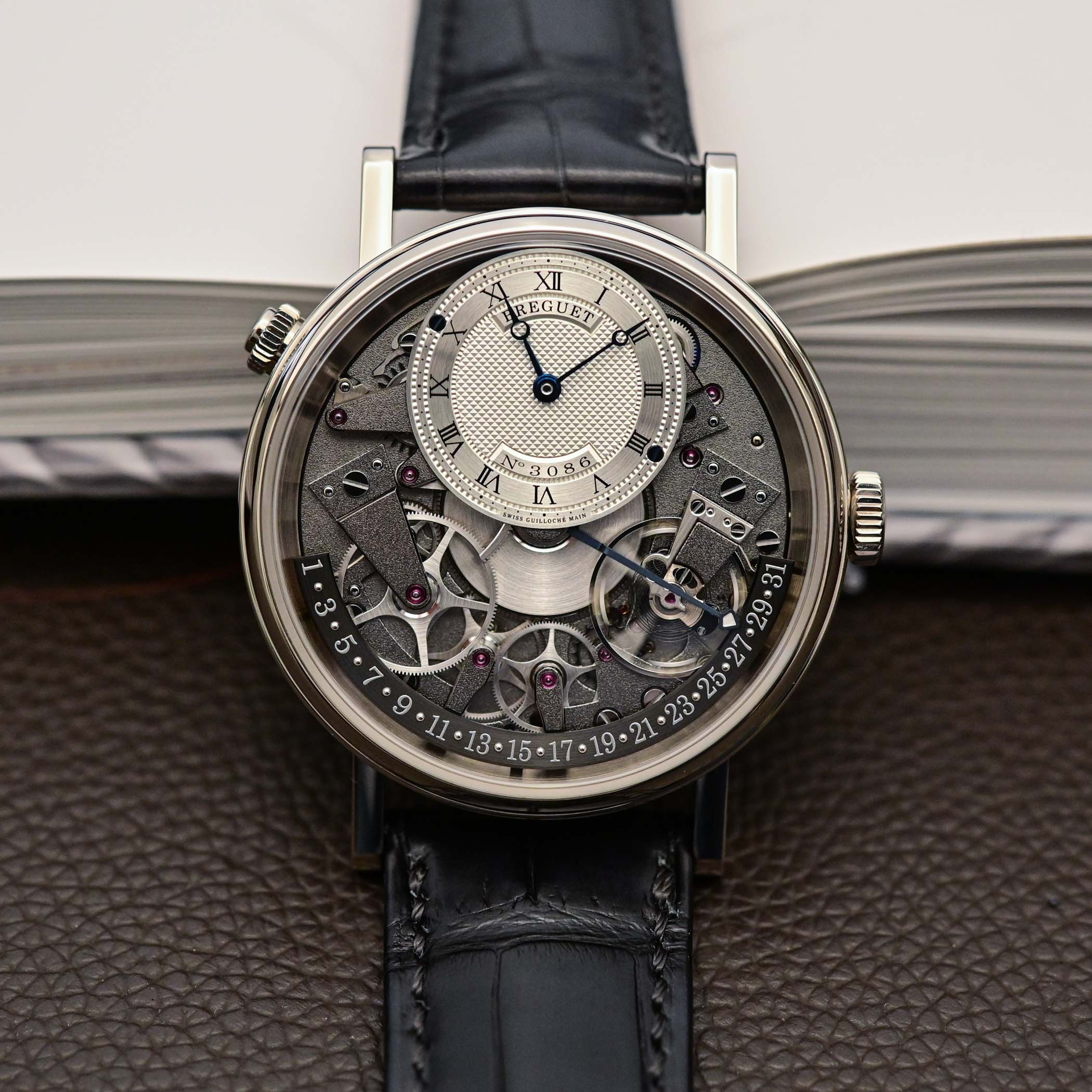
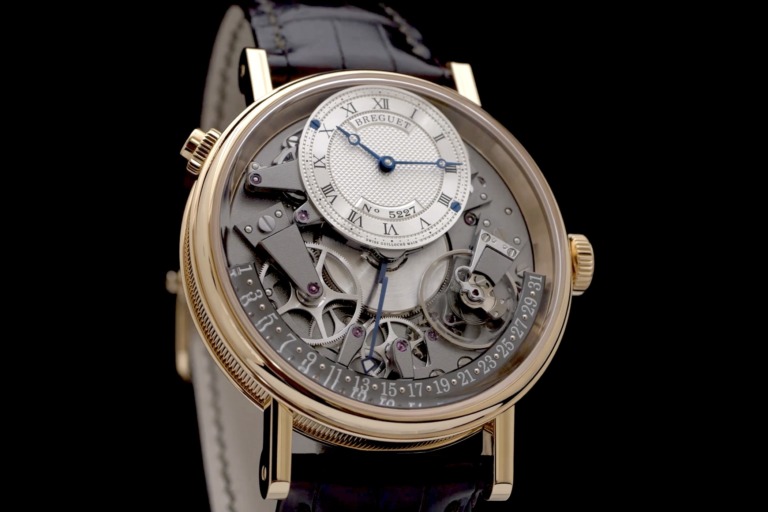
The Tradition Quantième Rétrograde 7597 takes a different route, using the collection’s architecture to frame a retrograde date display.
Its Clous de Paris guilloché hours-and-minutes dial is positioned at noon, while the lower half of the watch is used for an arcing date scale.
A central hand travels from the 1st to the 31st before snapping back to begin the next month.
Because of the movement layout, the date hand has to clear components including the balance and centre wheel, which gives a familiar complication an unusually sculptural role.
That is where the Tradition line is at its best.
It doesn’t add complexity simply to fill space; it makes each complication negotiate with the architecture that defines the collection.
Details & Specifications
| Brand | Breguet |
|---|---|
| Collection | Tradition |
| Collection debut | 2005 |
| First reference | Tradition 7027, hand-wound |
| Automatic follow-up | Tradition 7037, introduced in 2006 |
| Historical inspiration | Breguet Souscription watch of 1796 |
| Key architecture | Central barrel, triangular stepped bridges and para-chute-style balance protection |
| Notable complication | Tradition Tourbillon 7047 with one-minute tourbillon and fusée-and-chain mechanism |
| Notable calendar model | Tradition Quantième Rétrograde 7597 with retrograde date |
| Modern technical elements | Titanium and silicon used in the tourbillon escapement of the 7047 |
The enduring appeal of the Breguet Tradition collection is that it makes history functional rather than ornamental.
For collectors who care about movement architecture, brand continuity and the long arc of watchmaking ideas, it remains one of the most convincing bridges between Abraham-Louis Breguet’s workshop and contemporary mechanical watchmaking.