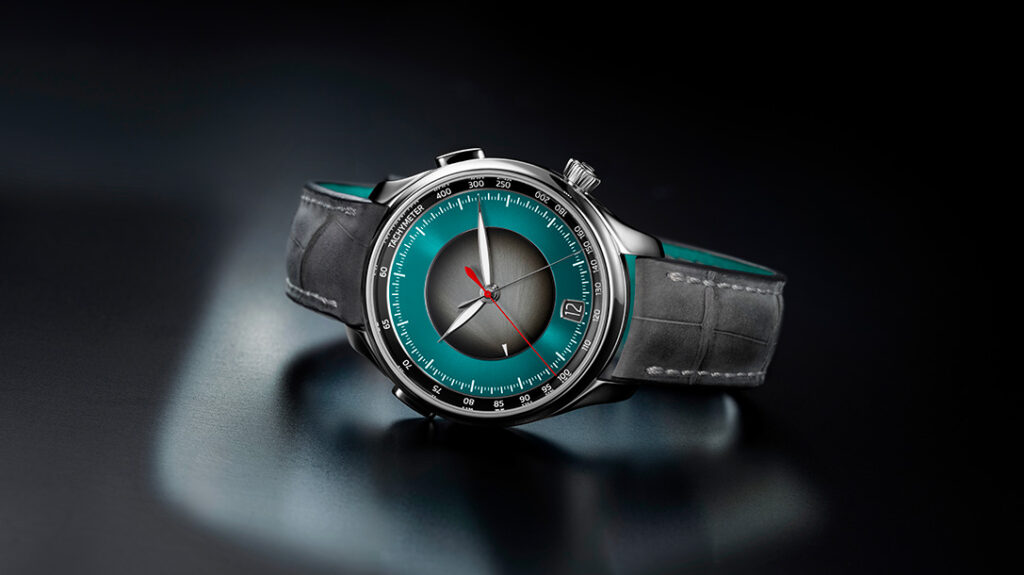
H. Moser & Cie has a particular talent for making complicated watches look deceptively simple.
The Endeavour Flyback Chronograph Dual Time Date follows that instinct, taking three practical complications and arranging them with the calm restraint expected from the Schaffhausen brand.
It’s built as a travel watch, but not the overburdened kind that asks the wearer to decode a crowded dial every time they land somewhere new.
At a glance
- H. Moser & Cie has introduced the Endeavour Flyback Chronograph Dual Time Date, combining a flyback chronograph, second time zone and date display.
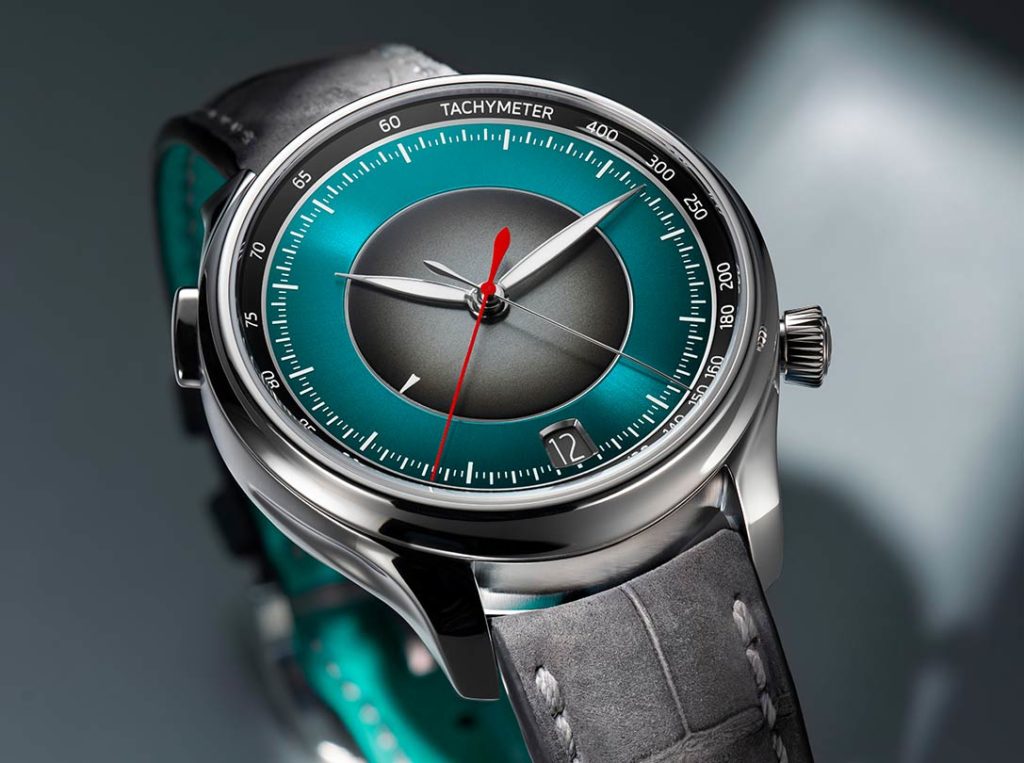
- The watch uses centralised chronograph hands, a smoked Blackor disc for the second time zone and an ethereal turquoise dial with no sub-dials.
- Developed with Agenhor, it runs on the hand-wound HMC 730 calibre with a 72-hour power reserve.
A travel chronograph with a quieter dial
The most interesting decision here is what H. Moser & Cie chose not to put on the dial.
There are no chronograph sub-dials interrupting the layout, which immediately gives the watch a more open and less technical feel than many multi-complication travel pieces.
The dial itself is described as an ethereal turquoise, a colour choice that keeps the watch firmly within Moser’s modern visual language while giving the Endeavour case a more relaxed character.
Chronograph information is carried by central hands, with a red seconds hand and a rhodium-plated minutes hand handling elapsed time in a direct, legible way.
The second time zone is integrated through a smoked Blackor central disc, marked by a discreet luminescent arrow rather than an oversized hand or separate register.
A peripheral minute track and tachymeter scale add an instrumental edge, but the overall impression remains clean rather than crowded.
The grey alligator leather strap, finished with a nubuck texture, reinforces that balance between function and understatement.
The HMC 730 brings Agenhor complexity into Moser form
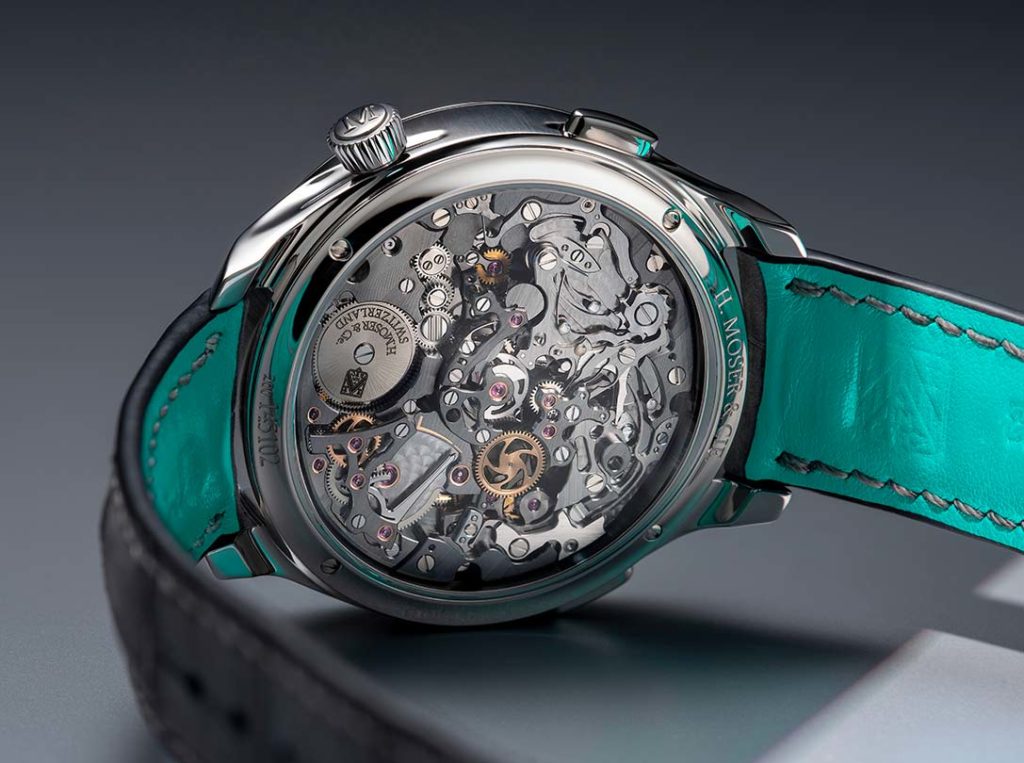
The movement is the hand-wound HMC 730, developed in collaboration with Agenhor.
That partnership matters because the watch is less about stacking functions for show and more about making them feel natural on the wrist.
The calibre uses a column wheel and a horizontal micro-toothed clutch, with a flyback mechanism that works on both the chronograph seconds and minutes hands.
In practical terms, the wearer can reset and restart the chronograph in a single action, a useful feature for timing consecutive intervals while travelling or moving through a busy day.
The dual mainspring barrel gives the movement up to 72 hours of power reserve, which suits the watch’s travel brief by allowing it to rest for a couple of days without immediately stopping.
The date display also gets a useful piece of engineering, as it can be adjusted in either direction without risking damage to the movement.
That detail may sound minor, but it’s exactly the kind of practical refinement that separates a genuinely wearable complicated watch from one that feels delicate in daily use.
Details & Specifications
| Brand | H. Moser & Cie |
|---|---|
| Model | Endeavour Flyback Chronograph Dual Time Date |
| Case size | 42mm |
| Case material | Steel |
| Dial | Turquoise with peripheral minute track and tachymeter scale |
| Movement | Hand-wound HMC 730 calibre |
| Complications | Flyback chronograph, second time zone, date |
| Chronograph display | Central red seconds hand and rhodium-plated minutes hand |
| Second time zone | Smoked Blackor central disc with luminescent arrow |
| Power reserve | Up to 72 hours |
| Movement features | Column wheel, horizontal micro-toothed clutch, dual mainspring barrel |
| Strap | Grey alligator leather with nubuck finish |
The Endeavour Flyback Chronograph Dual Time Date feels aimed at collectors who like serious mechanics but don’t want their wristwatch to announce every gear and lever at first glance.
It’s a complicated travel watch that keeps its composure, which is often the most Moser thing a Moser can do.