Jumping hour watches have a way of making time feel mechanical again, even when the display looks almost digital.
Instead of an hour hand creeping around the dial, the hour changes in an instant, opening the door to apertures, rotating cubes, retrograde displays and optical sleight of hand.
This year’s strongest examples show just how wide the format can stretch, from Louis Vuitton’s sculptural Spin Time to De Bethune’s moonphase theatre and Amida’s 1970s dashboard energy.
At a glance
- Jumping hour watches are enjoying renewed attention across both established luxury houses and expressive independents.
- The standout designs use instant hour changes through rotating cubes, apertures, discs, prisms and retrograde indications.
- Prices in this selection range from roughly EUR 5,500 to EUR 86,000, with several pieces using limited or tightly controlled availability.
The appeal of the instant hour change
A jumping hour display is one of watchmaking’s most satisfying small dramas.
For 59 minutes, the watch builds tension quietly; then, at the top of the hour, a numeral snaps forward with a precision that feels closer to choreography than ordinary timekeeping.
It’s also a useful reminder that mechanical creativity doesn’t have to mean piling on traditional complications.
By removing the conventional hour hand, brands can rethink the entire dial architecture, whether that means making the hour window the focal point or hiding the mechanism behind a playful visual trick.
Louis Vuitton and De Bethune turn the display into theatre
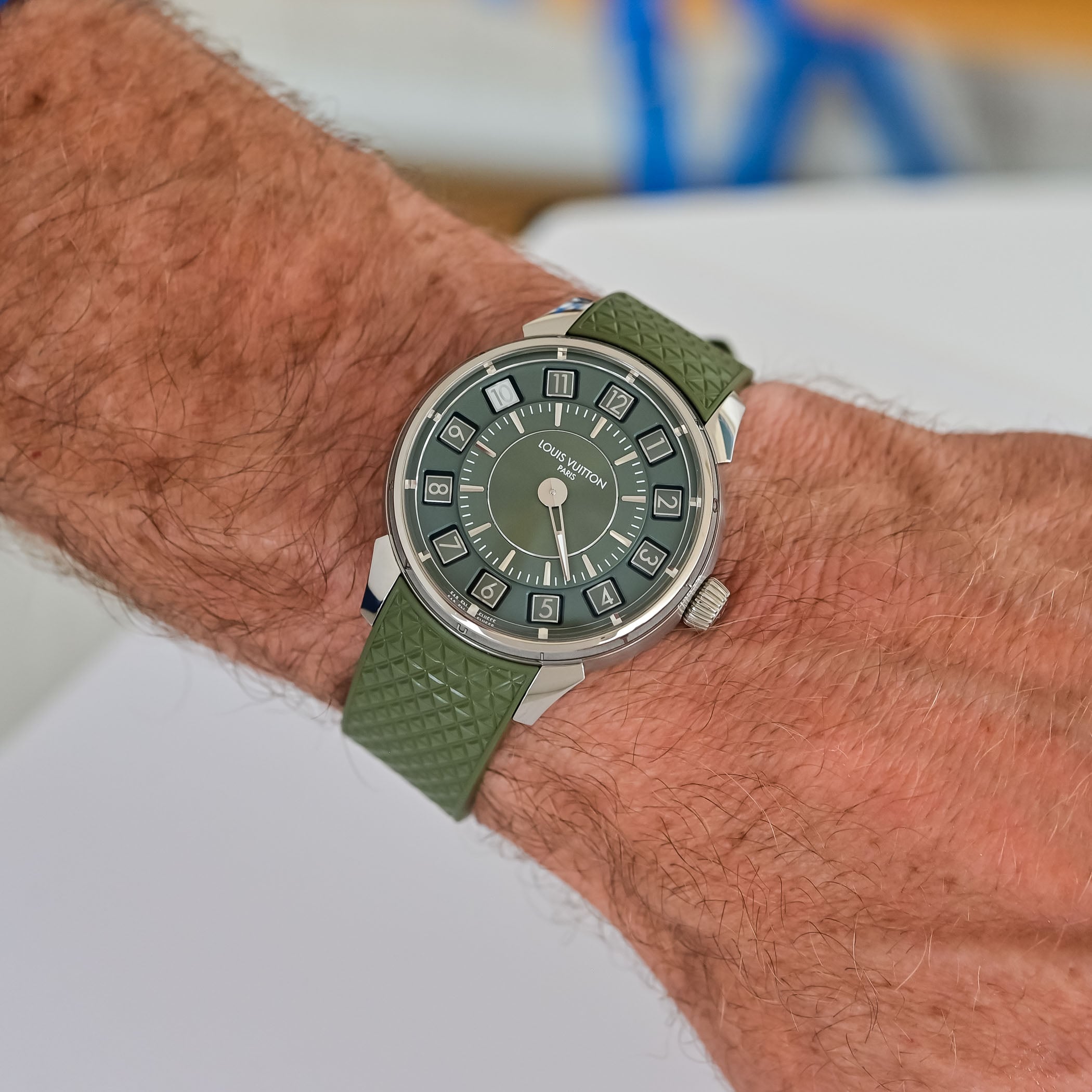
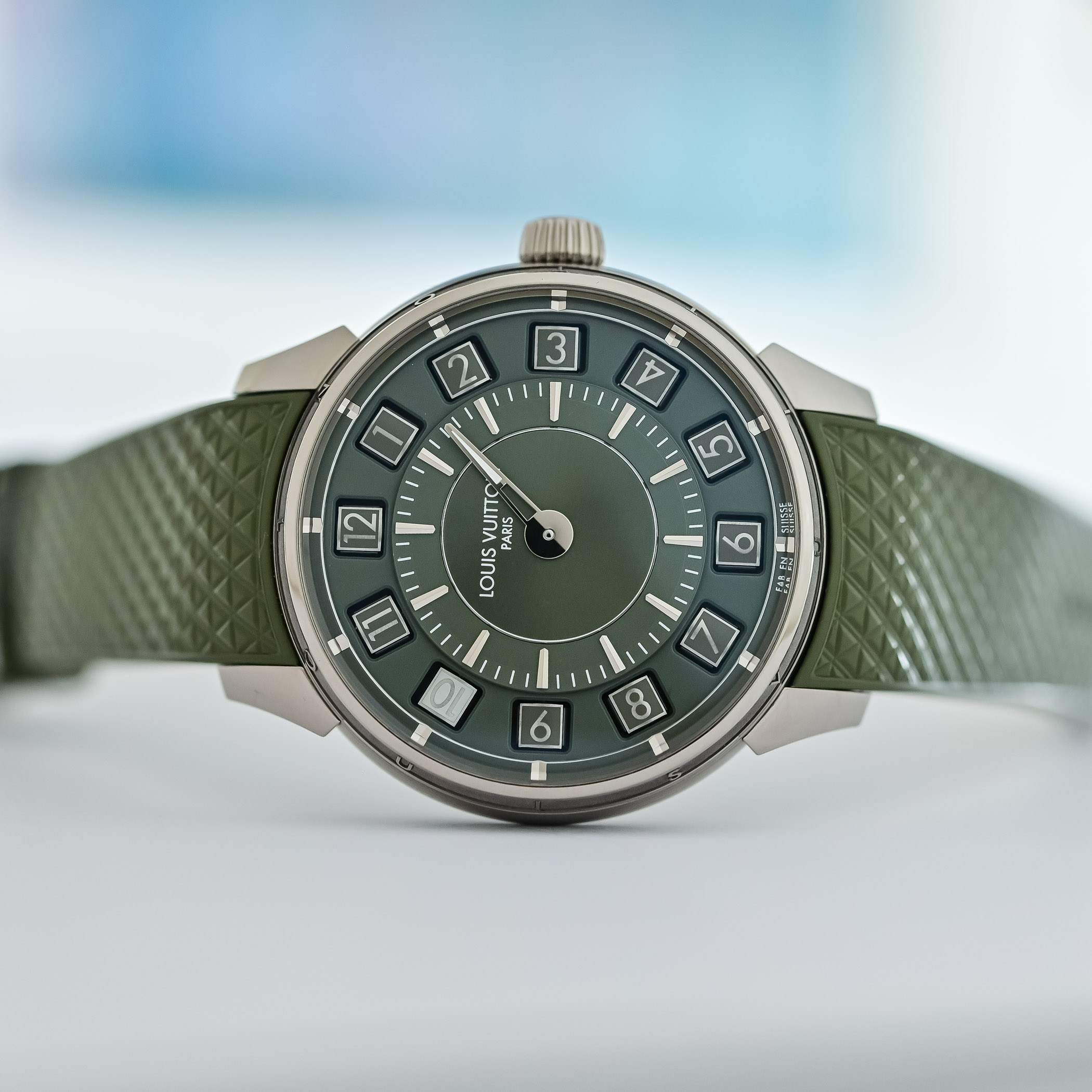
Louis Vuitton’s Tambour Spin Time is the most extroverted watch here, and it leans fully into the charm of physical motion.
In the khaki green closed-dial version, the hour is shown by rotating cubes set around the dial, each making a 180-degree turn on the hour so the light side marks the current time.
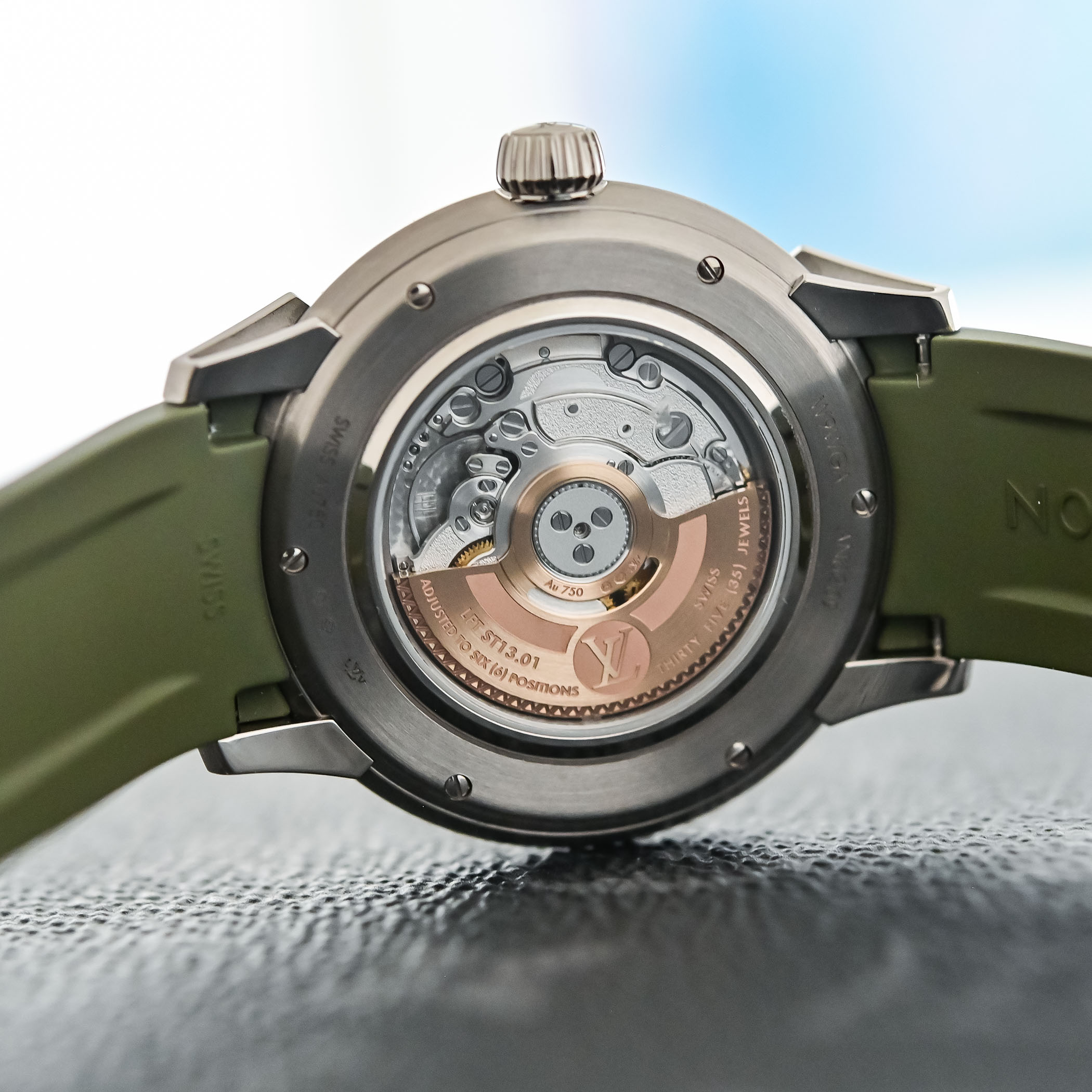
A central minute hand keeps the reading intuitive, which matters because the Spin Time could easily have become a showpiece at the expense of usability.
Instead, it feels like a Louis Vuitton idea executed with proper watchmaking discipline, housed in a 39.5mm white gold case and powered by the in-house automatic calibre ST13.01.
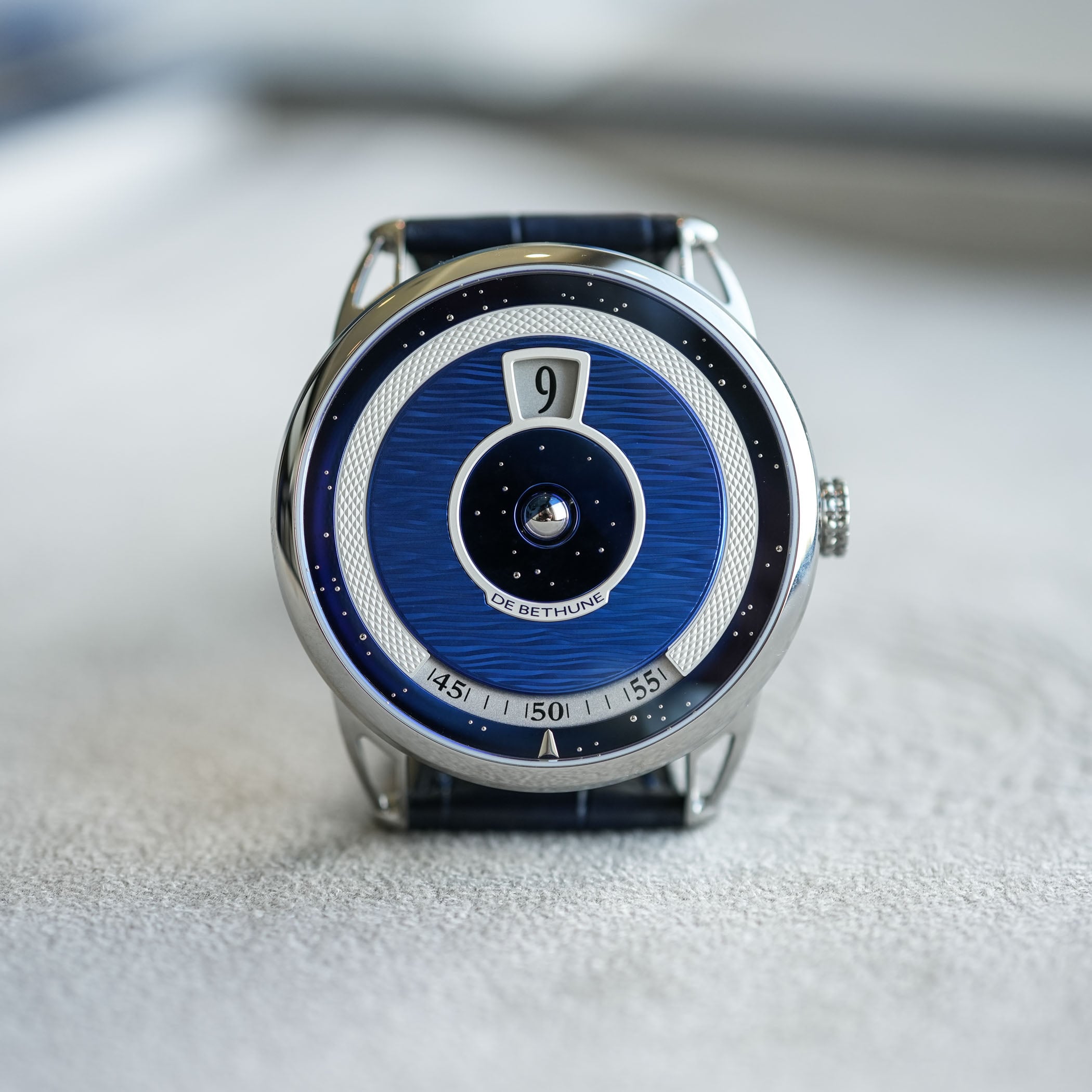
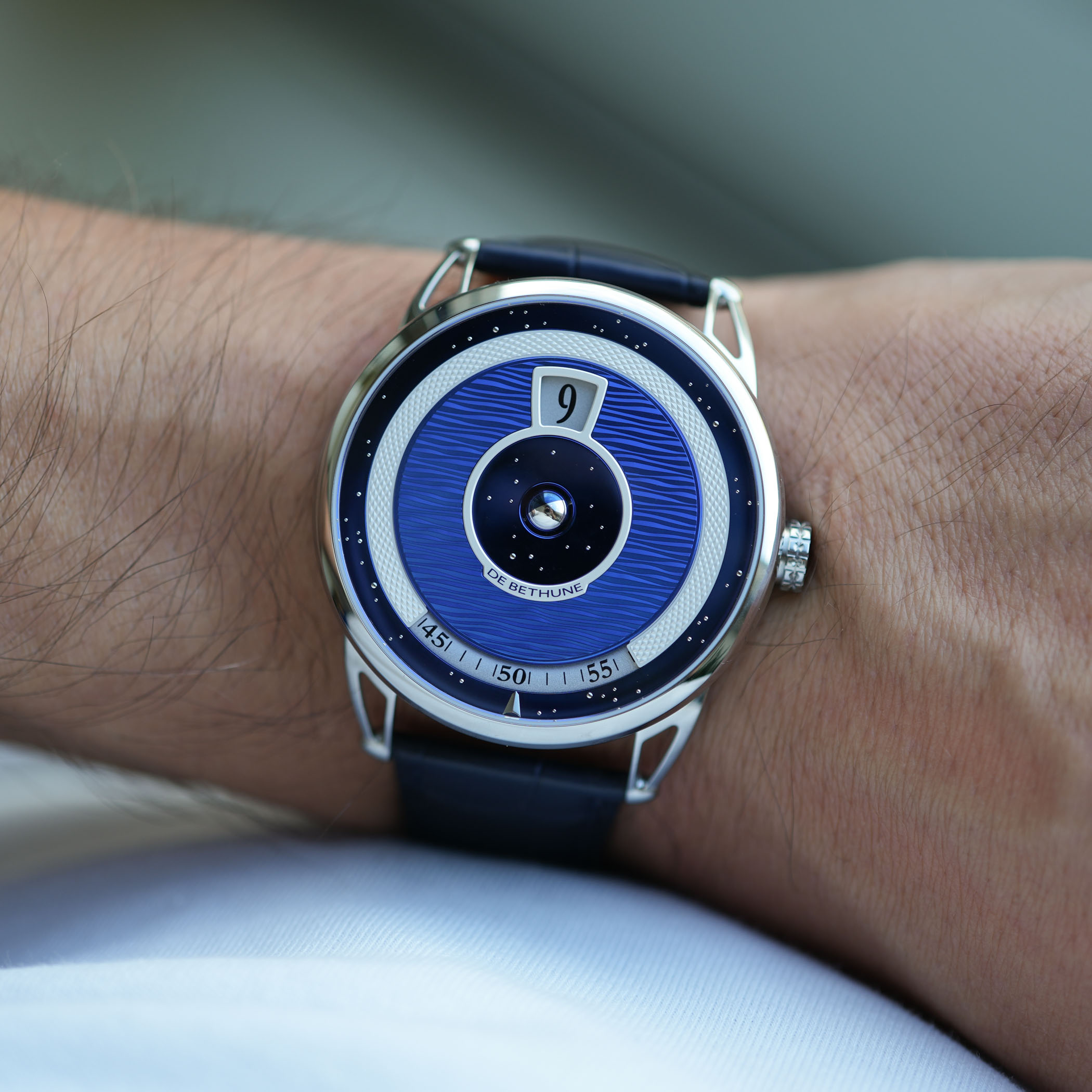
De Bethune takes a very different route with the DB25 Digitale.
The watch places a jumping hour at 12 o’clock and running minutes at 6 o’clock, but the mechanical display is only part of the attraction.
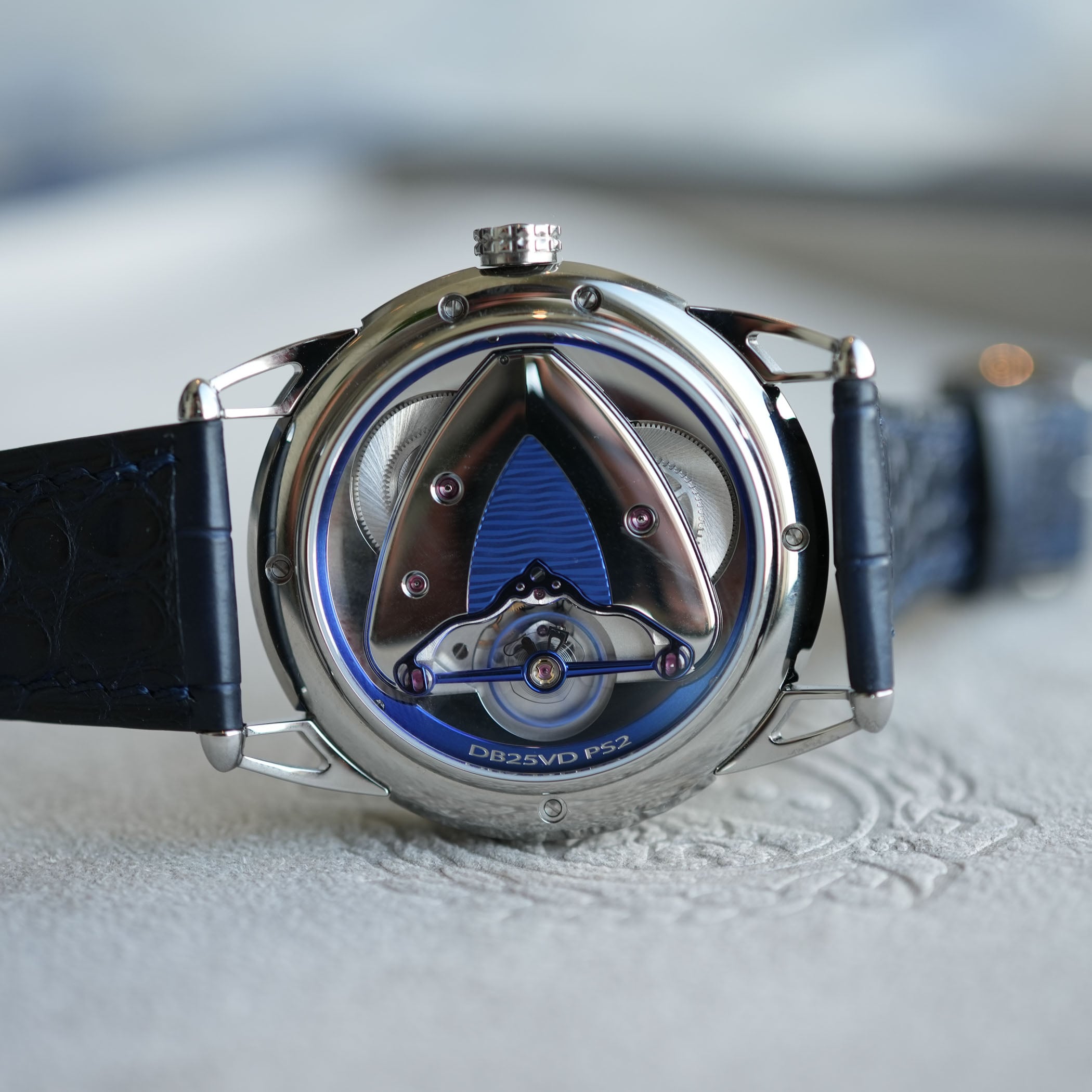
At the centre sits a spherical moonphase surrounded by a gold-studded blue Starry Varius disc, with a blue random guilloché section adding depth around it.
The 42mm grade 5 titanium case, openworked lugs and manual-winding DB2144V3 movement make it unmistakably De Bethune, and the five-day power reserve gives the poetry some real practical backbone.
Independent makers give the format fresh character
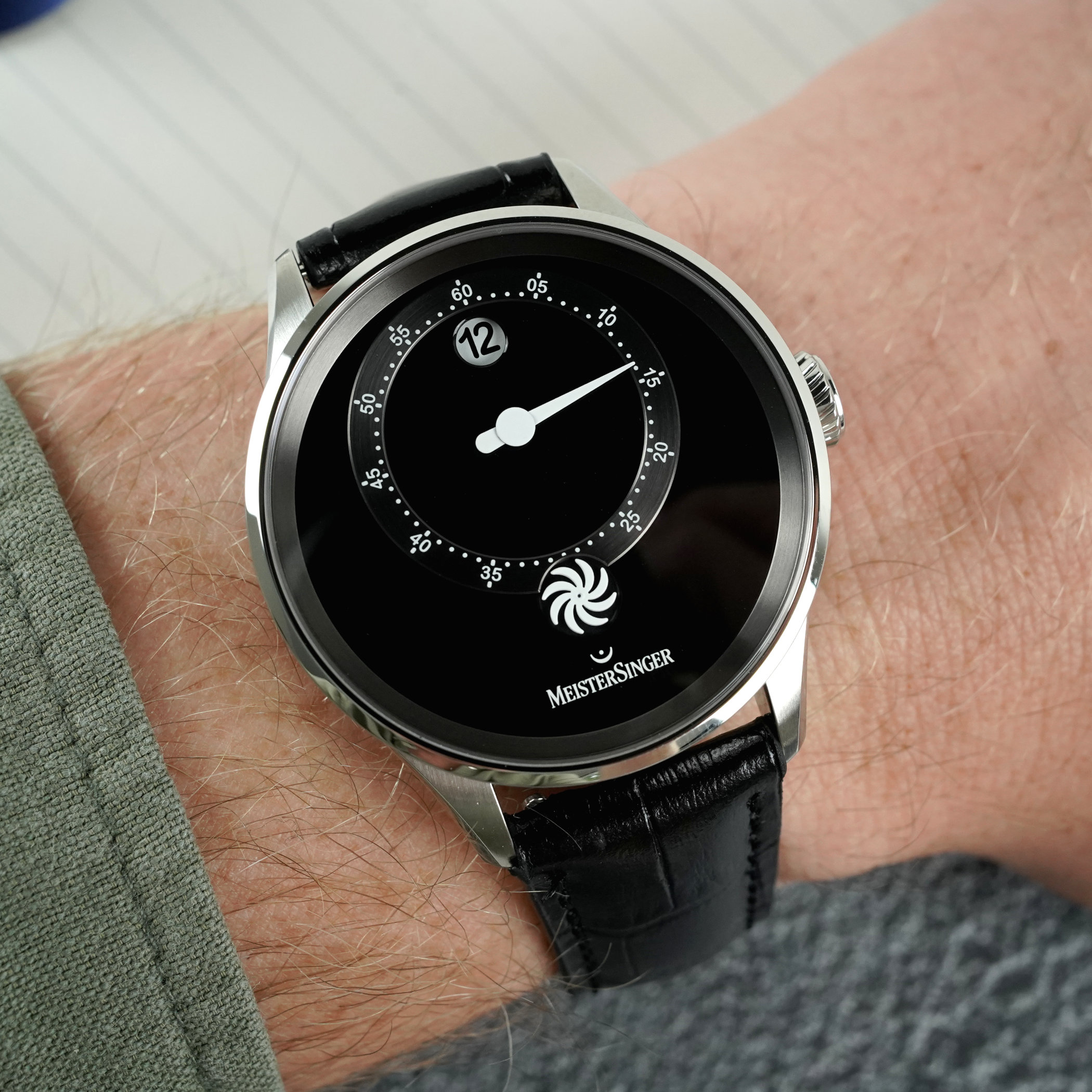
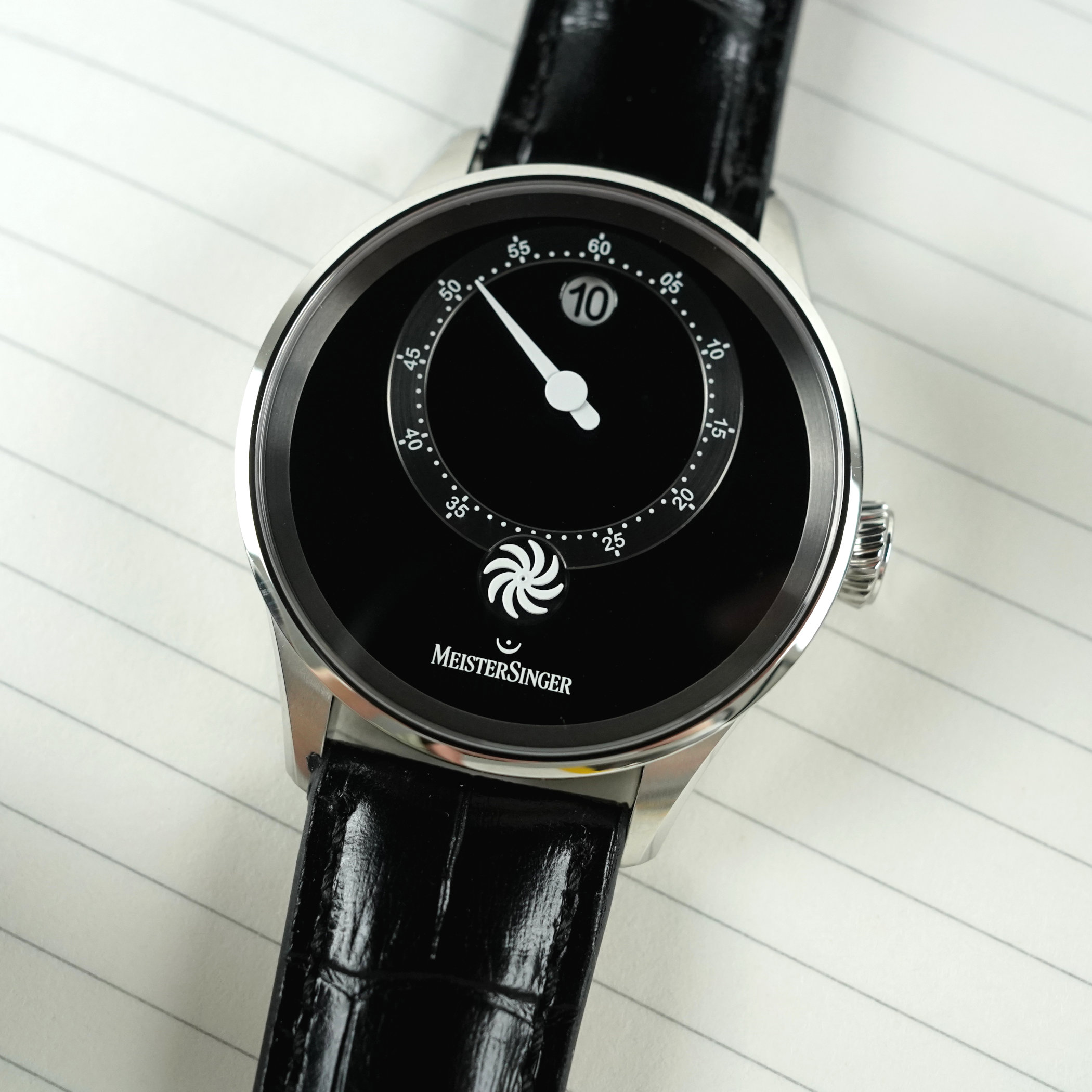
MeisterSinger is a natural fit for the jumping hour because the brand has long been comfortable challenging standard time displays.
The Panthero moves beyond the single-hand minimalism most associated with the name, placing a jumping hour aperture above an off-centre minute dial and a running seconds sun wheel below.
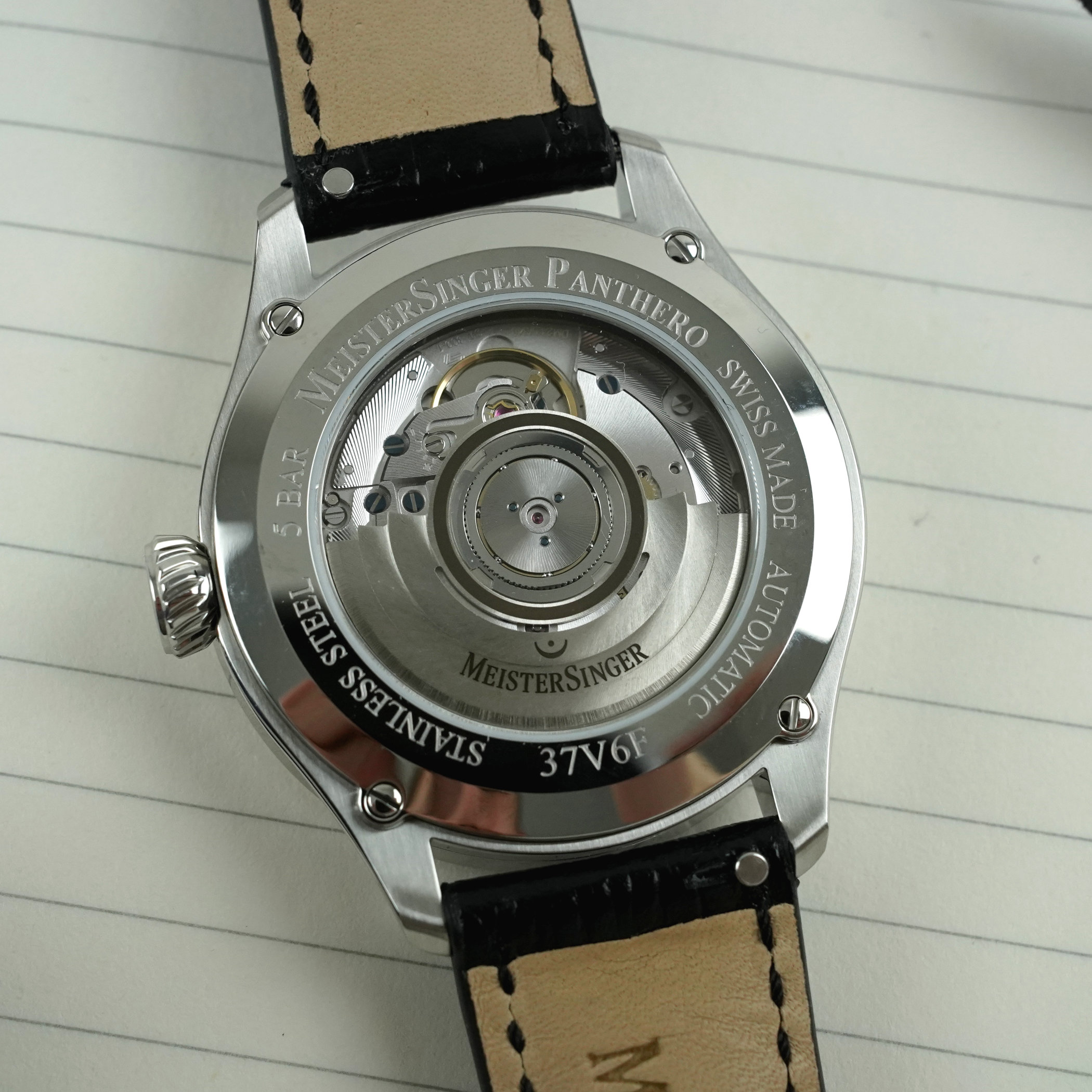
The black lacquered dial gives the watch a sharper, more formal presence, while the automatic MS_JH-01 uses a Sellita SW300 calibre with a Dubois-Depraz module for the indications.
It’s also one of the more accessible Swiss entries in this group, priced at EUR 6,990 in standard form, with limited guilloché editions at EUR 7,990.
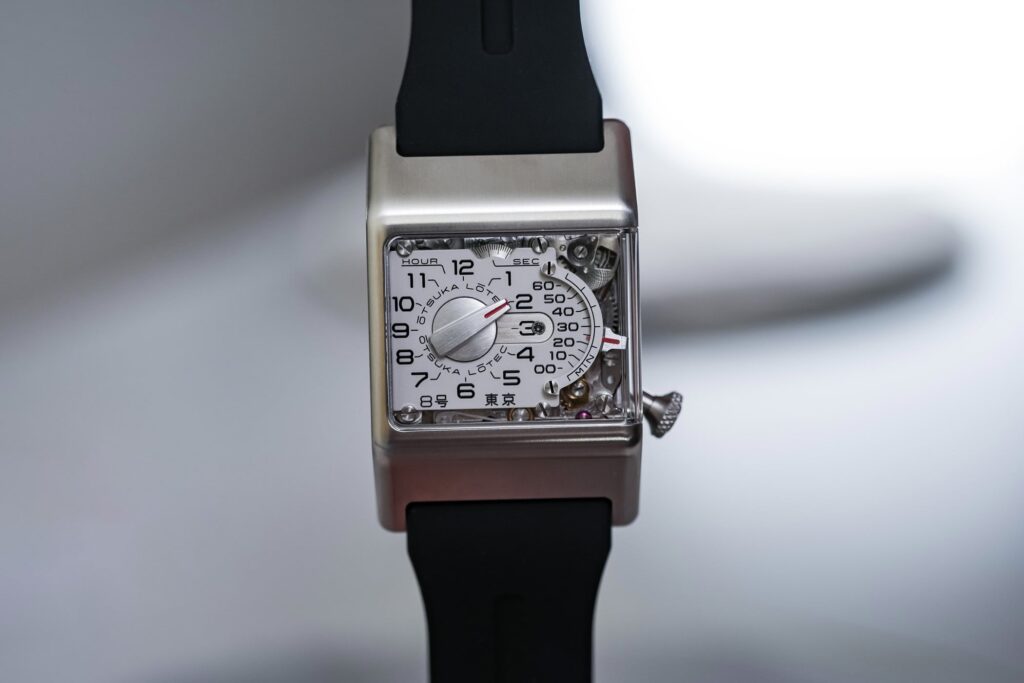
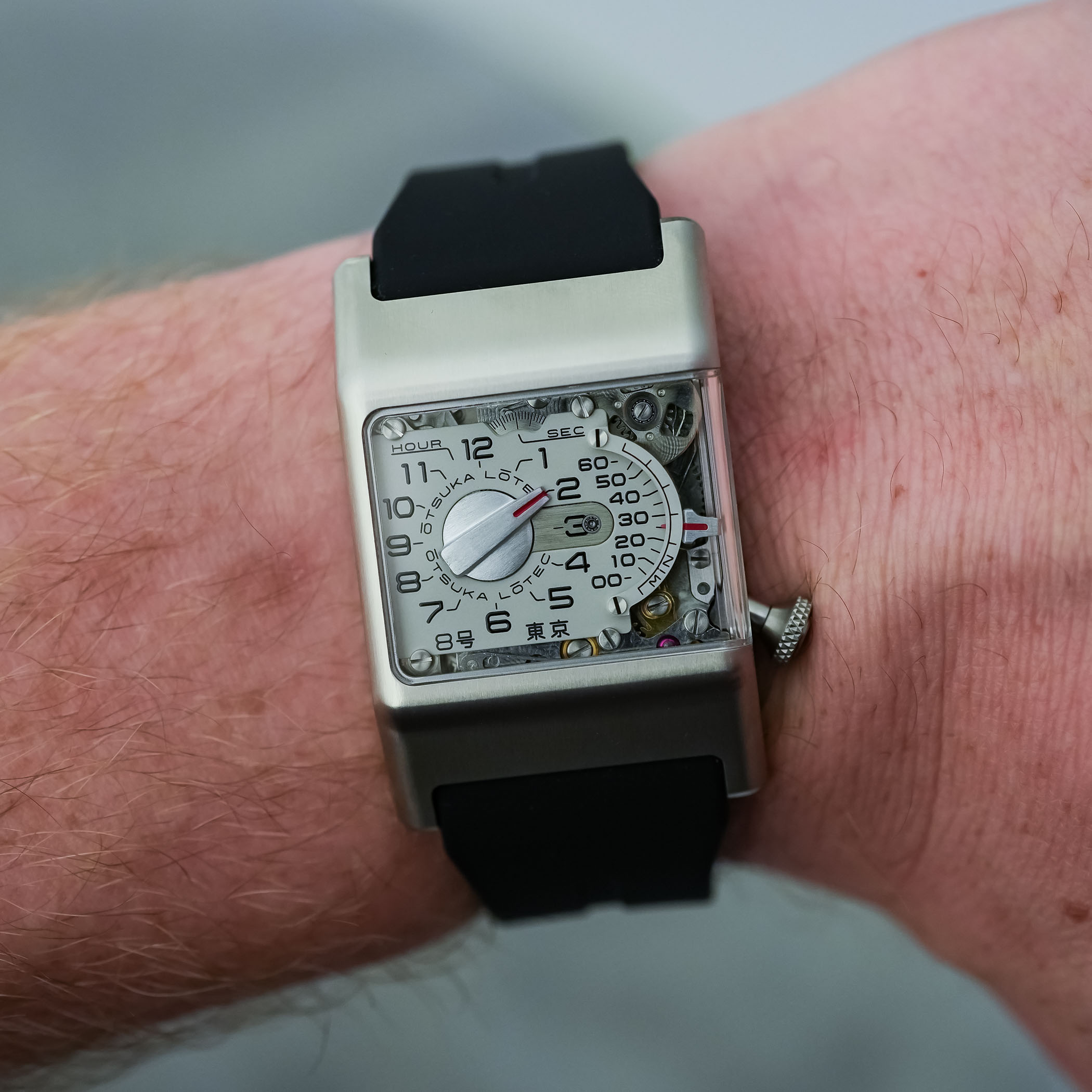
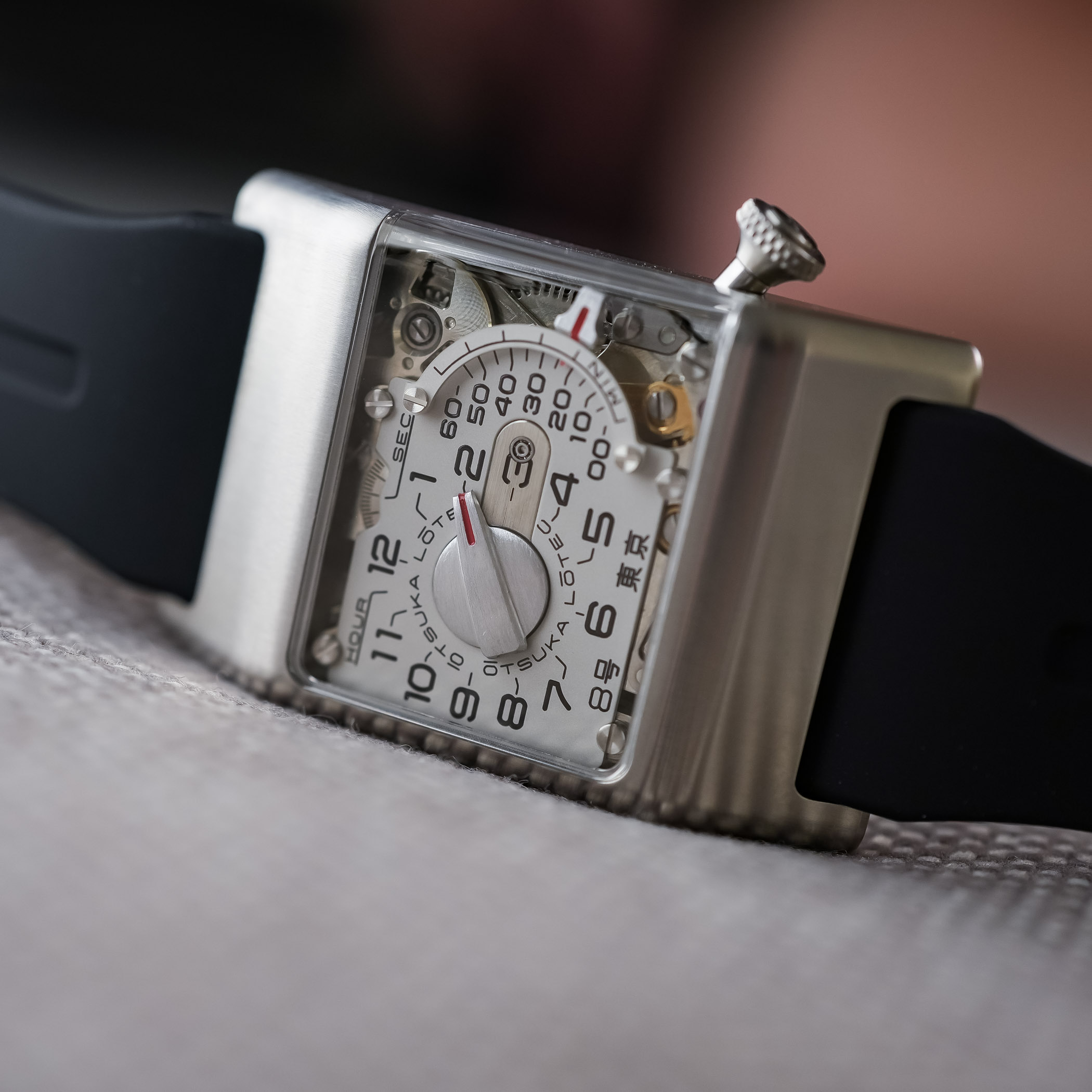
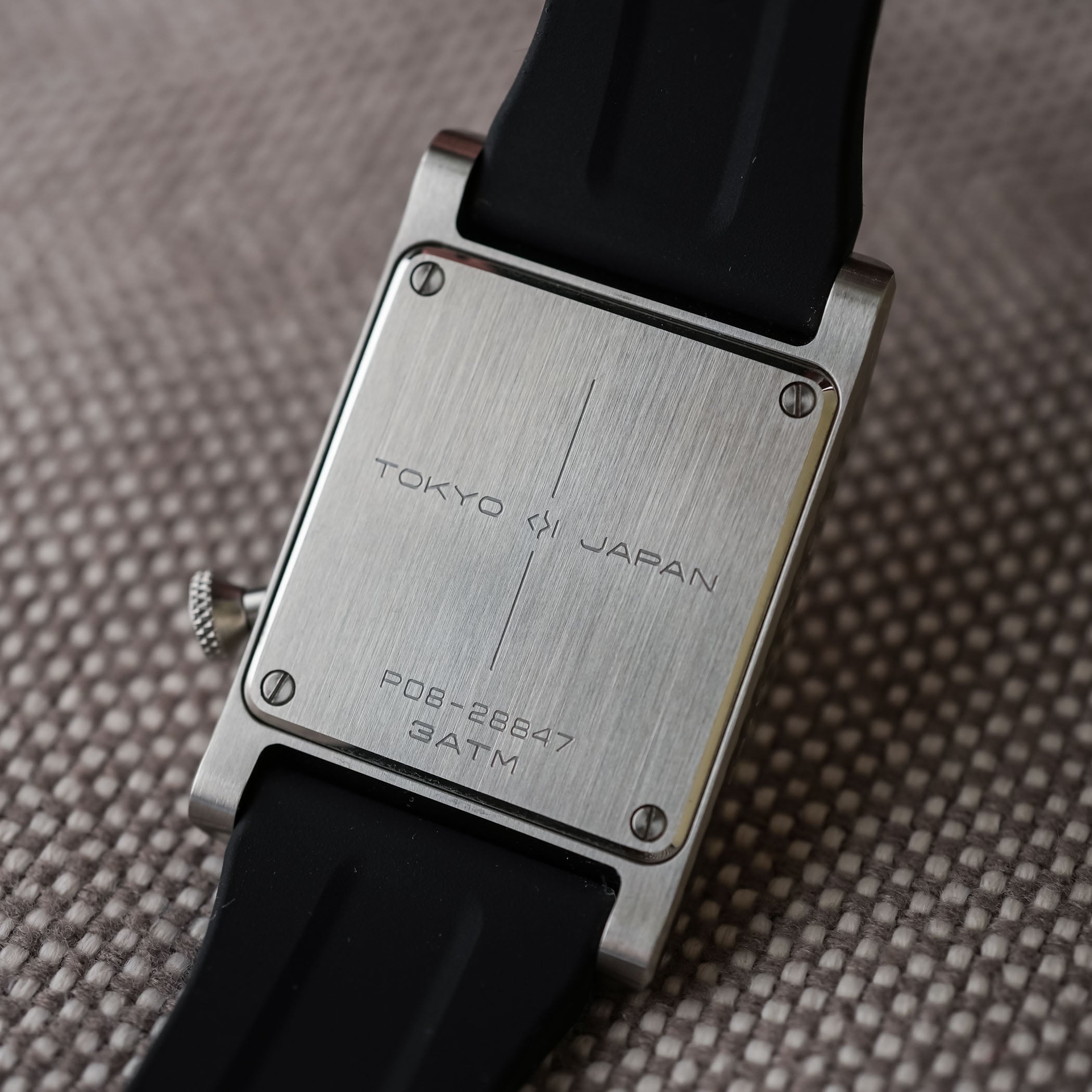
Otsuka Lotec’s No.8 speaks a completely different language.
Created by Jiro Katayama in Japan, it has the industrial, instrument-like personality that has made the brand one of the more distinctive recent names in independent watchmaking.
The display is split across the case, with a jumping hour and central indicator on the left, a retrograde minute display on the right and a running seconds disc tucked at noon.
The automatic movement uses a Miyota 9S05 with an in-house display module, and allocation is intentionally difficult, with raffle-style sales through the brand’s website and practical restrictions for buyers outside Japan.
Amida brings back the dashboard watch
The Amida Digitrend OSII Black shows how naturally the jumping hour lends itself to unusual case architecture.
Its design revives the spirit of the 1970s Digitrend with a flip-up display that feels closer to a sports car dashboard than a conventional wristwatch.
Beneath the sapphire crystal hood, an LRD prism projects the jumping hours and scrolling minutes into a vertical reading position.
The polished roll bar elements and ribbed air-vent detailing make the automotive influence obvious without turning the watch into costume design.
Inside, the Soprod Newton P092 automatic calibre is paired with an in-house jumping hour disc module.
With production limited to 150 pieces and pricing from CHF 5,150 on strap, it sits in the sweet spot between niche revival and genuinely wearable oddball.
Details & Specifications
| Louis Vuitton Tambour Spin Time | 39.5mm x 12.15mm white gold case; khaki green dial; calibre ST13.01 automatic; Spin Time jumping hour cubes with central minutes; 45-hour power reserve; 100m water resistance; khaki rubber strap; EUR 86,000; permanent collection. |
|---|---|
| MeisterSinger Panthero | 40.5mm x 11.25mm stainless steel case; black lacquered dial; jumping hour with off-centre minutes and running seconds; calibre MS_JH-01 automatic with Sellita SW300 and Dubois-Depraz module; 47-hour power reserve; 50m water resistance; leather strap with folding clasp; EUR 6,990. |
| Otsuka Lotec No.8 | 31mm x 47.8mm x 10.8mm stainless steel case; split jumping hour, retrograde minutes and running seconds display; Miyota 9S05 automatic with in-house display module; 32-hour power reserve; 30m water resistance; black rubber strap; raffle-based allocation; approximately EUR 5,500. |
| De Bethune DB25 Digitale | 42mm x 11.9mm grade 5 titanium case; jumping hour, running minutes and spherical moonphase; blue Starry Varius and random guilloché sections; DB2144V3 manual-winding movement with 416 components; five-day power reserve; 30m water resistance; blue alligator strap; price upon request. |
| Amida Digitrend OSII Black | 39.6mm x 39mm x 15.6mm stainless steel case; LRD prism display; jumping hours and scrolling minutes; Soprod Newton P092 automatic with in-house jumping hour disc module; 44-hour power reserve; 50m water resistance; black Alcantara strap or integrated steel bracelet; limited to 150 pieces; CHF 5,150 on strap or CHF 5,500 on bracelet. |
The best jumping hour watches don’t just change the way time is displayed; they change the mood of wearing a mechanical watch.
Whether the attraction is Louis Vuitton’s kinetic cubes, De Bethune’s celestial dial craft or Amida’s retro-futurist prism, the format feels newly relevant because it makes every hour feel like a small event.