Ferdinand Berthoud has always sat in a very particular corner of independent watchmaking, where historical chronometry matters as much as contemporary execution.
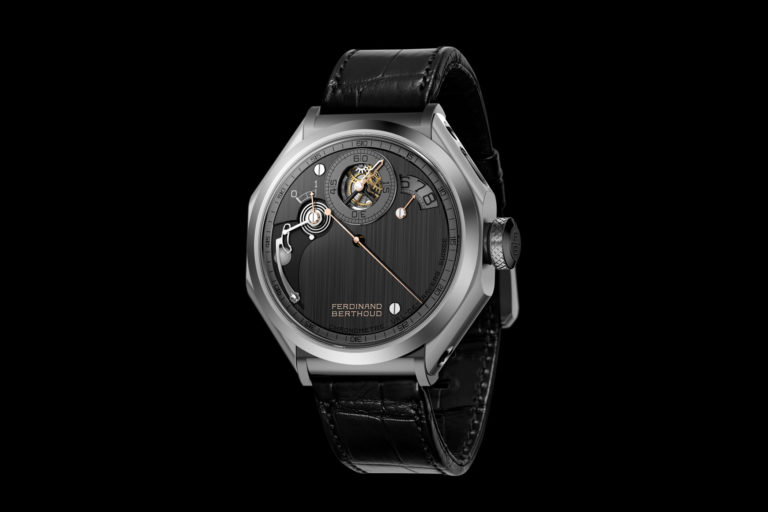
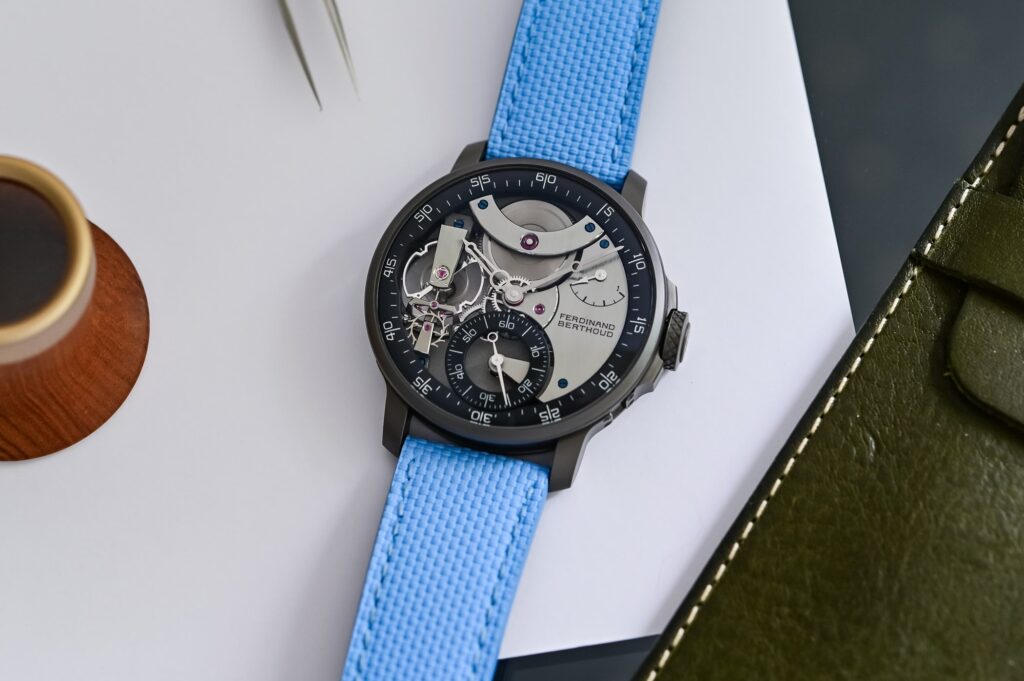
The Chronomètre FB 3SPC.4-1 sharpens that proposition with a black ceramised titanium case, newly added crown guards and a more technical, less formal presence on the wrist.
It’s still very much an haute horlogerie object, but this version gives the FB 3 family its most modern personality yet.
At a glance
- Ferdinand Berthoud has introduced the Chronomètre FB 3SPC.4-1 in black ceramised titanium for Geneva Watch Days.
- The watch retains the FB 3’s COSC-certified hand-wound movement with cylindrical hairspring and visible regulating organ.
- It is fitted to a black textile strap with a titanium pin buckle, with price on request.
Black ceramised titanium changes the FB 3’s posture
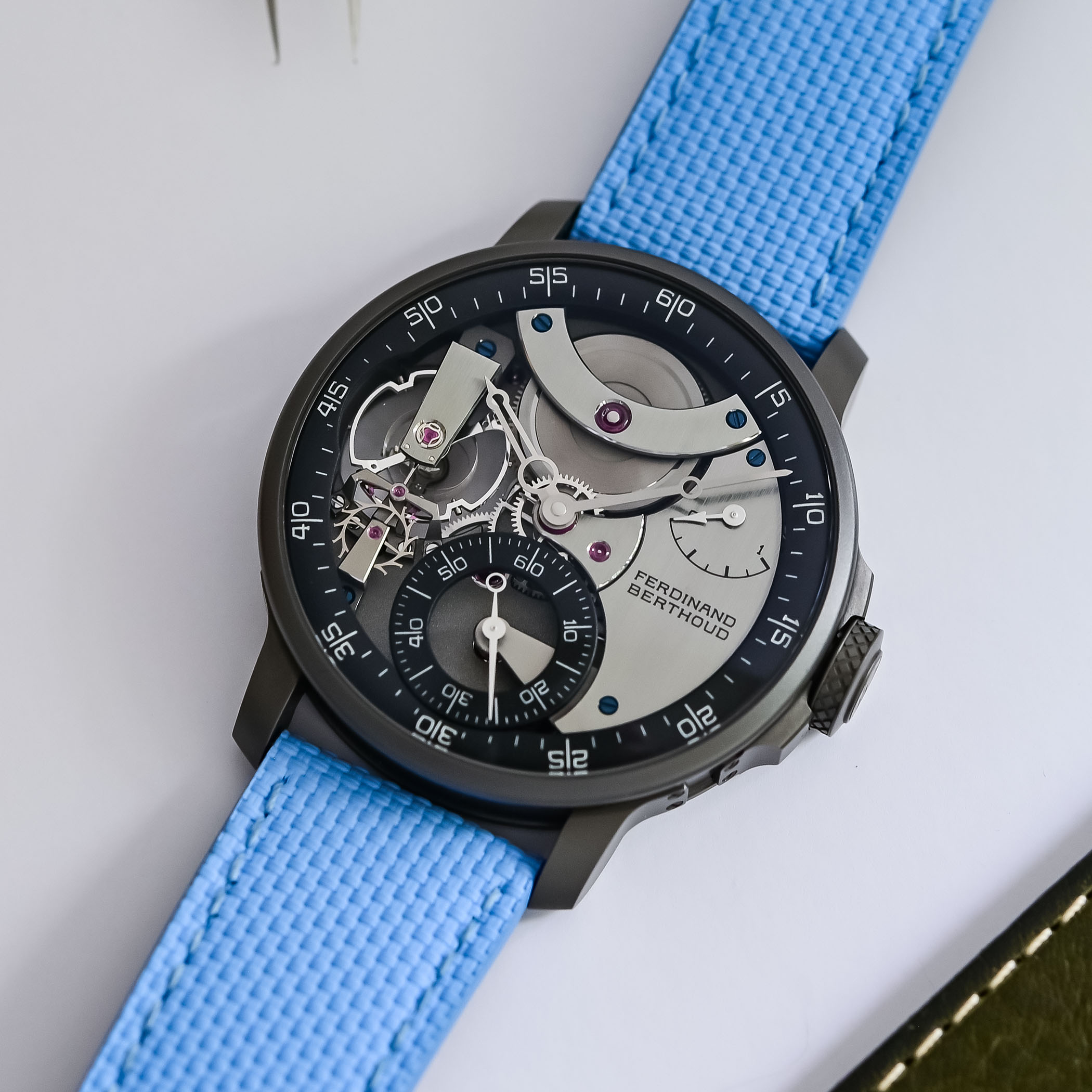
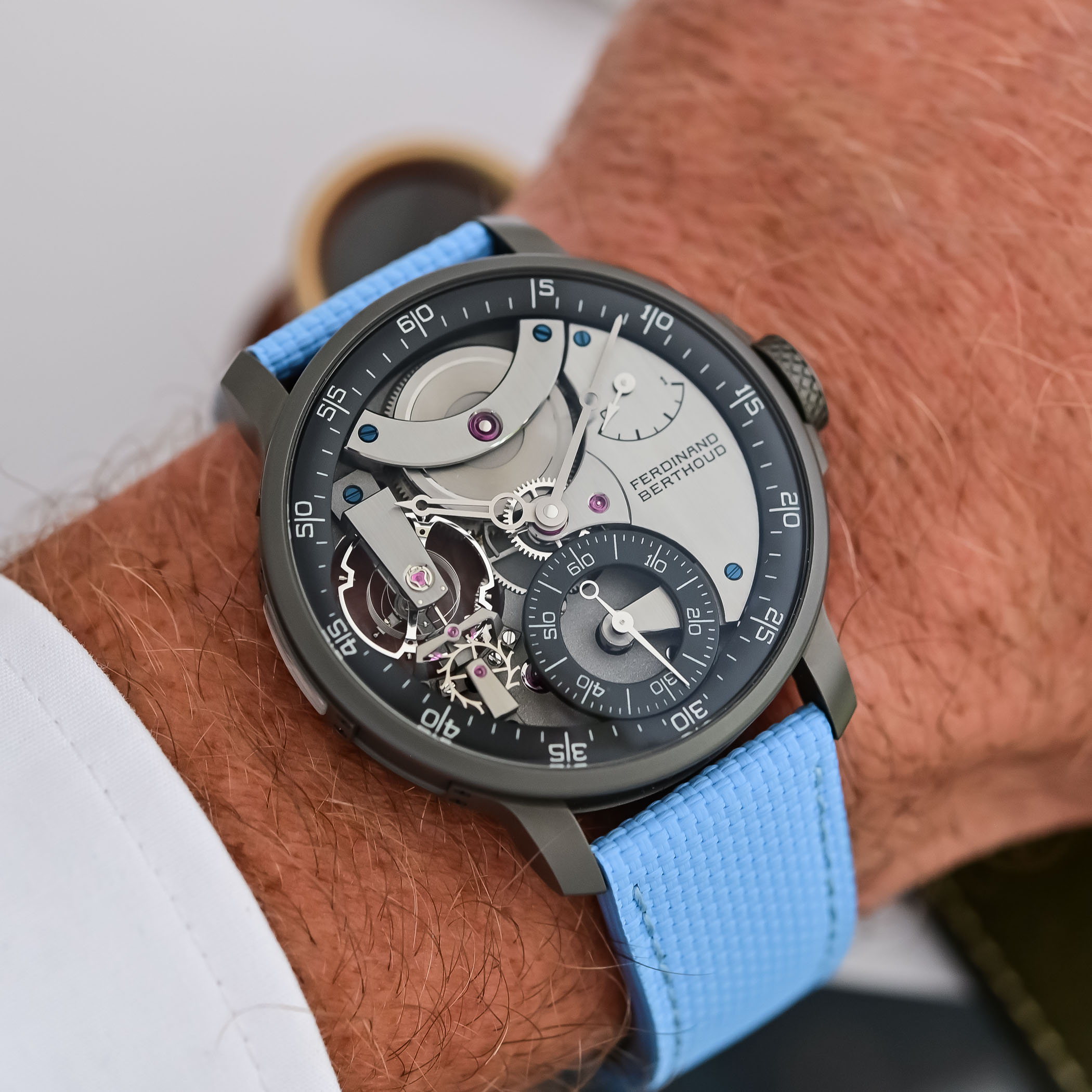
The FB 3SPC.4-1 uses the familiar 42.3mm case architecture, but the move to black ceramised titanium gives the watch a markedly tougher visual rhythm.
The material keeps the lightness associated with titanium while adding a matte sandblasted surface and improved scratch resistance.
This is also the first FB 3 to receive crown guards, framing the substantial 8.5mm crown and giving the case a more assertive profile.
The watch remains slim by the standards of this kind of open mechanical construction, measuring 9.43mm thick, with a domed sapphire crystal over the dial and an exhibition back.
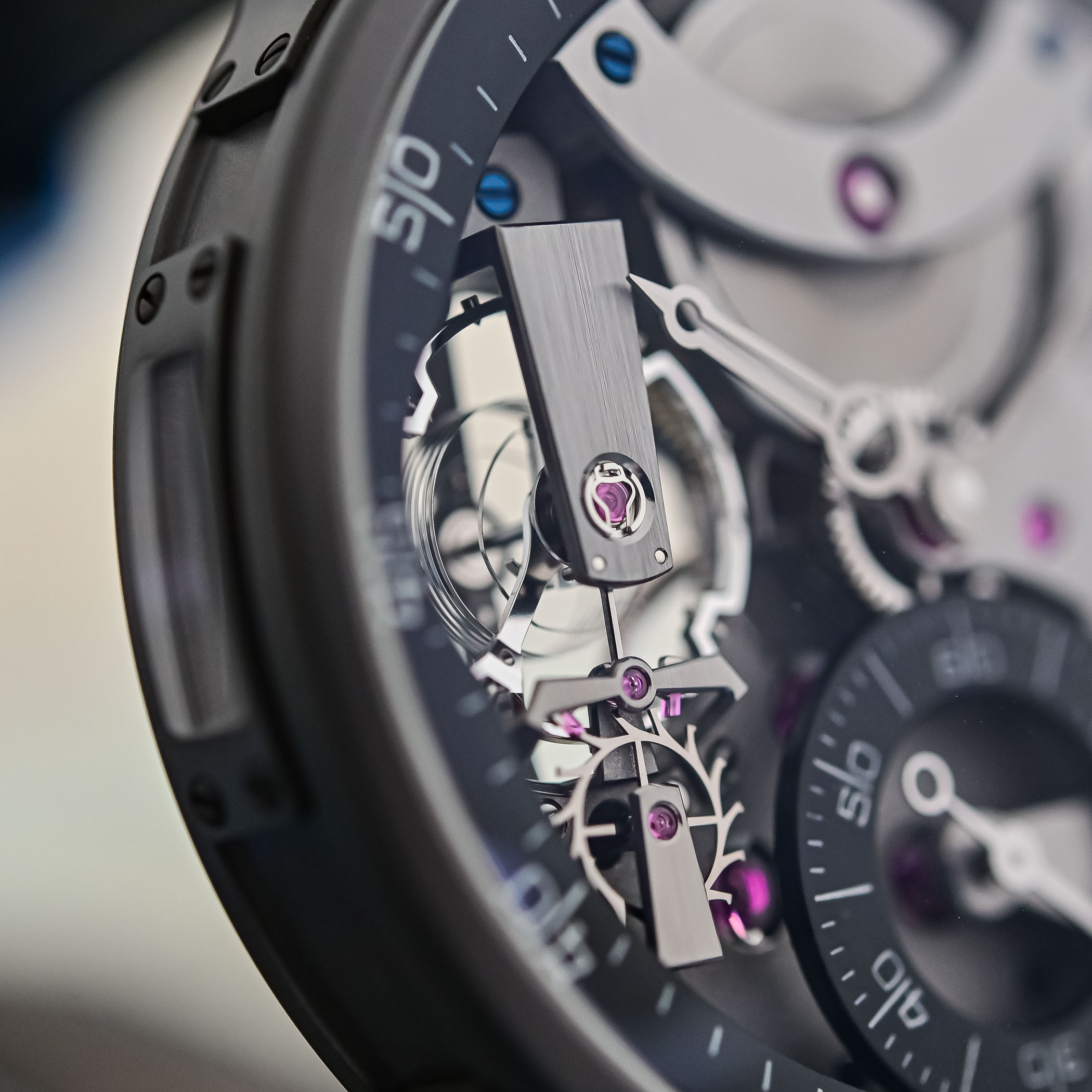
A rectangular sapphire porthole on the left side of the case adds one of the watch’s most charming details, offering a lateral view of the cylindrical balance spring in motion.
The four lugs are screwed to the case middle, while water resistance remains rated to 30 metres.
The cylindrical hairspring is still the main event
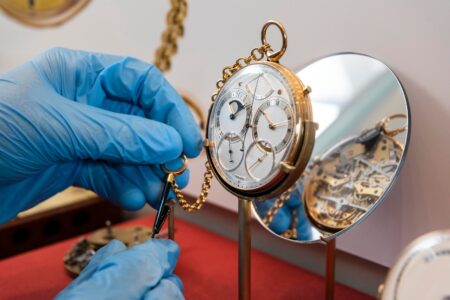
The FB 3 family takes its inspiration from a decimal pocket watch made in 1793 by Louis Berthoud, nephew of Ferdinand Berthoud.
Its defining mechanical idea is the cylindrical hairspring, a form historically associated with marine chronometry rather than wristwatches.
Unlike a flat hairspring, a cylindrical spring expands and contracts around its central axis with a high degree of symmetry, helping the regulating organ maintain more stable timekeeping.
Miniaturising that architecture for a wristwatch is the difficult part.
Here, the cylindrical hairspring is paired with a variable-inertia balance, and both terminal curves are shaped by hand.
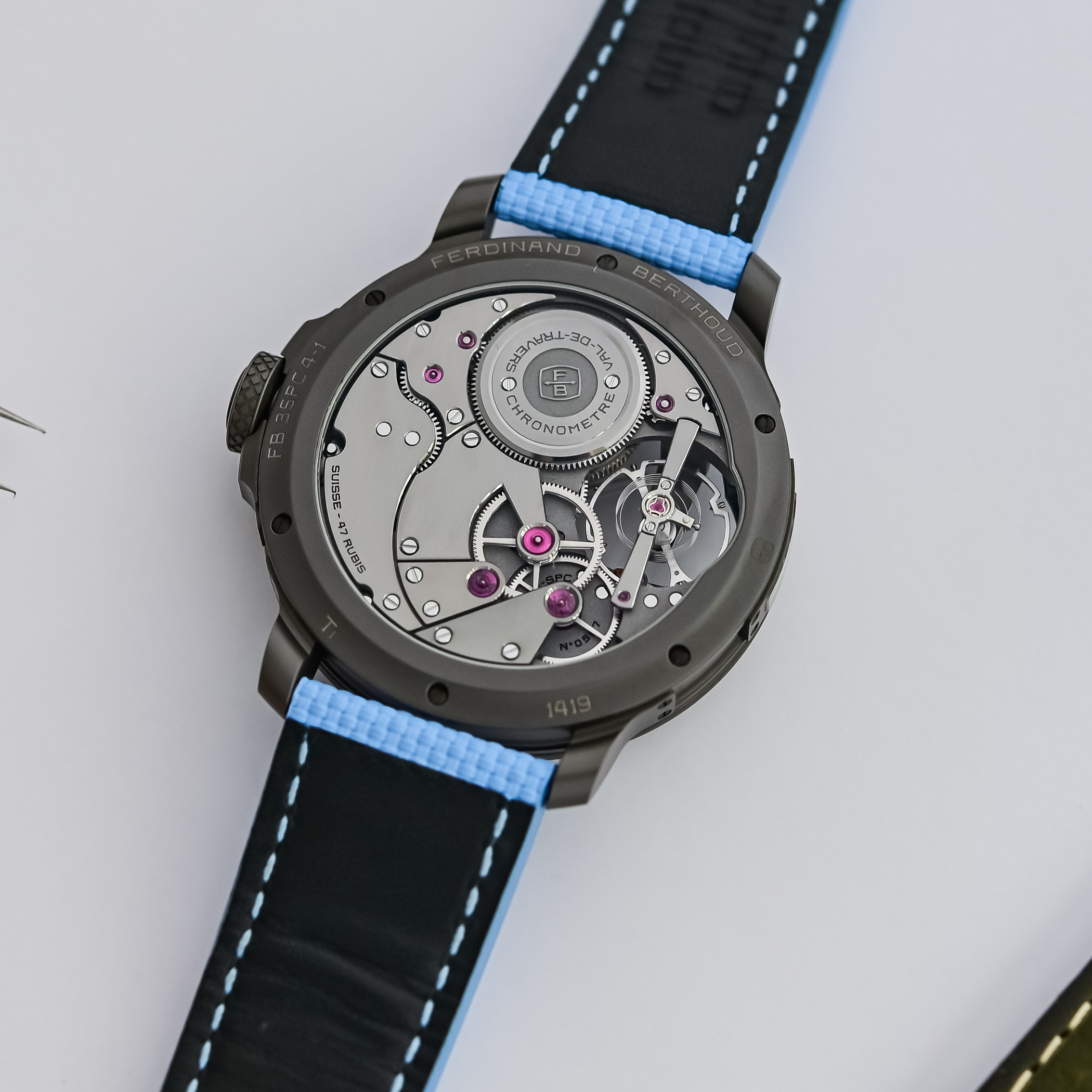
The calibre FB-SPC is hand-wound, COSC chronometer-certified and runs at 21,600 vibrations per hour, with a 72-hour power reserve supplied by a large barrel.
A stop-seconds mechanism is included, which is a practical detail for a watch so clearly invested in precision.
A movement built to be studied from both sides
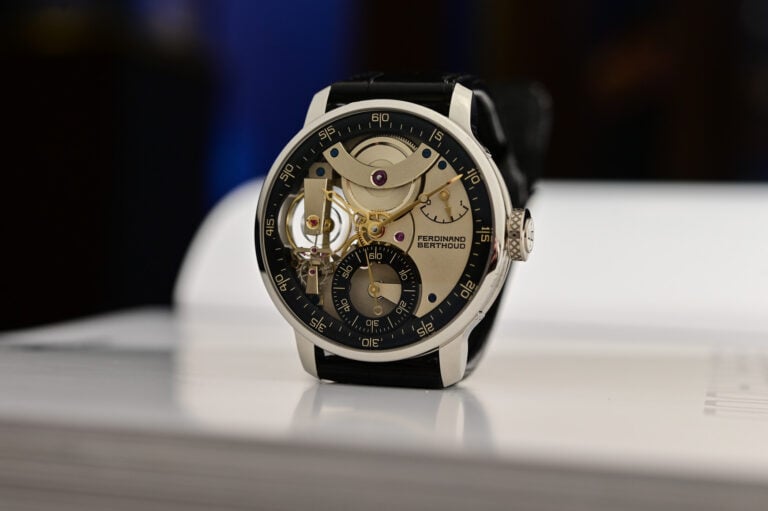
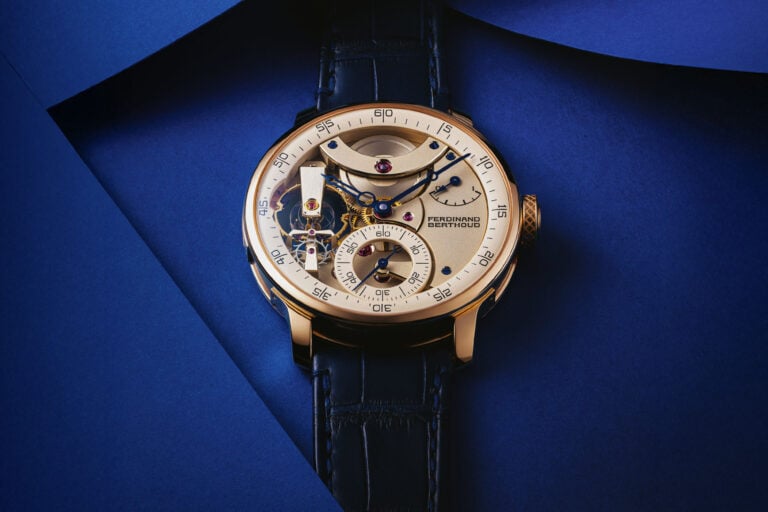
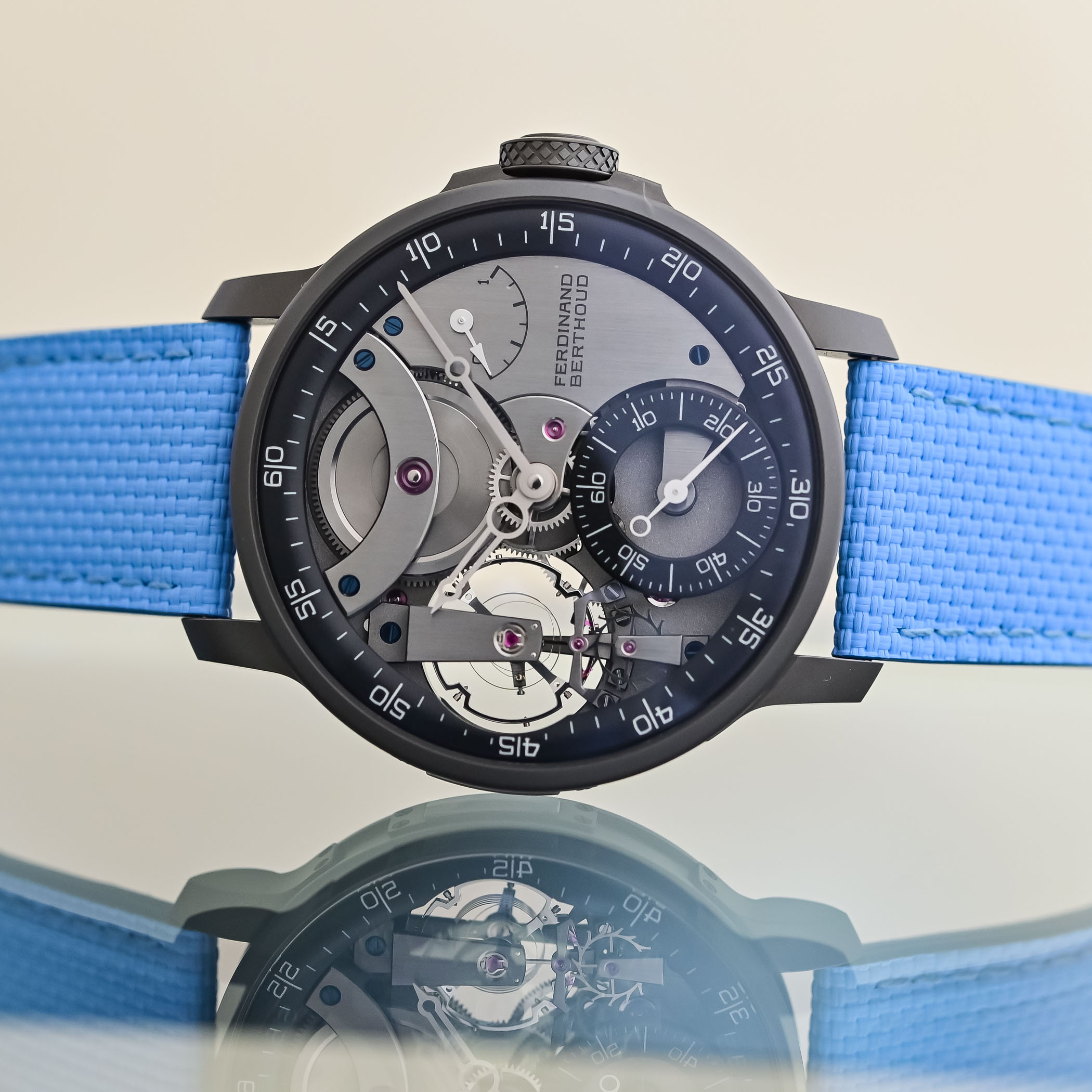
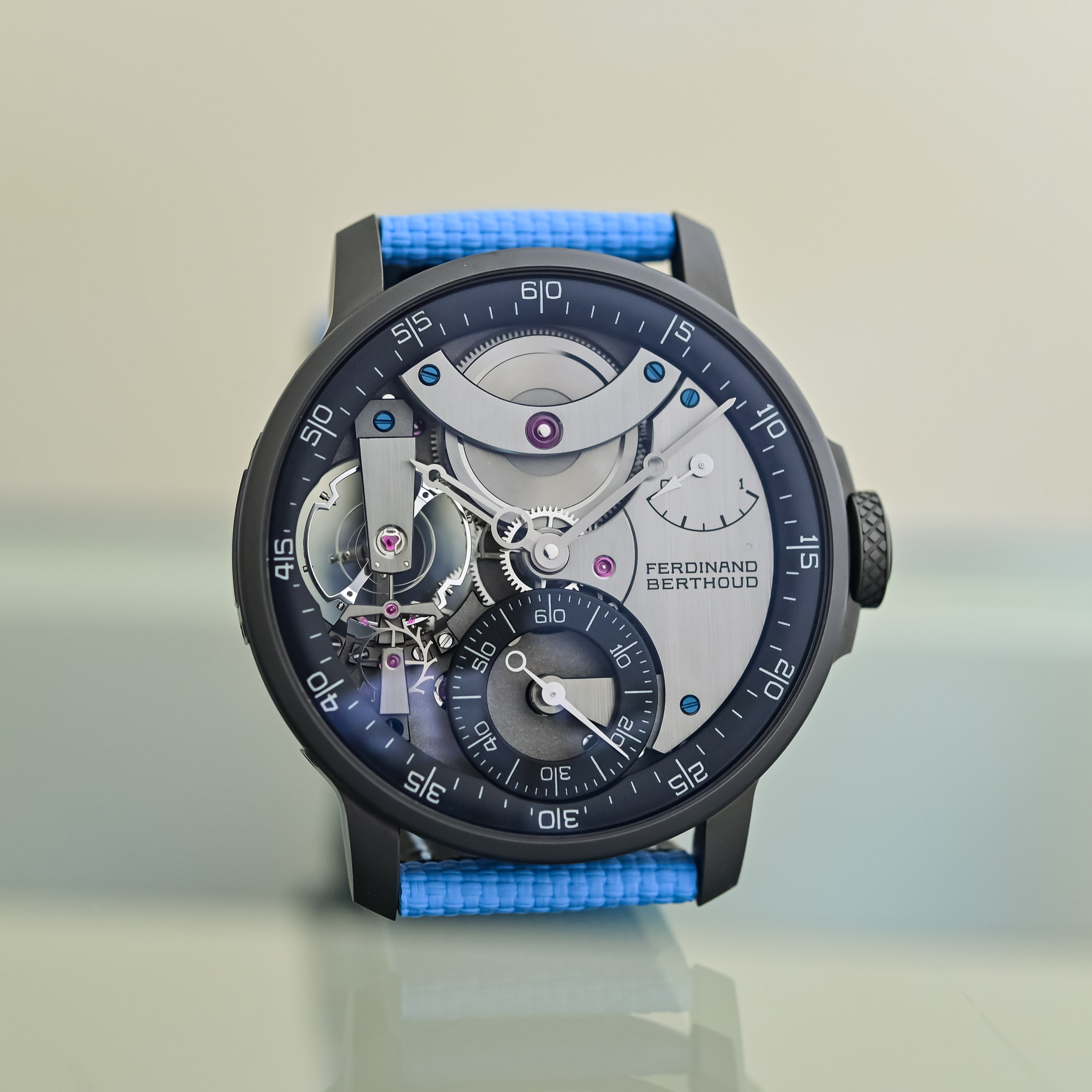
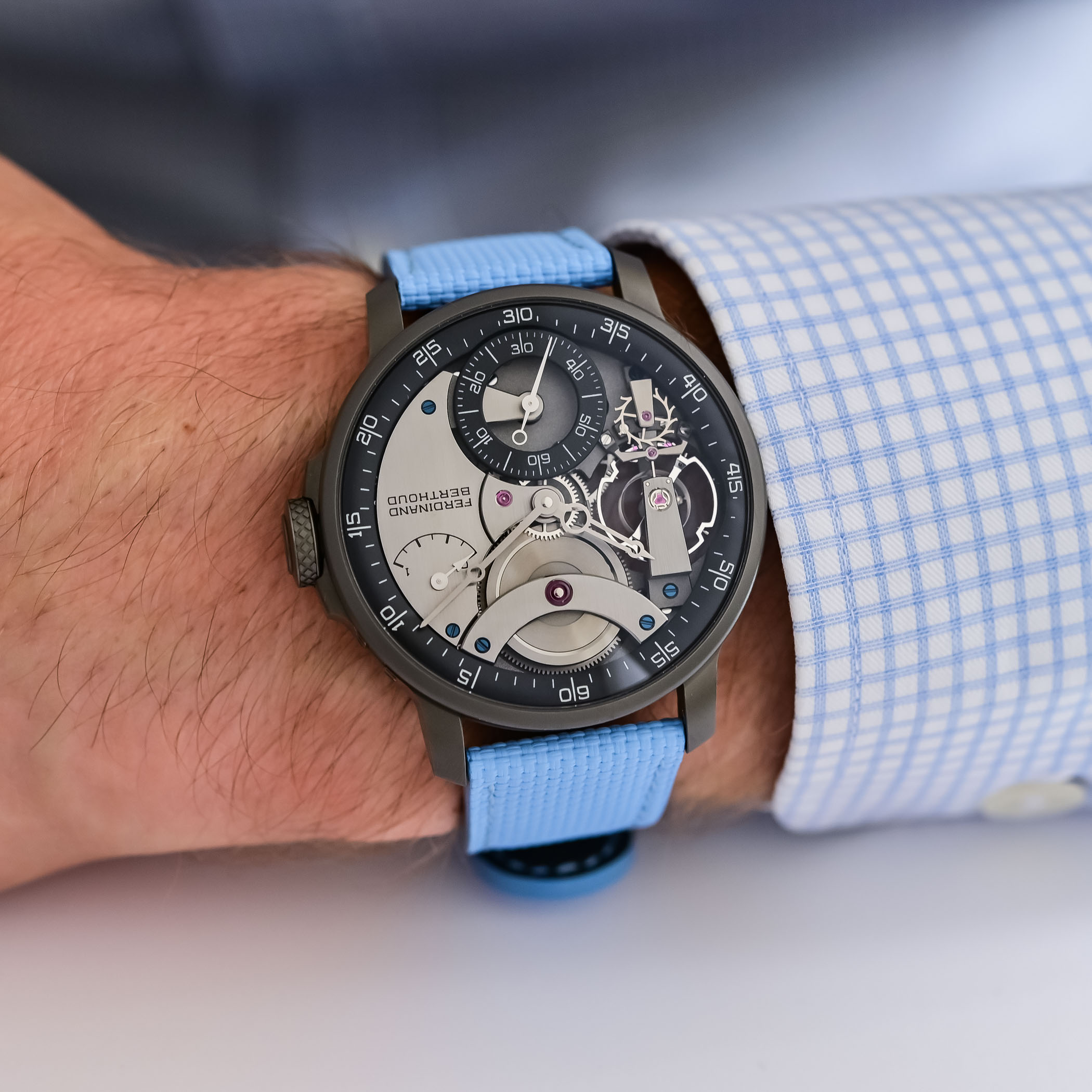
The dial side is less a conventional dial than an exposed architectural layout around a black sandblasted German silver mainplate.
Hours and minutes are read from a peripheral black-varnished brass ring with grey numerals, echoed by the small seconds at 6 o’clock.
The white gold hour and minute hands are faceted, skeletonised, open-tipped and sandblasted, keeping the display legible without covering the mechanics.
At 9 o’clock, the regulating organ is arranged vertically beneath three individual bridges, with the balance bridge above, the anchor bridge in the centre and the escapement wheel bridge below.
The large barrel sits under an arched bridge at noon, while the power reserve indicator appears at 2:30 with a white gold arrow-shaped hand.
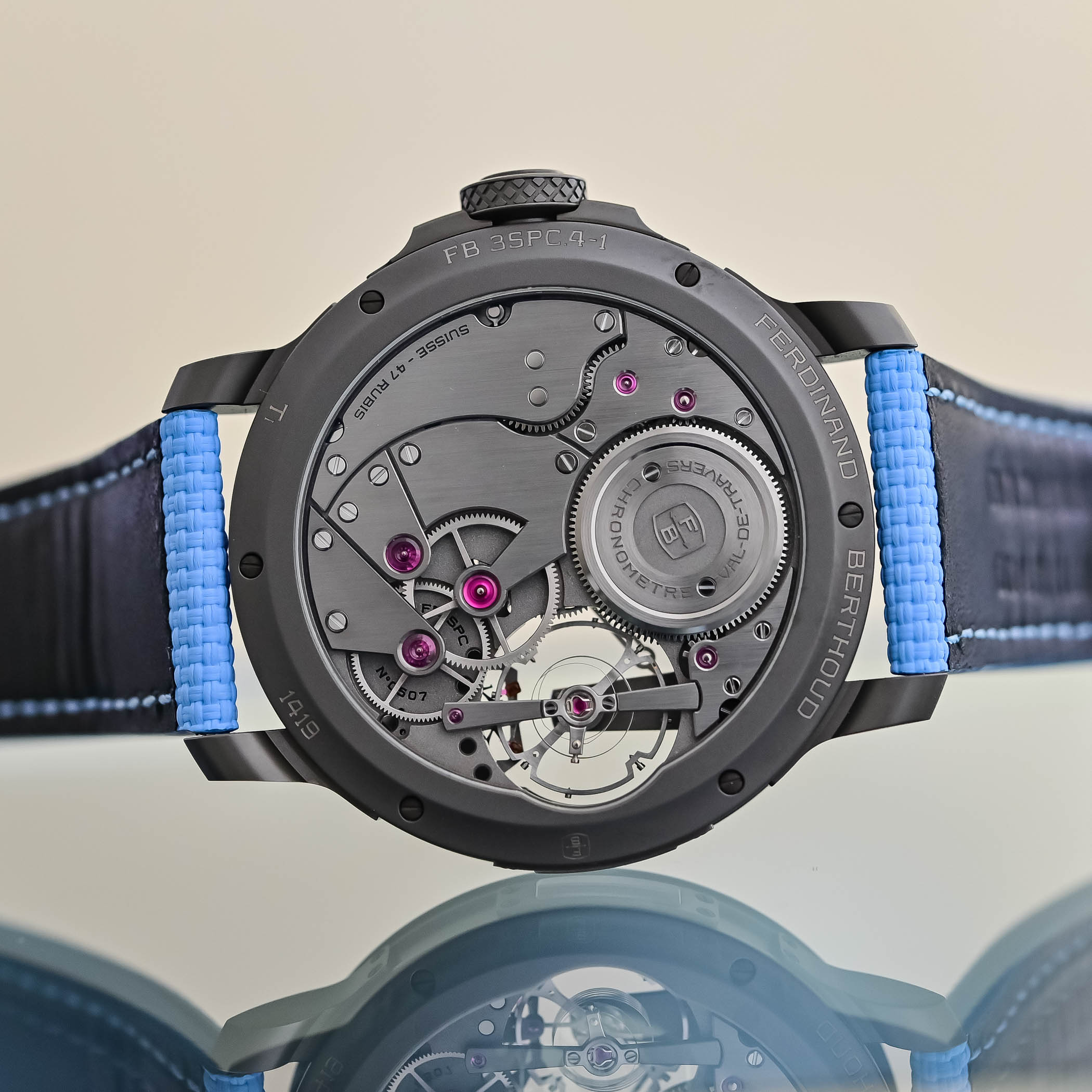
Finishing remains central to the appeal.
The movement has 102 exterior angles and 15 inner angles finished by hand, while the six dial-side bridges receive vertical satin finishing that must align precisely across separate components.
Through the back, the 34mm calibre reveals ten individual bridges and a wider view of the underside of the hairspring, along with eight decorative finishing techniques across the movement.
Details & Specifications
| Brand | Ferdinand Berthoud |
|---|---|
| Model | Chronomètre FB 3SPC.4-1 |
| Case size | 42.3mm diameter, 9.43mm thickness |
| Case material | Black ceramised titanium, 57-part construction |
| Crystal | Glareproofed domed sapphire crystal, sapphire exhibition back and rectangular sapphire side porthole |
| Water resistance | 30 metres |
| Dial | Black sandblasted German silver mainplate with black-varnished brass hour and minute ring |
| Hands | Faceted, skeletonised open-tipped hour and minute hands in white gold |
| Movement | In-house calibre FB-SPC, hand-wound |
| Certification | COSC chronometer-certified |
| Movement dimensions | 34mm diameter, 6.84mm thickness |
| Components | 230 components, 47 jewels |
| Frequency | 21,600vph, 3Hz |
| Power reserve | 72 hours |
| Regulating organ | Cylindrical hairspring with Berthoud terminal curves and variable-inertia balance |
| Functions | Hours, minutes, small seconds, power reserve indication and stop-seconds |
| Strap | Black textile strap with titanium pin buckle |
| Options | Other strap materials and titanium folding clasp available on request |
| Price | Upon request |
The Chronomètre FB 3SPC.4-1 doesn’t dilute Ferdinand Berthoud’s chronometric identity so much as put it in a sharper frame.
For collectors drawn to historically grounded mechanics but less interested in precious-metal formality, this black titanium edition may be the most compelling FB 3 yet.