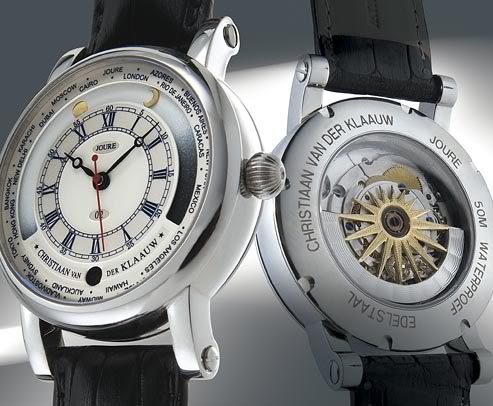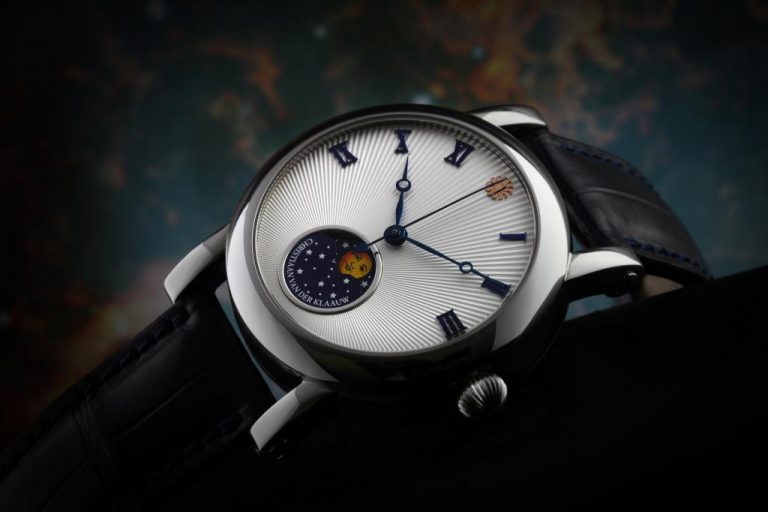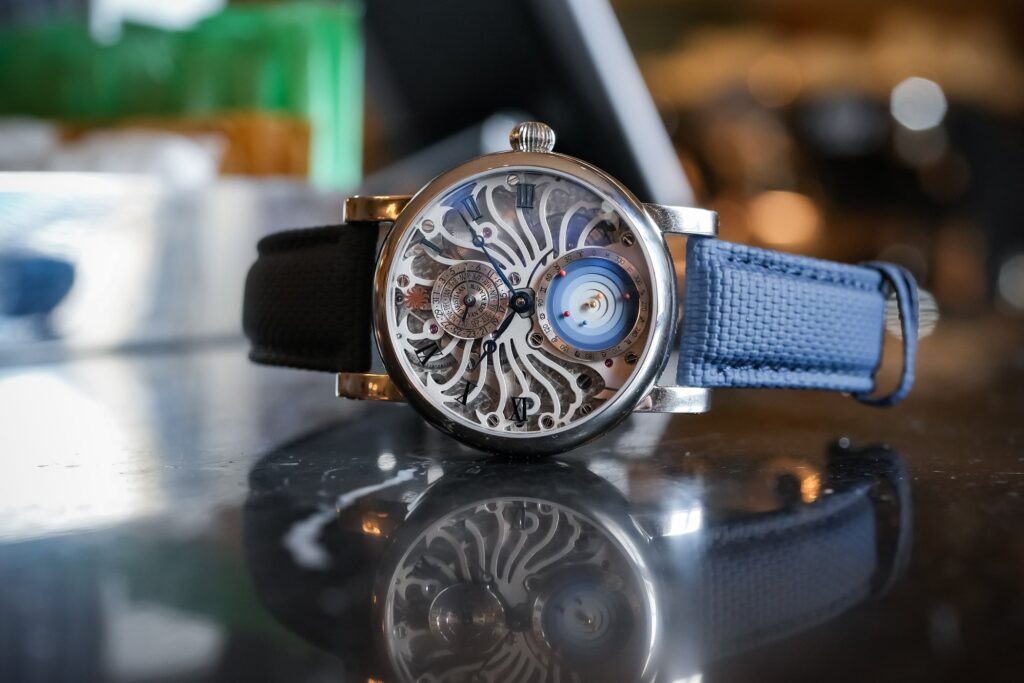
Christiaan van der Klaauw has always occupied a very particular corner of independent watchmaking, one where mechanical horology meets astronomy without losing sight of wearability.
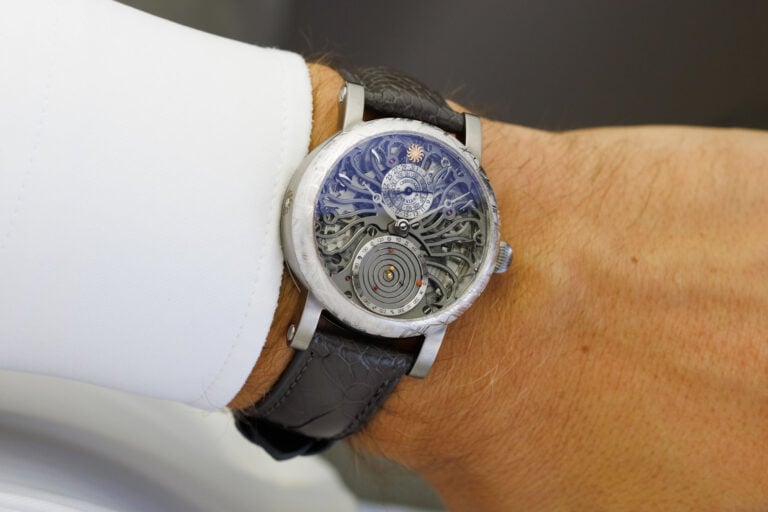
The Planetarium Skeleton Platinum brings that identity into sharper view, literally, by opening up the brand’s defining complication beneath a transparent sapphire dial.
Limited to just six numbered pieces, it takes the world’s smallest mechanical planetarium and gives it a more architectural, exposed treatment in a 40mm platinum case.
At a glance
- Christiaan van der Klaauw has introduced the Planetarium Skeleton Platinum, a six-piece limited edition of its signature astronomical wristwatch.
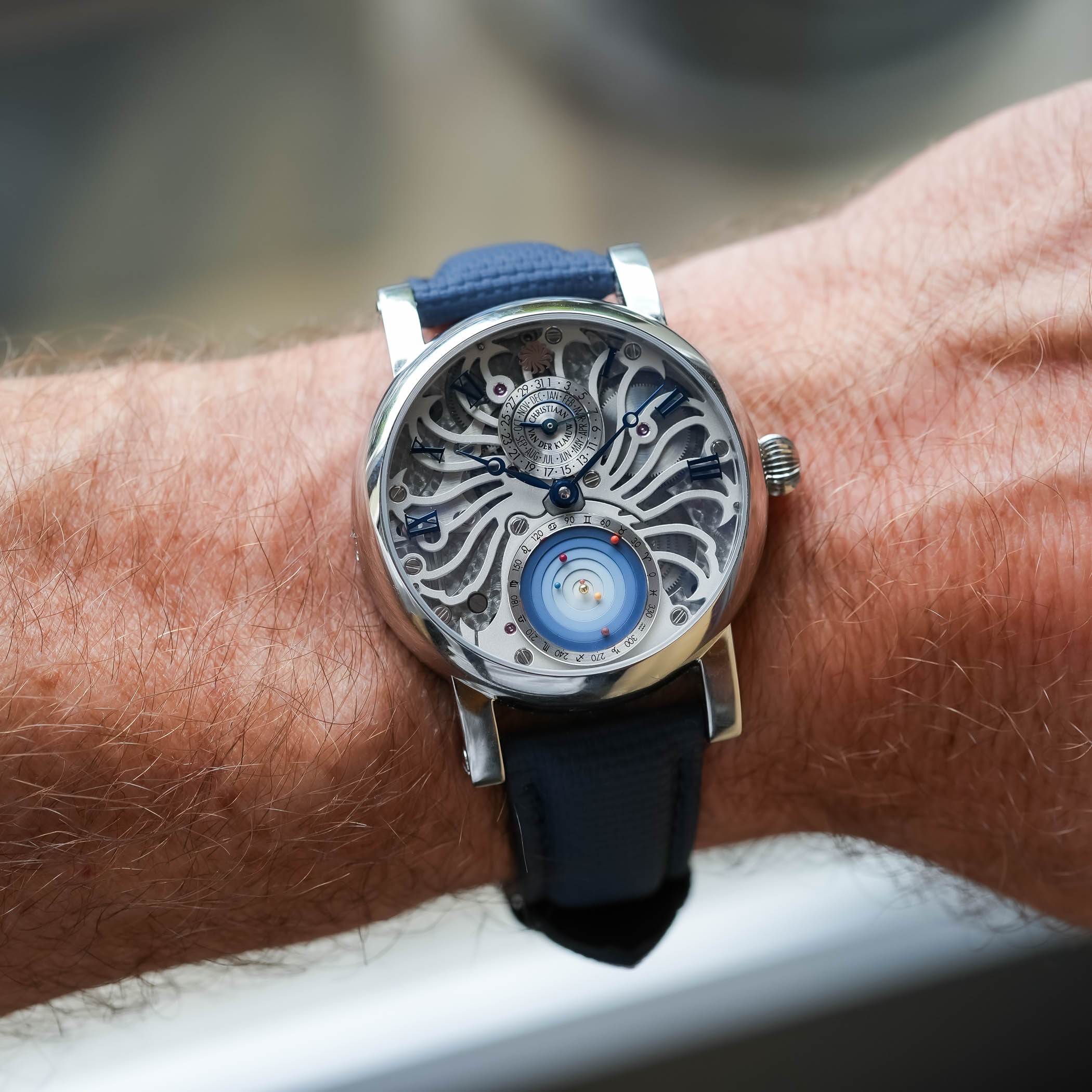
- The watch pairs a transparent sapphire dial with an openworked planetarium module showing six planetary orbits in real time.
- It is powered by the automatic CKM-01 manufacture calibre and is priced at EUR 86,000 excluding VAT.
A platinum case for a more exposed universe
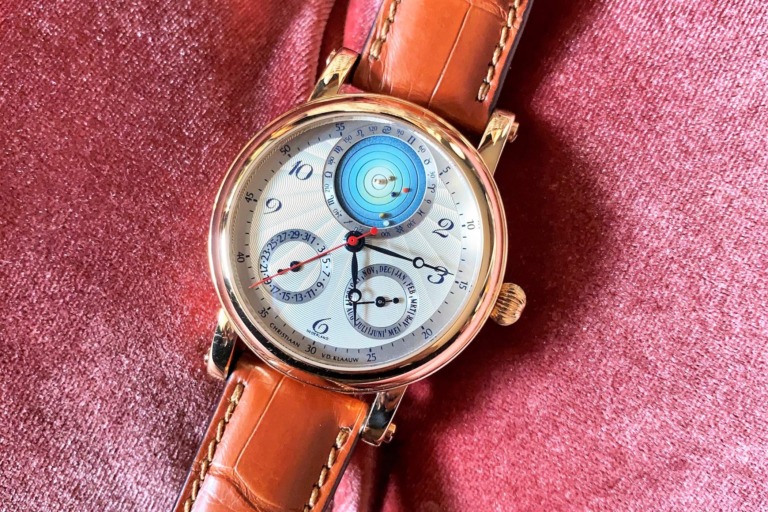
The Planetarium has been central to Christiaan van der Klaauw’s modern identity since the first wristwatch version appeared in 1999.
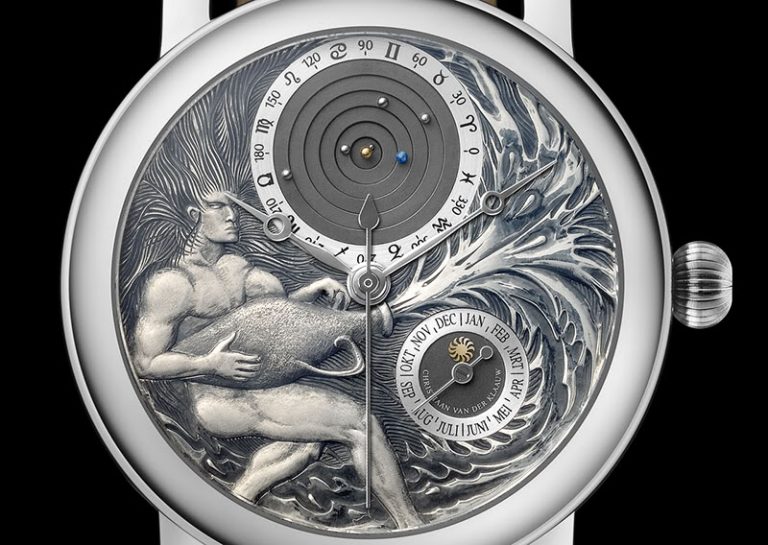
That watch carried what remains the world’s smallest mechanical planetarium, a complication that has since been developed through several interpretations, including the Grand Planetarium Eccentric and the singular Planetarium Julie.
The new Planetarium Skeleton Platinum borrows from the openworked language of the latter, but places it into a numbered limited edition rather than a one-off creation.
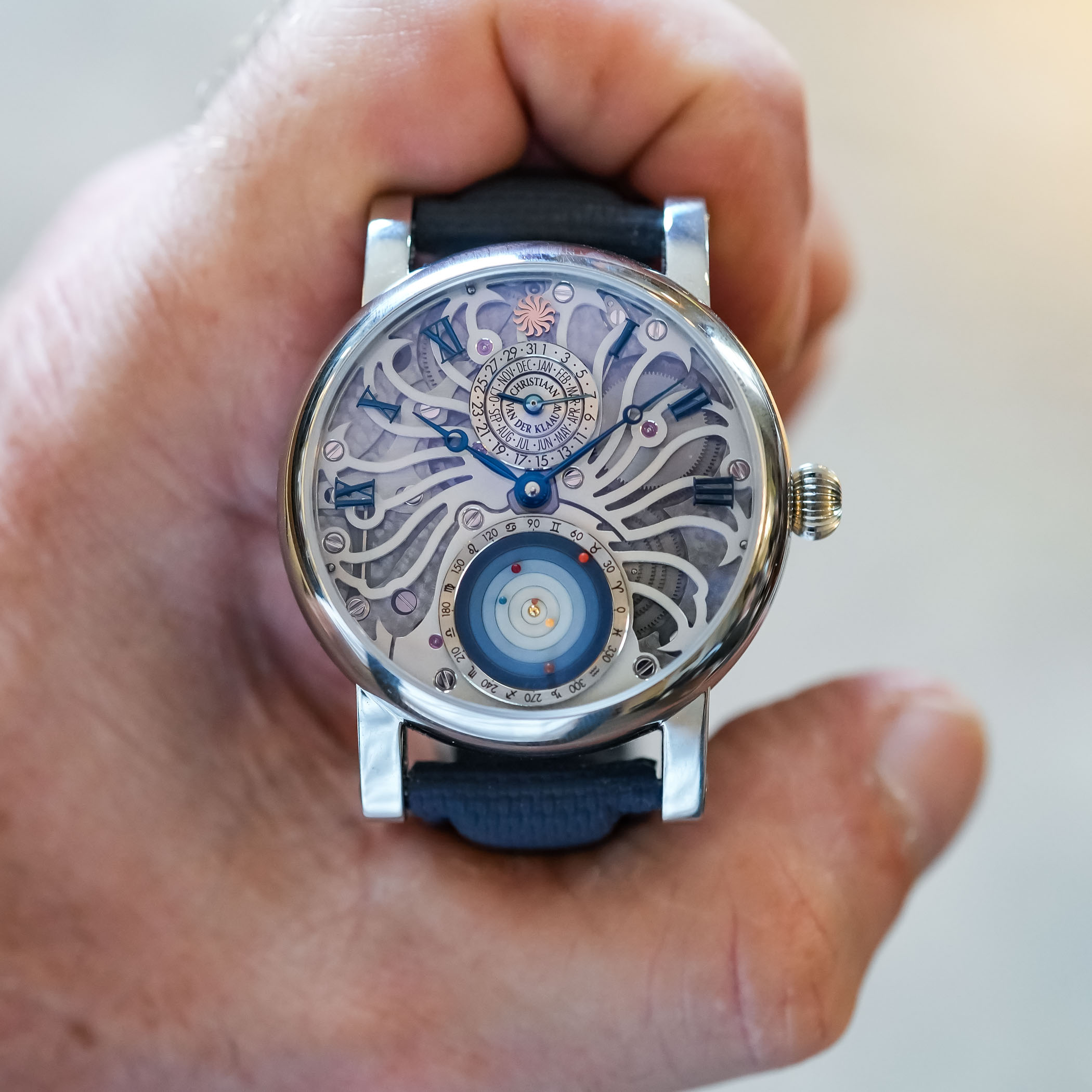
The case is 40mm in diameter and made from 950 platinum, with sapphire crystals on both the front and back.
Christiaan van der Klaauw keeps its familiar silhouette intact, including the onion crown and straight lugs, which gives the piece a recognisable classical frame around a far more contemporary dial construction.
Water resistance is rated to 50 metres, which is a practical specification for a high-complication watch of this type.
The sapphire dial changes how the planetarium is read
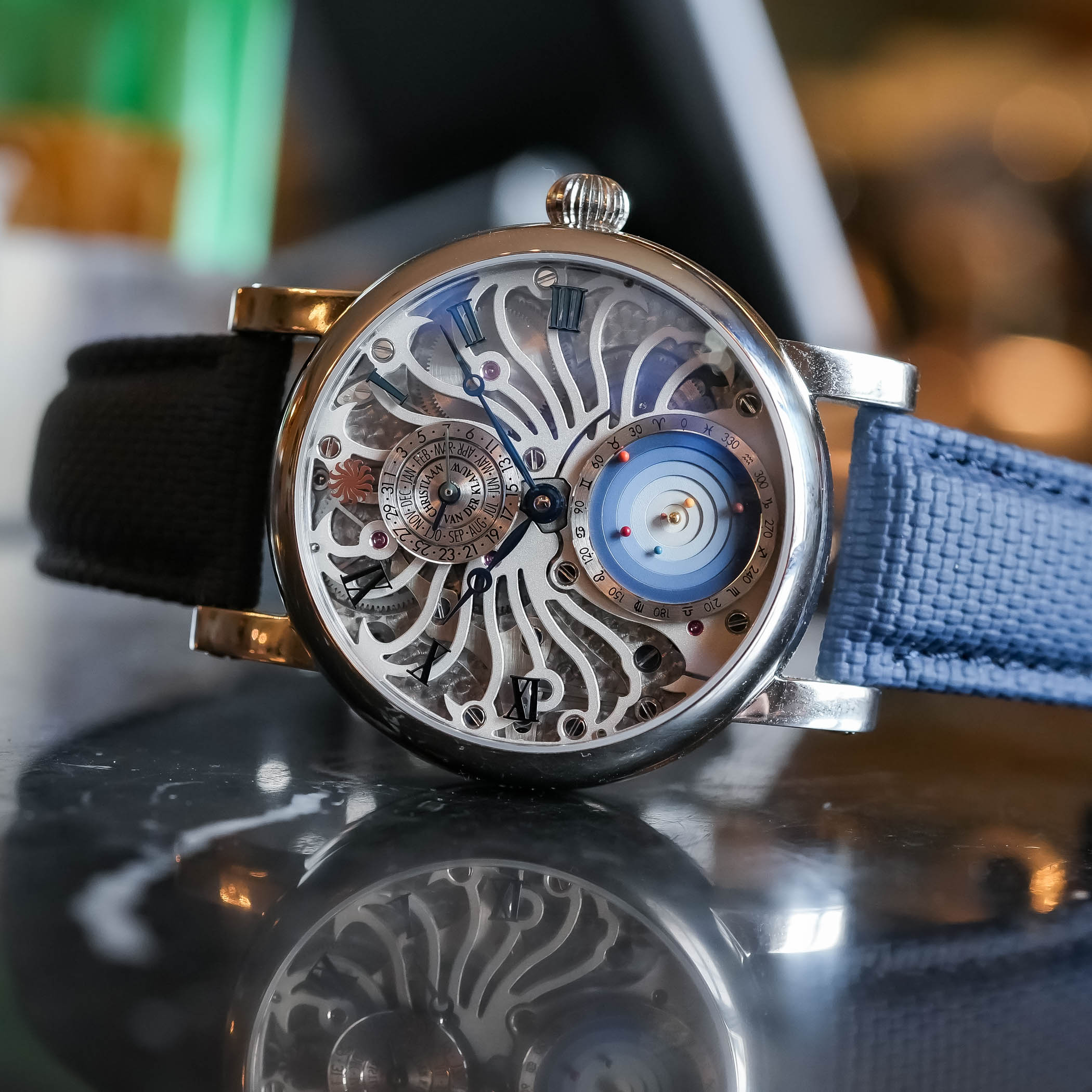
The transparent sapphire dial is the defining visual move here.
Instead of placing the astronomical display on a traditional solid surface, Christiaan van der Klaauw lets the structure of the module become part of the watch’s visual character.
Blued Roman numerals run across the upper half of the dial from 9 to 3, giving the time display a horizon line of sorts while leaving the lower section open for the planetarium.
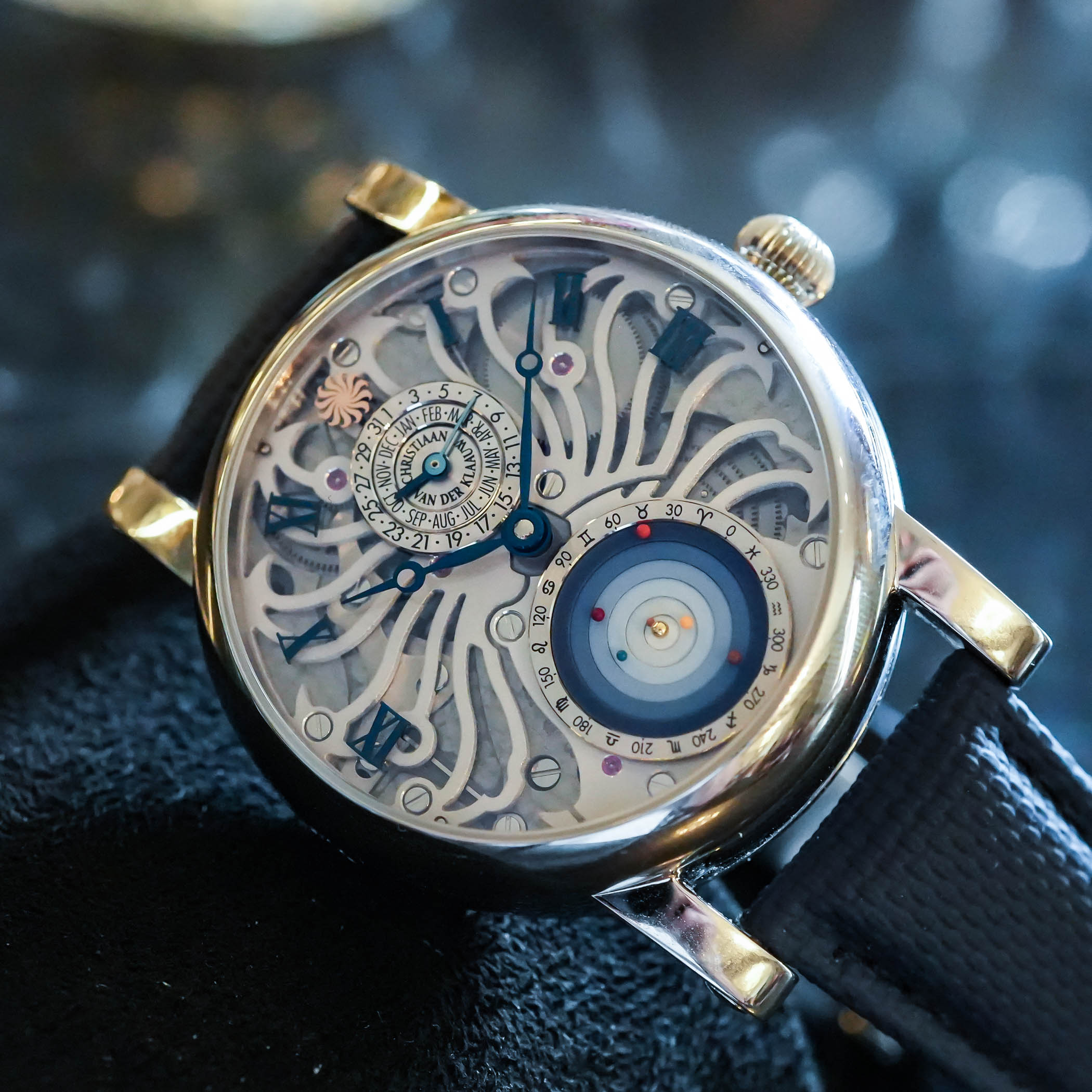
Central blued hands indicate hours and minutes, while a subdial at 12 o’clock adds the date and month.
At 6 o’clock, the heliocentric display tracks the real-time orbits of Mercury, Venus, Earth, Mars, Jupiter and Saturn around the Sun.
The orbital periods are not decorative approximations.
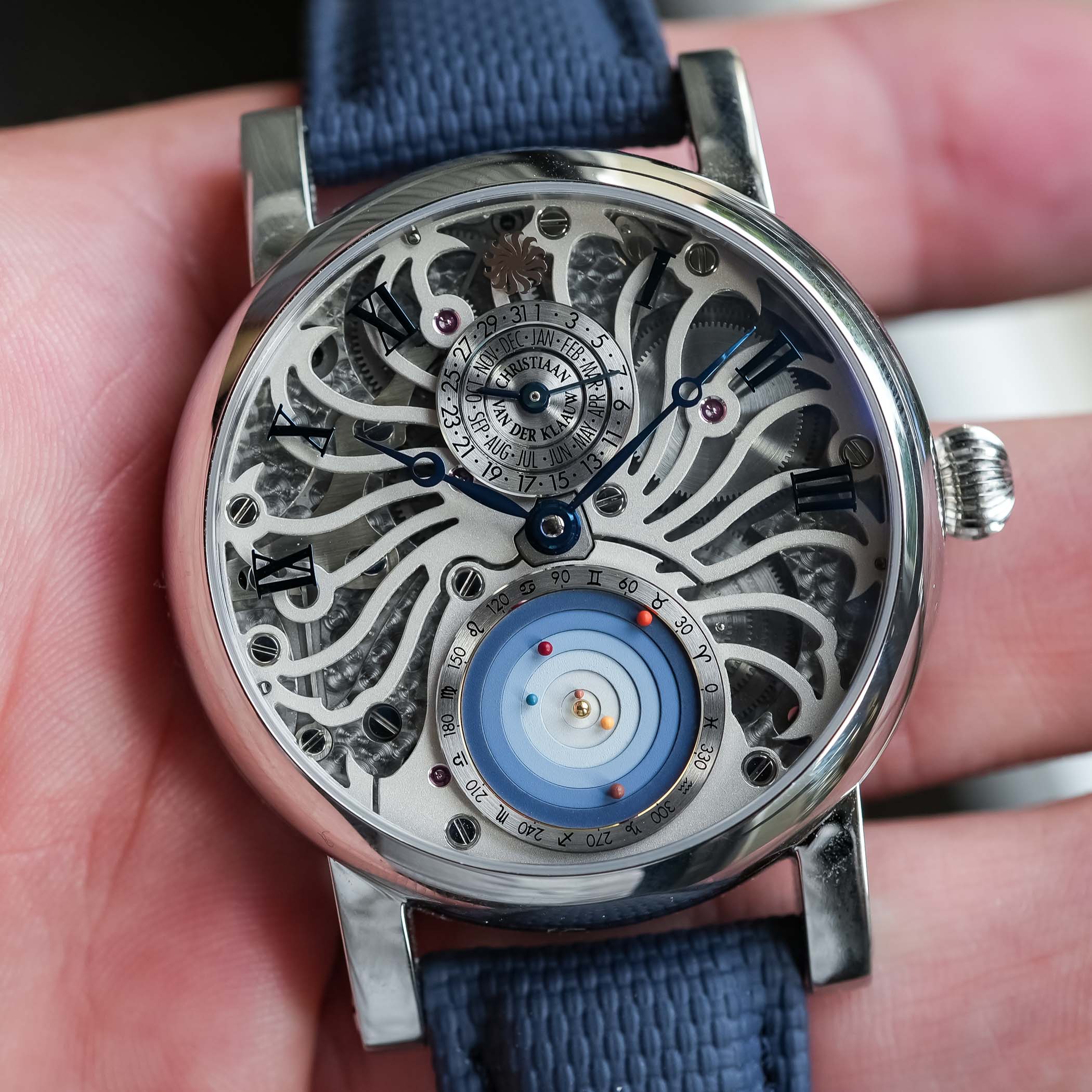
Mercury completes its path in 87.97 days, Venus in 224.70 days and Earth in 365.24 days, while Mars takes 686.98 days.
The two slowest indications are the most poetic, with Jupiter taking 11.86 years and Saturn taking 29.46 years to complete their displayed orbits.
The blue planetary rings also carry a subtle visual logic, beginning in a brighter light blue close to the Sun and darkening toward the outer orbits to suggest the fading intensity of sunlight over distance.
Logo-shaped bridges become part of the architecture
The skeletonisation is not simply a matter of removing material.
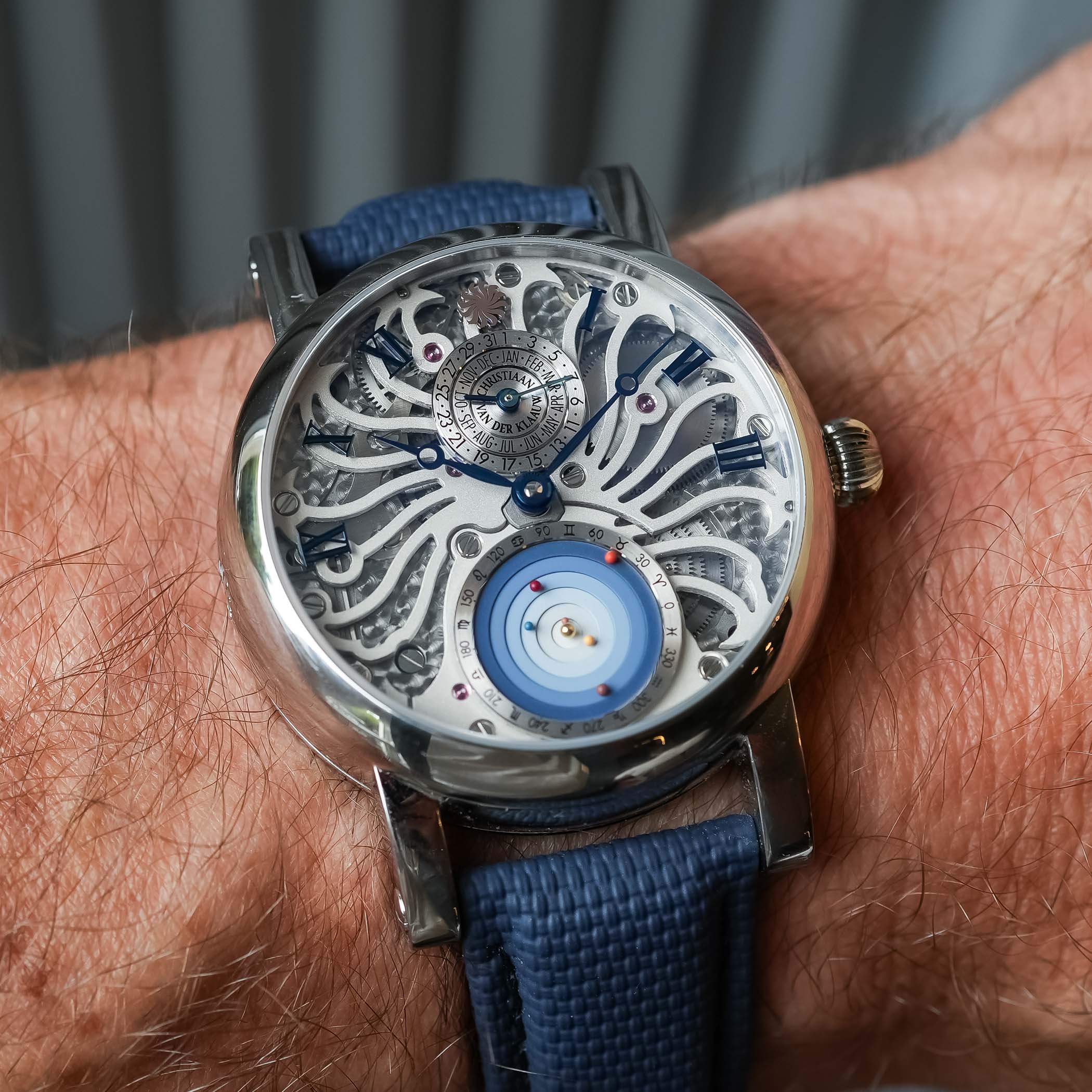
The custom bridges are shaped around the Christiaan van der Klaauw logo, a motif that represents the Sun with twelve radiating claws.
In this watch, that emblem becomes a structural element, surrounding the planetarium module and exposing more of the gear train beneath the sapphire dial.
The bridges and plate are rhodium-plated, giving the visible construction a coherent metallic tone against the transparency of the dial.
It’s a smart treatment because the openworking doesn’t compete with the astronomical display so much as frame it.
The CKM-01 movement beneath the astronomy
Power comes from the CKM-01 manufacture calibre, an automatic movement developed for Christiaan van der Klaauw with UhrTeil AG, the movement maker founded by Andreas Strehler.
It is the same base calibre used in the Grand Planetarium Eccentric.
The movement runs at 21,600 vibrations per hour and offers a 60-hour power reserve.
Its technical specification includes a free-sprung hairspring, a variable-inertia balance wheel, a Swiss lever escapement with jewelled bearings and 30 jewels.
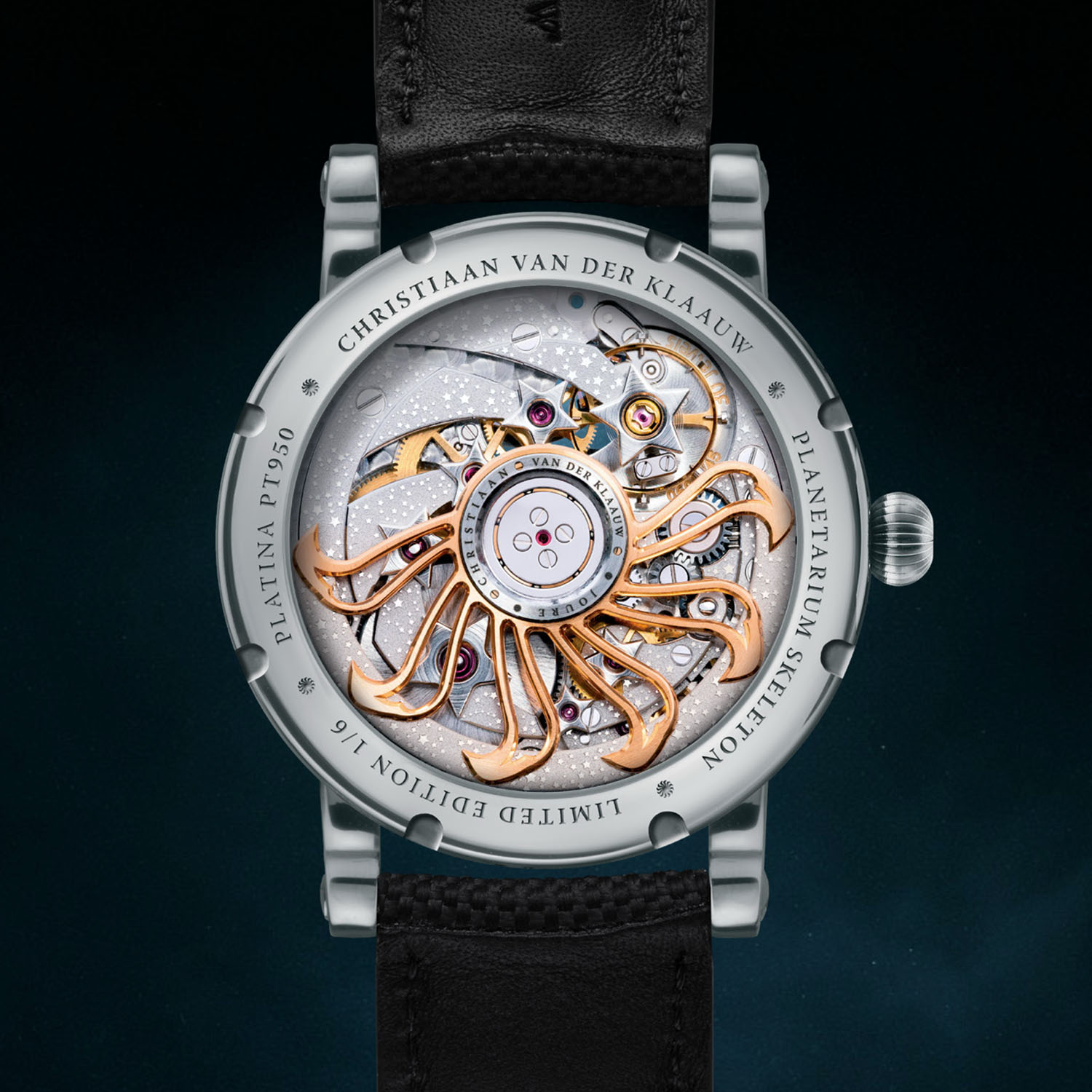
The finishing is also part of the theatre through the caseback, with circular decoration on the star-shaped bridges, frosted star decoration, perlage on the main plate and rhodium plating.
The skeletonised rotor is rose gold-plated and shaped like the CVDK logo, with a rhodium-plated tungsten weight for winding efficiency.
The watch is delivered on an FKM sailcloth strap with a stainless-steel folding clasp carrying a platinum CVDK logo.
Details & Specifications
| Brand | Christiaan van der Klaauw |
|---|---|
| Model | Planetarium Skeleton Platinum |
| Reference | CKPT22SK |
| Case size | 40mm |
| Case material | 950 platinum |
| Crystal | Sapphire crystal and sapphire caseback |
| Water resistance | 50 metres |
| Dial | Transparent sapphire with blued Roman numeral indices and blue-accented planetary rings |
| Indications | Hours, minutes, date, month and real-time orbits of Mercury, Venus, Earth, Mars, Jupiter and Saturn |
| Movement | CKM-01 automatic manufacture calibre |
| Winding | Automatic, unidirectional winding |
| Frequency | 21,600 vibrations per hour |
| Power reserve | 60 hours |
| Jewels | 30 |
| Escapement | Swiss lever escapement with jewelled bearings |
| Movement features | Free-sprung hairspring and variable-inertia balance wheel |
| Finishing | Rhodium-plated star-shaped bridges, hand circular decoration, frosted star decoration and perlage on the main plate |
| Rotor | Skeletonised rose gold-plated rotor with rhodium-plated tungsten weight |
| Strap | FKM sailcloth |
| Clasp | Stainless-steel folding clasp with platinum CVDK logo |
| Availability | Limited edition of 6 numbered pieces |
| Price | EUR 86,000 excluding VAT |
The Planetarium Skeleton Platinum is a compelling step for Christiaan van der Klaauw because it makes the brand’s most recognisable complication feel more immediate without diluting its astronomical purpose.
For collectors drawn to independent watchmaking with a genuine mechanical signature, this is a rare and highly focused expression of what the Dutch manufacture does best.