The Pininfarina Battista was never going to be a quiet arrival, even by hypercar standards.
With 1,900 hp, Rimac-supplied battery hardware and a production run capped at 150 cars worldwide, it sits among the most extreme electric performance cars yet offered to private buyers.
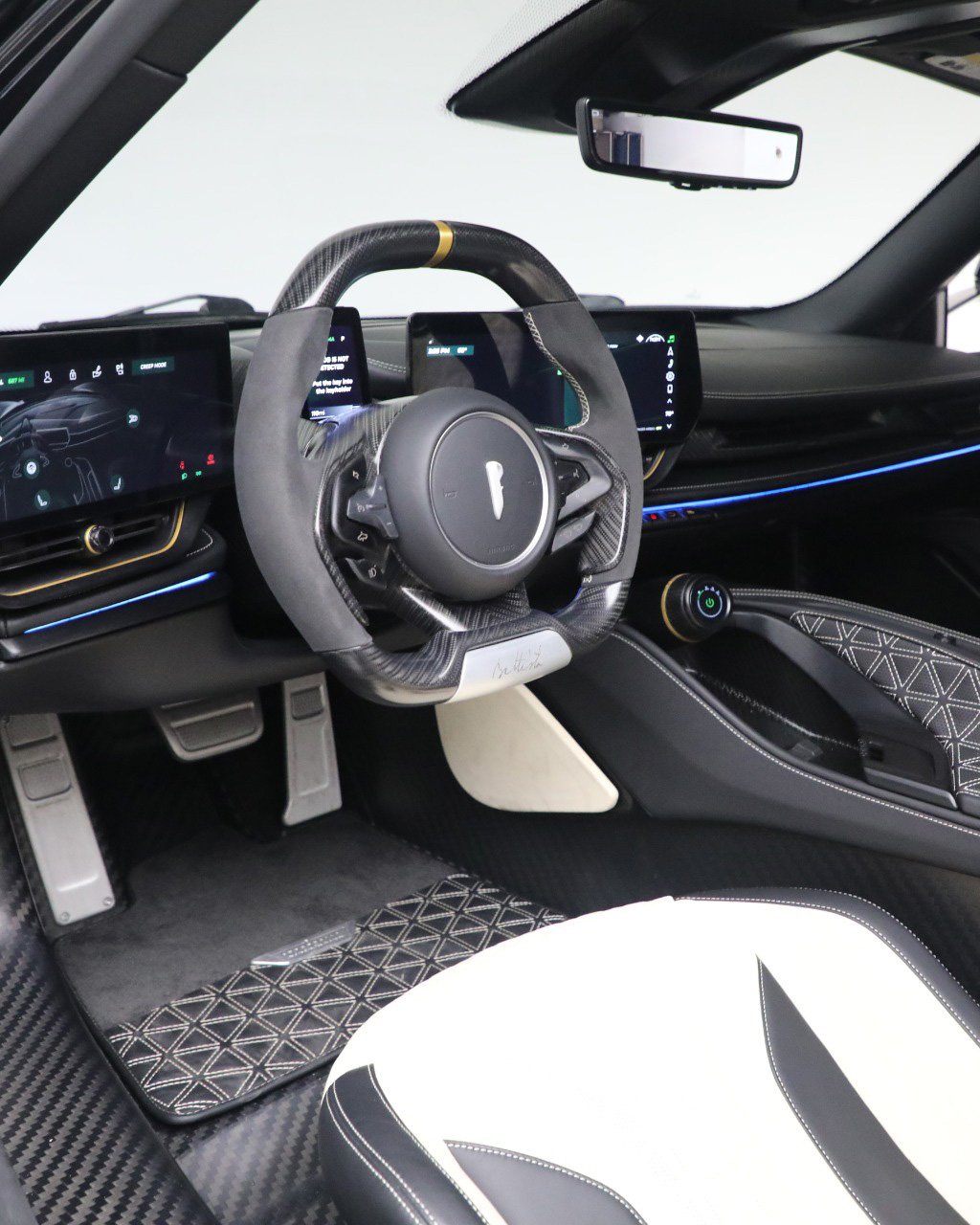
This 2022 example now up for sale adds another layer of interest, thanks to more than $1 million in bespoke upgrades and a specification that leans hard into the Battista’s futuristic character.
At a glance
- A 2022 Pininfarina Battista with more than $1 million in bespoke upgrades is currently up for sale.
- The electric hypercar uses a 120 kWh Rimac battery pack and a quad-motor all-wheel-drive setup producing 1,900 hp.
- Production of the Battista is limited to 150 units globally, while pricing for this example remains undisclosed.
A Battista specified well beyond standard
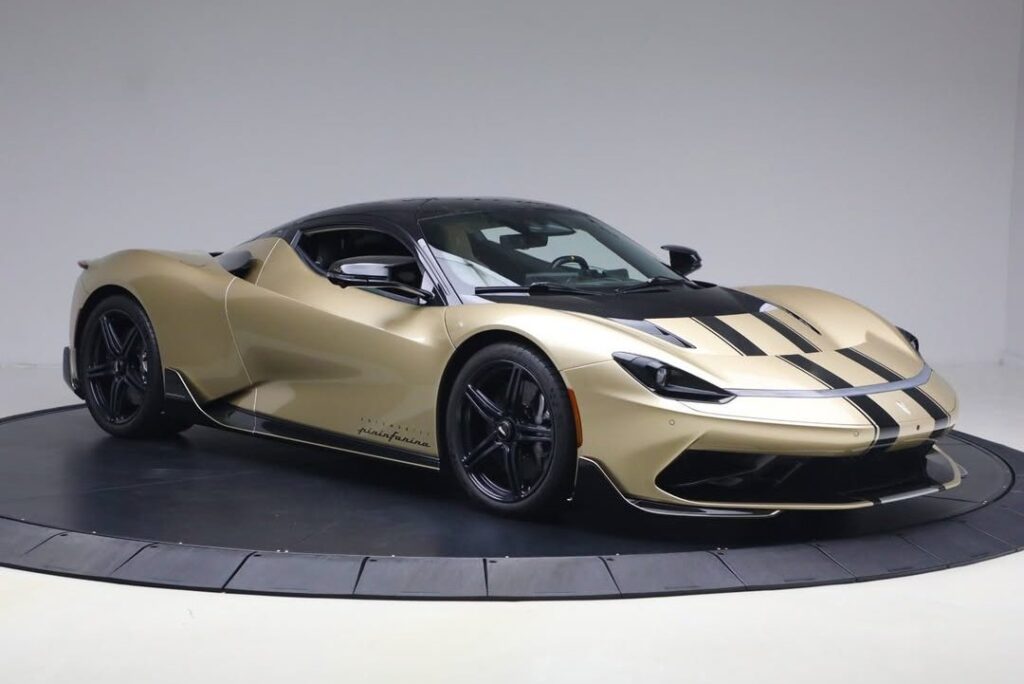
The car is finished in a light golden shade, a warmer and more elegant treatment than the darker, more aggressive palettes often seen on electric hypercars.
A blacked-out roof gives the profile a lower visual stance, while dual black racing stripes across the hood add a more traditional motorsport cue to an otherwise highly modern shape.
The Battista’s aerodynamics are central to the way it looks, with numerous aero elements integrated into the bodywork to help manage airflow and reduce drag.
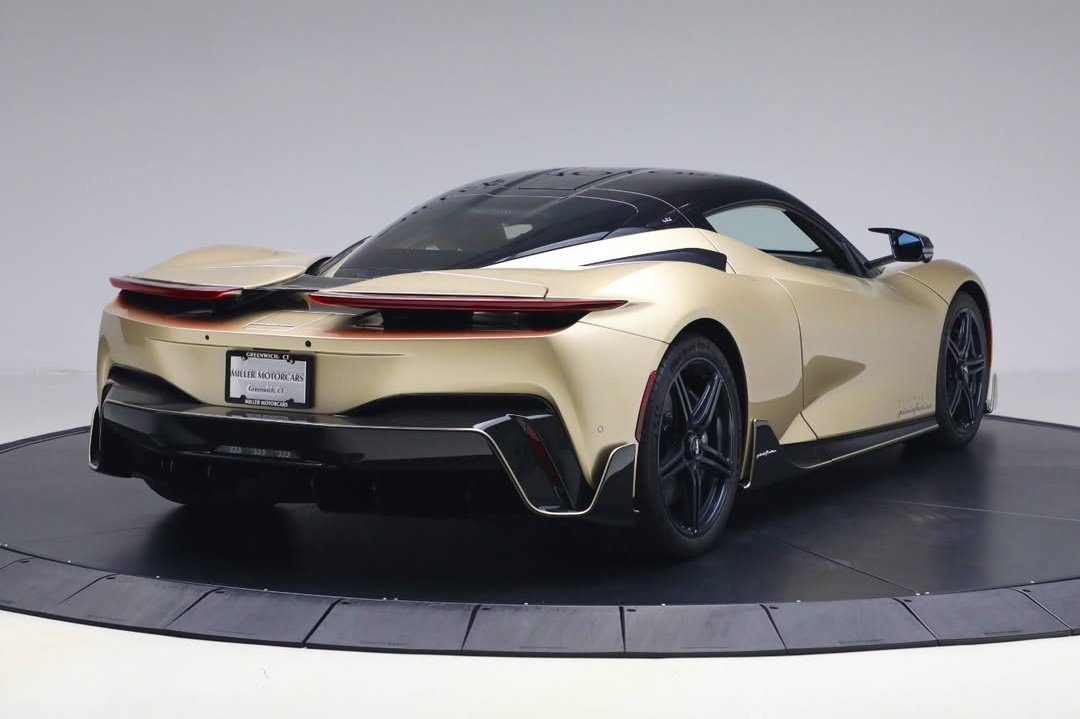
Its side mirrors are among the most striking exterior details, with a sharply futuristic form that suits the car’s electric architecture and near-concept-car presence.
At the rear, the thin lighting signature and sculpted tail continue that same visual theme, making the Battista feel less like an adaptation of an existing supercar formula and more like a clean-sheet electric statement.
Rimac battery hardware and four-motor performance
The numbers remain the Battista’s calling card.
Power comes from a 120 kWh battery pack supplied by Rimac Automobili, paired with a quad-motor all-wheel-drive system.
Total output is rated at 1,900 hp and 1,475 lb-ft of torque, placing the Battista in the same conversation as the most powerful road cars in the world.
The performance figures are suitably dramatic, with 0-62 mph taking just 1.89 seconds.
Top speed is listed at 222 mph, a reminder that the Battista was engineered not merely for instant electric launch performance, but also for sustained high-speed capability.
That combination is what makes the car so compelling from a technical standpoint.
It has the emotional nameplate and Italian design heritage associated with Pininfarina, but the underlying performance hardware belongs firmly to the new electric hypercar era.
Collector appeal in a 150-car production run
With only 150 units planned globally, the Battista was scarce from the start.
This example’s seven-figure bespoke specification pushes it further into collector territory, especially for buyers who want a car that won’t be easily duplicated.
The market for electric hypercars is still young compared with the long-established world of limited-production V12s and turbocharged exotics.
That makes cars like the Battista particularly interesting, because they occupy an early chapter in the story of ultra-high-performance EVs.
For some collectors, the appeal will be performance first.
For others, it will be the combination of rarity, design, customization and the Pininfarina name attached to a road car of this scale.
Details & Specifications
| Brand | Pininfarina |
|---|---|
| Model | Battista |
| Model year | 2022 |
| Powertrain | Quad-motor all-wheel drive |
| Battery | 120 kWh pack supplied by Rimac Automobili |
| Power | 1,900 hp |
| Torque | 1,475 lb-ft |
| Acceleration | 0-62 mph in 1.89 seconds |
| Top speed | 222 mph |
| Exterior | Light golden finish with black roof and dual black hood stripes |
| Bespoke upgrades | More than $1 million |
| Production | Limited to 150 units globally |
| Price | Undisclosed |
For the right buyer, this Battista isn’t simply a 1,900 hp electric hypercar with dramatic numbers.
It’s a rare Pininfarina with an unusually individual specification, and that may be the detail that matters most once the first-second acceleration fades into memory.