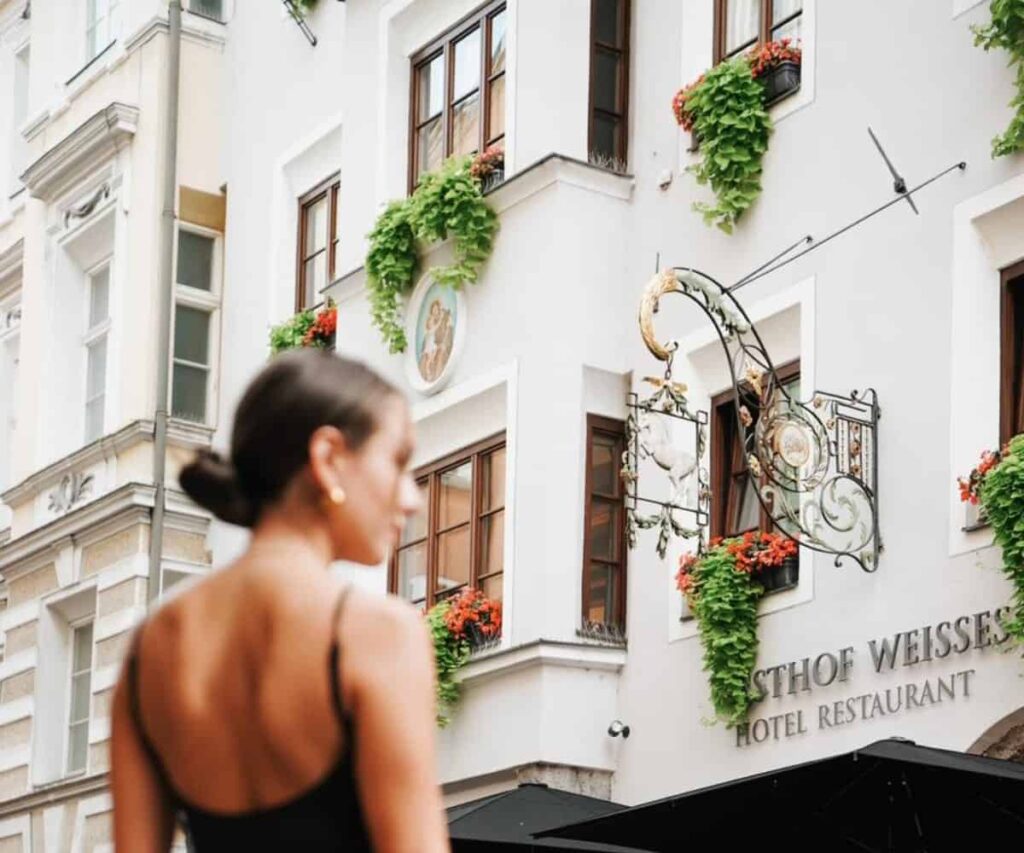
In a city where history can feel almost too neatly framed for visitors, Weisses Rössl has the advantage of feeling lived in.
Set just off Innsbruck’s busiest old-town route, less than a minute from the Golden Roof, the restaurant combines medieval architecture, Tyrolean cooking and a more local rhythm than its central location might suggest.
It’s the kind of address that makes sense for travellers who want regional food with a sense of place, but not a dining room that feels trapped in folklore.
At a glance
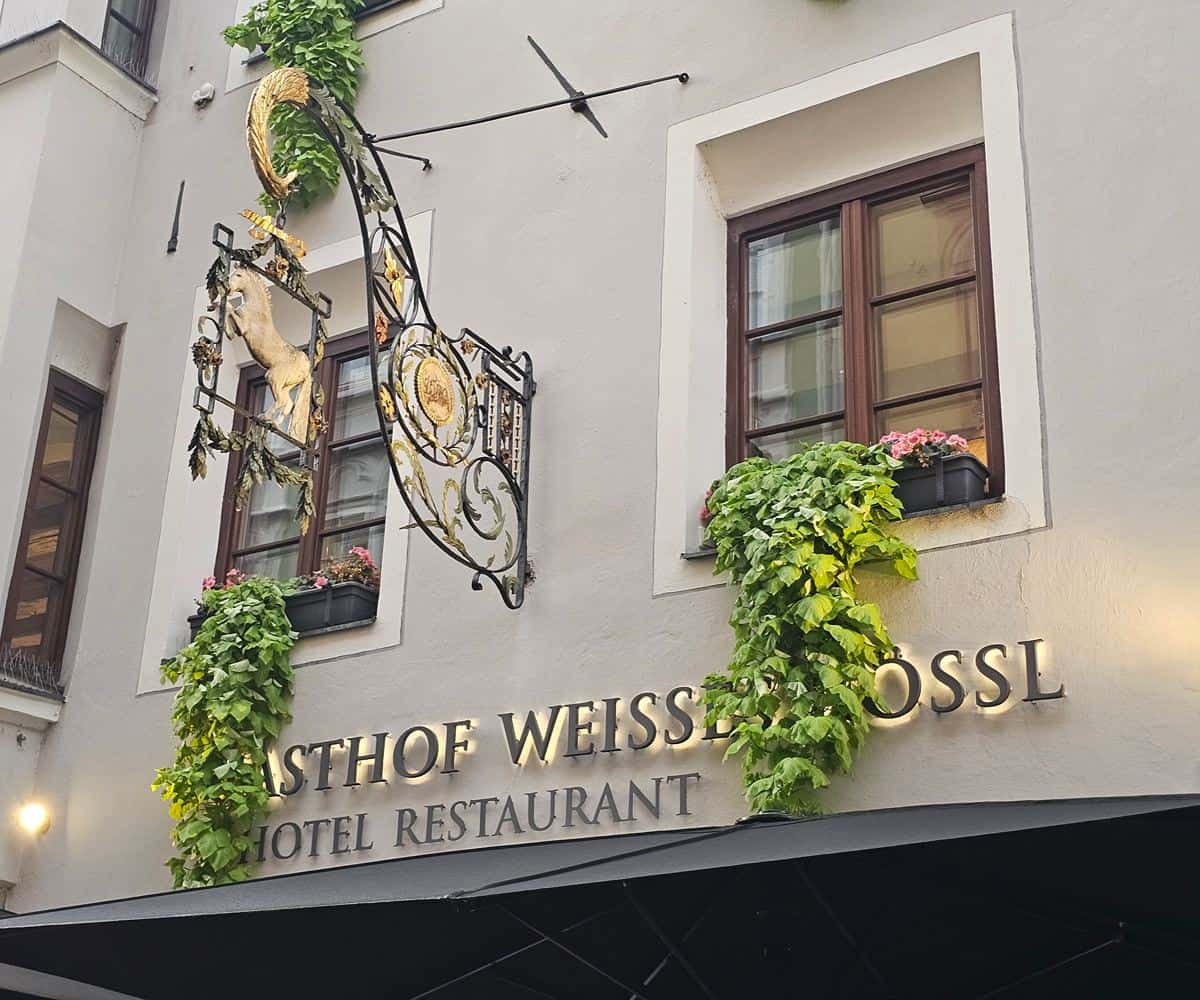
- Weisses Rössl is a historic Altstadt inn and restaurant on Kiebachgasse, moments from Innsbruck’s Golden Roof.
- Chef Hans Ruetz’s menu focuses on Tyrolean classics, local produce and refined alpine comfort food.
- Starters generally range from €8 to €16, mains from €18 to €32 and classic desserts from €6 to €12.
A medieval address just off the main flow
Weisses Rössl sits on Kiebachgasse, a street historically associated with craft workshops, and that slightly quieter setting matters.
Rather than facing directly onto the most photographed sweep of the Altstadt, the restaurant feels tucked into the old city’s working texture.
The building itself carries considerable age.
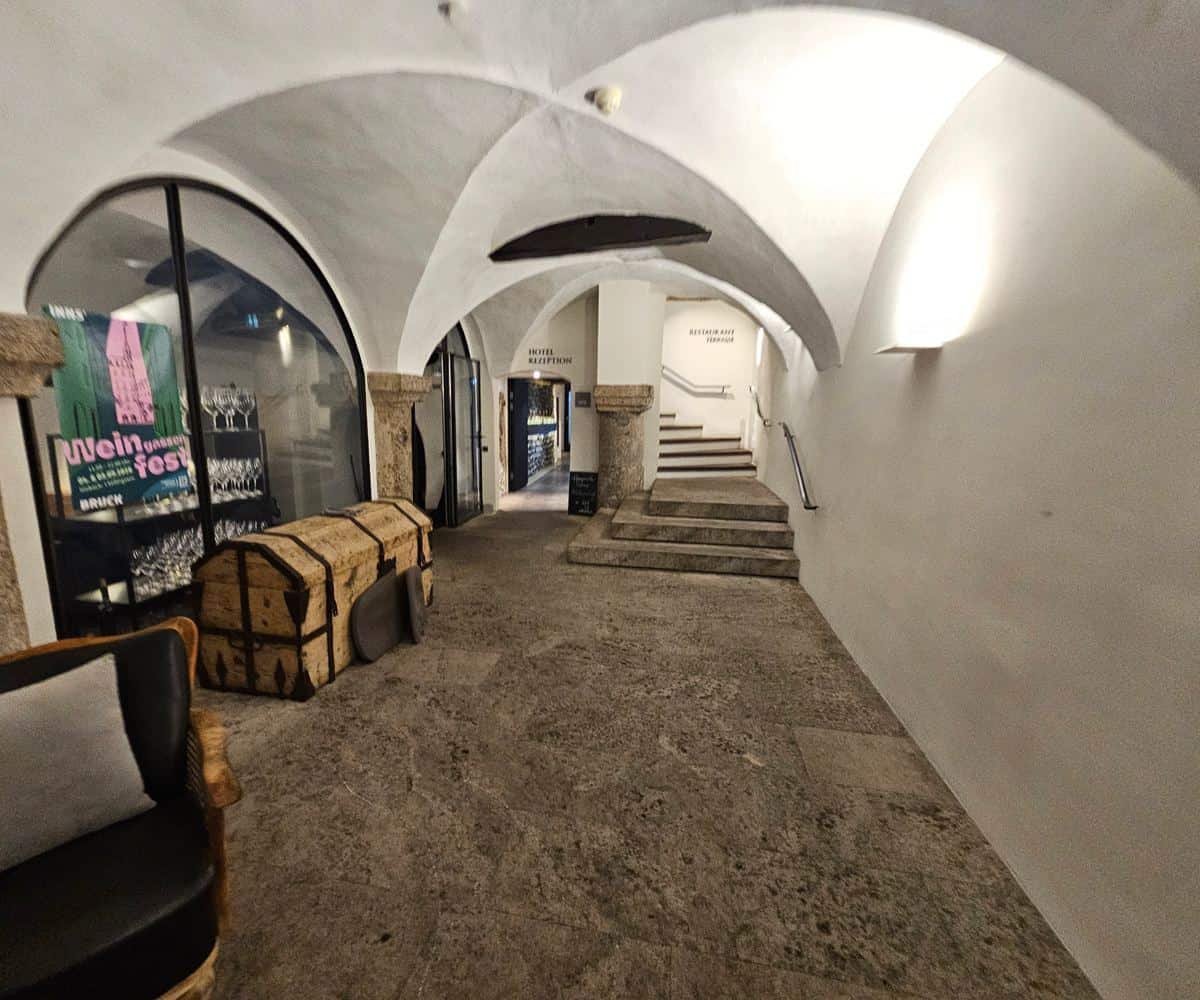
Municipal records trace it back to at least 1410, while an old wooden beam carved with the year 1292 suggests the structure’s roots may reach even further into Innsbruck’s past.
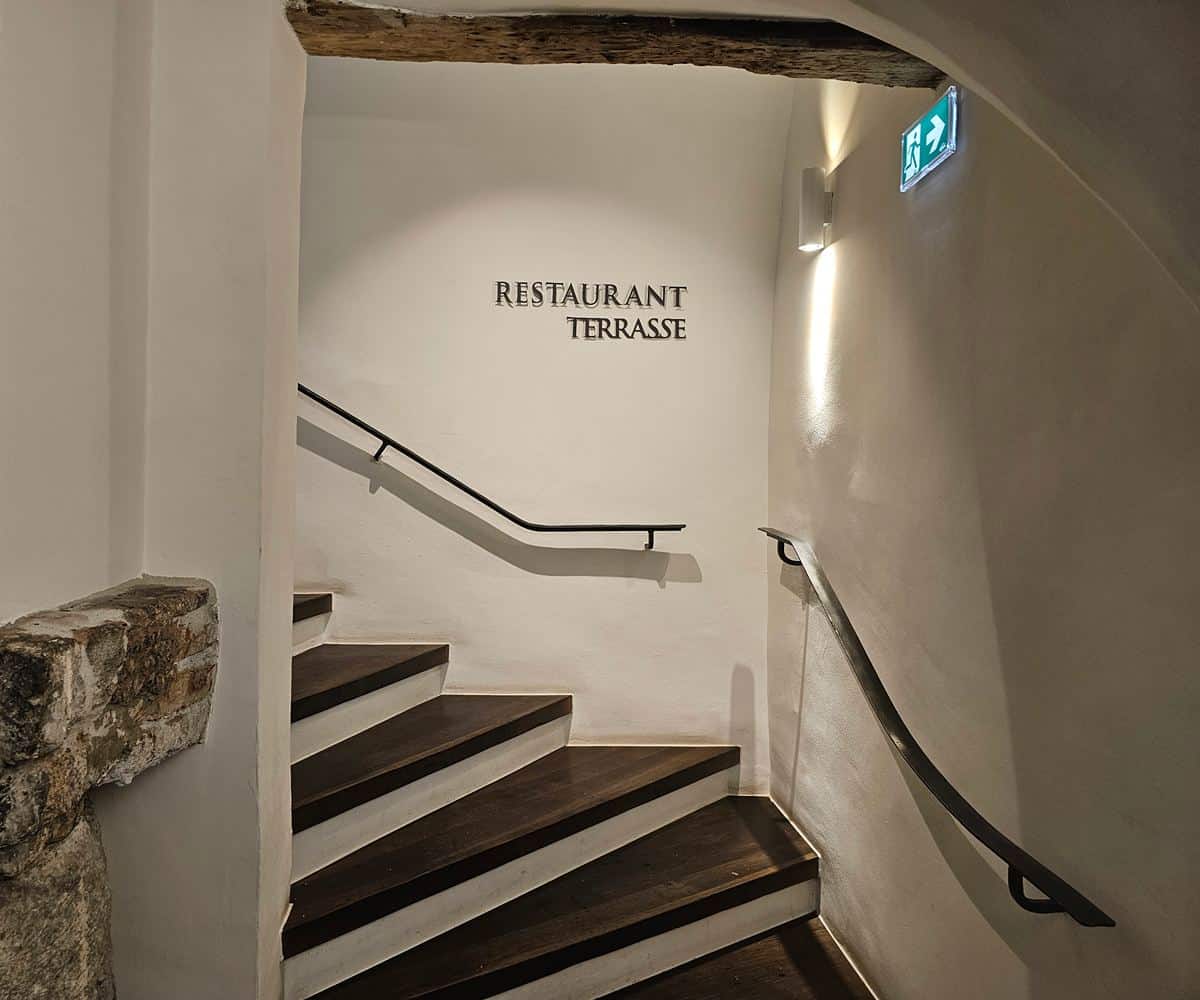
The entrance leads through a vaulted stone cellar, now home to a cocktail and wine bar, before a broad staircase rises to the main restaurant.
That first-floor dining arrangement is unusual for an Altstadt inn, and it gives the room a slightly private, removed quality above the lanes below.
Tyrolean cooking with a lighter hand
The menu is built around alpine appetite, but it doesn’t rely only on heft.
Chef Hans Ruetz works with familiar regional foundations such as braised meats, mountain cheeses, smoked produce and Austrian staples, then brings a cleaner, more contemporary finish to the plate.
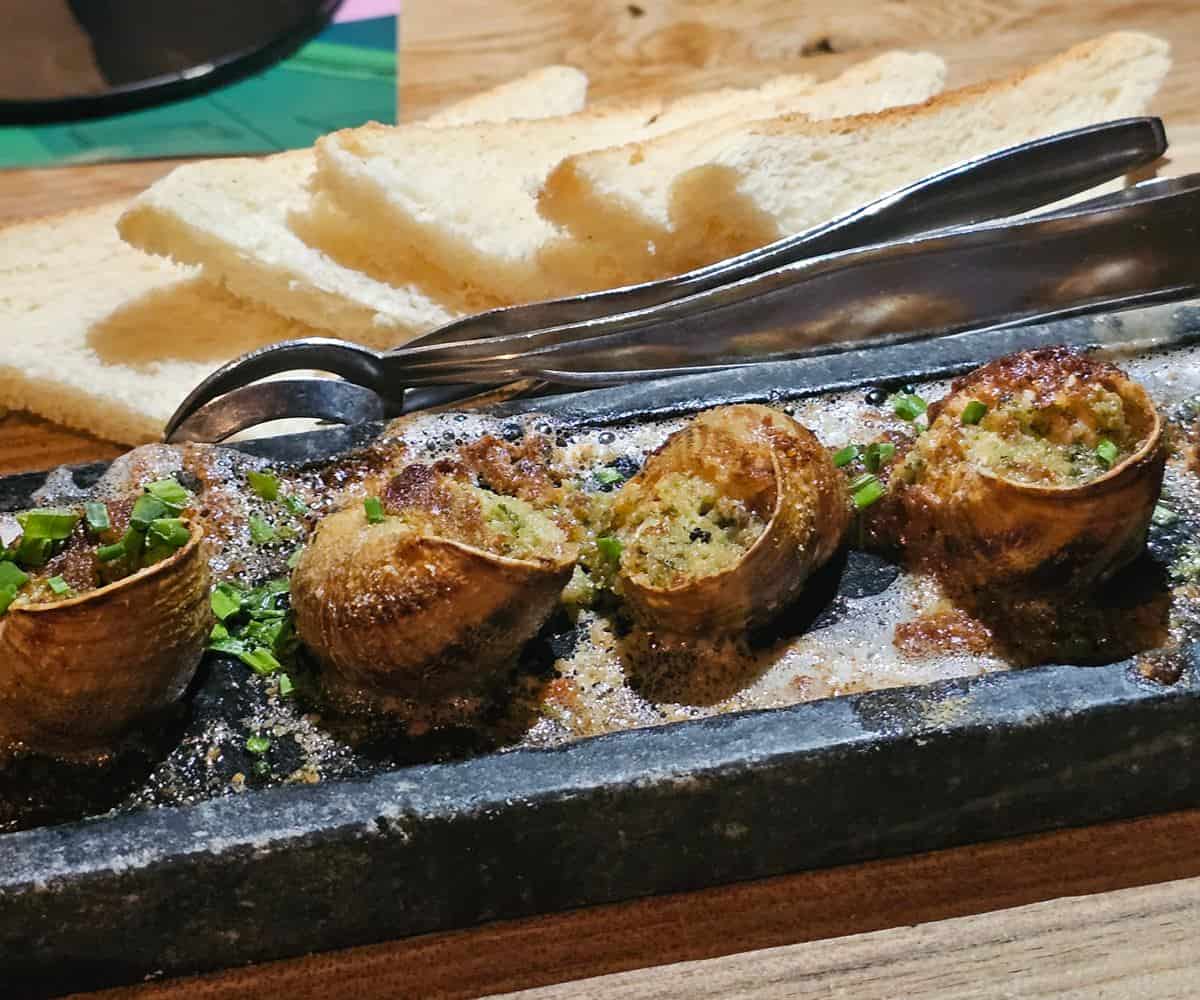
Among the starters, Tyrolean escargots arrive with garlic and herb butter, served with toast for chasing the last of the sauce.
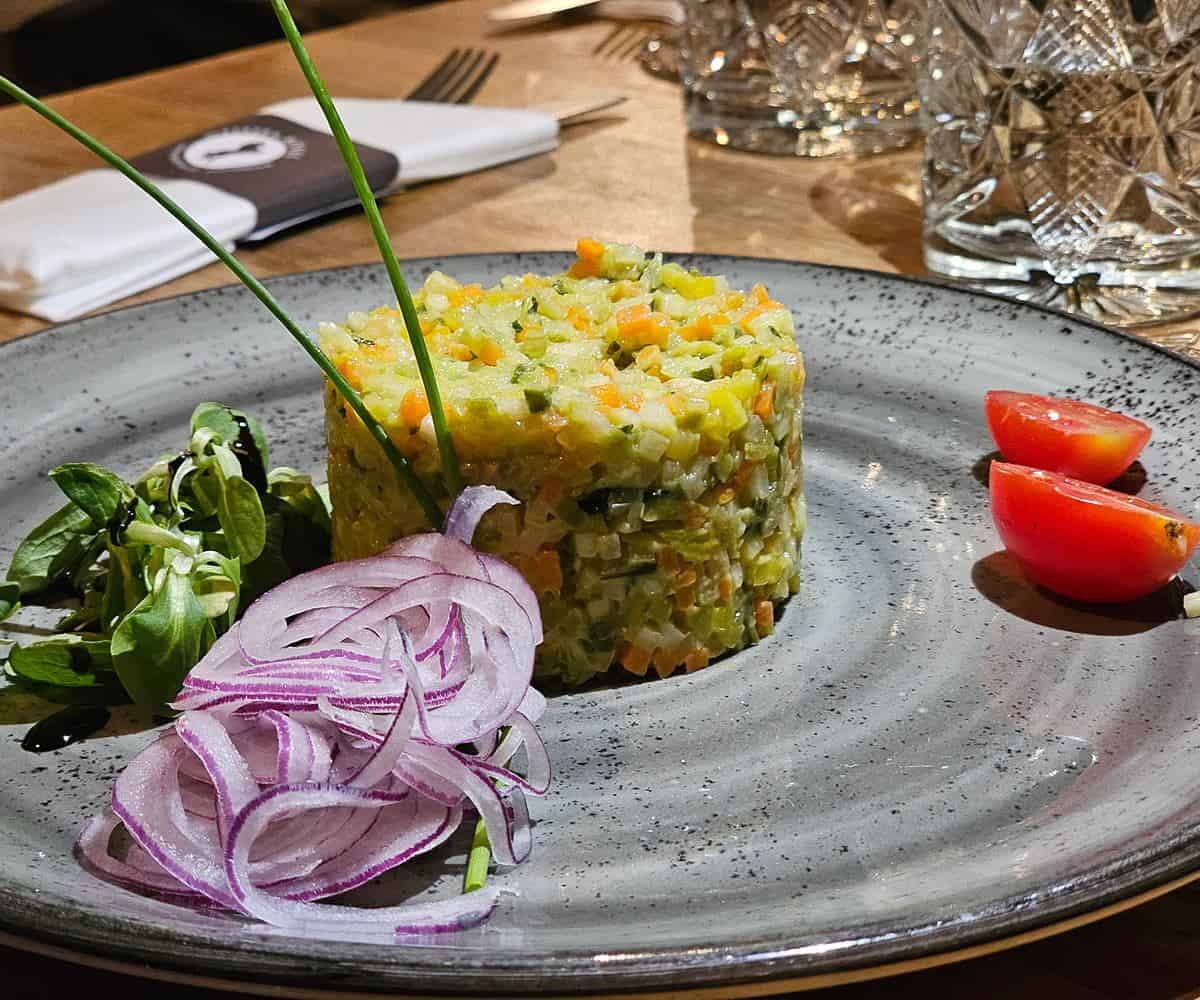
The gemüse tartar offers a vegetarian-leaning counterpoint, pairing a colourful vegetable tartare with smooth avocado cream.
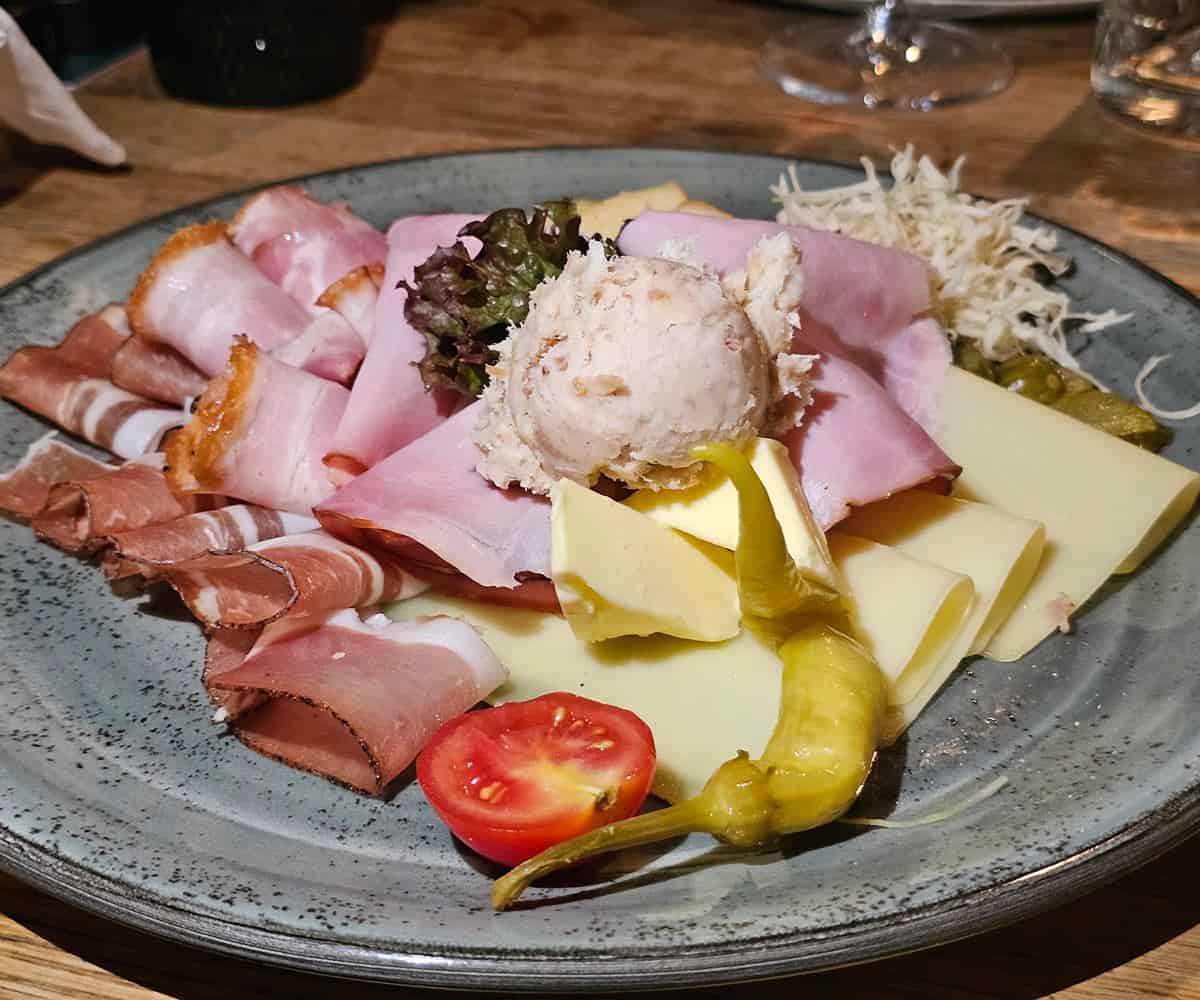
The winzerjause is the more traditional opening move, gathering local smoked specialities and artisanal cheeses sourced from nearby farmers into a generous sharing plate.
Main courses stay close to the comfort zone of Austrian cooking.
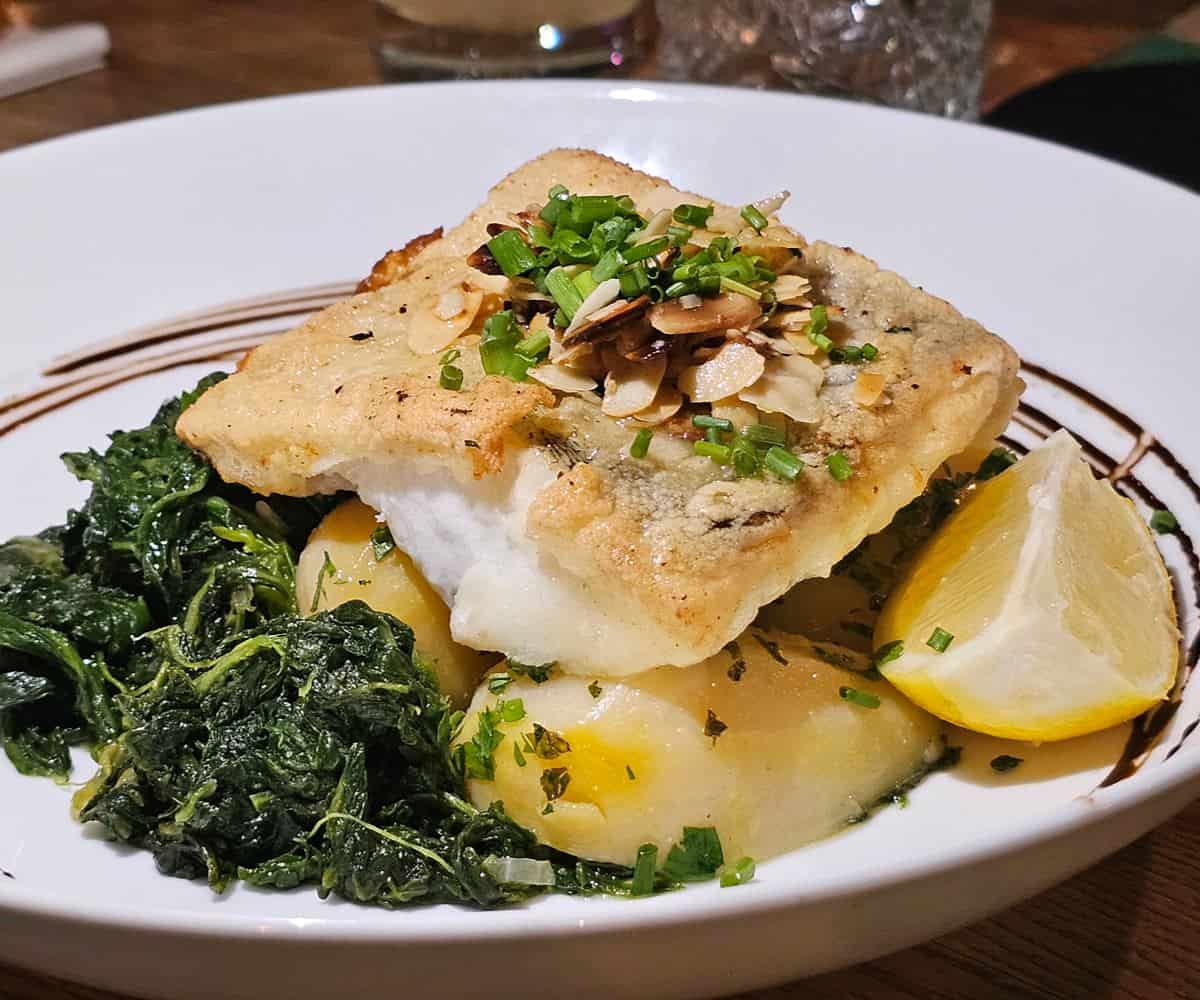
The gebratener zander is pan-fried with crisp golden skin, served with buttery leaf spinach and parsley potatoes.
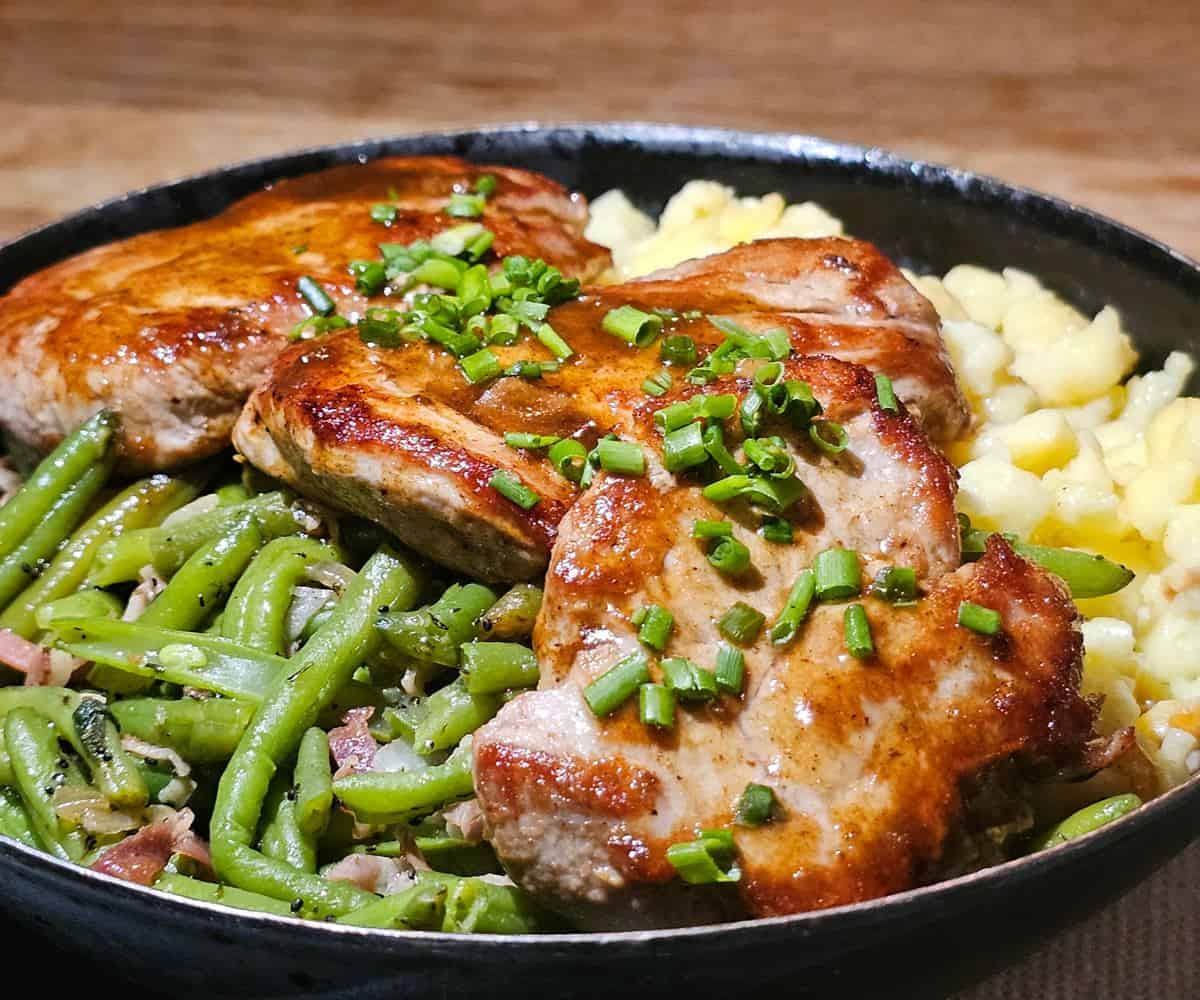
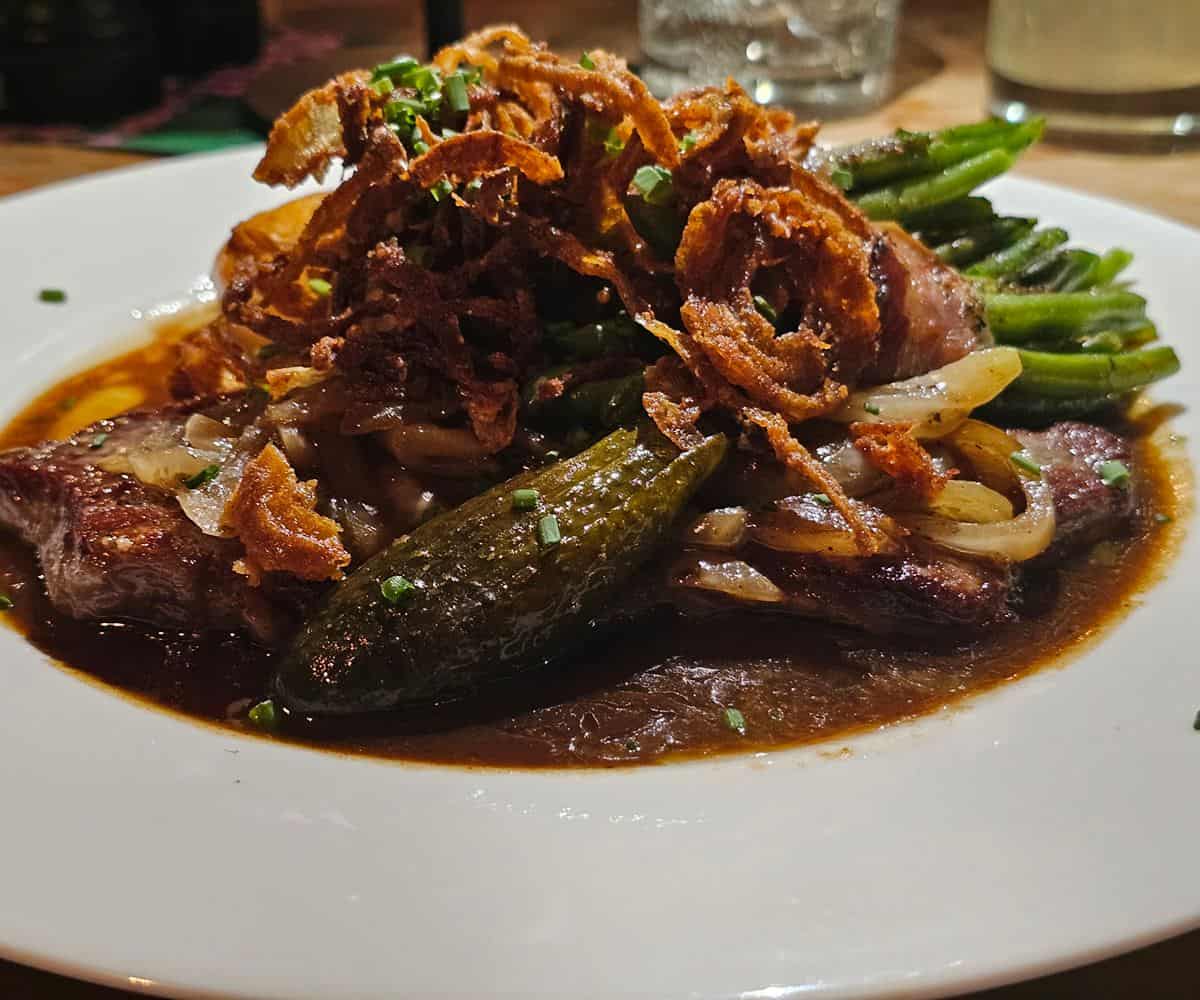
The haupsfandl brings pork fillet medallions with bacon and green beans, while the zwiebelrostbraten places roast beef from the high sirloin under a generous crown of crispy fried onions.
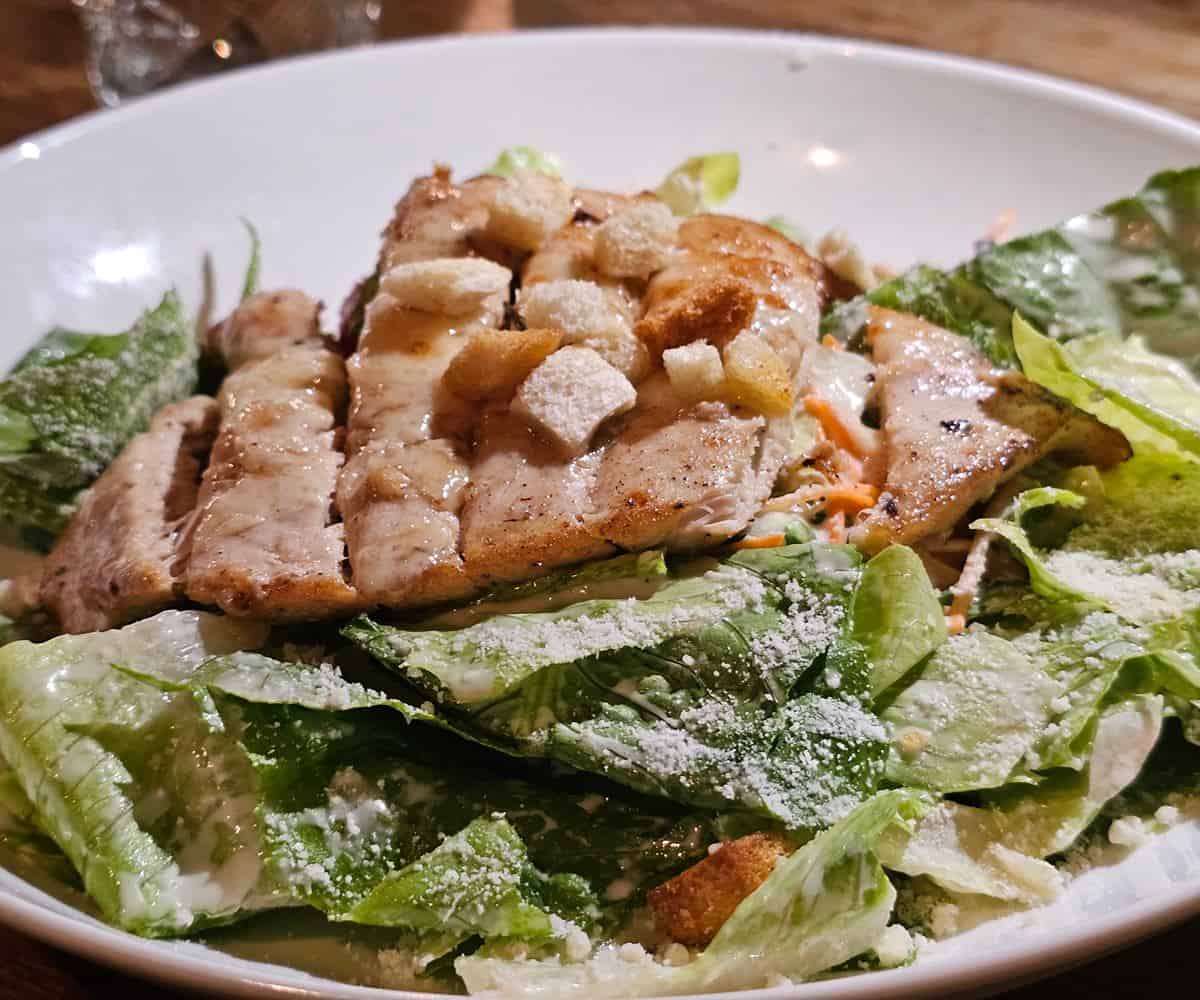
For something cooler and lighter, the romanasalat combines cos lettuce, creamy Caesar dressing, grilled chicken and garlic croutons.
Desserts remain firmly Tyrolean and Austrian in spirit, with classics such as Kaiserschmarrn with stewed plums, warm apple strudel and Palatschinken filled with apricot or cranberry jam.
Hans Ruetz and the kitchen’s broader outlook
Hans Ruetz’s connection to Weisses Rössl is more than a standard chef appointment.
He began his culinary career at the restaurant, later spent time as head chef, then left to broaden his experience abroad.
His travels included Hong Kong, Australia, New Zealand and Thailand before he returned to Weisses Rössl in 2012.
That background helps explain why the cooking doesn’t feel sealed off from the wider world, even when the dishes remain recognisably Tyrolean.
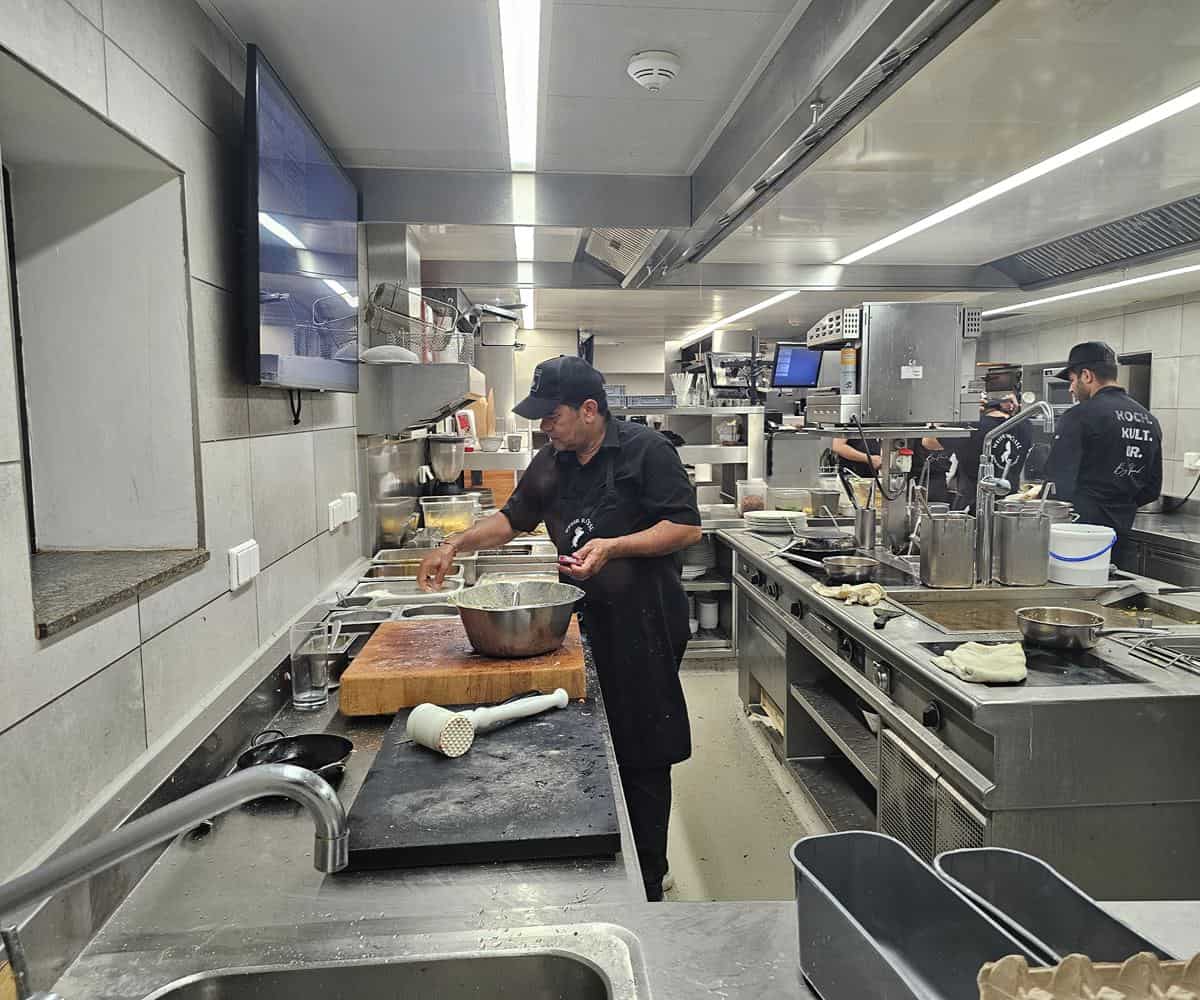
There’s also a small theatrical detail inside the restaurant, with viewing windows near the route to the restrooms giving diners a glimpse of the kitchen team at work.
The terrace is the table to ask for
Inside, Weisses Rössl can deliver the classic old-town inn atmosphere, particularly in its wood-panelled rooms.
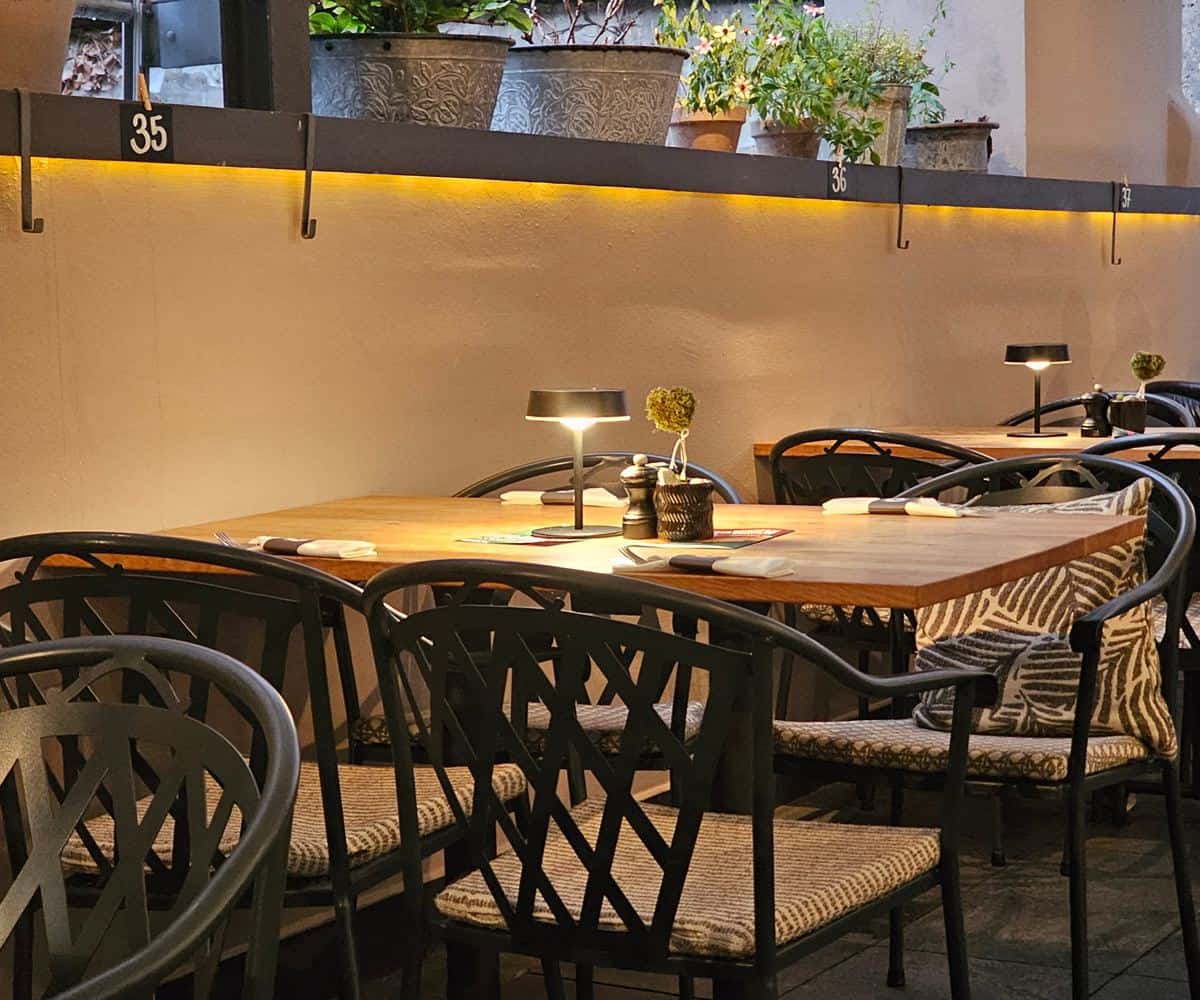
In warm weather, though, the first-floor terrace at the rear of the building is the more memorable setting.
It brings the Old Town close without placing diners in the middle of the pedestrian flow, which is a rare luxury in such a central part of Innsbruck.
By evening, with soft lighting and the medieval fabric of the Altstadt around it, the terrace gives the restaurant its strongest sense of occasion.
The pricing also helps its case.
With starters generally between €8 and €16, main courses between €18 and €32 and classic Tyrolean desserts between €6 and €12, Weisses Rössl sits in a notably reasonable bracket for regional dining in the historic centre.
For visitors to Innsbruck, it’s an easy recommendation for a meal that feels connected to the city rather than merely located in it.
Disclosure: The visit was sponsored by Innsbruck Tourism.