Great watchmaking is often judged by what can be seen through a loupe, but Vacheron Constantin has always made a deeper argument.
For the Geneva maison, the unseen surface still matters, and so does the architecture beneath the dial.
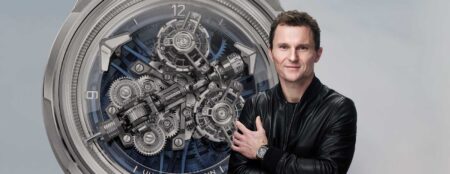
Morgan Maillard, Vacheron Constantin’s Heritage and Style Expert, brings that philosophy into focus through the lens of finishing, calibre development and the careful evolution of modern materials.
At a glance
- Vacheron Constantin’s Morgan Maillard examines the principles that define great watchmaking at the maison.
- The discussion centres on hidden hand-finishing, movement architecture, titanium executions, colour and new-generation calibres.
- Rather than chasing short-term records, the emphasis is on continuity, endurance and calibres built with a long horizon.
Finishing where the eye may never go
Vacheron Constantin’s reputation is not simply about decoration on display.
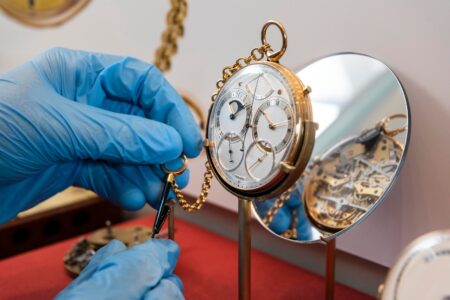
Its more demanding idea of finishing extends to areas most owners will never casually see, including hand-worked details hidden beneath bridges and within the movement structure.
That approach is easy to romanticise, but it’s also a technical stance.
A movement finished with care throughout reflects a belief that every surface belongs to the watch, whether it faces the sapphire back or sits quietly inside the calibre.
It’s the kind of discipline that separates ornamental luxury from serious haute horlogerie.
Movement architecture as a long-term language
Maillard’s view of watchmaking places architecture at the centre of the conversation.
In this context, a calibre is not just a mechanism that keeps time or carries a complication.
It’s a design language, a technical inheritance and a platform for future development.
That explains why historic movements such as Calibre 1003 and Calibre 1120 remain so meaningful within Vacheron Constantin’s story.
They represent more than thinness or elegance alone.
They show how a well-conceived movement can continue to shape a maison’s identity long after its first moment of attention has passed.
Titanium, colour and the modern Vacheron Constantin
The conversation also turns to how Vacheron Constantin handles contemporary expression without abandoning its centre of gravity.
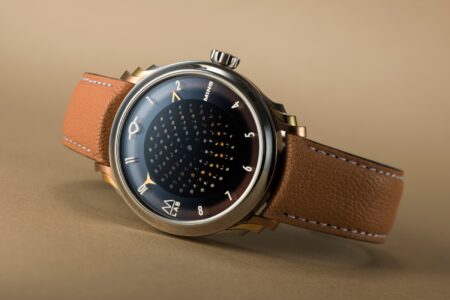
Recent titanium executions show the maison exploring lightness, texture and a more technical character, while still operating within a refined watchmaking vocabulary.
Colour plays a similar role.
At Vacheron Constantin, it’s not treated as a seasonal flourish but as part of a broader design judgement that has to make sense with the case material, dial execution and movement beneath.
The result is a modernity that doesn’t feel detached from heritage.
Continuity over short-lived records
One of the more compelling ideas here is restraint.
Vacheron Constantin’s philosophy, as Maillard presents it, is less concerned with building watches around fleeting technical headlines than with developing calibres and designs intended to endure.
That doesn’t mean the maison avoids innovation.
It means innovation is expected to serve continuity, rather than interrupt it.
For collectors, that distinction matters.
A watch that feels impressive on announcement day is one thing, but a watch that still feels intellectually and mechanically complete years later is something else entirely.
That is where Vacheron Constantin’s quieter strengths sit.
The beauty is not only in what’s visible through the caseback, but in the decisions, proportions and handwork that make the whole object feel considered from the inside out.