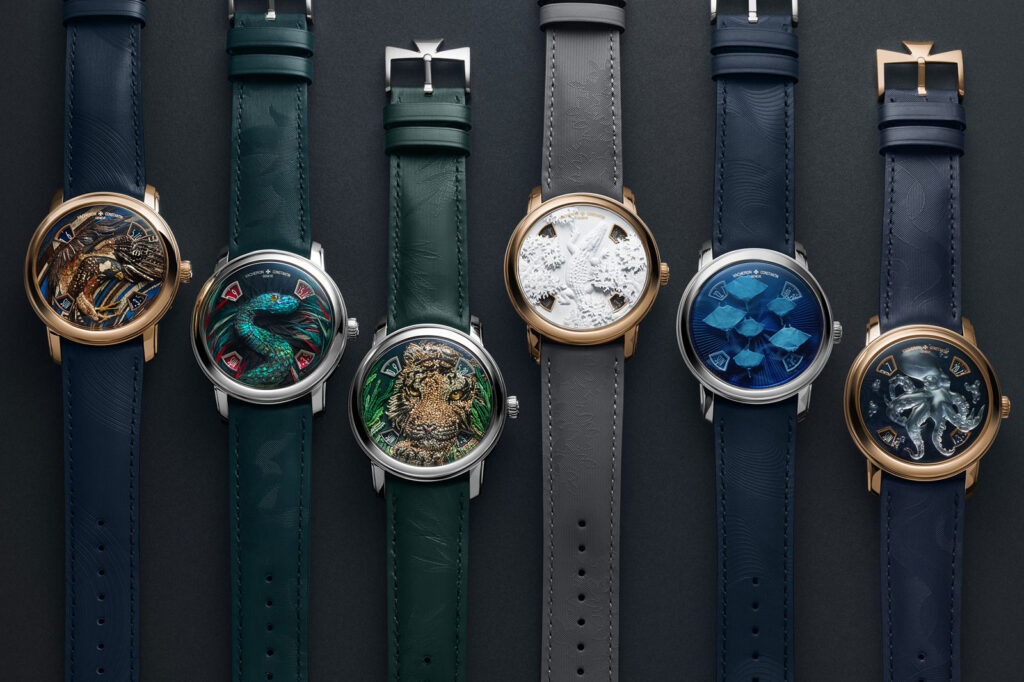
Vacheron Constantin’s latest Métiers d’Art project moves beyond the familiar vocabulary of enamel, guilloché and micro-painting.
The Métiers d’Art Tribute to the Animal Kingdom series asks a more unusual question for a high-watchmaking maison, which is what happens when artists from outside traditional horology are asked to work at dial scale.
The answer is a group of animal-themed watches that treat the centre of the dial as a tiny stage, with the time moved out to the perimeter so the craft can take the lead.
At a glance
- Vacheron Constantin has introduced a six-reference Métiers d’Art Tribute to the Animal Kingdom series.
- The collection uses unconventional dial crafts including featherwork, glass sculpture, origami, gold-wire embroidery and paper sculpture.
- Each watch uses a 42mm case and the automatic calibre 2460 G4 with a 40-hour power reserve.
A display built around the artwork
The clever part of this series isn’t only the craft itself, but the way Vacheron Constantin has given each artist room to work.
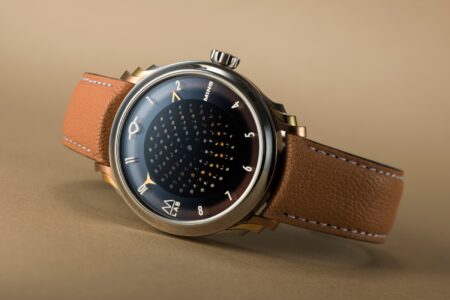
The watches use a peripheral time display with four separate apertures for hours, minutes, day and date, leaving the centre of the dial free of a hand stack.
It’s a layout associated with the maison’s Chinese New Year Métiers d’Art watches, and it makes particular sense here because the dial art is dimensional, delicate and often physically raised above the surface.
Across the six references, the cases measure 42mm by 12.9mm, with the group divided between white gold and pink gold.
Feathers, glass and paper at watch scale
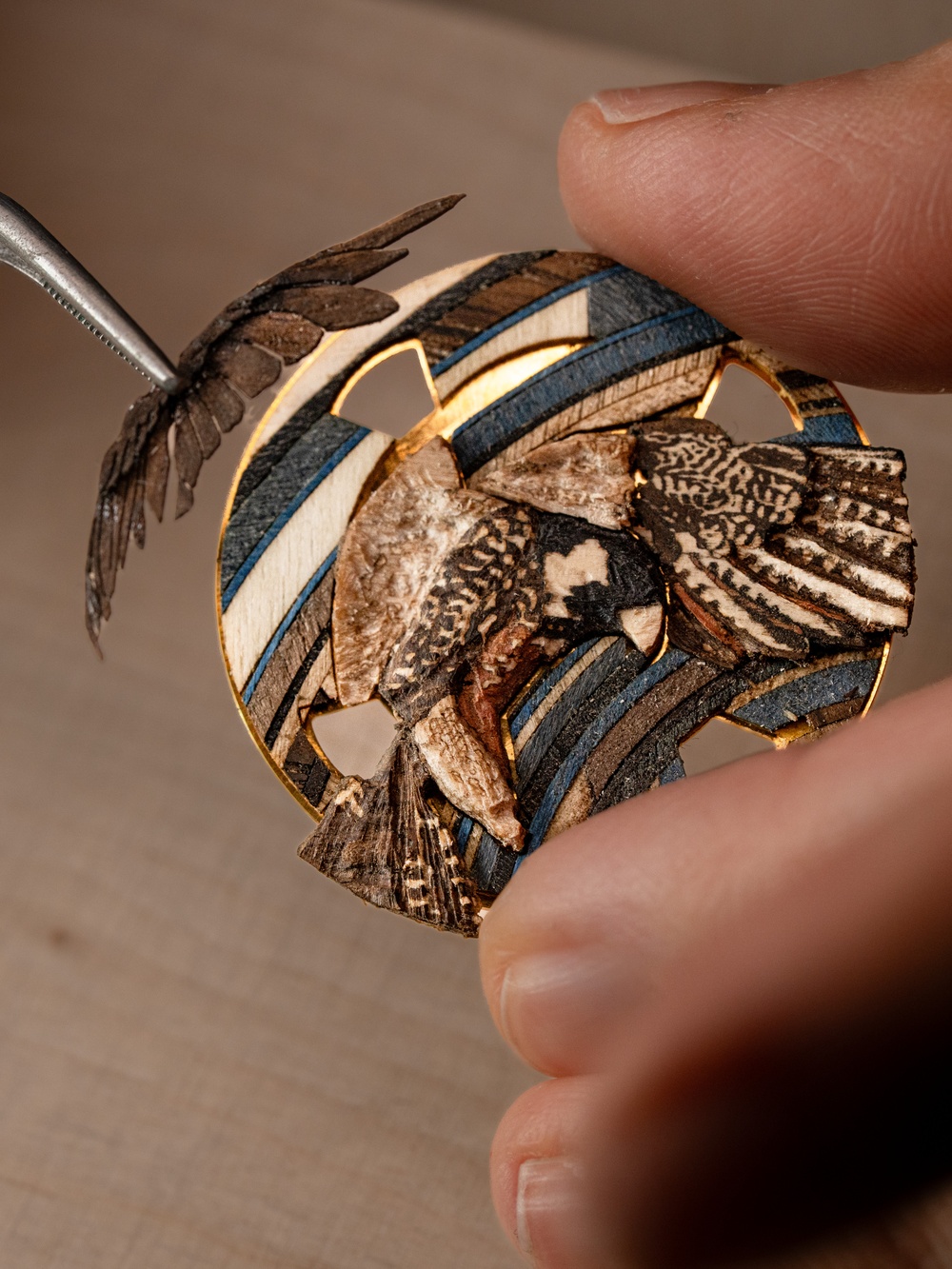
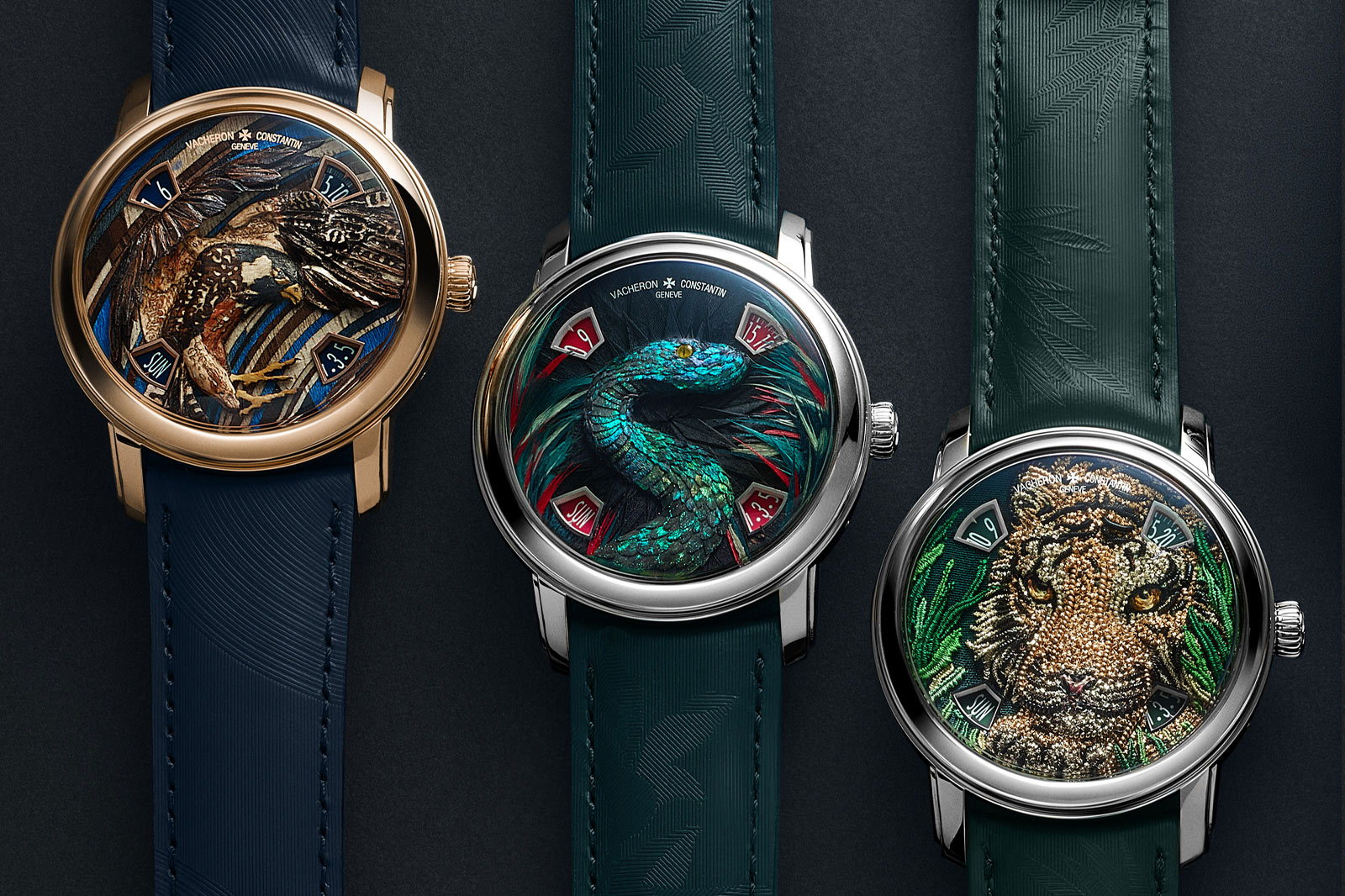
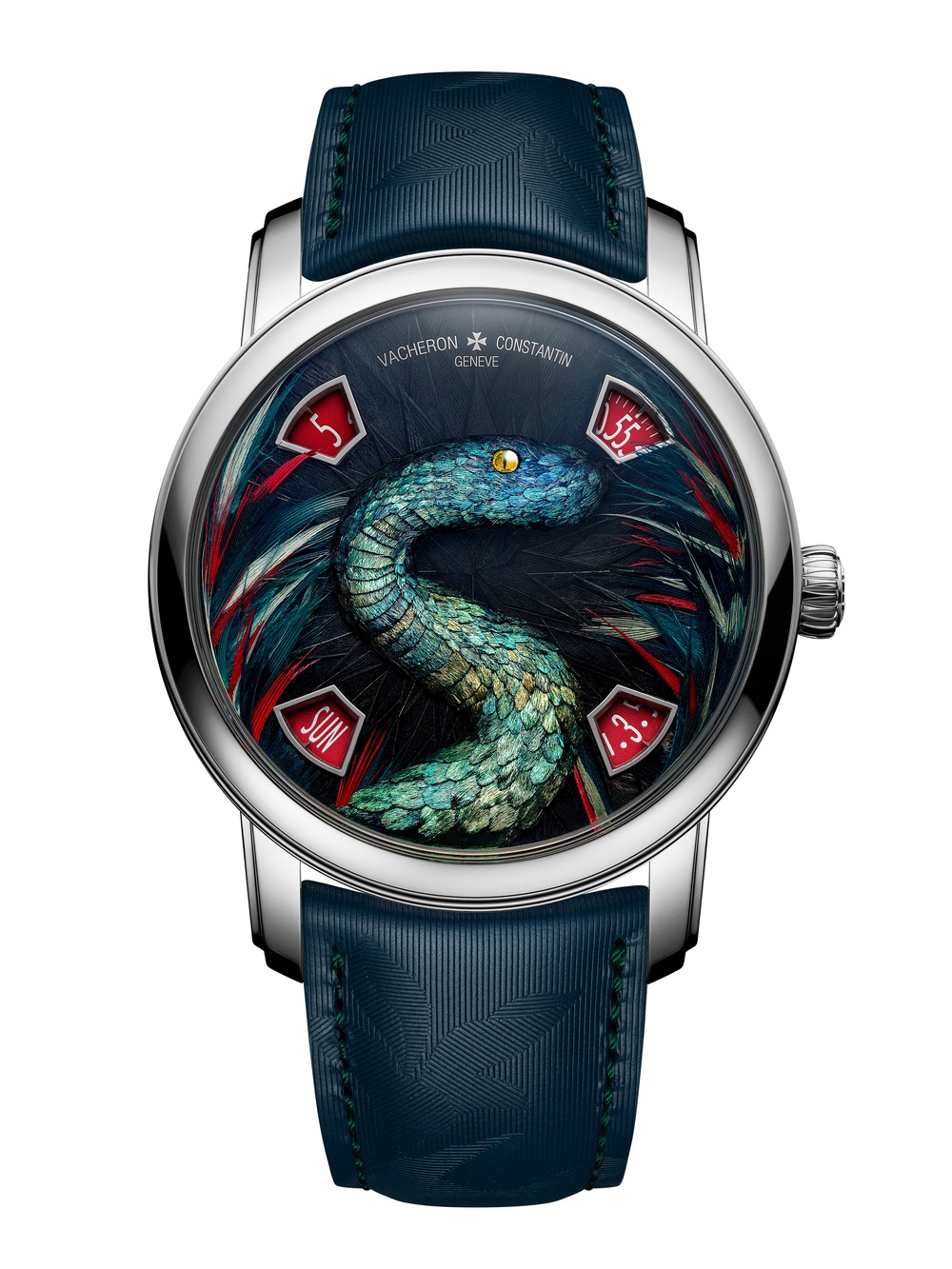
The Feather Snake watch by Julien Vermeulen is one of the most striking examples of the project’s ambition.
Its serpent is built from 200 individually cut feather elements, with seven Lophophore feathers used for the snake and goose feathers forming the foliage behind it.
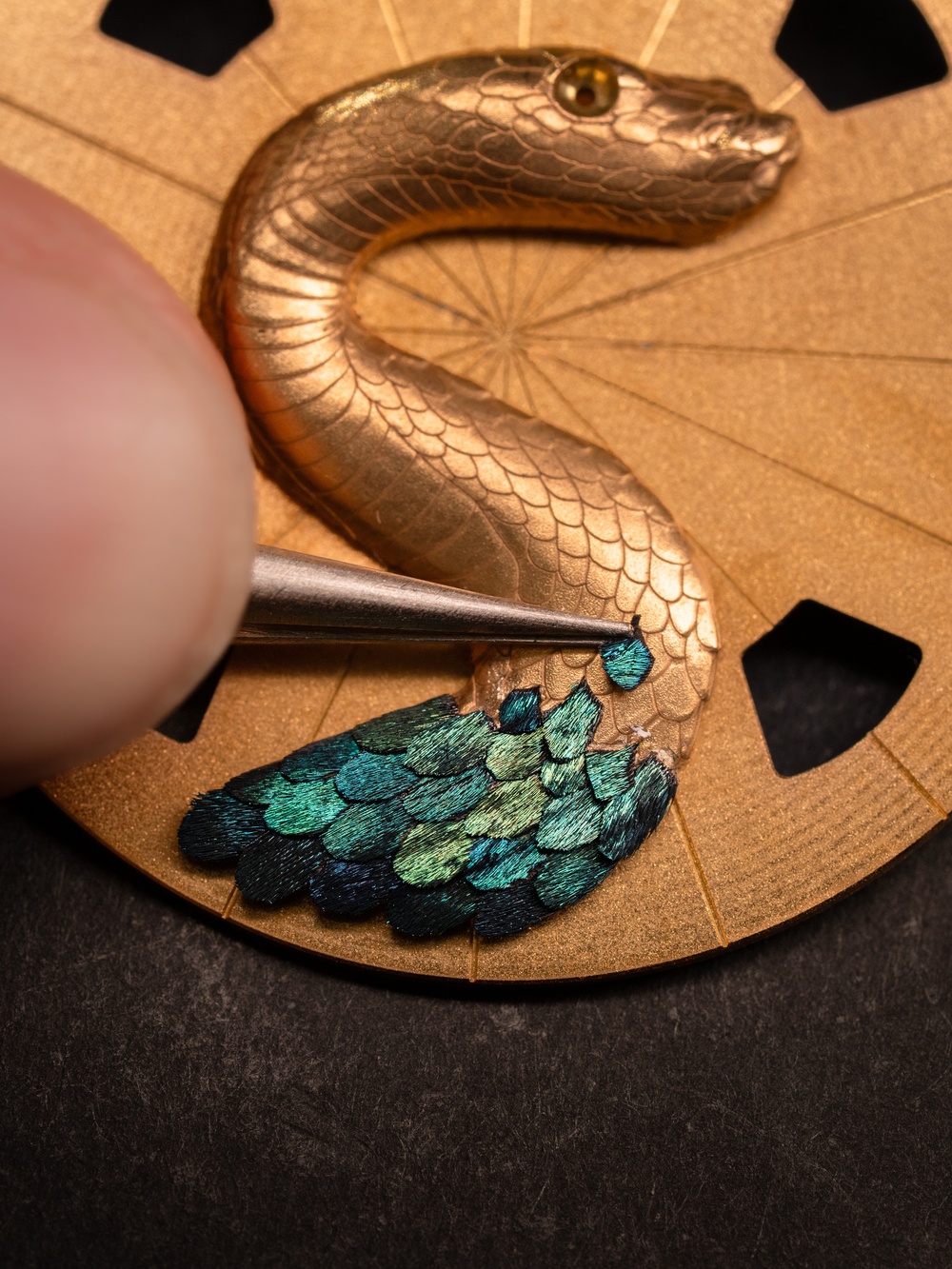
The feather sections are attached to a metal substructure to create a raised effect, while their natural iridescence gives the snake a scale-like shimmer that paint would struggle to imitate.
The dial required 250 hours of work and prompted the creation of specialist tools, including a scalpel for cutting the feathers and a modified sewing needle for applying tiny dots of glue.
The snake’s eye is the one non-feather detail, made from gold and enamel.
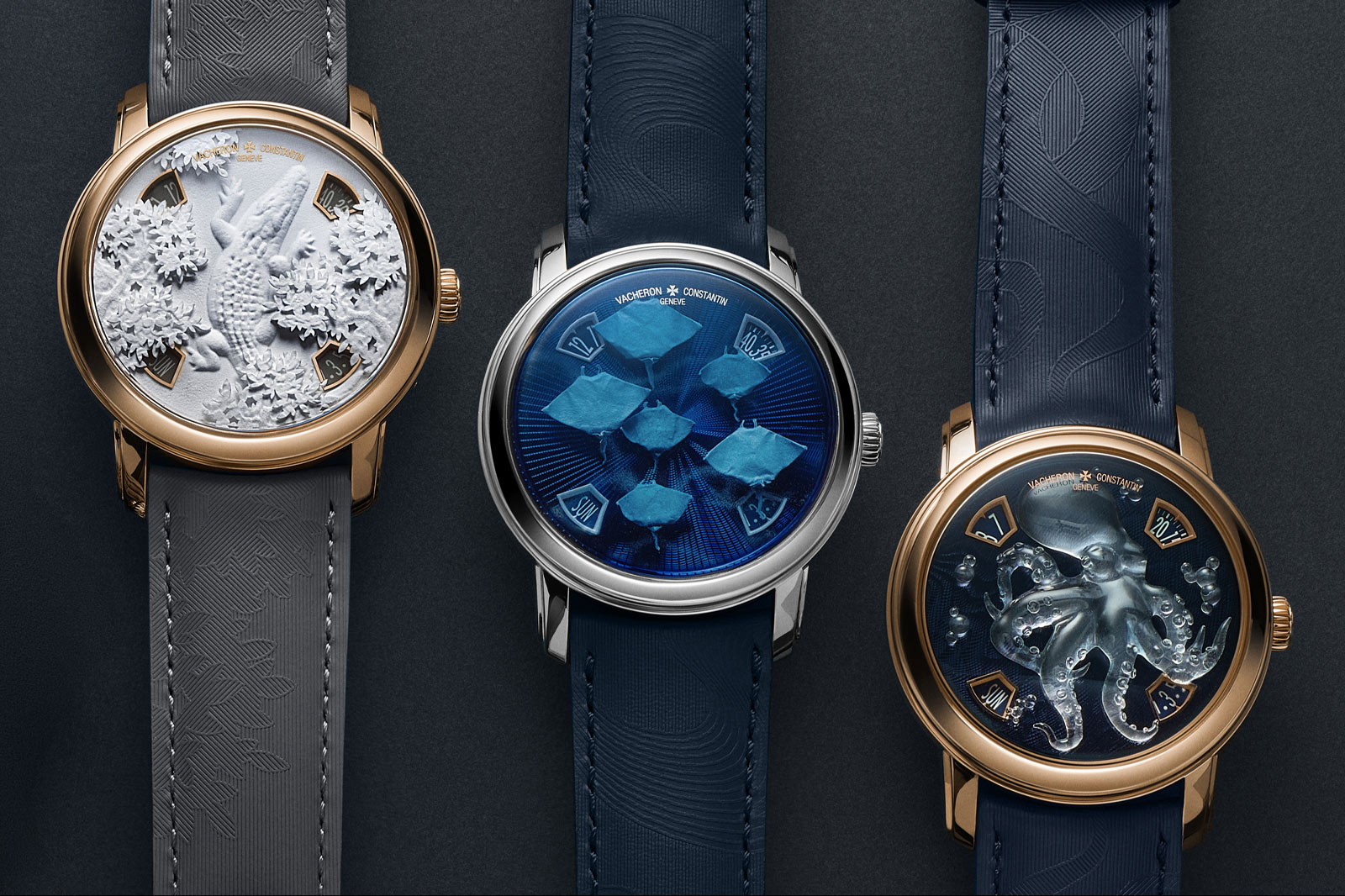
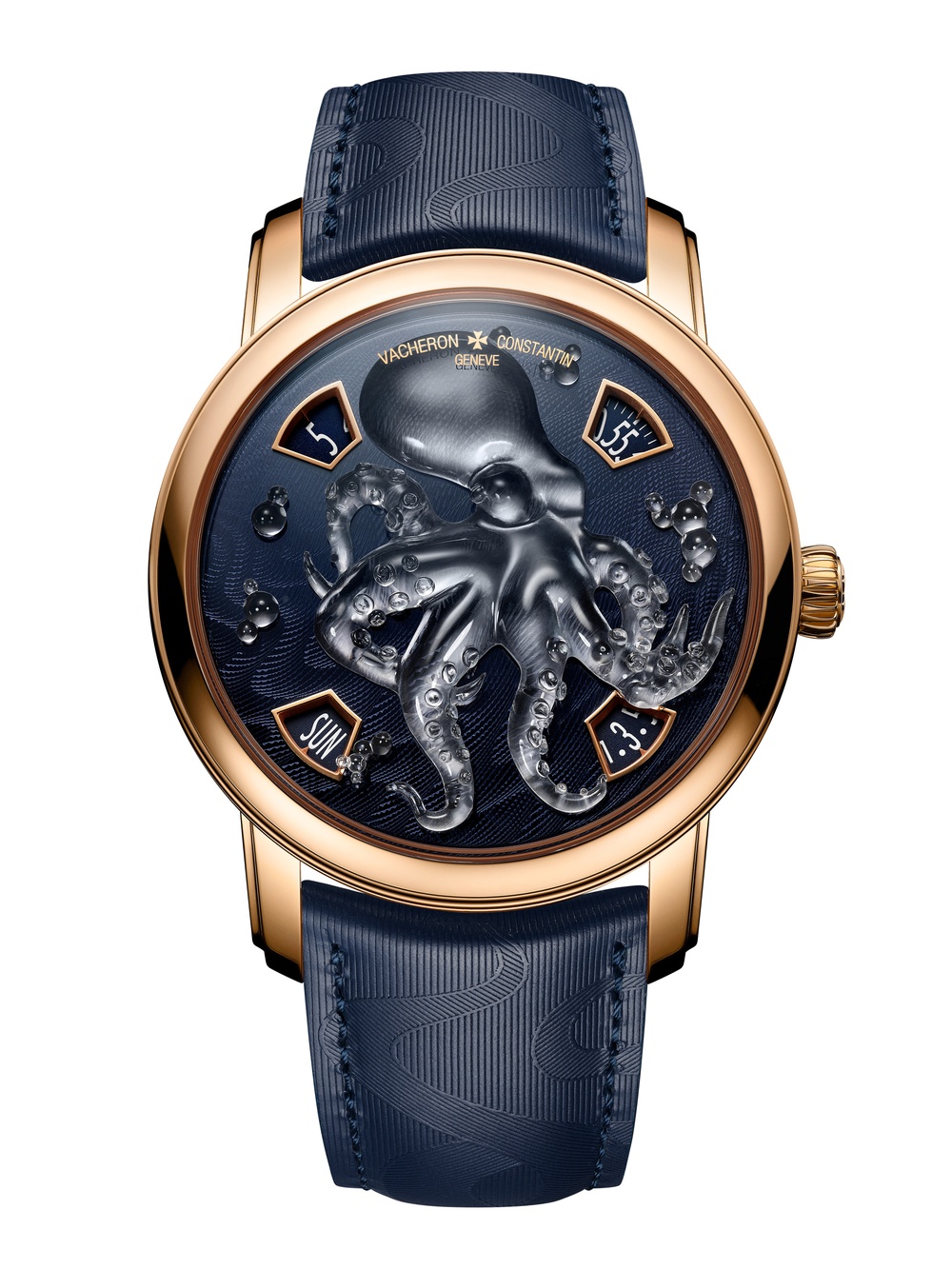
Simone Crestani’s Glass Octopus takes a different kind of risk, using transparent glass to form a miniature creature over a dark guilloché ground that evokes deep water.
Glass sculpture normally depends on heat and movement, but at a scale measured in millimetres, warming one area can affect the entire form.
The octopus therefore had to be built gradually in layers, with particular care given to how light, refraction and overlapping forms would behave under the sapphire crystal.
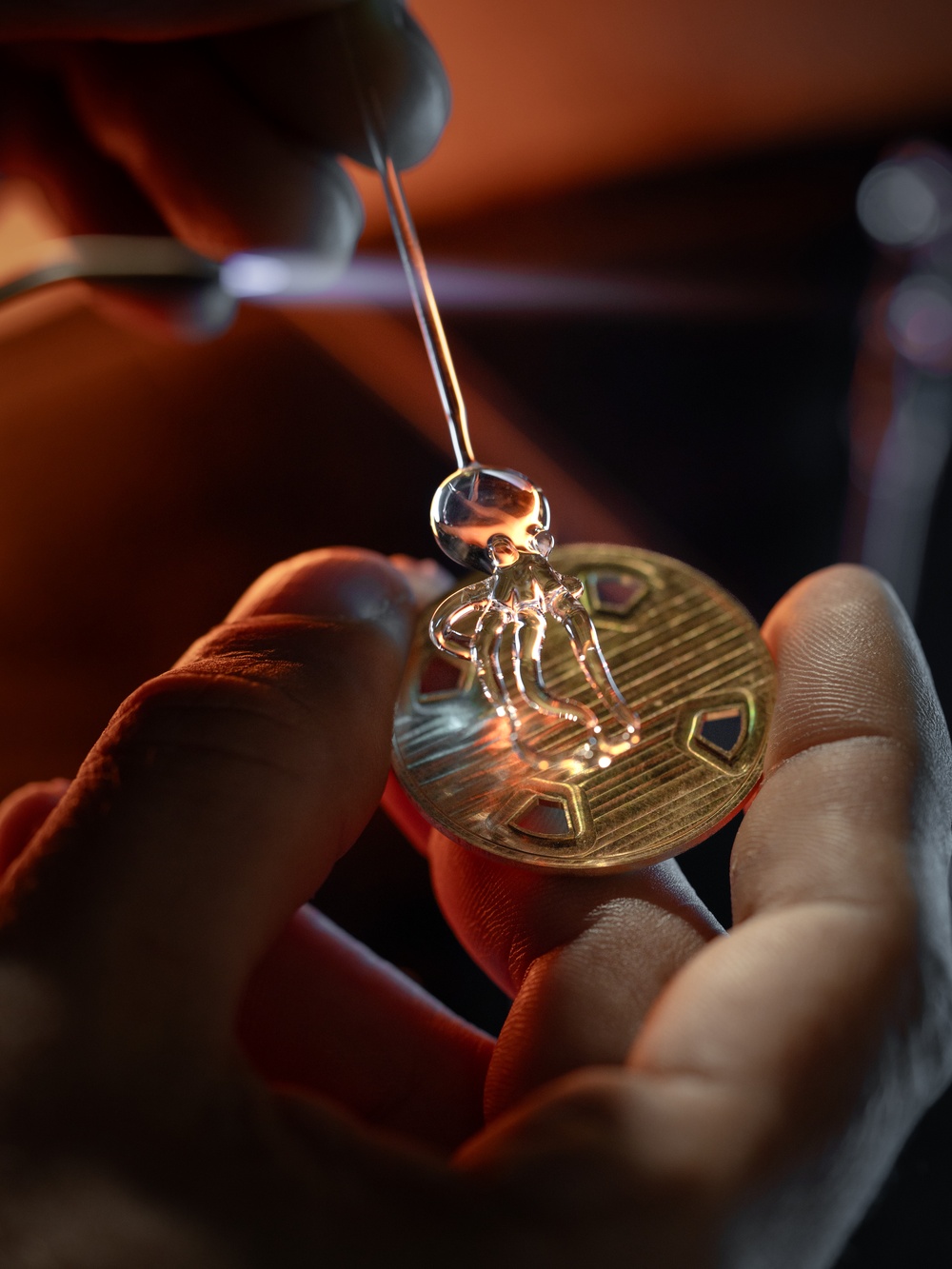
The apparent crossing of tentacles is partly illusion rather than literal overlap, a practical solution to the distortion transparent glass can create.
Origami rays, gold-wire tiger and a paper crocodile
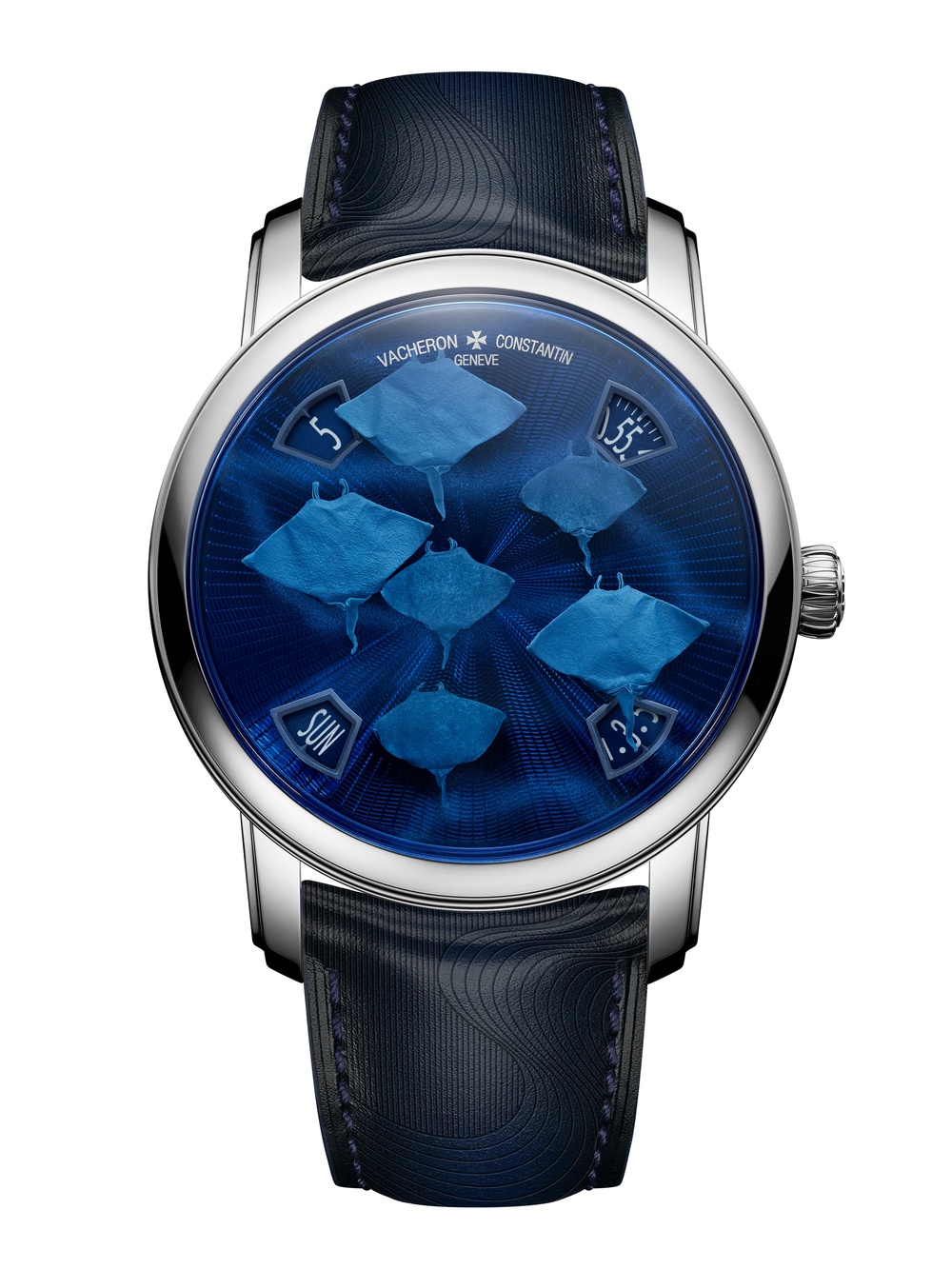
The Oraygami watch turns the manta ray into a miniature paper composition by Anja Midori.
Six rays, each measuring between 5mm and 10mm, are folded from specially dyed Japanese paper and set above an oceanic guilloché background on brass stems.
The stems create different heights, giving the impression that the rays are moving through water rather than lying flat on the dial.
Midori developed a new folding sequence for the project so the tails and pectoral fins would sit closer to the proportions of the real animal.
The folds were made using traditional tools of the craft, including fingers, fingernails and the edge of a toothpick.
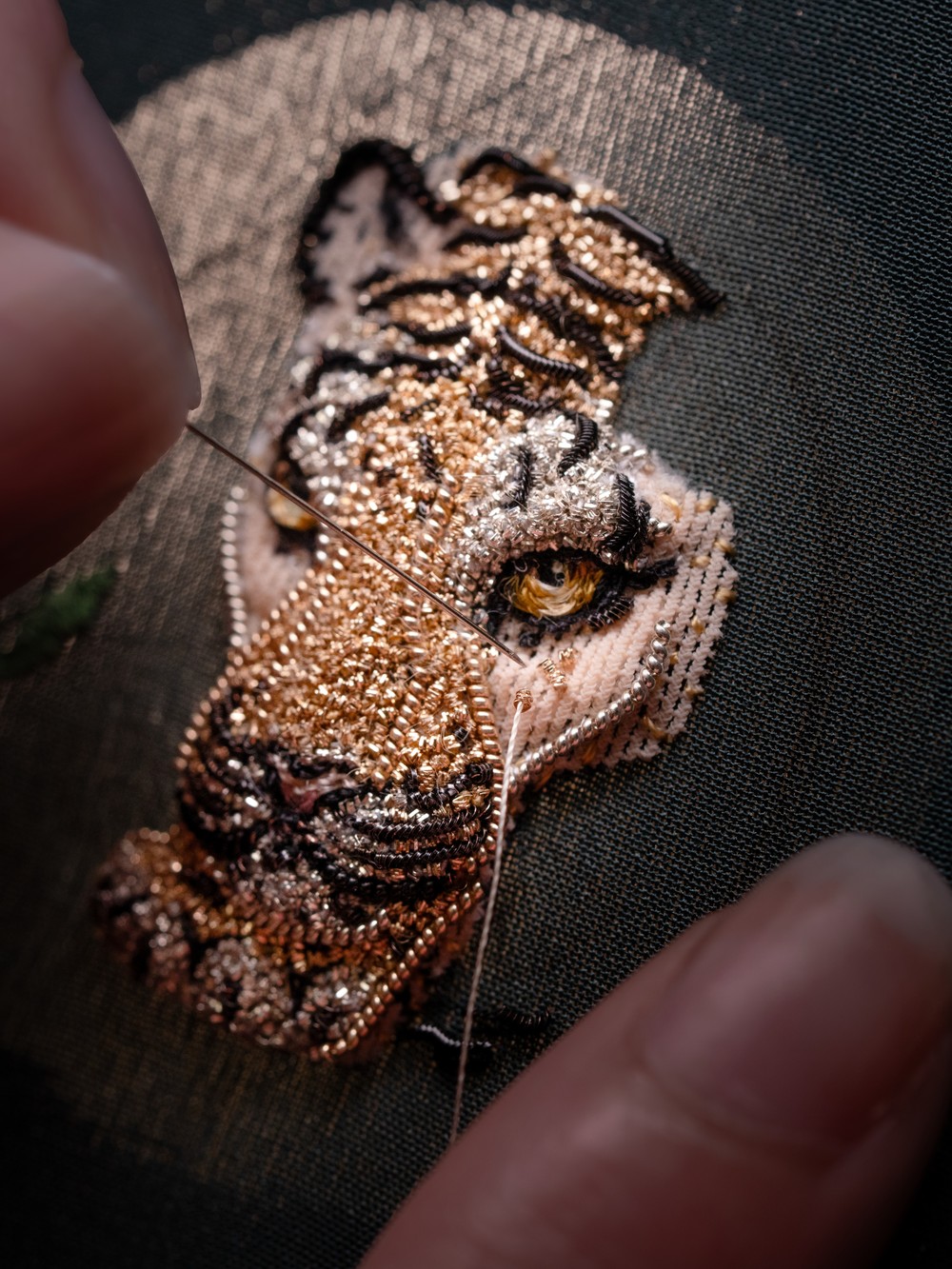
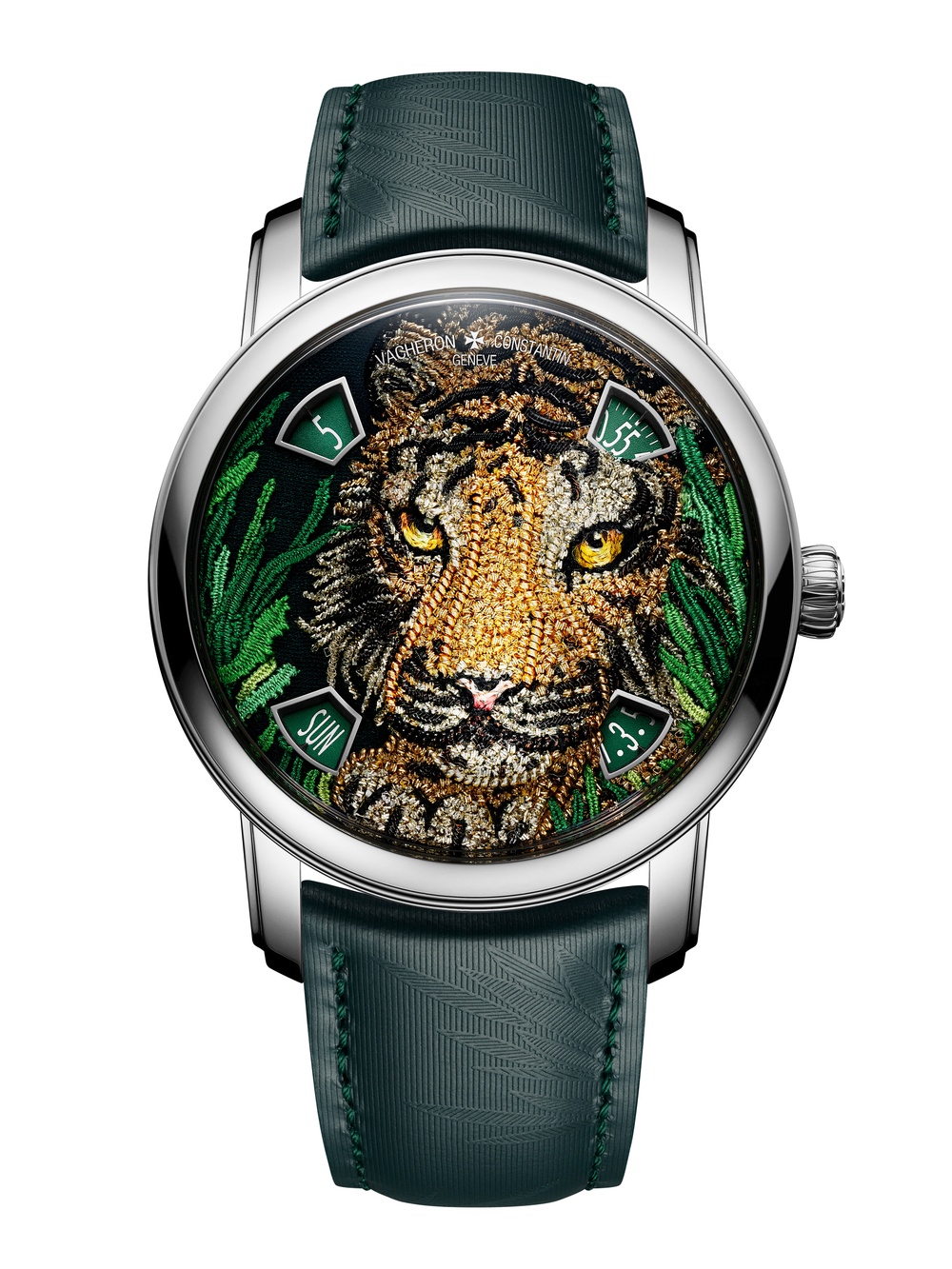
Tiger Broidery, created by Laura Baverstock, pushes embroidery into an even more unusual space by replacing thread with 9k gold wire.
Gold wire behaves differently from gilt wire, particularly in flexibility and malleability, so the technique required custom equipment to form the image of a tiger in the jungle.
The embroidery is worked directly into a perforated titanium dial plate, with the holes positioned so precisely that the stitched metal resolves into the animal image.
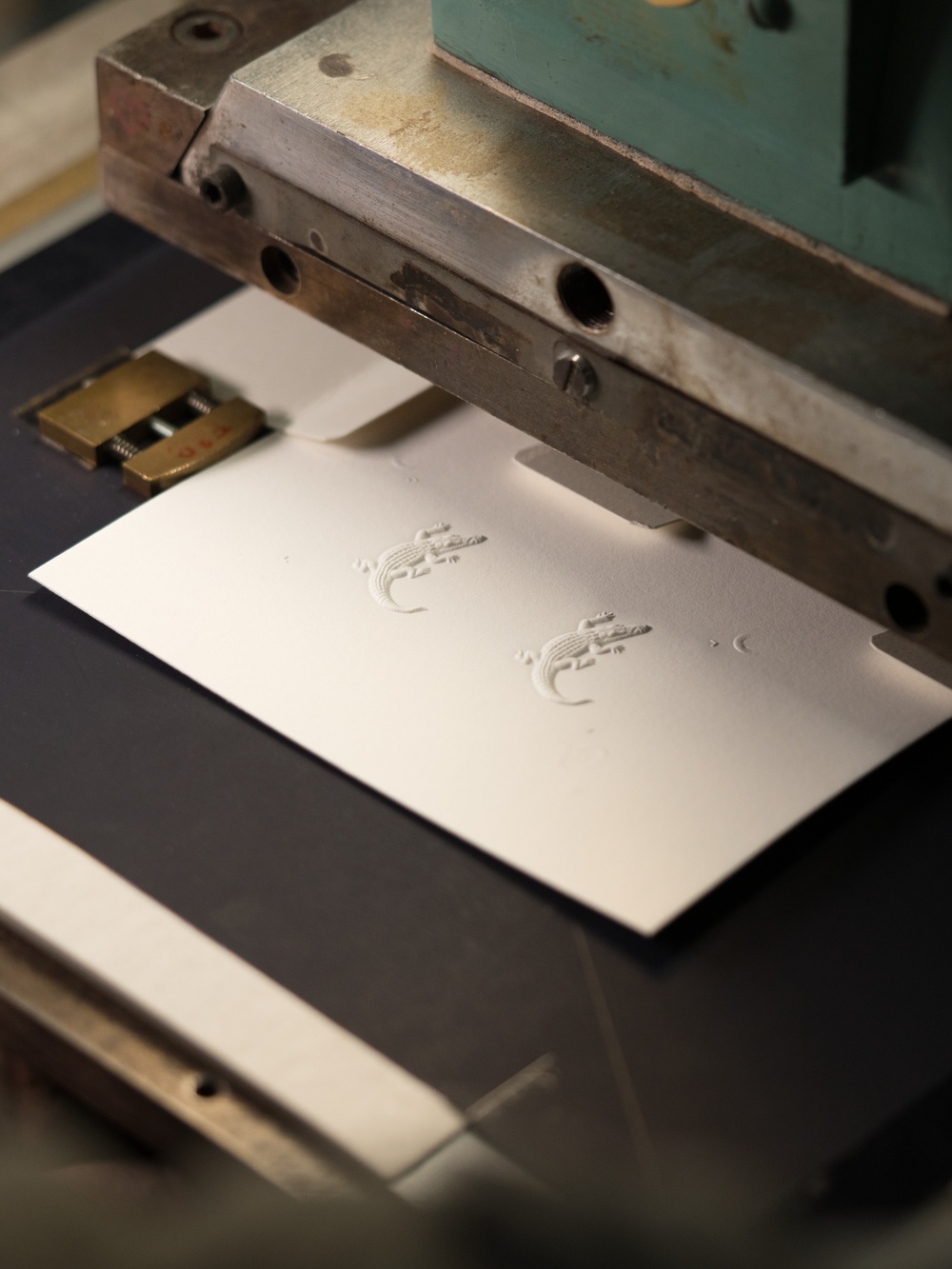
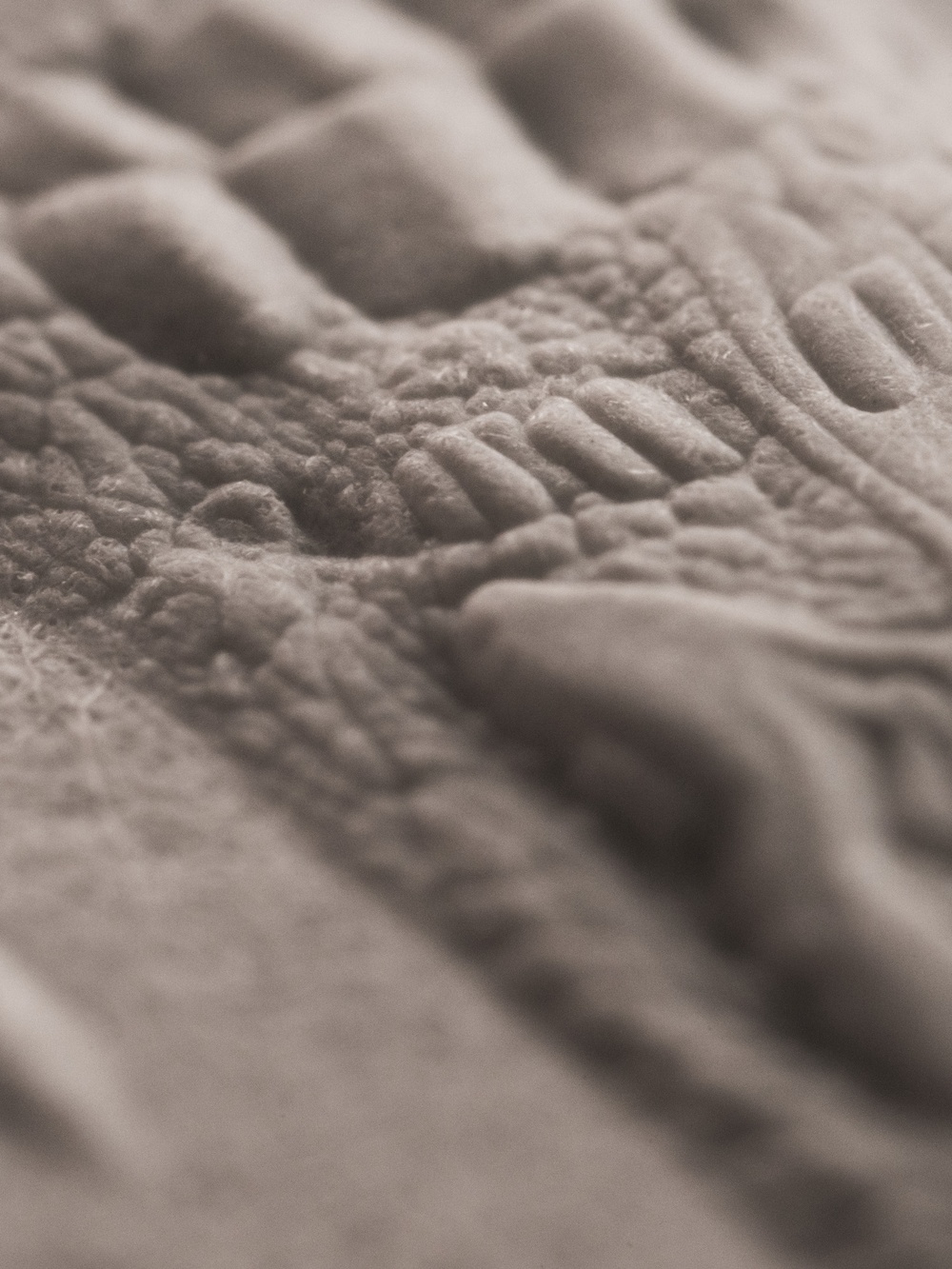
Marianne Guely’s Paper Croc uses paper sculpture rather than origami, which allows separate paper elements, varied textures and methods such as embossing, laser cutting and hand assembly.
The composition shows a white crocodile moving below pale foliage, with the challenge lying in creating depth inside the narrow space between dial and sapphire crystal.
Details & Specifications
| Brand | Vacheron Constantin |
|---|---|
| Collection | Métiers d’Art Tribute to the Animal Kingdom |
| Number of references | Six |
| Case size | 42mm by 12.9mm |
| Case material | White gold and pink gold, split three references each |
| Display | Peripheral windows for hours, minutes, day and date |
| Movement | Vacheron Constantin calibre 2460 G4 automatic |
| Power reserve | 40 hours |
| Highlighted dial works | Feather Snake, Glass Octopus, Oraygami, Tiger Broidery and Paper Croc |
For collectors, the appeal is less about complication counting and more about watching Vacheron Constantin stretch the definition of dial craft.
The Métiers d’Art Tribute to the Animal Kingdom series shows how a mechanical watch can become a vessel for disciplines rarely given space in horology, without losing the rigour expected from one of watchmaking’s most established maisons.