Universal Genève’s return has been watched closely by collectors for good reason.
The Compax is one of the names that made the marque matter in the first place, and its modern comeback carries more weight than a simple archival exercise.
The new collection keeps the familiar chronograph language intact, but the real story sits behind the dial, where Universal Genève has finally paired the Compax with a micro-rotor chronograph movement.
At a glance
- Universal Genève has introduced a new Compax collection as part of its wider brand relaunch.
- The 39.5 mm chronograph is powered by the new UG-200, an integrated vertical-clutch chronograph calibre with a three-quarter rotor.
- The range includes classic steel panda and reverse-panda models, a rose gold blue-dial version and more colourful Capsule editions.
A modern Compax with restrained proportions
The new Compax arrives at 39.5 mm across, which feels notably disciplined for a contemporary automatic chronograph.
That size gives the watch enough wrist presence to feel current without drifting into the oversized territory that still defines much of the sports-chronograph market.
It’s larger than the vintage 36 mm Compax that informs its character, but the proportions remain close enough to preserve the model’s compact, purposeful identity.
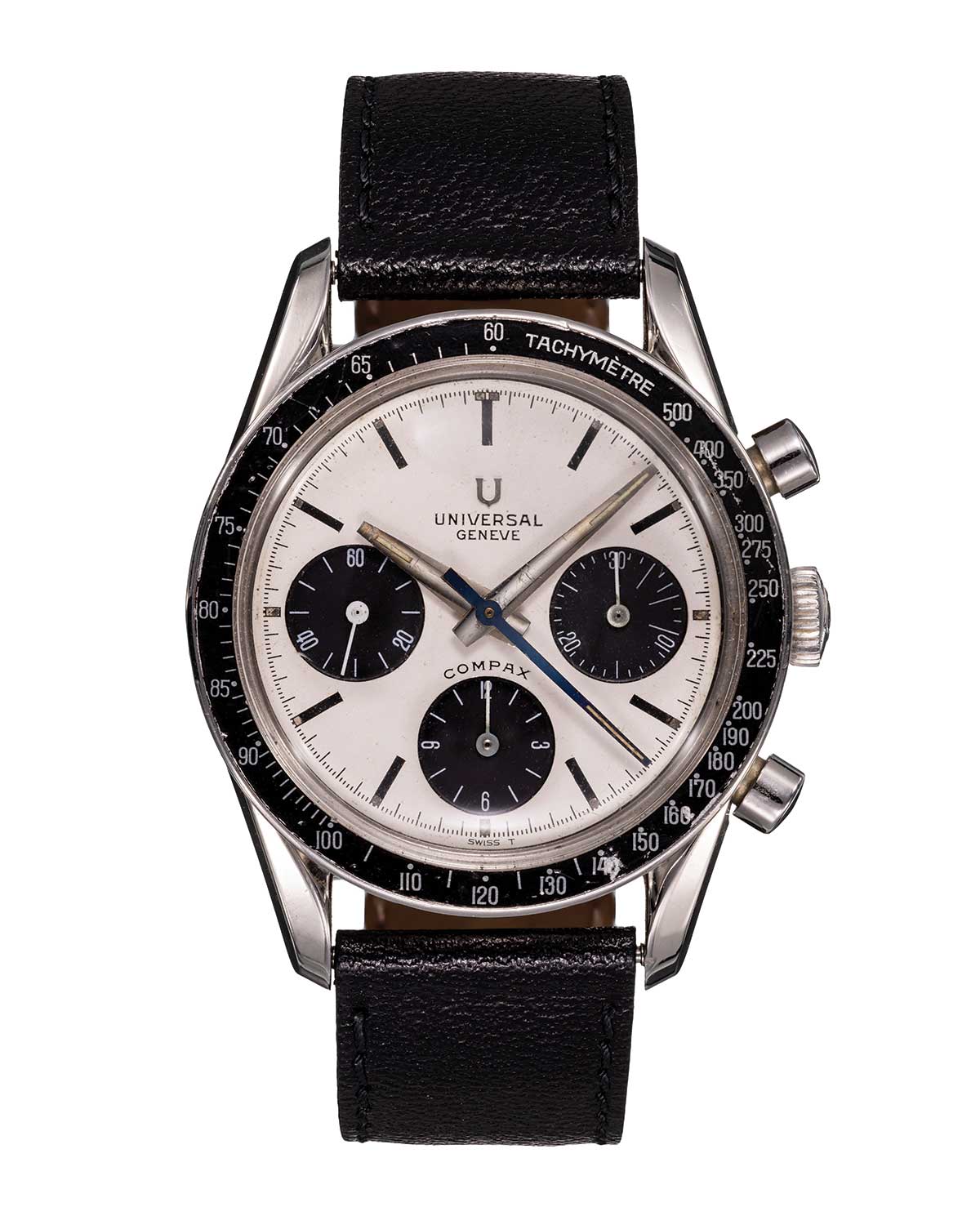
The case measures 12.45 mm thick, a figure that’s reasonable for an automatic chronograph, though the relatively modest diameter can make the height more apparent on the wrist.
That balance between vintage restraint and modern build is important because the Compax has always been a watch with sporting credibility rather than ornamental nostalgia.
Classic racing cues and a more experimental Capsule line
Universal Genève has split the new Compax family into two clear personalities.
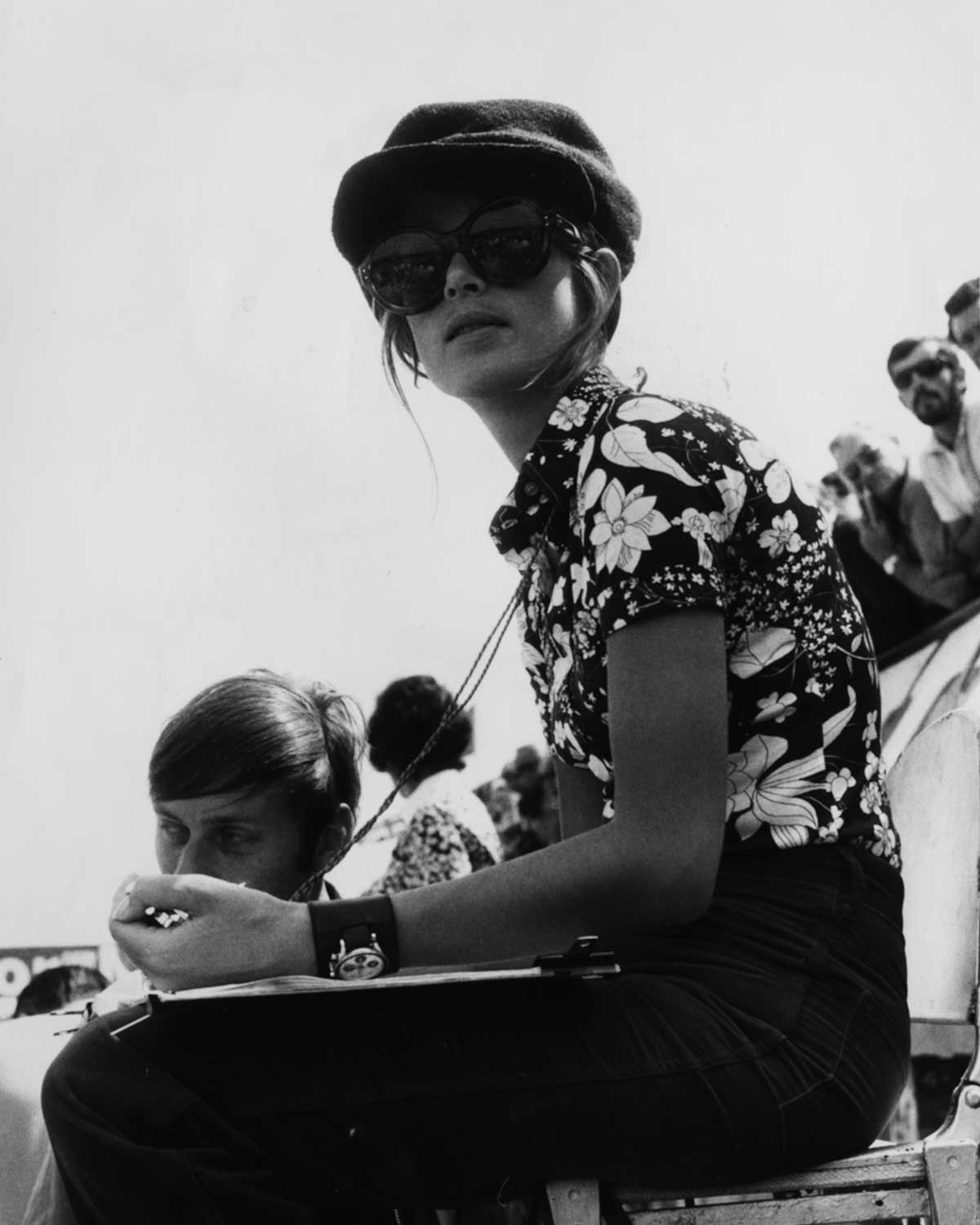
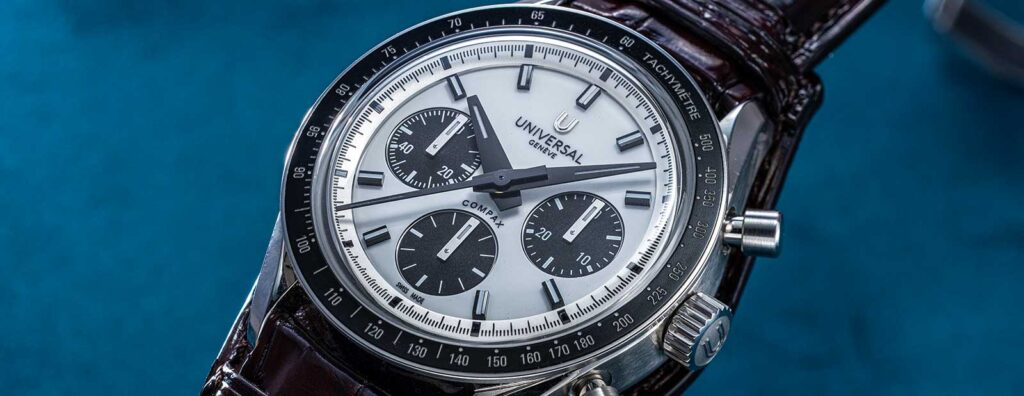
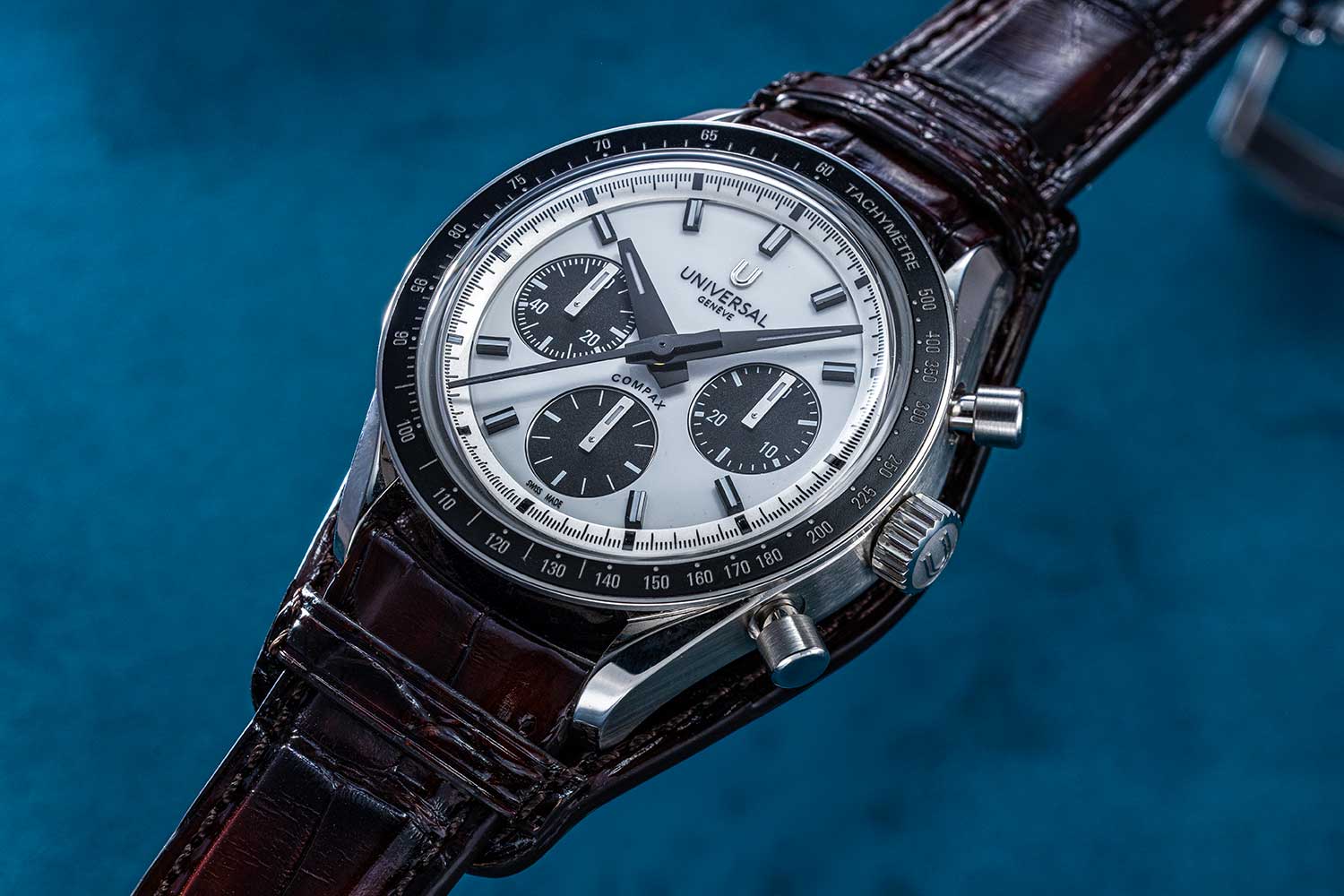
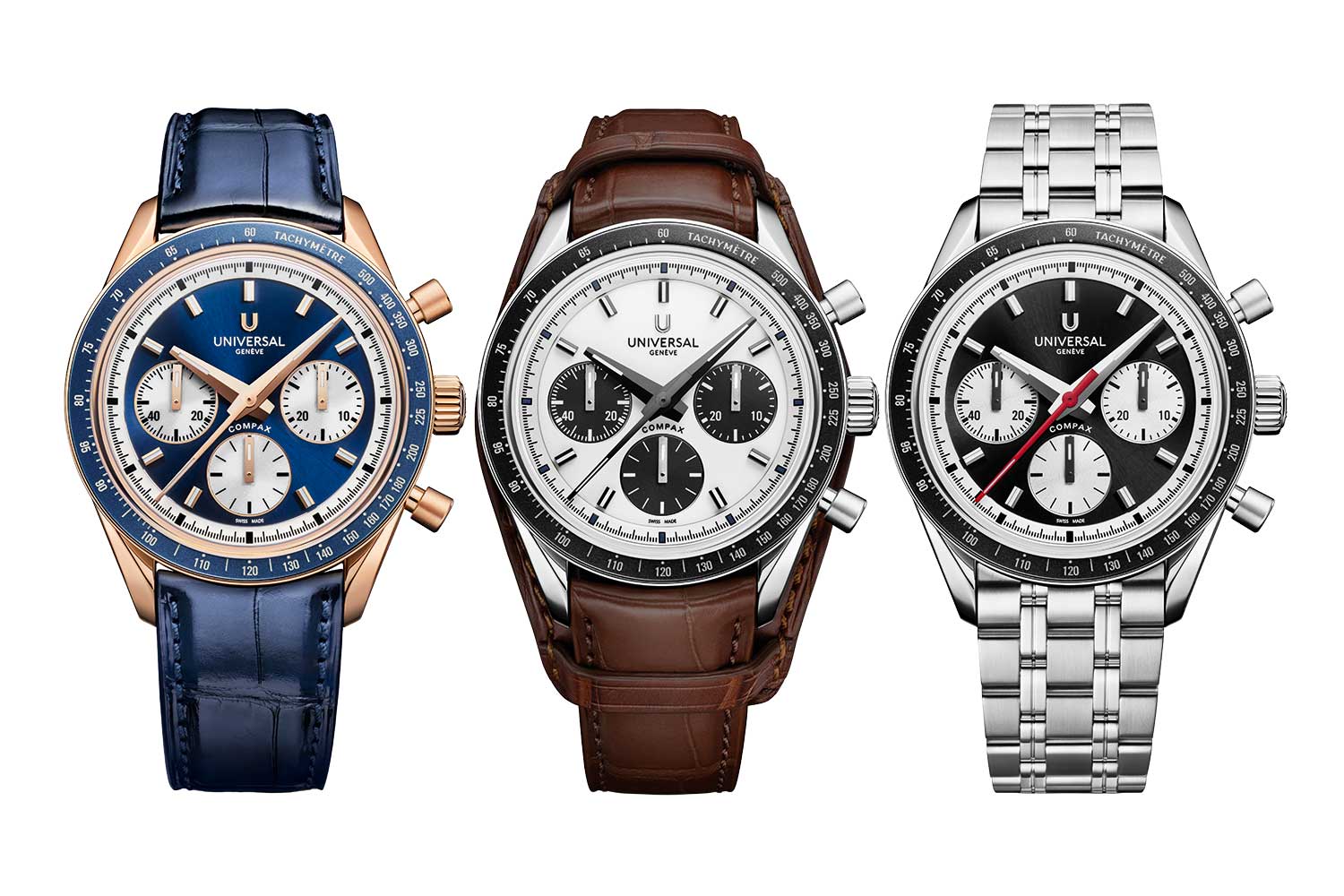
The more historically minded watches include a steel model with a white dial and black registers, giving the collection its expected panda configuration.
That version is paired with a bund leather strap, a deliberate nod to Nina Rindt, whose own Compax became part of motorsport watch lore through its association with Formula One timing culture.
A steel reverse-panda model broadens the classic side of the range, with the option of a five-link bracelet inspired by historic Gay Frères bracelet design.
The detail feels appropriate rather than decorative, as Gay Frères remains one of the most respected names in vintage bracelet making.
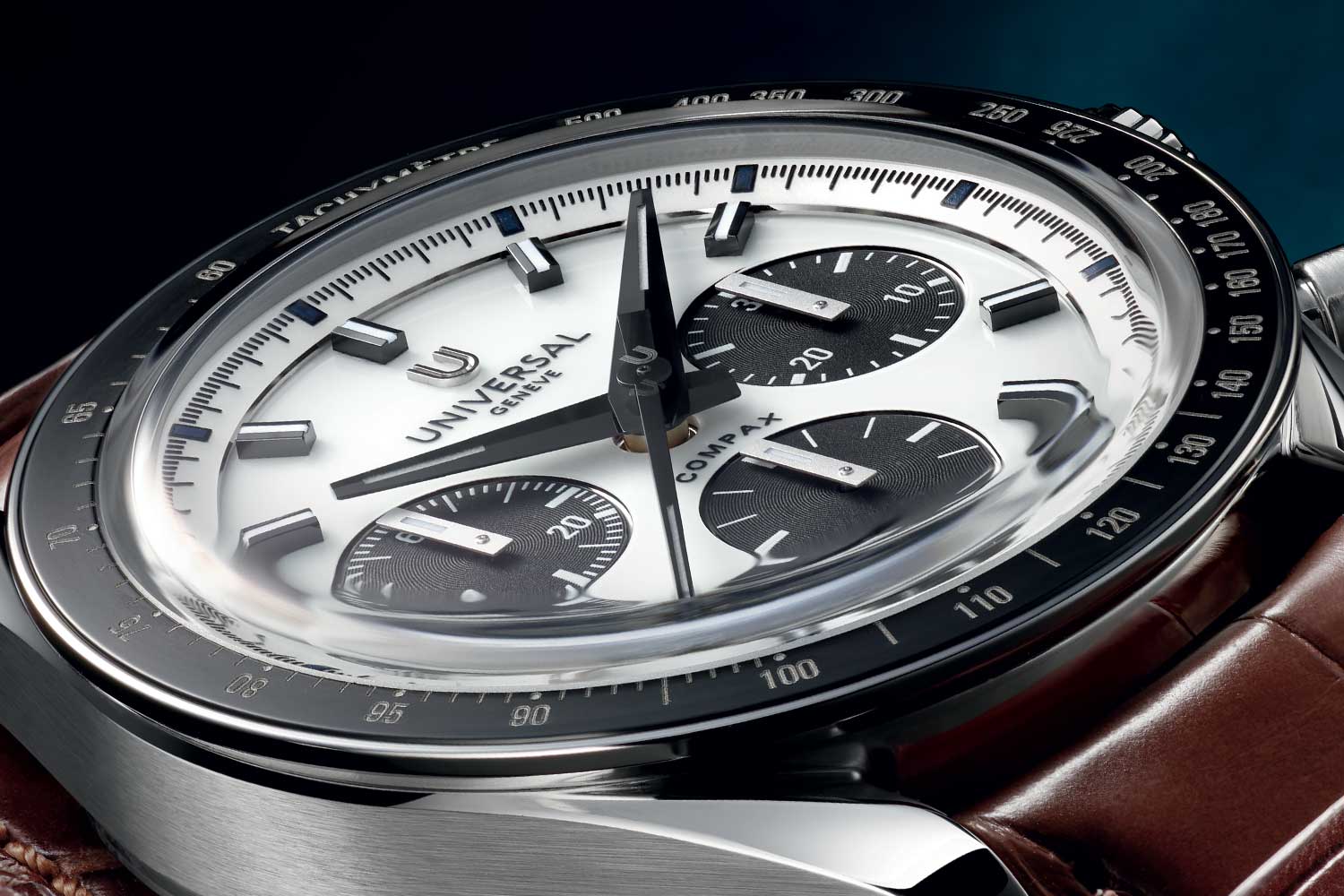
Across the black and white dial variants, rectangular black markers along the minute track give the design extra tension and a sharper sporting edge.
On the white dial, fully blackened hands strengthen the graphic contrast and prevent the vintage references from feeling too soft.
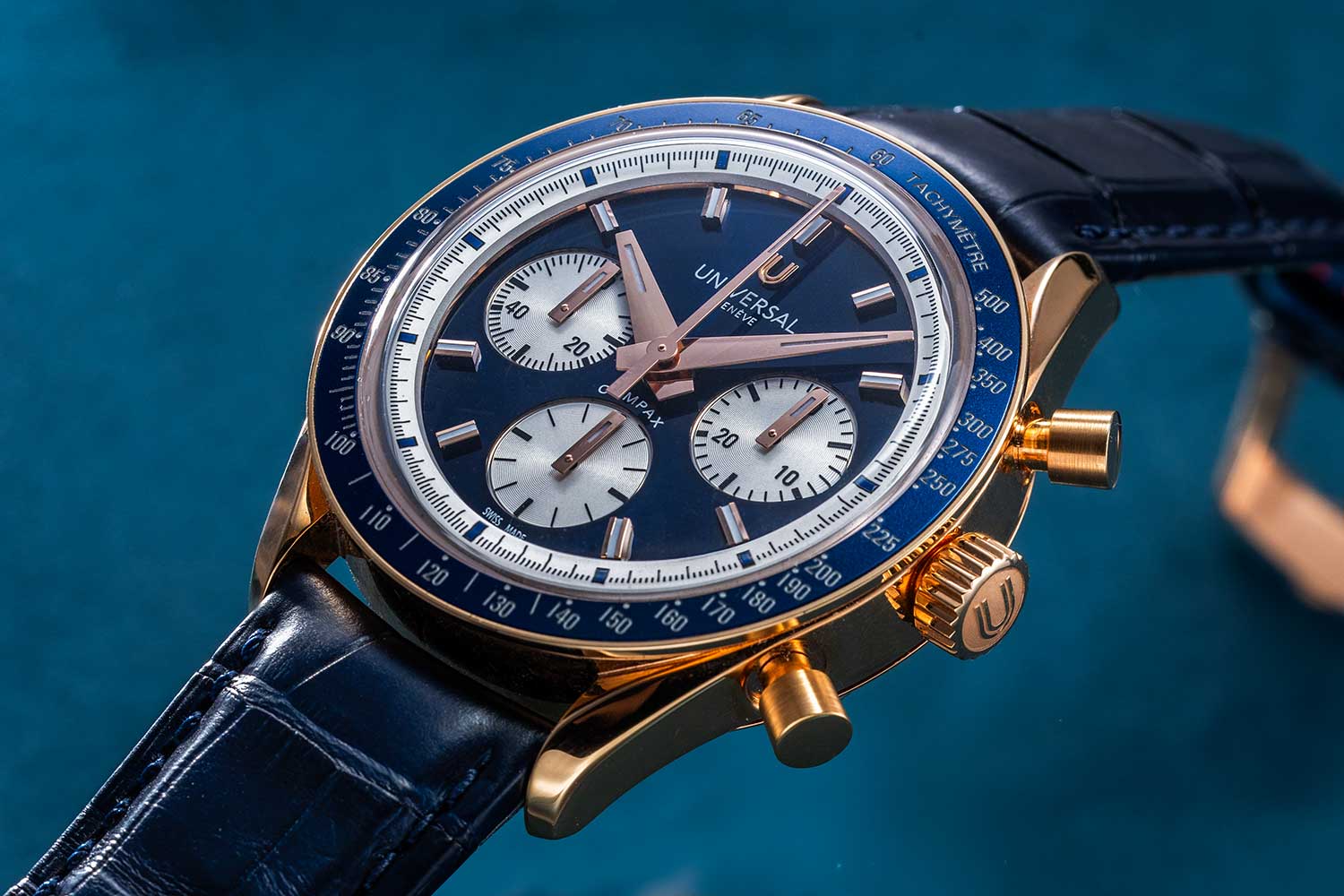
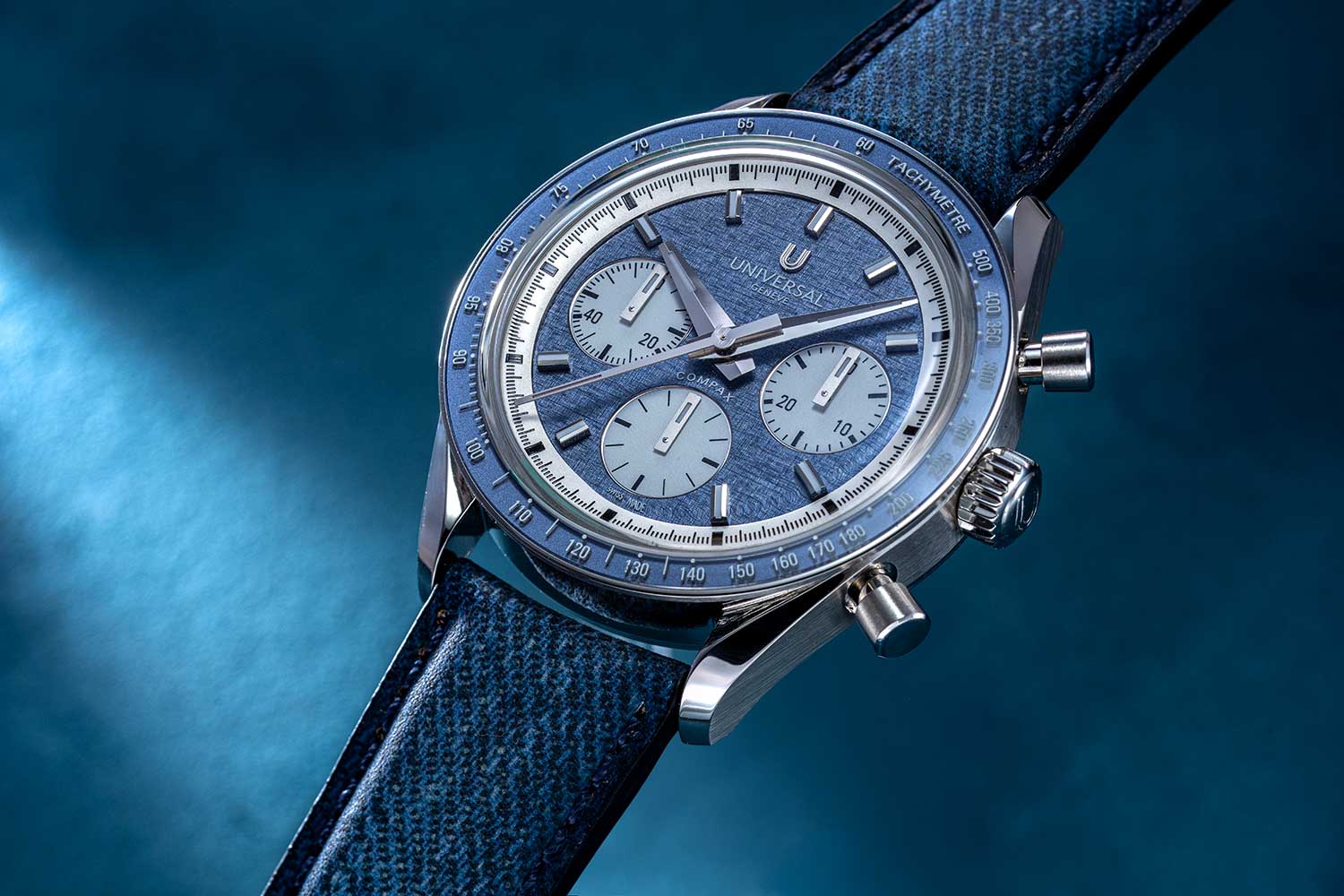
The rose gold model moves the Compax into a warmer, more formal register, pairing the precious-metal case with a blue dial and gold accents.
These classic-leaning models use colour-matched ceramic bezels with laser-engraved tachymeter scales, a contemporary detail that suits the watch’s sports-chronograph purpose.
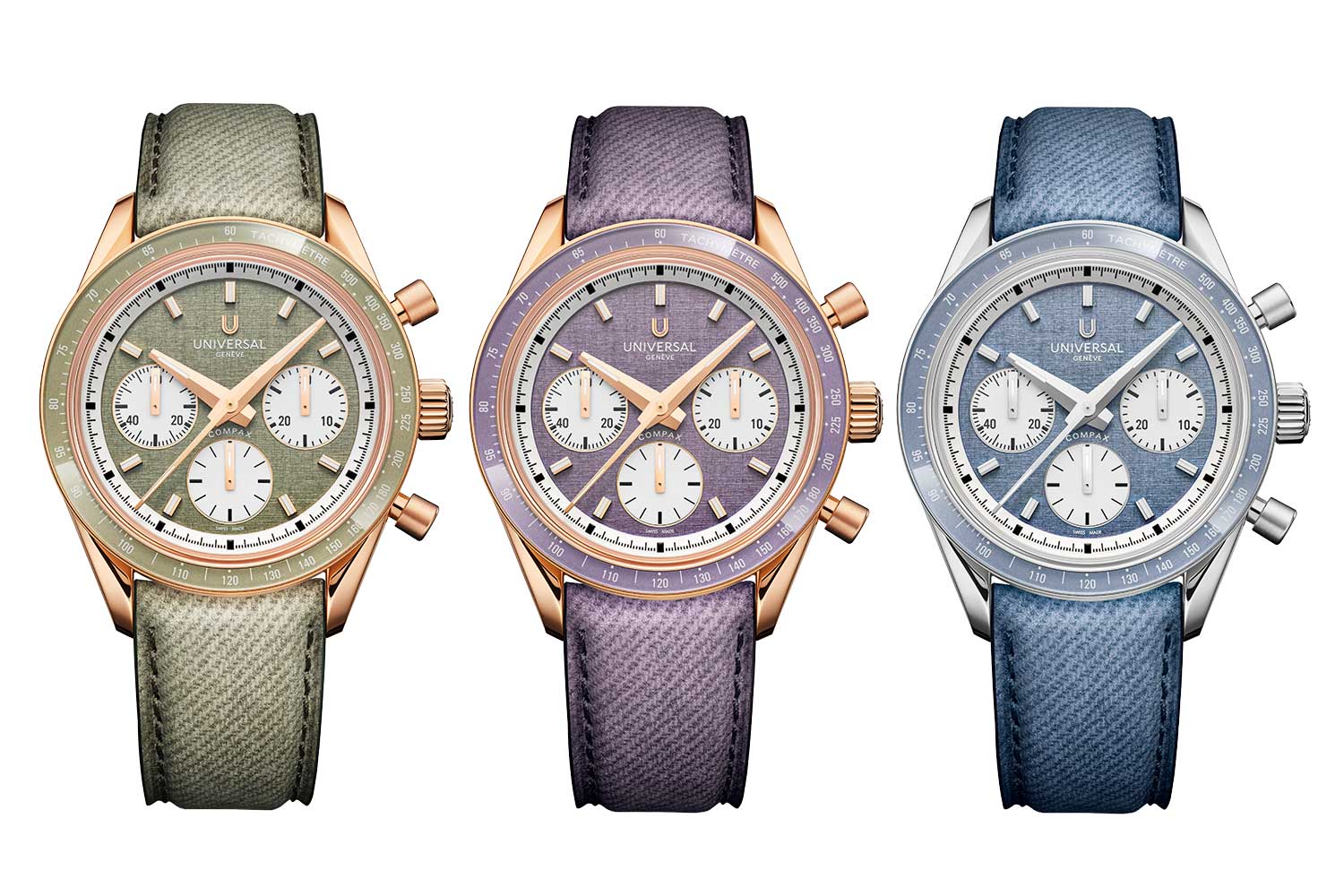
The Capsule editions take a different route.
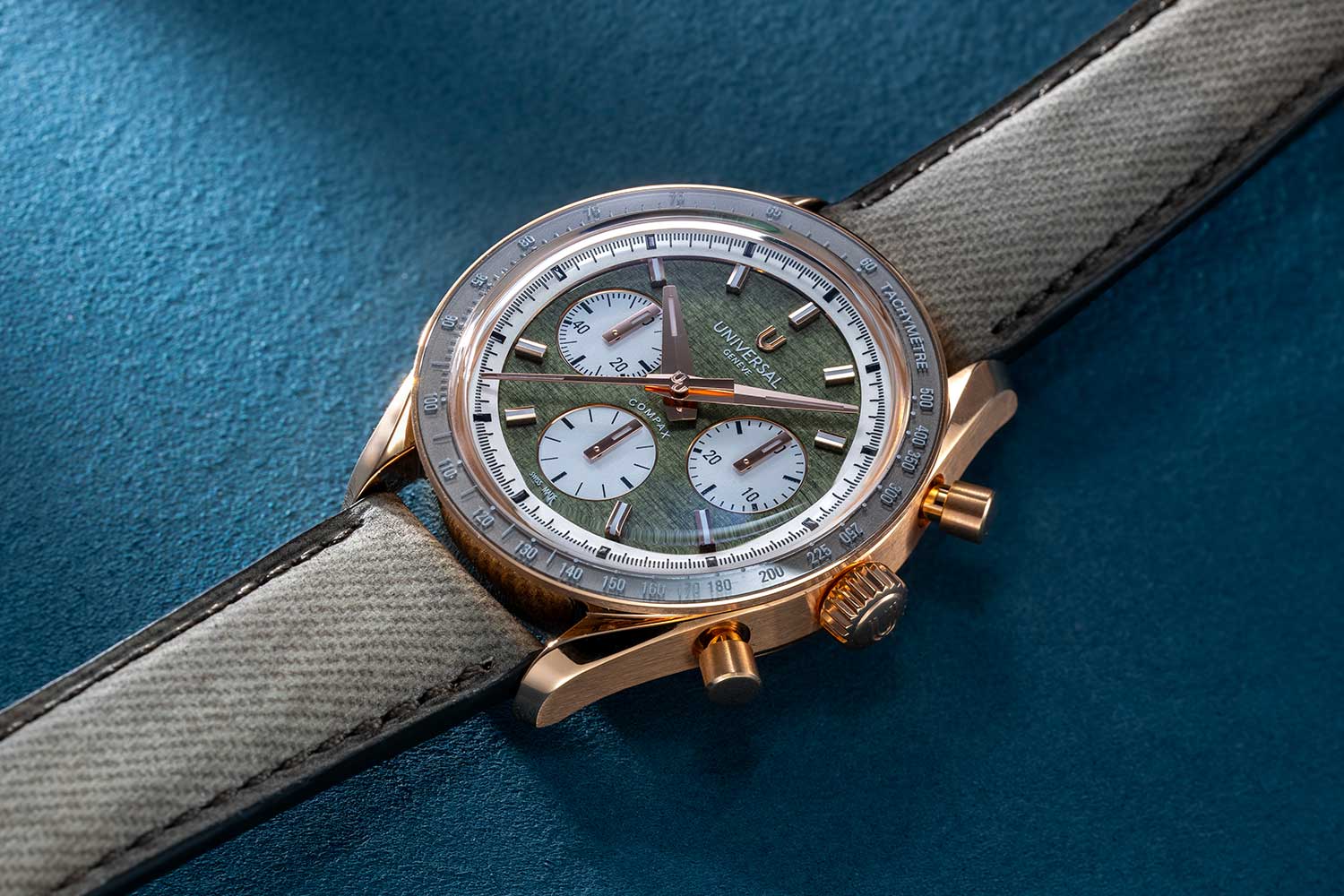
Dry Lavender, Brushed Indigo and Sage Green bring a less conventional mood to the Compax, while textured lacquer dials add visual depth beyond a simple colour change.
Instead of ceramic bezels, the Capsule watches use transparent sapphire rings that reveal the metal beneath in tones coordinated with the dials.
With the tachymeter scale printed on the sapphire itself, the markings appear to float slightly above the surface, giving the collection its most modern visual signature.
The UG-200 gives the Compax its technical reset
Universal Genève is closely tied to micro-rotor watchmaking, having been one of the early names associated with the technology in the 1950s.
That history makes the new Compax technically significant, because the model had never previously been powered by a micro-rotor chronograph movement.
The new UG-200 changes that.
More precisely, the movement uses a three-quarter rotor layout, giving the calibre automatic winding while keeping much of the mechanism visually open through the caseback.
This isn’t simply a time-only calibre with a chronograph module added on top.
The UG-200 is described as a fully integrated vertical-clutch chronograph movement, which gives the Compax a more serious technical footing within the revived Universal Genève catalogue.
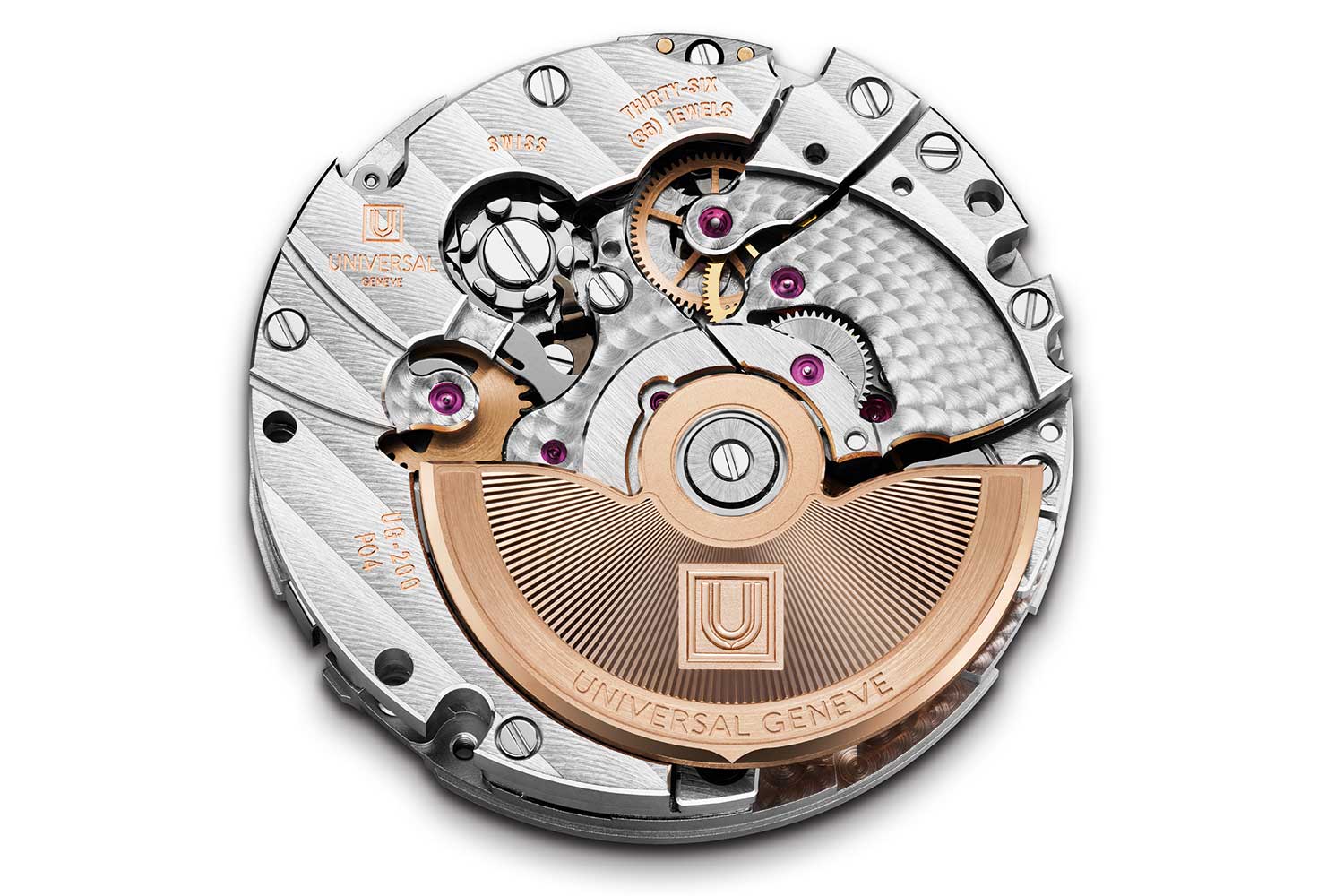
The compact oscillating mass leaves the column wheel visible from many angles, but the chronograph works are not the only point of interest.
The bridge architecture, assembled from multiple components, recalls the finger bridges seen on earlier pocket watches and wristwatches, lending the movement a period-correct mechanical character without making it feel old-fashioned.
Details & Specifications
| Brand | Universal Genève |
|---|---|
| Model | Compax |
| Case size | 39.5 mm |
| Case thickness | 12.45 mm |
| Case materials | Steel and 18k rose gold, depending on version |
| Dial options | Panda, reverse panda, blue, Dry Lavender, Brushed Indigo and Sage Green |
| Movement | UG-200 automatic chronograph calibre |
| Chronograph architecture | Integrated vertical-clutch chronograph |
| Rotor | Three-quarter rotor |
| Bezel | Ceramic tachymeter bezel on classic models, transparent sapphire tachymeter bezel on Capsule models |
| Strap or bracelet | Bund leather strap and five-link bracelet options mentioned within the collection |
The revived Compax works because it doesn’t treat heritage as a costume.
Its strongest versions understand the weight of the name, while the UG-200 gives Universal Genève a credible mechanical reason to bring the chronograph back now.