Monterey Car Week has a way of turning automotive history into something you can stand beside, hear, smell and, if the bidding goes your way, own.
This year’s auction calendar brings together two extraordinary American machines from very different eras, each carrying a distinct idea of what a great car could be.
The pairing of a 1933 Duesenberg Model J Disappearing Top Convertible Coupe and a 1948 Tucker 48 is more than a collector-car headline. It’s a reminder that American motoring ambition once stretched from bespoke pre-war opulence to post-war futurism.
At a glance
- A 1933 Duesenberg Model J Disappearing Top Convertible Coupe and a 1948 Tucker 48 are set to appear at Monterey Car Week auctions.
- The Duesenberg features Murphy coachwork, a fully retractable disappearing soft top and its original chassis, engine, transmission and body.
- Mecum will offer the Duesenberg during the August 13 to 15 Monterey sale, while the Tucker 48 is listed with RM Sotheby’s.
Monterey’s stage for American ambition
Every summer, Monterey becomes the gravitational centre of the classic car world.
Across roughly ten days, the California peninsula hosts historic racing, rallies, concours events, private gatherings and the Pebble Beach Concours d’Elegance, drawing serious collectors as well as enthusiasts who simply want to see the rarest cars in motion.
The auctions are a major part of that rhythm, and the best consignments tend to say something larger than their estimates.
In this case, the Duesenberg and the Tucker sit at opposite ends of a remarkable American story.
One represents the peak of pre-war coachbuilt luxury, when a wealthy client could commission a chassis and have the body tailored to taste.
The other belongs to the idealistic moment just after the Second World War, when Preston Tucker set out to build what he imagined as the car of tomorrow.
The Duesenberg Model J with a disappearing roof
Duesenberg’s reputation was built on far more than polished metal and imposing proportions.
Founded in 1920 by brothers Fred and August Duesenberg in Indiana, the company drew on deep engineering experience and motorsport credibility, including victory at the 1921 French Grand Prix and four Indianapolis 500 wins.
The Model J arrived in 1928 and became the defining Duesenberg, not just because it was luxurious, but because it was also seriously fast for its time.
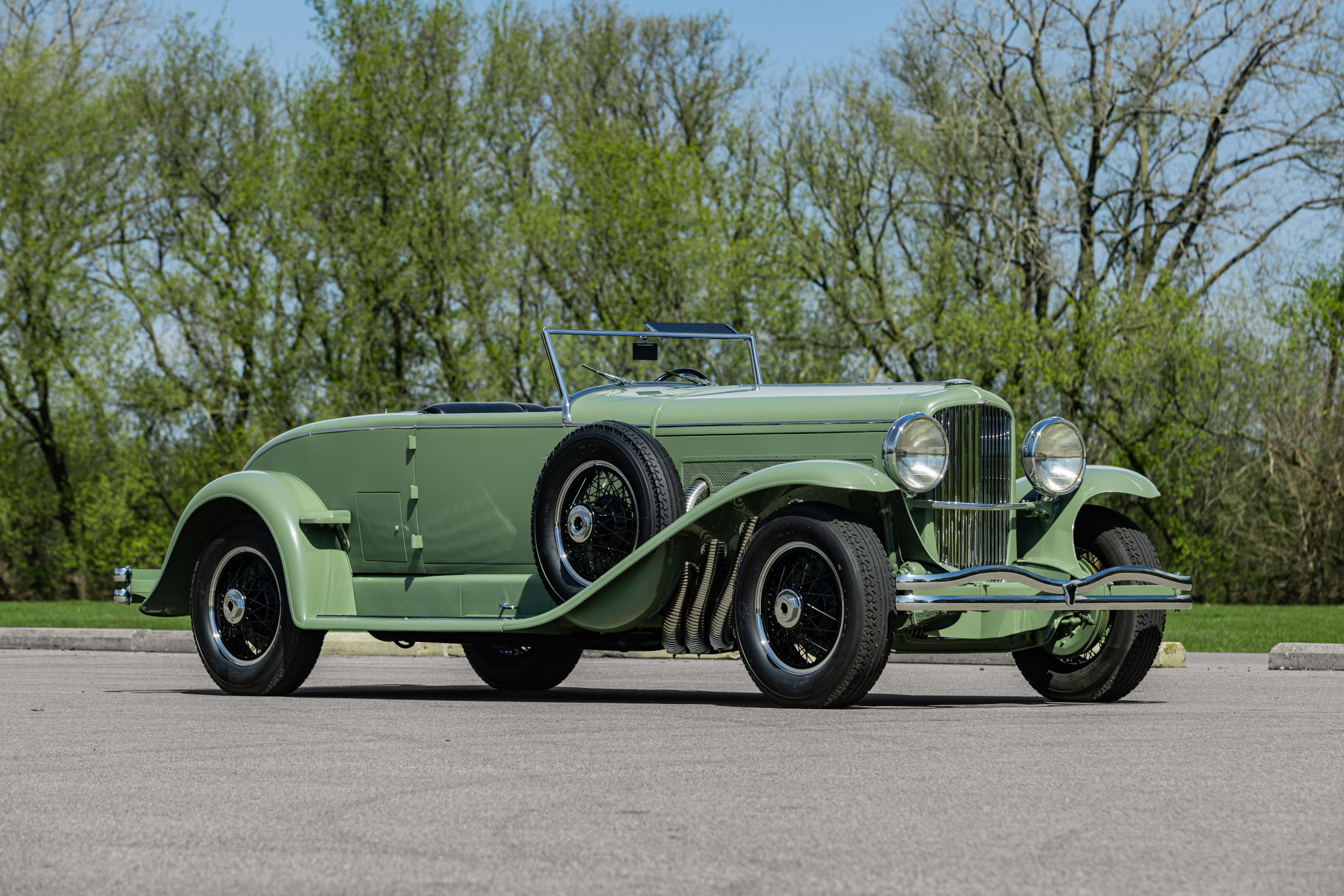
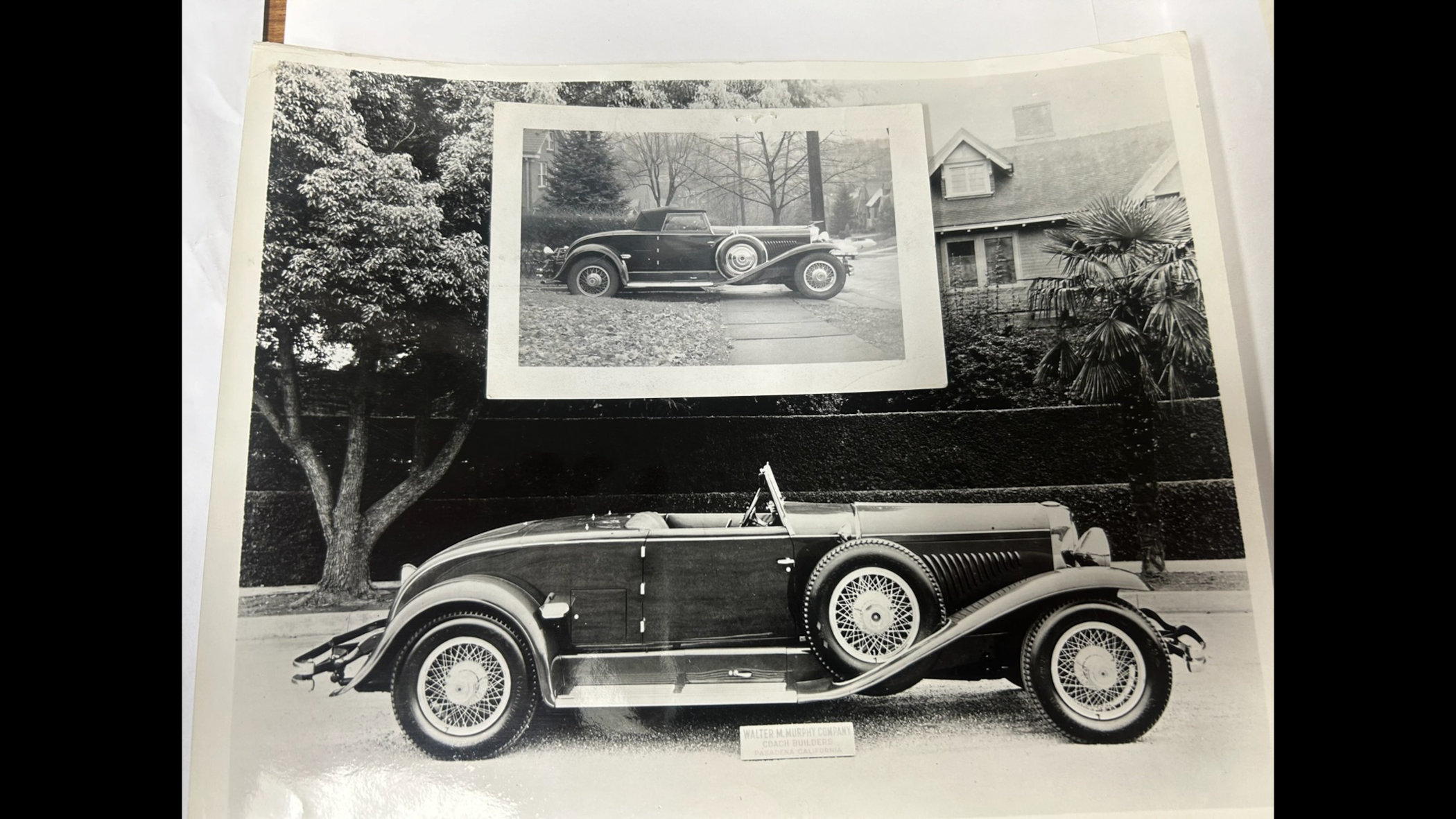
The example heading to Mecum is chassis No. 2446, completed in 1933 and bodied by Walter M. Murphy Co.
It carries a 420 cubic inch, or 7-litre, straight-eight engine rated at 265 horsepower, a substantial figure in the early 1930s and central to the Model J’s larger-than-life character.
As with many elite cars of the period, Duesenberg supplied the chassis and powertrain before the car went to a coachbuilder for its final form.
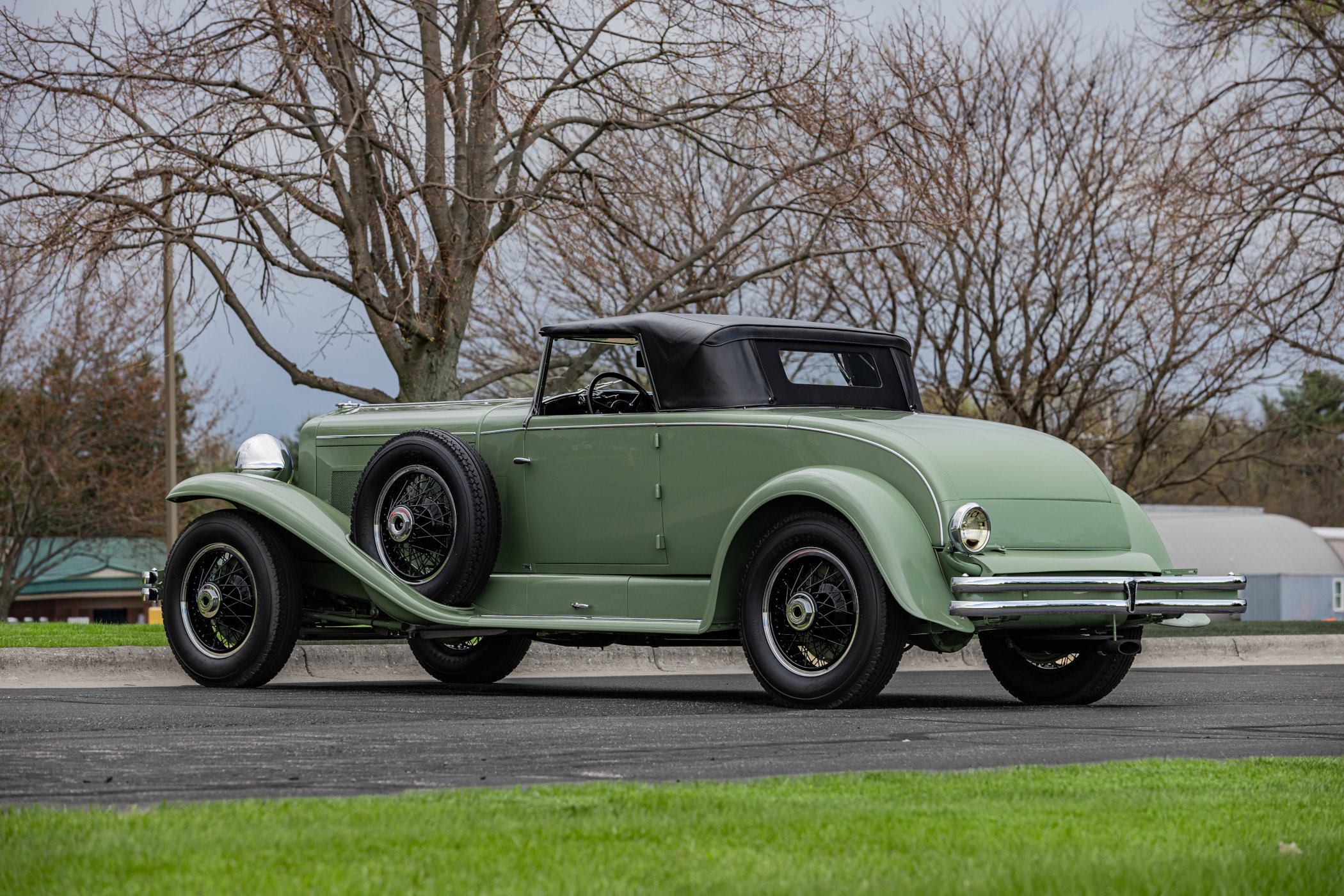
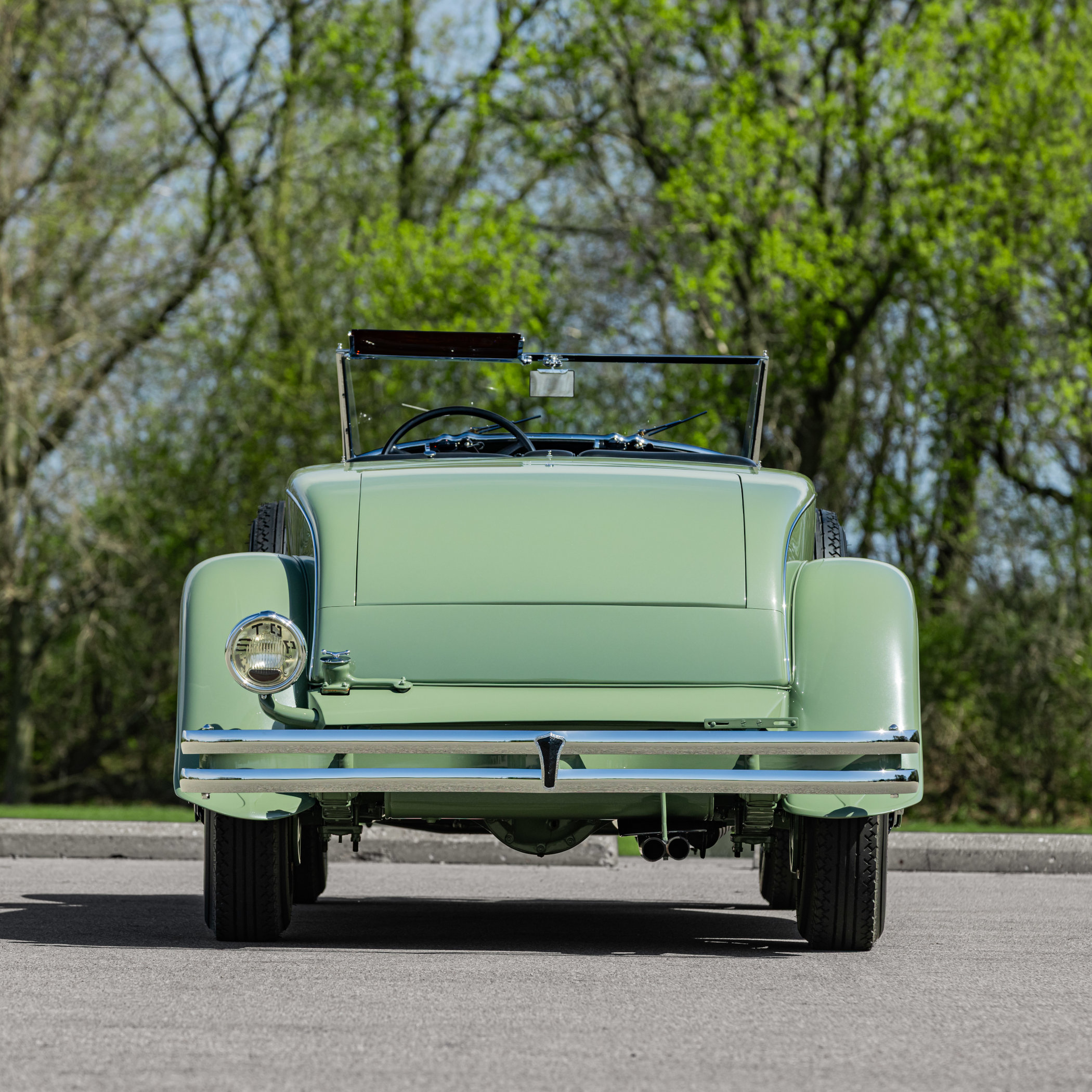
That practice means the details matter enormously, and this car’s Murphy-built two-door body is distinguished by a soft top that retracts fully into the bodywork rather than sitting exposed.
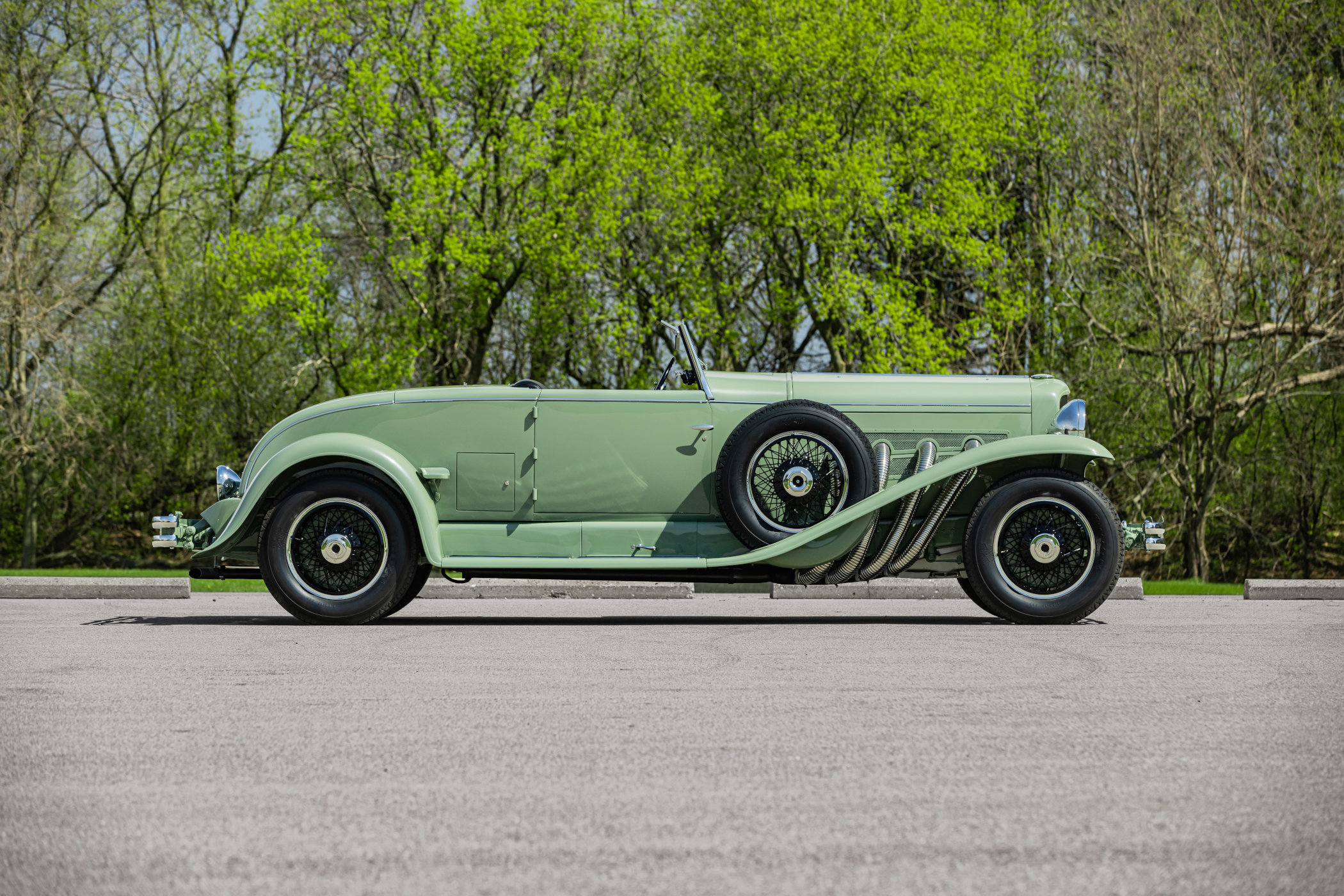
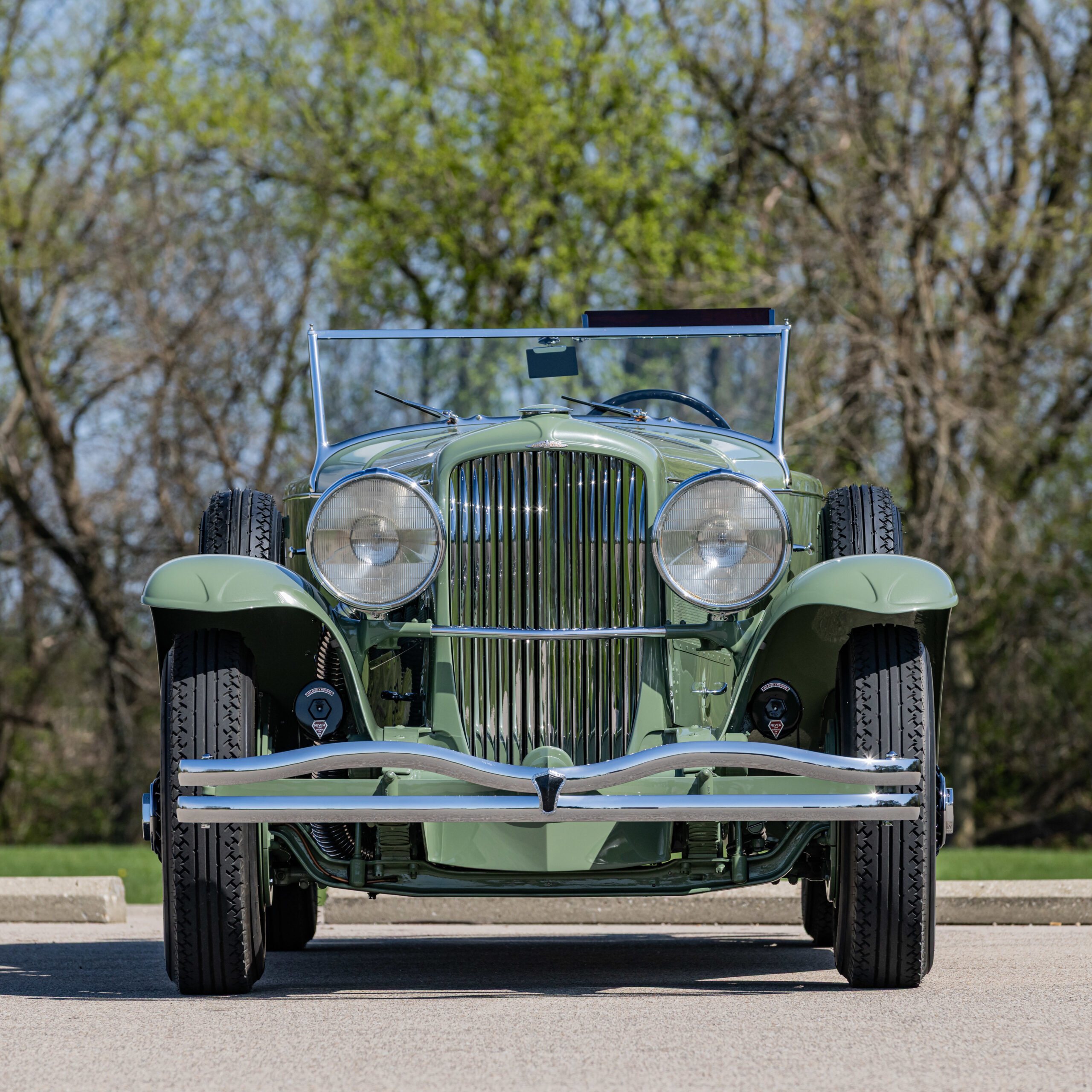
The result is a cleaner, more elegant profile when open, with long pontoon-style fenders, a vertical grille, an extended bonnet and side-mounted spare wheels giving it the cinematic presence collectors expect from a top-tier Duesenberg.
Four exhaust pipes emerge through the right side of the engine cover and sweep down through the fender before exiting through twin tailpipes, a flourish that feels both theatrical and purposeful.
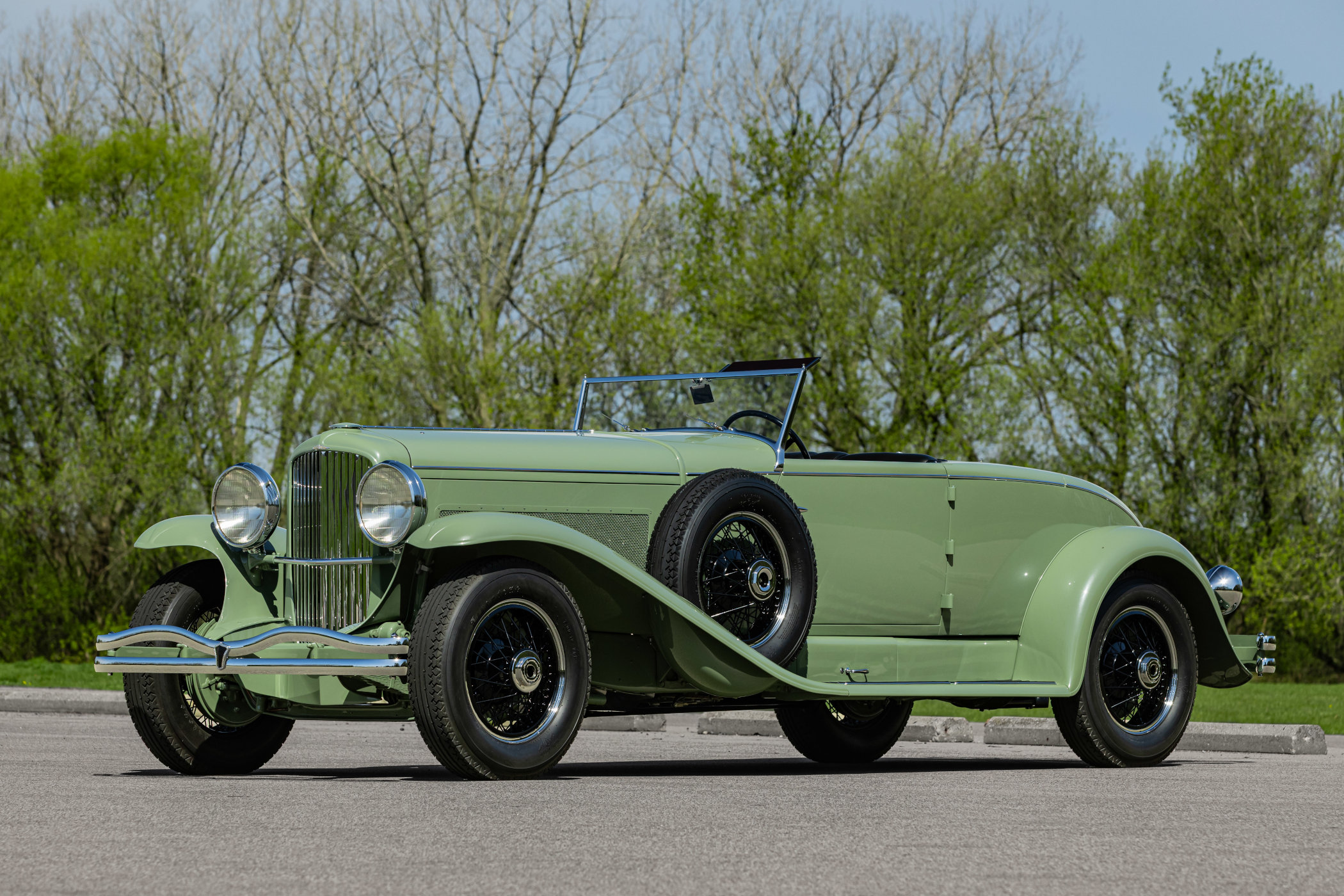
Behind the disappearing top compartment sits a rumble seat rather than a conventional trunk, a period detail that adds charm without softening the car’s grandeur.
The car’s provenance is another major part of its appeal.
It retains its original chassis, engine, transmission and body, and its known ownership history includes American racing figure Bob Estes, who owned it for roughly four decades.
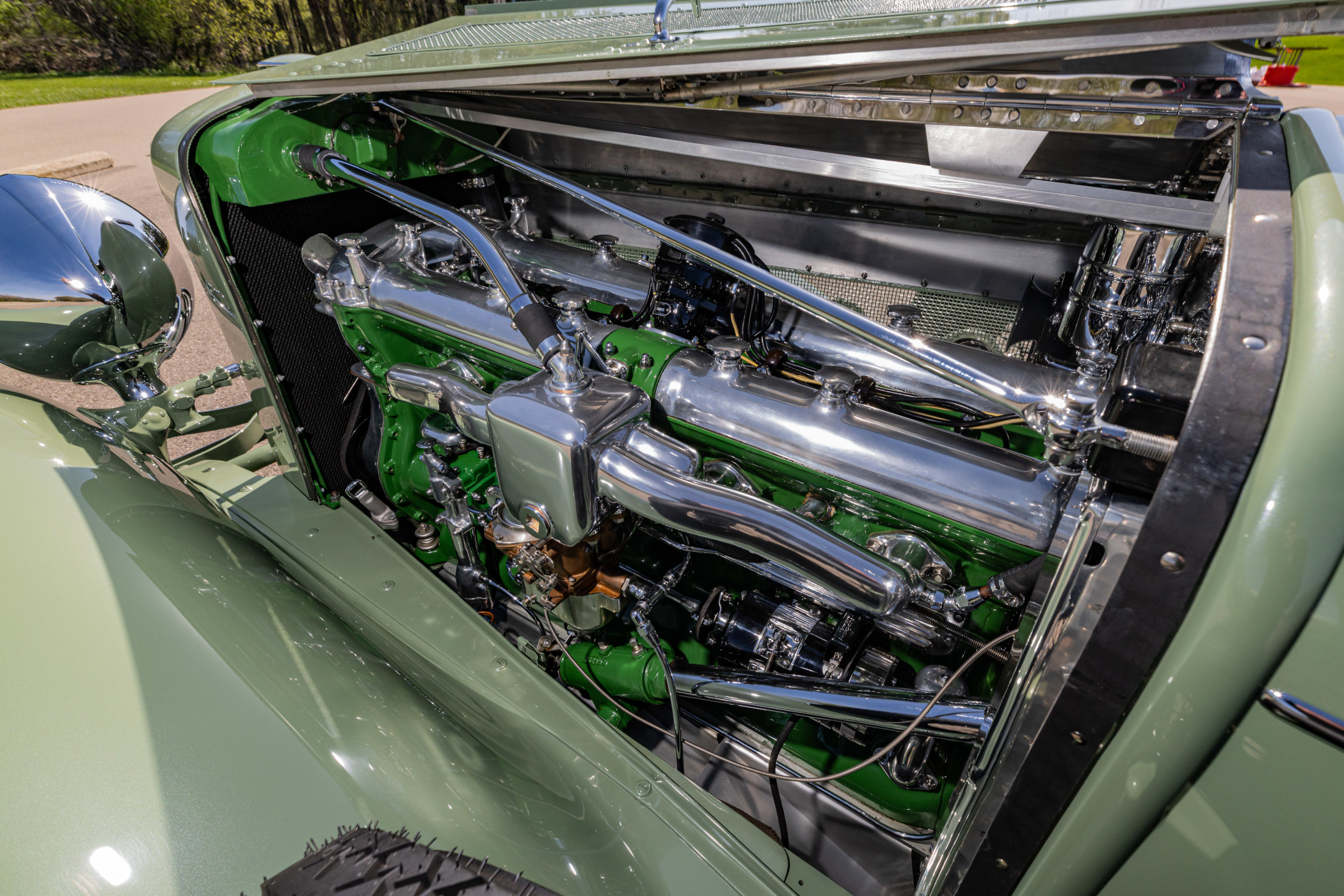
The Duesenberg has also appeared at Pebble Beach and has been restored in green over black leather.
No estimate has been announced, though the rarity of Murphy-bodied Model J cars, the disappearing-top configuration and recent market appetite for exceptional Duesenbergs place it among the most closely watched consignments of Monterey week.
Preston Tucker’s post-war idea of the future
If the Duesenberg speaks to the confidence of the pre-war coachbuilt age, the Tucker 48 belongs to a more restless chapter.
Preston Thomas Tucker was immersed in cars from youth and built a varied career around the industry, with time spent around policing, sales, service stations, assembly work and major American marques before launching his own automotive venture.
His ambitions were not limited to conventional passenger cars.
Before the Tucker 48, he explored ideas including a high-speed turreted combat vehicle and later founded wartime aviation-related businesses intended to produce engines and military components.
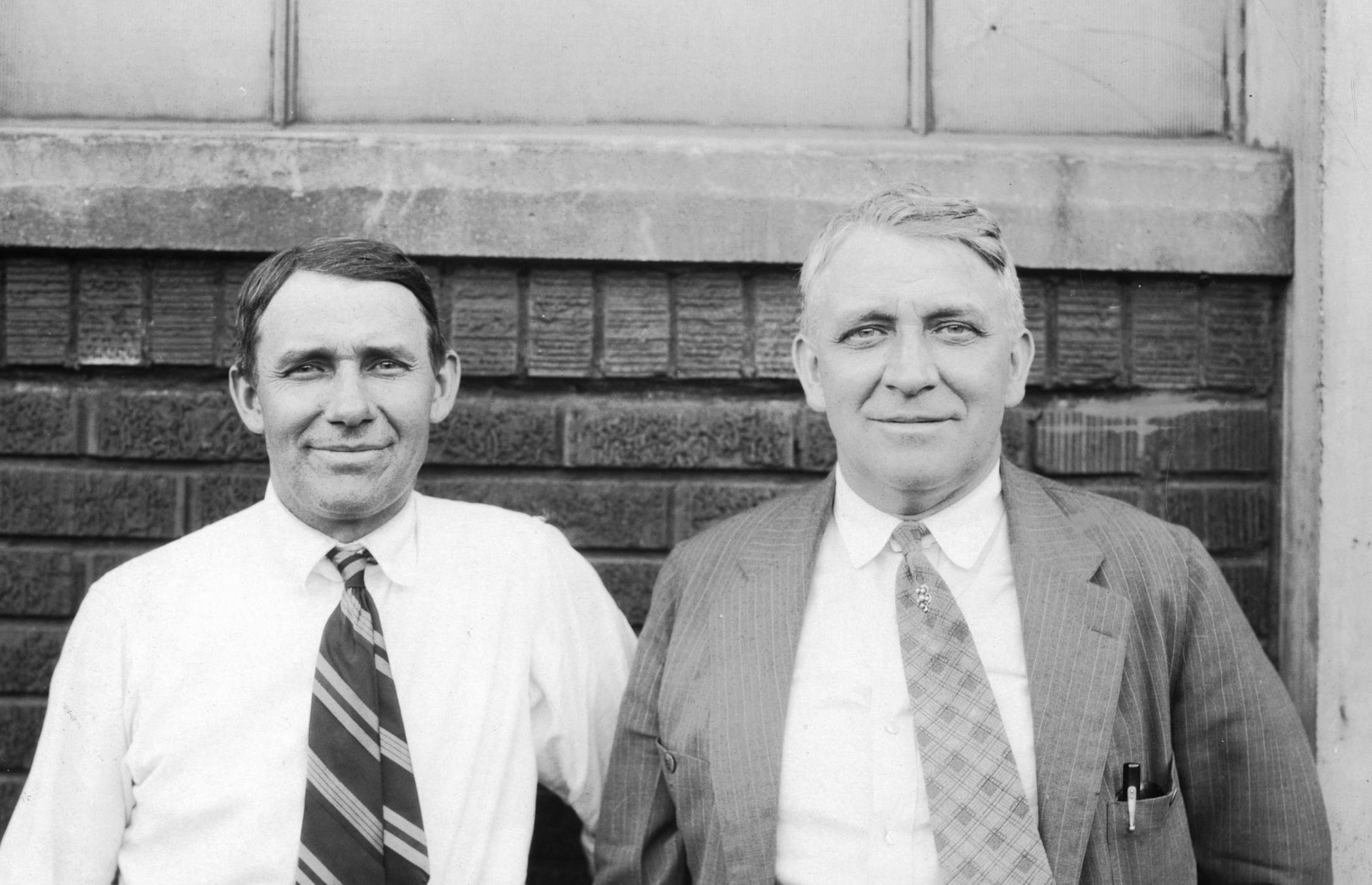
After the war, Tucker founded the Tucker Corporation and pursued a new American automobile with unusually bold intent.
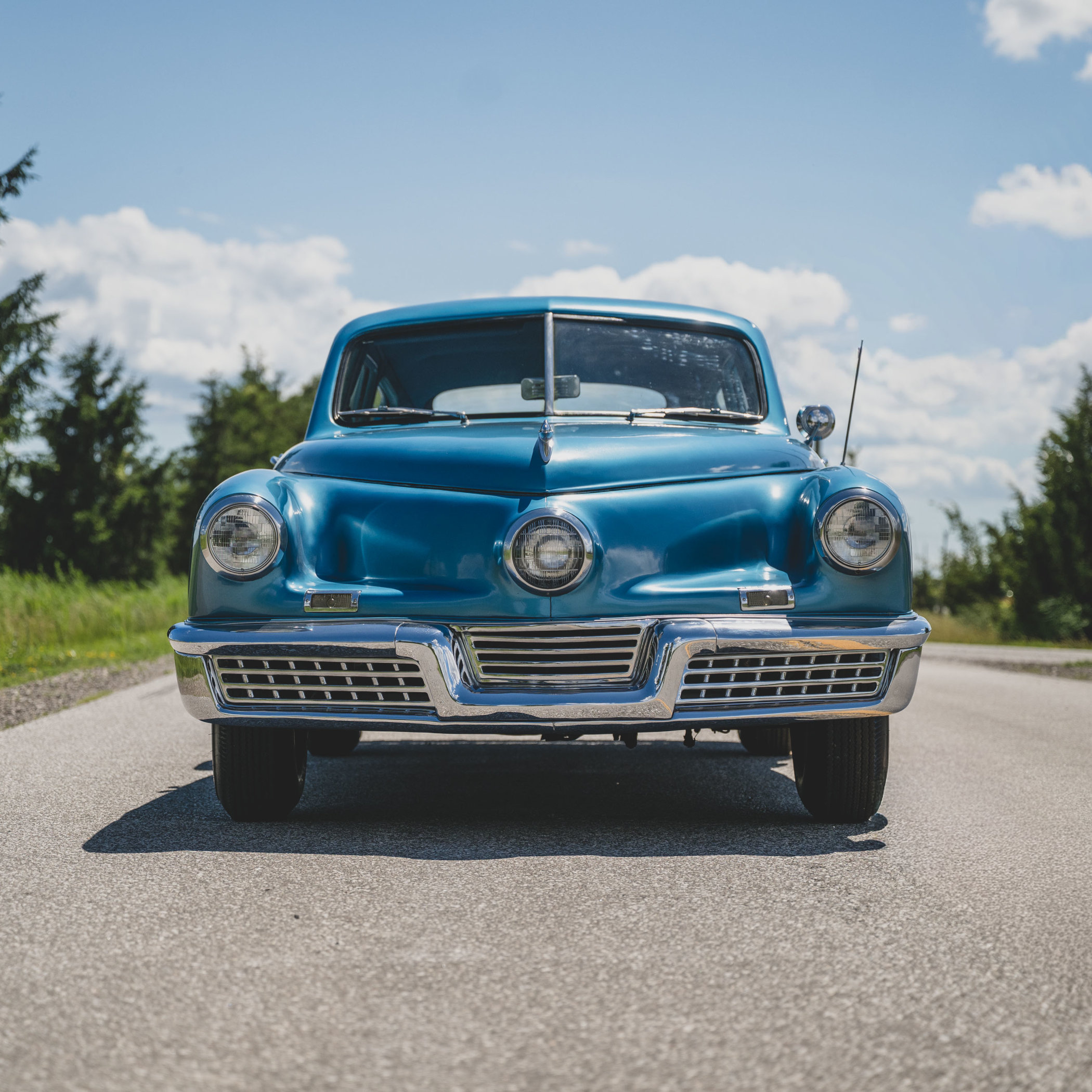
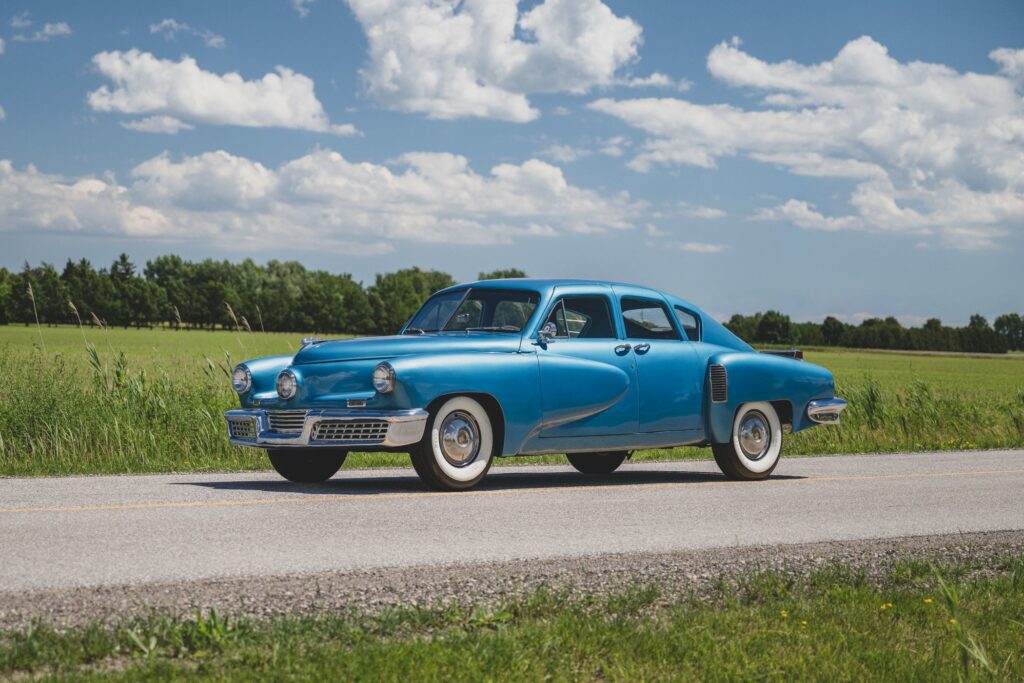
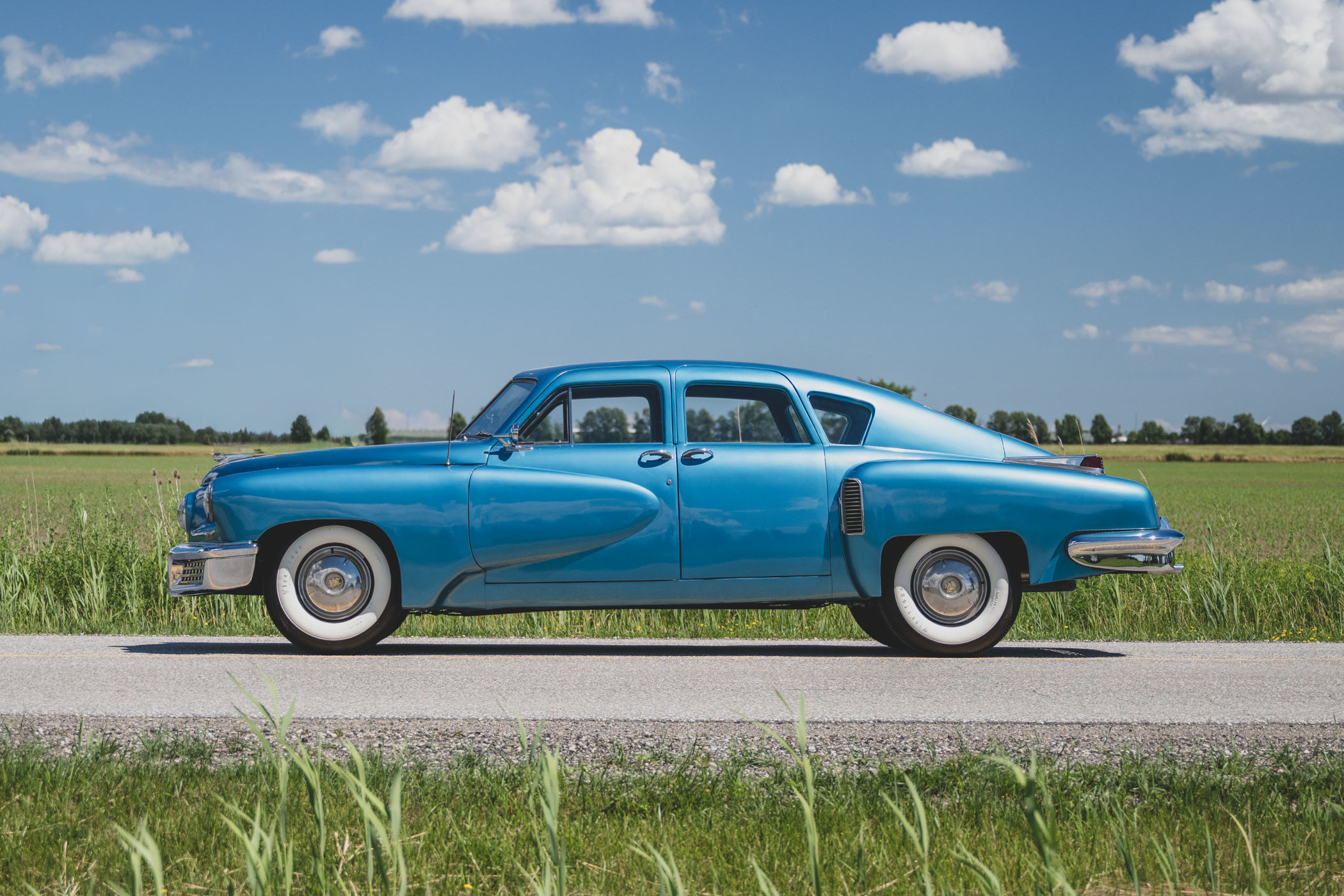
The Tucker 48, often remembered by its Torpedo association, was the only car the company produced during its brief life, yet it became one of the most recognisable post-war American motoring symbols.
Its appeal today isn’t only about scarcity.
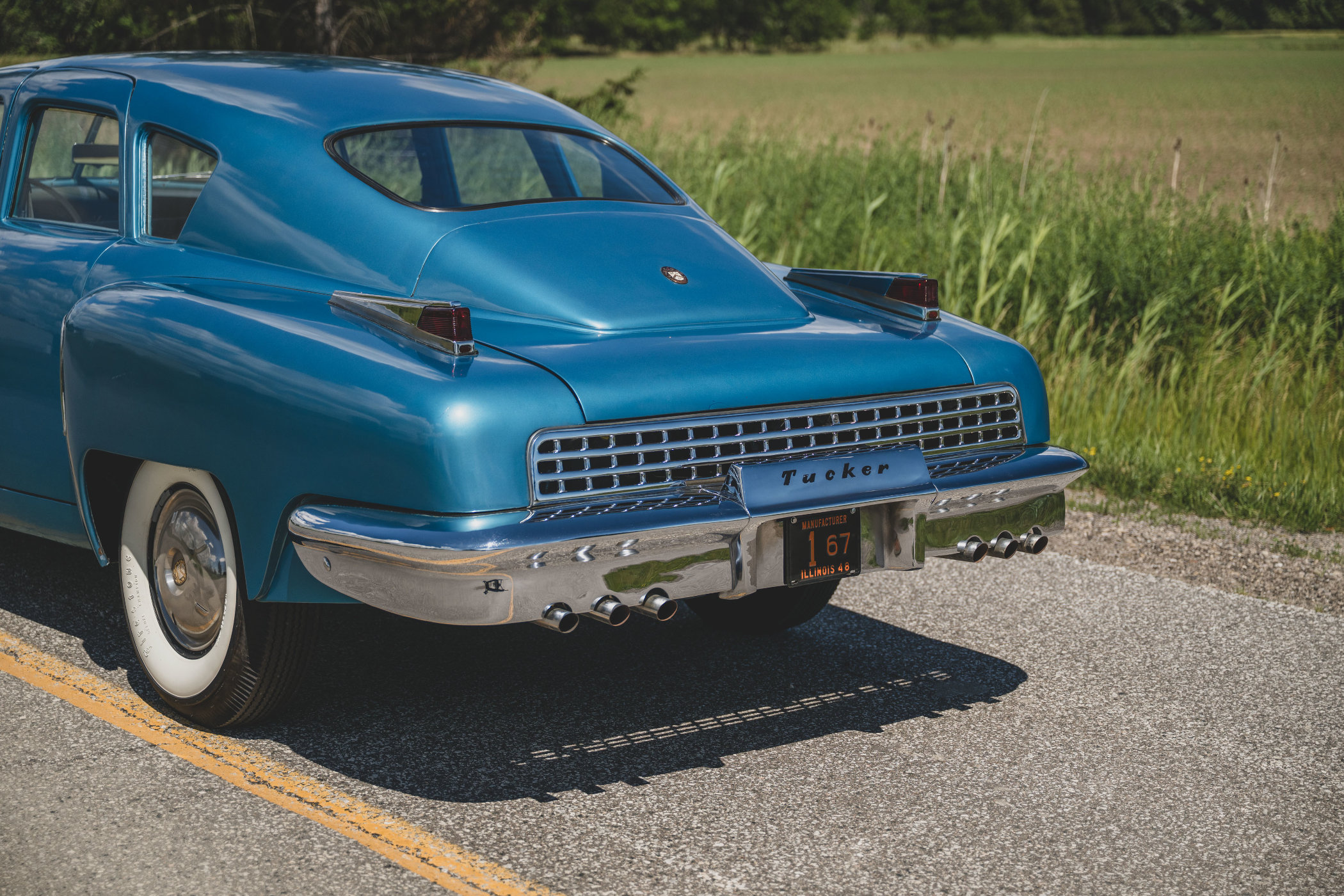
The Tucker story blends industrial optimism, entrepreneurial risk and the kind of dramatic collapse that tends to turn an ambitious machine into a legend.
RM Sotheby’s offering of a 1948 Tucker 48 gives Monterey bidders a chance to engage with that mythology directly.
Where the Duesenberg embodies custom craftsmanship and old-world American luxury, the Tucker carries the charge of an unfinished future.
Details & Specifications
| Car | 1933 Duesenberg Model J Disappearing Top Convertible Coupe |
|---|---|
| Auction house | Mecum |
| Sale timing | Monterey Car Week, August 13 to 15 |
| Chassis | No. 2446 |
| Coachbuilder | Walter M. Murphy Co. |
| Engine | 420 cubic inch, 7-litre straight-eight |
| Power | 265 horsepower |
| Body detail | Two-door convertible coupe with fully retractable disappearing soft top |
| Notable originality | Original chassis, engine, transmission and body |
| Finish | Green over black leather |
| Car | 1948 Tucker 48 |
| Auction house | RM Sotheby’s |
| Manufacturer | Tucker Corporation |
| Production context | The only model built by Tucker during the company’s brief three-year run |
Together, these two cars frame a compelling Monterey contrast.
The Duesenberg is the established masterpiece, formal and meticulously crafted, while the Tucker is the daring post-war proposition that never had time to fully unfold.
For collectors, that makes the week’s American offerings less about nostalgia than about two different kinds of conviction, each preserved in metal, leather and a great deal of history.