Case material has become one of the cleanest ways to read the modern watch market.
Steel still carries the everyday appeal collectors understand instinctively, but titanium, ceramic and precious metals tell a more nuanced story about comfort, innovation and value.
Recent pre-owned sales analysis from Watchfinder & Co., alongside wider market indicators from Chrono24, Everywatch and WatchCharts, shows just how lopsided the material race has become.
At a glance
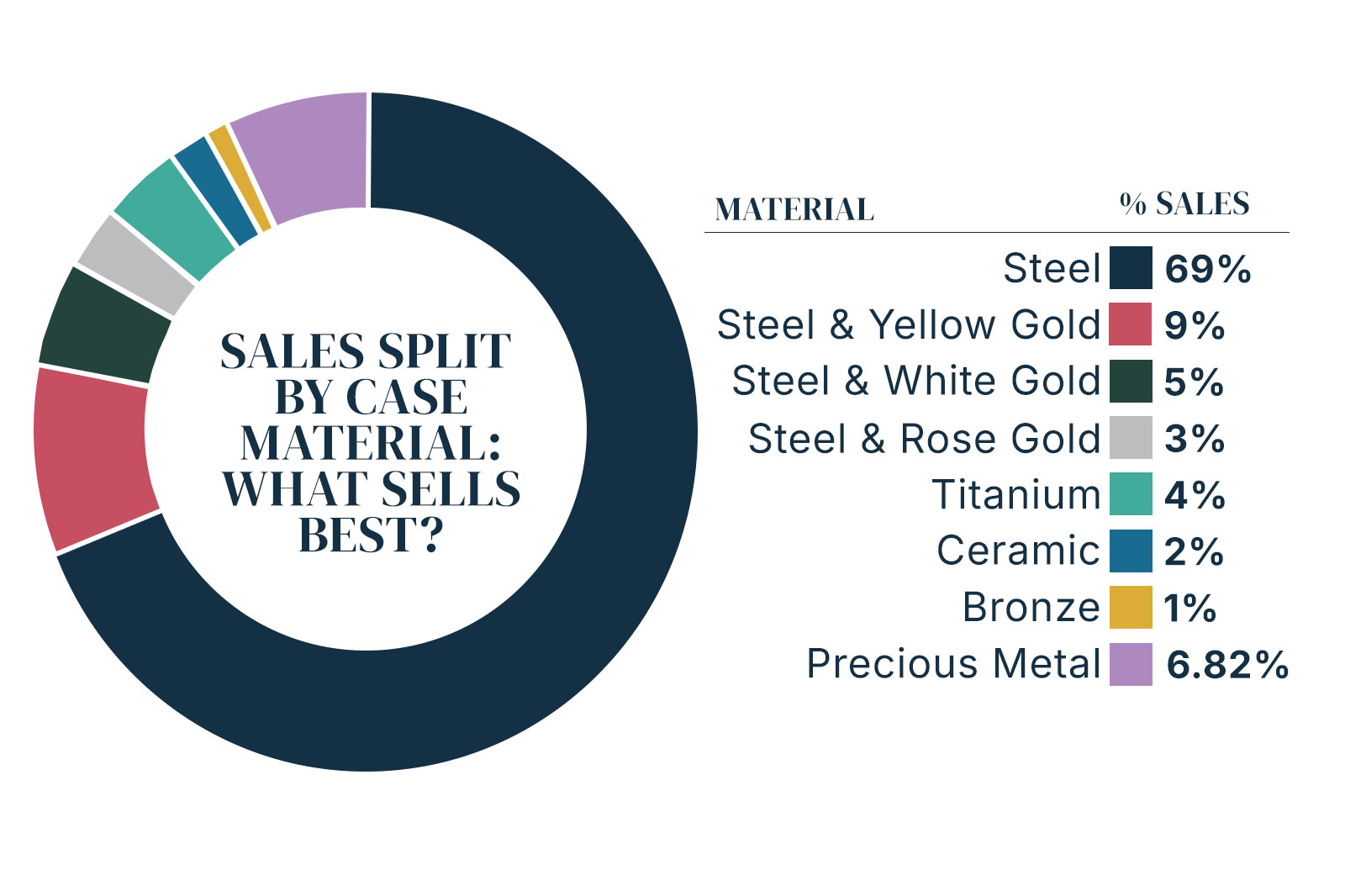
- Stainless steel remains the leading wristwatch case material, accounting for 69% of pre-owned sales by case type.
- Steel and bi-metal steel combinations together represent 86% of watch sales by volume.
- Precious metals sell in much smaller numbers, but high-value watches continue to shape the market’s financial centre of gravity.
Steel remains the default choice for collectors
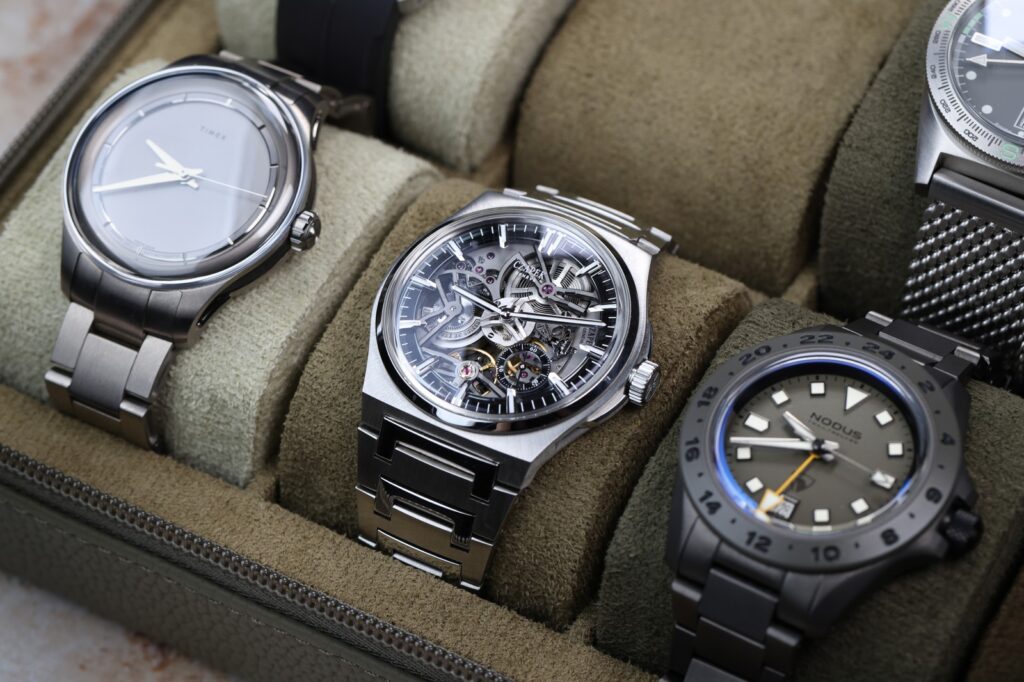
Stainless steel is still the watch world’s practical centre.
It accounted for 69% of sales across the past year, making it by far the most popular case material in the pre-owned market.
That dominance becomes even clearer once steel-and-gold variants are included.
Steel and yellow gold accounted for 9%, steel and white gold for 5%, and steel and rose gold for 3%, bringing the wider steel family to 86% of total sales.
The reasons are not difficult to understand.
Steel is durable, familiar, wearable and comparatively accessible, particularly in a market where the most desirable sports watches often double as daily wearers.
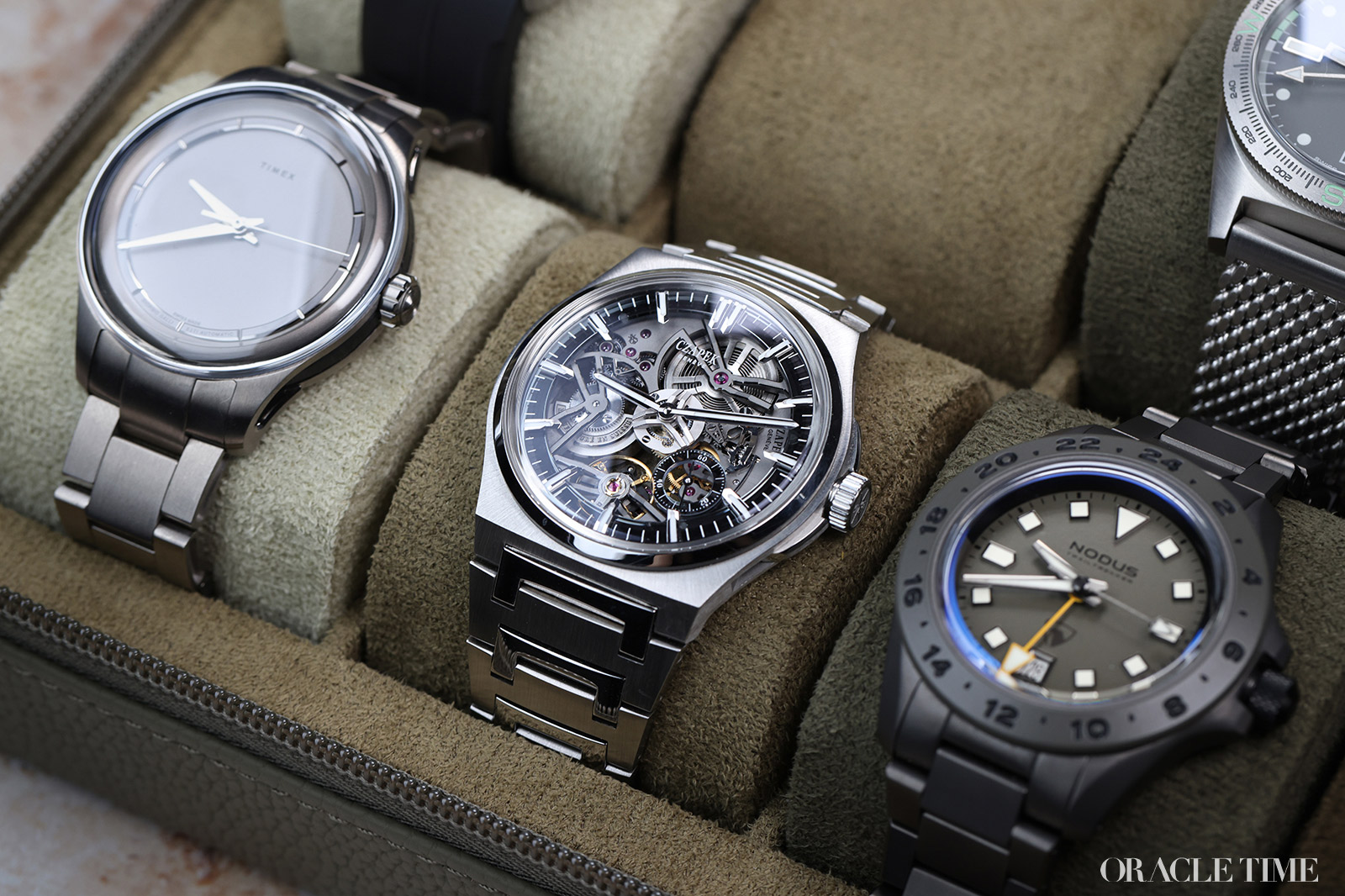
The best-performing steel models also underline how deeply the material is tied to modern collecting culture.
The Rolex GMT-Master II 126710BLNR, often nicknamed Batman or Batgirl depending on the bracelet, sits alongside the Omega Speedmaster Professional Moonwatch 310.30.42.50.01.002 and Patek Philippe Nautilus 5712/1A-001 as key steel performers.
Titanium and ceramic remain specialist choices
Titanium has made real progress in enthusiast circles, but its broader market share remains modest.
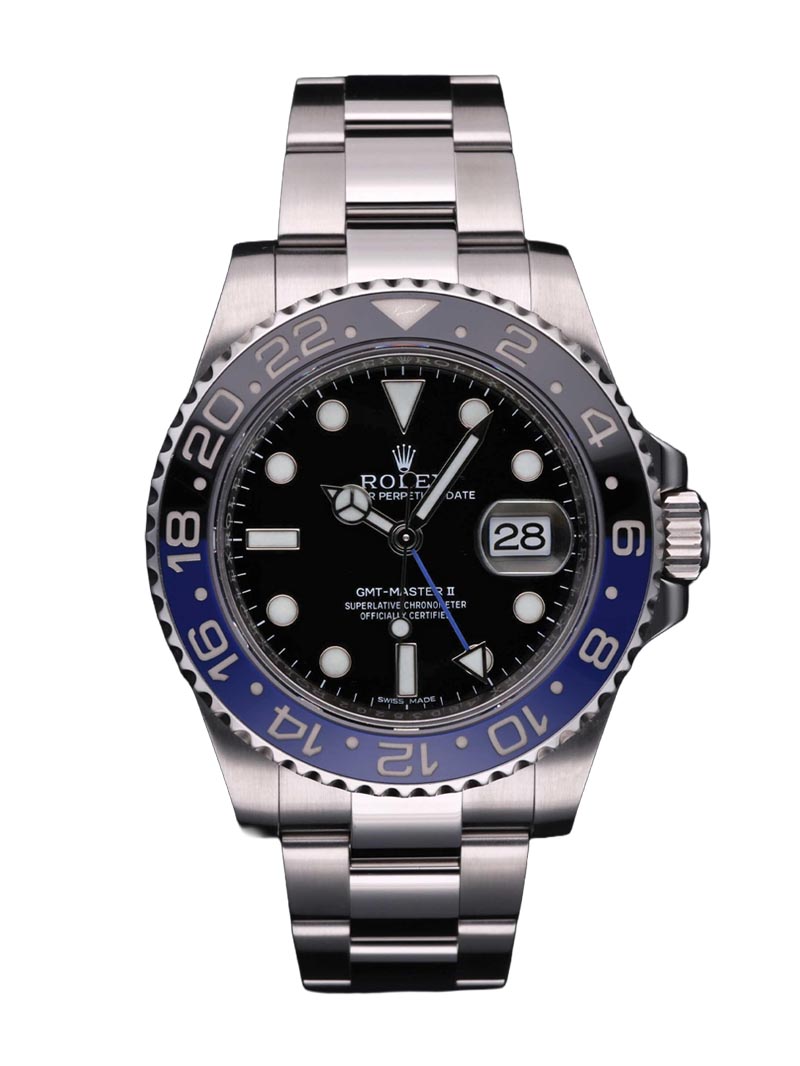
It accounted for 4% of sales, placing it ahead of ceramic and bronze but still far behind steel.
The appeal is clear for buyers who want a lighter, more technical feel on the wrist.
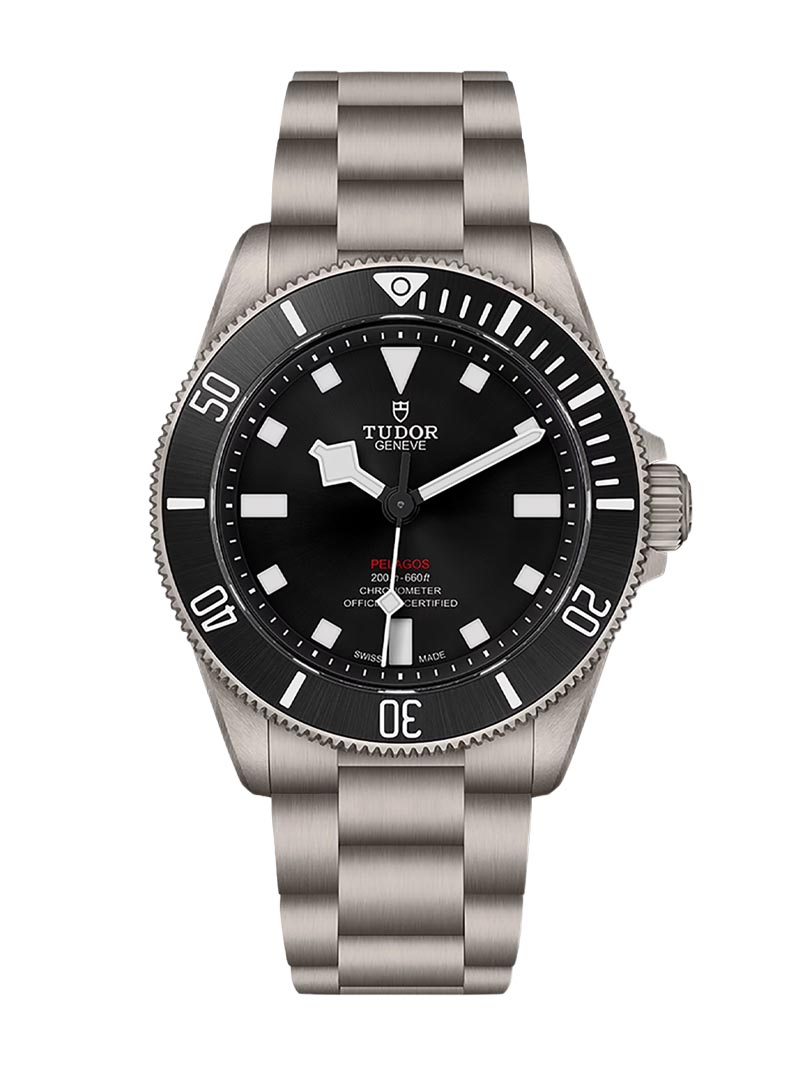
Models such as the Tudor Pelagos M25407N-0001, Omega Seamaster Diver 300M 007 No Time to Die 210.90.42.20.01.001 and Hublot Classic Fusion 542.NX.1171.RX show how titanium has become associated with tool watches, stealthier design and contemporary comfort.
Ceramic, meanwhile, represented 2% of sales.
Its strength lies less in volume and more in identity, particularly where brands use it to create watches with strong monochrome presence or high scratch resistance.
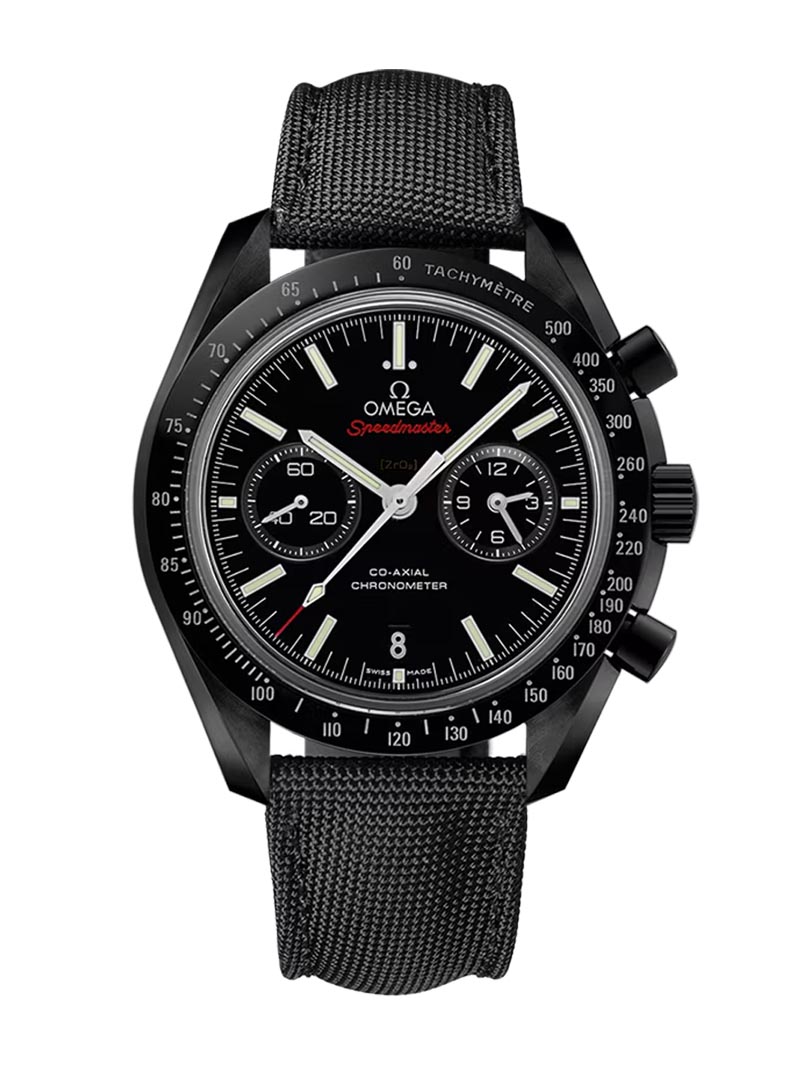
Notable ceramic performers include the Omega Speedmaster Dark Side of the Moon 311.92.44.51.01.003, IWC Pilot’s Watch Chronograph Top Gun IW378901 and Chanel J12.
Bronze remains smaller again at 1%, despite its enthusiast appeal and distinctive ageing character.
Precious metals sell less often but carry more weight
Precious metals occupy a very different position in the watch market.
Rose gold, yellow gold, white gold and platinum together accounted for 6.82% of sales, a small share when measured by volume.
Yet low volume does not mean low importance.
High-end precious-metal watches can represent a large amount of value in a single transaction, especially when brand, rarity, movement architecture and complications are part of the equation.
Industry figures from Morgan Stanley and LuxeConsult show the broader pattern clearly.
Watches priced above CHF 50,000 made up only 1.4% of export volume in 2025, but accounted for 37% of export value and 89% of growth.
That is the premiumisation effect in sharp form.
Fewer watches are doing more of the financial work, and case material often plays a role in how those watches are positioned.
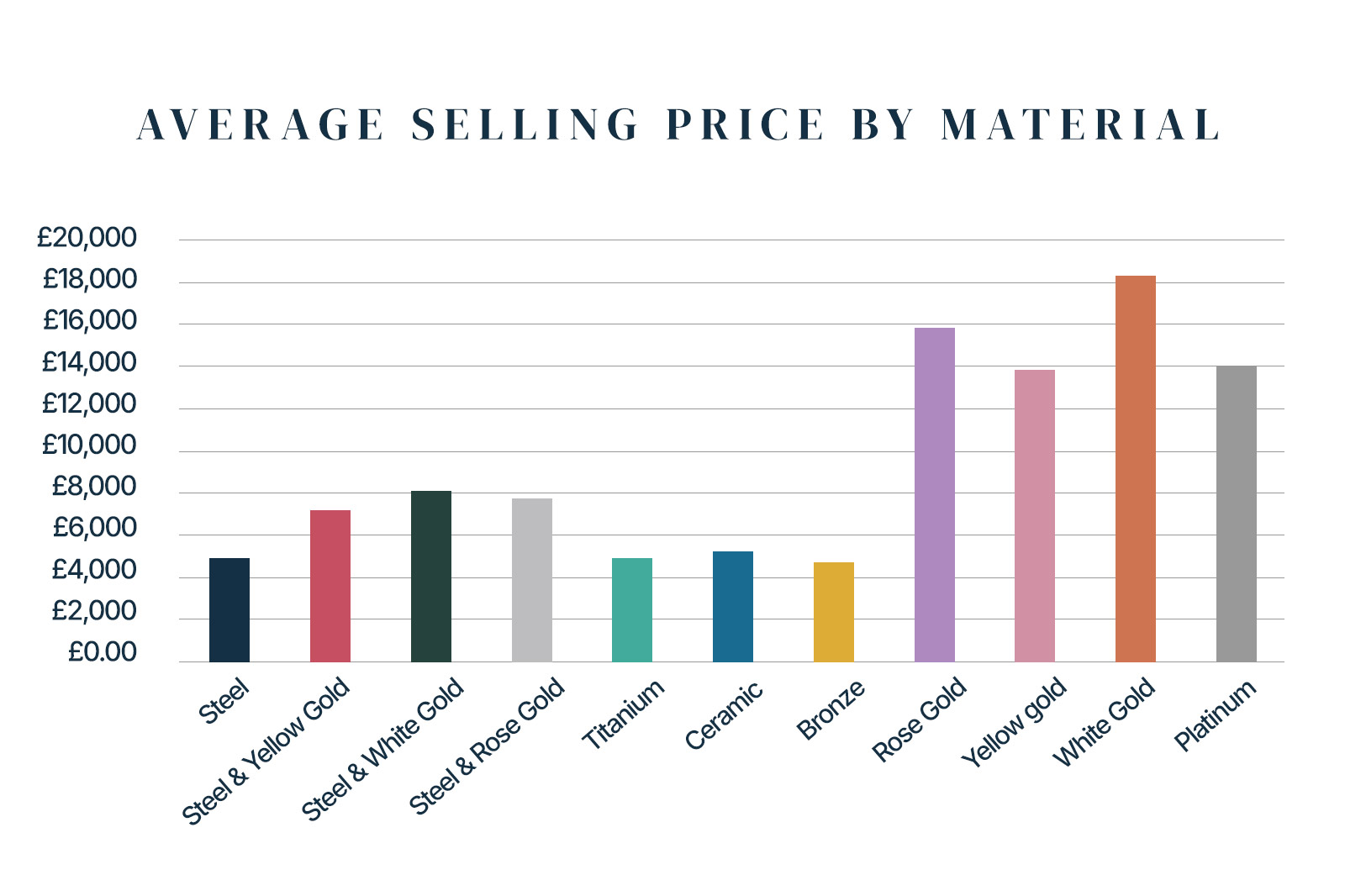
White gold currently has the highest average selling price by material in Watchfinder & Co.’s data, at approximately £18,200.
Rose gold follows, while platinum sits third at around £14,000, which is notable given platinum’s traditional status as the more prestigious metal.
Steel, titanium and bronze are broadly comparable at the more accessible end of the spectrum, with average sale prices around £4,800.
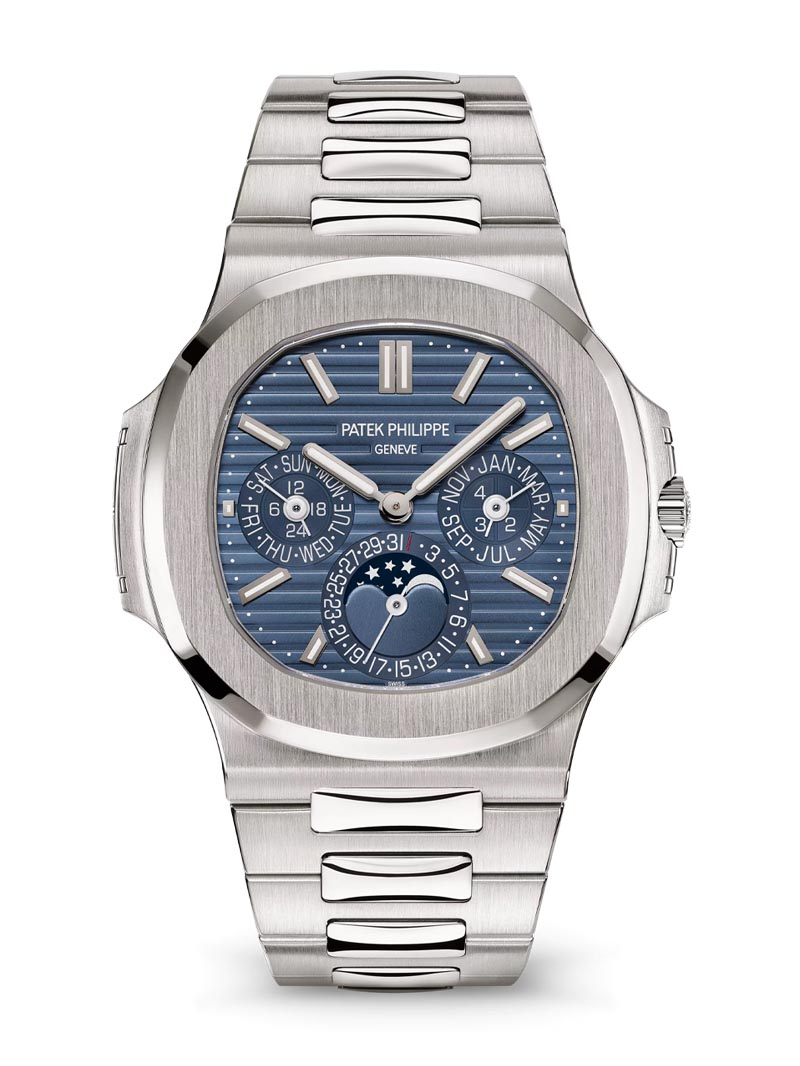
Among precious-metal standouts, the Patek Philippe Nautilus Perpetual Calendar 5740/1G-001, Patek Philippe Nautilus Chronograph 5980/1R-001 and Rolex Daytona 116506-0001 all illustrate how material, complication and brand power can converge.
Details & Specifications
| Stainless steel share | 69% |
|---|---|
| Steel and yellow gold share | 9% |
| Steel and white gold share | 5% |
| Steel and rose gold share | 3% |
| Total steel and bi-metal steel share | 86% |
| Titanium share | 4% |
| Ceramic share | 2% |
| Bronze share | 1% |
| Combined precious-metal share | 6.82% |
| Highest average selling price by material | White gold, approximately £18,200 |
| Platinum average selling price | Approximately £14,000 |
| Approximate average selling price for steel, titanium and bronze | Approximately £4,800 |
The material story is ultimately a story about two markets moving at once.
Steel remains the collector’s default by volume, while precious metals give brands and high-end buyers a route into fewer, more expensive watches.
That tension explains why the steel sports watch still dominates day-to-day demand, even as the industry’s biggest financial gains increasingly sit higher up the price ladder.