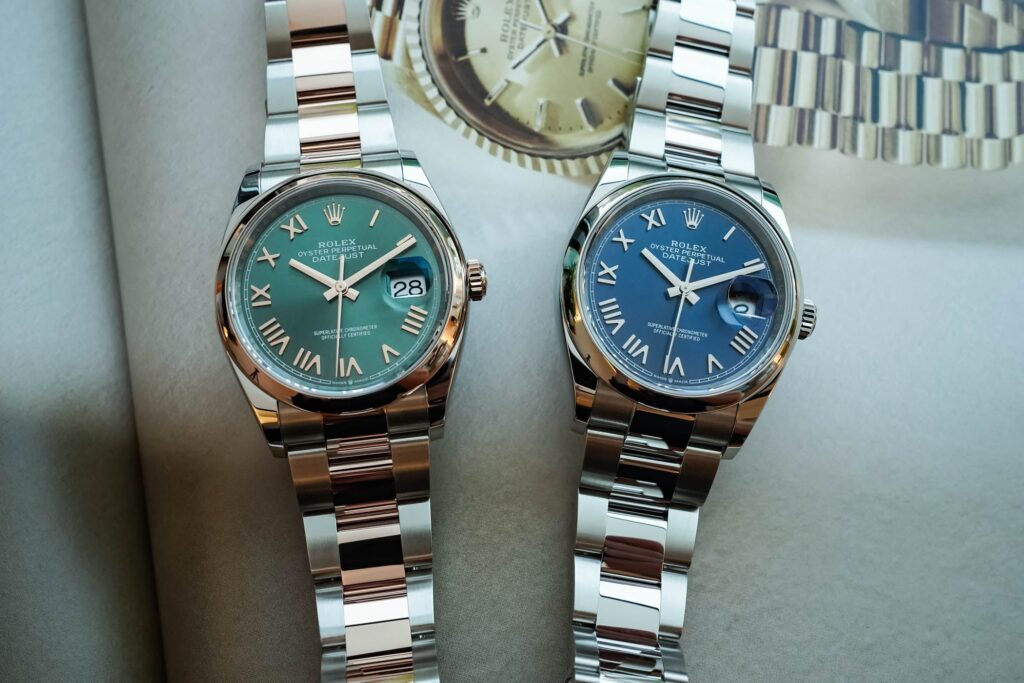
Rolex had no shortage of talking points at Watches and Wonders Geneva 2026, but the Datejust update may be the one that rewards the closest look.
The green ombré dial drew the spotlight, and understandably so, yet the bigger story is the scale of the refresh around it.
Across 36mm and 41mm Datejust models, Rolex has added well over 100 new configurations, including a meaningful redesign of its Roman numeral dials.
At a glance
- Rolex has expanded the 2026 Datejust family with well over 100 new configurations across 36mm and 41mm models.
- The headline green ombré dial is joined by a broader update to Roman numeral dials, with sharper applied numerals and a more modern execution.
- The new green ombré Datejust appears across eight combinations of case size, bracelet and bezel style.
Green ombré comes to the Datejust
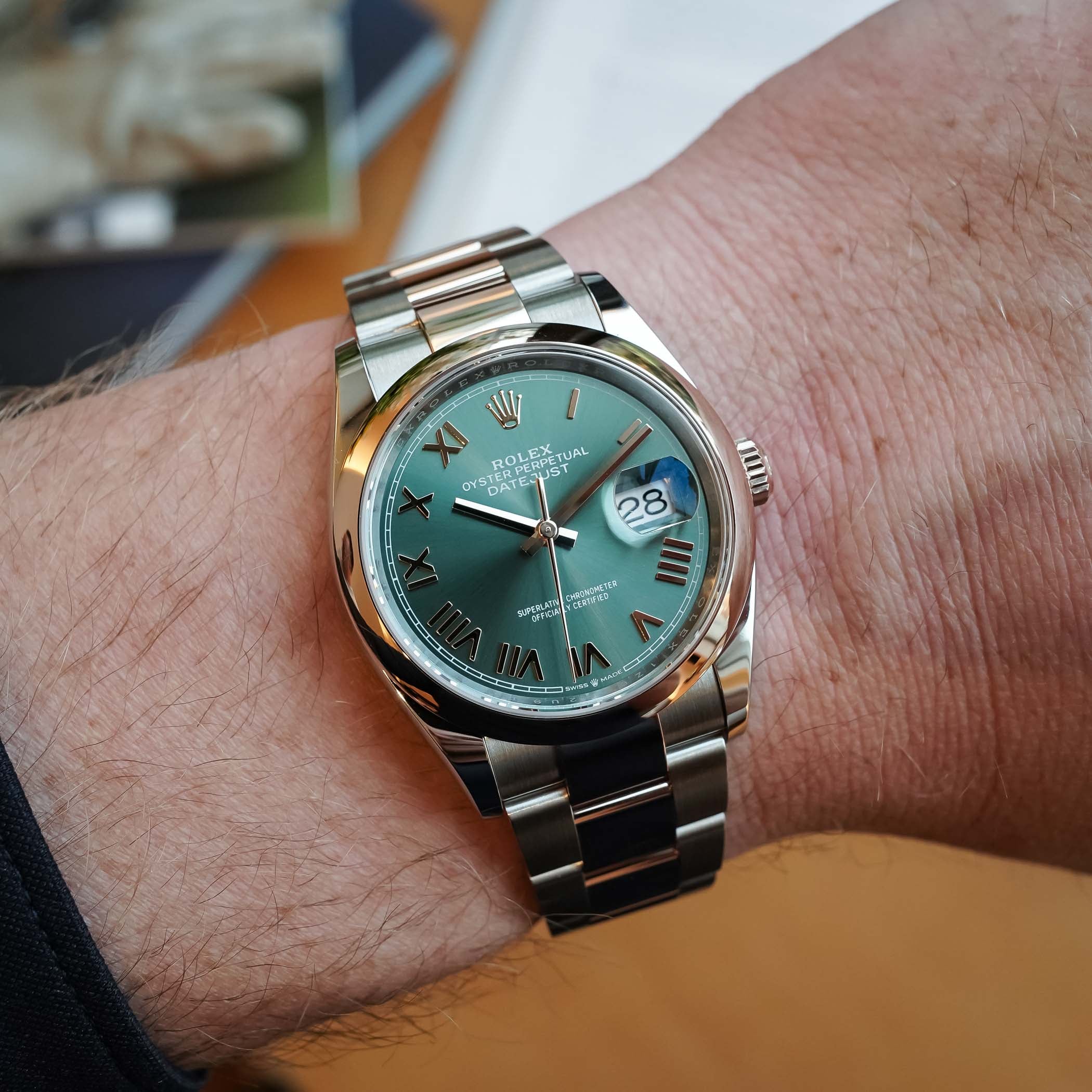
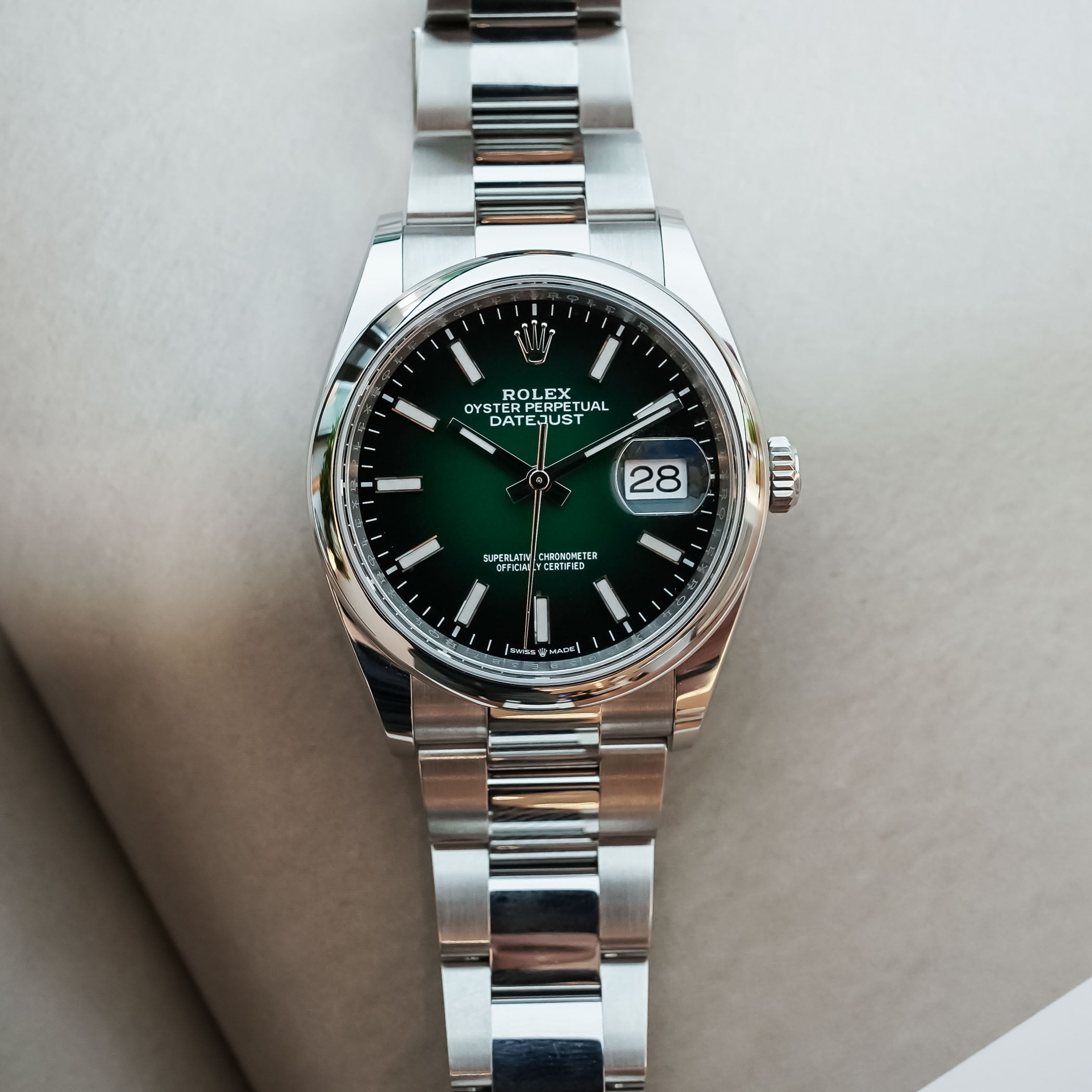
The most visible new Datejust dial for 2026 is the green ombré, a smoked gradient treatment that Rolex has already used on the Day-Date.
On the Datejust, it gives the brand’s everyday classic a richer and more contemporary presence without pushing it into novelty territory.
Rolex initially put the focus on a 41mm stainless steel model with an Oyster bracelet and a white gold fluted bezel, but the dial is not limited to that single configuration.
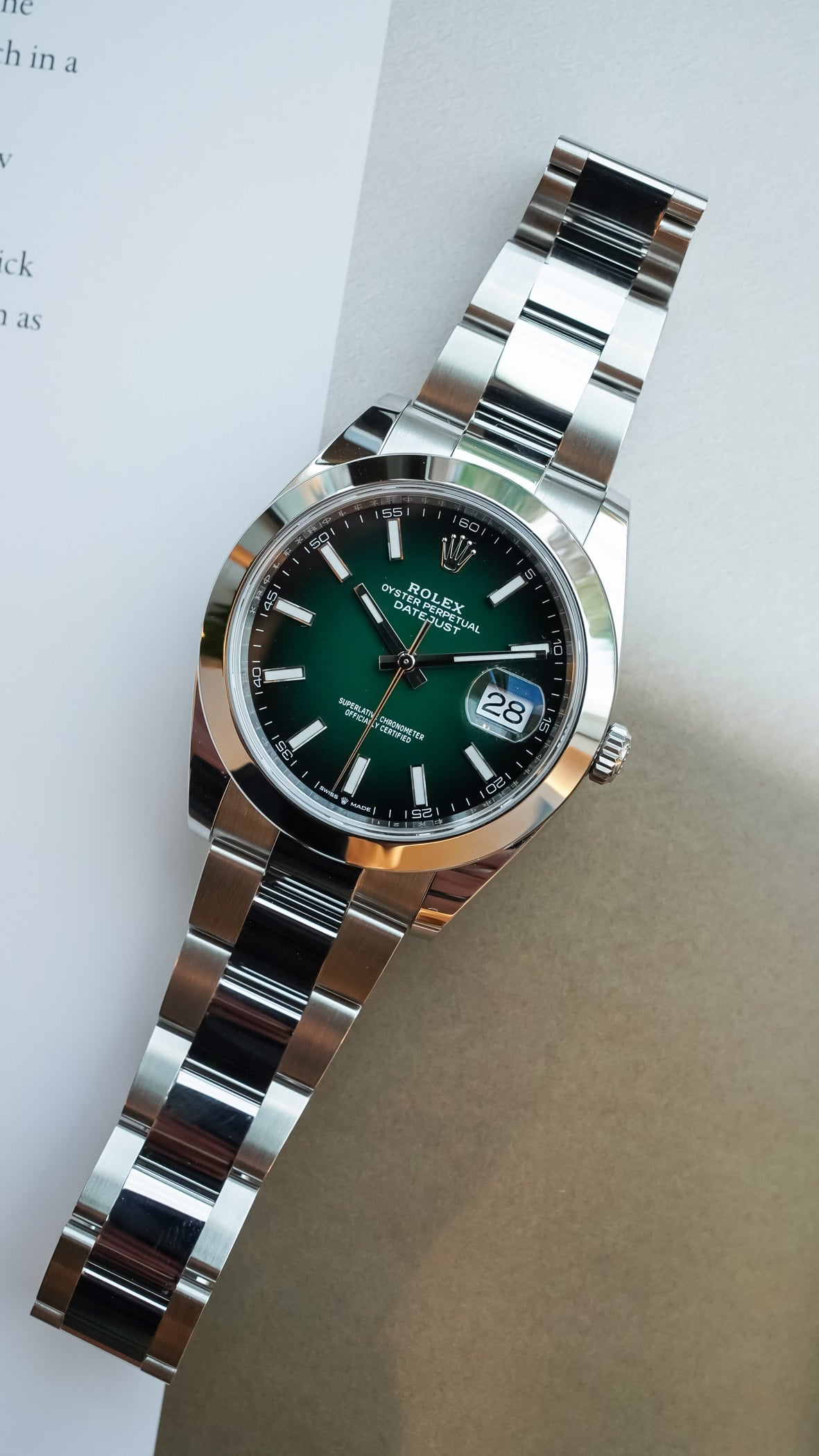
The green ombré is spread across eight Datejust references, covering 36mm and 41mm sizes, Oyster and Jubilee bracelets, and both smooth and fluted bezels.
The dial keeps the familiar white gold baton hour markers, white luminous material and baton-style hands, so the change is about atmosphere rather than a new layout.
Its gradient effect is created through lacquer work, with green lacquer applied to the base before black lacquer is sprayed in concentric motions to darken the perimeter.
The result is a dial that reads as green without becoming loud, with enough depth to make a familiar watch feel freshly considered.
The 36mm and 41mm Datejust are not just scaled versions
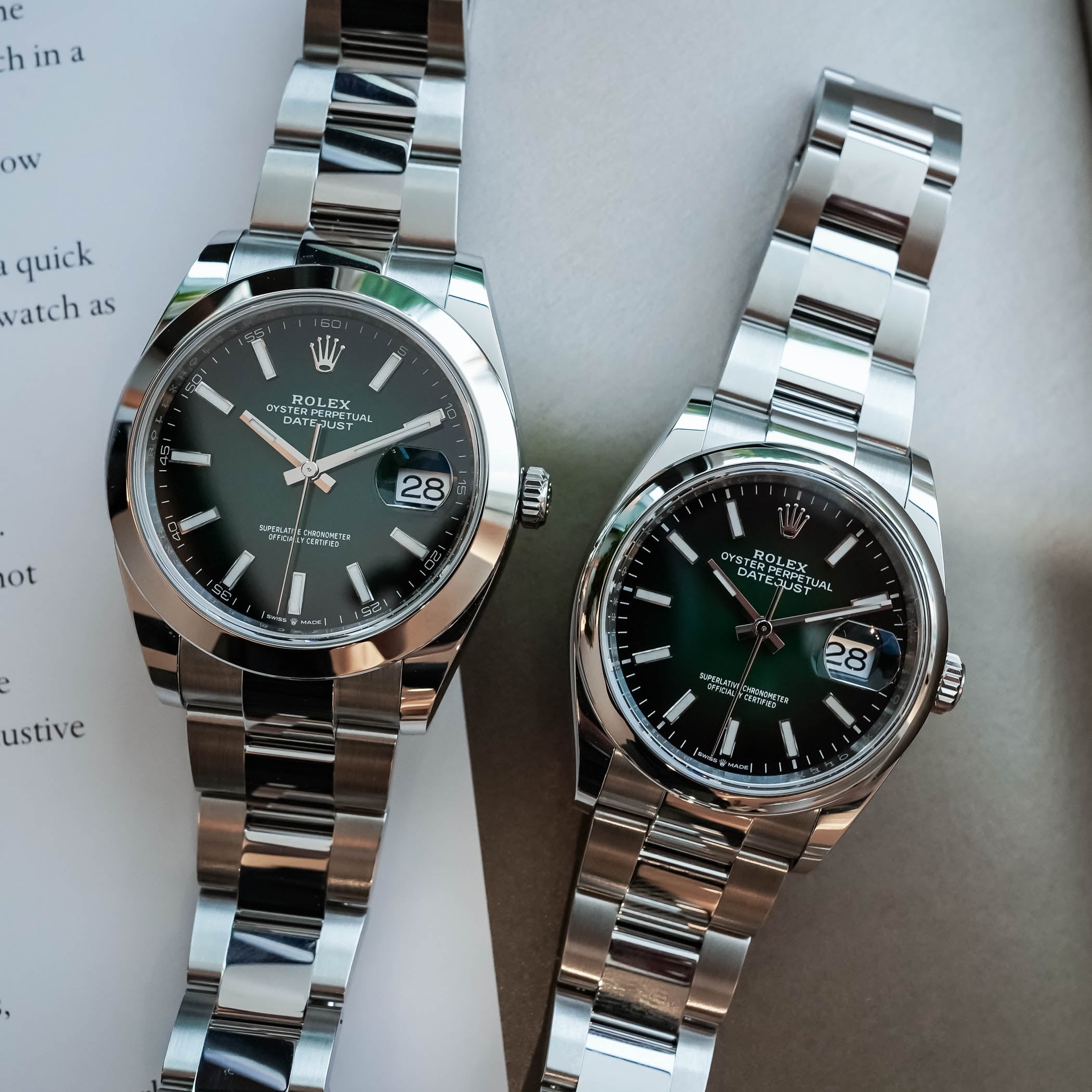
The new dial also highlights how different the 36mm and 41mm Datejust models feel on the wrist and to the eye.
Both sizes use Rolex Calibre 3235 and both are rated to 100 metres of water resistance, but their proportions tell very different stories.
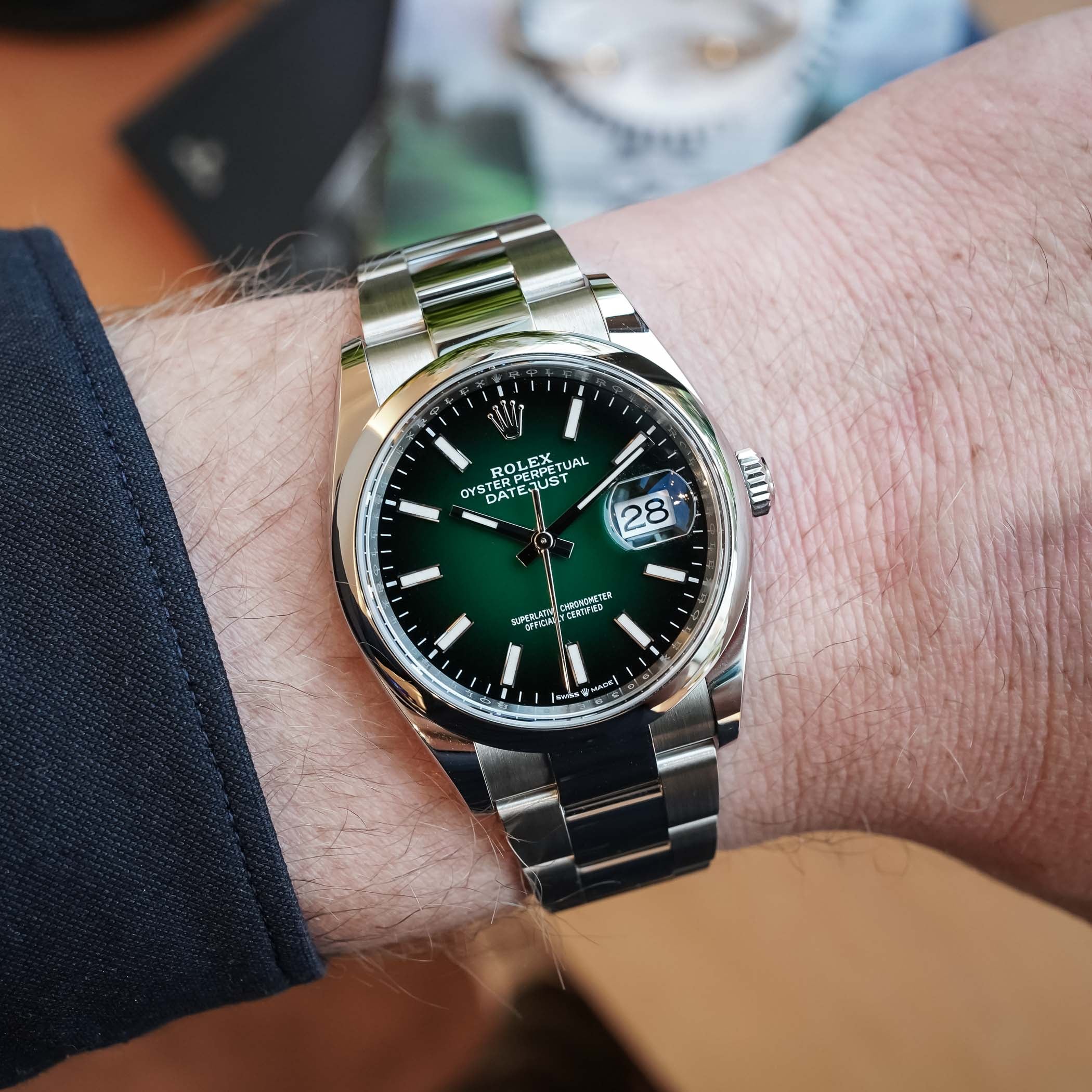
The 36mm Datejust measures 11.8mm thick, with a 43.1mm lug-to-lug length, a 20mm lug width and a 30mm dial opening.
The 41mm Datejust is slightly thinner at 11.6mm, but its 47.4mm lug-to-lug length, 21mm lug width and 32mm dial opening give it a broader visual footprint.
The key difference is how much metal surrounds the dial.
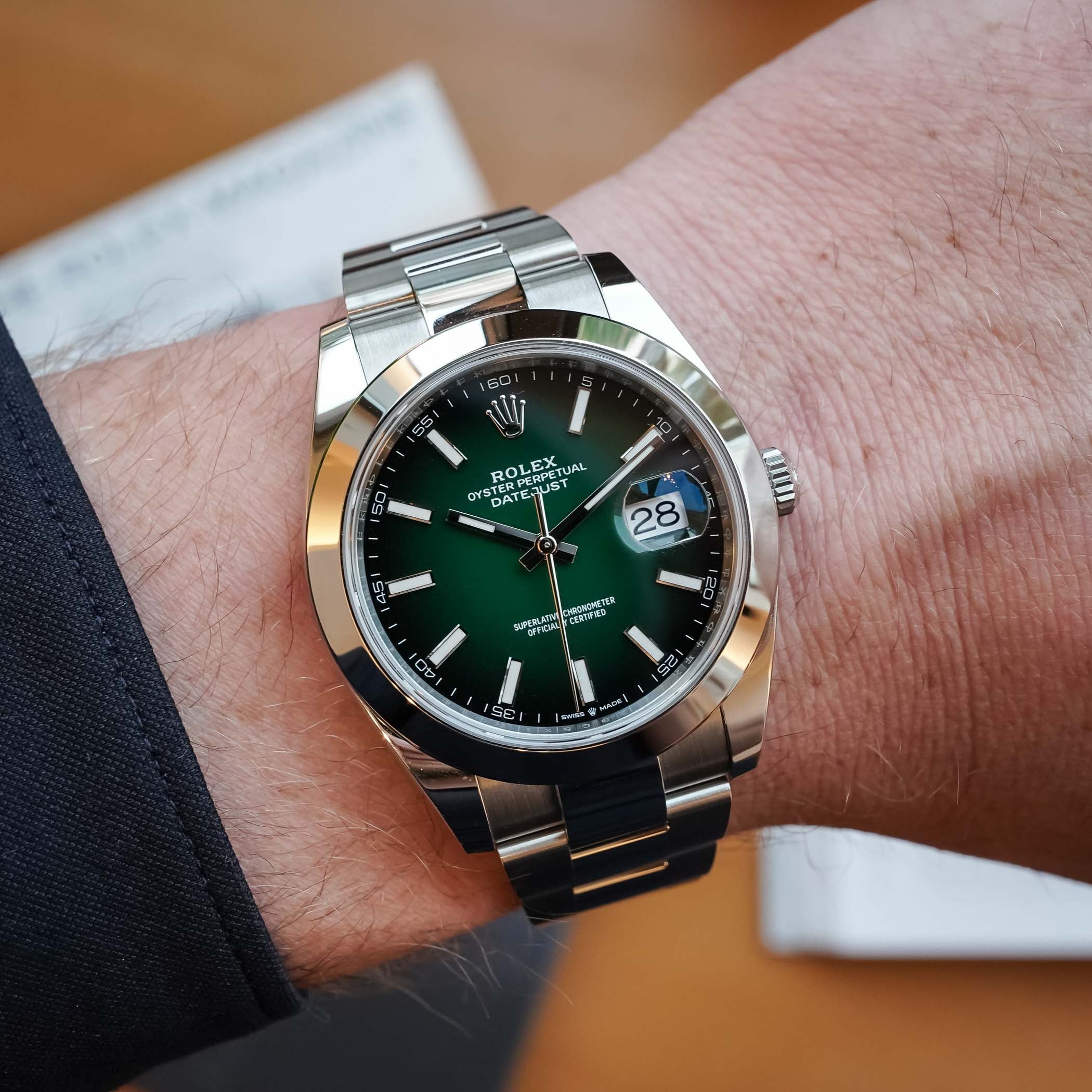
On the 41mm, the gap between the dial opening and case diameter is much larger, which gives the watch a wider, flatter and more assertive bezel profile.
The 36mm model has a smoother, more domed bezel shape in its smooth-bezel form, and its narrower lugs make the case and bracelet feel more integrated.
Even the dial markings separate the two sizes.
The 41mm uses a minute scale with numerals, giving it a sportier edge, while the 36mm keeps a cleaner minute track with small markers.
For buyers choosing between the two, this is less about wrist size alone and more about personality.
The 41mm has more presence, while the 36mm feels closer to the Datejust’s classic balance.
Roman numerals get a sharper Rolex treatment
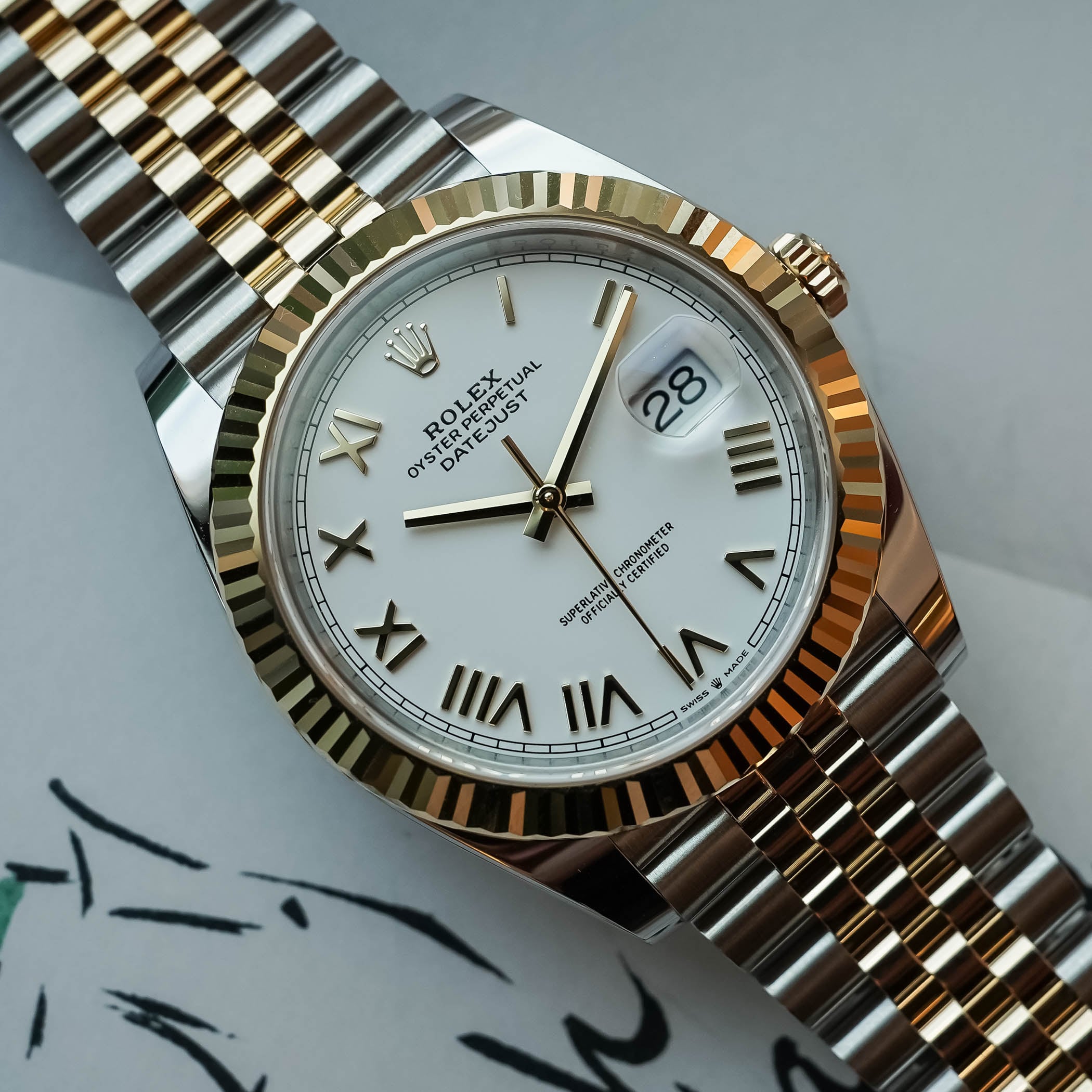
The quieter but arguably more important update sits in the Roman numeral Datejust models.
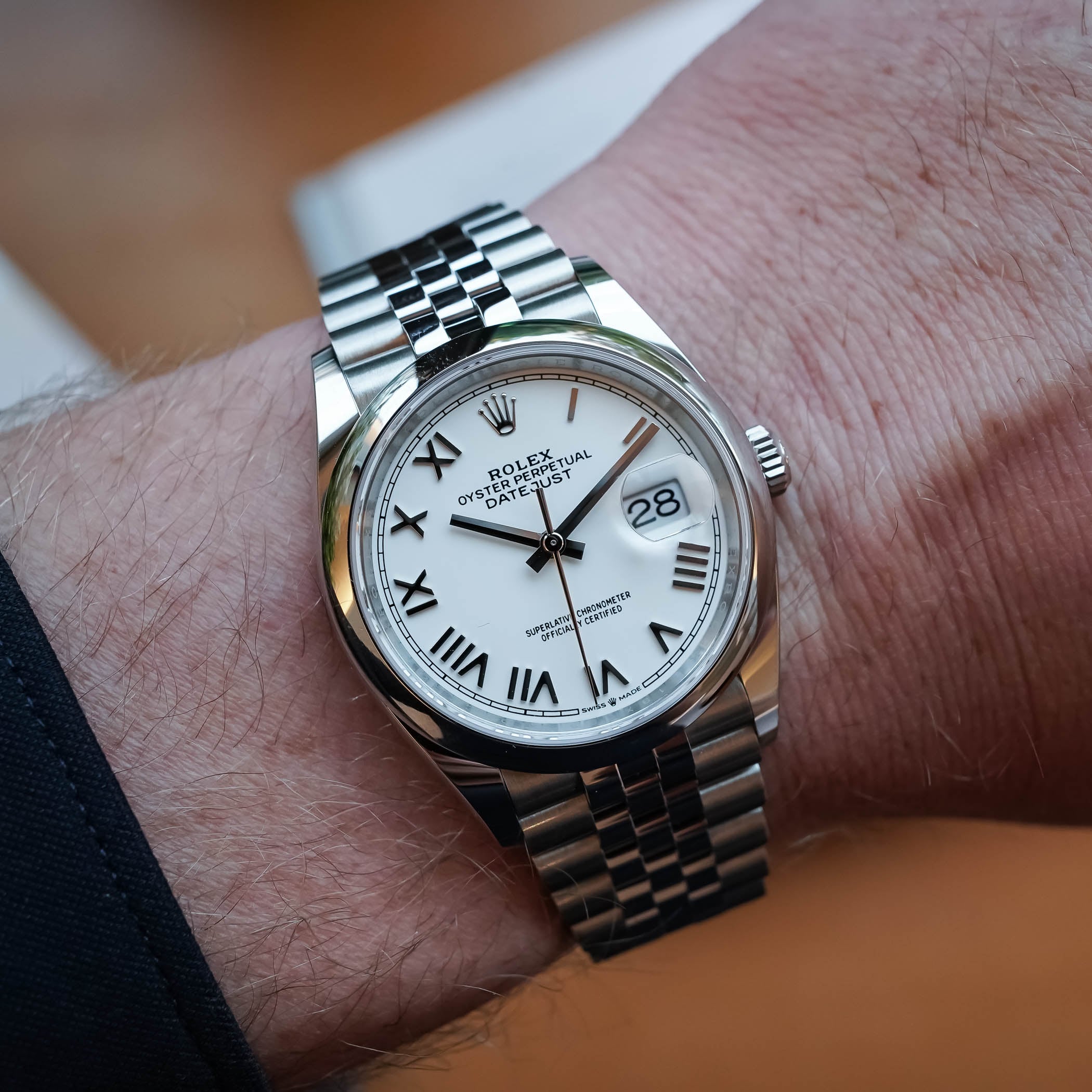
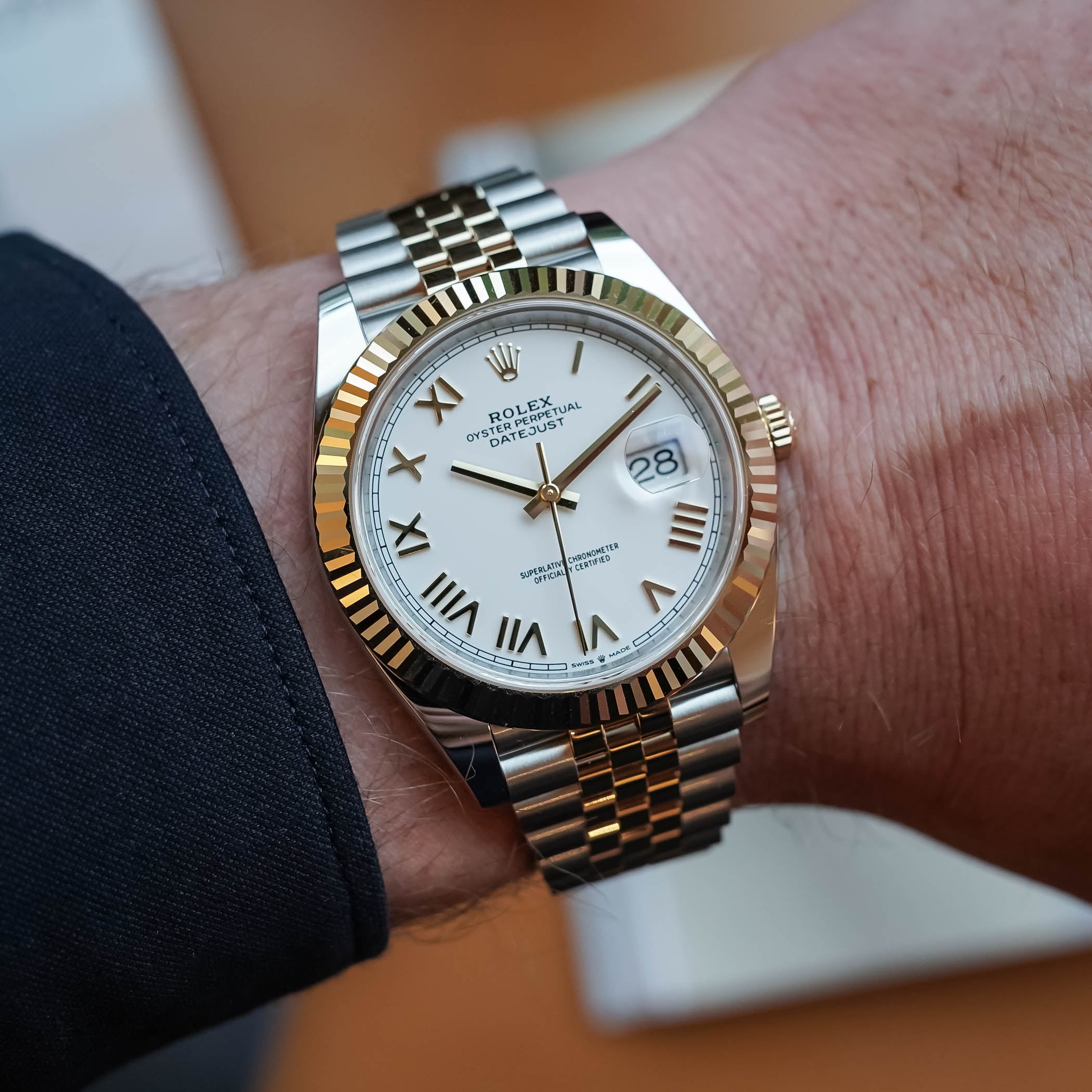
For 2026, Rolex has refreshed the Roman numeral dials for 36mm and 41mm Datejust references, while the 31mm range is not part of this particular update.
The well-known Wimbledon dial remains its own case, but the broader Roman numeral family has been revised across steel, white Rolesor, yellow Rolesor and Everose Rolesor configurations.
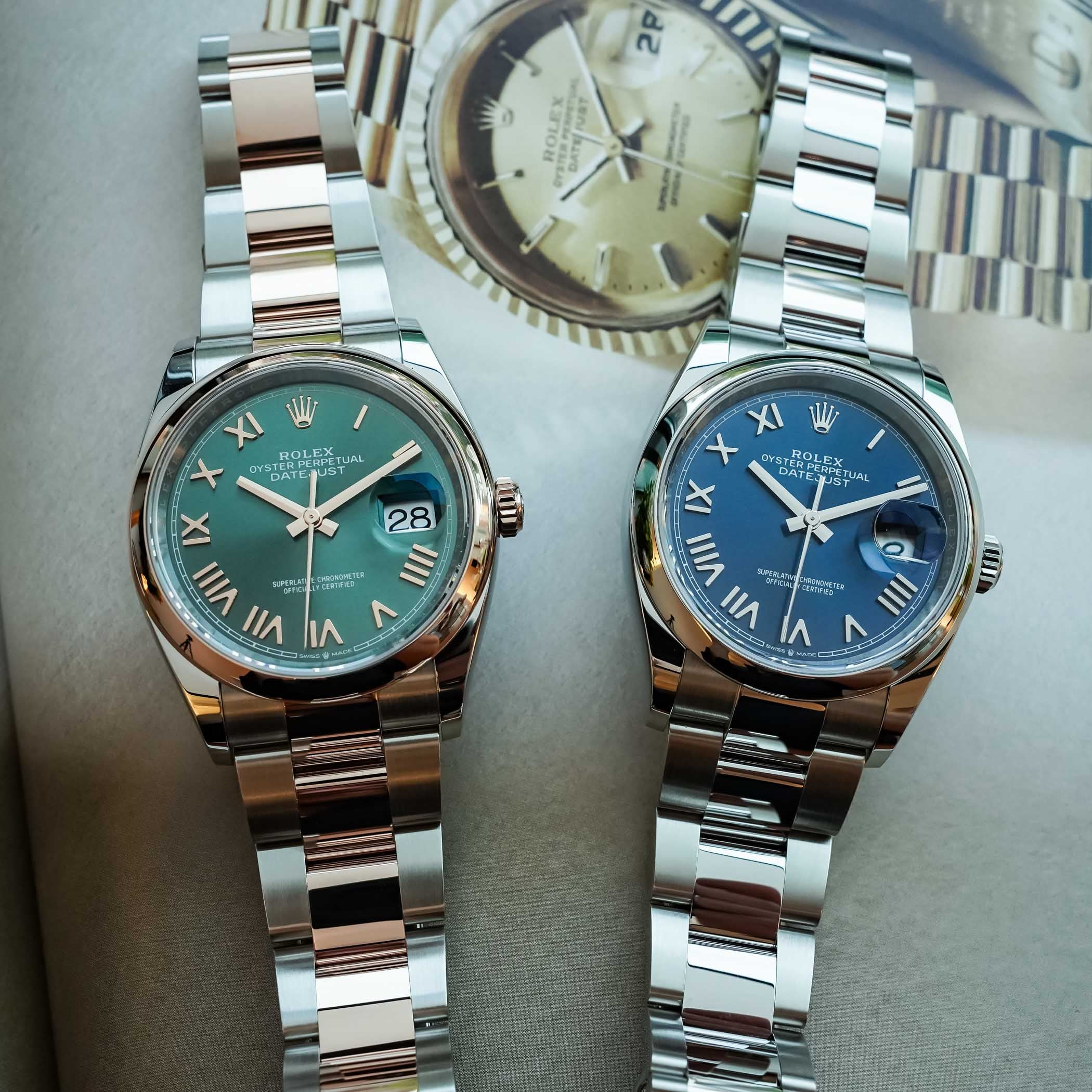
The change applies across Oyster and Jubilee bracelet options, which helps explain the unusually large number of new Datejust entries.
The redesigned Roman numerals are sharper, flatter and more angular than before, with a cleaner sans-serif character that brings them closer in spirit to the Day-Date’s applied markers.
Instead of each Roman numeral being formed as a single applied piece, the new execution uses separate components.
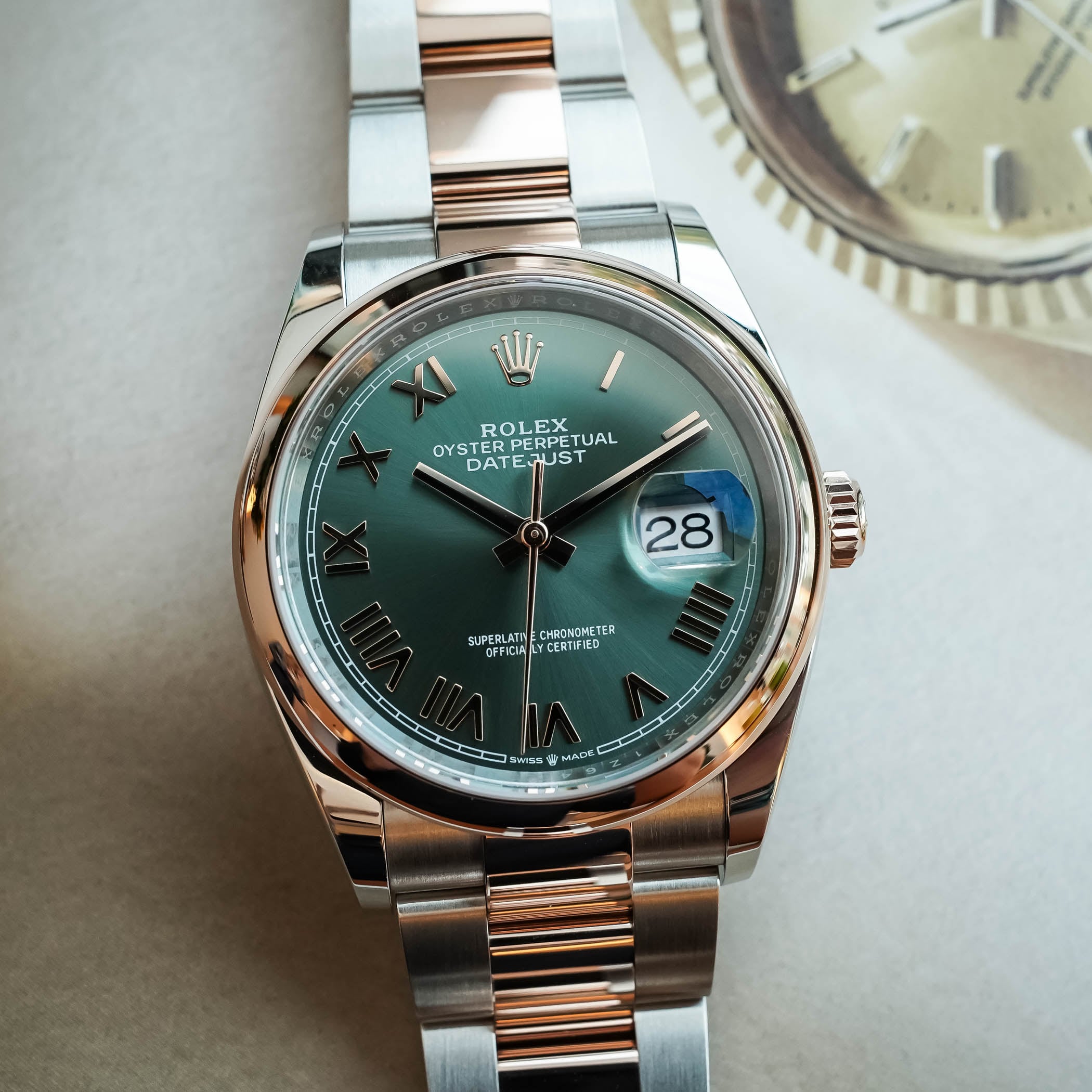
The IIII, for example, is built from four individual batons, while VIII is also made from distinct elements rather than one continuous marker.
The numerals also have a thicker profile, which gives them stronger definition against the dial.
Rolex has also replaced the former baton at 9 o’clock with a Roman numeral, creating a more complete and balanced Roman layout.
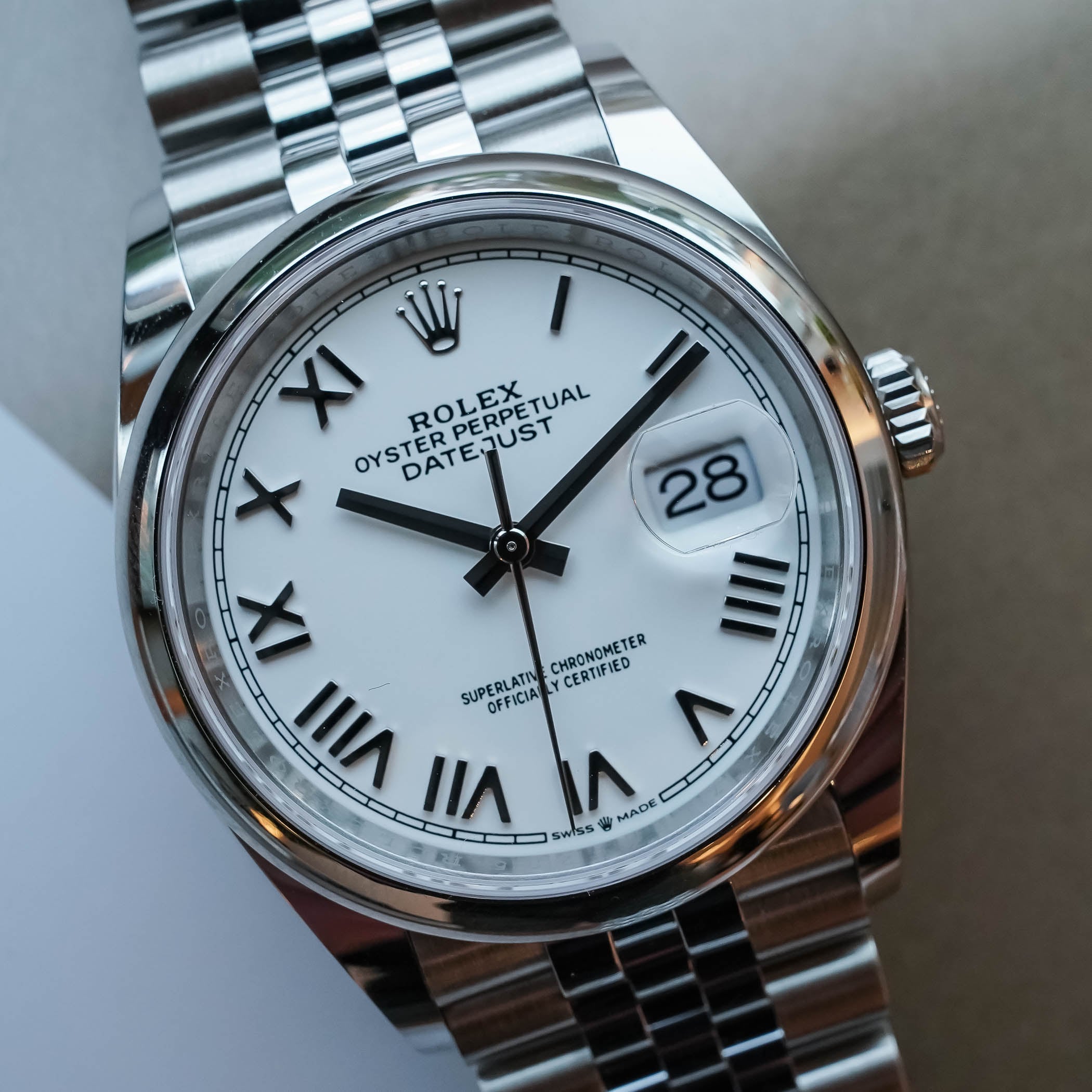
It is the kind of change that can look subtle in a catalogue image but matters in person, because the dial becomes crisper, more dimensional and more consistent with the brand’s current language.
Details & Specifications
| Brand | Rolex |
|---|---|
| Collection | Datejust |
| New 2026 dial highlights | Green ombré dial and redesigned Roman numeral dials |
| Case sizes discussed | 36mm and 41mm |
| 36mm dimensions | 11.8mm thick, 43.1mm lug-to-lug, 20mm lug width, 30mm dial opening |
| 41mm dimensions | 11.6mm thick, 47.4mm lug-to-lug, 21mm lug width, 32mm dial opening |
| Movement | Rolex Calibre 3235 |
| Water resistance | 100 metres |
| Green ombré configurations | 36mm or 41mm, Oyster or Jubilee bracelet, smooth or fluted bezel |
| Roman numeral update | Applies to 36mm and 41mm Datejust models, excluding the Wimbledon dial treatment |
The 2026 Datejust update is a reminder that Rolex often makes its most significant changes through small visual adjustments and broad catalogue moves rather than dramatic reinvention.
The green ombré dial will be the one people notice first, but the redesigned Roman numerals may have the longer impact on how the modern Datejust looks and feels.