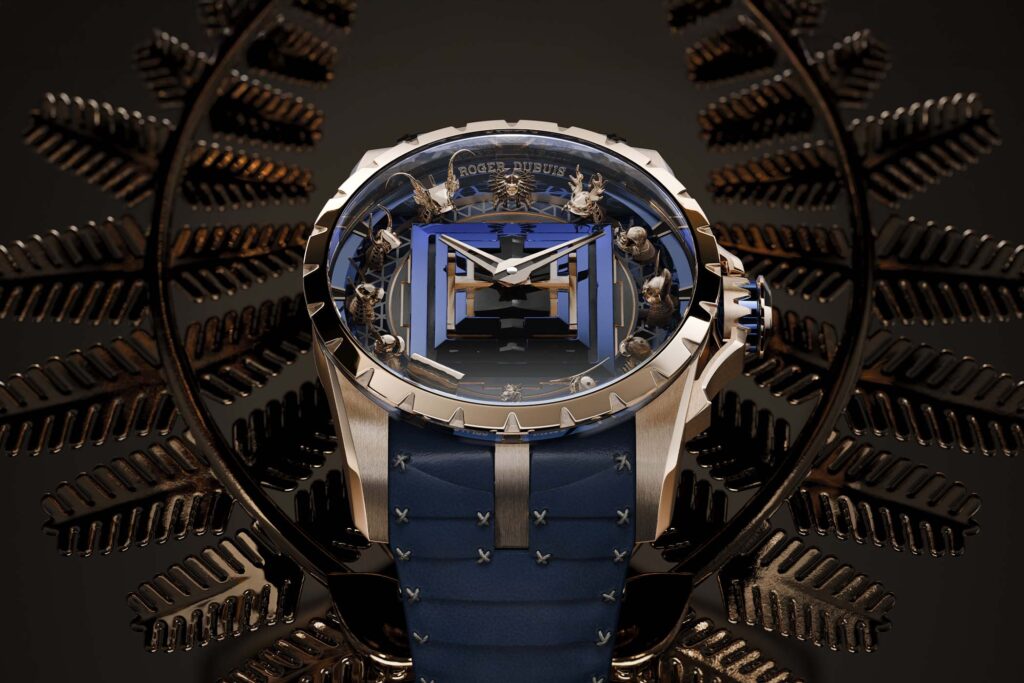
Roger Dubuis has never treated the dial as a flat surface when it could become a stage.
With the Excalibur The Kabuto Legacy, that instinct moves from Arthurian legend to early 17th-century Japan, replacing knights with miniature samurai helmets and placing Edo Castle at the centre of the scene.
It’s a high-watchmaking object for collectors who like their complications wrapped in sculpture, symbolism and a fair amount of theatrical ambition.
At a glance
- Roger Dubuis has introduced the Excalibur The Kabuto Legacy, a 28-piece limited edition in 18k pink gold.
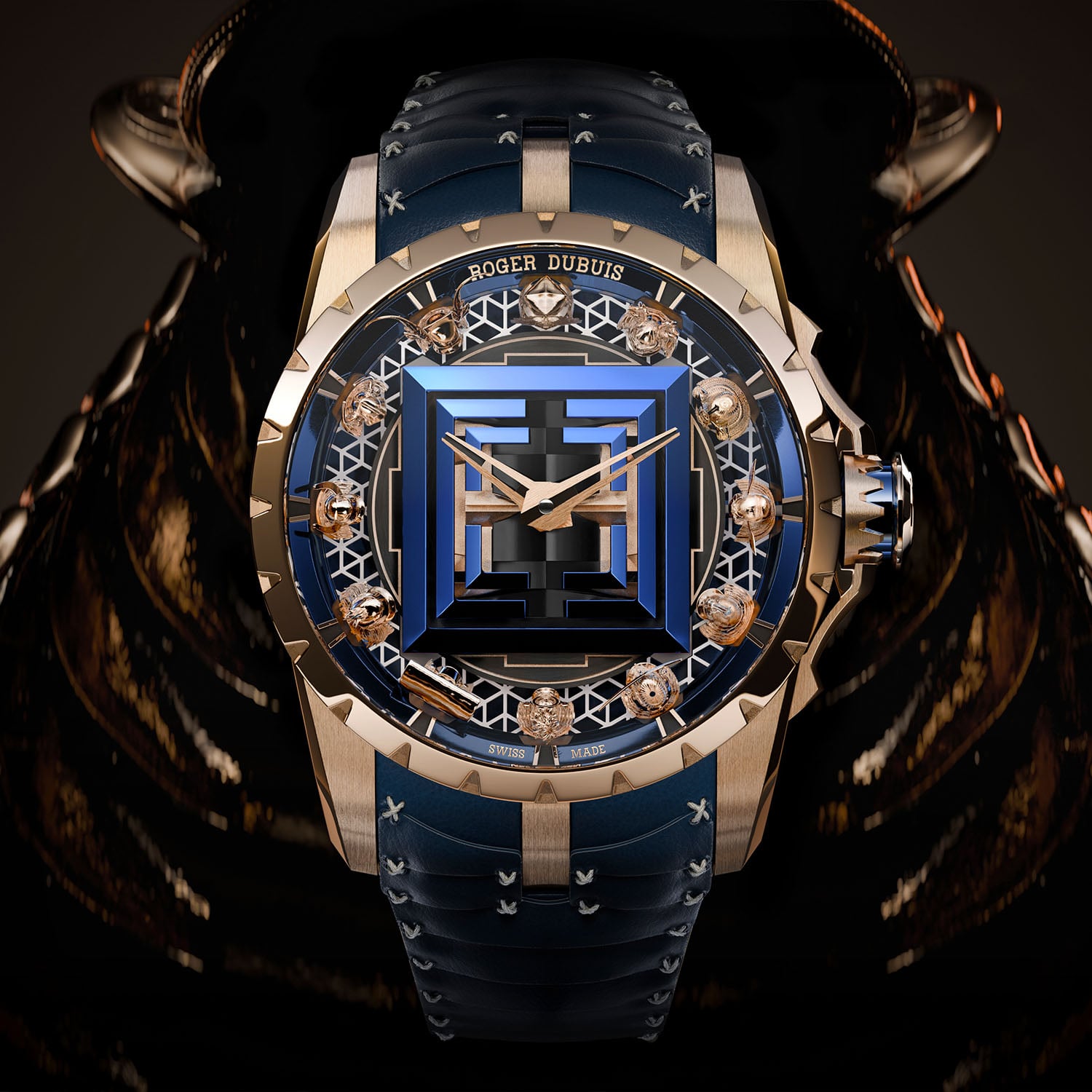
- The dial features 12 hand-engraved Kabuto helmets around an abstract Edo Castle made from 17 decorative elements.
- The watch uses the automatic RD821 calibre with Poinçon de Genève certification, with pricing available upon request.
From Camelot to Edo Castle
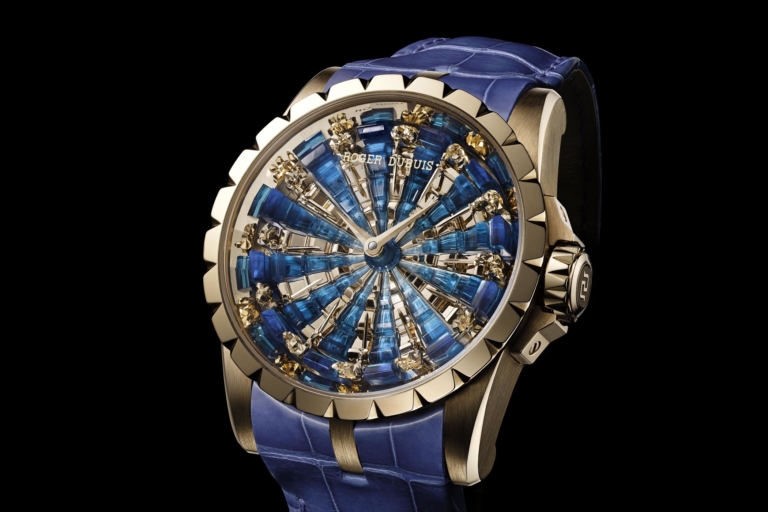
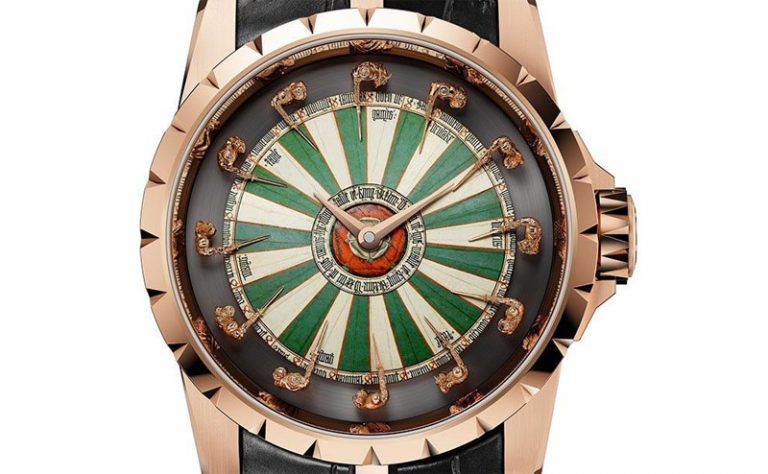
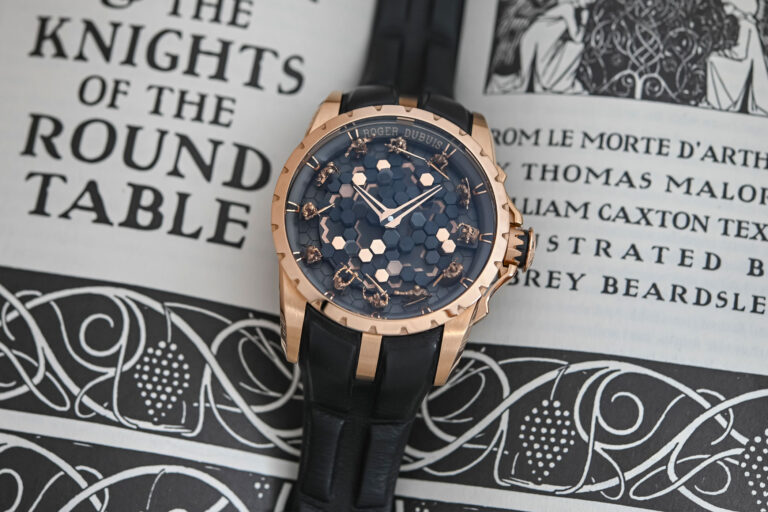
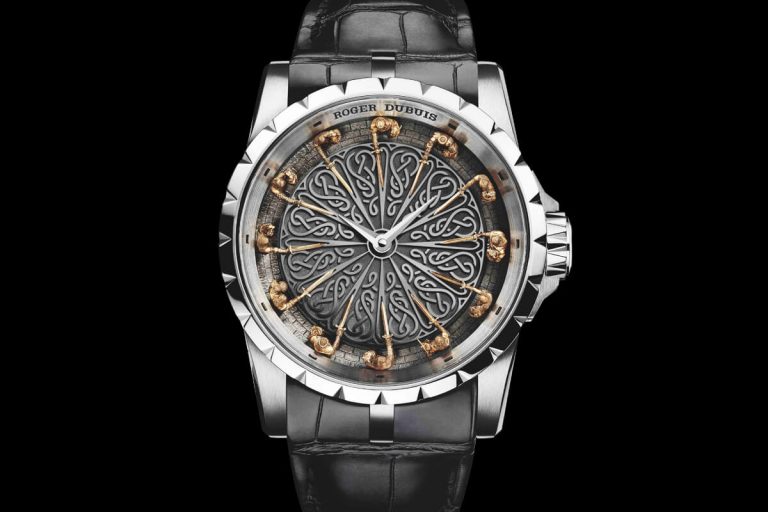
The Excalibur line has long been Roger Dubuis’ playground for grand gestures, and the Knights of the Round Table concept has been one of its most recognisable recurring ideas since 2013.
The formula is simple in outline and far more difficult in execution, with 12 figures positioned around the dial in place of conventional hour markers.
For The Kabuto Legacy, the setting shifts to Japan during the early 1600s, a period shaped by military power, clan identity and the rise of the Tokugawa shogunate.
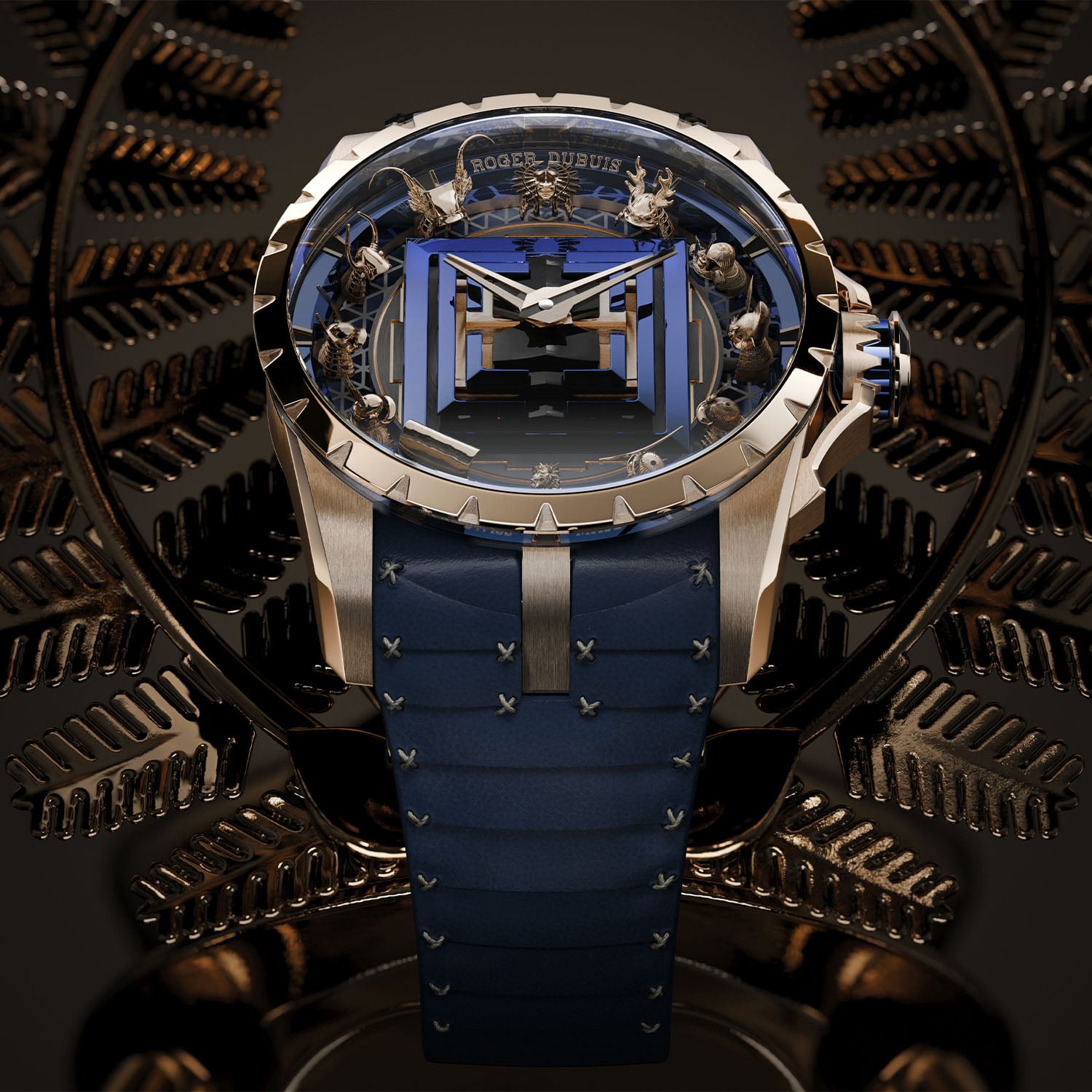
Rather than sculpting full warriors, Roger Dubuis focuses on the Kabuto, the samurai helmet that could carry status, personality and allegiance in a single silhouette.
The result is still recognisably part of the brand’s warrior-watch lineage, but it has a different temperament.
Where the Arthurian editions leaned into medieval fantasy, this watch feels more ceremonial, more architectural and more precise in its historical references.
Twelve Kabuto helmets in pink gold
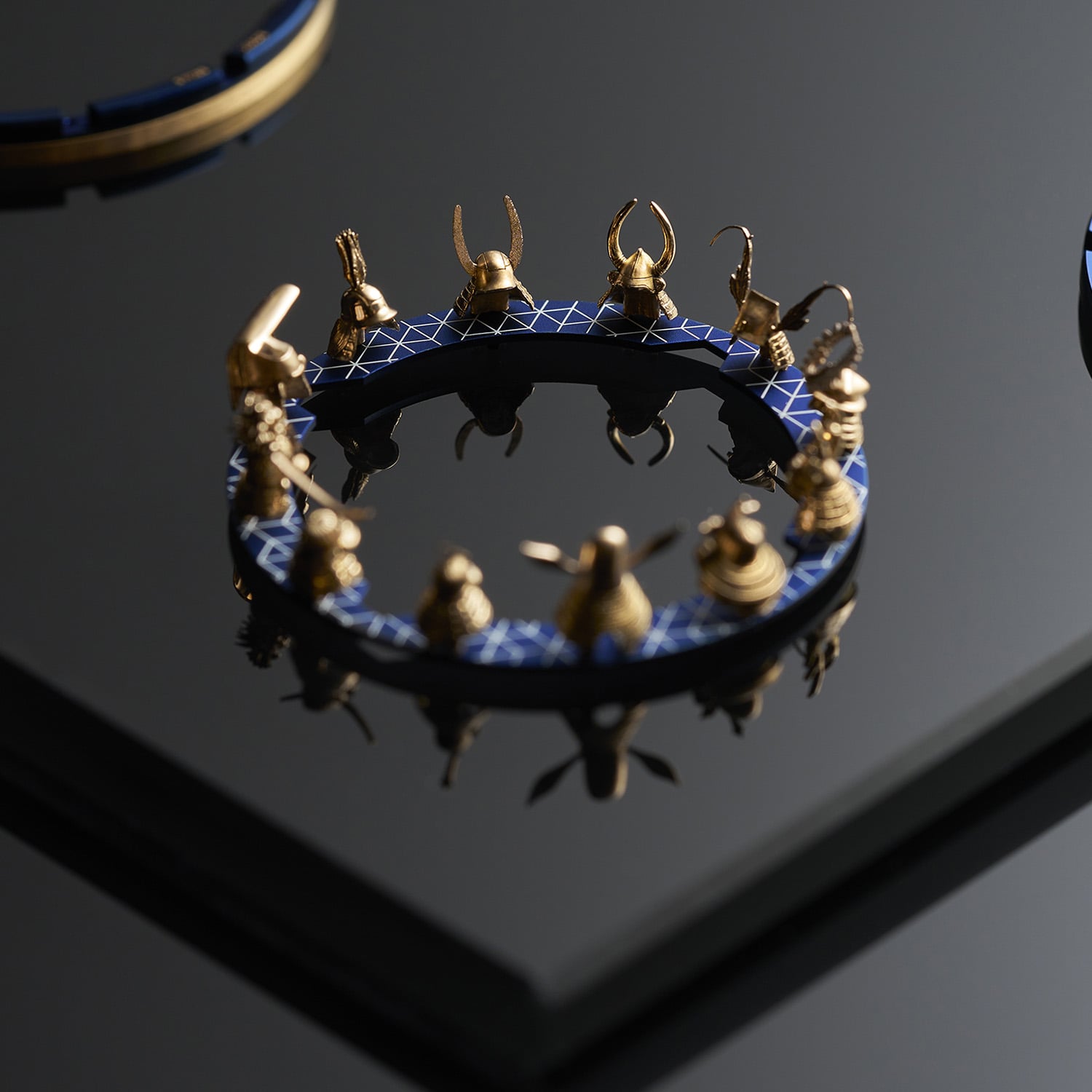
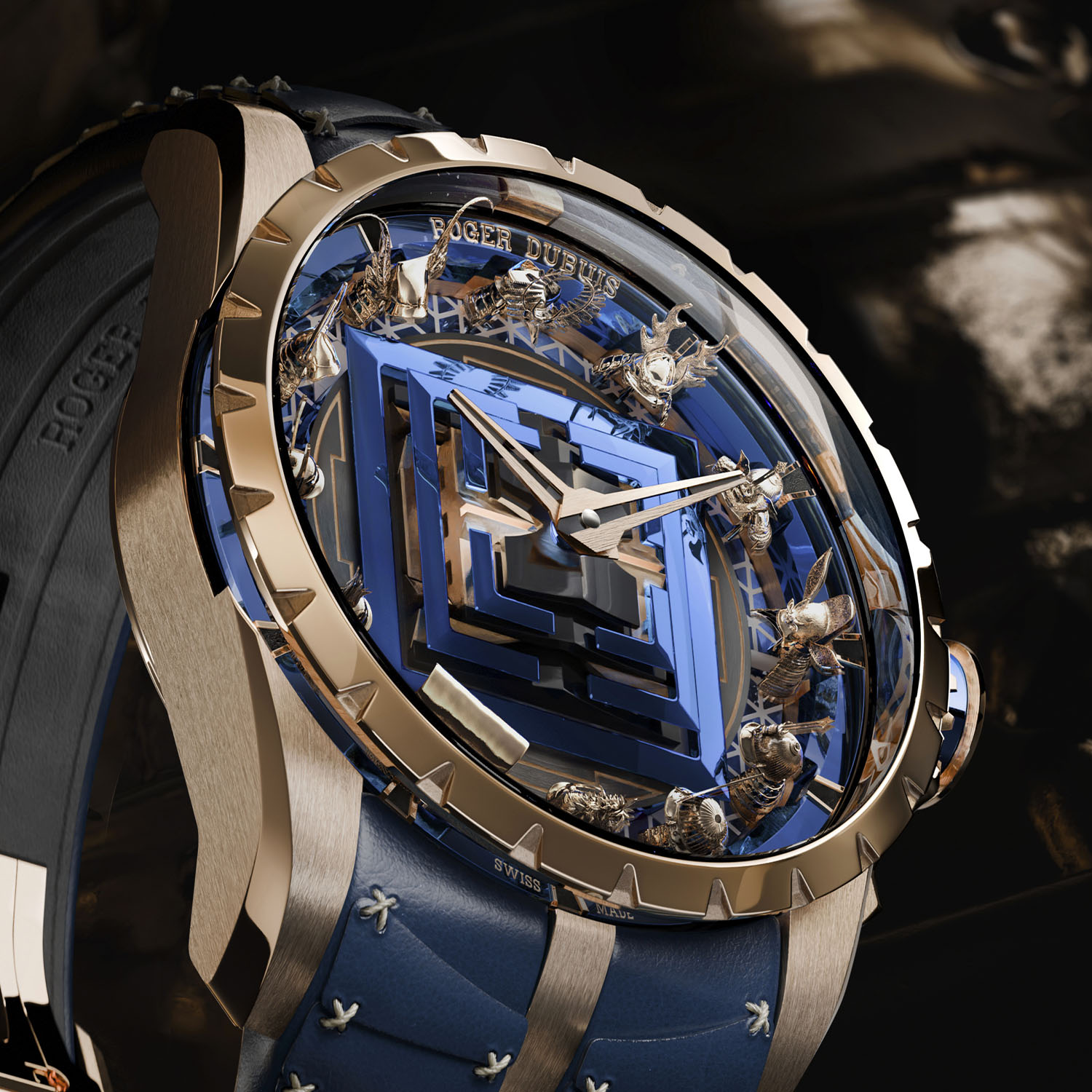
The dial is built around 12 micro-sculpted Kabuto helmets, each hand-engraved in 18k pink gold and linked to a famed samurai commander from early 17th-century Japan.
Several of the helmets are immediately distinctive, including the fern crest associated with Tokugawa Ieyasu, the deer antlers of Honda Tadakatsu and the crescent moon of Date Masamune.
Those details matter because this is not just a decorative exercise in Japanese styling.
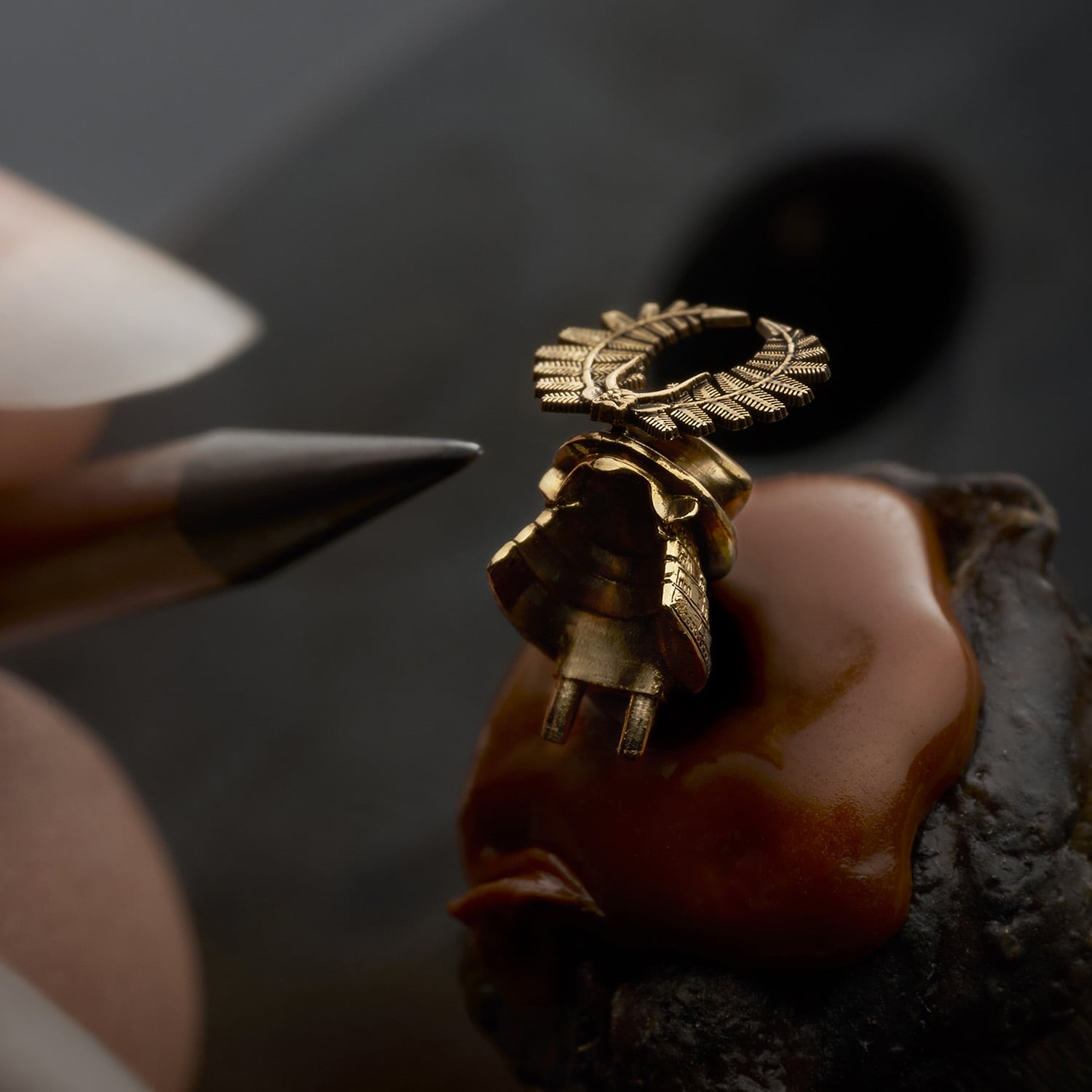
The crests and helmet shapes bring clan identity into the watch, giving each marker a specific character rather than making the ring of figures feel interchangeable.
At the centre of the dial sits an abstract interpretation of Edo Castle, constructed from 17 elements in pink gold, black PVD and deep blue CVD.
The blue treatment nods to indigo dye used in Japanese textiles and samurai garments, adding depth to a dial that could easily have become too warm in an all-gold palette.
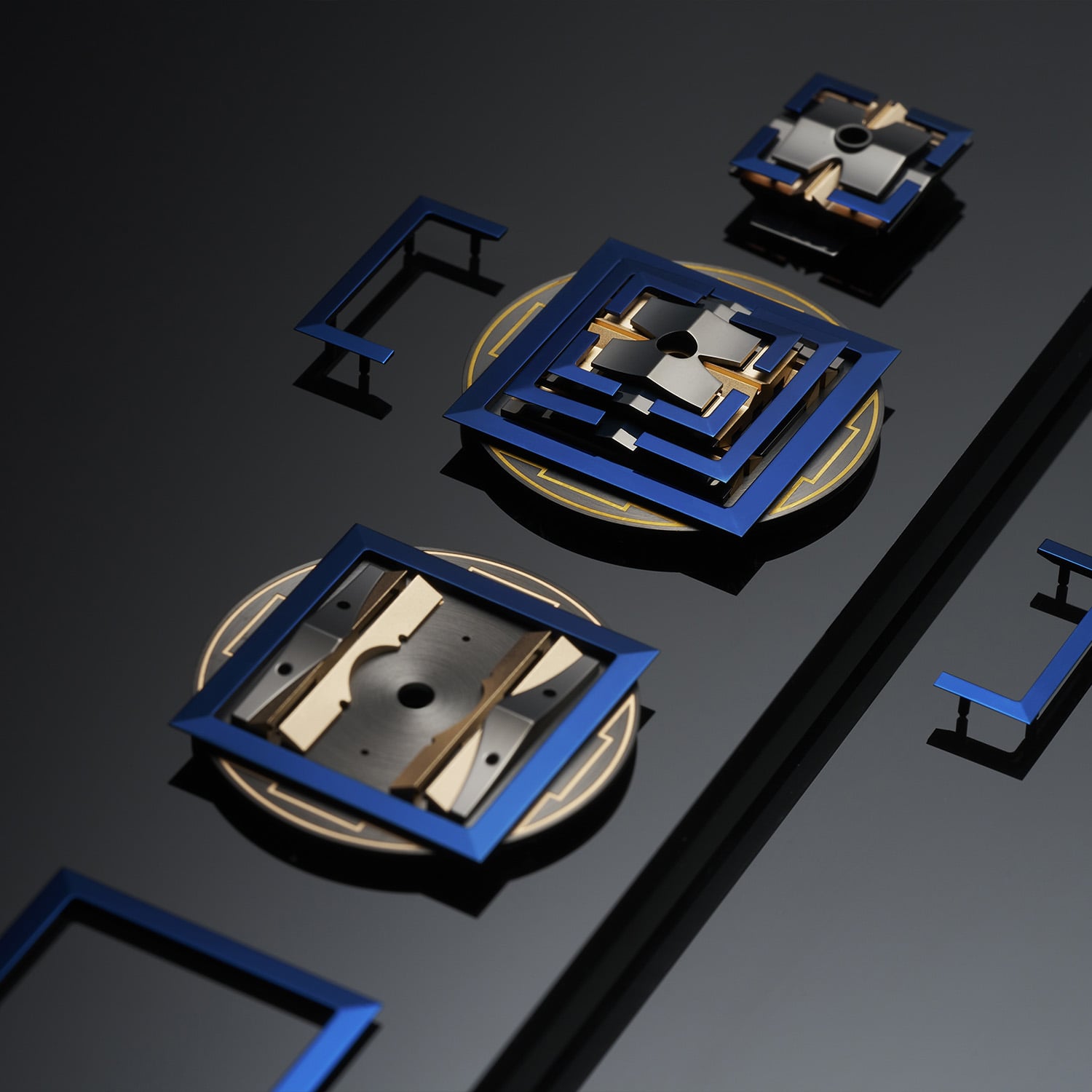
Finishing plays a central role in the composition.
The dial includes polished, bright-polished, circular-brushed and shot-blasted surfaces, creating the kind of shifting light that rewards close inspection rather than a quick glance.
Roger Dubuis also brought in Frederik Cryns, a professor of Japanese history and consultant on the Emmy-winning series Shōgun, to help refine the historical grounding of the project.
That added layer of context suits a watch that is leaning heavily on cultural specificity rather than a loose samurai mood board.
The Excalibur case goes ceremonial
The watch remains unmistakably an Excalibur from the outside, with a round case, fluted bezel and the brand’s signature third central lug.
The case measures 45mm across and 16.87mm thick, so this is not a discreet dress watch dressed up with elaborate decoration.
It’s large, sculptural and openly built to display its craft.
The case is made from 18k pink gold and includes a sapphire crystal ring under the bezel, while the crown is accented with a blue enamel ring.
Water resistance is rated to 30 metres, which fits the character of a collector’s art watch rather than a daily sports watch.
The blue calfskin strap continues the armour theme with glued and stitched leather strips arranged to recall traditional samurai protective panels.
An additional leather strap is included, and the 18k pink-gold triple folding buckle uses a quick-release system.
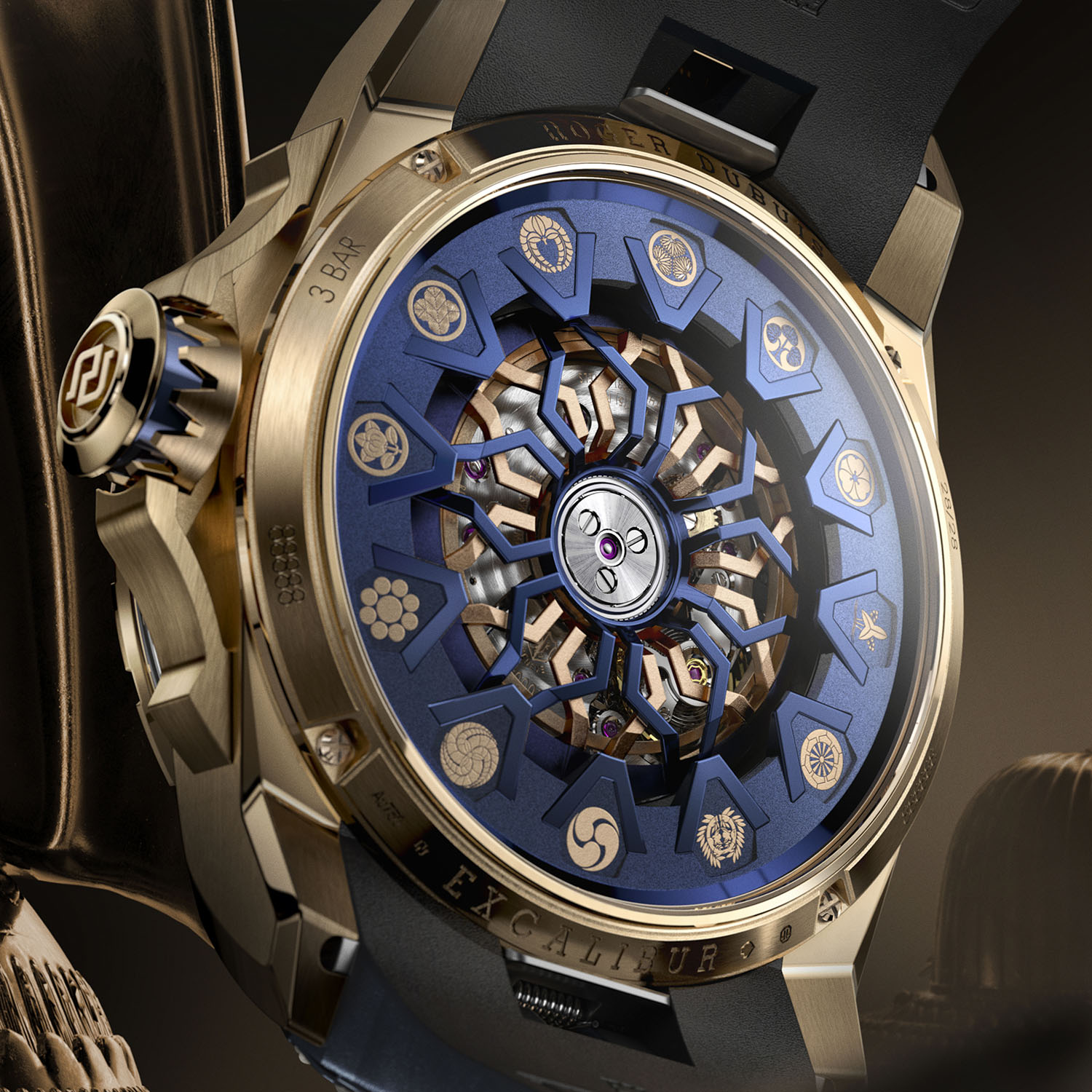
The caseback keeps the story moving rather than simply exposing the movement.
A blue-coated pink-gold ring frames the sapphire display back and carries laser-engraved crests of the 12 samurai commanders.
A Geneva Seal movement beneath the theatre
Inside is the RD821, an in-house automatic calibre with central rotor and Poinçon de Genève certification.
The movement runs at 28,800 vibrations per hour and offers a 48-hour power reserve.
It’s made from 172 components, uses 33 jewels and displays hours and minutes, keeping the mechanical display deliberately restrained while the dial does the storytelling.
Roger Dubuis lists 14 in-house finishing techniques for the calibre, which is fitting for a watch where decorative and mechanical craftsmanship are meant to meet rather than compete.
The Excalibur The Kabuto Legacy is limited to 28 pieces, with price available upon request.
Expectations place it around the CHF 300,000 mark, which puts it firmly in the realm of highly specialised collecting.
Details & Specifications
| Brand | Roger Dubuis |
|---|---|
| Model | Excalibur The Kabuto Legacy |
| Reference | RDDBEX1139 |
| Case size | 45mm diameter, 16.87mm thickness |
| Case material | 18k pink gold with sapphire crystal ring under the bezel |
| Crown | Blue enamel ring |
| Water resistance | 30 metres |
| Dial | Abstract Edo Castle made from 17 elements in pink gold, black PVD and deep blue CVD |
| Hour markers | 12 hand-engraved 18k pink-gold Kabuto helmets with corresponding Kamon crests |
| Hands | Satin-brushed pink gold hour and minute hands |
| Movement | Roger Dubuis RD821 automatic calibre |
| Certification | Poinçon de Genève |
| Components | 172 |
| Jewels | 33 |
| Frequency | 28,800vph, 4Hz |
| Power reserve | 48 hours |
| Functions | Hours and minutes |
| Strap | Blue calfskin strap with leather strips inspired by samurai armour |
| Additional strap | Leather strap included |
| Buckle | 18k pink gold triple folding buckle with quick-release system |
| Production | Limited to 28 pieces |
| Price | Upon request |
The Kabuto Legacy is not aiming for broad appeal, and that is exactly the point.
It’s a Roger Dubuis for collectors drawn to watches as miniature worlds, where history, mythology, engraving and mechanical finishing all have to share the same 45mm stage.