Geneva Watch Days 2026 will bring the industry back to the city from September 2 to 6, and some of its most interesting moments may happen away from the display cases.
Revolution’s annual Horological Symposiums return across three afternoons, bringing watchmakers, executives, journalists and collectors into direct conversation about the questions shaping modern watch culture.
The programme is pointed rather than sprawling, with sessions devoted to movement authorship, gendered watch design and the increasingly difficult space between global groups and small independents.

At a glance
- Revolution will host three Horological Symposiums during Geneva Watch Days 2026.
- The panels will examine movement construction, women’s watch design and the polarisation of the watch market.
- Sessions are scheduled for September 3, 5 and 6 in Geneva during the fair week.
Movement makers take centre stage
The opening session, scheduled for Thursday, September 3 from 2pm to 3pm, asks whether watchmaking is now being defined as much by calibre architecture as by traditional bench craft.
Titled Watchmakers vs Movement Constructors, the discussion will consider the distinction between refining established mechanical ideas and starting with the movement as the central act of creation.
That difference matters in contemporary independent watchmaking, where the calibre is often the strongest expression of a maker’s identity.

Constant Kwong, Revolution’s Head of Partnerships, will moderate the panel.
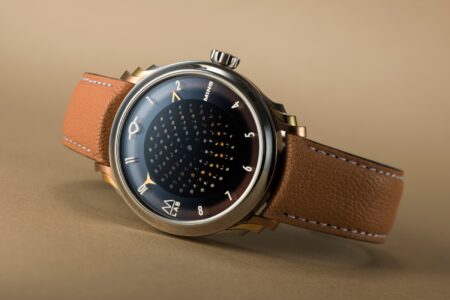
Speakers include Mathieu Cleguer, the watchmaking engineer and movement developer behind Cleguer Horology, which debuted in 2026 with the Inspiration One.
He will be joined by Bernhard Lederer, an independent master watchmaker recognised for technically ambitious calibres and deep escapement research, and Jack Forster, Global Editorial Director at The 1916 Company and one of the industry’s most respected technical voices.

A better conversation around watches for women
The second symposium, Beyond Gender, runs on Saturday, September 5 from 1pm to 2pm and takes on a subject the industry has often handled clumsily.
The central question is not simply whether watches still need gender labels, but whether thoughtful design for women remains important when buyers increasingly choose by proportion, style and personal preference.
For decades, women’s watches were too often treated as smaller, gem-set counterparts to men’s mechanical watches rather than as fully considered objects in their own right.

The panel will look at the difference between putting a gender tag on a product and genuinely understanding how different customers wear, collect and relate to watches.
Tracey Llewellyn, Revolution’s Global Editorial Director, will moderate the discussion.
The line-up brings together Jean-Christophe Babin, president and co-founder of Geneva Watch Days and former CEO of Bulgari and TAG Heuer, and Marie Lehnherr, Head of Communication, Subsidiaries Europe, at Frédérique Constant.

Also joining are Ash Longet of Watchonista, Alexandre Beauregard of Beauregard, and Suzanne Wong, veteran watch journalist and co-founder of Watch Femme.
The squeeze between scale and scarcity
The final session, The Great Polarisation, is set for Sunday, September 6 from 2pm to 3pm and turns to one of the industry’s most urgent structural questions.
At one end of the market sit the major luxury groups, with manufacturing depth, retail networks and marketing reach that few can match.

At the other are small independents, whose appeal often comes from scarcity, direct collector relationships and highly specific creative language.
The more complicated territory lies in the middle, where brands must compete without the same industrial muscle or the cult-like pull of ultra-limited production.
Moderated by Constant Kwong, the discussion will ask whether the mid-tier Swiss watch brand is fading, changing shape or simply being measured by outdated definitions.

The panel includes Davide Cerrato, CEO of Bremont, offering a view from an independent brand in the middle of a repositioning across product, pricing and identity.
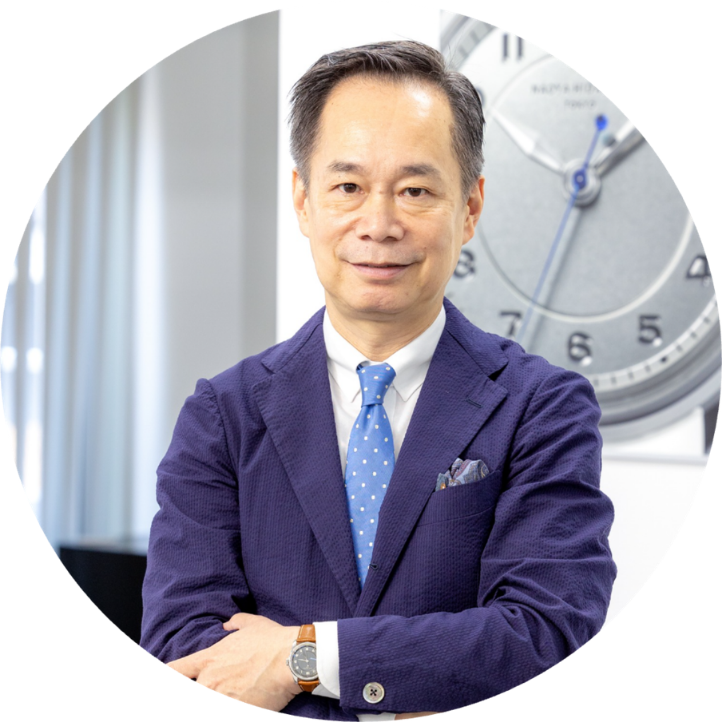
Naoya Hida, founder and CEO of Naoya Hida & Co., will bring the perspective of a small Japanese independent built around limited output and close collector engagement.
Roy Davidoff, Geneva-based vintage watch dealer, collector and co-founder of Roy & Sacha Davidoff SA, adds the long view from the secondary market, where collectability is tested well after launch-day noise has faded.
Geneva Watch Days gets a more reflective layer
The value of these symposiums is that they give the fair a slower, more analytical counterpoint to the normal rhythm of launches and appointments.
Each topic speaks to a real tension in today’s watch world, from who gets credited with mechanical innovation to how brands think about customers beyond inherited categories.
For collectors and industry observers, the appeal is less about neat answers and more about hearing the people inside the trade test the assumptions that govern it.

Geneva Watch Days has always benefited from its open, city-wide energy, and Revolution’s 2026 Symposiums should add the kind of conversation that lingers after the week’s new releases have been catalogued.