Rado has always been at its most interesting when it treats materials as part of the design rather than a technical footnote.
The Anatom Skeleton does exactly that, taking one of the brand’s most distinctive 1980s shapes and giving it a modern openworked treatment for the 40th anniversary of Rado high-tech ceramic.
It’s a watch with a very specific point of view, and that’s what makes it worth paying attention to.
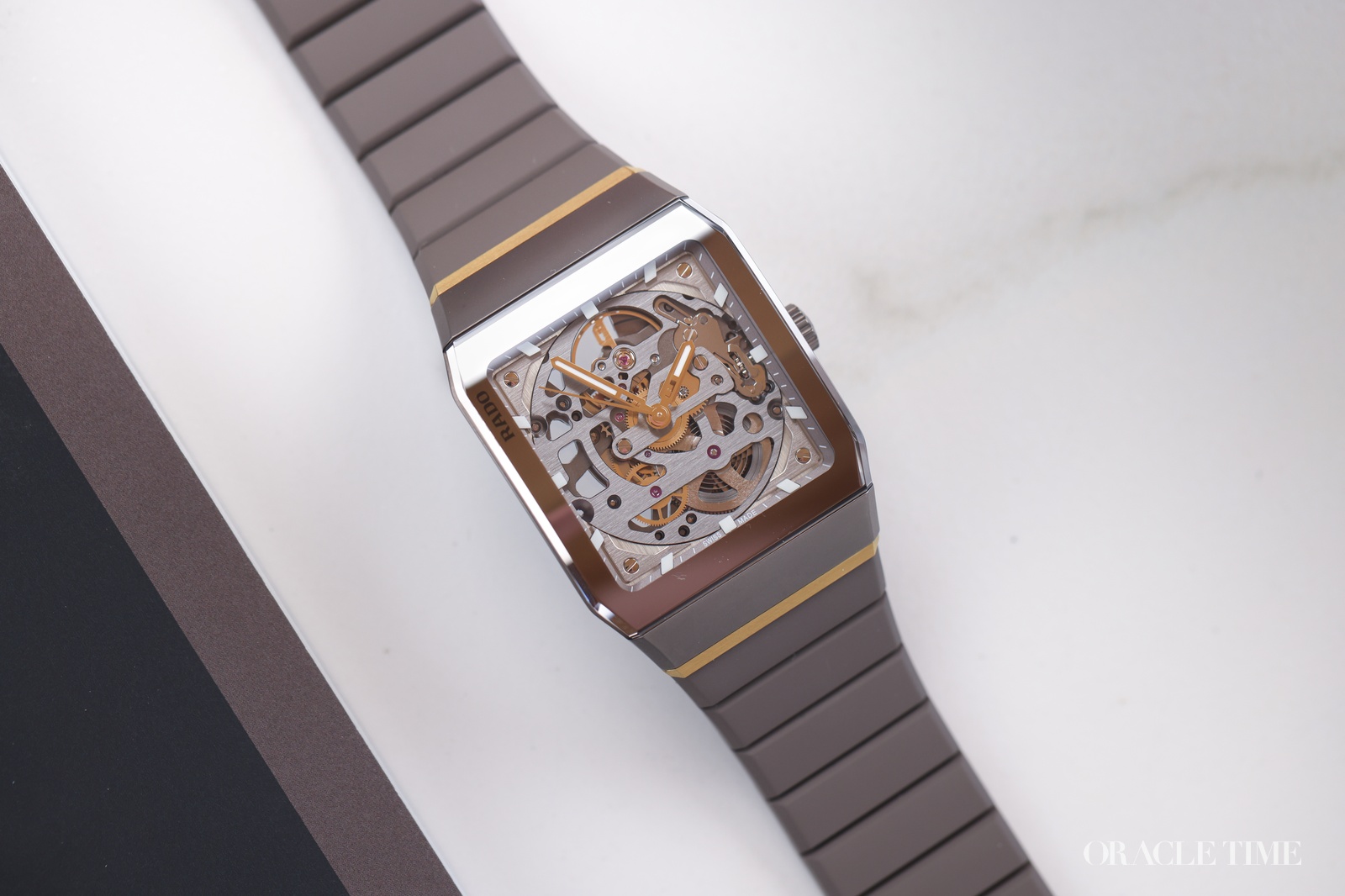
At a glance
- Rado has introduced the Anatom Skeleton as a ceramic anniversary piece inspired by the original 1983 Anatom design.
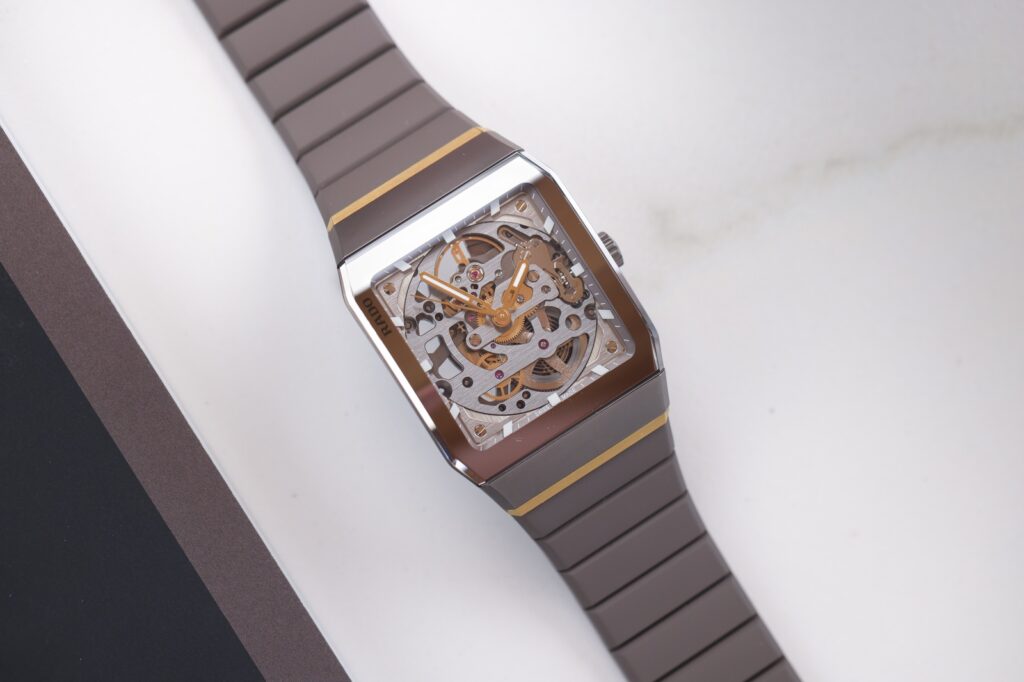
- The watch pairs a curved plasma high-tech ceramic case with a skeletonised dial and automatic R808 movement.
- It is priced at £3,800 and comes on a grey rubber strap with 50m water resistance.
A ceramic case shaped around the wrist
The Anatom name comes from the idea of anatomy, and that’s more than just branding here.
The watch’s defining feature is its curved rectangular form, with a cylindrical convex crystal that runs across the case rather than sitting flat above it.
That crystal gives the Anatom its profile, especially from the side, where the watch looks less like a conventional rectangular design and more like a single continuous surface shaped to follow the wrist.
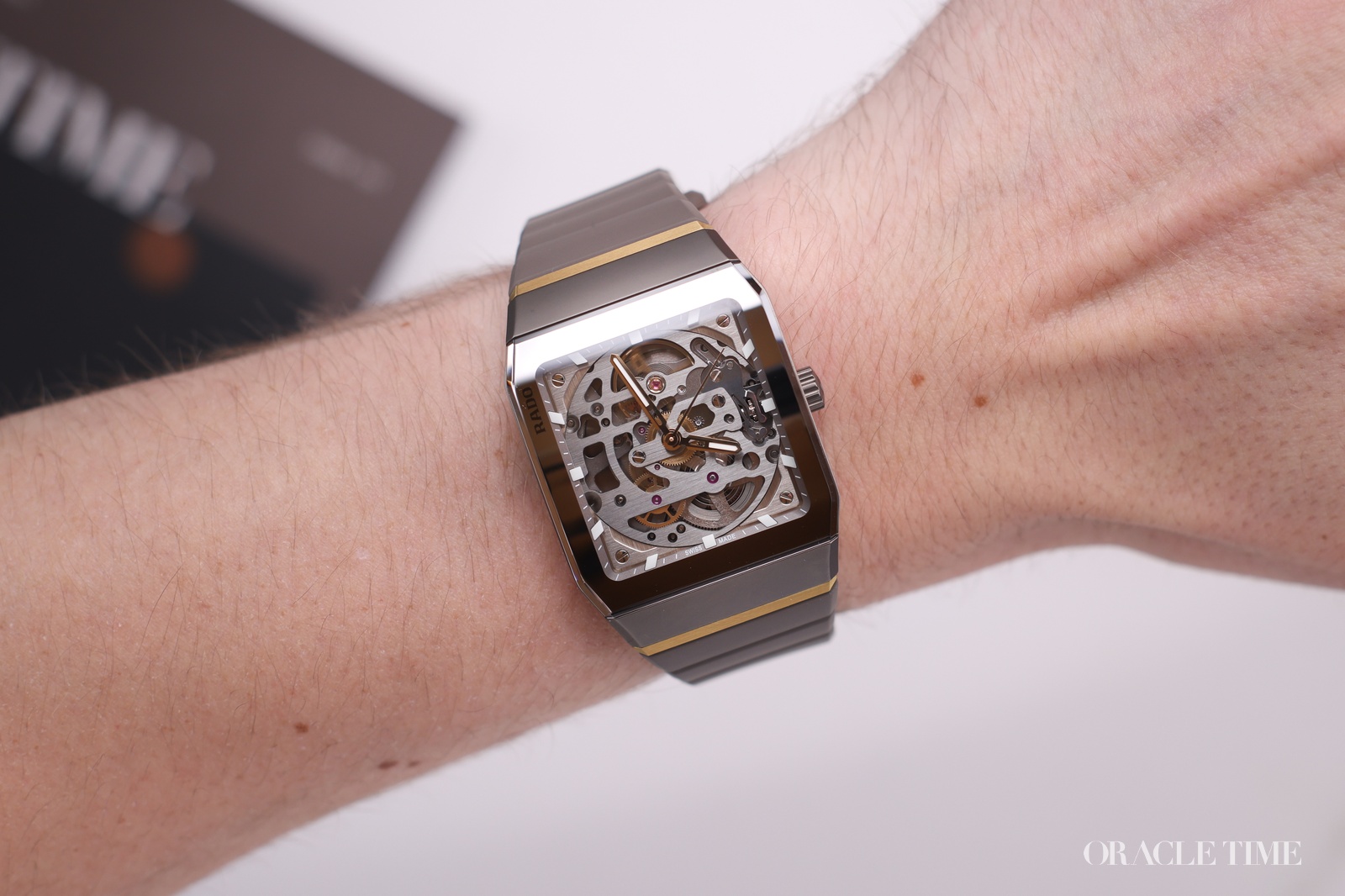
The case measures about 33mm across, with a 46.3mm length and a thickness of around 12mm, so it wears with more presence than the headline width suggests.
Rado uses plasma high-tech ceramic for the case, a material that begins as ceramic before being treated in a superheated plasma process to create its metallic grey finish.
The result has the cool, smooth feel associated with ceramic, but without looking like ordinary black or white ceramic.
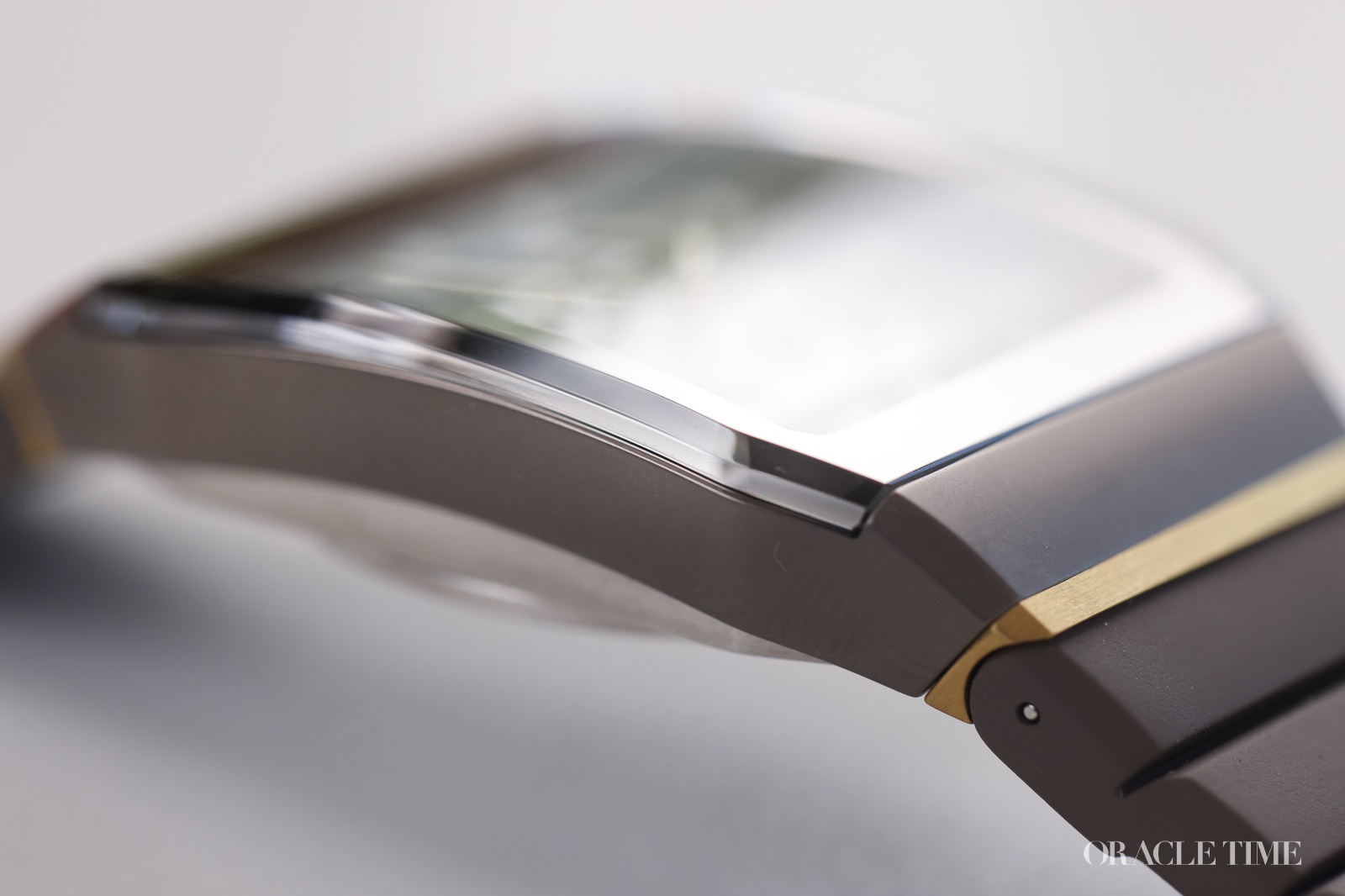
Yellow gold-tone PVD end-links bring a deliberate flash of 1980s character, though the overall impression is cleaner and more contemporary than nostalgic.
The grey rubber strap is also worth noting because it’s moulded to echo bracelet links, giving the watch a more integrated look without adding the weight or rigidity of a full ceramic bracelet.
On the wrist, that combination matters.
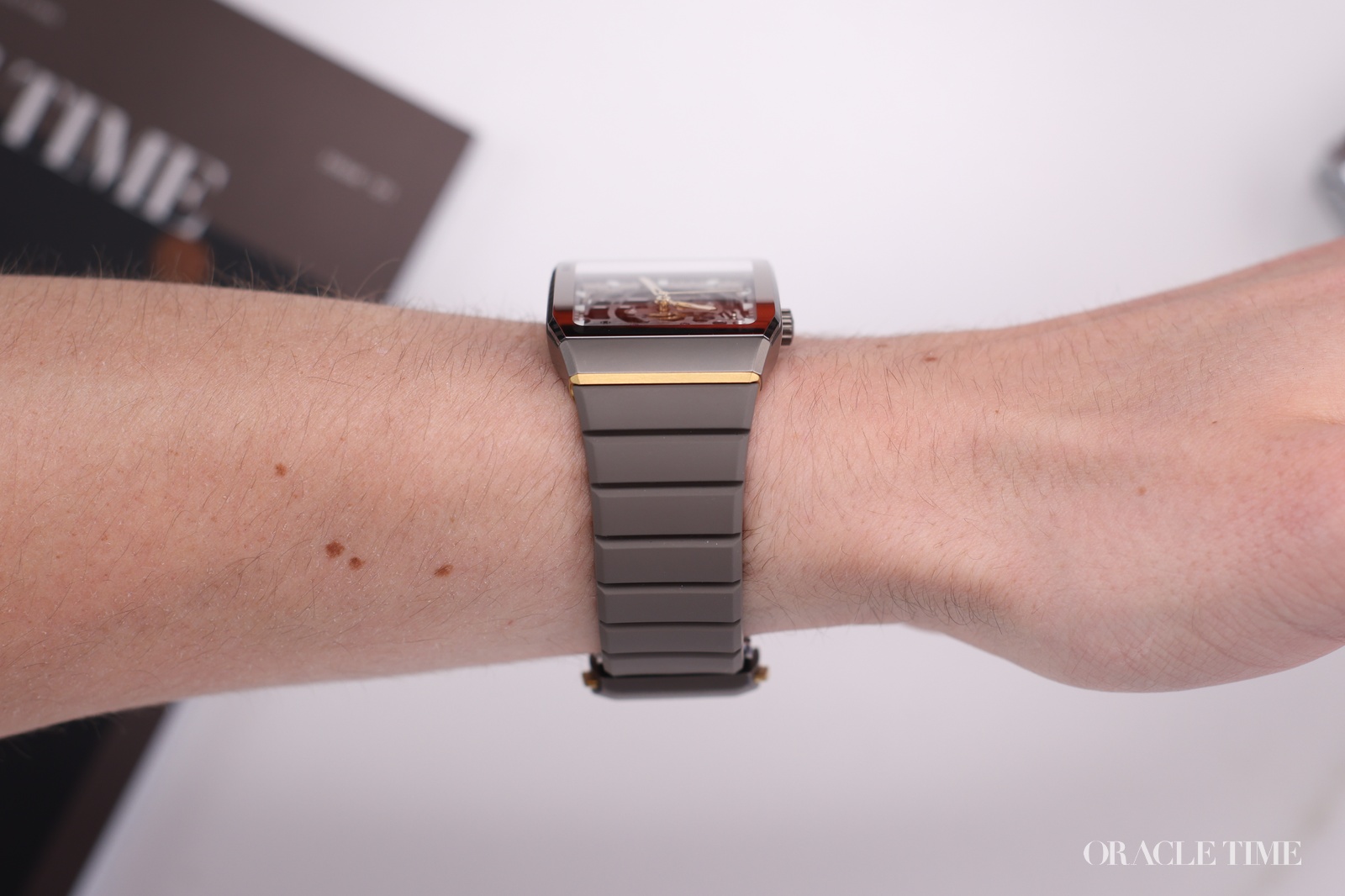
The curved case, smooth ceramic and flexible strap make the Anatom Skeleton feel unusually easy to wear for a design-led ceramic watch.
A skeleton dial that keeps its composure
Skeleton watches often struggle because visibility and legibility end up fighting one another.
The Anatom Skeleton handles that tension better than many, using open space without turning the dial into visual noise.
The bridges are finished in a tone that sits close to the plasma ceramic case, so the front of the watch keeps a cohesive grey palette rather than becoming a busy mechanical display.
Gold-tone hands pick up the end-links and the visible wheels in the movement, adding warmth without overwhelming the monochrome architecture.
The curved crystal also changes the way the dial is seen, creating distortion and depth at the edges that suit the watch’s engineered feel.
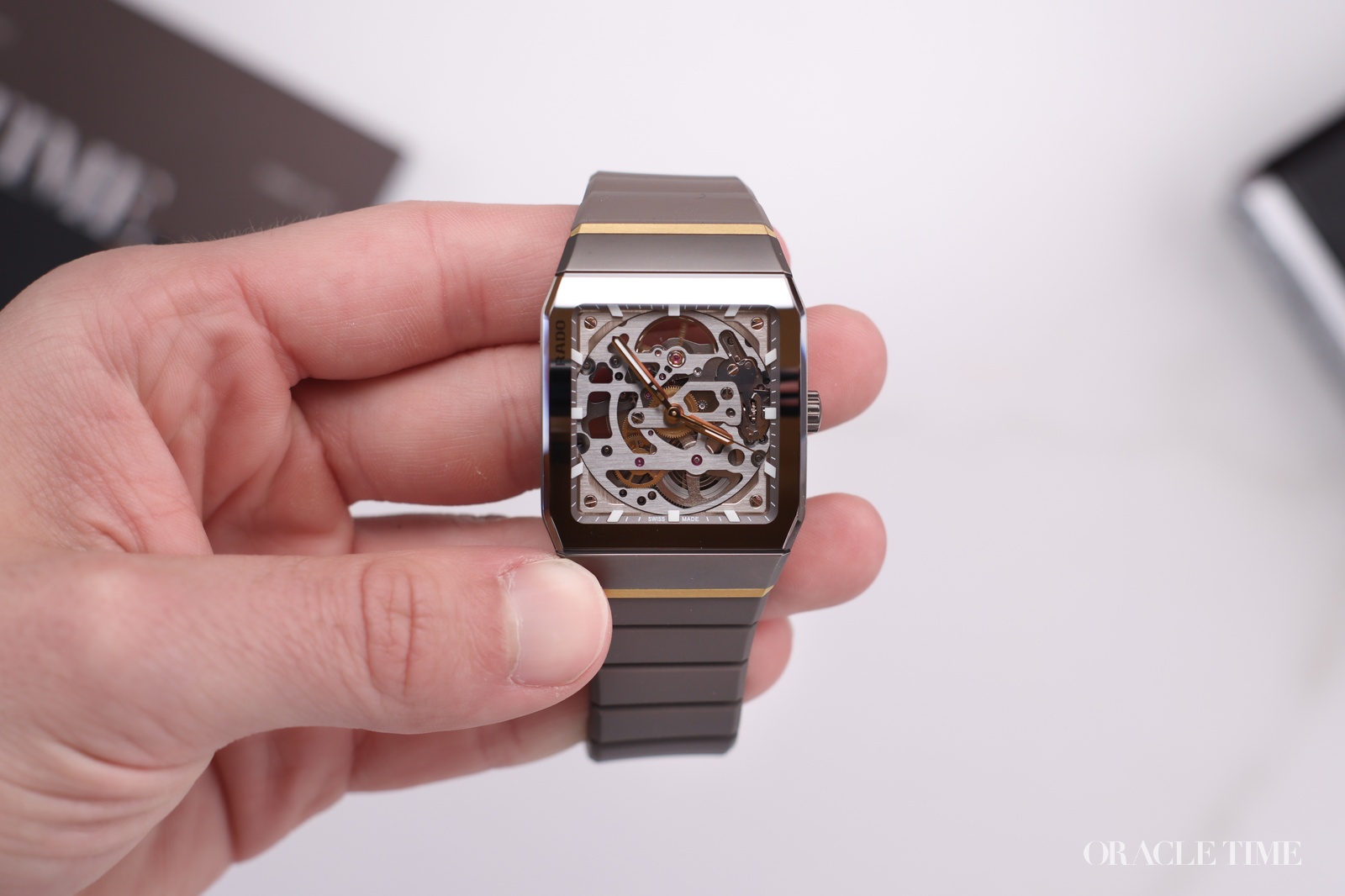
It’s not a discreet design, but it’s more controlled than the term skeleton might suggest.
That balance is important because the Anatom’s case already has so much personality.
A heavier-handed dial treatment would have pushed it into costume territory, while this version feels sharp, technical and deliberately styled.

The R808 movement and daily usability
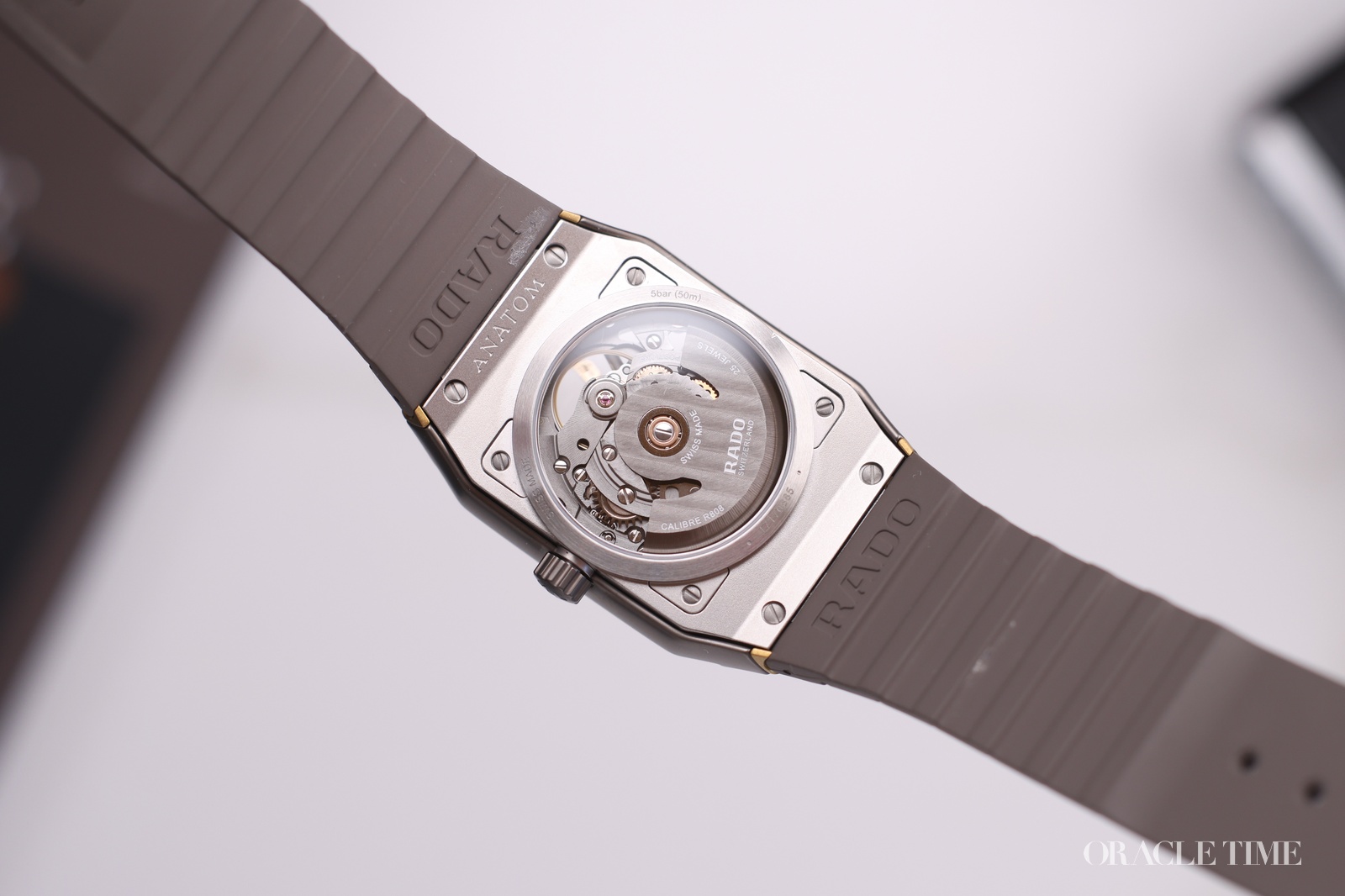
Inside is Rado’s calibre R808, an automatic movement with an 80-hour power reserve.
That long reserve makes the watch more practical than its fashion-forward shape might imply, as it can be left aside for a weekend and still be running when picked up again.
The movement runs at 21,600 vibrations per hour, or 3 Hz, and drives hours, minutes and seconds.
There is an exhibition caseback, though the front of the watch is the more compelling view.
With 50m of water resistance, the Anatom Skeleton is suited to daily wear rather than serious aquatic use.
That feels appropriate for a piece whose strengths are comfort, materials and design identity rather than tool-watch credentials.
At £3,800, it sits in an interesting position for buyers who want a ceramic Swiss automatic with a distinctive silhouette rather than another conventional sports watch.
It won’t be for everyone, and that’s part of the appeal.
Details & Specifications
| Brand | Rado |
|---|---|
| Model | Anatom Skeleton |
| Reference | R10206109 |
| Case size | 33mm wide, approximately 12mm thick |
| Case length | 46.3mm |
| Case material | Plasma high-tech ceramic and stainless steel |
| Dial | Skeletonised |
| Movement | Rado calibre R808 automatic |
| Frequency | 21,600 vph, 3 Hz |
| Power reserve | 80 hours |
| Functions | Hours, minutes, seconds |
| Water resistance | 50m, 5 bar |
| Strap | Grey rubber |
| Price | £3,800 |
The Rado Anatom Skeleton is the kind of watch that makes more sense on the wrist than in a product photograph, because its comfort and curved construction are central to the experience.
For collectors drawn to Rado’s ceramic history, 1980s design and watches that don’t follow the usual round-case formula, this is one of the brand’s most persuasive modern pieces.