Piaget has returned to one of its most technically ambitious Polo creations with a new white gold minute repeater.
It’s a watch that sits in an unusual space, taking the broad-shouldered language of the Polo and fitting it around a high complication more often associated with classical dress watches.
The result is less about casual sportiness than contrast, with an ultra-thin chiming movement housed in a substantial precious-metal case.
At a glance
- Piaget has introduced the Polo Minute Repeater in white gold, with standard and high jewellery versions.
- The watch uses the automatic calibre 1290P, a 4.8mm-thick minute repeater movement with a platinum micro-rotor.
- Annual production is limited by capacity rather than a numbered edition, with only five pieces possible each year and pricing on request.
A Polo case built around a chiming calibre
The Polo Minute Repeater measures 48mm across, which makes it one of the more assertive expressions of the collection.
That diameter is doing real work, giving Piaget room for the hammer and gong architecture of the minute repeater while preserving the model’s slim profile.
At 9.3mm thick in the standard version, the watch remains unusually thin for such a demanding complication.
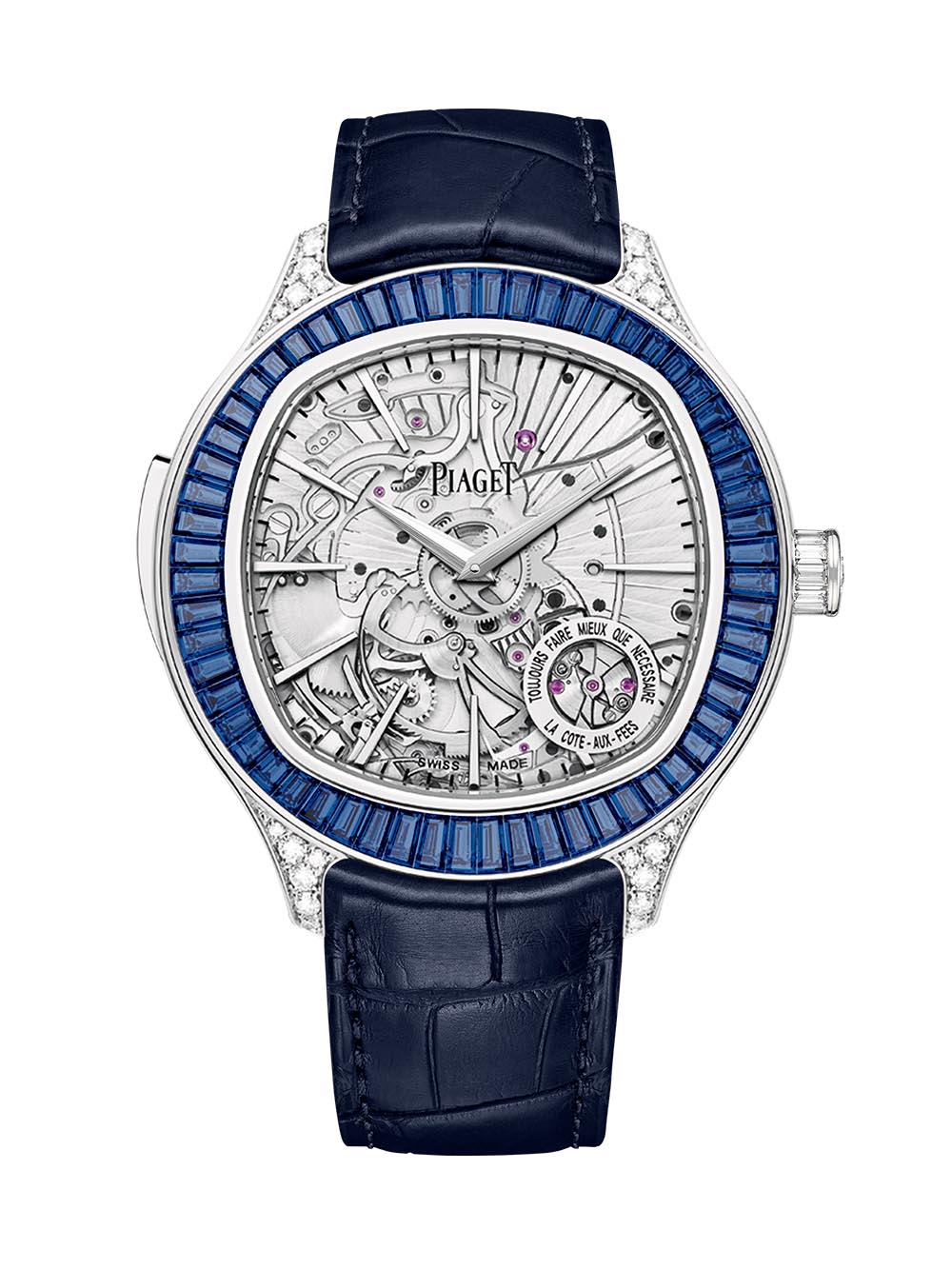
The high jewellery model increases only slightly to 9.4mm, despite the addition of baguette-cut blue sapphires on the bezel and diamonds across the case and lugs.
White gold is an intentional choice beyond its status as a precious metal, as gold is prized in chiming watches for the way it carries sound.
Openworked dials with two distinct personalities
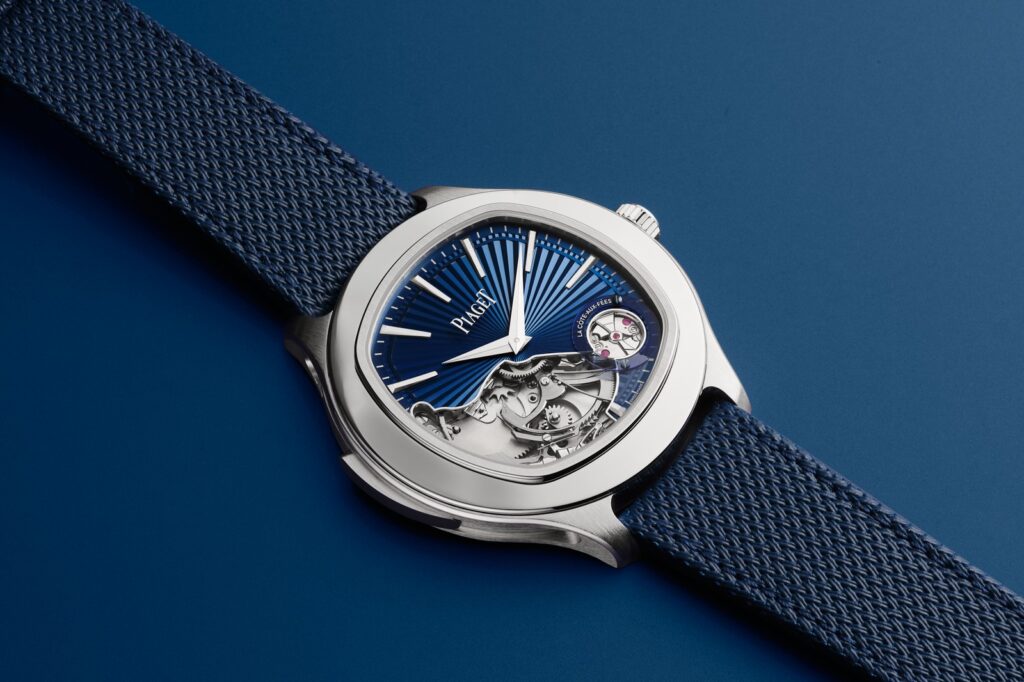
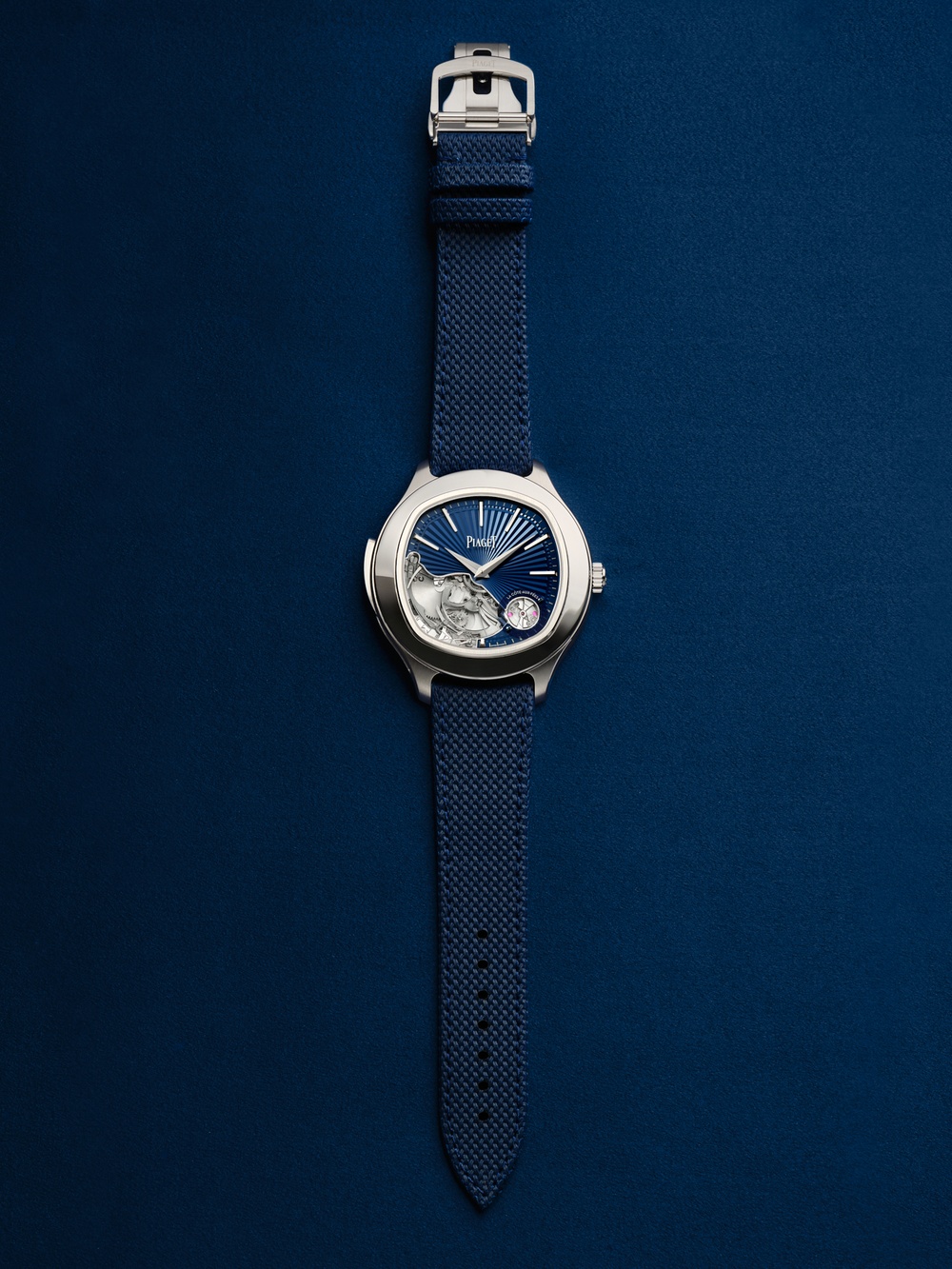
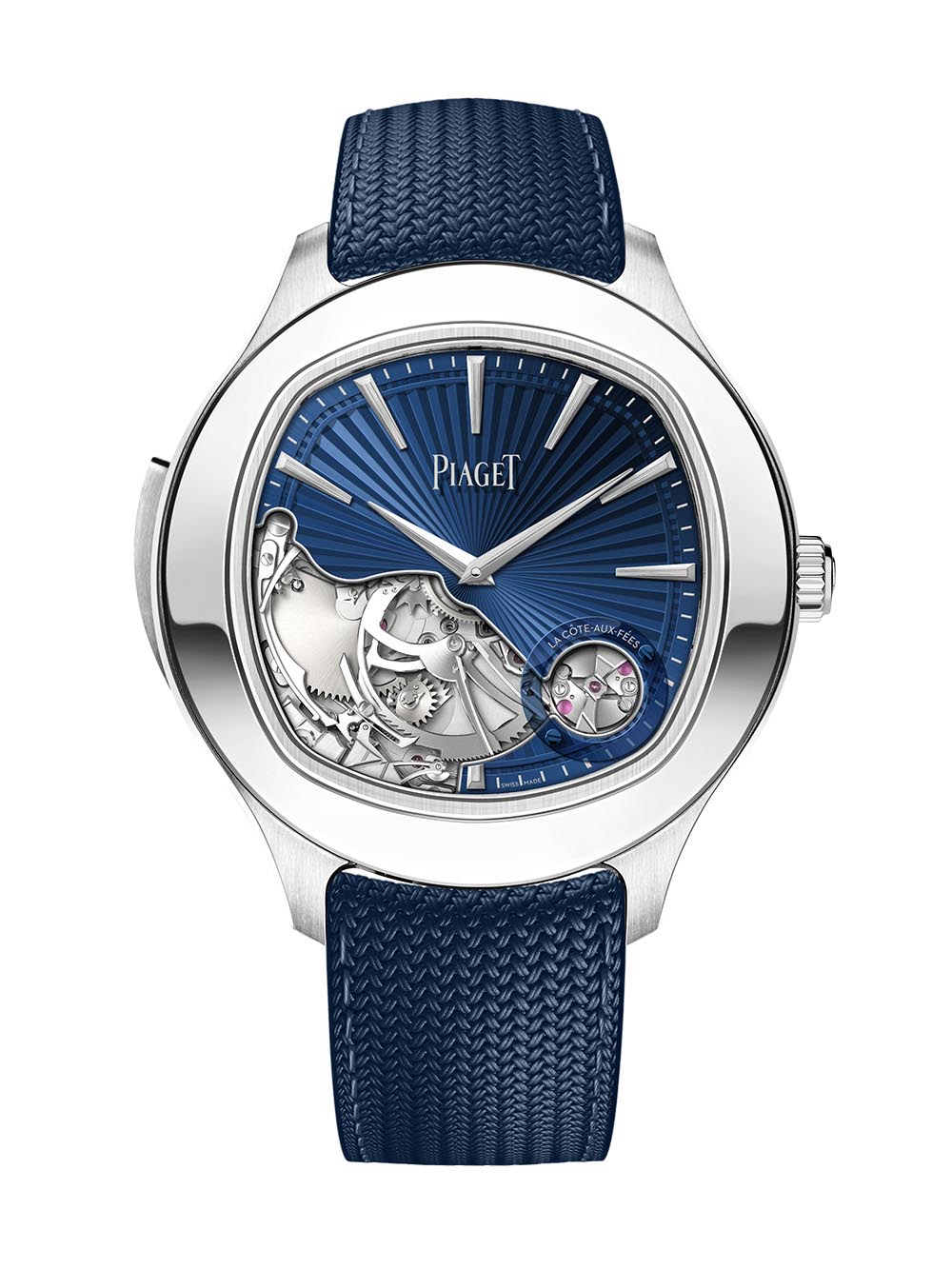
The standard Polo Minute Repeater uses a blue dial with a hand-guilloché soleillé finish radiating from the central hands.
A small aperture between 4 and 5 o’clock reveals the inertia wheel, with “La Côte-aux-Fées” inscribed around the opening in reference to Piaget’s manufacture.
The larger exposed section runs from 6 to 9 o’clock, where a curving aperture edged in white gold reveals part of the minute repeater mechanism.
Rather than cutting away the dial in a rigid geometric block, Piaget gives the opening a more fluid outline, which suits the Polo’s mix of polish and technical display.
The high jewellery edition takes the idea further with a fully openworked dial, shifting the emphasis toward spectacle and gem-setting.
The calibre 1290P returns
Inside is Piaget’s calibre 1290P, the automatic minute repeater movement that powered the brand’s record-setting 2013 chiming watch.
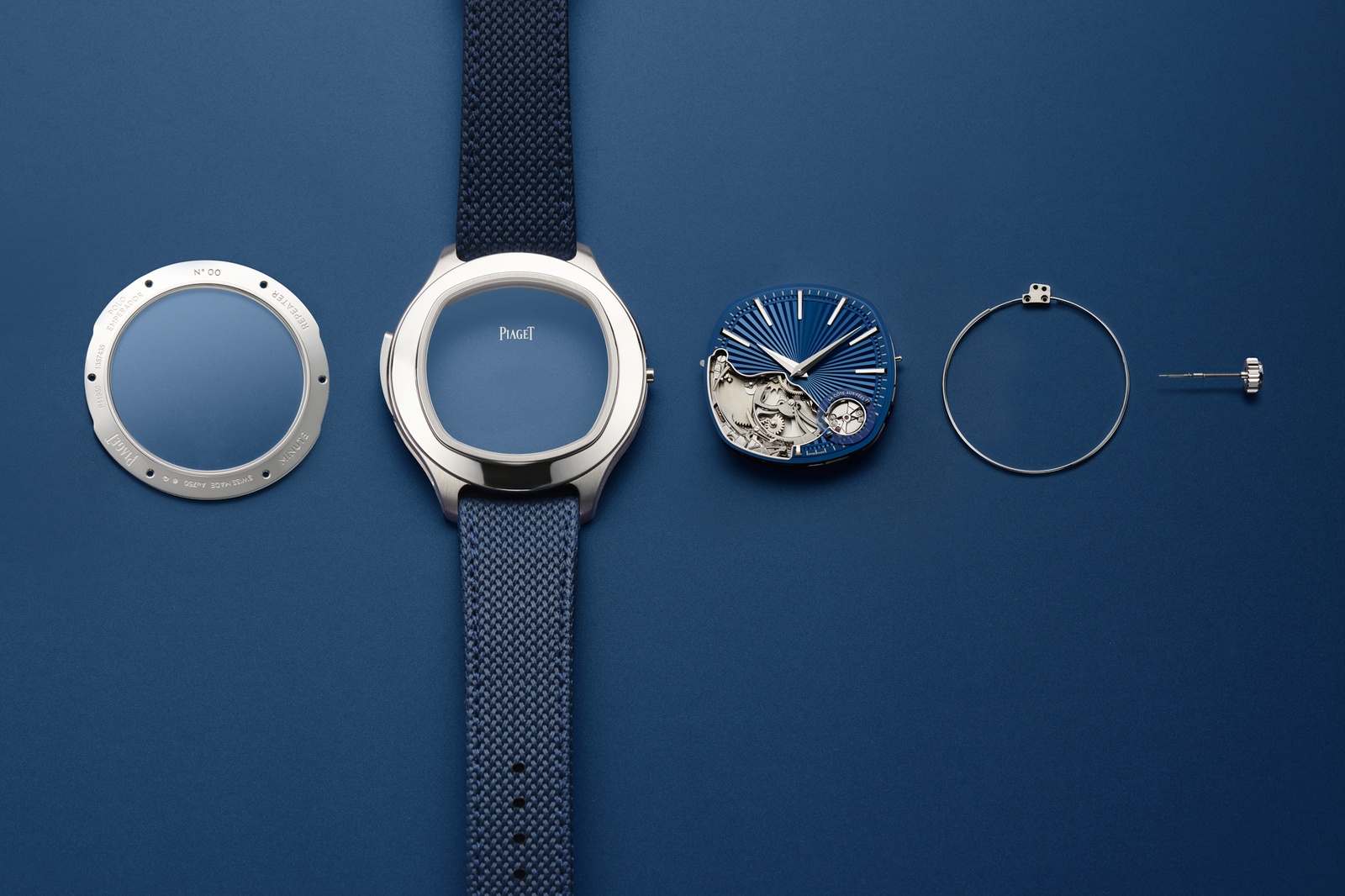
The movement is only 4.8mm thick and contains 430 components, a figure that underlines how tightly packed this mechanism is.
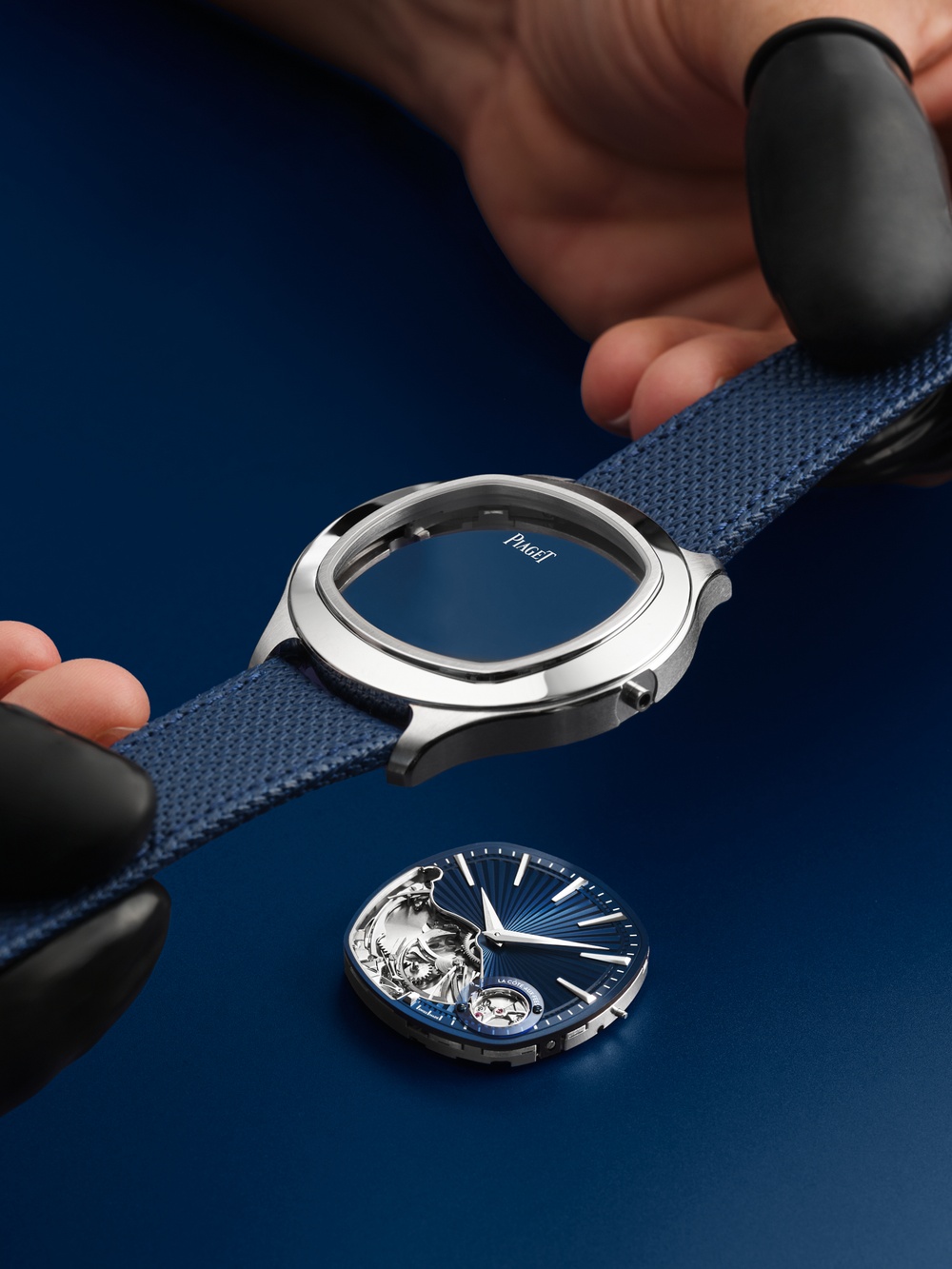
A platinum micro-rotor, finished in blue to echo the dial, winds the movement while keeping the architecture thin.
The calibre runs at 21,600 vibrations per hour and delivers a 40-hour power reserve, a practical figure given the additional energy demands of a minute repeater.
Production is necessarily slow, with Piaget able to make only five pieces annually.

Part of that scarcity comes from the dial alone, which takes more than 200 hours to produce and finish.
Details & Specifications
| Brand | Piaget |
|---|---|
| Models | Polo Minute Repeater, Polo Emperador Minute Repeater High Jewellery |
| References | G0A51038, G0A51017 |
| Case size | 48mm diameter, 9.3mm thick for the standard model, 9.4mm thick for the high jewellery model |
| Case material | 18k white gold with rhodium finish for the standard model, 18k white gold with baguette-cut blue sapphires and diamonds for the high jewellery model |
| Dial | Openworked gold with hand-guilloché soleillé finish, blue PVD and blue sapphire ring |
| Movement | Piaget calibre 1290P automatic |
| Complication | Minute repeater |
| Frequency | 21,600 vph, 3 Hz |
| Power reserve | 40 hours |
| Water resistance | 30 metres, 3 bar |
| Strap | Blue embossed calfskin with folding clasp and additional alligator strap for the standard model, dark blue alligator with folding clasp for the high jewellery model |
| Price | Price on request |
| Availability | Five pieces can be produced annually |
The Polo Minute Repeater works because it doesn’t try to disguise its contradictions.
It’s large but thin, sporty in outline but deeply traditional in craft, and a reminder that Piaget’s reputation for elegance has always been tied to serious mechanical discipline.