The Omega Speedmaster Moonwatch Calibre 321 is one of those modern watches that makes more sense the closer you look.
It isn’t a limited edition, and it doesn’t need theatrical reinvention to make its point.
Its appeal rests on a compact 39.7 mm case, a hand-wound movement with deep Speedmaster history and a set of design choices that feel unusually disciplined for a contemporary heritage chronograph.
At a glance
- Omega’s Speedmaster Moonwatch Calibre 321 revives the celebrated hand-wound chronograph movement associated with NASA-era Speedmasters.
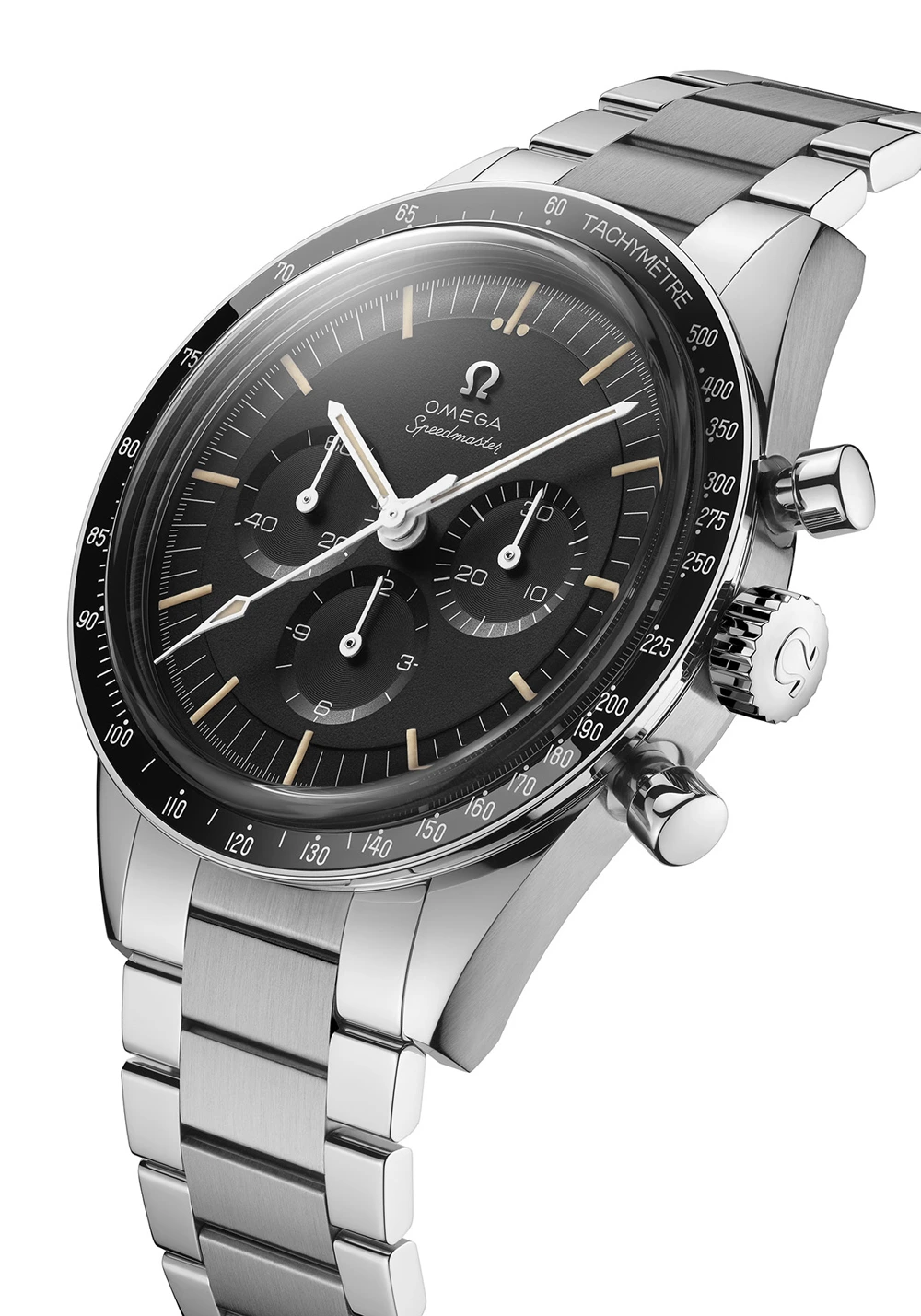
- The watch pairs a 39.7 mm straight-lug case with a black step dial, sapphire crystal, ceramic tachymeter bezel and exhibition caseback.
- It isn’t a limited edition, but production remains comparatively low because each watch is assembled in a dedicated Calibre 321 workshop.
The Ed White link gives this Speedmaster its shape
The Calibre 321 has a legitimate place in Omega’s space-age mythology.
In the 1960s, the Lemania-derived movement powered Speedmasters that survived NASA’s testing programme and went on to accompany manned missions, including Apollo 11 in 1969.
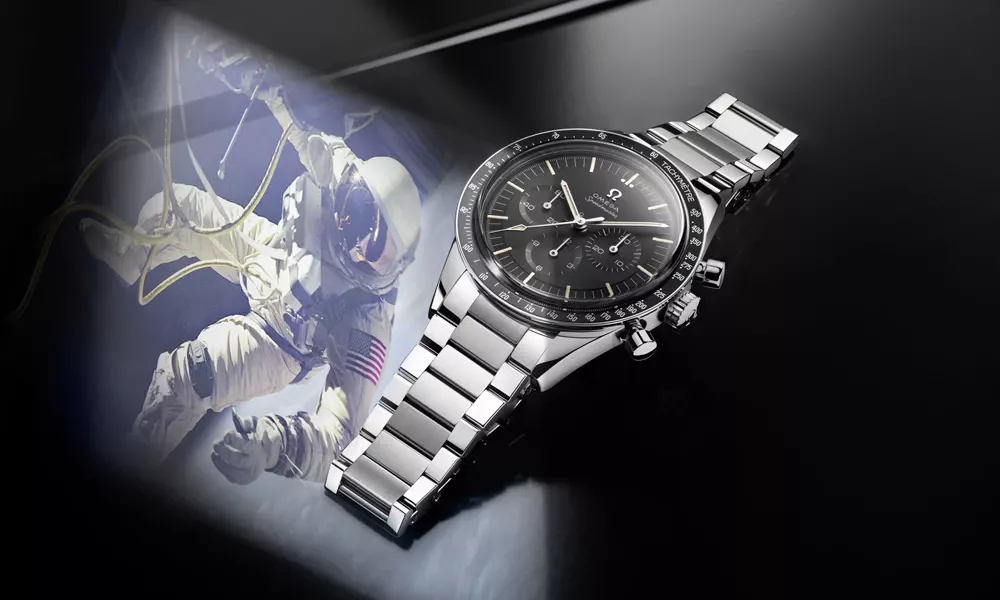
The “Ed White” nickname points to astronaut Edward H. White II, pilot of the Gemini IV mission and the first American to walk in space on 3 June 1965.
During that extravehicular activity, White wore an Omega Speedmaster reference 105.003 on his wrist.
More precisely, he wore two Speedmasters, with one set to mission time aboard Gemini IV and the other set to the time in Houston.
That historical footnote matters because this modern Speedmaster Moonwatch Calibre 321 doesn’t simply borrow a famous name.
It brings back the proportions and straight-lug character that many collectors associate with the pre-Professional Speedmaster era.
A compact case with more vintage restraint than costume drama
The 39.7 mm case is central to the watch’s charm.
Compared with the 42 mm Speedmaster Moonwatch Professional, the Ed White feels more compact, more precise and less imposing on the wrist.
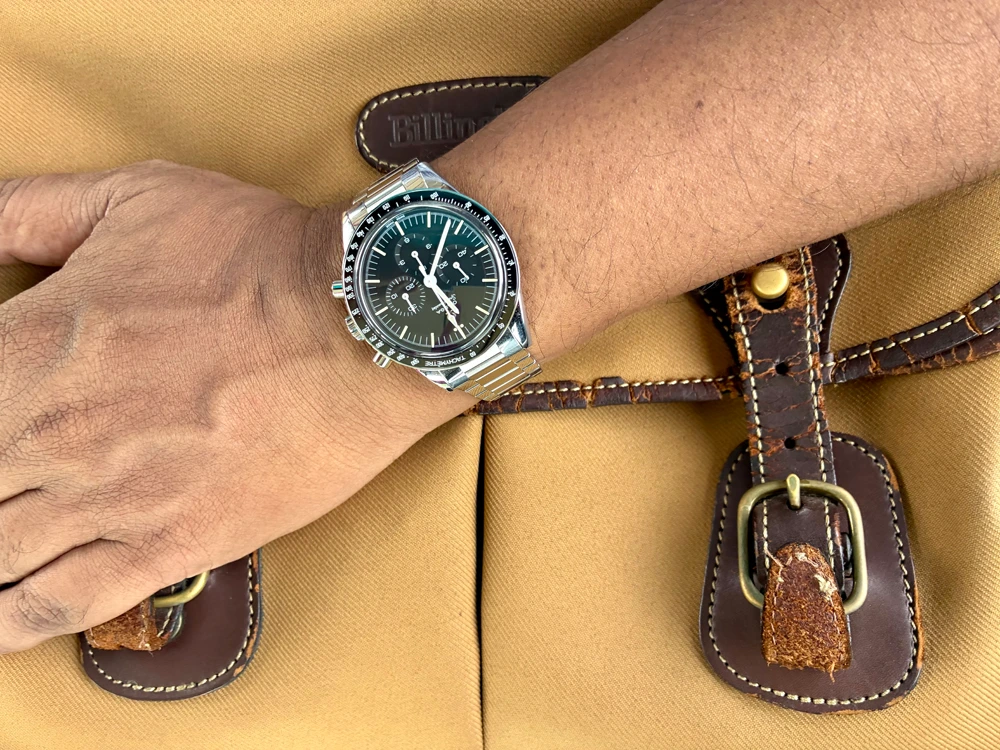
The straight lugs are a key part of that personality, giving the case a tauter, more old-school silhouette without feeling fragile or overly nostalgic.
Omega also made several modern concessions that improve daily usability.
The sapphire crystal keeps the period-inspired curved profile while offering better scratch resistance than Hesalite.

The exhibition caseback is another important distinction, since it allows the Calibre 321 to become part of the ownership experience rather than a hidden historical reference.
The bezel uses a polished black ceramic insert in zirconium oxide, with the tachymeter scale in white enamel.
It preserves the familiar Speedmaster look while adding a degree of durability that suits a watch intended to be worn, not merely stored.

Collectors will also notice the “Dot over Ninety” tachymeter detail, a vintage cue associated with earlier Speedmaster bezels before Omega later repositioned the dot near the 90 marker.
The crown and pushers sit proud of the case rather than being tucked into modern crown guards, and that choice gives the chronograph a cleaner, more classical profile.
The dial is cleaner because it knows what to leave out
The black step dial is one of the strongest parts of the Calibre 321 package.

Its outer hour track sits on a lower plane, while the three counters are recessed with sloping edges, giving the surface more depth than a flat chronograph dial can usually manage.
Omega leaves the “Professional” text off this model, which gives the dial a quieter and more balanced appearance.
The period-style Omega logo is applied in relief, adding just enough dimensional detail without cluttering the design.

The handset follows the familiar Moonwatch language, with luminous fill for practical legibility.
Rectangular hour markers frame the dial, with two dots around the 12 o’clock marker to help orientation in low light.
The chronograph layout remains classic Speedmaster.

A 30-minute counter sits at 3 o’clock, a 12-hour counter at 6 o’clock and running seconds at 9 o’clock.
The result is a dial that feels historical without becoming theatrical, and readable without looking plain.
The Calibre 321 is the real reason to care
Omega’s decision to bring back the Calibre 321 was not a casual movement swap.

The hand-wound chronograph is assembled in a dedicated workshop using traditional watchmaking techniques, which helps explain why the watch can be difficult to obtain even though it isn’t officially limited.
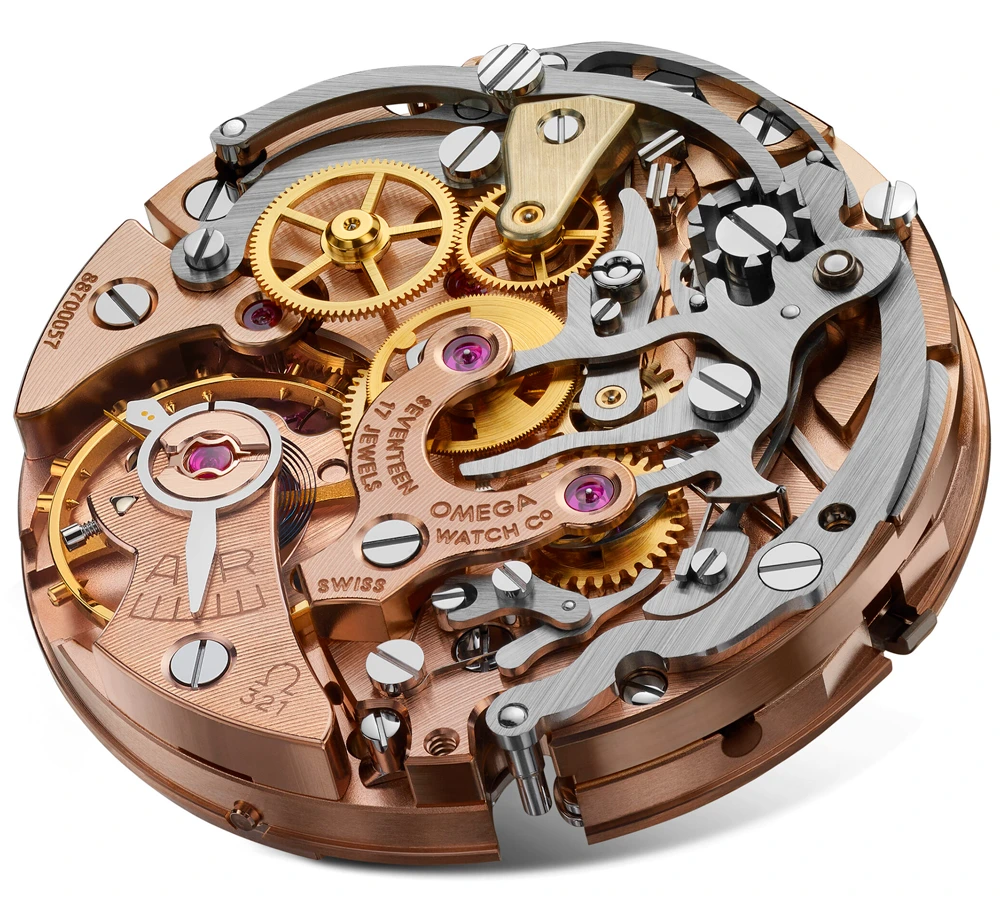
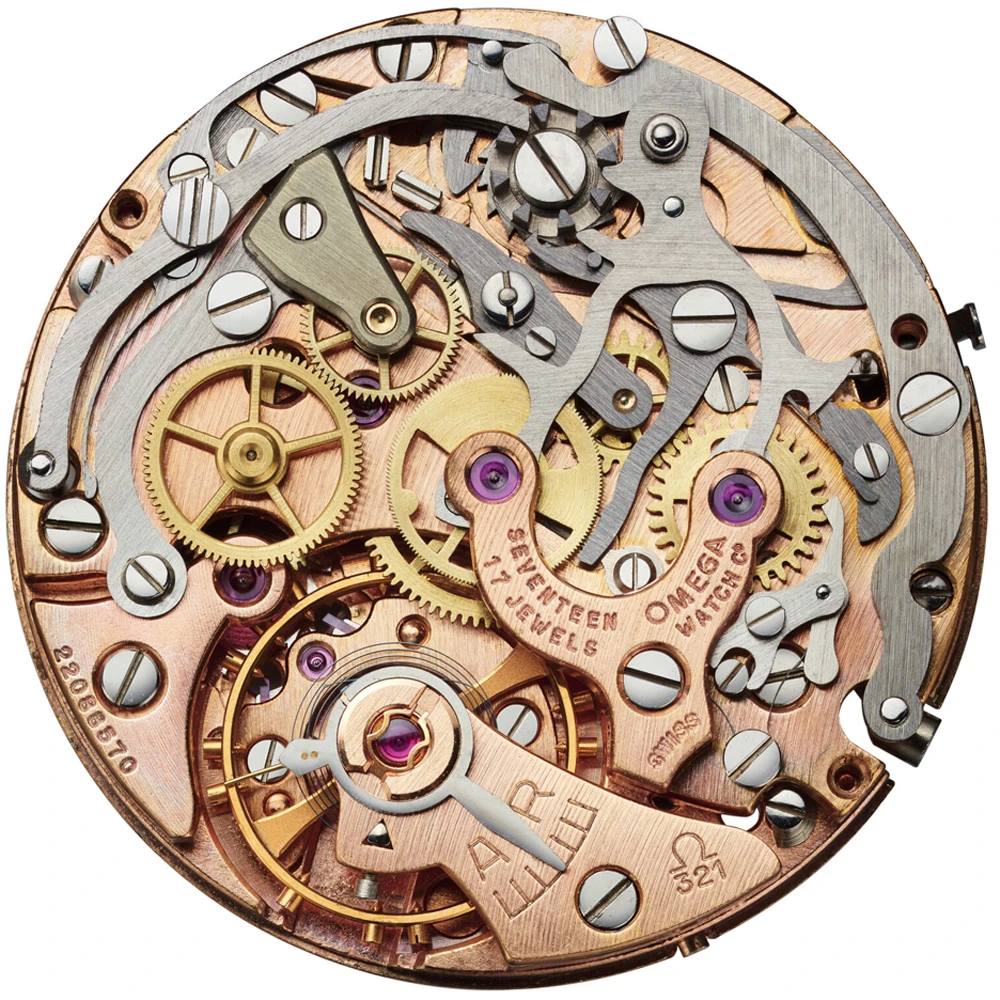
Visually, the movement is a major part of the attraction.
The 18K Sedna gold PVD-coated finish gives the calibre a warm tone through the exhibition back, turning the watch over into an unusually rewarding ritual.

For many enthusiasts, that visible movement is what separates this watch from a standard Moonwatch purchase.
It connects the Speedmaster’s space-flight past with a level of contemporary finishing and presentation that feels deliberate rather than decorative.
Details & Specifications
| Brand | Omega |
|---|---|
| Model | Speedmaster Moonwatch Calibre 321 “Ed White” |
| Case size | 39.7 mm |
| Dial | Black step dial with recessed counters |
| Movement | Hand-wound Omega Calibre 321 |
| Movement finish | 18K Sedna gold PVD-coated finish |
| Chronograph display | 30-minute counter, 12-hour counter and small seconds |
| Crystal | Sapphire crystal with period-inspired curved edges |
| Caseback | Exhibition caseback |
| Bezel | Polished black ceramic tachymeter bezel with white enamel scale |
| Water resistance | 50 metres |
| Production | Not a limited edition, with comparatively low production volumes |
The Speedmaster Moonwatch Calibre 321 Ed White succeeds because it doesn’t try to modernise the Speedmaster out of recognition.

It keeps the parts that matter, improves the parts that make ownership easier and gives the movement enough space to be appreciated every time the watch leaves the wrist.