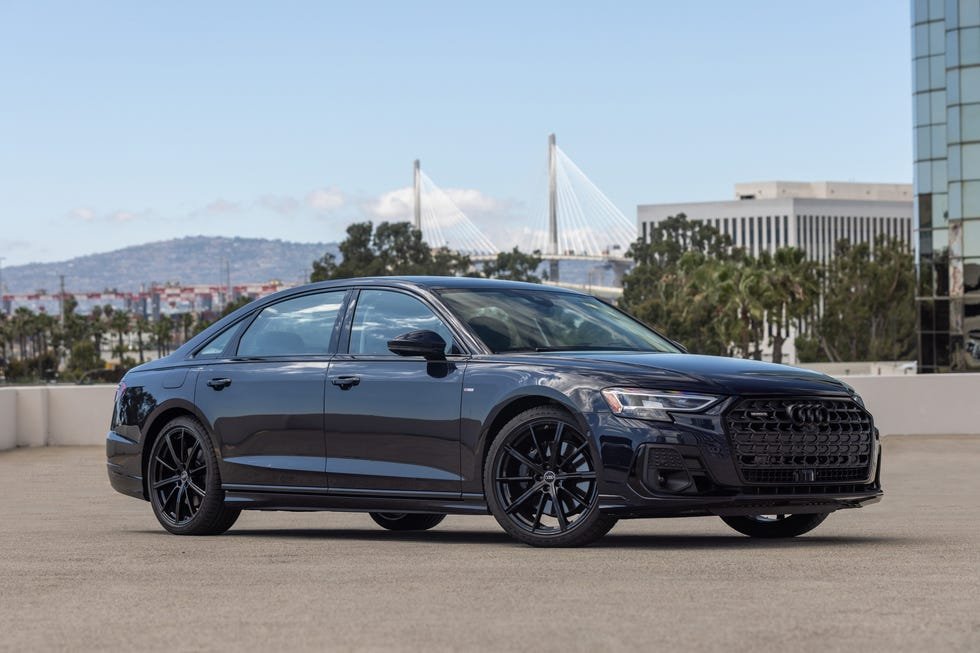
Audi’s flagship sedan may be heading for a very different kind of second act.
The next-generation A8 is being linked with Porsche Panamera hardware, a move that would give Audi a route back into the full-size luxury sedan space without developing an entirely separate platform from the ground up.
If the plan moves forward, it would also underline how Volkswagen Group is thinking about its most expensive sedans in an era where traditional luxury saloons have to justify every euro of investment.

At a glance
- The next Audi A8 could share its core underpinnings with the next Porsche Panamera.
- Production has been linked with Porsche’s Leipzig plant in Germany.
- The new A8 is not expected before 2030, potentially leaving Audi without a flagship sedan for several years.
A flagship sedan with a Porsche connection
The key idea is simple, even if the engineering behind it won’t be.
Audi’s future A8 could use the same basic architecture as the next Panamera, giving the two luxury sedans shared technical foundations while allowing each brand to develop its own design, cabin character and dynamic brief.
That distinction matters because platform sharing is no longer just a cost-saving exercise in the old sense.
For high-end models with lower volumes, shared development can be the difference between a new generation happening at all and a nameplate being left to fade out.
The Volkswagen Group already has a clear example in this part of the market.
The Porsche Taycan and Audi E-Tron GT are closely related beneath the skin, yet they feel and look like distinct products because Porsche and Audi have tuned the experience around different priorities.

A future A8 and Panamera pairing could follow a similar philosophy, though in the world of full-size performance sedans rather than electric grand tourers.
Why Leipzig would make sense
Porsche’s Leipzig plant in Germany is being discussed as a possible production site for the next A8.
That would be a notable shift for Audi’s flagship, but not an illogical one if the car ends up closely aligned with the Panamera.
Building related models within the same industrial ecosystem can simplify manufacturing planning, supplier logistics and production investment.
It also helps explain why the proposal feels plausible from a group strategy perspective.
Audi gets a path to retain a top-tier sedan in its line-up, Porsche continues with the Panamera’s next chapter, and Volkswagen Group spreads the cost of keeping both brands represented in a segment that still matters for image even as demand has shifted toward SUVs.

The A8 has long played a different role from Audi’s volume models.
It’s the car that carries the brand’s executive presence, technology story and chauffeur-class credibility, even when it isn’t the biggest seller in the showroom.
A long gap before the next A8 arrives
The timing is the most interesting part of the story.
Production of the next A8 is not expected to begin before 2030, while the current-generation car is expected to end its run sometime next year.
That would potentially leave Audi without a traditional flagship sedan for around three years.
For a brand that has historically competed against the Mercedes-Benz S-Class and BMW 7 Series, that absence would be significant.
It would also say something about the changing role of the limousine in a premium line-up.
Where the A8 once acted as the natural summit of the Audi range, today the brand’s most visible luxury push is spread across electric models, large SUVs and performance derivatives.
A delayed successor could allow Audi to rethink the A8’s positioning rather than simply replace the current car with another familiar executive sedan.
Sharing foundations with the Panamera could also influence the character of the next A8.
The Panamera has always lived closer to the performance side of the luxury sedan spectrum, while the A8 has traditionally prioritised refinement, space and discreet authority.
The challenge for Audi would be to preserve that quieter flagship identity while benefiting from hardware with a more dynamic Porsche connection.
What it could mean for Audi buyers
For buyers, the appeal will depend on execution rather than corporate logic.
An A8 that borrows its bones from a Panamera still has to feel like an Audi flagship, with the calmness, interior restraint and long-distance polish that have defined the model at its best.
Done properly, the arrangement could give Audi a stronger technical base and a more compelling luxury sedan without blurring it into a Porsche in different clothing.
Done poorly, it risks leaving the A8 without the clear identity that a flagship needs.
For now, the most important takeaway is that the A8 name appears to remain part of Audi’s long-term thinking, even if its next chapter may arrive later and with a different engineering strategy than before.
In a market where flagship sedans are no longer guaranteed a future, that alone makes the potential Porsche link worth watching.