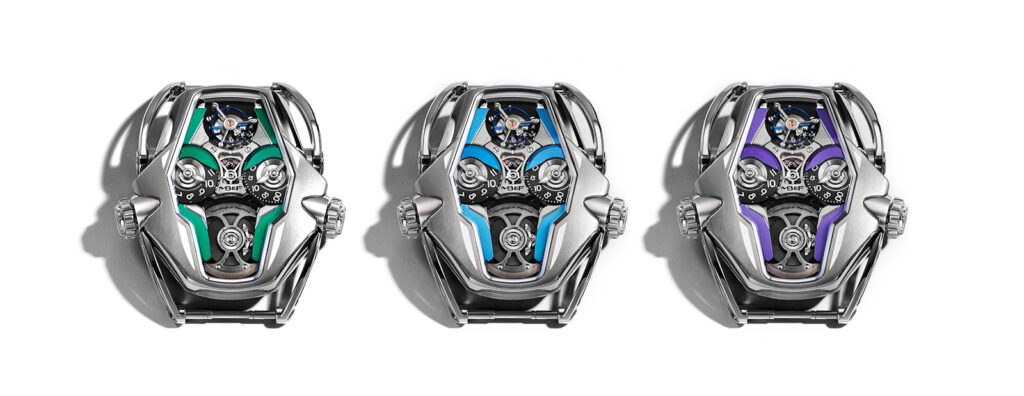
MB&F has never treated the watch case as a polite container for a movement, and HM12 The Guardian pushes that instinct into full character design.
The new creation is a two-part proposition, pairing a Grade 5 titanium wristwatch with a robot-shaped stand that’s conceived as part of the object rather than an accessory.
It’s mechanical watchmaking with a toy-box memory, but the execution is anything but casual.
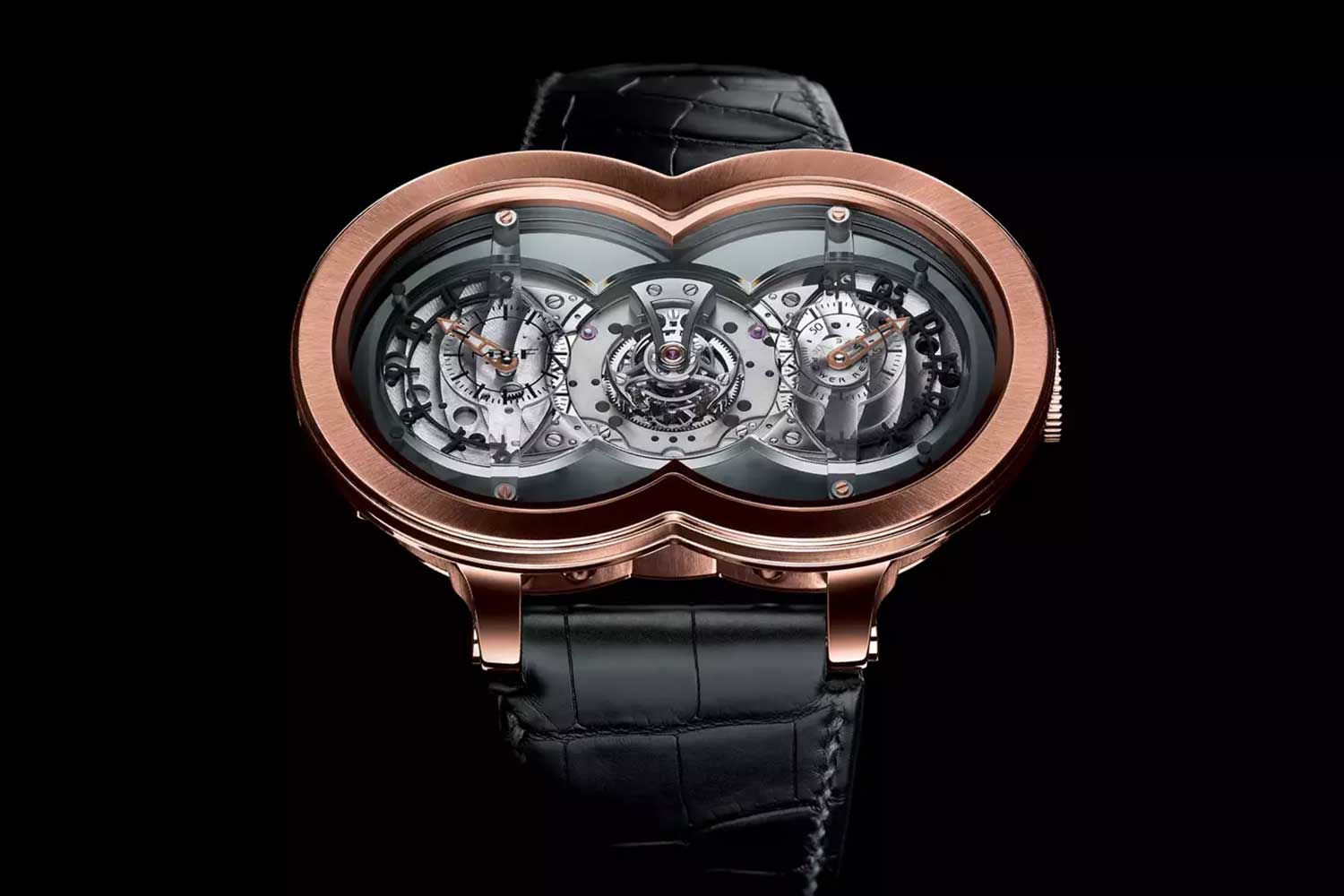
At a glance
- MB&F’s HM12 The Guardian combines the HM12 wristwatch with a dedicated robot-form stand, sold only as a set.
- The watch features a flying tourbillon, jumping hours, trailing minutes and mechanically operated face shields.
- The project marks a new chapter for the Horological Machine line, led by Max Büsser and creative director Max Maertens.
A Horological Machine with a robot alter ego
The HM12 is the face of the robot, while The Guardian is its body, a stainless-steel sentinel designed to hold the watch when it’s off the wrist.
MB&F has made it clear that the two belong together, so collectors won’t be able to buy the watch without the stand or the stand without the watch.
That matters because the idea isn’t simply presentation packaging.
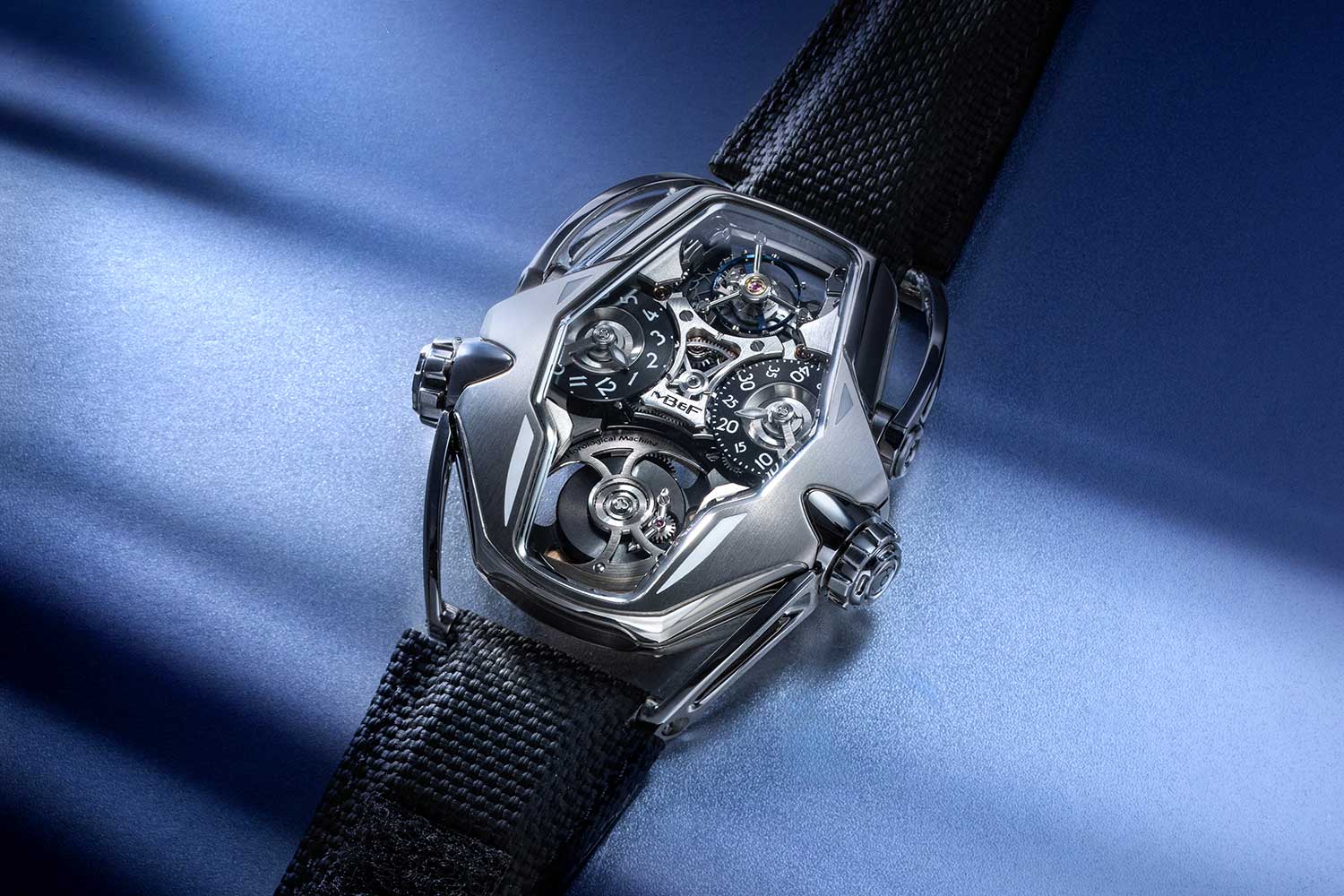
The Guardian extends the watch’s identity into a full object, with details such as a magnifying shield, a Super-LumiNova element and a chest needle that gives it the slightly absurd charisma of a mechanical defender.
The result sits neatly in MB&F’s world, where watches have previously borrowed from aircraft, sea creatures, science fiction and childhood obsessions without losing their mechanical seriousness.
The titanium face and its moving shields
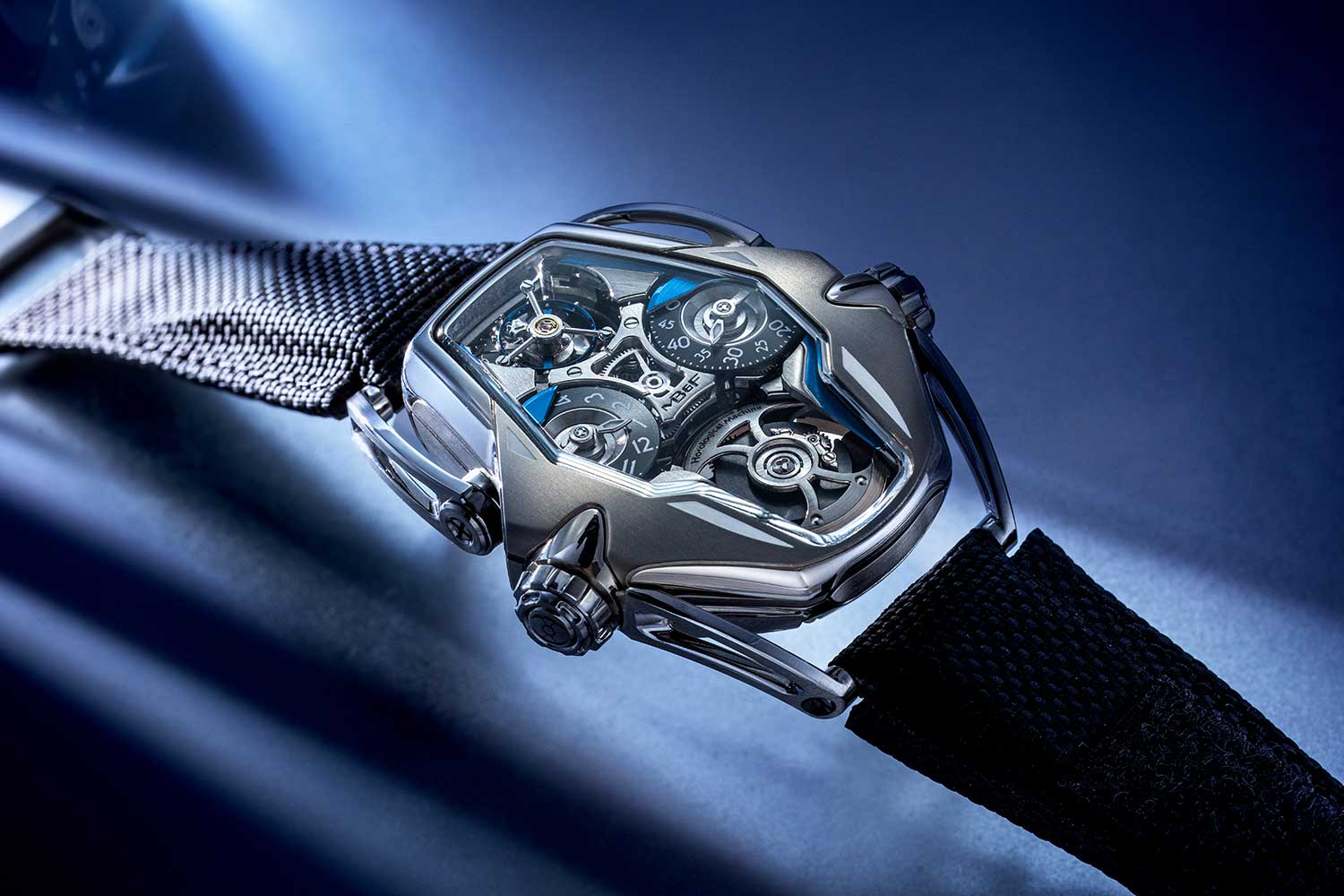
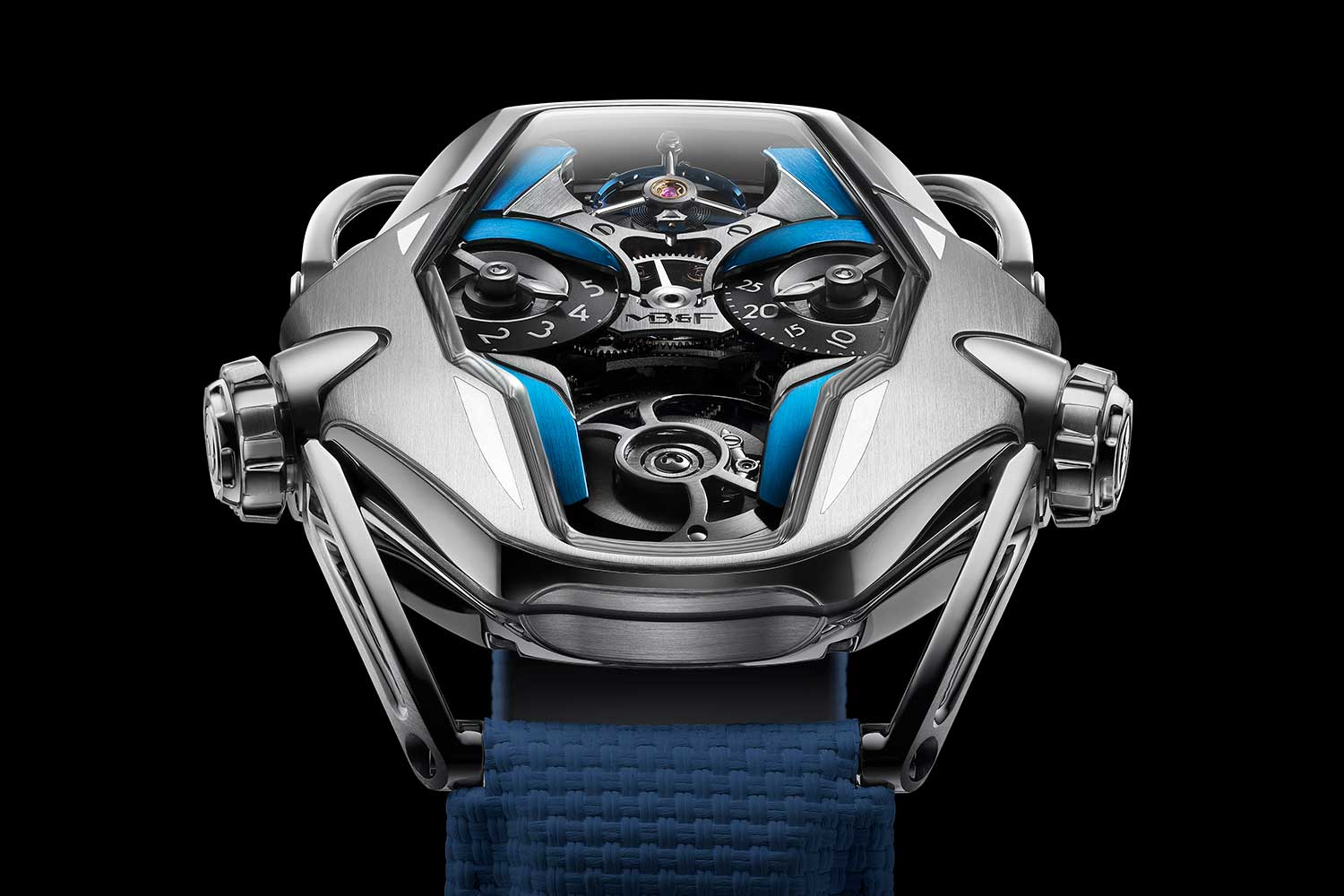
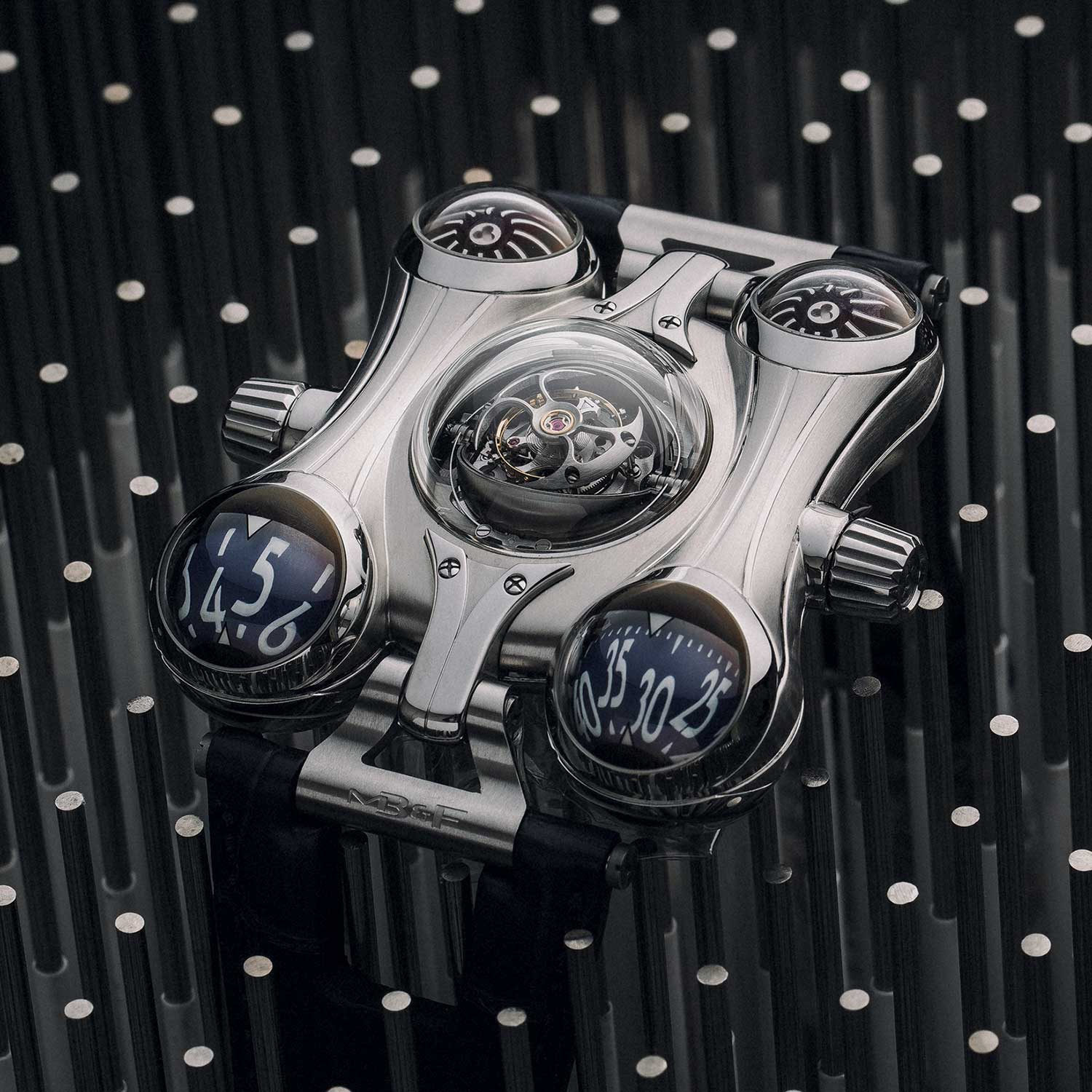
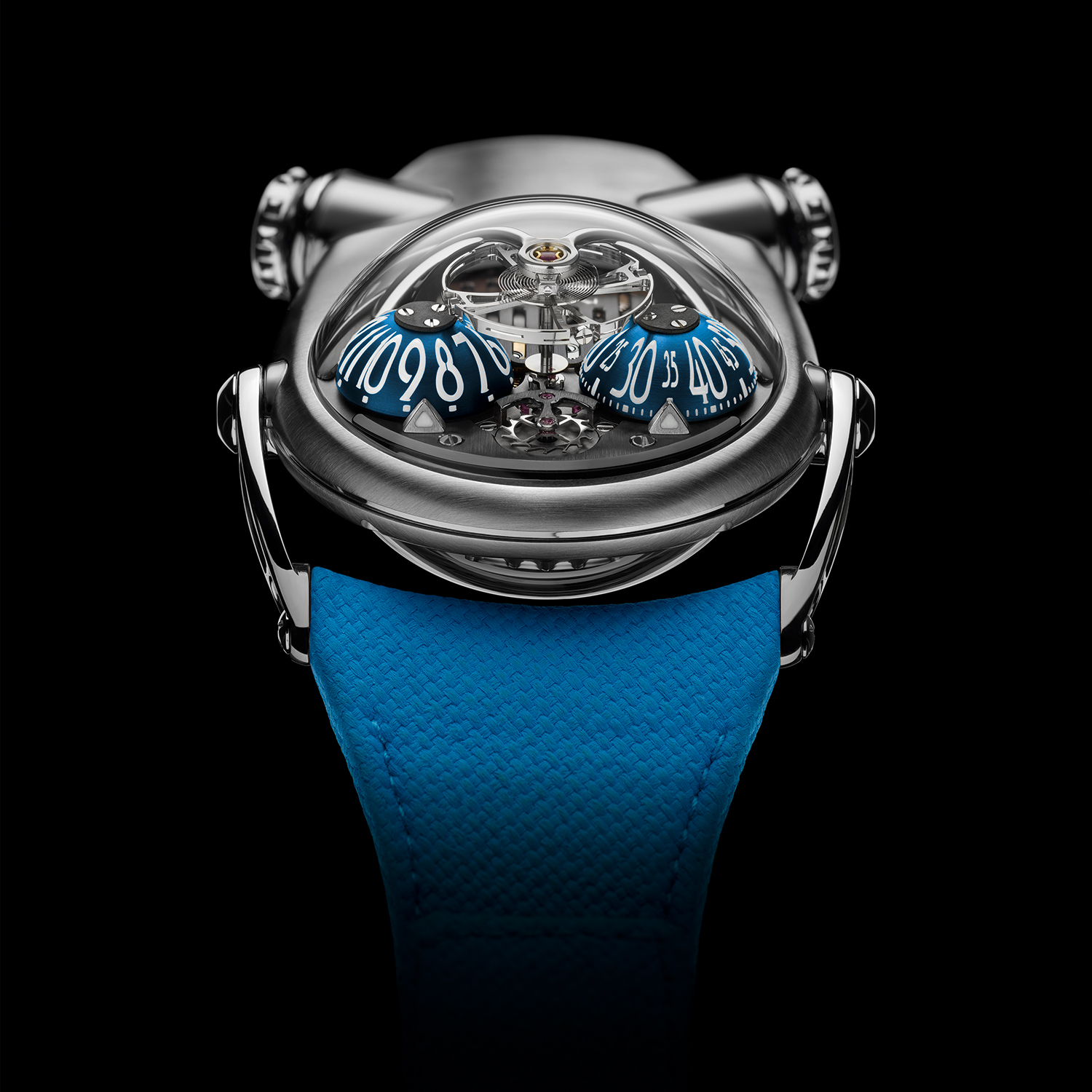
The HM12 wristwatch is built in Grade 5 titanium and presents time through a distinctly robotic front.
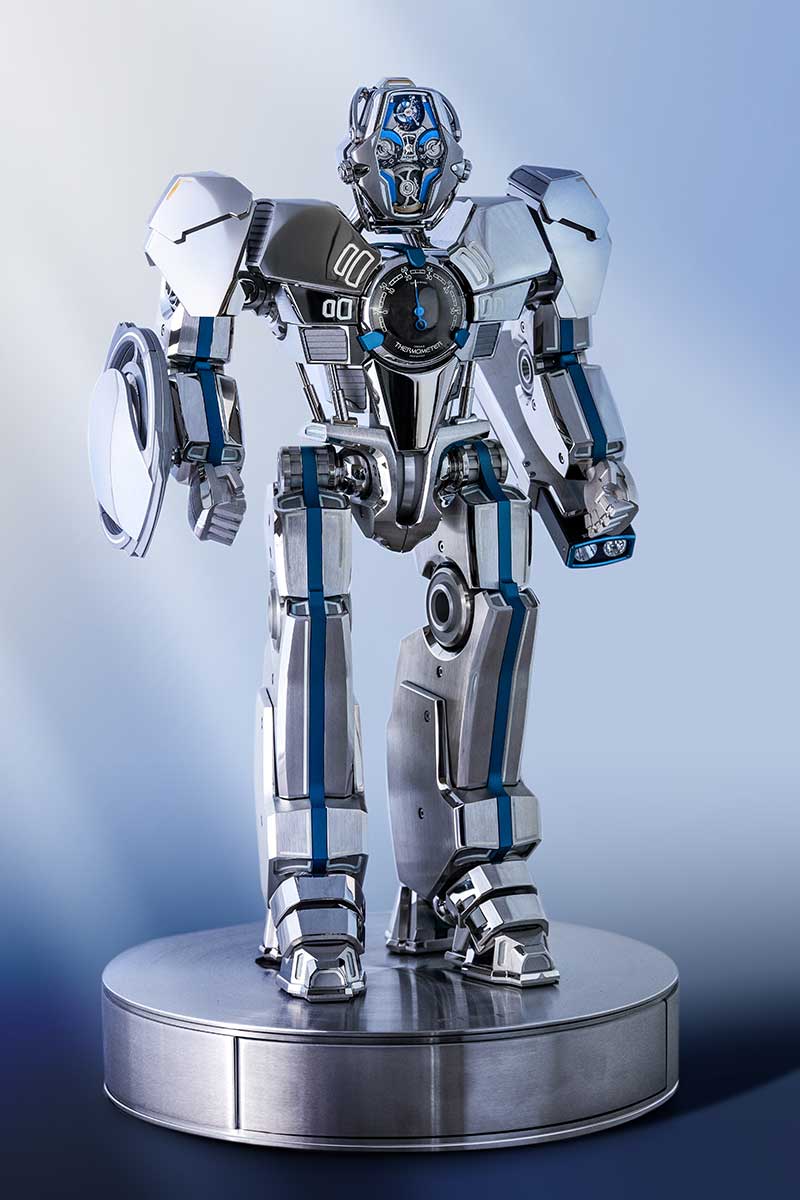
At 3 o’clock, a subdial displays trailing minutes, while a jumping-hour display sits opposite at 9 o’clock.
At 6 o’clock, the visible section of the double-winding micro-rotor takes the form of MB&F’s battle-axe motif, turning a winding component into something closer to a mechanical mouth.
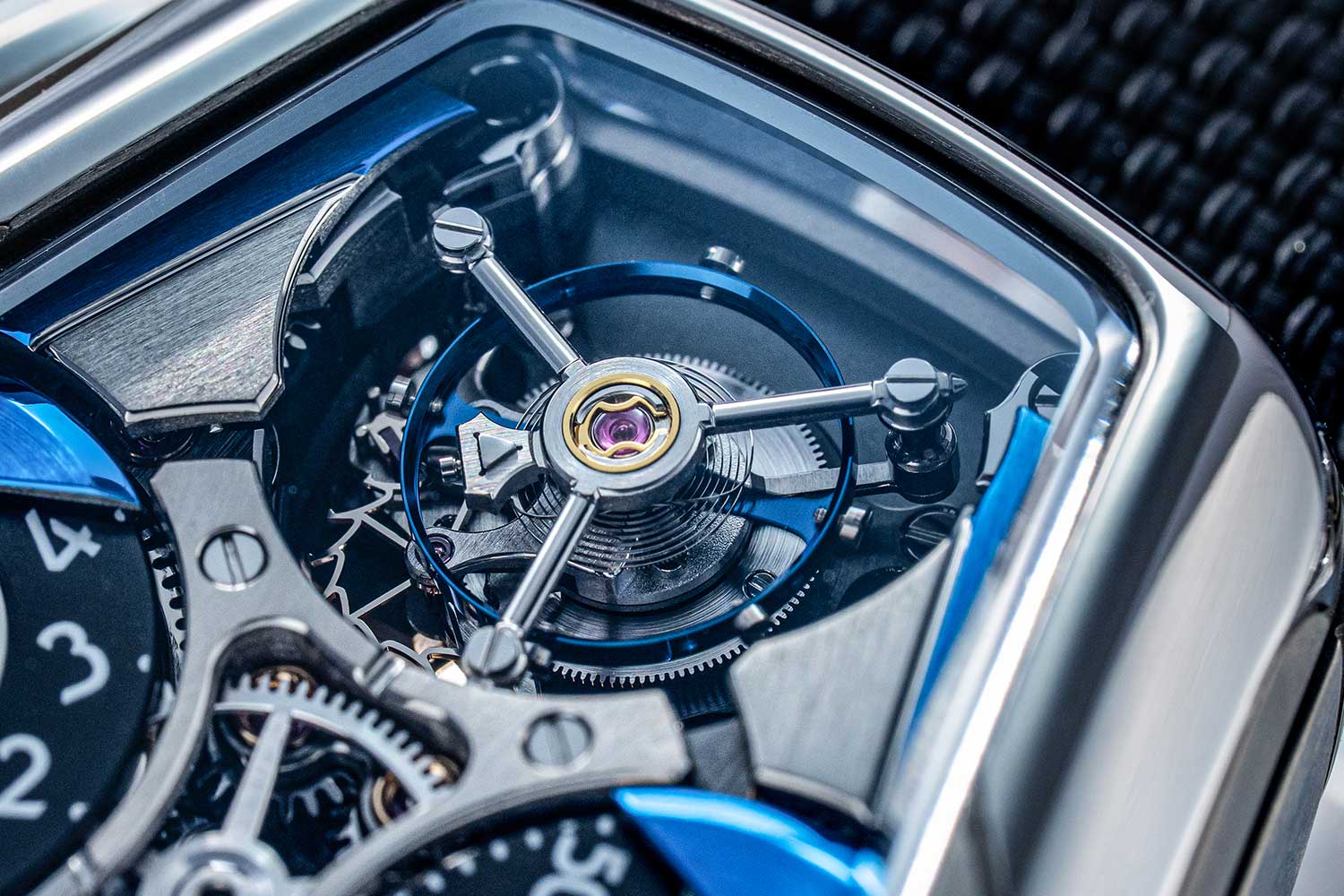
The flying tourbillon occupies the crown position and completes a full rotation every 60 seconds, giving the watch a kinetic focal point that reads like the machine’s exposed brain.
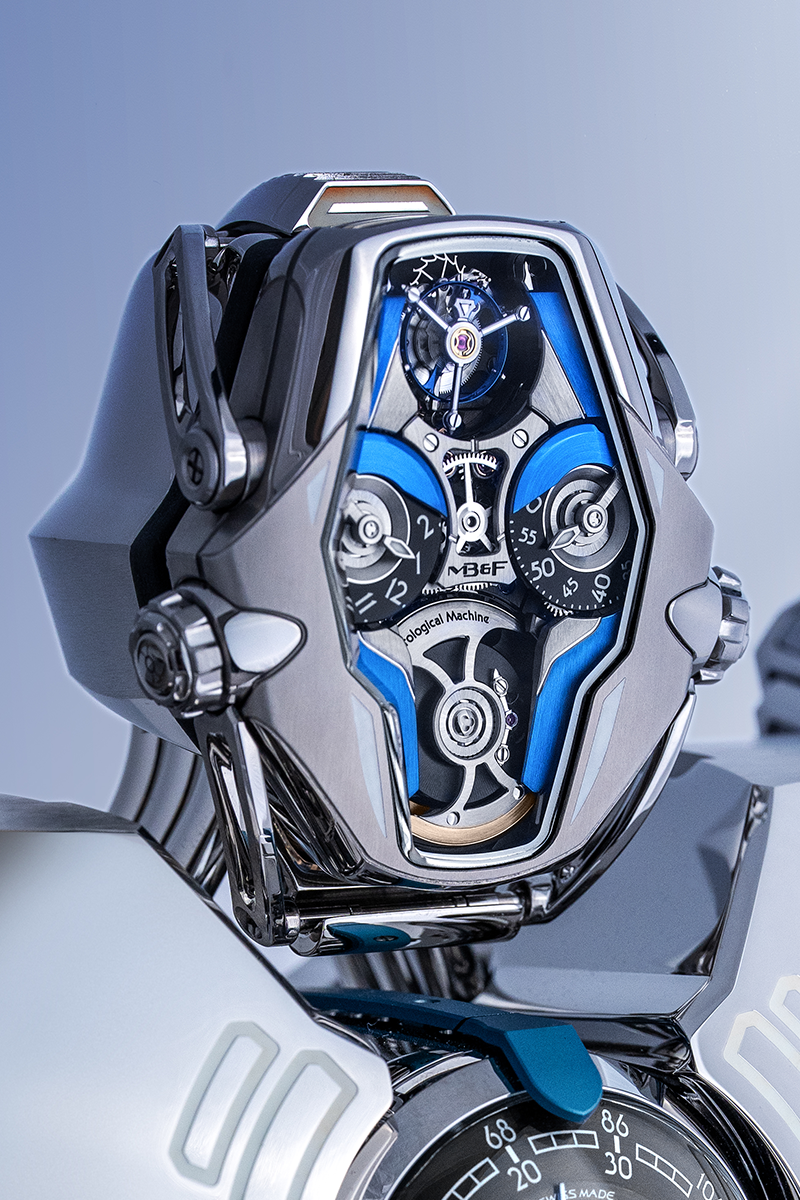
The most theatrical feature is the pair of face shields.
Turning the left-hand crown clockwise extends the shields over the dial, while turning it the other way retracts them.
When the shields reach the end of their travel, the crown disengages automatically, a small but important detail in a mechanism that exists for spectacle yet still needs to feel engineered rather than gimmicky.

The shield system uses more than 200 components, all polished and chamfered, and it operates independently of the timekeeping movement.
The right-hand crown handles time adjustment, keeping the expressive mechanical theatre separate from the job of setting the watch.
A calmer machine on the caseback
Turn the HM12 over and the personality changes.
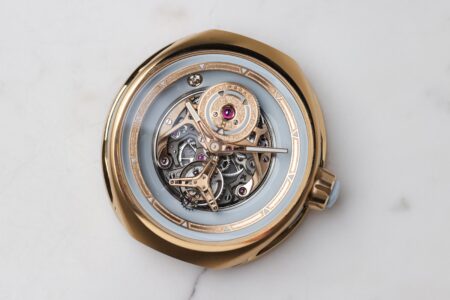
The front is the animated robot mask, but the reverse shows a more traditional strand of high-end finishing, closer in spirit to MB&F’s Legacy Machine sensibility.
The bridges are frosted, the angles are polished and the twin barrels carry snailing that turns them into a second pair of eyes.
The rear rotor is a guilloché dome made from 22k 5N rose gold, a flourish that adds warmth to a watch otherwise dominated by titanium, sapphire and dark dial elements.
Guilloché on a curved surface is a demanding exercise, and this element was executed with help from Kari Voutilainen and the team at Brodbeck Guillochage.
It’s a typically MB&F contrast, with outrageous architecture on one side and visibly disciplined hand-finishing on the other.
MB&F’s third decade begins with childhood memory
The HM12 arrives after four years of development and opens a new phase for MB&F’s Horological Machine family.
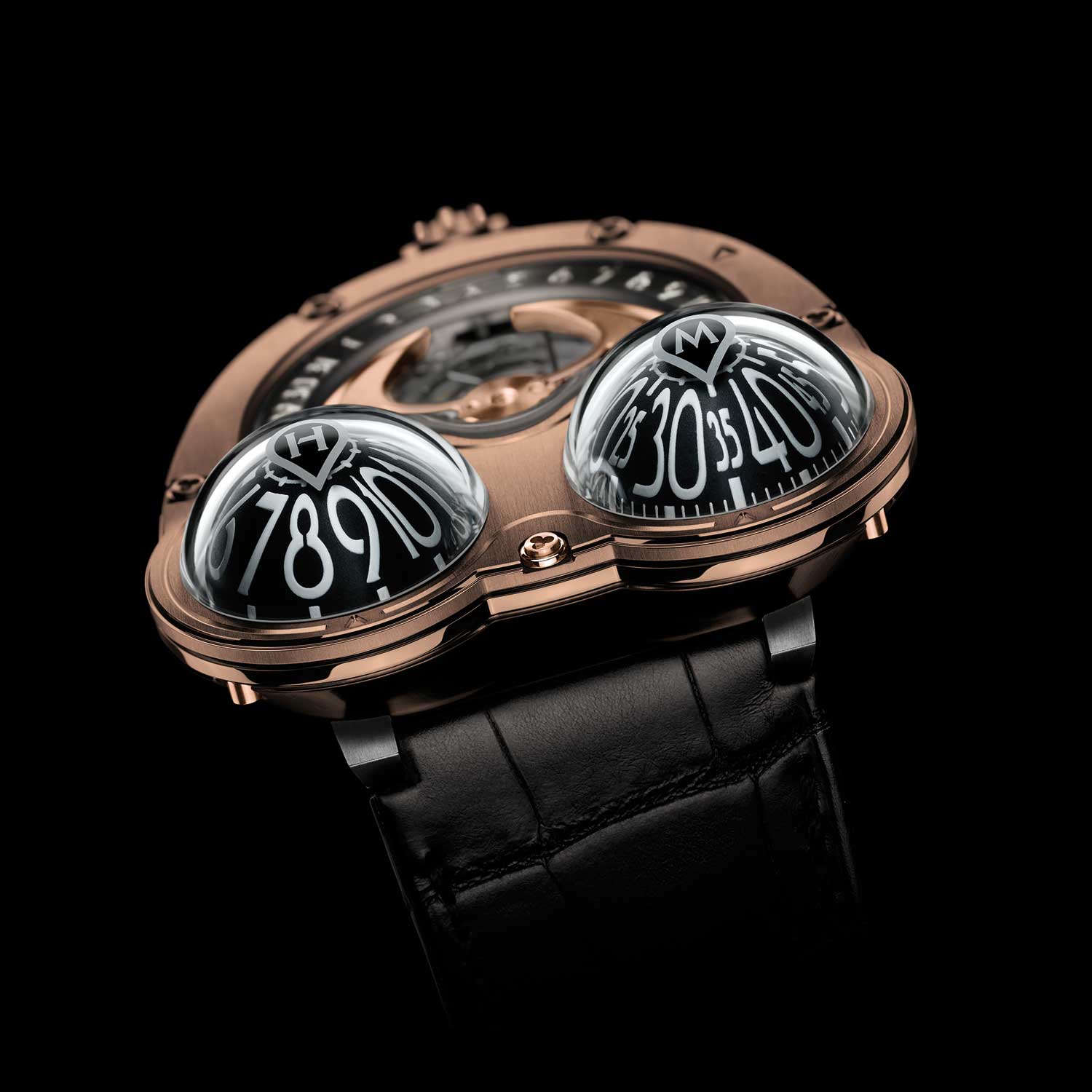
Max Büsser founded MB&F in 2005, and the first Horological Machine, HM1, arrived in 2007 as a collaborative statement from Büsser, designer Eric Giroud, movement engineer Laurent Besse and independent watchmaker Peter Speake-Marin.
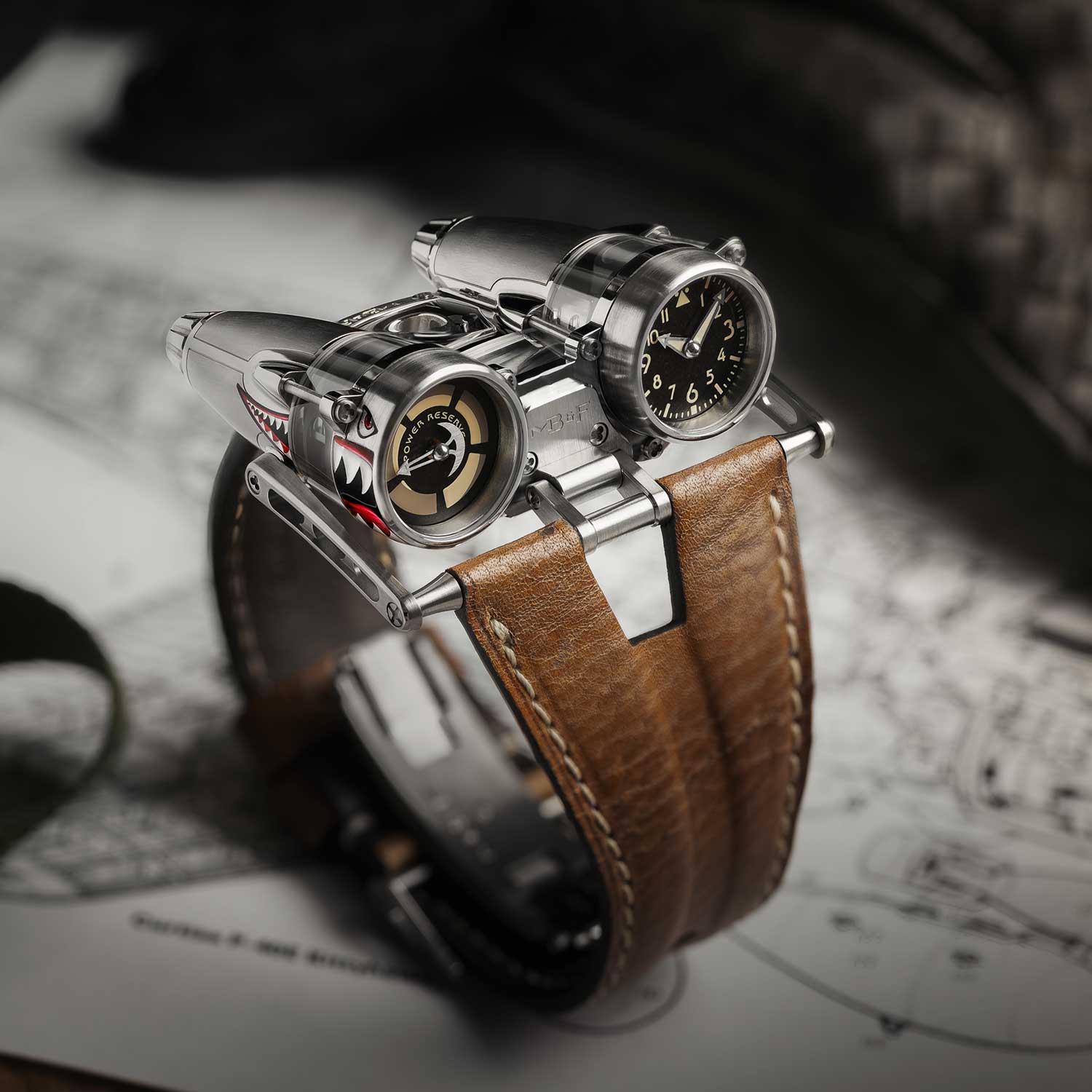
Since then, the line has produced some of the brand’s defining watches, including HM4 Thunderbolt, HM6 Space Pirate, HM3 Frog and HM10 Bulldog.
HM12 also carries the influence of creative director Max Maertens, whose 1980s robot and transforming-hero references help explain the watch’s physical presence.
It’s the kind of object that will make immediate sense to collectors who see MB&F less as a conventional watch brand and more as a studio for mechanical world-building.
Details & Specifications
| Brand | MB&F |
|---|---|
| Model | HM12 The Guardian |
| Collection | Horological Machine |
| Case material | Grade 5 titanium |
| Display | Jumping hours at 9 o’clock and trailing minutes at 3 o’clock |
| Regulating organ | Flying tourbillon positioned at the crown |
| Tourbillon rotation | 60 seconds |
| Rotor | Double-winding micro-rotor with battle-axe motif on the dial side |
| Caseback rotor | 22k 5N rose gold guilloché dome |
| Special mechanism | Mechanically operated face shields with more than 200 components |
| Operation | Left crown controls face shields, right crown adjusts time |
| Companion object | The Guardian robot watch stand |
| Availability | Watch and stand sold as a set |
HM12 The Guardian won’t be for the collector looking for understatement, and that’s precisely its point.
It takes the emotional language of robots, action figures and science fiction, then filters it through serious finishing and mechanical architecture, which is where MB&F continues to feel most at home.