M.A.D.Editions has always worked best when it treats watchmaking as a playground with serious mechanics underneath.
The new M.A.D.3 Vincent Calabrese pushes that idea into more historically charged territory, bringing one of independent watchmaking’s most quietly influential figures into the brand’s orbit.
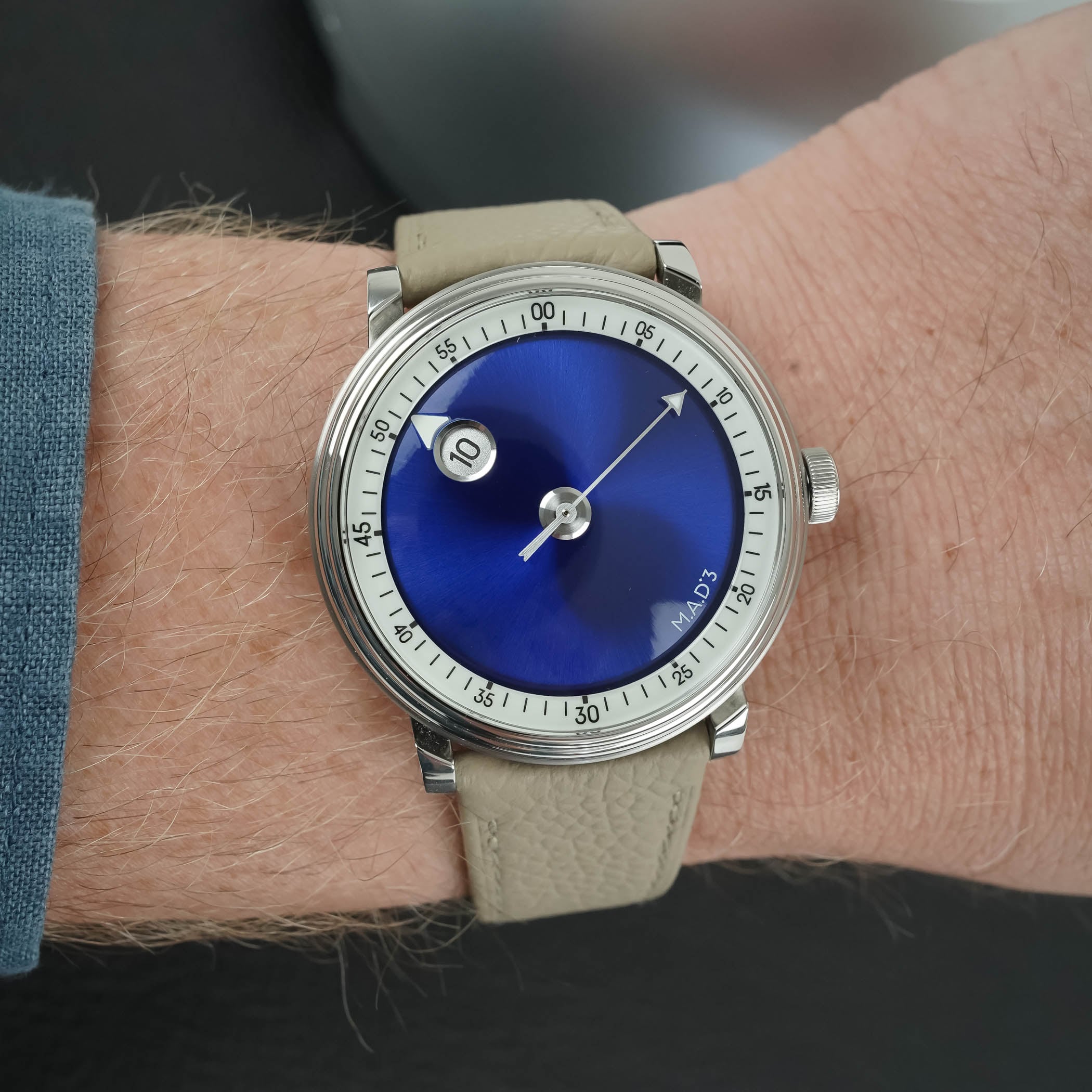
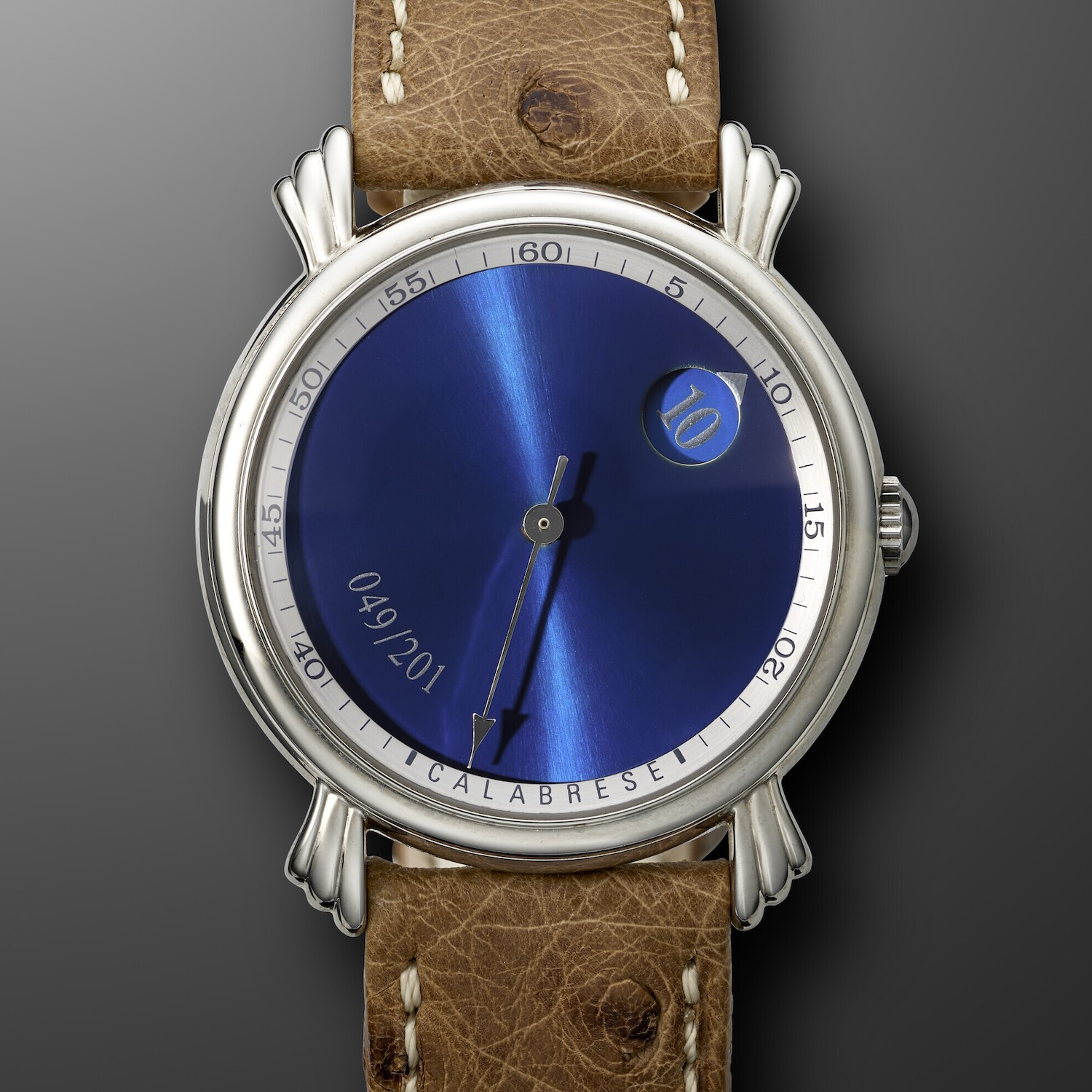
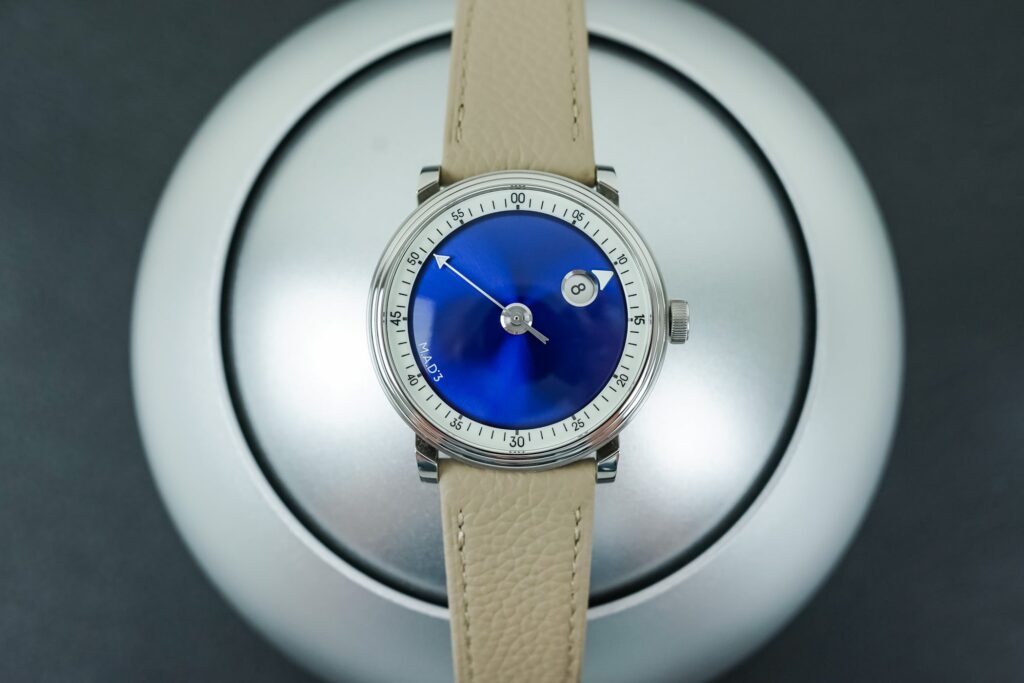
At its centre is a modern interpretation of Calabrese’s Baladin idea, a wandering jumping-hour display that turns the change of the hour into a visible, gradual event rather than a blunt mechanical snap.

At a glance
- M.A.D.Editions has introduced the M.A.D.3 Vincent Calabrese, a new watch built around a wandering jumping-hour display inspired by Calabrese’s Baladin concept.
- The watch uses an internally developed module over an optimised La Joux-Perret G111 calibre, housed in a 40mm stainless steel case designed by Eric Giroud.
- Two versions are planned, with the blue model offered through a public raffle and the pink model reserved for The Tribe and Friends, priced at CHF 2,900 excluding taxes.
Vincent Calabrese and the spirit behind the M.A.D.3
Vincent Calabrese belongs to the generation that made independent watchmaking feel possible before it became a recognised category.
Born in Naples and later established in Switzerland, he built a career around mechanical freedom, unusual displays and a willingness to challenge the habits of traditional horology.
In 1985, he co-founded the Académie Horlogère des Créateurs Indépendants with Svend Andersen, giving independent makers a shared platform at a time when their work sat well outside the industry mainstream.
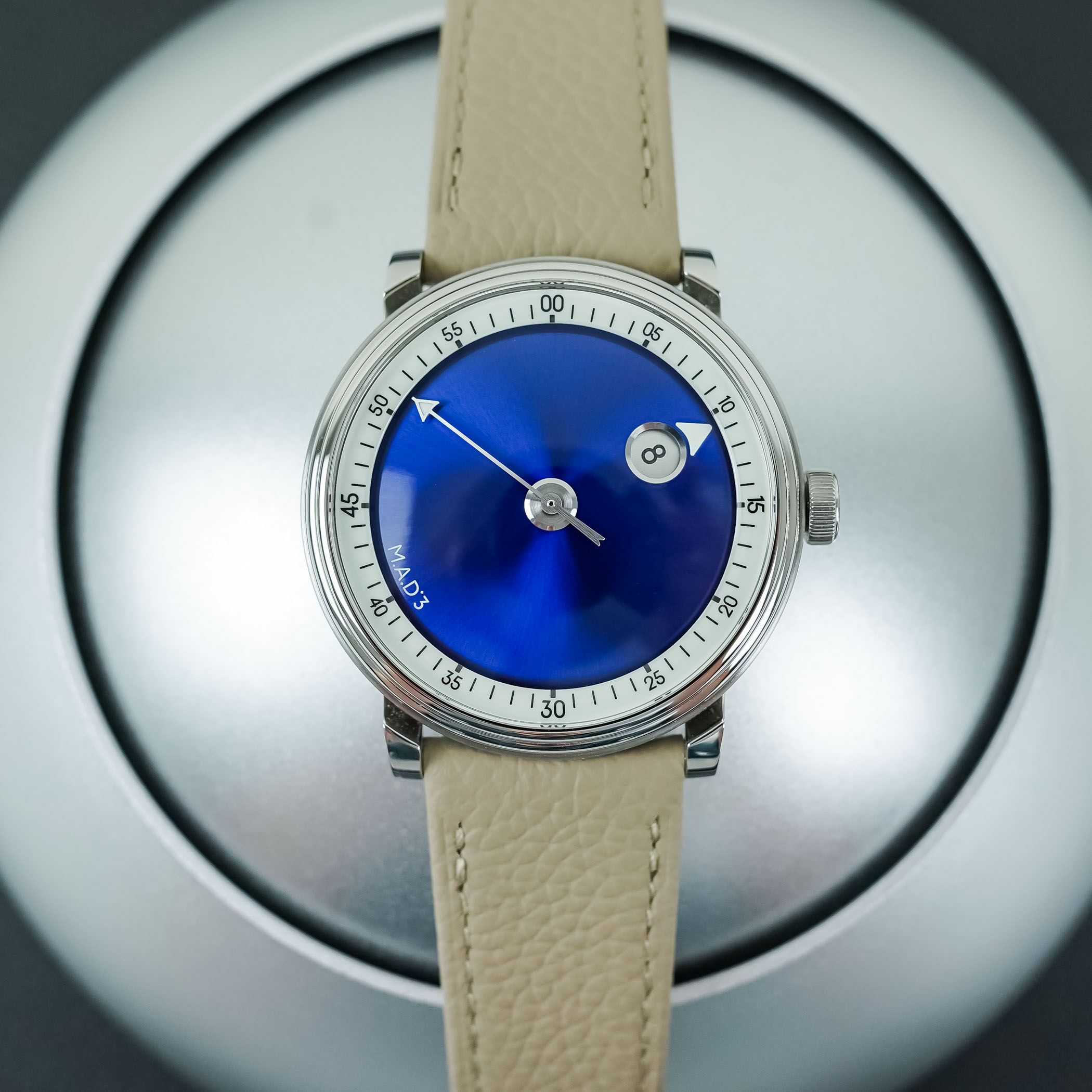
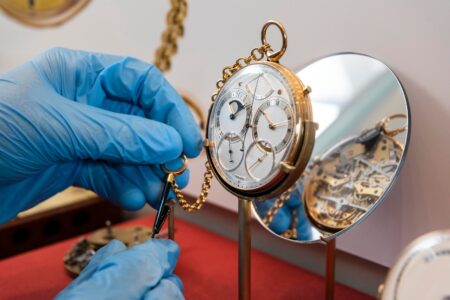
His name is also tied to the Golden Bridge for Corum, one of modern watchmaking’s most recognisable movement architectures, along with wandering hours, tourbillons and more than forty patents.
That background makes him a fitting collaborator for M.A.D.Editions, the more accessible creative offshoot connected to MB&F’s universe of unconventional watch design.
The Baladin idea becomes a modern M.A.D.Editions watch
The M.A.D.3 isn’t a nostalgic reissue, even if the visual connection to Calabrese’s Baladin is clear.
The point of the Baladin concept was to soften the suddenness of a conventional jumping-hour display.
Rather than having the hour indication simply leap from one number to the next, Calabrese wanted the passage between hours to feel more continuous.
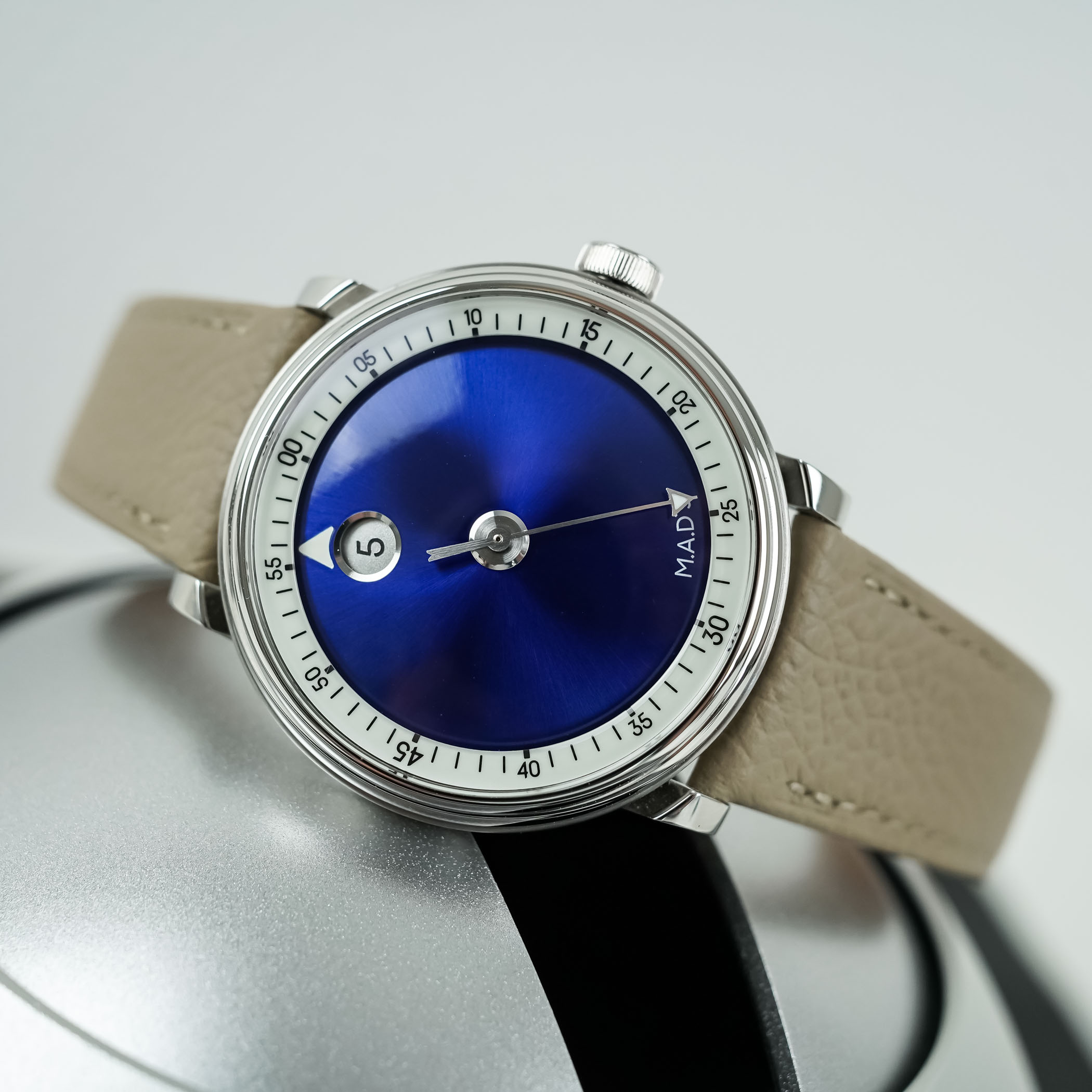
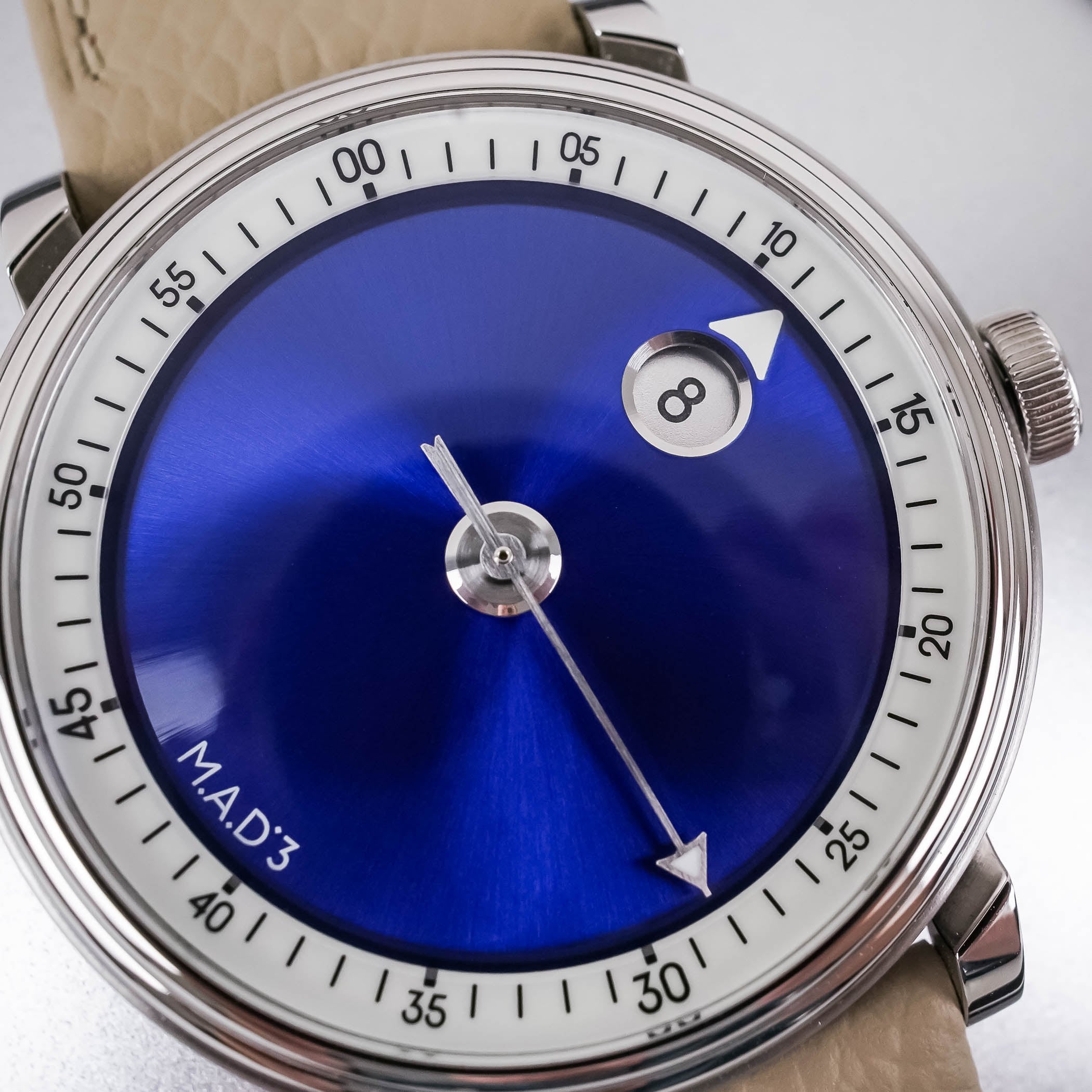
On the M.A.D.3, the hour appears in a circular window that travels around the dial over the course of an hour, while also serving as the minute indication.
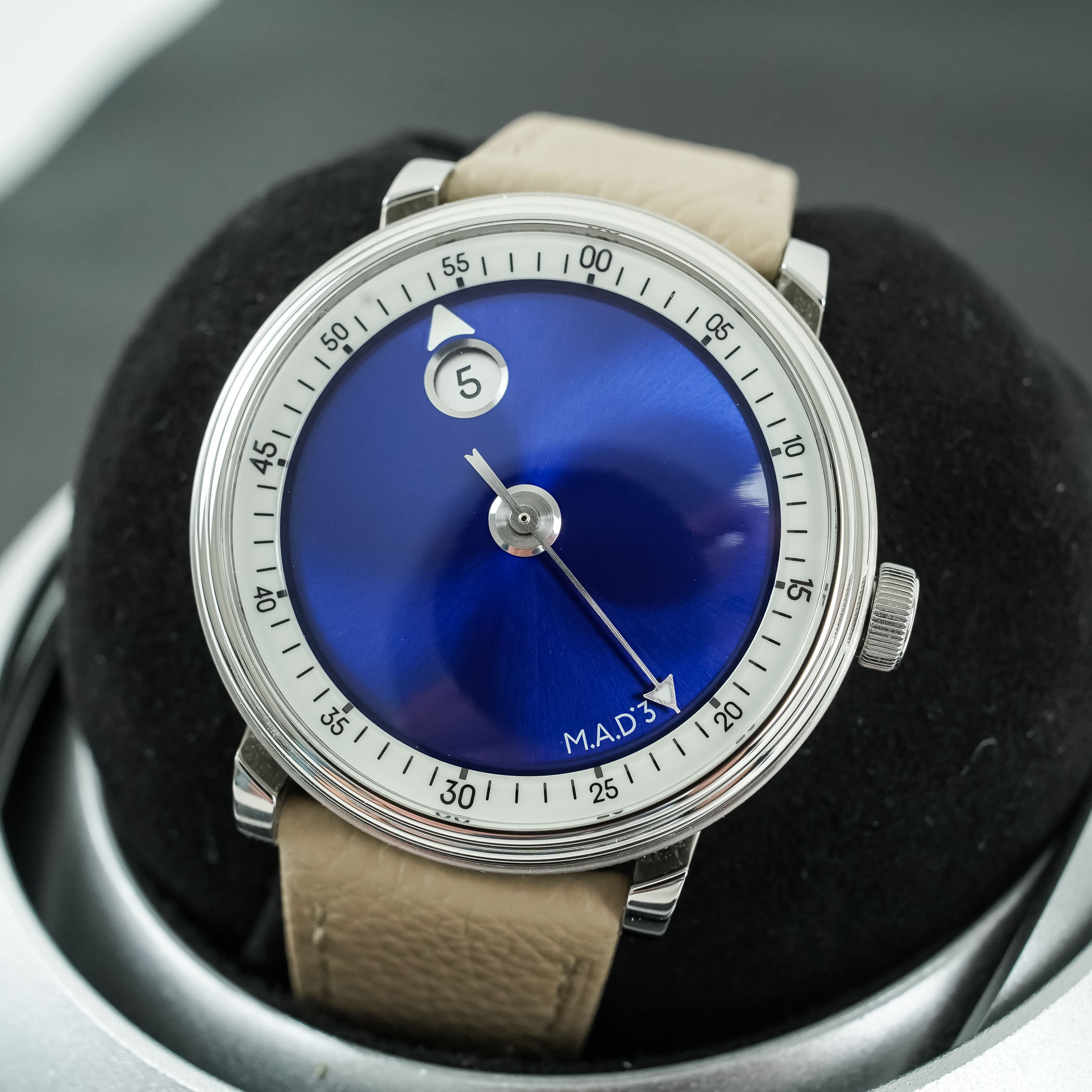
It’s a small but meaningful shift in how time is read, because the complication makes the hour change feel like part of a journey rather than an isolated mechanical action.
A central seconds hand adds another layer of motion, which is unusual for this style of jumping-hour watch but consistent with Calabrese’s own approach.
A new module with a familiar mechanical base
Turning a Calabrese-style wandering jumping hour into a repeatable M.A.D.Editions watch required more than cosmetic adaptation.
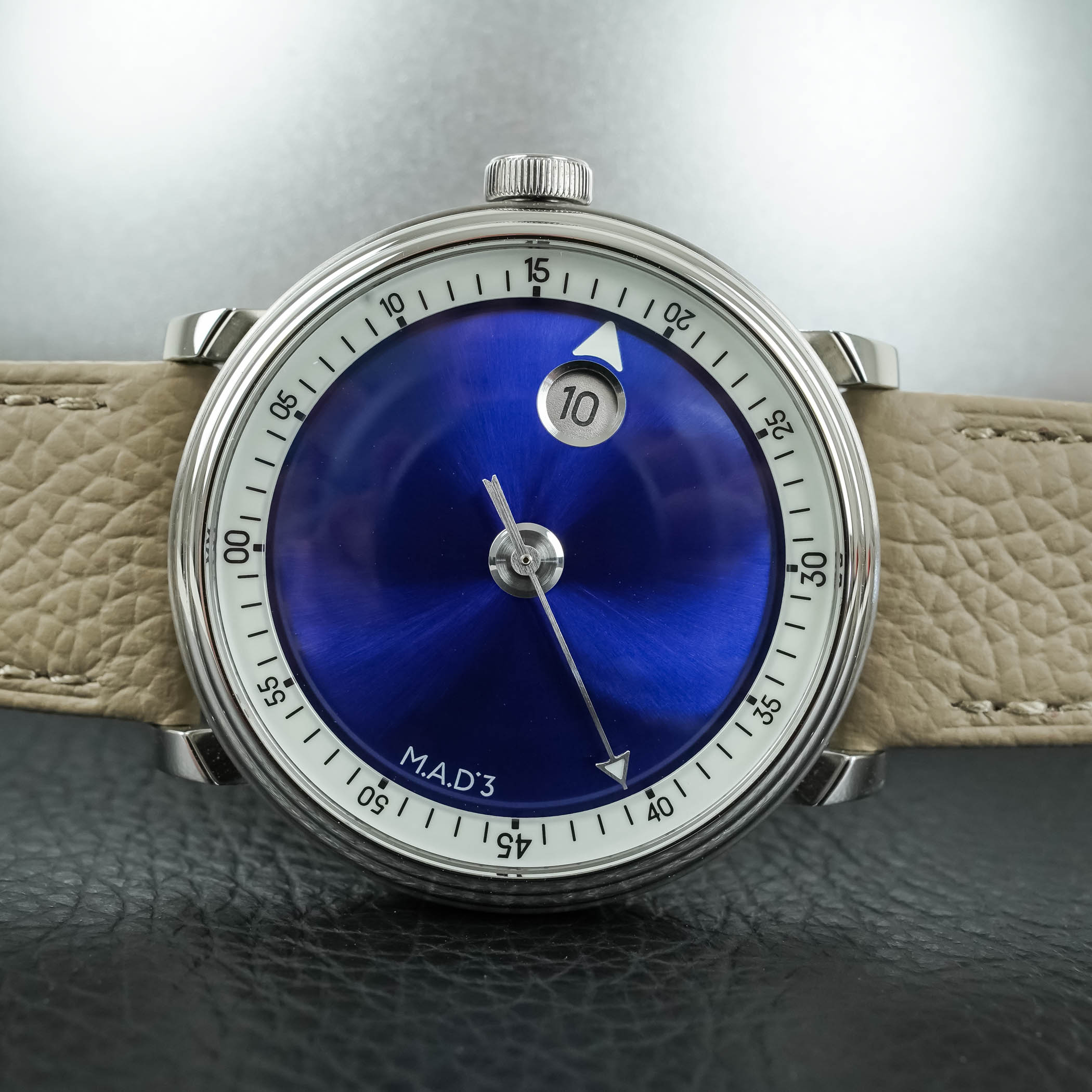
The wandering-hours module was developed internally, with a focus on preserving the progressive hour transition while improving reliability, stability and energy delivery.
It runs over an optimised La Joux-Perret G111 calibre, the same movement family used as the technical base for the M.A.D.1S and M.A.D.2.
For this application, the calibre was adjusted to better manage the complication’s energy requirements, with tighter tolerances and improved amplitude control.
That work matters because this is exactly where accessible independent-minded watchmaking can succeed or fail.
The charm of the display has to survive the move into broader production without becoming fragile, temperamental or prohibitively expensive.
Eric Giroud’s case keeps the M.A.D. attitude in check
The case, designed by Eric Giroud, is more restrained than earlier M.A.D.Editions pieces without losing the brand’s mechanical character.
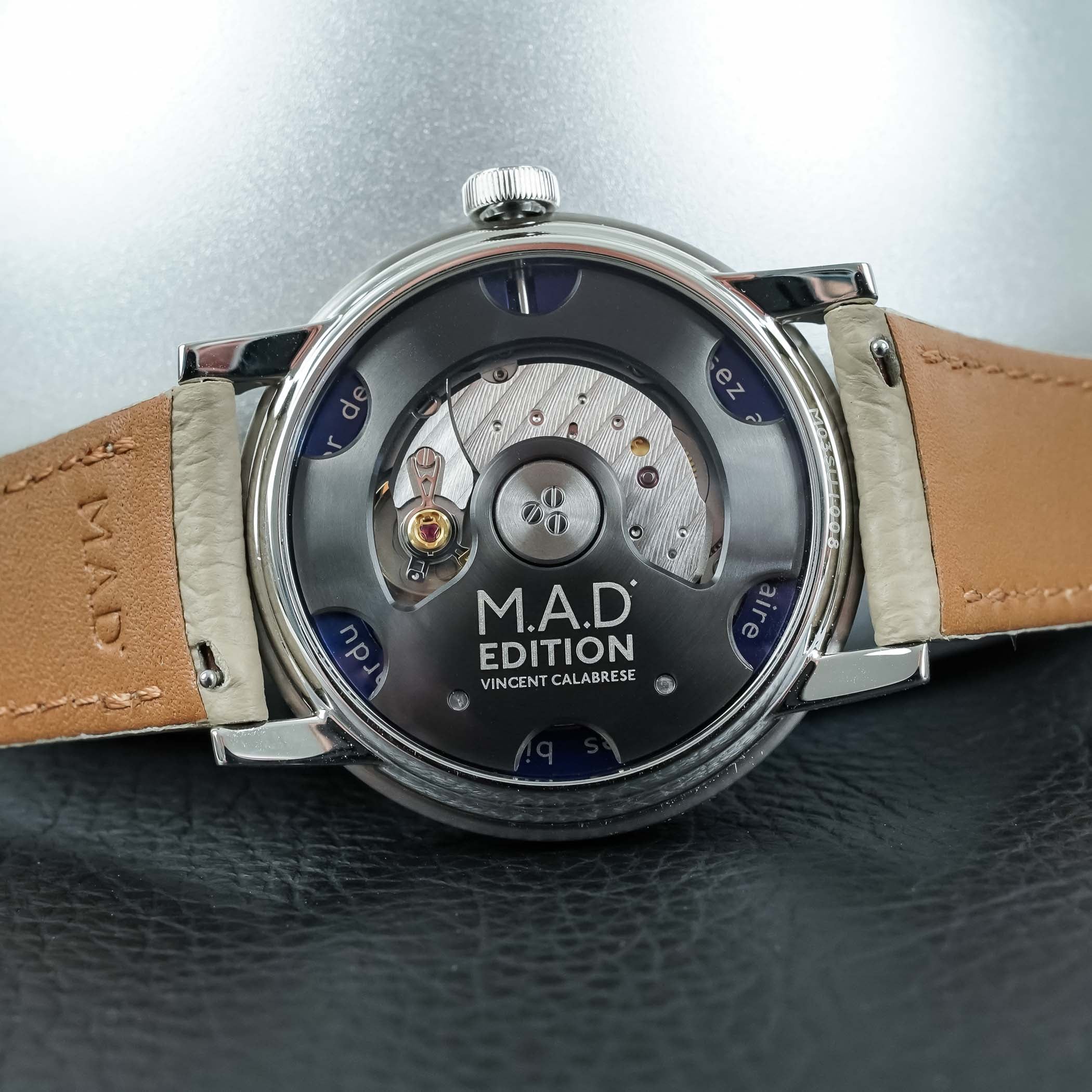
It measures 40mm across, 43.7mm lug-to-lug and 12.7mm thick, with stainless steel construction, floating lugs, a double-step bezel and domed sapphire crystals on both sides.
The proportions are sensible, especially for a watch with such an animated display.
The dial stays close to the logic of the Baladin while adding modern details, including Super-LumiNova on the white inner minute flange, the hour disc and the arrow pointer.
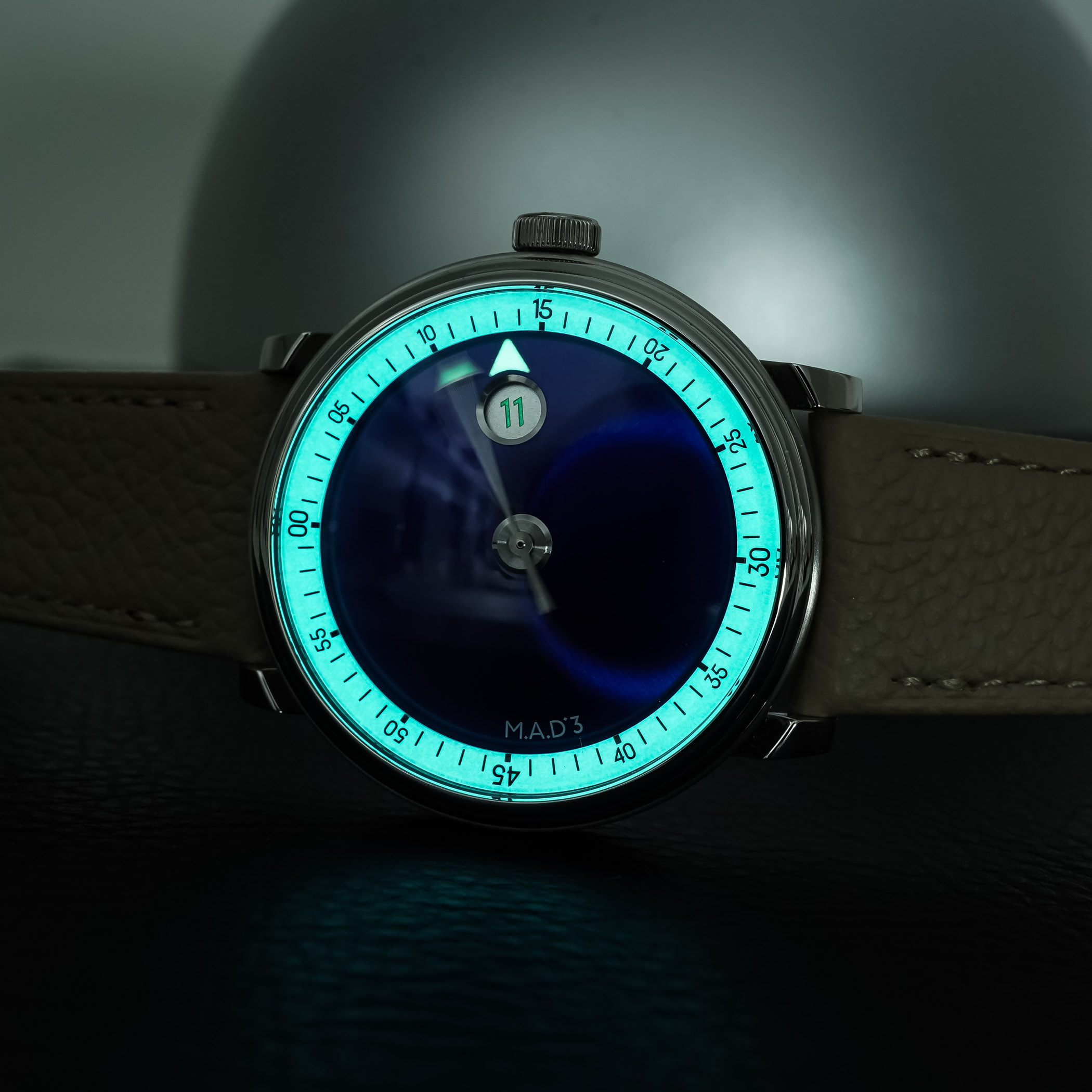
That lume treatment gives the watch a different personality after dark, turning what could have been an academic complication into something more playful and immediate.
Both announced versions are fitted to a beige leather strap with a stainless steel folding buckle.
Details & Specifications
| Brand | M.A.D.Editions |
|---|---|
| Model | M.A.D.3 Vincent Calabrese |
| Case size | 40mm diameter, 12.7mm thickness, 43.7mm lug-to-lug |
| Case material | Stainless steel with brushed and polished finishing |
| Case architecture | Floating lugs, double-step bezel and domed sapphire crystals front and back |
| Display | Wandering jumping hour with minute indication and central seconds |
| Movement | Optimised La Joux-Perret G111 calibre with internally developed wandering-hours module |
| Dial details | Super-LumiNova on the inner minute flange, hour disc and arrow pointer |
| Versions | Blue public raffle model and pink model for The Tribe and Friends |
| Strap | Beige leather strap |
| Buckle | Stainless steel folding buckle |
| Price | CHF 2,900 excluding taxes |
| Availability | Blue version offered through a public raffle, with raffle details to be published by M.A.D.Editions |
The M.A.D.3 Vincent Calabrese feels like a strong fit for collectors who enjoy independent watchmaking’s more experimental lineage but don’t want the distance, cost or delicacy often attached to it.
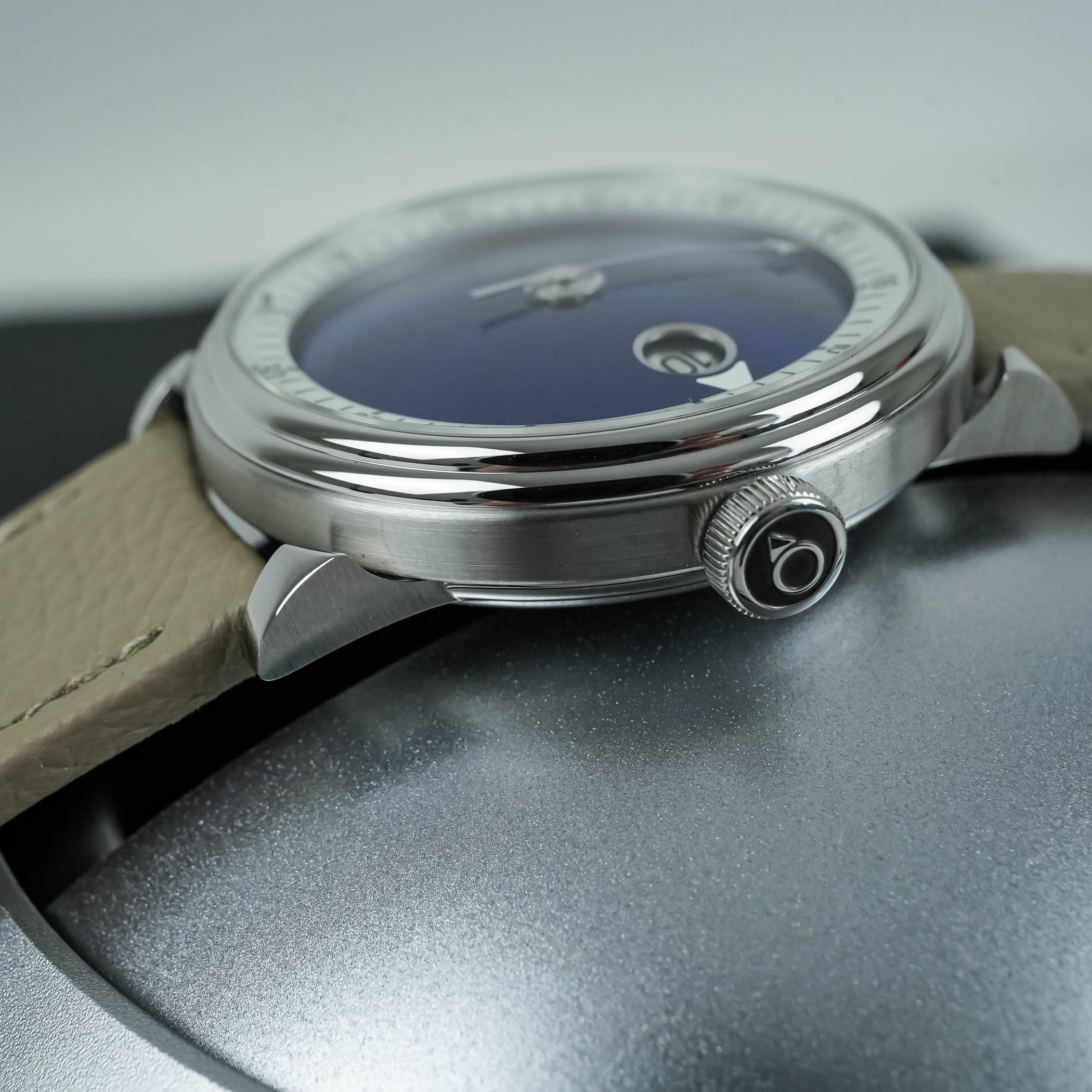
It’s respectful of Calabrese’s work without feeling frozen in the past, and it gives M.A.D.Editions its most historically grounded watch to date.