Ferrari Luce has become an unexpected flashpoint in the supercar world, drawing sharp reactions well beyond the usual electric-vehicle debate.
For Lamborghini, the timing has made its own strategy look less like hesitation and more like a calculated pause.
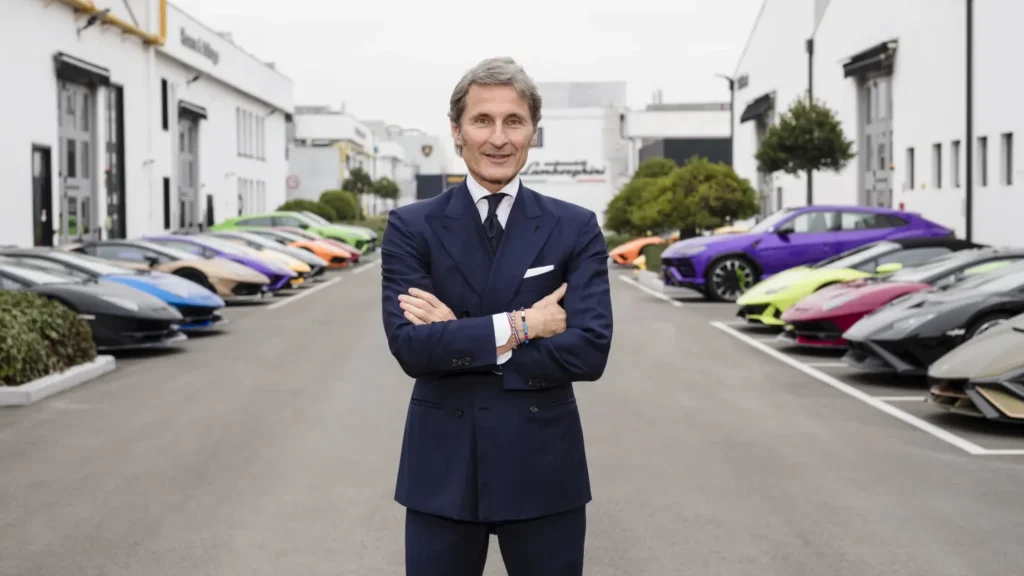
CEO Stephan Winkelmann has made clear that moving away from a full-EV path was the right decision for the brand, with Sant’Agata now putting its weight behind plug-in hybrids.
At a glance
- Lamborghini has cooled its full-electric plans while Ferrari Luce faces heavy backlash.
- The brand is prioritising plug-in hybrids rather than pushing ahead with an all-electric Lanzador-style model or an EV Urus.
- Winkelmann says Lamborghini customers aren’t moving toward full electrification as quickly as the wider industry once expected.
Winkelmann’s read on Lamborghini buyers
Stephan Winkelmann’s position is simple enough. Lamborghini customers still want electrification to serve the driving experience, not replace the character they expect from the badge.
That distinction matters in the upper end of the performance-car market, where sound, response, theatre and emotional identity carry as much weight as acceleration figures.
Winkelmann has indicated that Lamborghini’s clientele hasn’t embraced full battery-electric cars at the pace many manufacturers anticipated.
For a marque built around combustion-era drama, that makes plug-in hybrid technology a more natural bridge than a hard pivot into silent performance.
The Lanzador and electric Urus plans move off the front line
Lamborghini had been developing an all-electric model widely expected to evolve from the Lanzador concept.
An electric version of the Urus had also been part of the conversation, giving the brand a potential EV route through its highest-volume model line.
Both projects have now been shelved, shifting attention back to hybridisation across the range.
That doesn’t mean Lamborghini is rejecting electrification outright.
It means the company is choosing a form of electrification it believes better fits the way its customers currently use and desire its cars.
Ferrari Luce has sharpened the debate
The reaction to Ferrari Luce has underlined how sensitive the first wave of electric supercars remains.
For buyers and enthusiasts, the question isn’t only whether an EV can be fast, because that part has already been answered by the wider market.
The harder question is whether a fully electric supercar can feel culturally and emotionally convincing under a badge built on combustion heritage.
Lamborghini appears unwilling to force that answer before its audience is ready.
A wider industry reset on EV timing
Lamborghini’s recalibration doesn’t sit in isolation.
With the backing of Volkswagen Group, the Italian marque is part of a broader industry mood in which several manufacturers are reassessing aggressive EV timelines as demand proves softer than expected.
In that context, plug-in hybrids offer a pragmatic middle ground.
They allow Lamborghini to meet regulatory pressure and improve efficiency while preserving the sensory side of its cars.
For collectors and customers, the message is equally clear. Lamborghini’s next chapter is still electrified, but it won’t rush to become fully electric just to satisfy a timetable the market itself is now questioning.