Konstantin Chaykin has unveiled the SC02C, a mechanical chronograph developed for Russian cosmonauts and tested during multiple spacewalks outside the International Space Station.
Originally created as a professional instrument for extravehicular activity, the watch is now being offered to civilian collectors for the first time. Just 28 examples will be made, each housed in a 44 mm stainless steel case and adapted for everyday use.
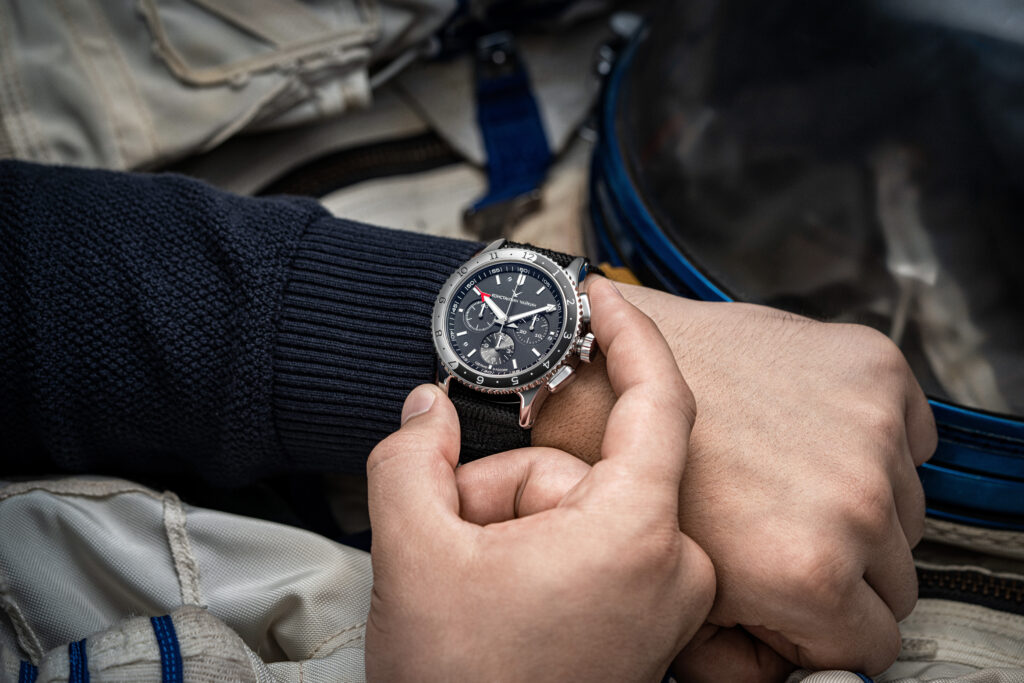
The project is more than a commemorative exercise. Owners will be invited to provide feedback on the watch in real-world conditions, adding another layer of data to a research program that has been running since 2018.
At a glance
- The SC02C evolved from chronographs tested during four spacewalks outside the International Space Station.
- Its hand-wound K.20-5 movement is based on the Poljot 3133 and incorporates 60 components made by Konstantin Chaykin.
- Production is limited to 28 pieces, with each watch supplied with both a standard strap and an extended version designed to fit over a spacesuit.
Four Spacewalks Helped Shape the SC02C
Konstantin Chaykin’s collaboration with Roscosmos began with a straightforward brief: develop a mechanical chronograph capable of accompanying cosmonauts during extravehicular activity.
The project has since evolved into an ongoing research program. Rather than designing the watch around theoretical requirements alone, successive prototypes have been tested during actual missions with the results feeding directly into later versions.
Two Space Conqueror prototypes reached the International Space Station in April 2021. One remained inside while another was worn by cosmonaut Oleg Novitsky during spacewalks on June 2 and September 9 that year.
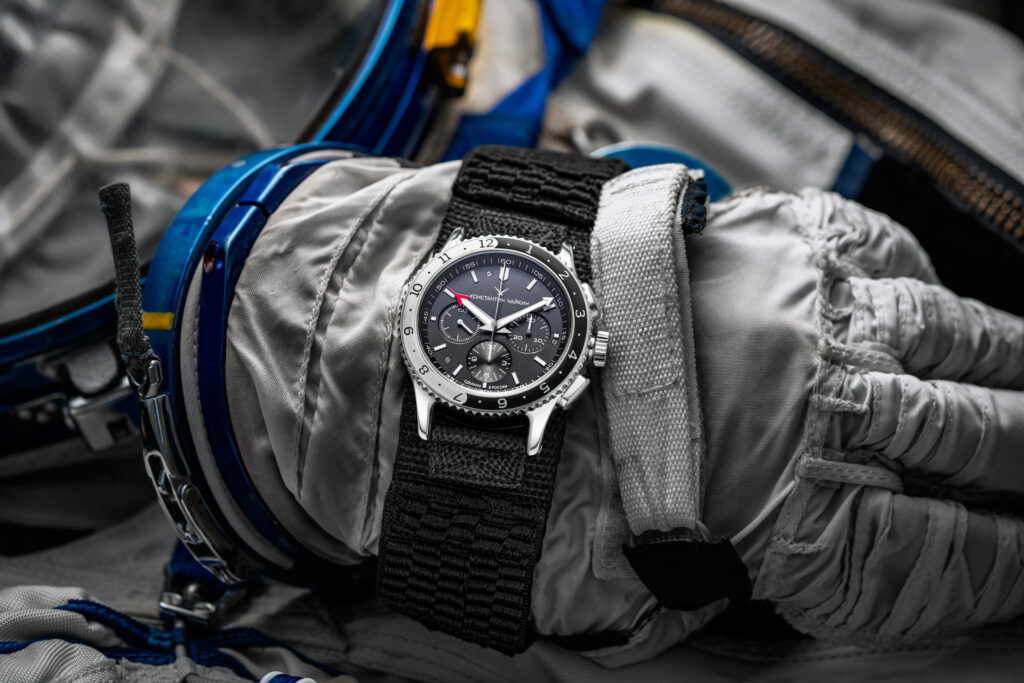
Once the watches returned to Earth, Konstantin Chaykin analysed their performance and revised the way the sapphire crystal was secured to the case. An updated chronograph returned outside the ISS with Oleg Artemyev on August 17, 2022.
The most recent test took place on May 27, 2026, when Sergey Kud-Sverchkov and Sergey Mikayev spent six hours and six minutes outside the station with new-generation chronographs attached to their Orlan-MKS spacesuits.
That brings the project’s total to four spacewalks. The SC02C now moves the testing program back to Earth, where owners of the 28 production watches will be able to contribute feedback from everyday use.
Its Design Is More Functional Than It First Appears
The SC02C is relatively conventional by Konstantin Chaykin standards, particularly when compared with the watchmaker’s more theatrical creations. Look closer, though, and most of its design decisions have a practical purpose.
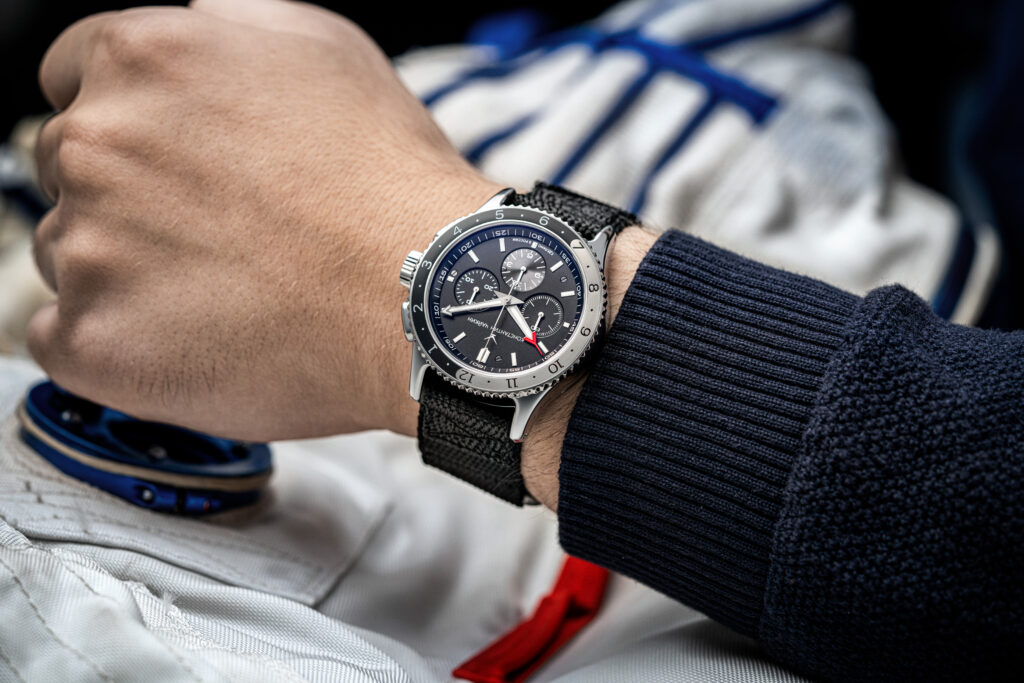
Its deep black dial uses three counters, oversized hour markers and large polished hands to prioritise legibility. Luminous material is applied to the hands, markers and bezel while the sapphire crystal receives an anti-reflective coating.
The red-tipped hour hand continues a visual theme first seen on the Mars Conqueror Mk3, but it also works with the rotating 12-hour bezel as an additional timing system.
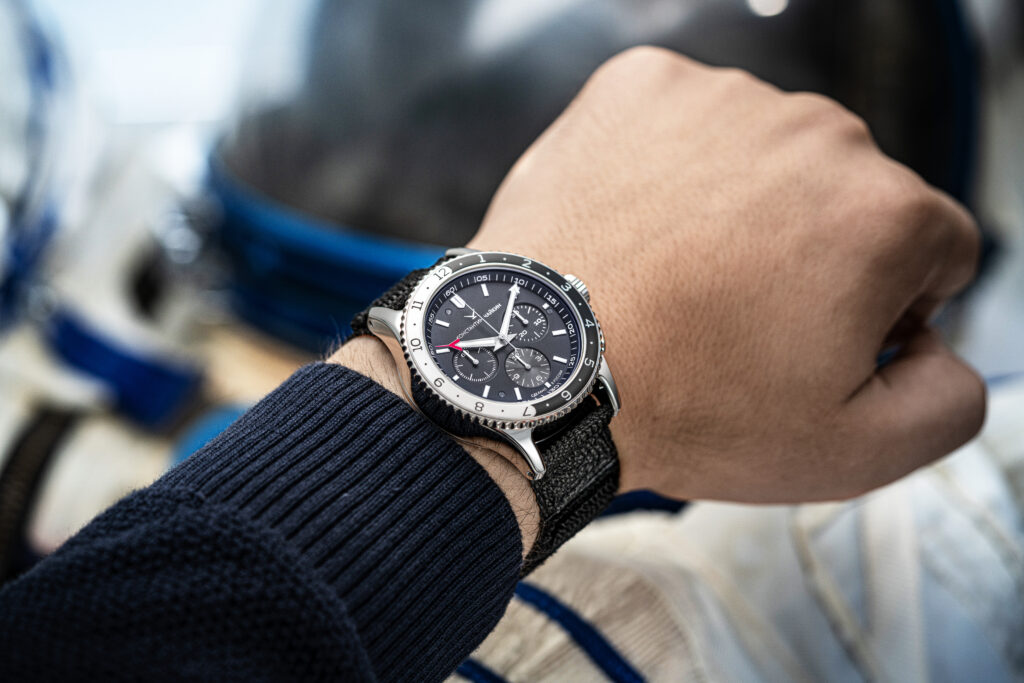
Align the bezel’s 12 marker with the hour hand at the beginning of an interval and the elapsed time can later be read against the hand’s new position. It is a simple secondary timing method that does not rely on the chronograph mechanism.
The watch is also supplied with two black fabric straps. One is sized for normal wrist wear while the second is long enough to secure the SC02C over a spacesuit.
The Case Was Built to Deal With Pressure, Magnetism and Impact
Spaceflight creates requirements that rarely matter to conventional mechanical watches, so the SC02C incorporates several forms of protection beyond the usual water resistance.
An antimagnetic cover shields the movement against magnetic fields of up to 4,800 A/m. The sapphire crystal is secured using what Konstantin Chaykin describes as a reverse dovetail construction, with its bevelled profile helping prevent it from being forced out by pressure changes or extreme loads.
The stainless steel case is water-resistant to 10 ATM and is also designed to operate in high-vacuum conditions down to a pressure of 1 × 10⁻⁶ atmospheres.
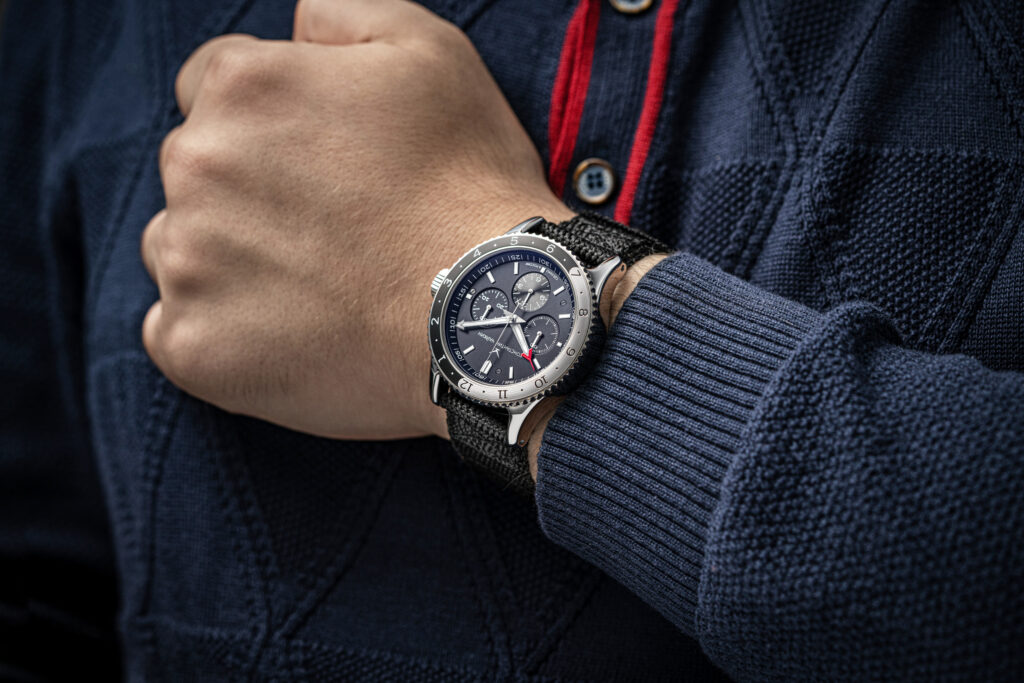
Before the chronographs travelled to the ISS, Konstantin Chaykin’s research and development division subjected them to centrifuge testing, vibration testing, extreme temperatures and impact tests.
Production watches undergo their own multi-stage quality control, including accuracy testing in five positions plus checks for power reserve, water resistance and resistance to external influences.
Even the strap mounting received additional attention. Its pins use two extra locking threads intended to reduce the risk of accidental unscrewing.
A Modified Poljot 3133 Sits Inside
Perhaps the most interesting decision concerns the movement.
Konstantin Chaykin could have developed an entirely new manufacture calibre for the project but deliberately chose not to. For a watch intended to be tested outside a spacecraft, proven reliability mattered more than creating something new for its own sake.
The starting point was therefore the Poljot 3133, a hand-wound chronograph calibre with decades of service history.
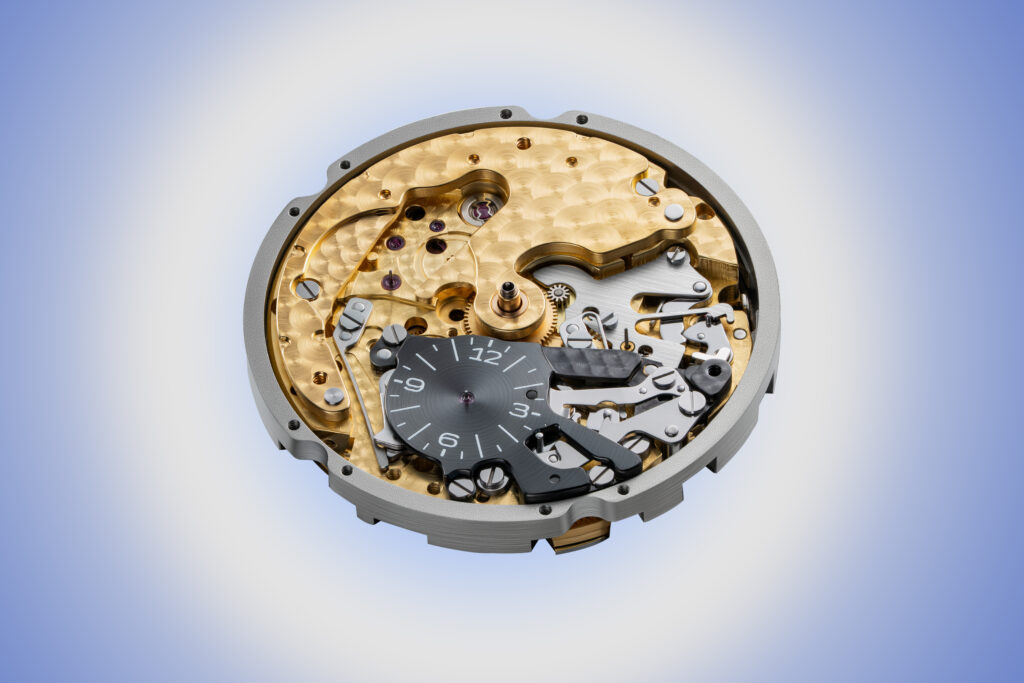
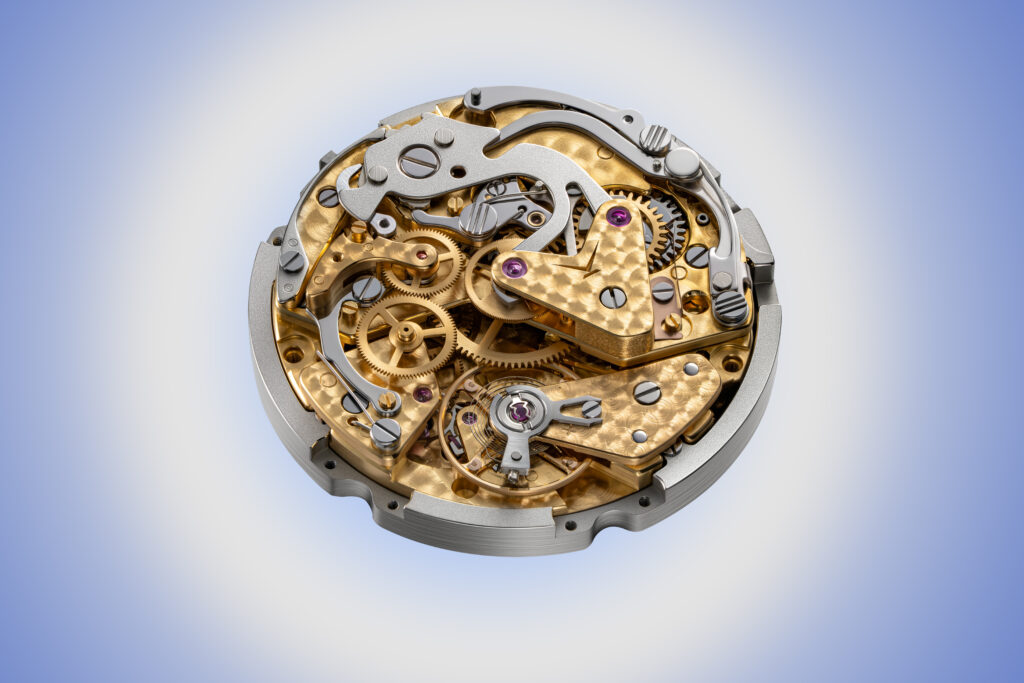
Konstantin Chaykin substantially reworked the movement to create the K.20-5, adding 60 manufacture-made components. The modified calibre gains a 12-hour chronograph counter, stop-seconds functionality and a balance with micrometric adjustment using weights rather than a conventional index regulator.
A damping ring provides additional protection against vibration and overloads.
The movement runs at 21,600 vibrations per hour, uses 25 jewels and delivers a 45-hour power reserve.
Despite being hidden behind a solid caseback, its components are finished to haute horlogerie standards. That solid back is deliberate too, providing another protective layer around the movement rather than putting it on display.
Konstantin Chaykin is also offering unusual servicing terms. If an impact or fall causes the watch to malfunction, the Manufacture says it will restore the mechanism to full working order free of charge while retaining external wear marks accumulated by the owner.
The Movement Also Links the Watch to Spaceflight History
Using the Poljot architecture gives the SC02C a historical connection that stretches back well beyond the current research program.
During the first human spacewalk in 1965, Alexei Leonov wore a Strela chronograph produced by the First Moscow Watch Factory. That watch used the calibre 3017, which was later succeeded by the 3133 family during the 1970s.
The SC02C therefore combines modern testing with a mechanical lineage closely associated with Soviet and Russian spaceflight.
It also fits into Konstantin Chaykin’s broader fascination with time beyond Earth.
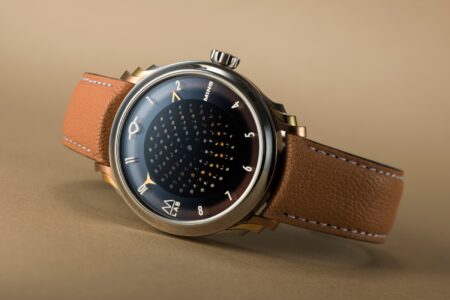
His Space Program began in 2011 with the Lunokhod and its patented spherical moon-phase display. That interest later expanded towards Mars, resulting in projects including the Mars Conqueror Mk1, Mars Conqueror Mk3, a Martian perpetual calendar and a Martian Tourbillon.
Chaykin has even developed a 270-part mechanical module capable of indicating the changing distance between Earth and Mars.
The SC02C is considerably more grounded than those conceptual pieces, but that may be precisely what makes it interesting. It is not a watch imagining what space exploration might require one day. Parts of its design have already been tested outside the planet.
Details & Specifications
| Specification | Konstantin Chaykin SC02C |
|---|---|
| Movement | Hand-wound K.20-5, based on the Poljot 3133 with 60 manufacture-made components |
| Frequency | 21,600 vibrations per hour |
| Jewels | 25 |
| Power reserve | 45 hours |
| Accuracy | -15/+15 seconds per day |
| Functions | Hours, minutes, small seconds, central chronograph seconds, 30-minute counter, 12-hour counter and additional timing via rotating bezel |
| Case | Stainless steel |
| Diameter | 44 mm |
| Height | 14.5 mm |
| Bezel | Unidirectional rotating bezel with 12-hour scale and luminous elements, 45.1 mm diameter |
| Crystal | Sapphire with anti-reflective coating and reverse dovetail mounting |
| Water resistance | 10 ATM |
| Antimagnetic protection | Up to 4,800 A/m |
| Vacuum resistance | Designed for conditions down to 1 × 10⁻⁶ ATM |
| Caseback | Solid with themed 3D engraving |
| Straps | Two black fabric straps, standard length and extended spacesuit version |
| Limited edition | 28 pieces |
There are plenty of watches inspired by space travel, but considerably fewer that have had their engineering developed through actual exposure to the environment they reference.
That distinction gives the SC02C a compelling reason to exist beyond its limited production run. It is a sizeable, highly specialised mechanical chronograph, but its unusual construction and four-spacewalk development history make those compromises easier to understand.
For the 28 owners who eventually receive one, the more interesting proposition may be that the experiment is not quite finished yet.