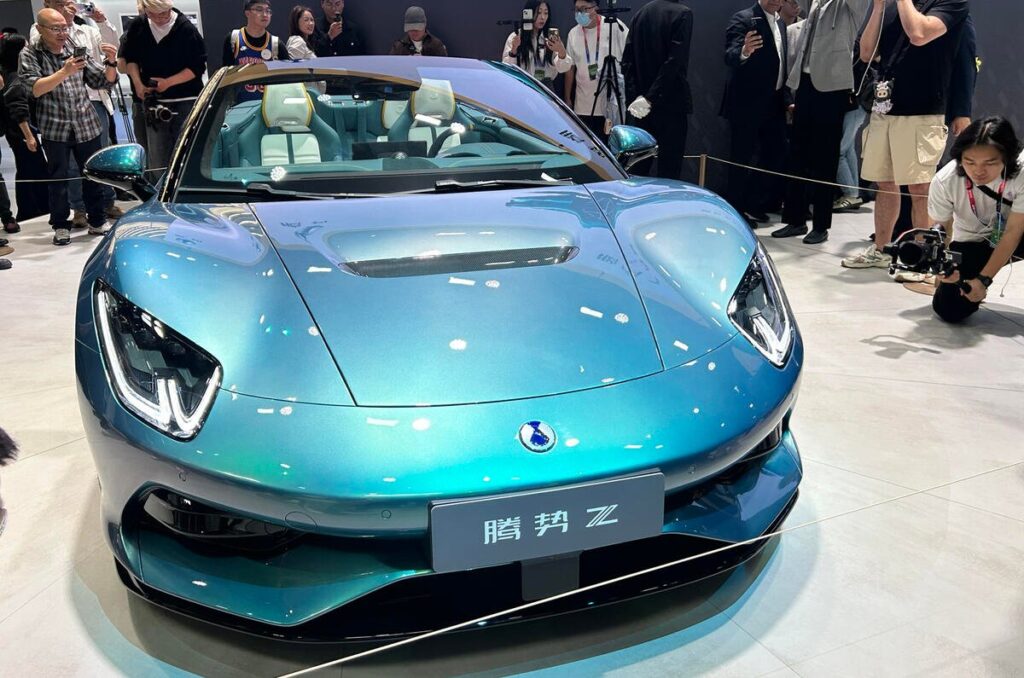
Denza is preparing to make a very direct statement in the electric performance world with the Z, a 2+2 roadster from BYD’s premium division.
The headline figures are hard to ignore, but the more interesting story is where Denza wants to take the car first. Rather than beginning quietly at home, the Z is being positioned for a European launch, putting it in front of some of the most established luxury and performance names in the market.
At a glance
- Denza’s Z is a tri-motor electric 2+2 roadster with a combined output of 1,582 hp.
- The quickest version is claimed to reach 62 mph in under 2.0 seconds and top out at 217 mph.
- Denza plans to introduce the Z in Europe first, with pricing yet to be confirmed.
A tri-motor roadster with serious numbers
The Denza Z uses a three-motor setup, with one motor at the front axle and two at the rear.
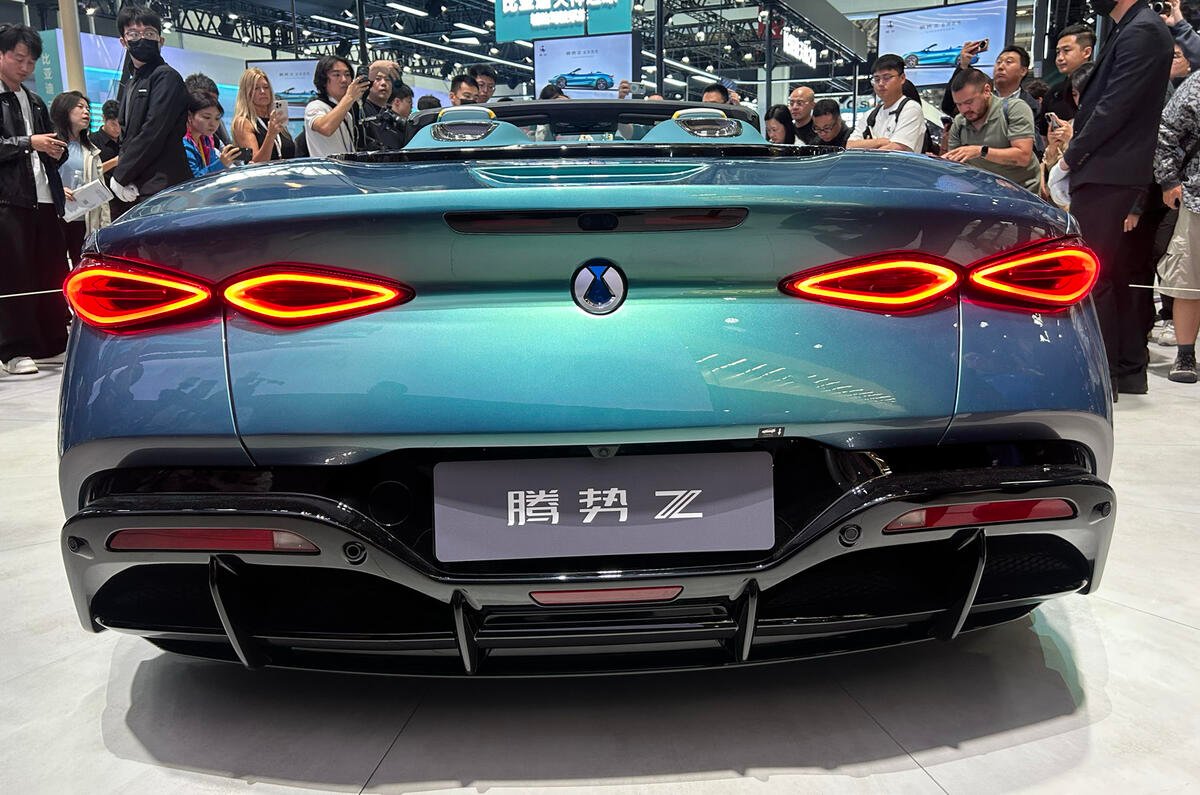
Together, the system produces a combined 1,582 hp, placing the car among the most powerful electric performance machines currently moving toward production.
The acceleration claim is the figure that will pull the most attention.
Denza says the Z can run from 0 to 62 mph in under 2.0 seconds, a number that puts it in the conversation with the fastest EV hypercars rather than conventional grand tourers.
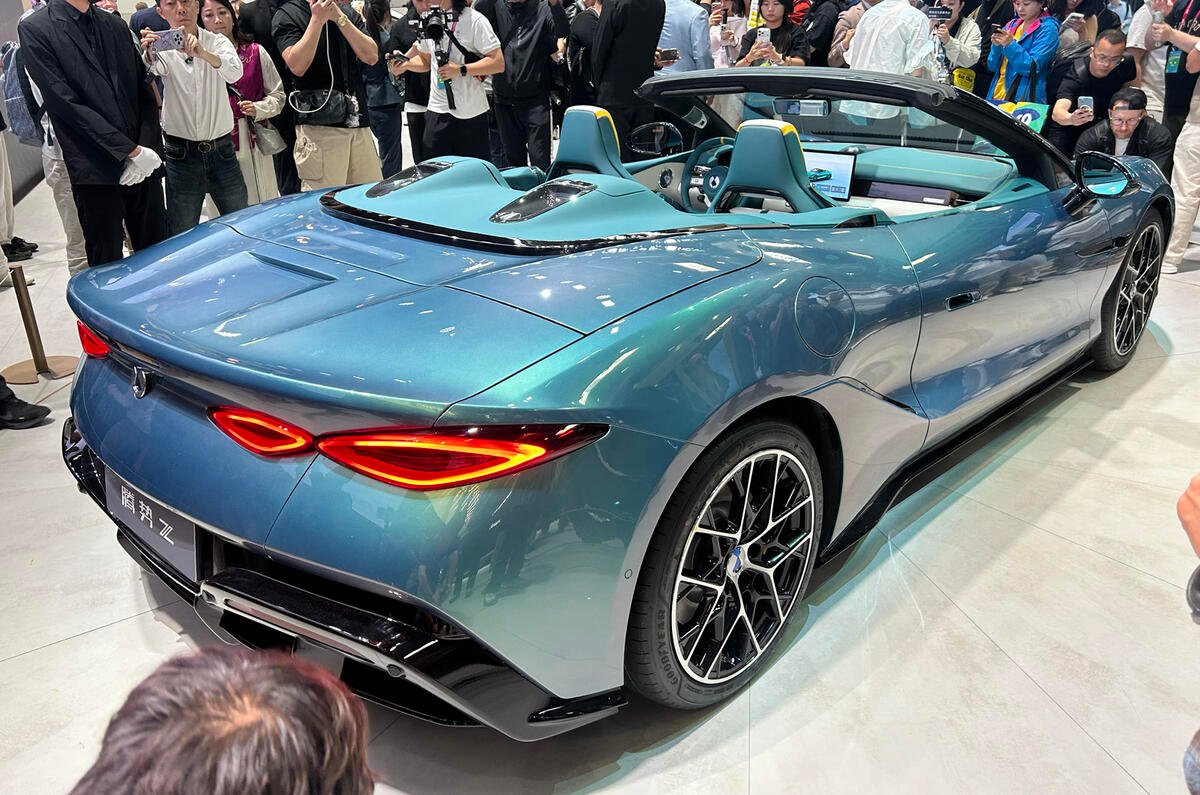
Its top speed depends on configuration.
The standard version is limited to 186 mph, while a performance package lifts the maximum to 217 mph and adds a prominent rear spoiler.
Weight, roof choices and chassis technology
The Z won’t be a lightweight roadster in the traditional sense.
In soft-top form, it weighs 2,650 kg, while the fixed-roof version trims that to 2,580 kg.
Those figures are substantial, even by modern electric performance car standards, so chassis technology will matter just as much as raw output.
Denza has fitted steer-by-wire, while the three motors are designed to operate independently.
That layout should give the car meaningful scope for torque management across the axles, especially under hard acceleration and corner exit.
The Z also uses DiSus-M magnetorheological suspension, a system associated with the Yangwang U9.
For Denza, borrowing that technology signals an effort to give the Z more than straight-line theatre, particularly as it enters a market where high-speed stability and body control are expected rather than optional.
Europe first is the bold part
The technical numbers make the Z dramatic, but the launch strategy may prove just as important.
Denza’s plan to bring the car to Europe first suggests confidence in the product and a desire to challenge established premium players on their own ground.
It also frames the Z as more than a domestic-market performance flagship.
Europe remains one of the toughest places to introduce a luxury EV with supercar pace, because the buyers are informed, brand-loyal and deeply aware of handling credibility.
If the Z can translate its specification sheet into usable performance, it could give Denza a visible entry point into the upper end of the EV market.
Details & Specifications
| Brand | Denza |
|---|---|
| Model | Z |
| Body style | Electric 2+2 roadster |
| Powertrain | Tri-motor electric setup, one front motor and two rear motors |
| Power | 1,582 hp |
| Acceleration | 0-62 mph in under 2.0 seconds |
| Top speed | 186 mph standard, 217 mph with performance package |
| Weight | 2,650 kg soft-top, 2,580 kg fixed-roof |
| Chassis technology | Steer-by-wire and DiSus-M magnetorheological suspension |
| Performance package | Rear spoiler and higher top speed |
| Launch plan | Europe first |
The Denza Z arrives with the kind of numbers that are easy to dismiss until the hardware begins backing them up.
If its suspension, steering and torque control match the ambition of its powertrain, this could be one of the more consequential Chinese performance EVs to reach European roads.