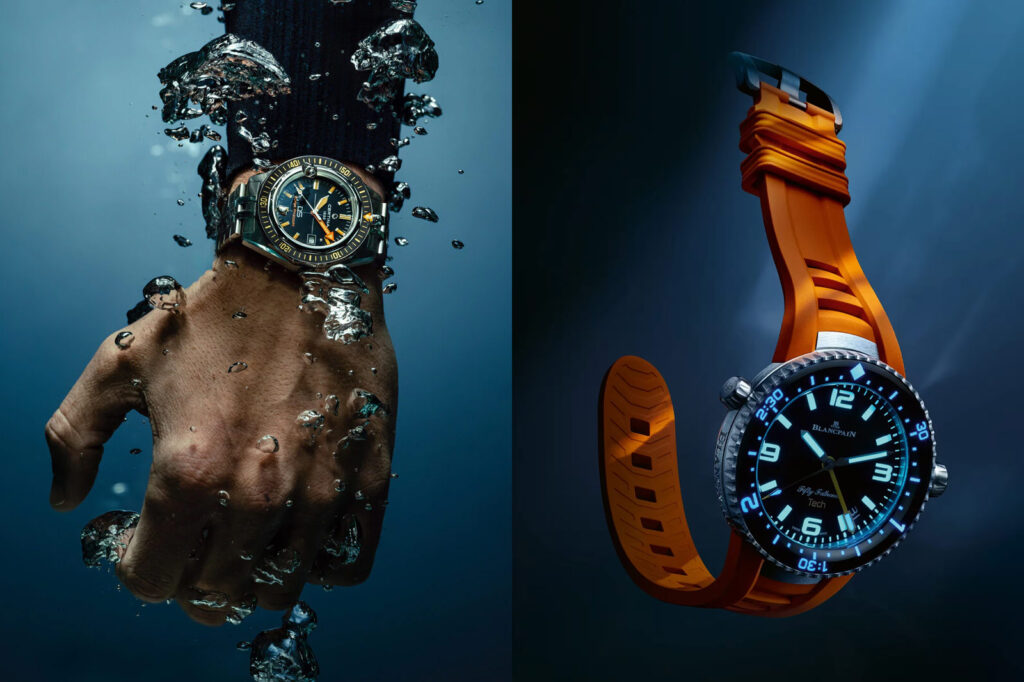
Dive watches remain the most useful corner of the sports-watch world because they tend to get the fundamentals right.
Legibility, water resistance, a secure crown and a bezel you can actually use still matter, whether you’re timing a descent, a swim or a parking meter.
The 2026 field is already broad, with compact microbrand pieces, integrated-bracelet skin divers, saturation-ready instruments and extreme-depth specialists all competing for attention.
At a glance
- Standout 2026 dive watches range from the £215 Quantum Barracuda to the 6,000m-rated Oceaneva Deep Marine Explorer VI.
- The strongest entries combine proper screw-down crowns, automatic movements and useful water resistance rather than relying on styling alone.
- Accessible pricing is a major theme, with several compelling mechanical divers sitting below £1,000.
Serious mechanical divers below £1,000
The Quantum Barracuda is the sort of watch that explains why affordable divers have become so competitive.
For £215, it brings a 41mm stainless steel case, 200m water resistance, a screw-down crown, sapphire crystal and a Miyota 8215 automatic movement.
The black dial is intentionally uncluttered, with applied markers and a date window at 3 o’clock, giving it the feel of a proper daily tool rather than a novelty diver.
Citizen takes a different route with the Tsuyosa Shore Timeslip, a 12,000-piece limited edition that adapts the brand’s integrated-bracelet sports-watch format into a skin-diver shape.
Its 40mm steel case, 100m water resistance and unidirectional timing bezel make it more recreational than professional, but the fumé black dial and gold-coloured accents give it a richer personality than the price suggests.
At £349, it’s one of the easiest entries here to recommend for someone who wants an automatic sports watch with dive-watch energy and everyday polish.
The Héron Marinor Rainbow White is more playful, but there’s real purpose behind the colour.
Its decompression-table dial uses colours selected for visibility at relevant depths, a practical response to the way colour fades underwater.
The shift to a white dial and steel bezel gives this version a brighter, more summery character, while the 39mm case, 250m water resistance and Miyota 9039 movement keep the specification firmly in enthusiast territory.
Microbrand toughness and extreme depth ratings
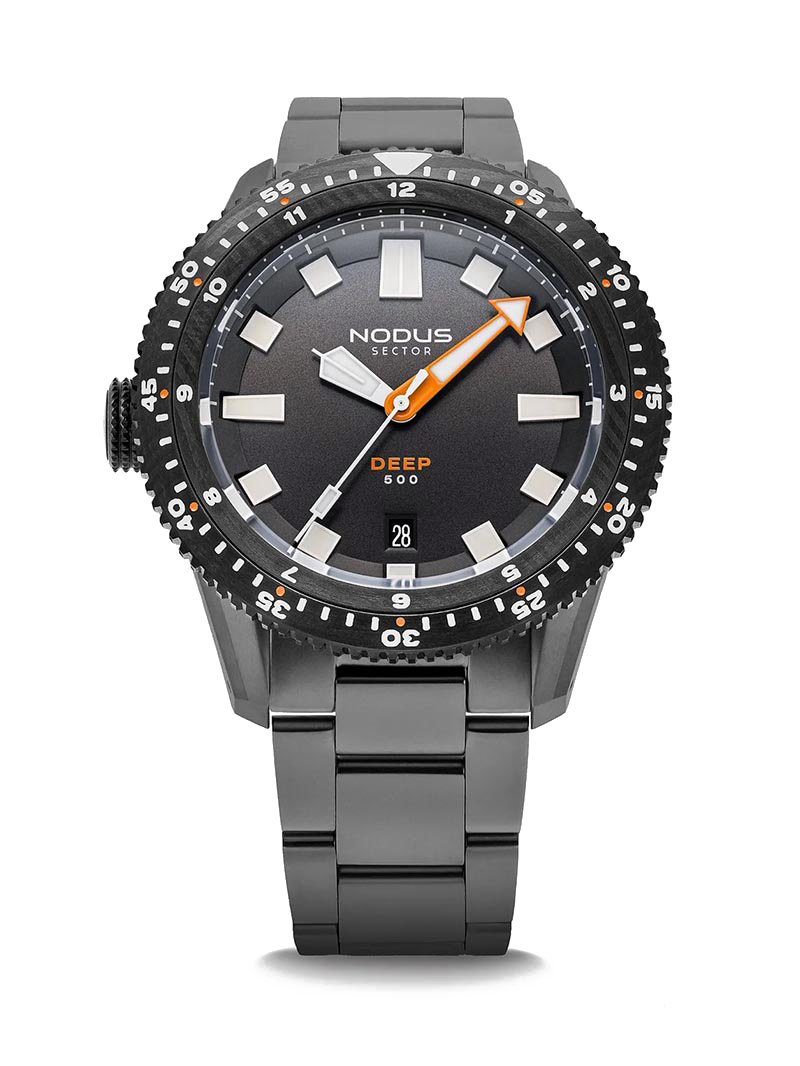
Nodus gives the Sector Deep Damascus a distinctive material story without weakening the tool-watch brief.
The case body measures 38mm, while the bezel flares to 42mm, creating the stepped profile associated with the Sector Deep line.
Its DLC-coated stainless steel case is rated to 500m, and the Damascus steel bezel adds visible striations beneath the dark coating for a stealthy but textured look.
Inside, the Miyota 8315 brings a useful 60-hour power reserve, making the £608 price feel especially persuasive.
Tissot’s Seastar 2000 sits at the upper end of the sub-£1,000 category, but it earns its place with the sort of specification usually associated with much pricier dive watches.
The 44mm stainless steel case is rated to 600m, and the watch uses a ceramic bezel, a welcome durability upgrade at this level.
The Powermatic 80 movement gives it an 80-hour power reserve, which remains one of the strongest practical arguments for Swatch Group divers in this segment.
The most extreme watch here is the Oceaneva Deep Marine Explorer VI 6,000m Power Reserve.
Its 44mm Grade 5 titanium case is a substantial 19.75mm thick, but that mass is tied to a remarkable 6,000m water-resistance rating.
The addition of a power-reserve indicator makes sense on a dive watch, giving the wearer a quick view of remaining running autonomy before heading into the water.
At a pre-sale price of £915, it’s an unusually aggressive proposition for anyone fascinated by overbuilt engineering.
Big-case divers return with confidence
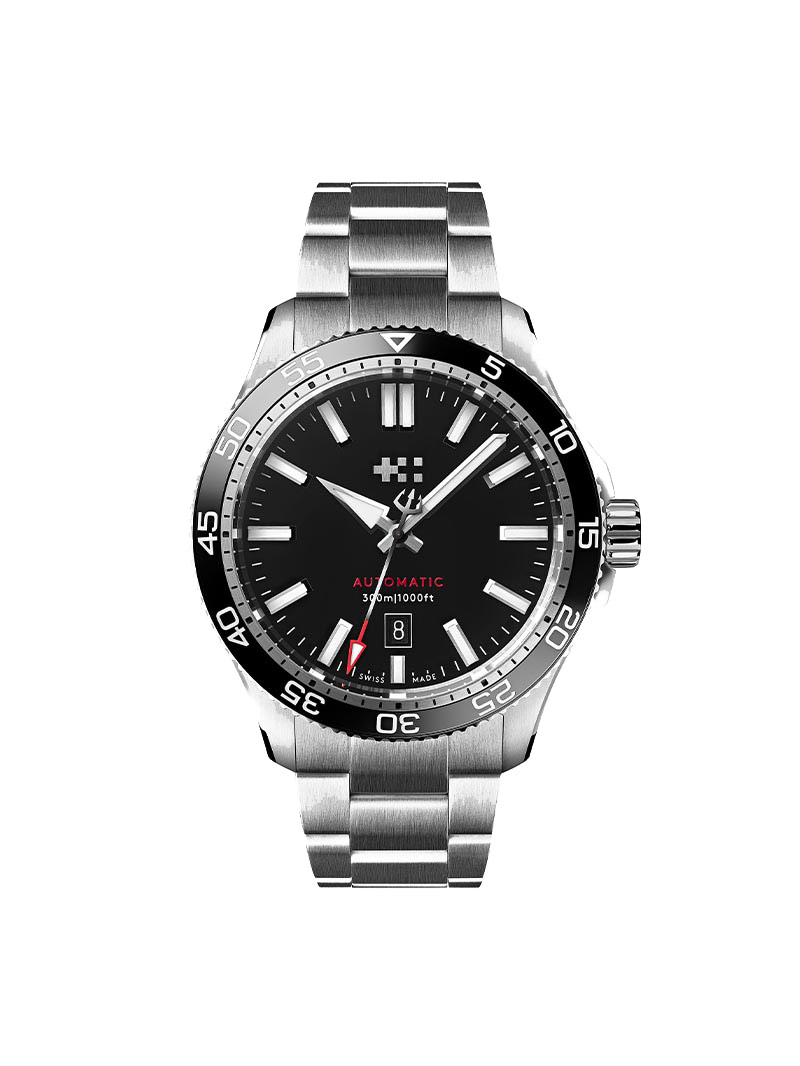
Christopher Ward’s C60 Trident Pro 300 in 44mm reflects a broader move back toward larger, more assertive sports watches.
The brand has built much of its recent reputation on cleanly engineered tool watches, and this version leans into that identity with a larger case, 300m water resistance and a blue dial.
At 11.7mm thick, it’s comparatively slim for a 44mm diver, and the Sellita SW200-1 movement keeps the mechanical package familiar and serviceable.
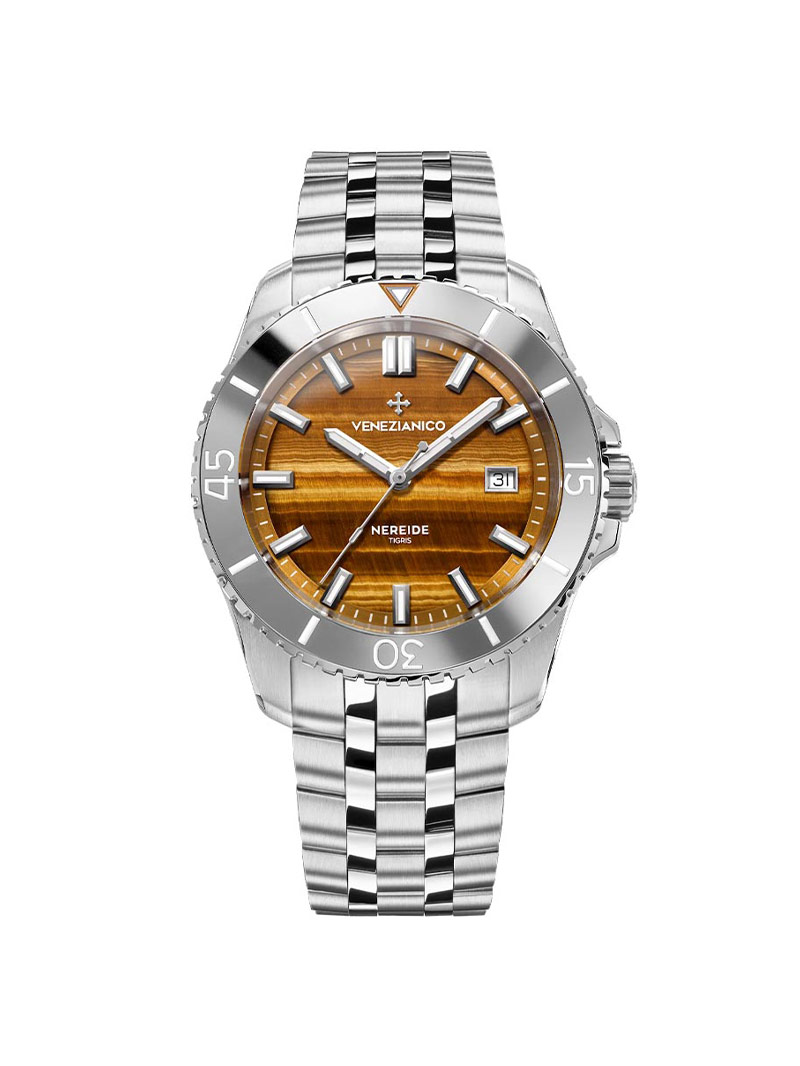
Venezianico’s Nereide Tigris brings stone-dial character into the dive-watch space.
The Venetian brand’s Nereide line is already a recognisable part of the enthusiast microbrand scene, and this £1,110 model adds a more decorative dial treatment to a familiar diver format.
It’s the choice here for the buyer who wants the practical silhouette of a dive watch but doesn’t want another plain black or blue dial.
Details & Specifications
| Quantum Barracuda | 41mm stainless steel case, black dial, Miyota 8215 automatic, 200m water resistance, steel bracelet, £215 |
|---|---|
| Citizen Tsuyosa Shore Timeslip | 40mm stainless steel case, fumé black dial, Citizen 8210 automatic, 100m water resistance, limited to 12,000 pieces, £349 |
| Héron Marinor Rainbow White | 39mm stainless steel case, white decompression-table dial, Miyota 9039 automatic, 250m water resistance, steel bracelet, £490 |
| Nodus Sector Deep Damascus | 38mm DLC-coated stainless steel case, black dial, Damascus steel bezel, Miyota 8315 automatic, 500m water resistance, £608 |
| Tissot Seastar 2000 | 44mm stainless steel case, black dial, ETA Powermatic 80 automatic, ceramic bezel, 600m water resistance, £900 |
| Oceaneva Deep Marine Explorer VI 6,000m Power Reserve | 44mm Grade 5 titanium case, light blue dial, Miyota 9132 automatic, power reserve display, 6,000m water resistance, pre-sale £915 |
| Christopher Ward C60 Trident Pro 300 44mm | 44mm stainless steel case, blue dial, Sellita SW200-1 automatic, 300m water resistance, steel bracelet, £960 |
| Venezianico Nereide Tigris | Stone-dial dive watch from the Nereide collection, £1,110 |
The best 2026 dive watches aren’t defined by a single formula.
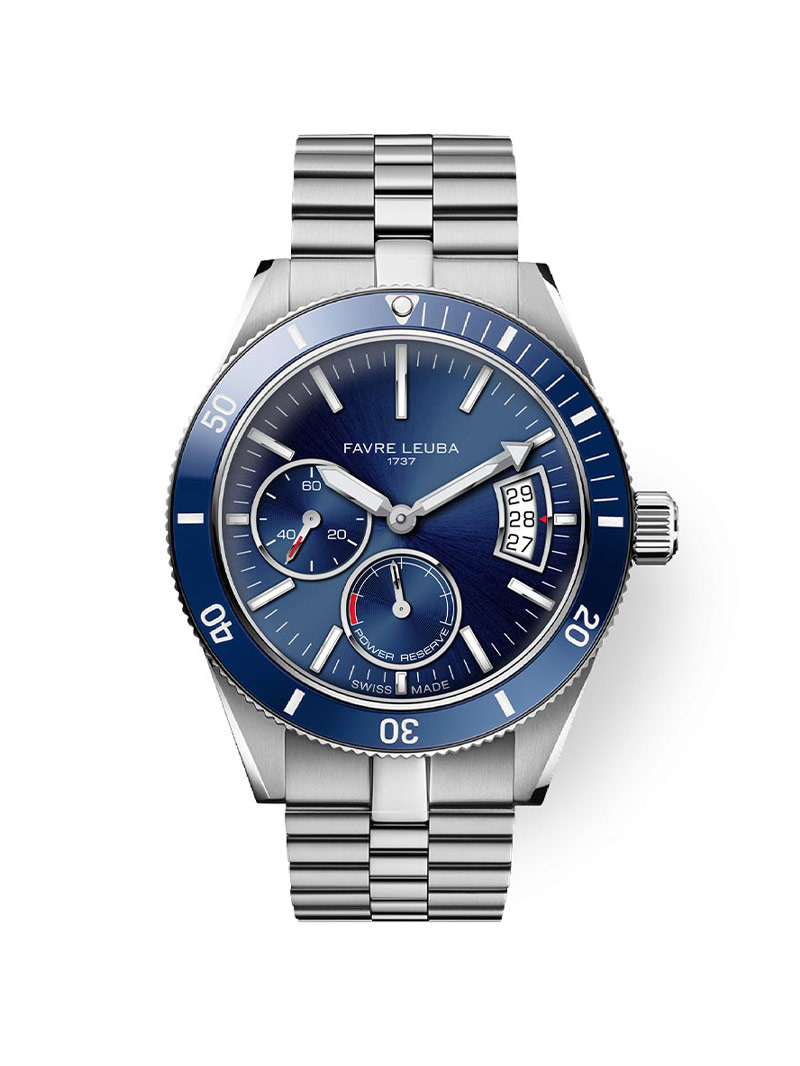
Some prioritise depth ratings, some focus on wearable sizing, and others use colour or materials to stand apart, but the strongest examples all understand that a diver still needs to be legible, durable and easy to trust.