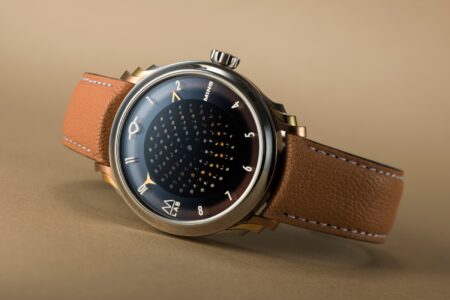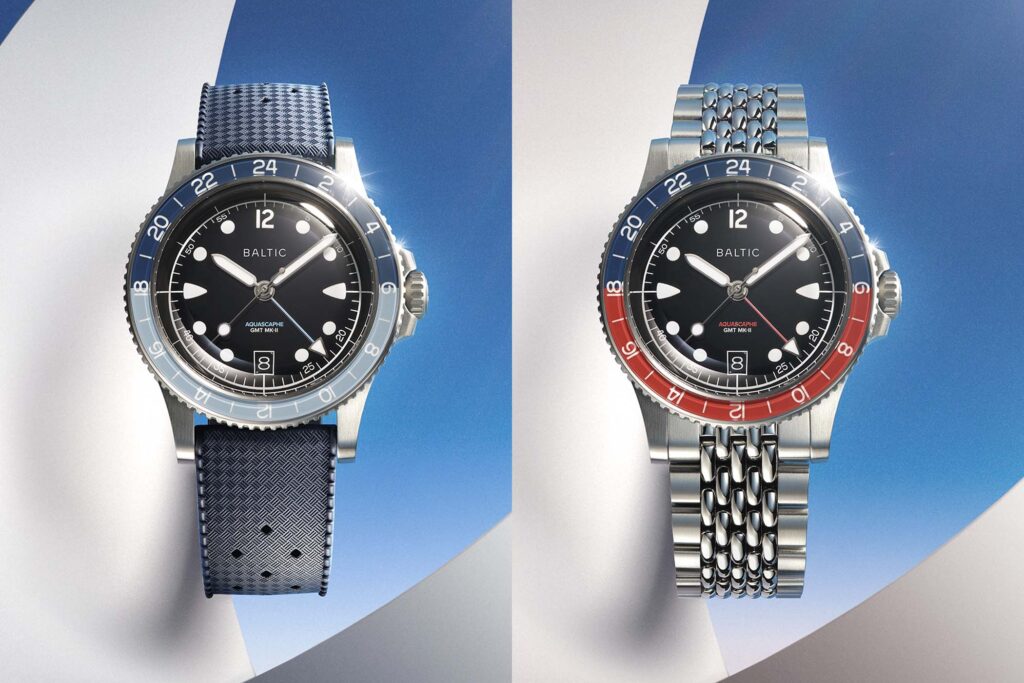
Baltic has given the Aquascaphe GMT its most meaningful update yet, and the headline isn’t just a new case or fresh colours.
The Aquascaphe GMT MK-II now uses a true traveller GMT movement, bringing the watch closer to the way frequent flyers actually use a dual-time watch.
It also arrives with improved water resistance, a more assertive case profile and a lower starting price than the previous Swiss-powered version.
At a glance
- Baltic has launched the Aquascaphe GMT MK-II as a permanent collection model in four colourways.
- The watch moves to the Miyota 9075 automatic true GMT movement, allowing independent adjustment of the local hour hand.
- Pricing starts at EUR 850 on FKM rubber and EUR 915 on a steel bracelet, excluding taxes.
A sharper Aquascaphe case with stronger dive credentials
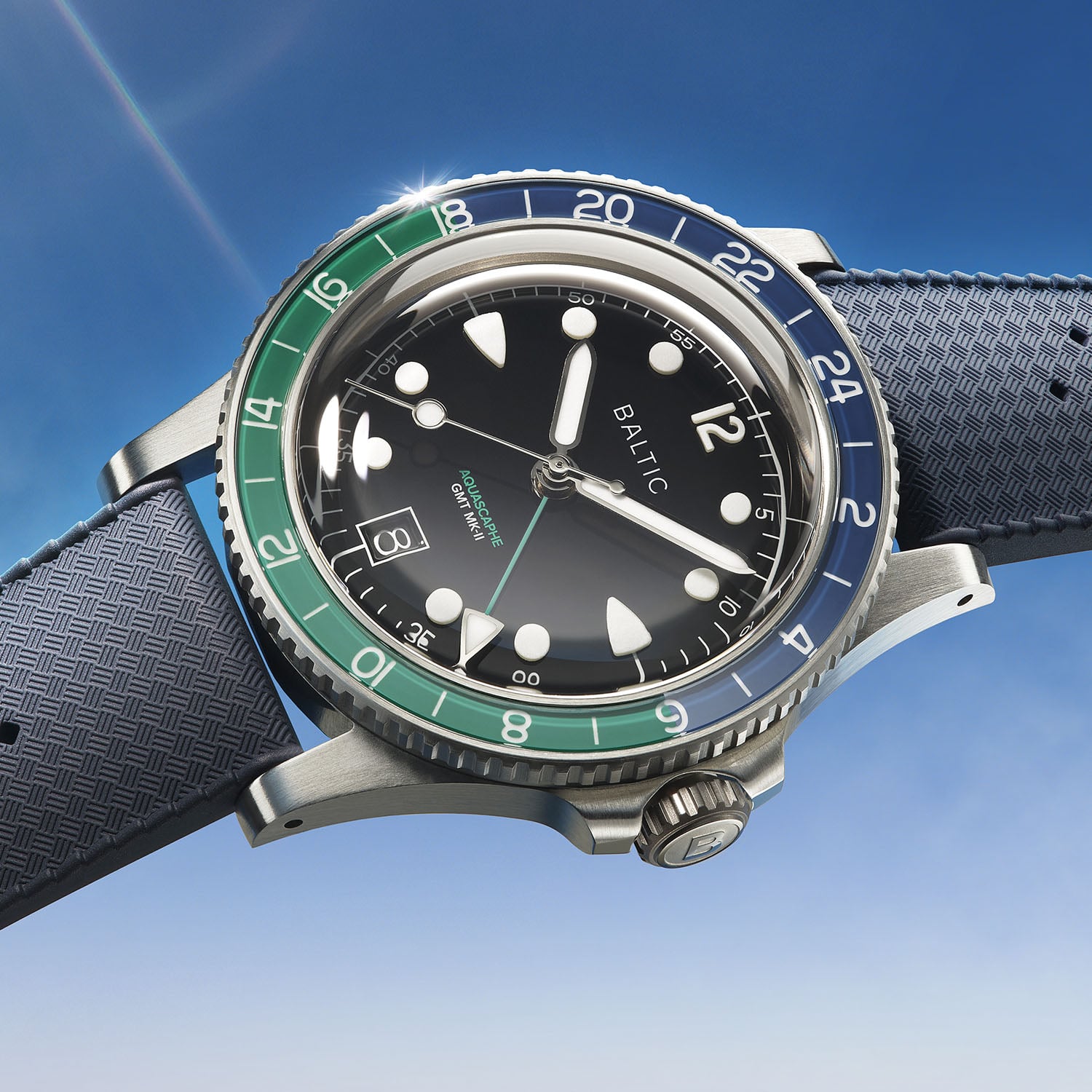
The Aquascaphe GMT MK-II keeps the compact proportions that helped make the line approachable, but the case language is noticeably more angular.
The 316L stainless-steel case measures 39.5mm across, with a 47mm lug-to-lug span and a 13.8mm thickness including the double-domed sapphire crystal.
Wider lugs, sharper edges and vertical brushing across the top surfaces give the watch more definition on the wrist without pushing it into oversized territory.
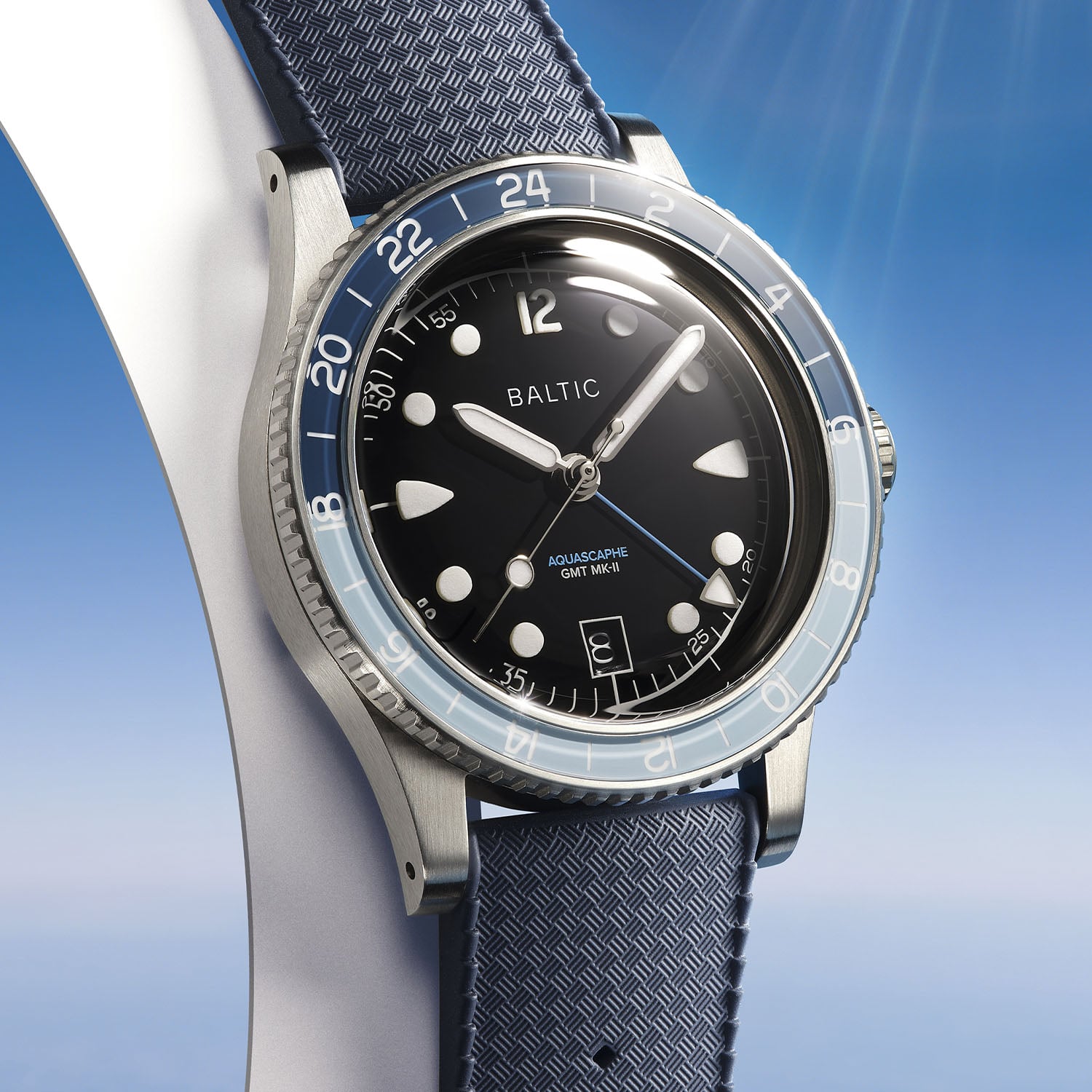
The addition of crown guards is a first for the Aquascaphe GMT, framing the screw-down crown and making the case feel more tool-like than its predecessor.
Water resistance has also doubled from 100 metres to 200 metres, which better suits a GMT watch built on Baltic’s dive-watch platform.
The bidirectional 24-hour bezel remains central to the design, using a sapphire insert and 24 clicks for tracking another time zone alongside the central GMT hand.
The Miyota 9075 makes it a true traveller GMT
The most important change sits inside the case.
Baltic has moved from the earlier Swiss Soprod calibre to the Miyota 9075, an automatic movement that changes the daily usability of the watch in a significant way.
Where the previous Aquascaphe GMT used an independently adjustable GMT hand, the MK-II allows the local hour hand to be moved independently.
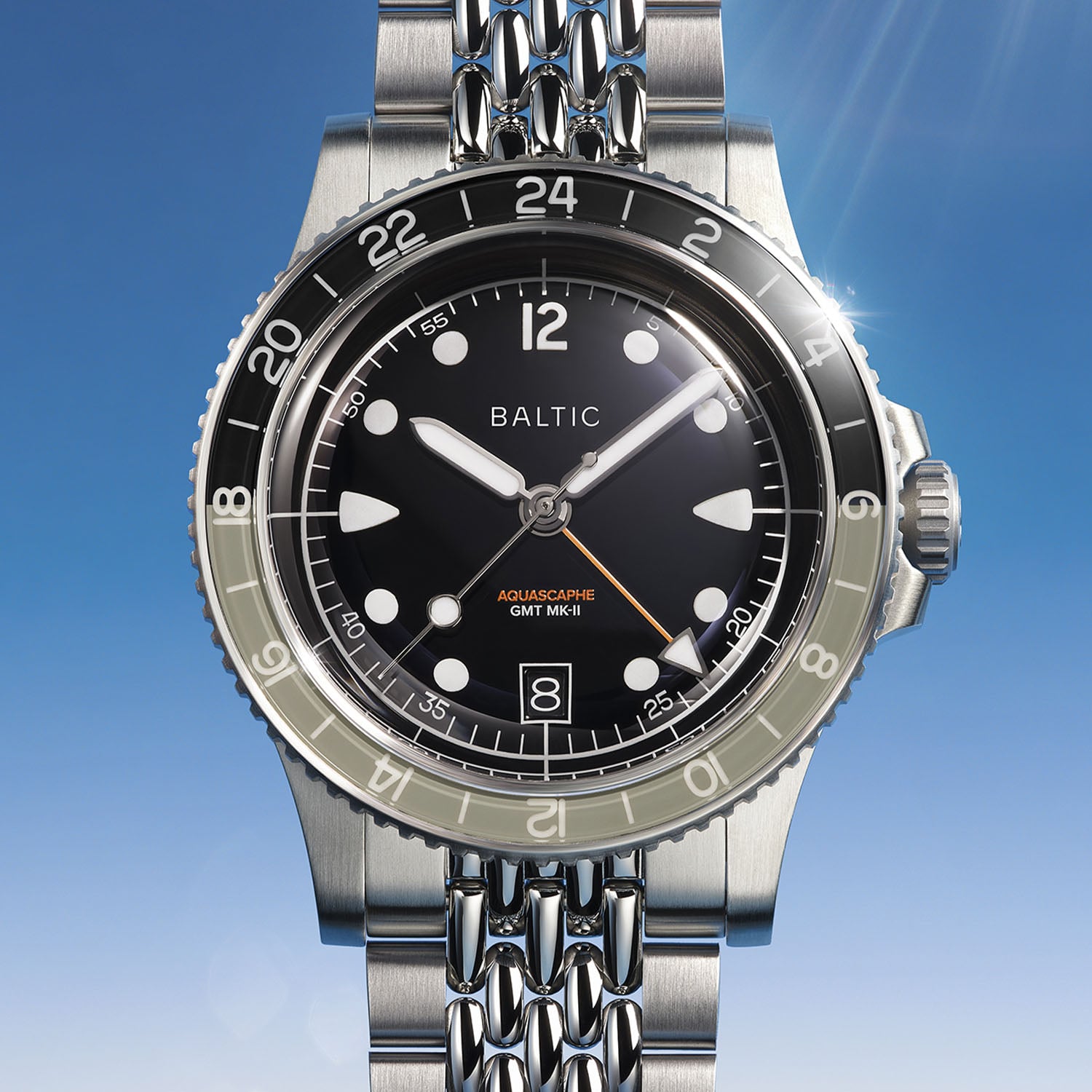
That distinction matters when travelling, because the wearer can jump the main hour hand forward or backward after landing while the GMT hand continues to track home time.
The movement runs at 28,800 vibrations per hour and offers a 42-hour power reserve.
For a watch aimed at travel, commuting and everyday wear rather than safe-bound collecting, this is the right functional upgrade.
Four bezel pairings and a cleaner dial execution
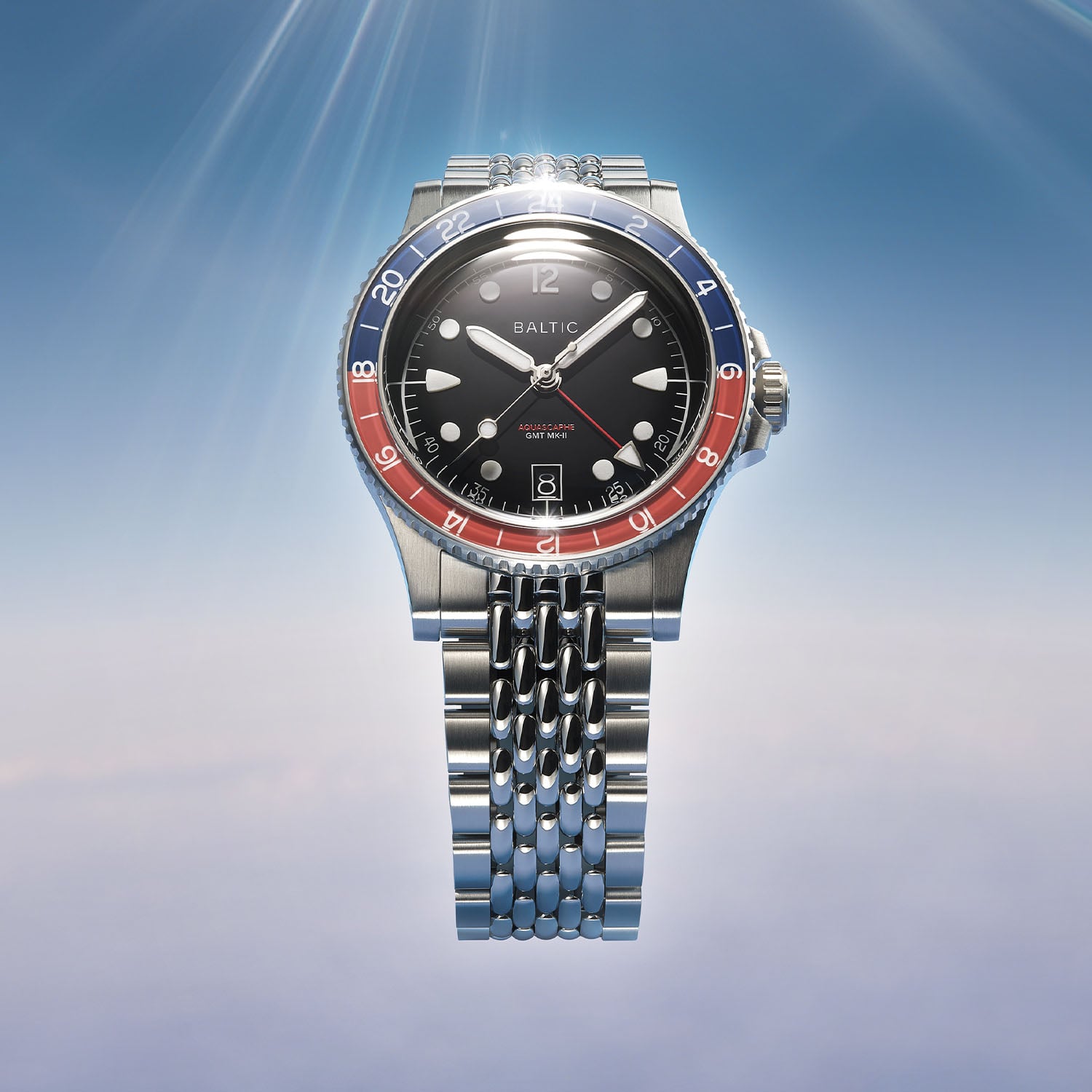
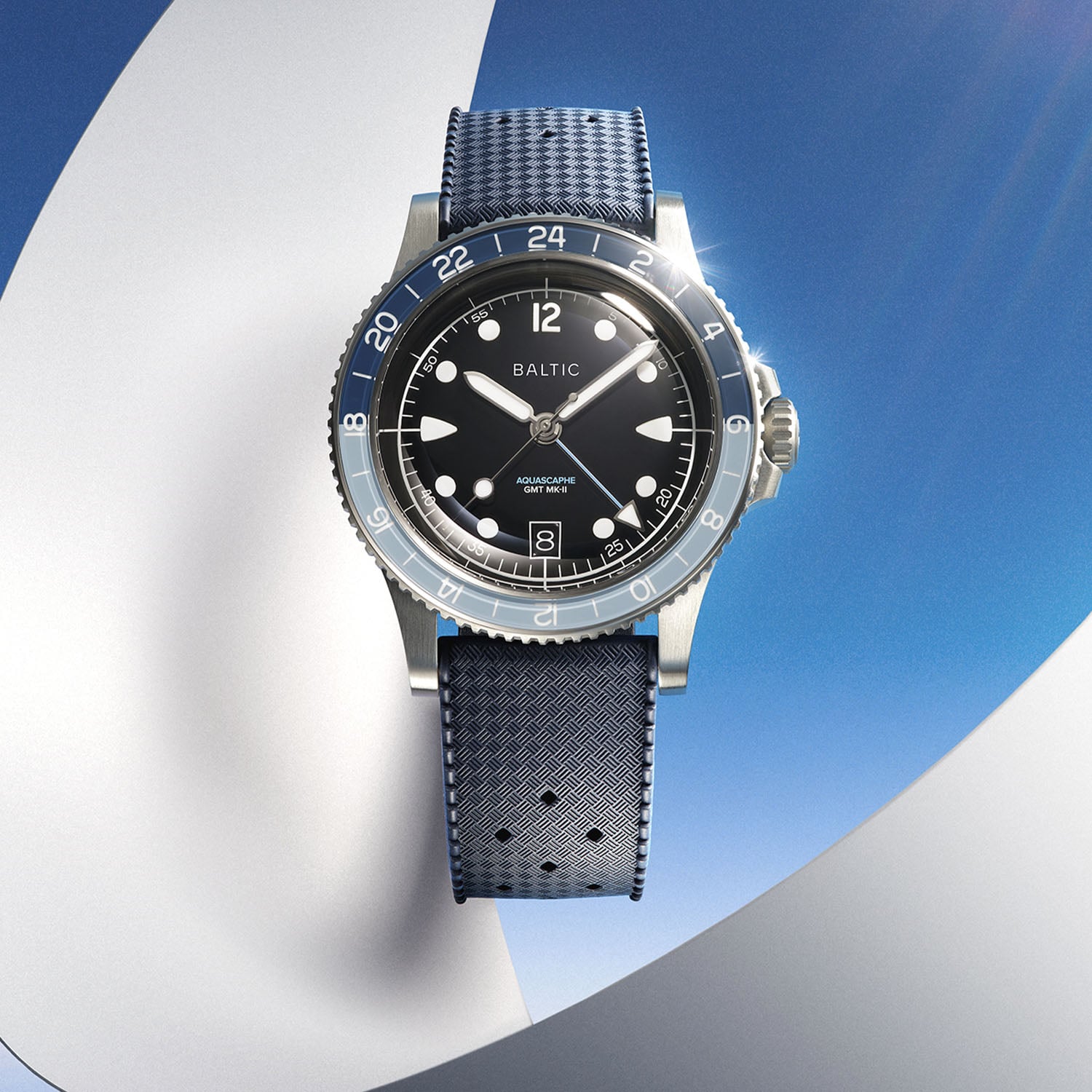
All four launch versions share a deep glossy black dial, giving the collection a consistent base regardless of bezel colour.
The applied “super indexes” use Super-LumiNova BGW9, while the faceted hour and minute hands are also lumed for legibility in low light.
The date sits at 6 o’clock and uses a colour-matched disc, a small but worthwhile choice that keeps the dial from feeling interrupted.
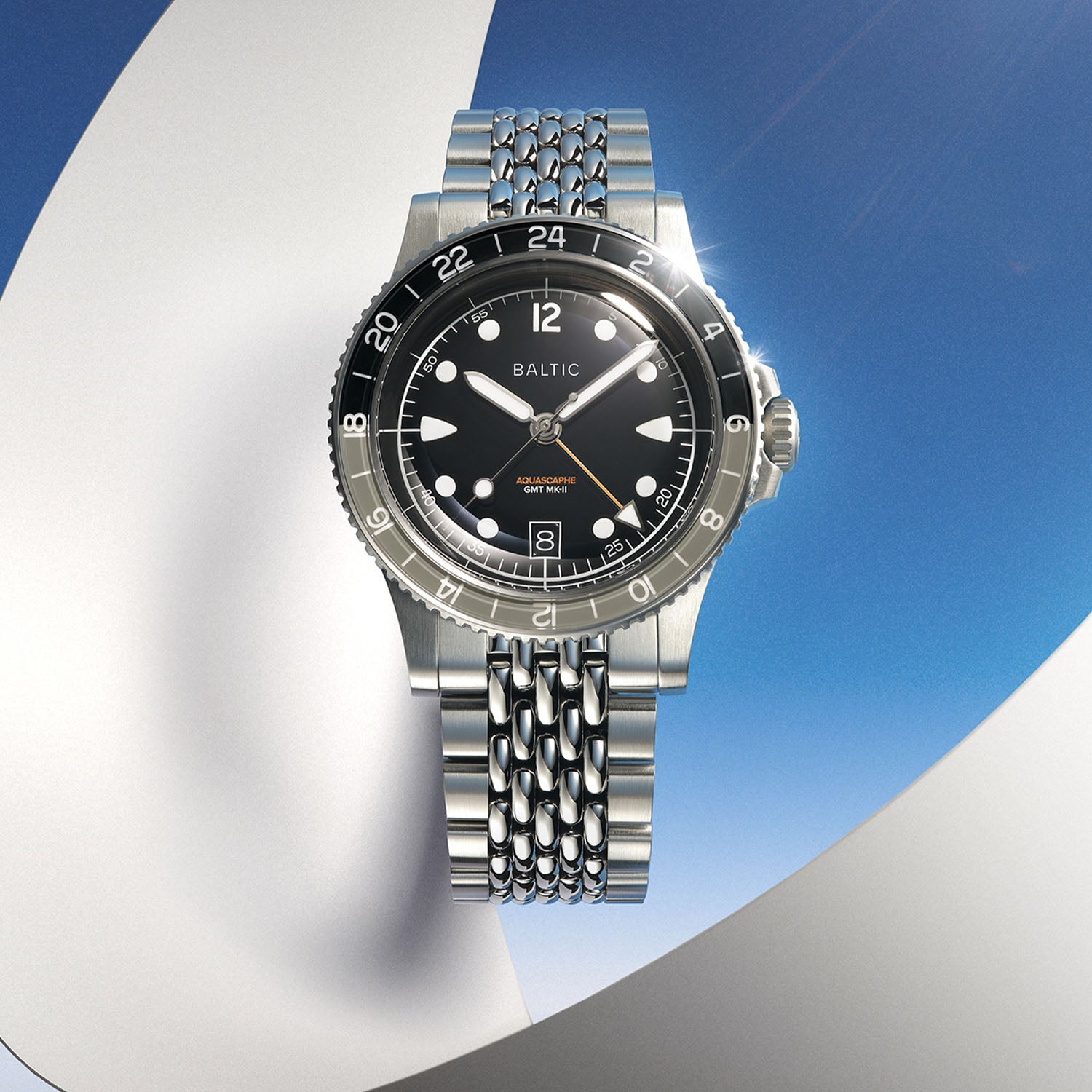
Each version is defined primarily by its two-tone bezel insert.
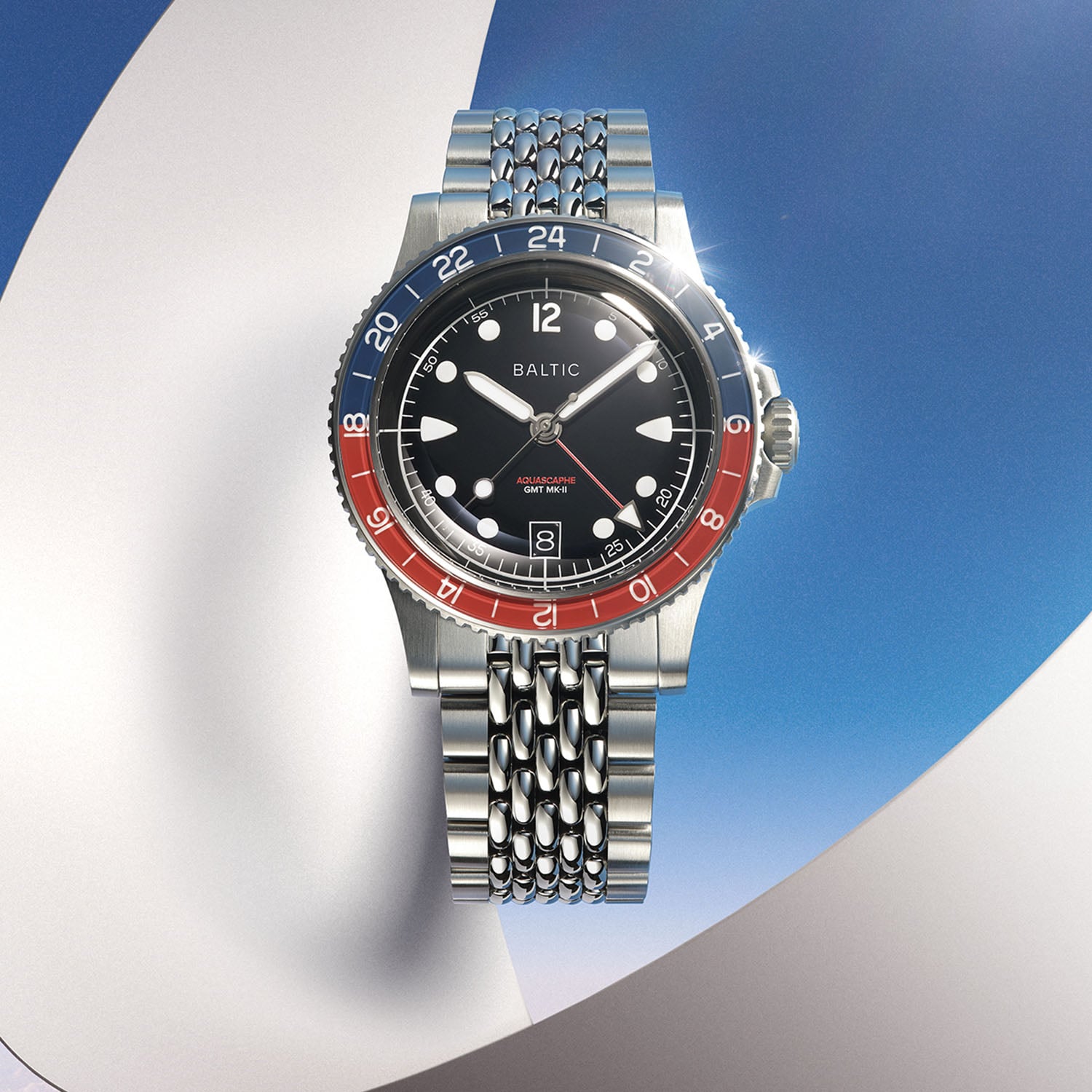
- The Aquascaphe GMT MK-II Red pairs red and blue.
- The Aquascaphe GMT MK-II Blue pairs blue and light blue.
- The Aquascaphe GMT MK-II Grey pairs black and grey.
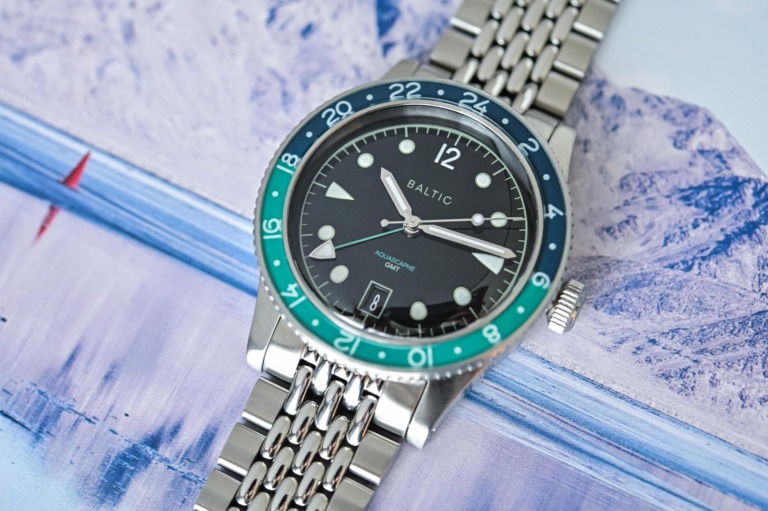
- The Aquascaphe GMT MK-II Green pairs green and blue.
The result is a collection that covers classic travel-watch territory while still offering less expected combinations for buyers who want something outside the usual blue-and-red formula.
Straps, bracelets and lower pricing
The Aquascaphe GMT MK-II comes as standard on Baltic’s Rubber Sport FKM strap.
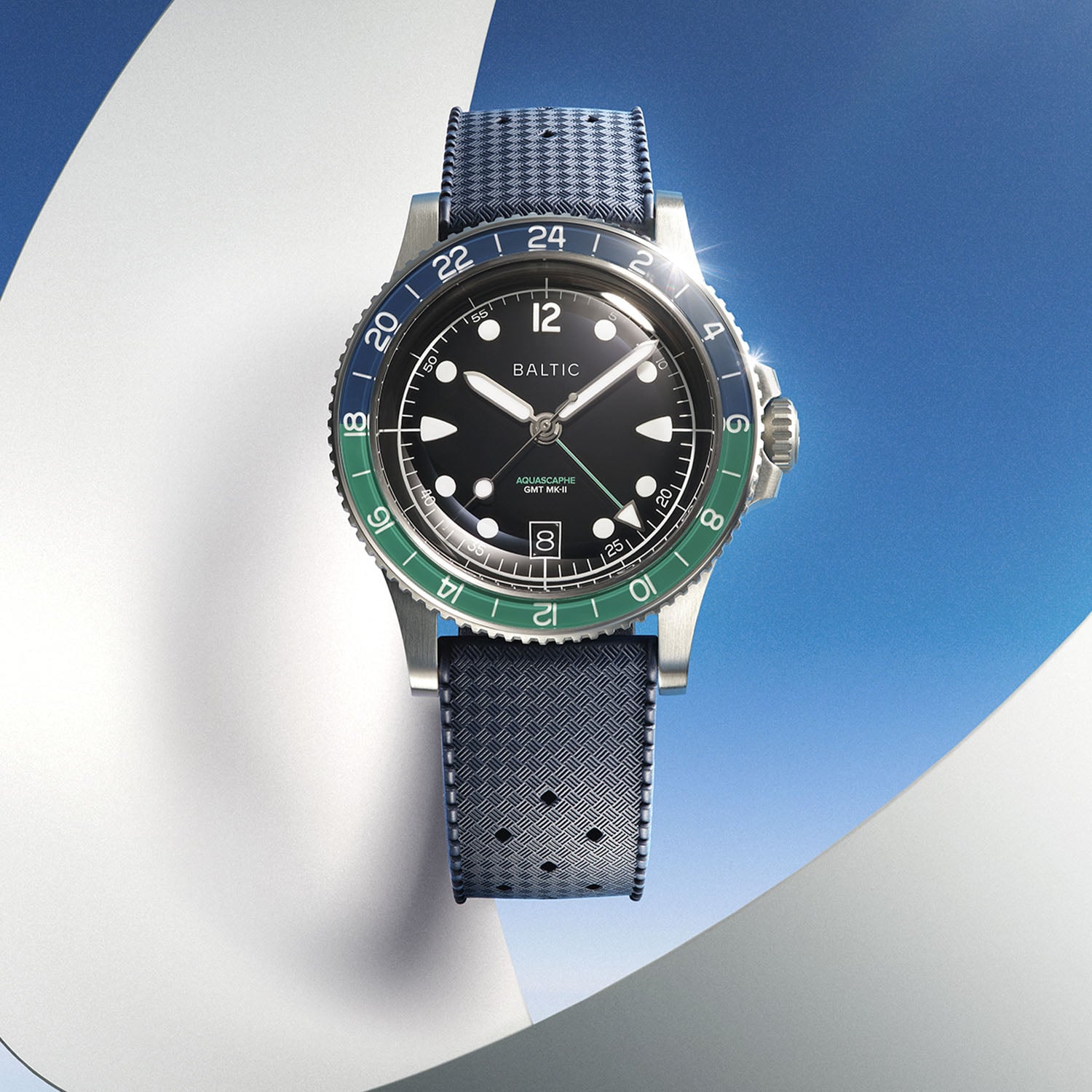
The grey and red variants are supplied on black rubber, while the blue and green versions arrive on blue rubber.
Buyers can also choose either a beads-of-rice or flat-link stainless-steel bracelet, both fitted with quick-release spring bars.
The 20mm lug width should also make strap changes straightforward for anyone who likes to rotate between rubber, steel and fabric.
Despite the more capable movement specification and higher water resistance, Baltic has brought the price down.
The Aquascaphe GMT MK-II is priced from EUR 850 on rubber and EUR 915 on steel bracelet, excluding taxes.
Details & Specifications
| Brand | Baltic |
|---|---|
| Model | Aquascaphe GMT MK-II |
| Collection status | Permanent collection |
| Case size | 39.5mm diameter, 47mm lug-to-lug, 13.8mm thick including crystal |
| Case material | 316L stainless steel |
| Crystal | Double-domed sapphire crystal with internal anti-reflective coating |
| Bezel | Bidirectional 24-hour bezel with sapphire insert and 24 clicks |
| Dial | Deep glossy black with Super-LumiNova BGW9 indexes |
| Movement | Miyota 9075 automatic true GMT |
| Functions | Hours, minutes, seconds, GMT and date |
| Frequency | 28,800vph, 4Hz |
| Power reserve | 42 hours |
| Water resistance | 200 metres |
| Strap | Rubber Sport FKM rubber strap |
| Bracelet options | Beads-of-rice or flat-link stainless-steel bracelet with quick-release spring bars |
| Lug width | 20mm |
| Price | EUR 850 on rubber strap, EUR 915 on steel bracelet, excluding taxes |
The Aquascaphe GMT MK-II feels like a practical recalibration rather than a cosmetic refresh, with Baltic making the watch more useful, more robust and easier to justify at the same time.
For collectors who want a compact GMT with dive-watch toughness and genuine travel functionality, this is likely to be one of the brand’s most compelling everyday propositions.