Vintage watches ask a lot from the buyer.
Beyond condition and price, there’s the harder question of trust, especially in a market where charm can sometimes arrive before clarity. Arwind Jhand has built Tortoise Watches around a different rhythm, one shaped by collector instincts, fair pricing and a taste for watches that sit slightly outside the obvious blue-chip lane.
His world is heavy on Zenith, fond of left-field references and increasingly attentive to the era now loosely called neo-vintage.
At a glance
- Arwind Jhand turned a personal collecting habit into Tortoise Watches, a vintage-focused business with an enthusiast’s eye.
- Zenith remains central to his taste, with references such as the G583, A384, A386, De Luca and Port Royal forming part of the story.
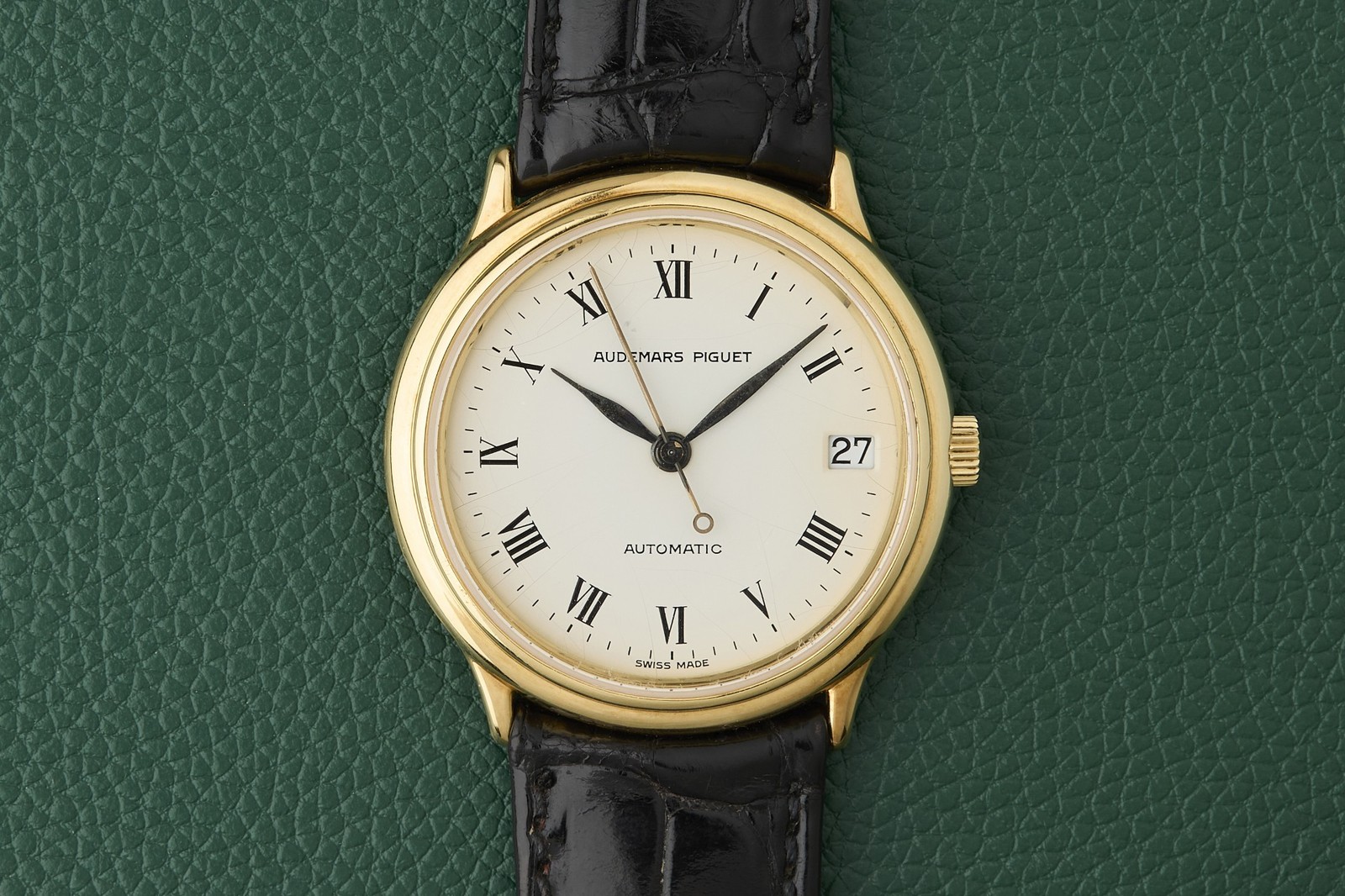
- He sees value in neo-vintage watches, especially Audemars Piguet dress pieces that can still sit around the £5,000 mark.
Collector instincts behind Tortoise Watches
Jhand didn’t arrive at watches through a conventional retail route.
He began as a collector who enjoyed buying, selling and using one watch to fund the next, a cycle familiar to anyone who has discovered how quickly curiosity can turn into a cabinet full of near-duplicates.
That habit eventually became a business, but it didn’t remove the emotional charge entirely.
In the early days of dealing full time, the appeal was obvious. Watches could be bought for stock rather than justified as personal indulgences, though he admits the line between the two could blur.
Today, his collecting has largely merged with the shop.
Rare finds still deliver a rush, but the pattern has changed. A watch might be worn briefly, enjoyed properly, then moved into the cabinets rather than absorbed into a growing private collection.
That shift has cost him some of the old romance, but it has also sharpened his knowledge.
Why Zenith became a house language
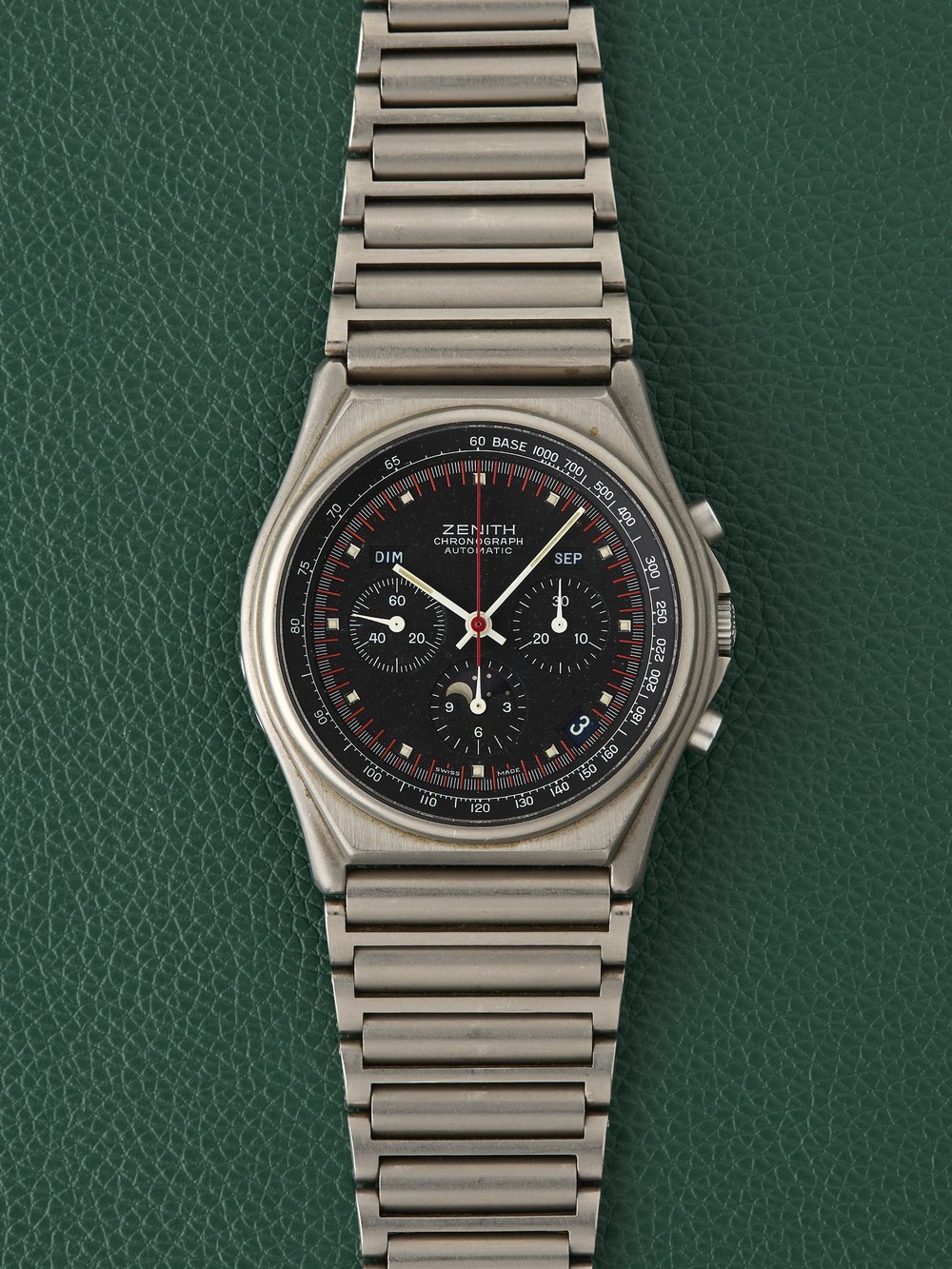
Tortoise Watches has developed a clear leaning toward Zenith, with pieces such as the A384, A386, De Luca and Port Royal sitting naturally within Jhand’s orbit.
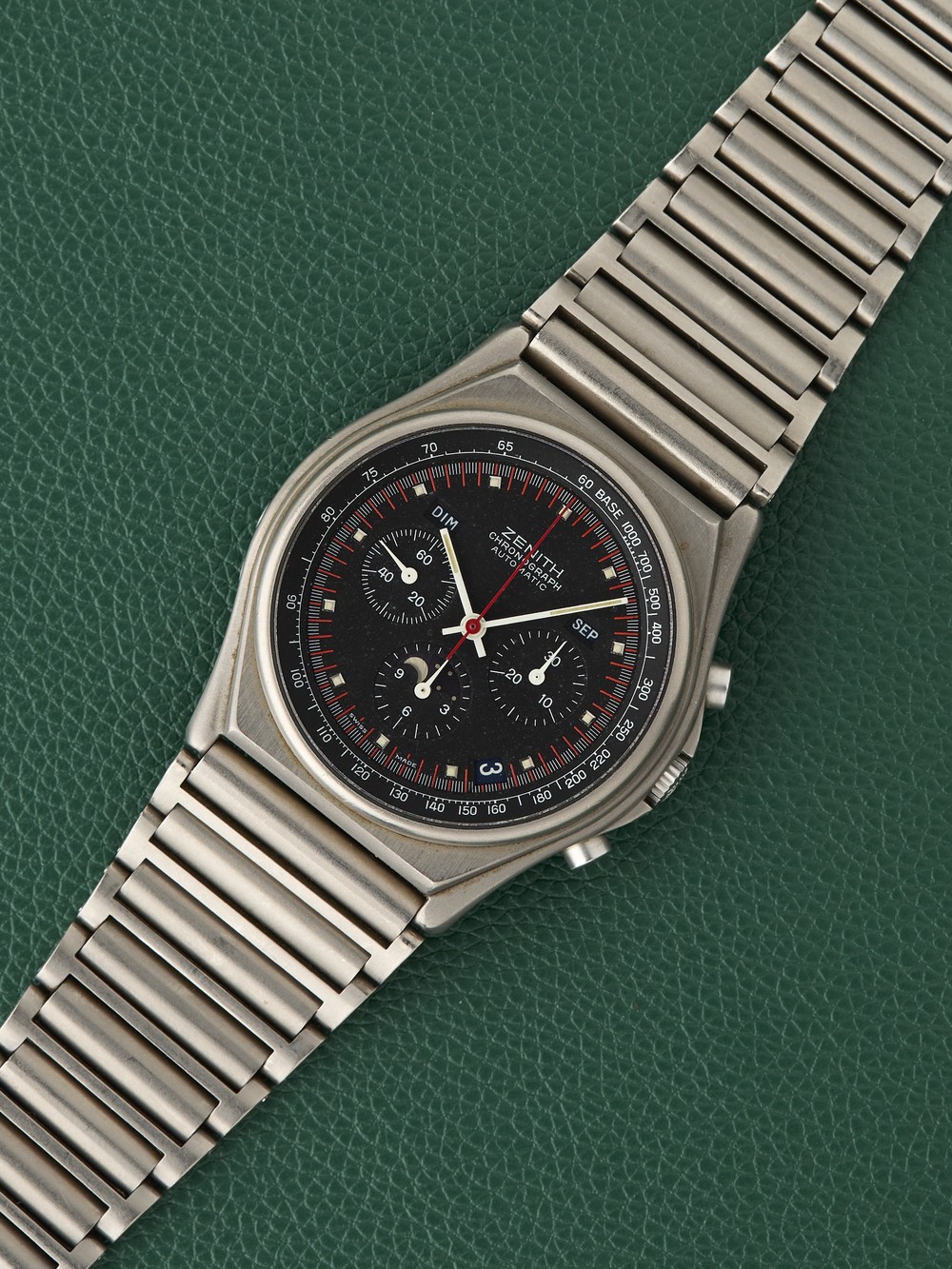
The watch that opened that door was a Zenith G583 from 1971, bought in 2014 from a major Zenith collector who became a friend.
For Jhand, that community aspect mattered.
Watches became a social language as much as an object of study, an entry point into friendships built around shared curiosity rather than a purely transactional pursuit.
The first spark, however, wasn’t Zenith at all.
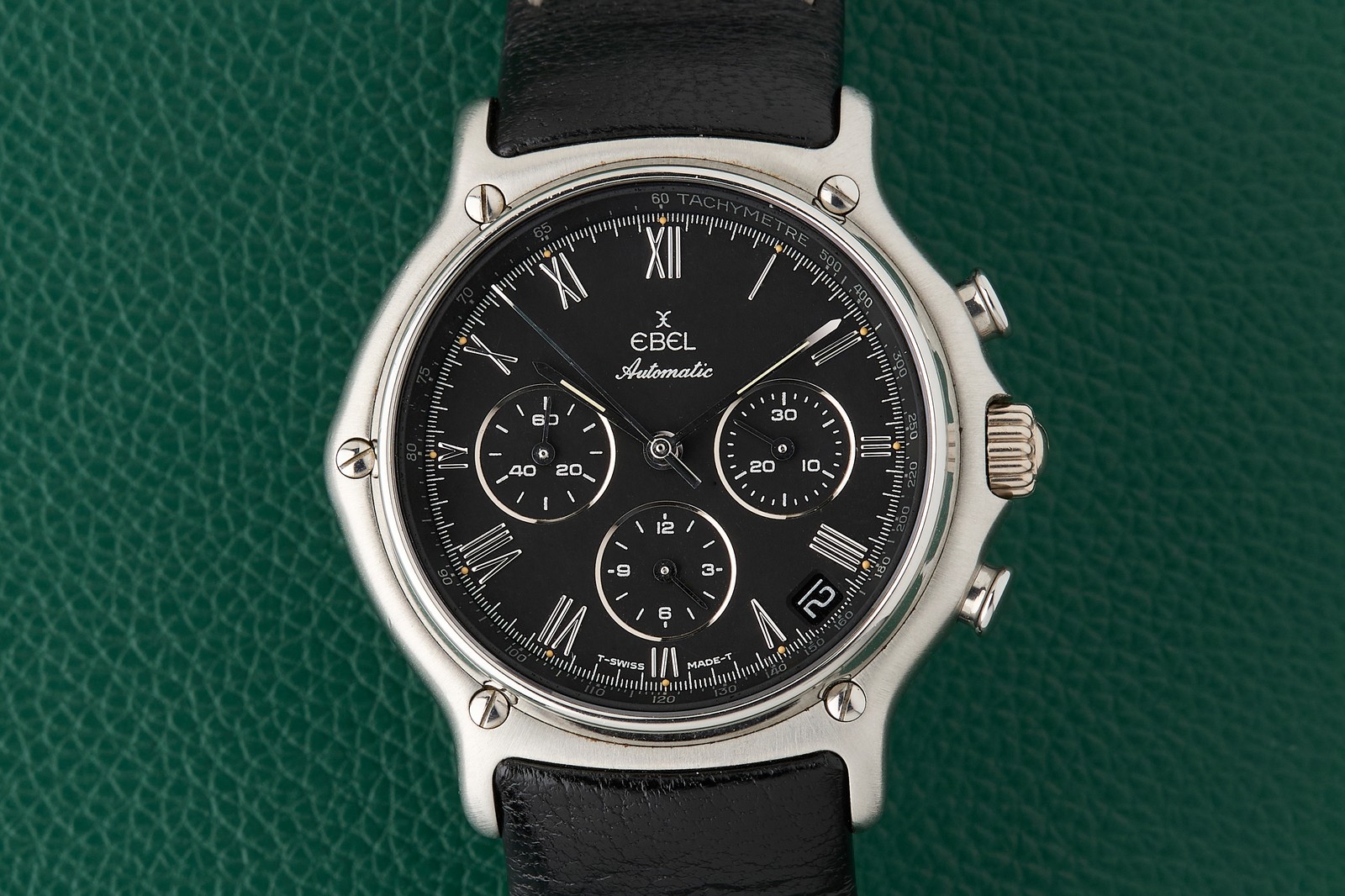
It came from an Ebel in a heavily discounted cabinet at Selfridges, the kind of find that sends a certain kind of collector straight home to research.
That trail led him to the Zenith El Primero, and then deeper into a brand that appealed precisely because it was less exhaustively mapped than the better-known giants.
While working in finance, Jhand had long hours at a desk and generous access to the internet, which gave him time to dig into the corners of watch history that weren’t neatly packaged in books.
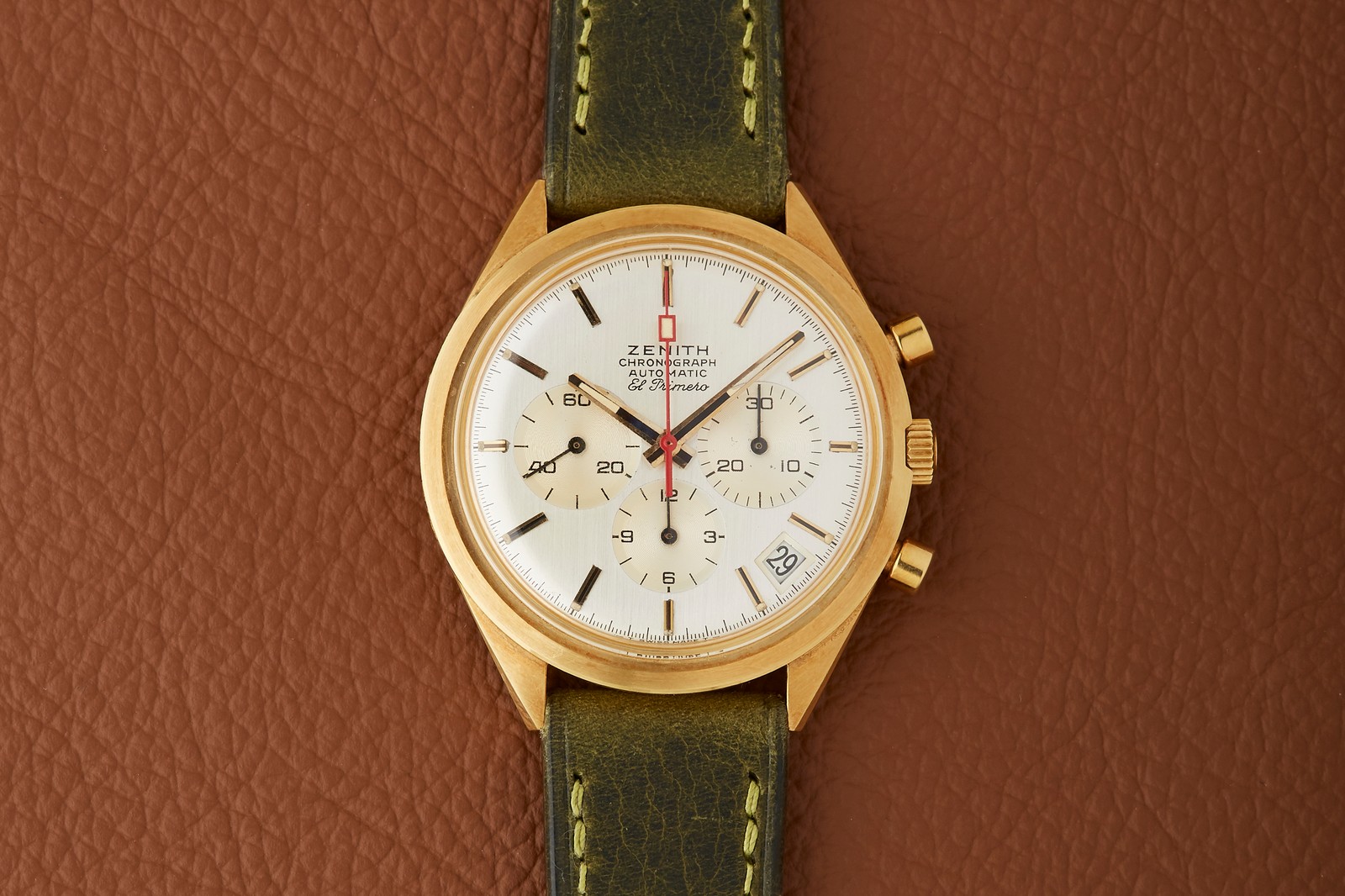
Zenith rewarded that kind of attention.
Stories, provenance and real value
Zenith’s modern mythology is inseparable from Charles Vermot, the watchmaker who preserved El Primero tooling during the quartz crisis.
It is a compelling story, and one that still gives the brand an underdog charge.
Jhand sees that kind of narrative as more powerful for modern watch marketing than for the value of an individual vintage watch.
In vintage collecting, the details attached to the specific piece usually matter more than a broad brand legend.
Photographs of an original owner wearing the watch, or clear personal history tied to that exact example, can do more to strengthen interest than a general tale repeated across an entire marque.

As collectors become more informed, the object itself takes priority.
Design, condition, originality and traceable history carry the weight.
Neo-vintage value and the AP he still misses
The phrase neo-vintage may belong to dealers and collectors more than casual buyers, but the demand is real.
Jhand sees younger and newer collectors asking for watches from the late 1980s through the early 2000s, even if they don’t necessarily use the label.
The attraction is easy to understand.
Prices can still be approachable, and many designs from the period wear with far more presence than their cost might suggest.
One area he continues to rate is vintage and neo-vintage Audemars Piguet.
A simple 18k yellow gold AP dress watch, such as a Classic reference 14406, can still be found around the £5,000 area, which looks striking when set against the price of many new luxury watches today.
Audemars Piguet also sits behind the watch Jhand still thinks about.
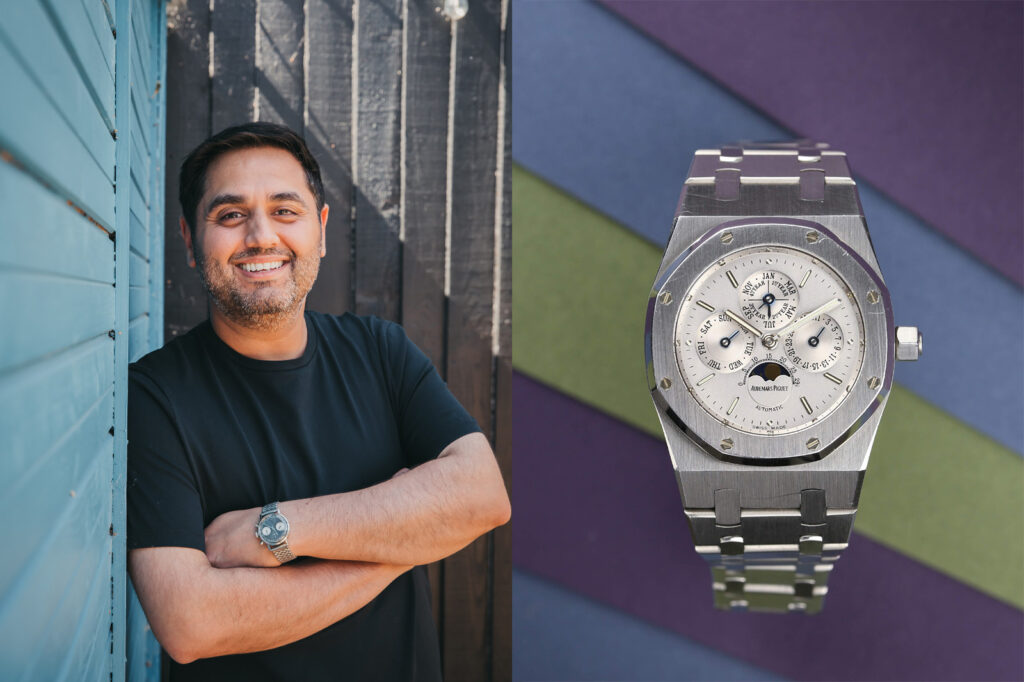
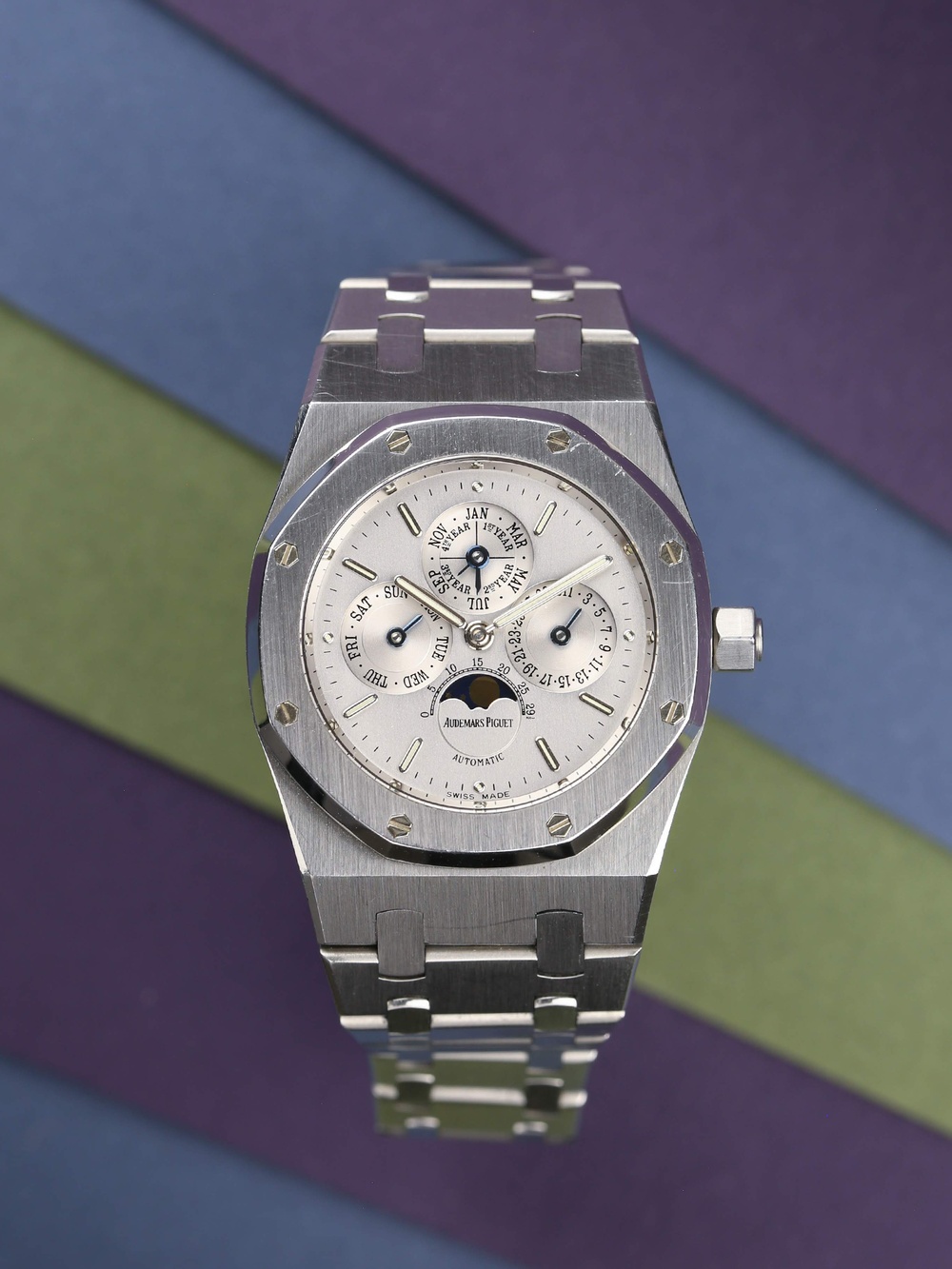
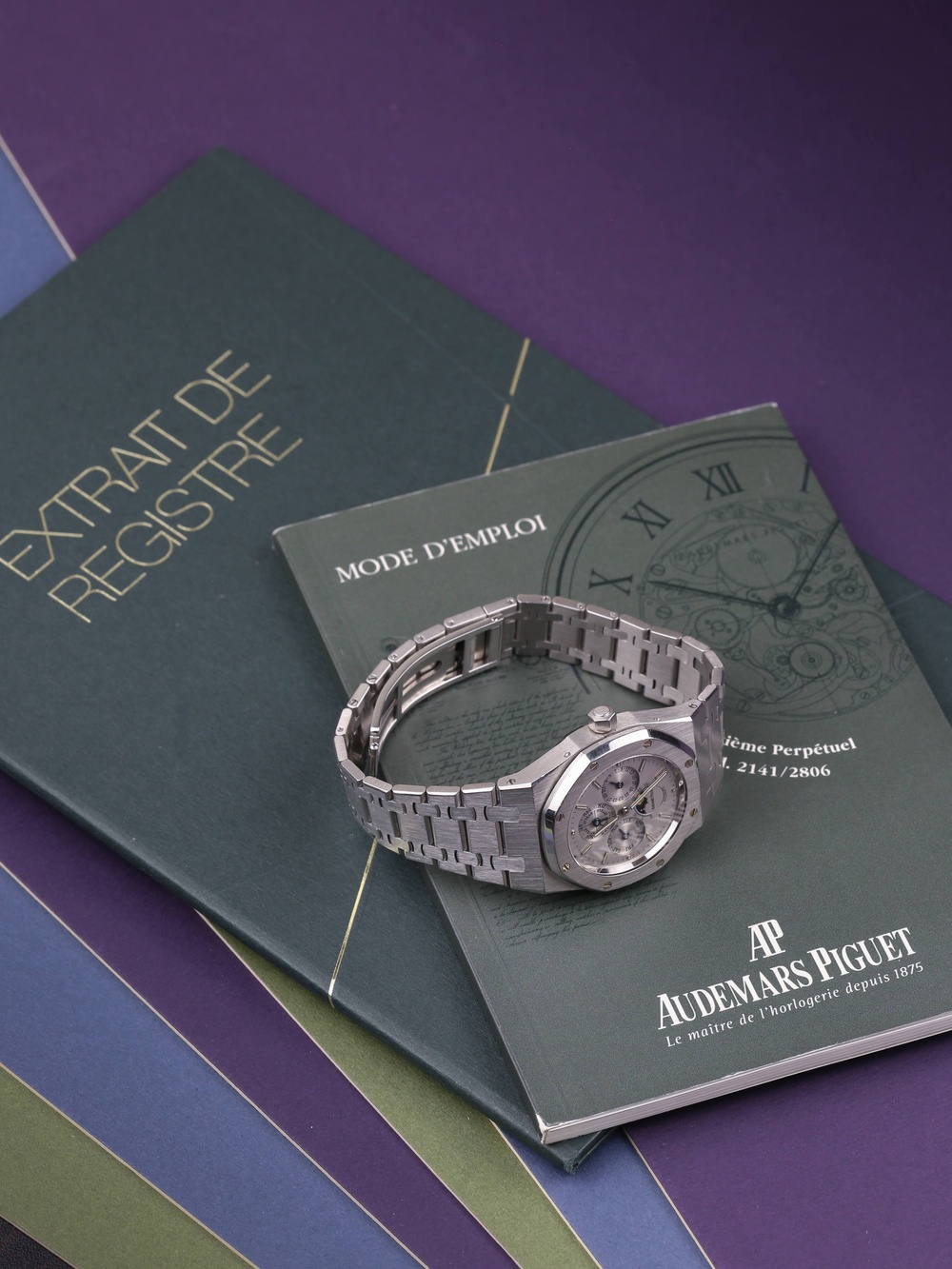
The one he regrets letting go is a Royal Oak Perpetual Calendar reference 25800ST, a stainless steel piece that had been the most expensive watch in his personal collection and came with memories attached through the friend he bought it from.
Selling it was a business decision made at the point when Tortoise Watches had to become more than an enthusiast’s project.
The piece went to another dealer, strengthened an important relationship and caught the attention of a major London dealer who later became part of Jhand’s wider business network.
He still misses the watch, but he also recognises what it did for the company.
Sometimes the piece that hurts to sell is the one that moves the whole story forward.
That tension is what makes Jhand’s view of watches feel grounded. He understands the pull of keeping something rare, but he also knows that a healthy vintage market depends on movement, trust and the willingness to let the next collector have their turn.