Peter Speake’s PS Horology has taken on a particularly British chapter of watchmaking history with the Tsuba 1720.
The new limited edition looks back to George Graham, the 18th-century horologist associated with some of the most important technical and aesthetic developments of his era.
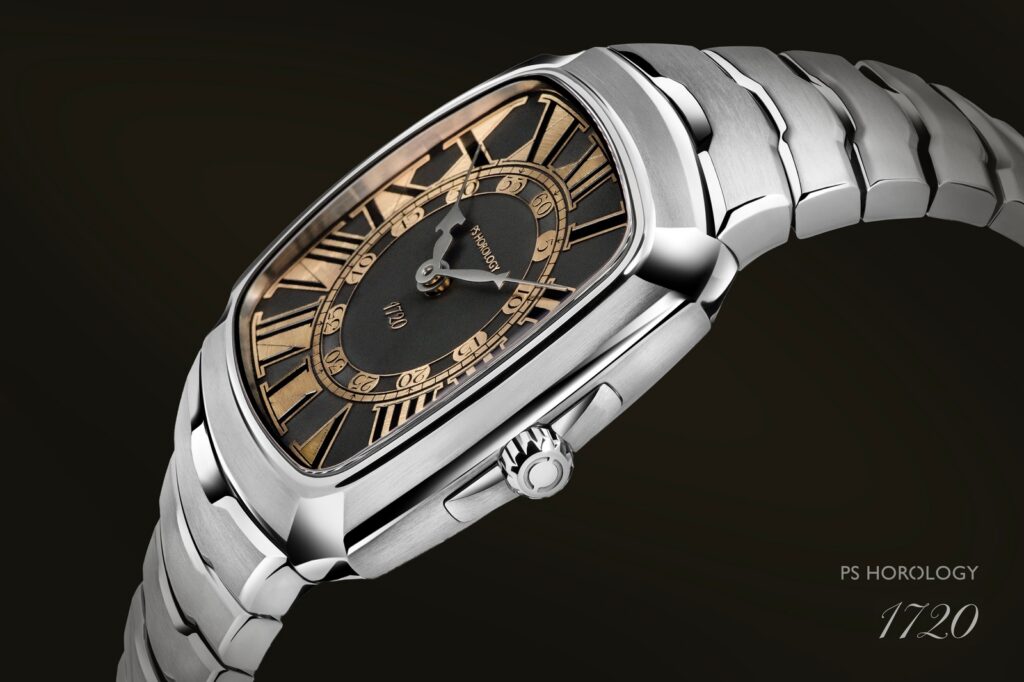
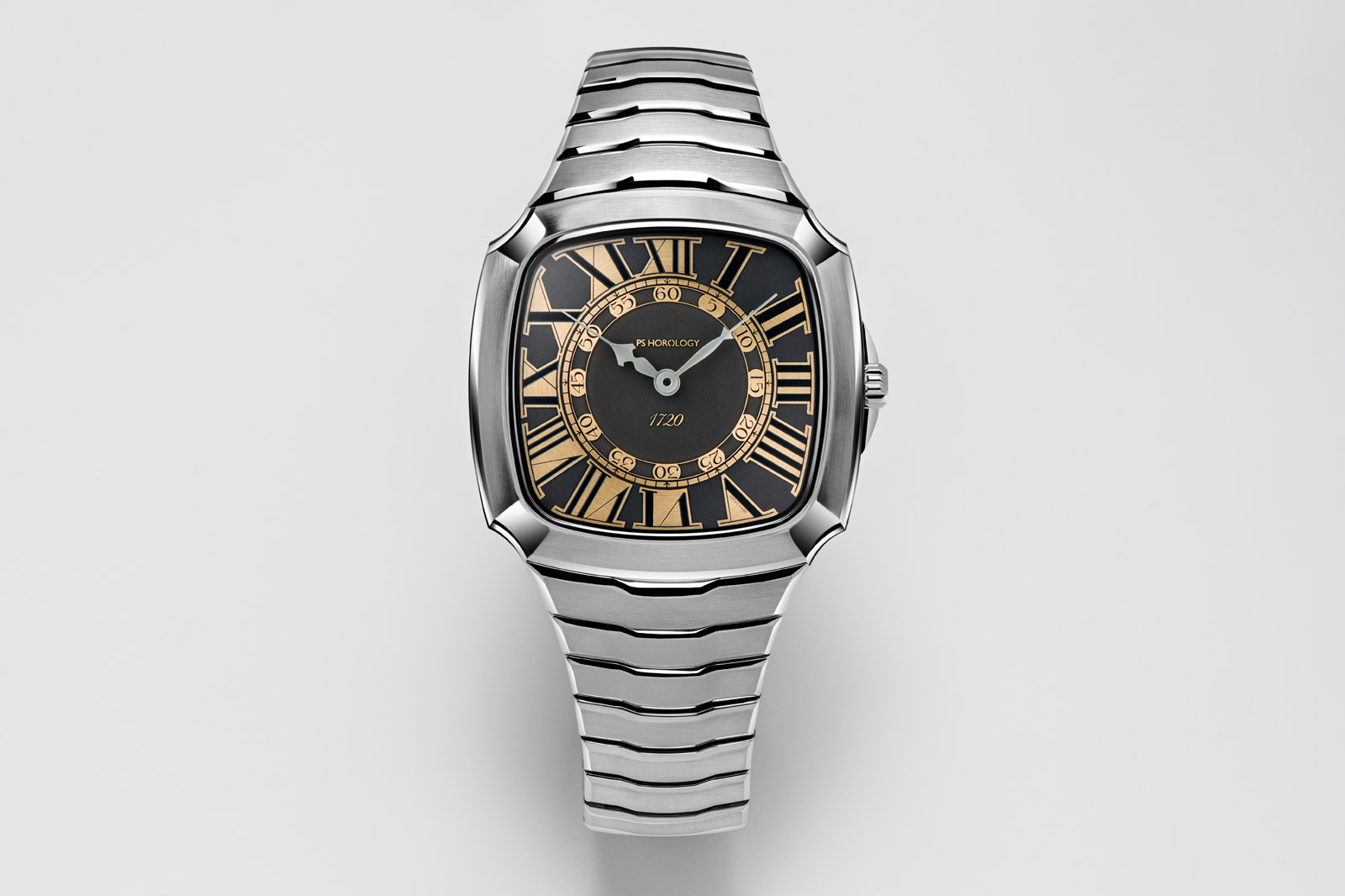
Rather than producing a museum-style copy, PS Horology has translated a 1719-1720 Graham pocket watch into a compact contemporary wristwatch with a steel cushion case, a modern automatic movement and a dial that keeps the spirit of the original without pretending to be one.
At a glance
- PS Horology has introduced the Tsuba 1720, a 28-piece limited edition dedicated to George Graham.
- The watch reinterprets a 1719-1720 Graham champlevé pocket watch with a laser-engraved ceramic lacquer dial and revised scale layout.
- It is priced at CHF 26,000 excluding tax, with delivery expected in February 2027.
George Graham through a modern British lens
George Graham lived from 1673 to 1751 and trained under Thomas Tompion, one of the defining figures of English clockmaking.
His career unfolded during a period of rapid horological invention, shortly after the invention of the hairspring in 1675.
Graham later developed his cylindrical escapement in 1726, but PS Horology has focused on a narrower point in his story.
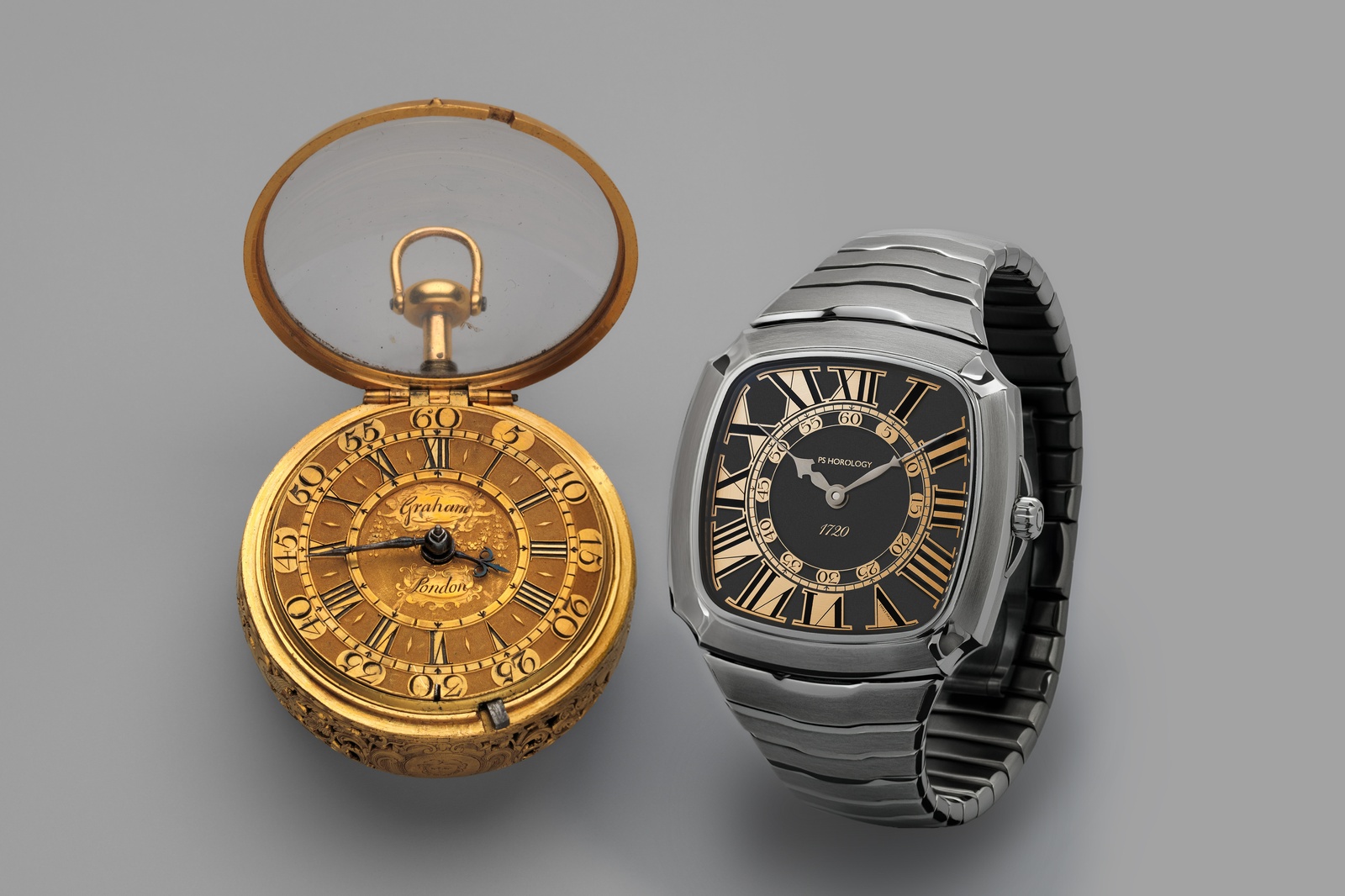
The Tsuba 1720 takes its visual cue from a pocket watch completed around 1719-1720, notable for its champlevé dial architecture and strong period character.
That choice fits the wider purpose of PS Horology, the project Speake founded in 2022 to explore art, history and culture through watchmaking.
A dial that edits rather than copies
The historical Graham watch used a hand-carved gold dial filled with champlevé enamel.
For the Tsuba 1720, PS Horology uses laser engraving, ceramic lacquer and polishing to create a contemporary equivalent rather than a direct reproduction.
The Roman hour numerals are lacquered by hand in a deeper black tone than the surrounding dial, giving the display its strongest graphic note.
One of the most meaningful changes is the order of the scales.
On the Graham pocket watch, the hours sat at the centre and the minutes occupied the outer track.
PS Horology reverses that arrangement, placing the minutes centrally and moving the hours to the outside.
The decision gives the angular Roman numerals more room to work across the cushion-shaped dial, while the rounded Arabic minute numerals remain tighter and more contained.
The hands also had to change to suit the new layout.
PS Horology kept close to the beetle and poker forms associated with the original pocket watch, then adapted them with an elongated hour-hand tip for the outer scale and a shelf on the minute hand to track the inner minute scale.
Steel cushion case and Vaucher micro-rotor movement
The Tsuba 1720 is housed in a 38.3mm steel cushion case, a shape that gives the watch a period-informed outline without pushing it into costume territory.
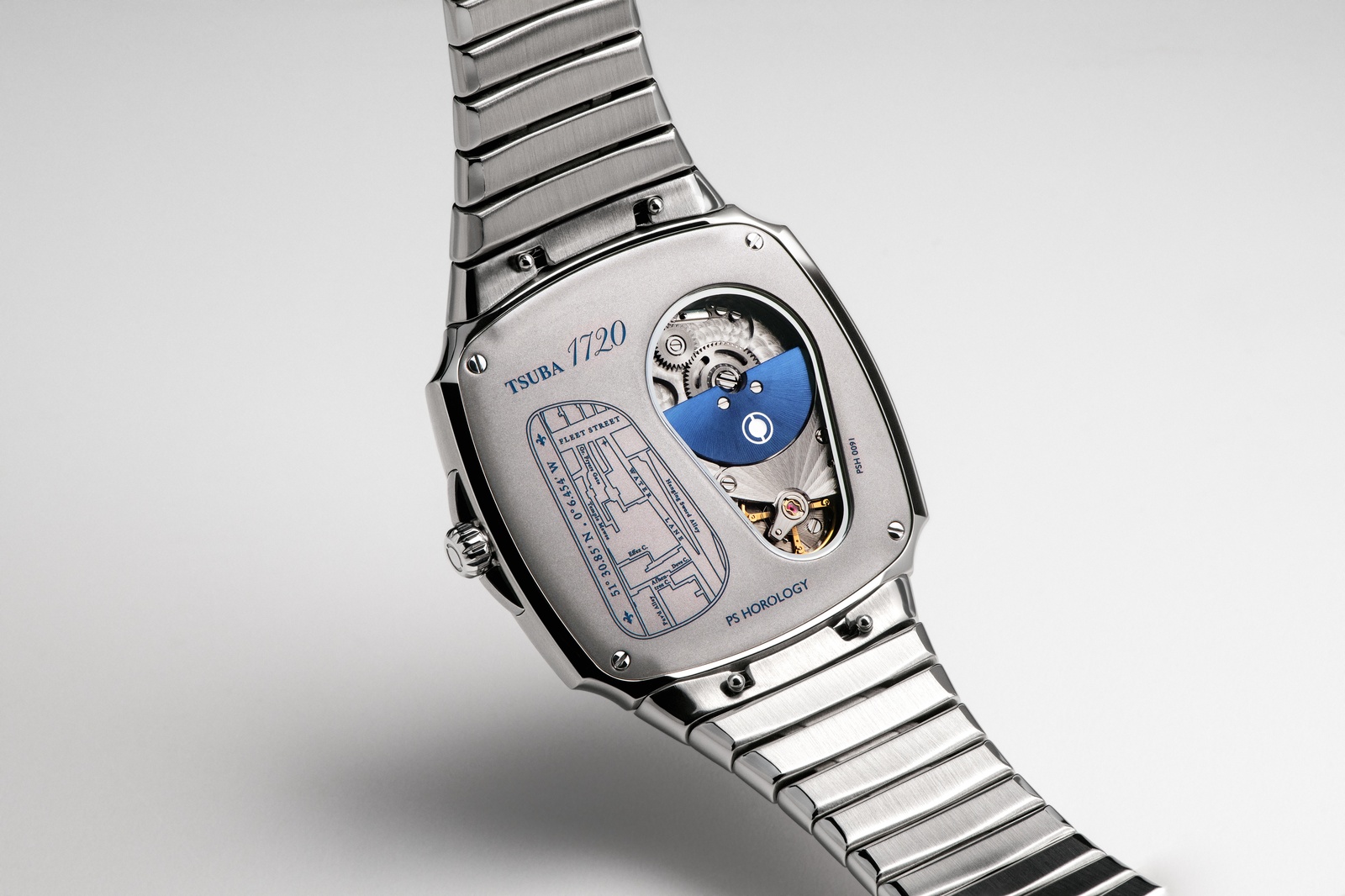
Inside is the Vaucher Manufacture calibre 5401, an automatic movement with a micro-rotor and a 48-hour power reserve.
The caseback is partly open, revealing the micro-rotor.
The closed section carries a map of George Graham’s historic London workshop, tying the movement side of the watch back to the place and personality behind the inspiration.
The underside of the integrated bracelet is also visible from the back, reinforcing that this is a modern wristwatch first and a historical reference second.
Details & Specifications
| Brand | PS Horology |
|---|---|
| Model | Tsuba 1720 |
| Case size | 38.3mm |
| Case material | Steel |
| Case shape | Cushion |
| Dial | Laser engraved with ceramic lacquer and polished, with hand-lacquered Roman numerals |
| Movement | Vaucher Manufacture calibre 5401 automatic |
| Rotor | Micro-rotor |
| Power reserve | 48 hours |
| Caseback | Partial exhibition caseback with map of George Graham’s historic London workshop |
| Bracelet | Integrated bracelet |
| Limited edition | 28 pieces |
| Price | CHF 26,000 excluding tax, approximately £23,675 |
| Availability | Available direct from PS Horology, with delivery expected in February 2027 |
The Tsuba 1720 should appeal to collectors who like their independent watchmaking with a clear historical line, not just a vintage mood.
It’s a thoughtful bridge between Peter Speake’s modern British watchmaking perspective and one of the great names of British horological history.