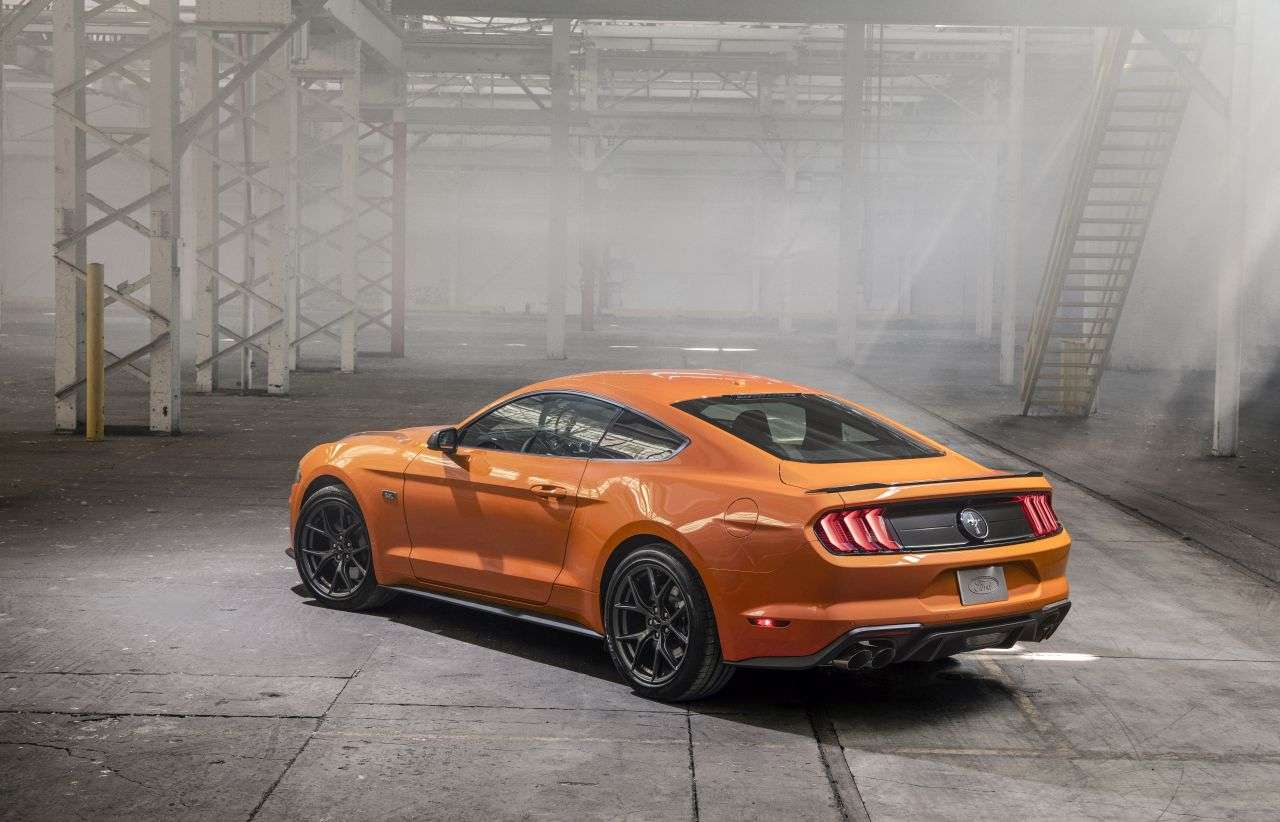
A four-door Mustang no longer feels like the sort of idea that lives only in forums and design studios.
Ford has already stretched the Mustang name into the electric crossover space with the Mach-E, but the next expansion could stay much closer to the coupe’s traditional character.
The interesting part isn’t simply the extra doors. It’s the possibility that Ford could build a Mustang sedan around familiar combustion power, including the kind of V8 hardware that still defines the badge for many buyers.
At a glance
- Ford is exploring how the Mustang family could expand, with a four-door combustion model now looking more plausible.
- A production version would likely need to share heavily with the current Mustang to keep costs under control.
- The idea arrives as traditional sedans occupy a far smaller slice of the market than they once did.
Ford sees a smaller sedan market with room for the right car
Andrew Frick, president of Ford Blue and Model e, recently framed the challenge clearly while discussing the decline of the sedan segment.
Sedans once represented around half of the market, while today that figure sits closer to 16 or 17 percent.
That would usually make a new four-door car a difficult business case, especially from a company that has spent years prioritising trucks, SUVs and crossovers.
Frick’s comments suggest Ford hasn’t dismissed the idea, but any sedan would need to fit the wider portfolio and be cost-effective to develop.
That wording matters because it points away from a clean-sheet project and toward something built with existing Mustang components and manufacturing logic.
A Mustang sedan would need to feel like more than a badge exercise
The Mustang name gives Ford something most mainstream sedan projects lack before they even begin.
It brings instant recognition, a performance identity and a loyal audience that still cares about naturally emotive cars.
Ford reportedly showed dealers a four-door coupe concept in 2024, alongside an off-road-focused Mustang idea, which suggests the company has been actively testing how far the name can stretch.
The “Mach 4” trademark added another layer of intrigue, even if trademarks don’t guarantee production intent.
If a four-door Mustang reaches showrooms, the design brief would be delicate.
It would need to offer real everyday usability without turning into a generic sport sedan wearing familiar lights and badging.
The most convincing version would likely lean into a fastback profile, a long bonnet and rear-drive proportions rather than chasing the upright practicality of a crossover.
Combustion power is the key distinction
The Mach-E already gives Ford a four-door Mustang-branded model, but it occupies a completely different part of the showroom.
A combustion four-door Mustang would speak to buyers who want the shape and usability of a sedan without giving up the mechanical character of the coupe.
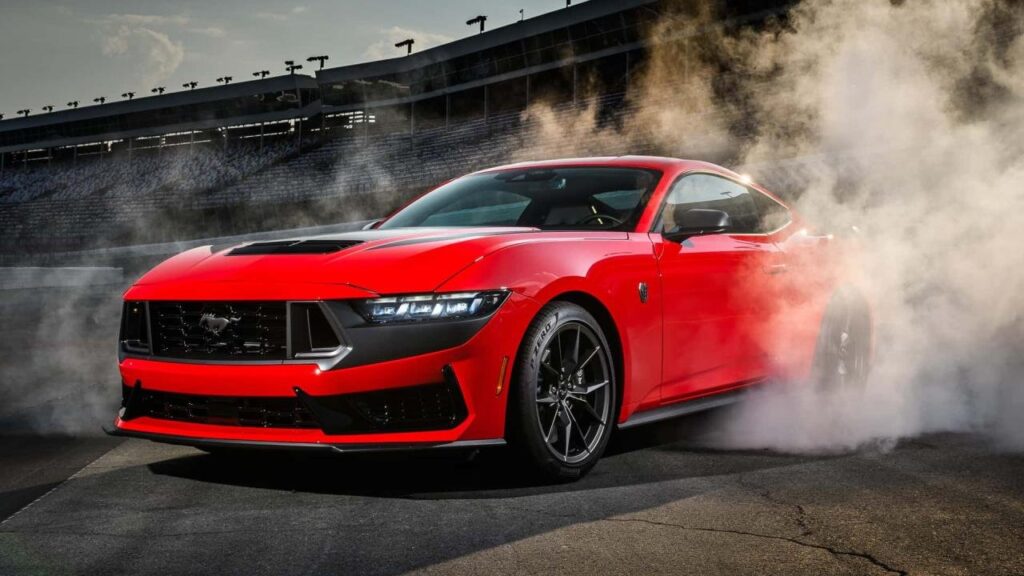
If Ford keeps costs contained by leaning on the current Mustang, the obvious powertrains would be the 2.3-litre EcoBoost four-cylinder and the 5.0-litre Coyote V8.
The latter is the version enthusiasts will watch most closely, with current Mustang V8 output sitting well beyond 480 hp depending on configuration.
A V8-powered four-door Mustang would also give Ford a rare position in today’s market, where affordable rear-drive performance sedans with big engines have become increasingly scarce.
The unanswered question is whether a manual gearbox could survive the transition to a sedan body style.
For many Mustang loyalists, that detail would separate a genuinely enthusiast-focused model from a more conventional performance four-door.
Where it could sit in the Mustang family
The strongest argument for a Mustang sedan is that it could broaden the nameplate without forcing customers into an EV or SUV shape.
It would appeal to drivers who like the current coupe’s attitude but need easier rear-seat access or a more family-friendly daily car.
It could also give Ford a halo-like alternative to mainstream sedans, using emotion rather than pure utility as the selling point.
The risk is dilution.
Mustang has survived because its core identity remains clear, even as the market around it has changed.
A four-door version would have to protect that identity through stance, powertrain choice and driving feel, not just exterior styling cues.
For now, the idea remains unconfirmed, but the pieces are lining up in a way that makes it hard to ignore.
If Ford can make the numbers work, a non-electric four-door Mustang could become one of the more interesting performance-car twists of the next few years.