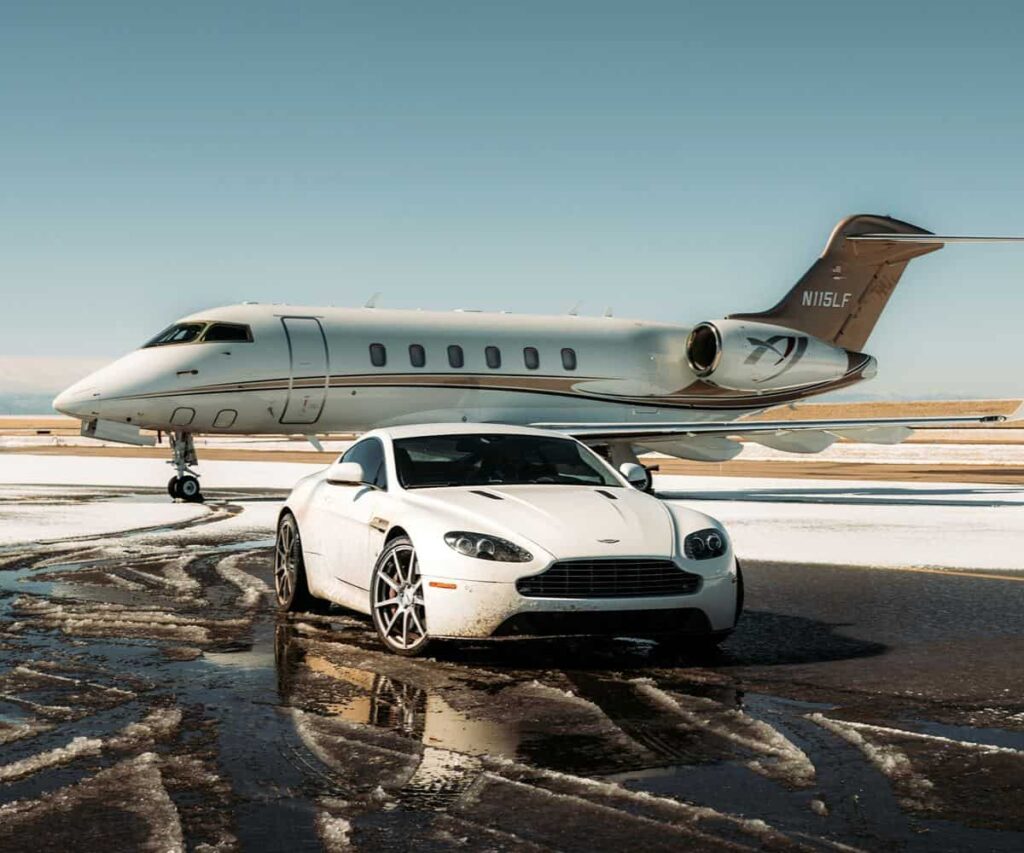
Private aviation has a reputation for opacity, but the pricing logic is easier to understand once you stop thinking of it like an airline ticket.
You’re not buying one seat on a flight that was already going to operate. You’re arranging an aircraft, crew and schedule around your own journey.
That’s why the same London to Nice request can look perfectly reasonable one week and sharply more expensive the next.
At a glance
- Many popular one-way private jet charters within Europe fall roughly between €5,000 and €15,000 for the whole aircraft.
- Positioning flights, seasonal demand, airport slots, passenger numbers and luggage can all shift the final quote.
- London to Nice may be around €5,000 to €9,000 in ordinary conditions, while peak summer dates can move pricing well above typical ranges.
Why private jet prices move so much
A private flight is priced around the aircraft’s full operating picture, not just the passengers sitting inside it.
If a suitable jet is already at your departure airport, the journey can be relatively efficient for the operator.
If that aircraft first has to fly empty from another city to collect you, the economics change immediately.

This is known as positioning, and it’s one of the biggest reasons private jet quotes vary so widely across Europe.
To the passenger, London to Nice is still London to Nice.
Operationally, the aircraft may have flown Paris to London before continuing to the South of France, and that extra movement has to be accounted for somewhere in the quote.
It also explains why the cheapest hourly rate isn’t always the cheapest flight.
A lower-priced jet sitting hundreds of miles away can cost more than a slightly more expensive aircraft already close to your departure point.
Typical European charter ranges in 2026
For many short and medium European sectors, a one-way private jet charter often sits somewhere between about €5,000 and €15,000 for the whole aircraft.
That range is most useful as a budgeting guide rather than a fixed fare card.
London to Nice, one of Europe’s classic private aviation routes, can often be around €5,000 to €9,000 one way in normal conditions.
London to Ibiza may fall in the region of €6,000 to €12,000, while Geneva to Mykonos can sit around €7,000 to €13,000.
Those figures can change quickly when the aircraft required is larger, the sector is longer or the requested date sits in a busy travel window.
A Friday afternoon in late July is a very different market from a quiet weekday in May, even if the runway and flight time are almost identical.
Seasonality and events can reshape the market
Europe’s private jet market follows the movement of wealth, leisure and business through the year.
In summer, aircraft demand leans heavily towards Mediterranean destinations such as Nice, Cannes, Ibiza, Mallorca, Olbia and Mykonos.
In winter, the pattern turns toward Alpine gateways including Geneva, Sion and Innsbruck.
Then come the pressure points created by major events.
The Monaco Grand Prix, Cannes Film Festival, prominent yacht shows, Art Basel and the World Economic Forum in Davos can all concentrate demand in a narrow window.
When aircraft, crew, parking and slots are under pressure, prices rise.
This is why headline “from” pricing can be misleading for first-time charter clients.
It may describe what happens when everything lines up neatly, but it doesn’t always reflect what a traveller should budget for a specific date, time and passenger requirement.
When private flying makes financial and practical sense
Private aviation rarely wins a simple one-passenger comparison against a commercial ticket.
The equation changes when several people are travelling together, particularly on a route where timing and convenience matter.
Take London to Nice.
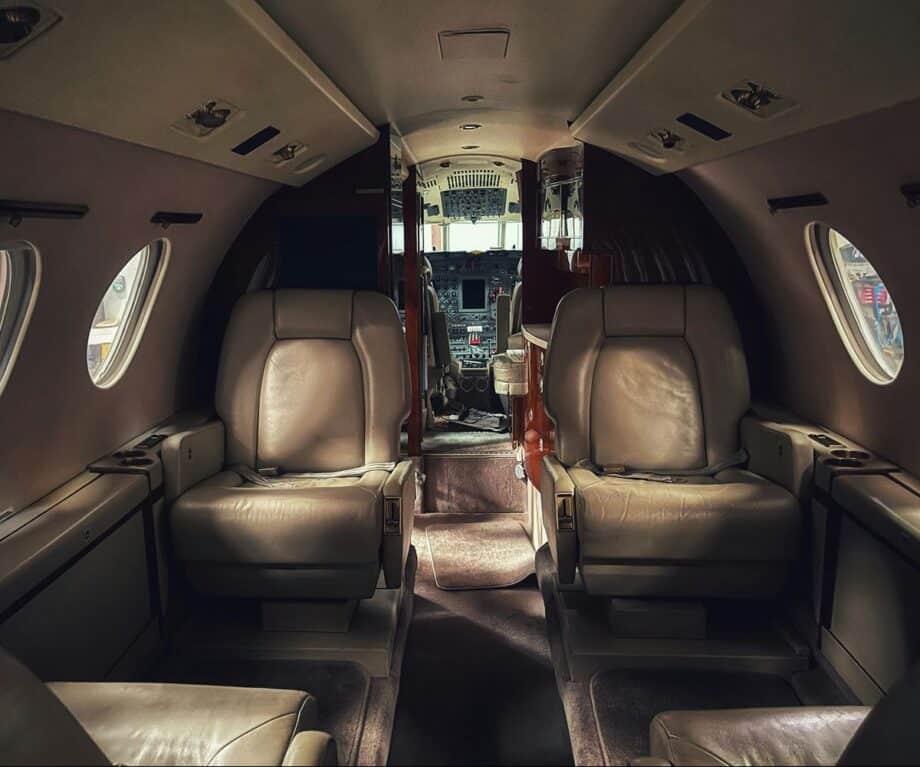
The flying time is just under two hours, and a light or midsize jet can usually handle the trip comfortably for a small group.
For six passengers, the comparison is no longer one airline seat against one private aircraft.
It becomes the aircraft against multiple flexible Business Class fares, airport transfers, terminal time, luggage complications and the restrictions of a scheduled timetable.
The private aircraft will usually still cost more.
But the value may sit elsewhere, especially for a family travelling with children, significant luggage and a pet, or for executives who need to leave immediately after a meeting.
It can also make sense for passengers connecting to a yacht, villa or event where a delayed arrival would create a larger inconvenience than the cost of the aircraft.
Private flying is at its strongest when it solves a practical problem rather than simply replacing a premium airline seat.
What affects the final quote
The route is only the starting point.
Operators and brokers will also look at passenger count, luggage volume, airport choice, flight timing, crew duty limits and whether the aircraft can be used efficiently before or after your trip.
- Aircraft positioning before your departure
- Whether the aircraft has a suitable onward flight after your journey
- Seasonal demand on the route
- Airport slots, parking and operating restrictions
- Passenger numbers and luggage requirements
- Aircraft category, from light jet to larger cabin aircraft
- Flexibility around departure time
A passenger willing to move a departure by an hour may sometimes give the operator more room to pair the aircraft efficiently with another movement.
That won’t always transform the price, but in private aviation small timing differences can matter.
The most realistic way to think about private jet costs in Europe is not as a fixed menu, but as a live market shaped by aircraft location and demand.
For travellers planning 2026 trips, the smartest approach is to work with ranges, stay flexible where possible and understand that the best-value aircraft is usually the one that fits the journey most efficiently.