James McVey didn’t fall into watches through a grand plan or a carefully built wish list.
The Vamps guitarist was nudged toward the habit by his father-in-law, then properly hooked by the kind of watch memory many collectors understand: seeing the right person wear the right thing at the right time.
Six years into collecting, his taste has moved well beyond obvious trophies, toward weathered Universal Genèves, oddball GMTs and watches that can survive one simple test.
At a glance
- James McVey’s collecting now centres on overlooked watches, especially later Universal Genève pieces.
- His collection spans a unique Christopher Ward Bel Canto, vintage Rolex, a Ulysse Nardin Freak and a £3 quartz watch from a mental health retreat.
- His guiding question is whether he’d still want a watch without online attention or resale upside.
A Submariner started the idea, but not the collection
McVey traces his first real awareness of watches to Ed Cook, the photographer who worked with The Vamps in the band’s early years.
Cook wore a mid-1990s no-date Rolex Submariner with tritium, and McVey remembers associating the watch with someone he saw as effortlessly cool.
That image stayed with him, though the collecting habit took longer to form.
His father-in-law had spent years trying to pull him into watches, and McVey now frames that persistence as the gateway into a world that eventually became part of his identity.
The Submariner would become his first watch, but not a permanent anchor.
He later sold it and, by his own account, didn’t miss it in the way he expected.
The appeal of Universal Genève’s neglected years
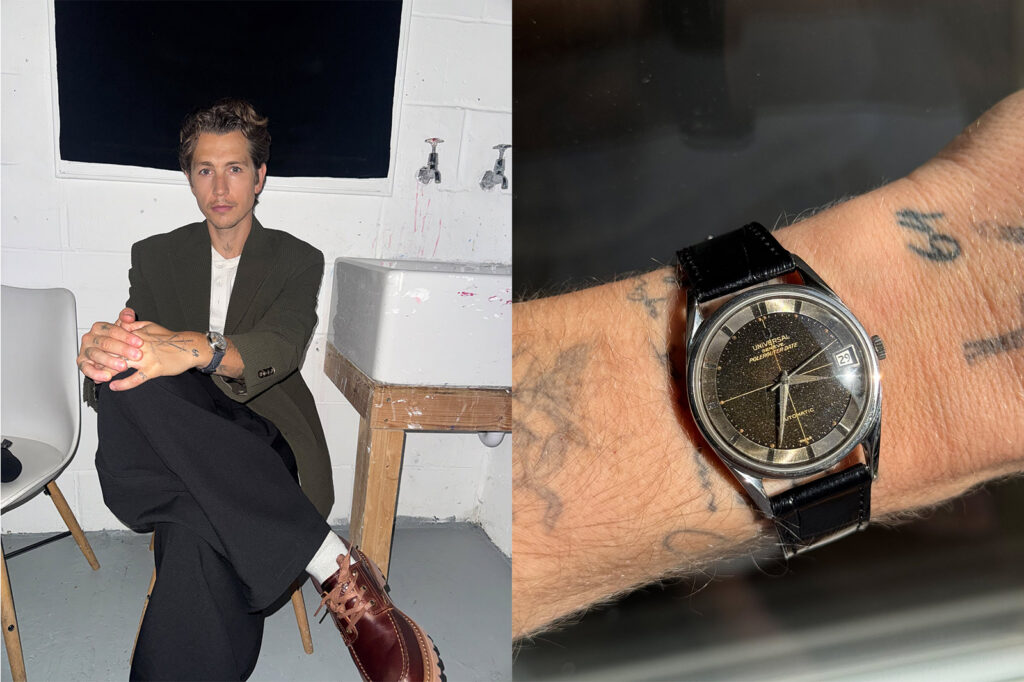
McVey’s strongest collecting lane today is Universal Genève, particularly the brand’s later era from the 1980s into the early 2000s.
That’s not the period most collectors instinctively chase.
The usual reference points are the earlier Tri-Compax models, the Polerouter years and the mid-century designs that made the brand so respected.
McVey is more interested in the fringe.
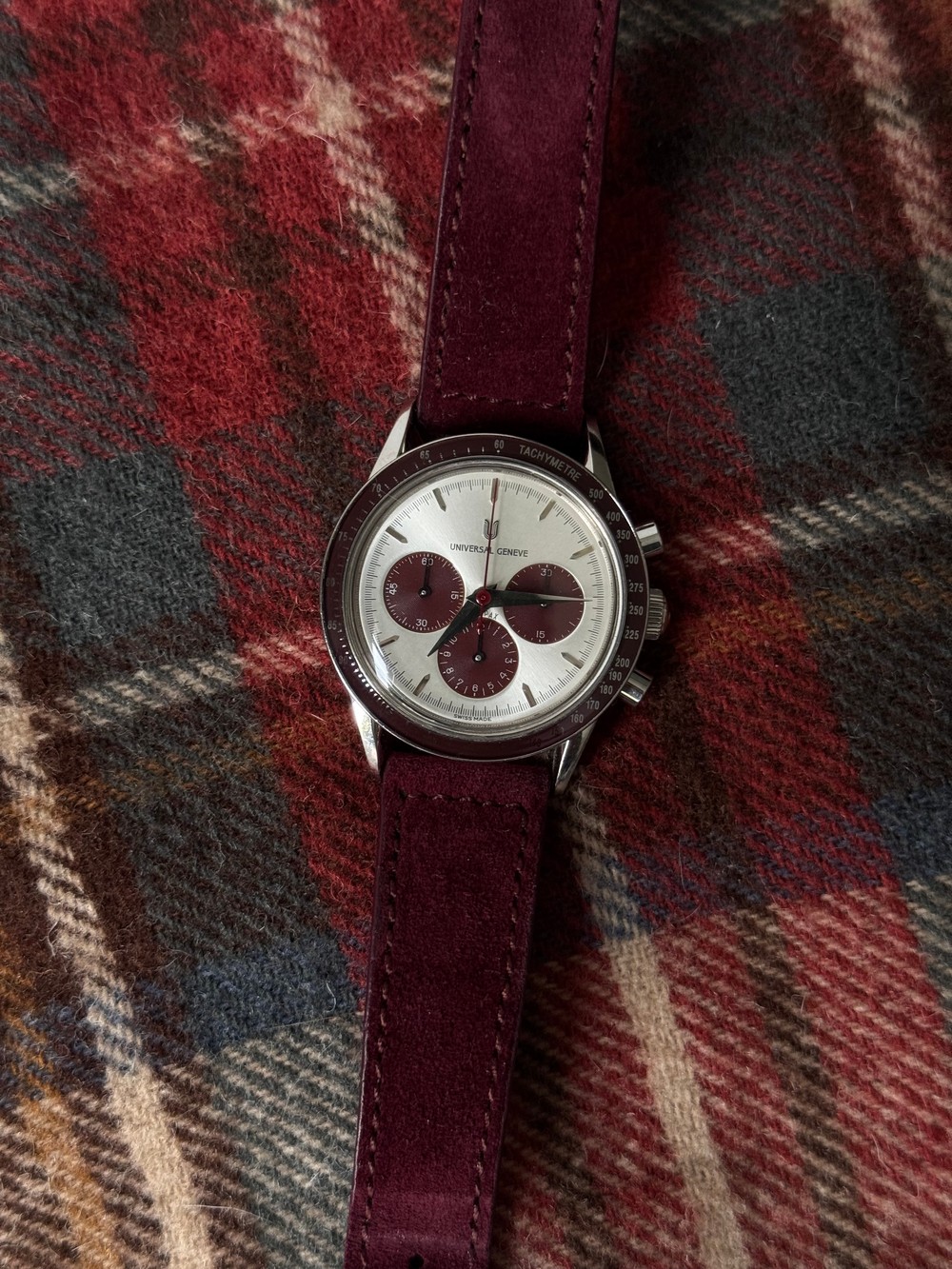
He has recently bought a 1993 Universal Genève World Time GMT from his birth year, a watch he says many of his own Universal Genève friends disliked on sight.
He bought it anyway, drawn to its position outside the current consensus.
There’s a practical side to that instinct, too.
He describes his 1990 Universal Genève Baby Nina as a watch that sums him up as a collector, because it sits near the more expensive and better-known 1960s references without being the thing everyone is already chasing.
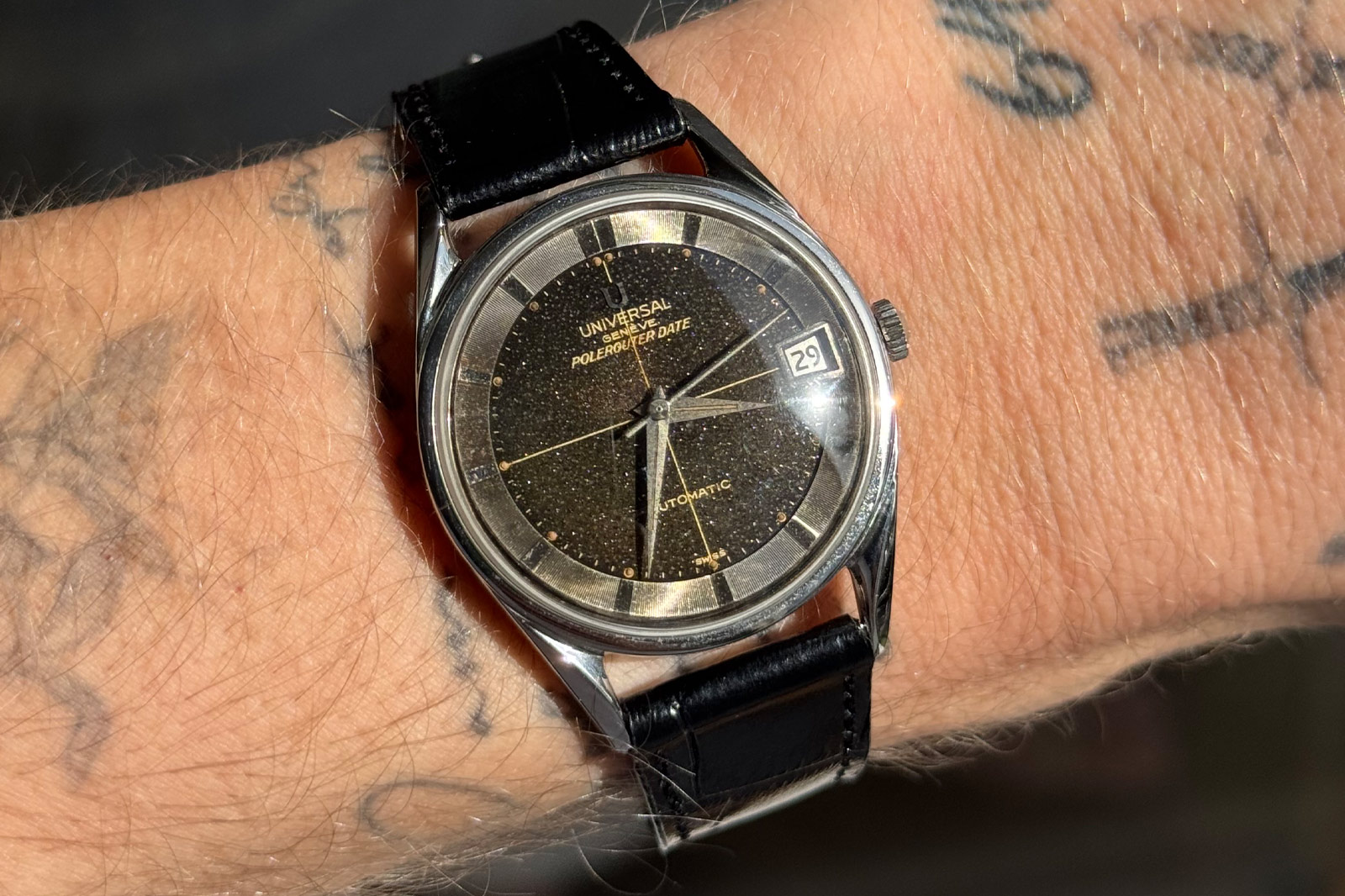
His Universal Genève Polerouter carries the kind of aging he likes most, with a tropical dial that was once black and lume plots that have turned custard-toned.
For McVey, that creamy tritium look has become one of the clearest threads in what he hunts.
The watches with the strongest stories
Not every meaningful watch in McVey’s orbit is rare in the market sense.
One of the most personal is a cheap quartz watch handed to him during the Hoffman Process, a mental health retreat where phones were taken away and participants were given simple watches to keep to the schedule.
He had arrived with six watches, including vintage Rolex pieces, before realising the contradiction of bringing a watch collection to a retreat built around self-reflection.
The retreat watch was worth about £3, and he accidentally ended up with two.
They matter because everyone in the group wore the same watch through an intense shared experience.
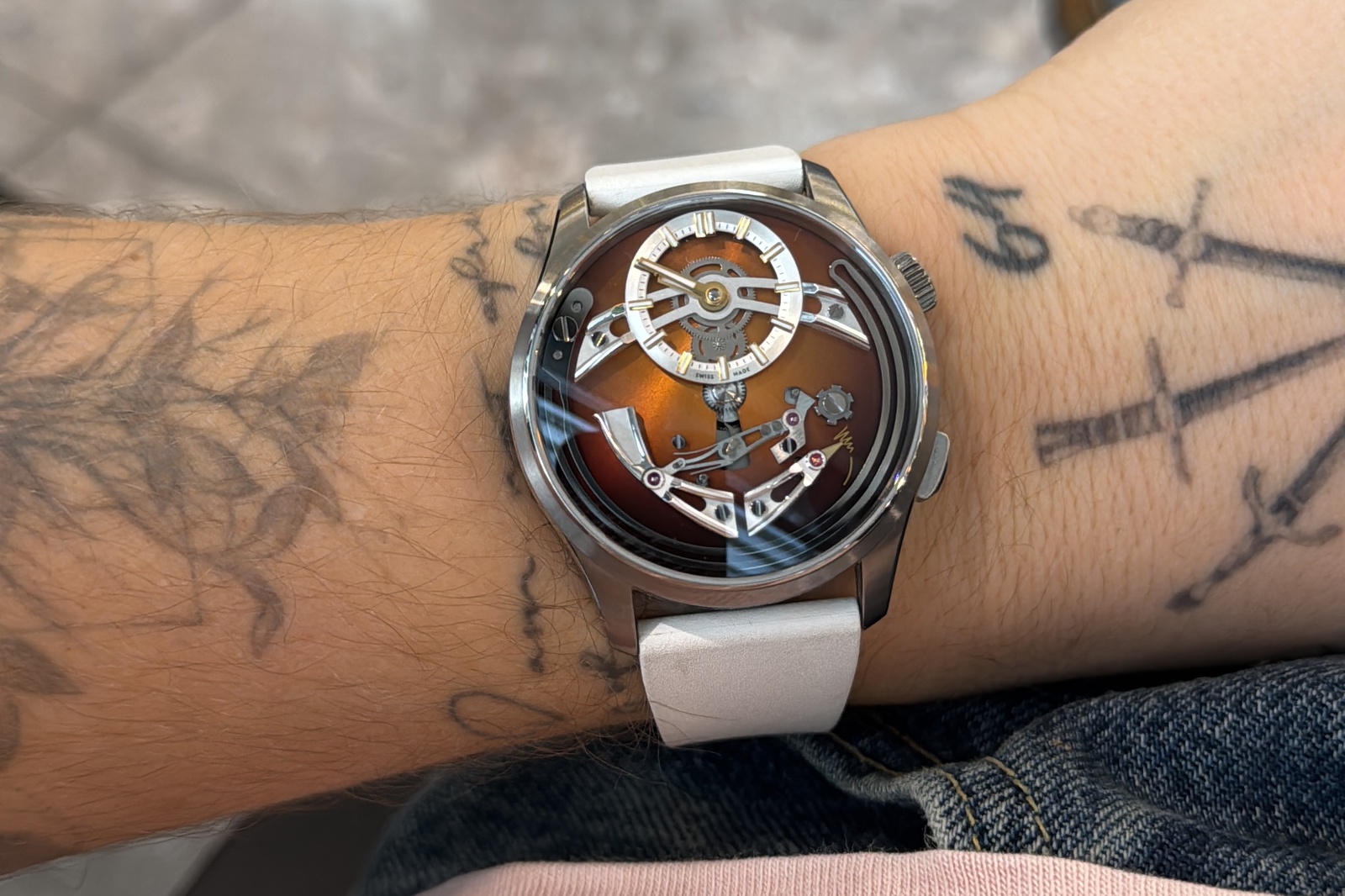
At the other end of the spectrum is his unique Christopher Ward Bel Canto, designed with the brand and inspired by a 1950s Fender Stratocaster.
Its sunburst gradient dial drew enough interest that people asked for more, but McVey says the idea of making additional pieces wasn’t entertained.
His wife’s first watch also holds a place in the story.
In 2022, at Watches of Switzerland in New York, she gravitated past Longines and Cartier before landing on a Grand Seiko SBGM221 with a cream dial and blue GMT hand.
McVey saw it as an obscure first choice, only later appreciating that she had picked one of Grand Seiko’s most recognised modern references.
Rethinking rarity, regret and restraint
McVey is candid about the tension between rarity and usefulness.
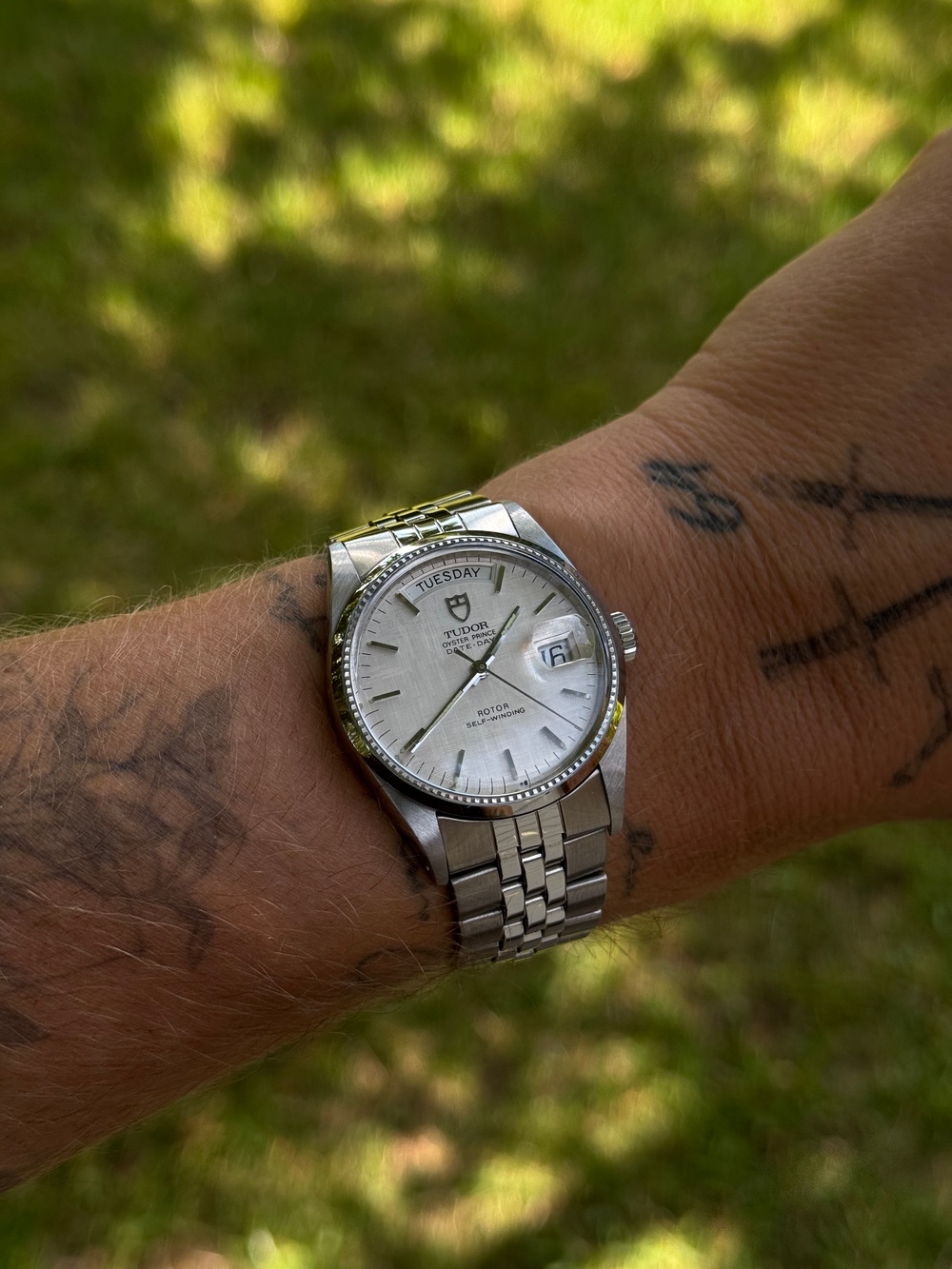
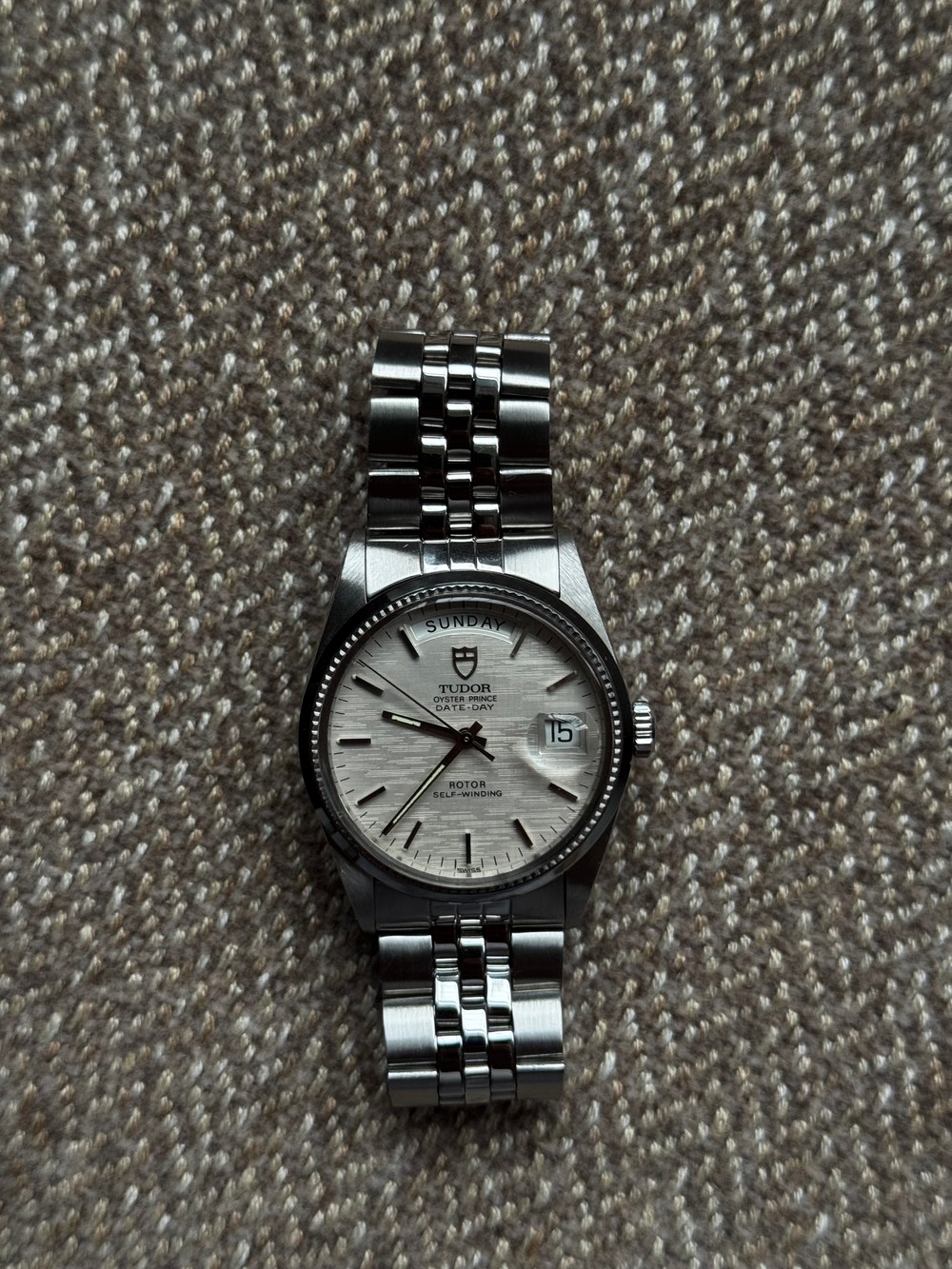
He is considering selling a mid-1980s Tudor Date Day with a linen dial, a watch he believes he’ll regret letting go.
He says its rarity has made him wear it less, which is part of the problem.
The more he worries about condition, the less the watch behaves like something to enjoy.
That tension has pushed him to rethink the psychology of collecting, especially the habit of keeping something simply because it’s difficult to replace.
His current filter is sharper than it used to be.
He asks whether he would still like a watch without social media attention, without resale logic and without the reassurance that other collectors approve.
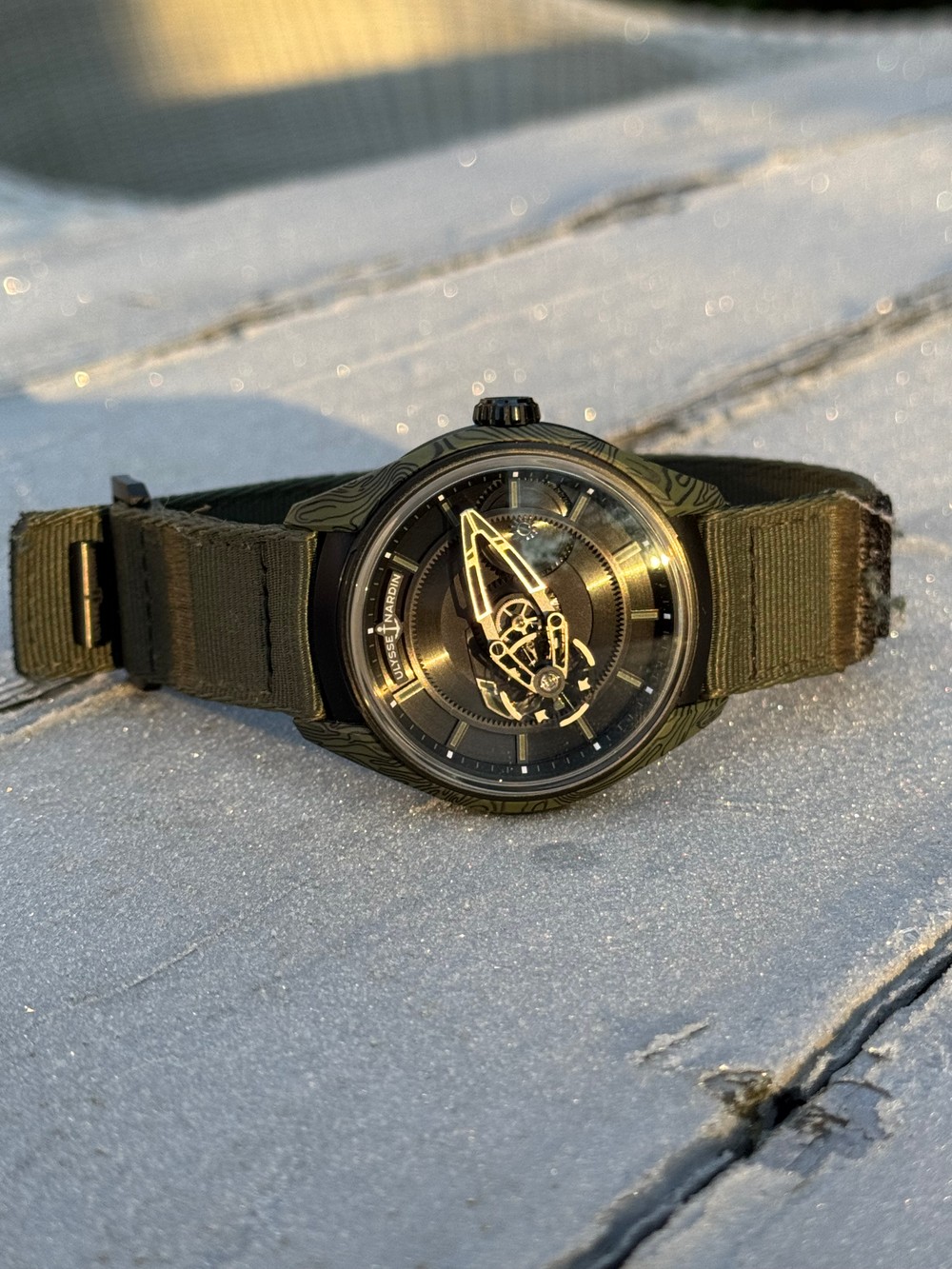
That question explains why a Ulysse Nardin Freak can sit comfortably beside vintage Universal Genève in his collection.
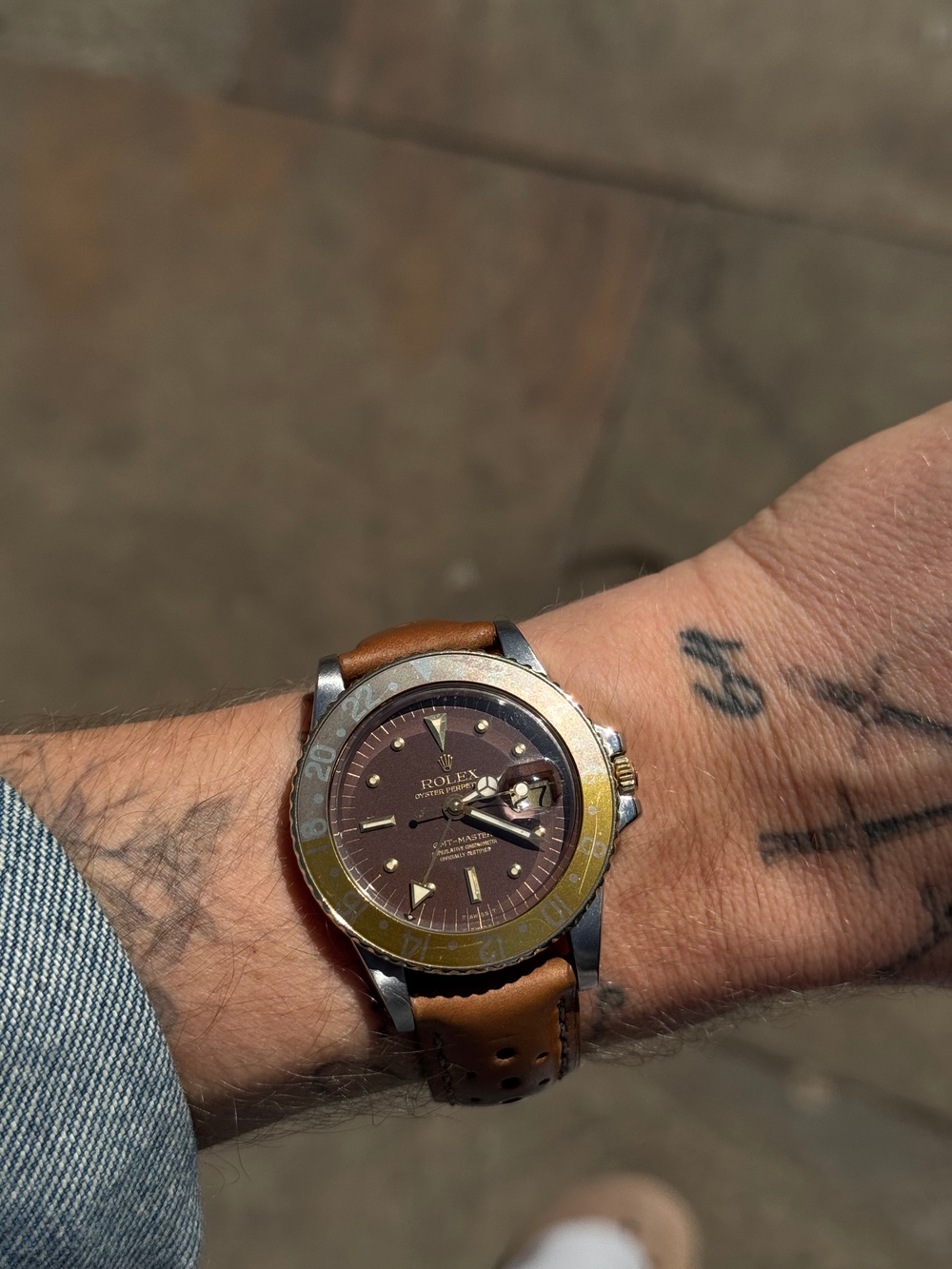
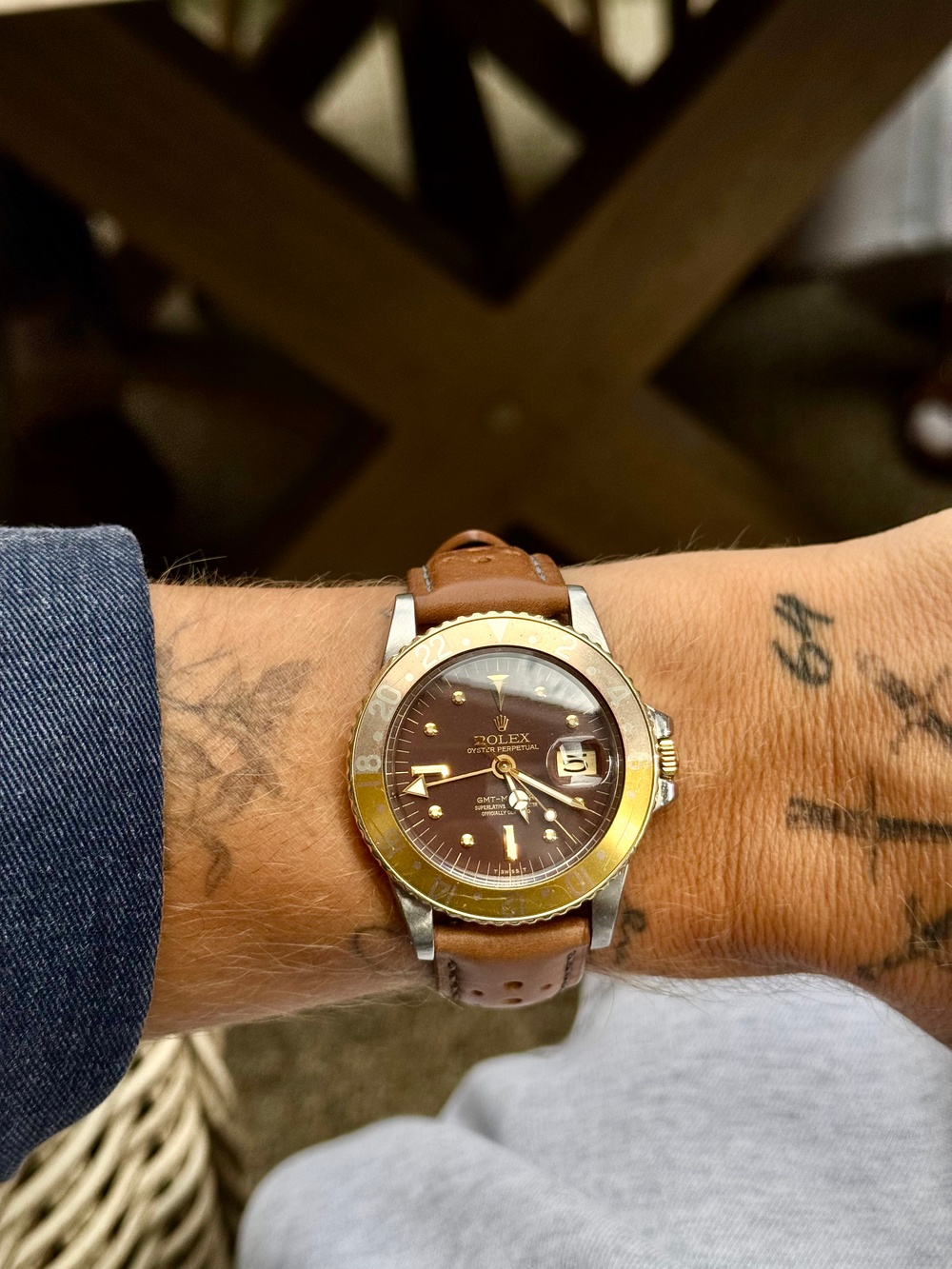
It also explains why he can appreciate an Otsuka Lotec No.6, a Delhi Watch Company watch costing £35, a vintage Polerouter and a neglected Rolex root beer GMT-Master without needing them to speak the same design language.
Size remains an instant barrier.
McVey says a 44mm case will usually stop him before he thinks about thickness, and he’s wary of multi-colour dials unless the execution really earns it.
If he had to rebuild from nothing, he’d aim for fewer watches and clearer roles: a dress watch, a grab-and-go piece, a chronograph and a GMT, rather than several watches clustering around the same purpose.
He also admits that geography would matter from the beginning, with one exceptional Grand Seiko rather than four, and that he would avoid buying watches drunk.
McVey’s collection is interesting because it doesn’t pretend taste is fixed.
It’s a record of influence, reaction, overcorrection and instinct, with the most revealing watches often being the ones other people would have left behind.