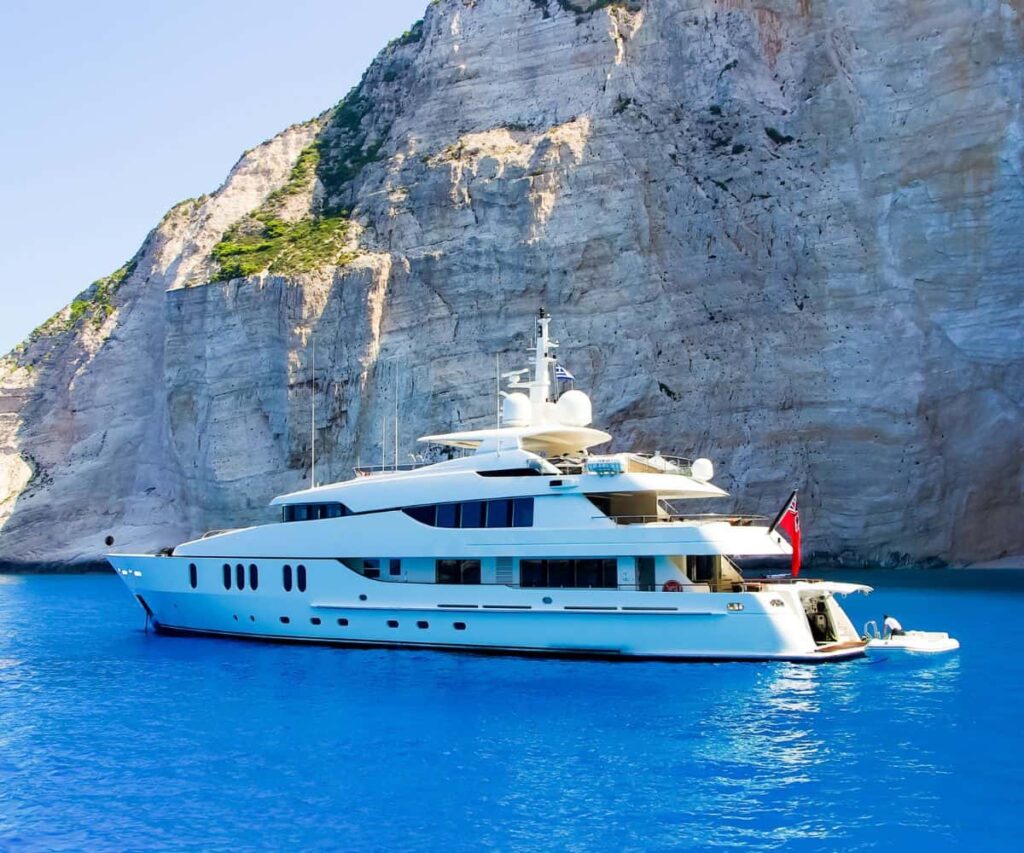
For many yacht guests, a Greek charter still begins with Mykonos and Santorini.
There’s nothing wrong with that instinct, but the Cyclades aren’t the only version of Greece worth seeing from a superyacht.
On the country’s western side, the Ionian trades hard afternoon winds and whitewashed drama for pine-edged bays, luminous water and itineraries that don’t feel like a test of endurance.
At a glance
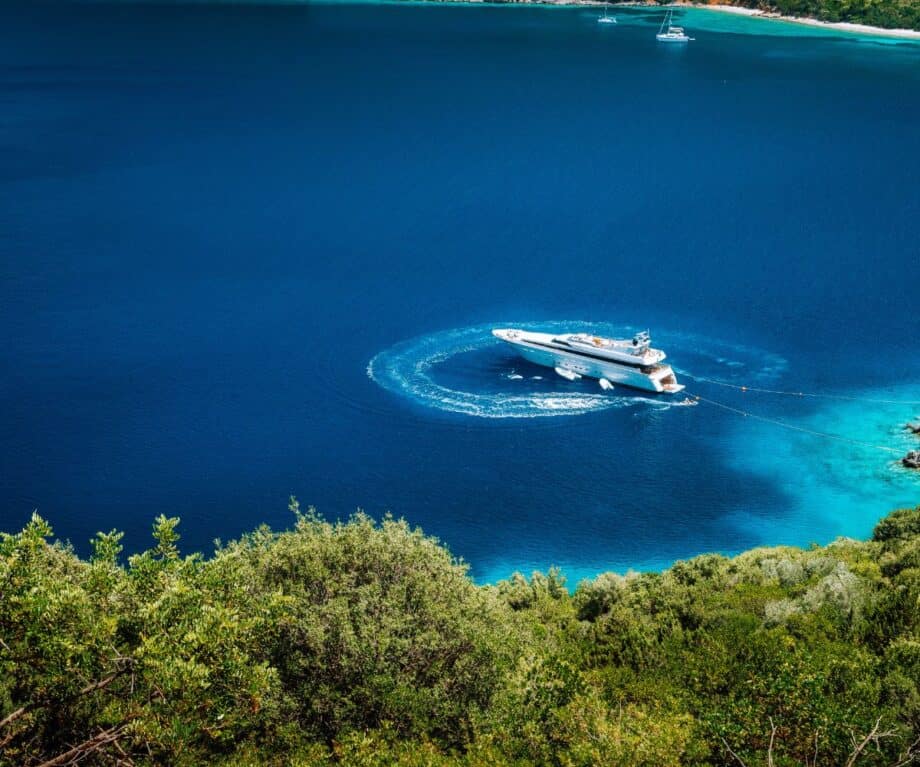
- The Ionian is a calmer, greener alternative to the Cyclades for a Greek superyacht charter.
- Corfu, Lefkas, Paxos, Antipaxos, Kefalonia and Ithaca offer short passages, clear water and varied anchorages.
- May to October is the broad charter window, with June and September especially appealing for quieter bays.
A gentler sea than the Cyclades
The main practical difference is wind.
In the Cyclades, the meltemi can turn July and August into a waiting game, particularly around exposed Aegean islands such as Mykonos.
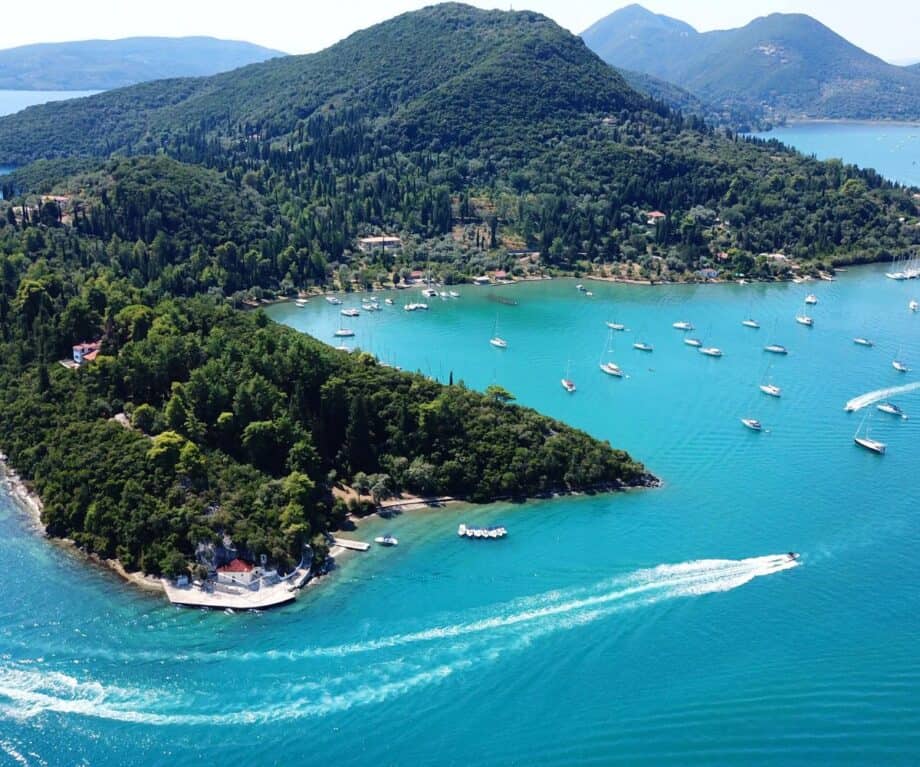
The Ionian is a different proposition, with lighter conditions and more sheltered cruising grounds for much of the season.
That matters on a superyacht because comfort is part of the point.
Shorter passages mean more time at anchor, longer swims, later lunches and fewer conversations about whether the afternoon crossing is still sensible.
The landscape changes the mood as well.
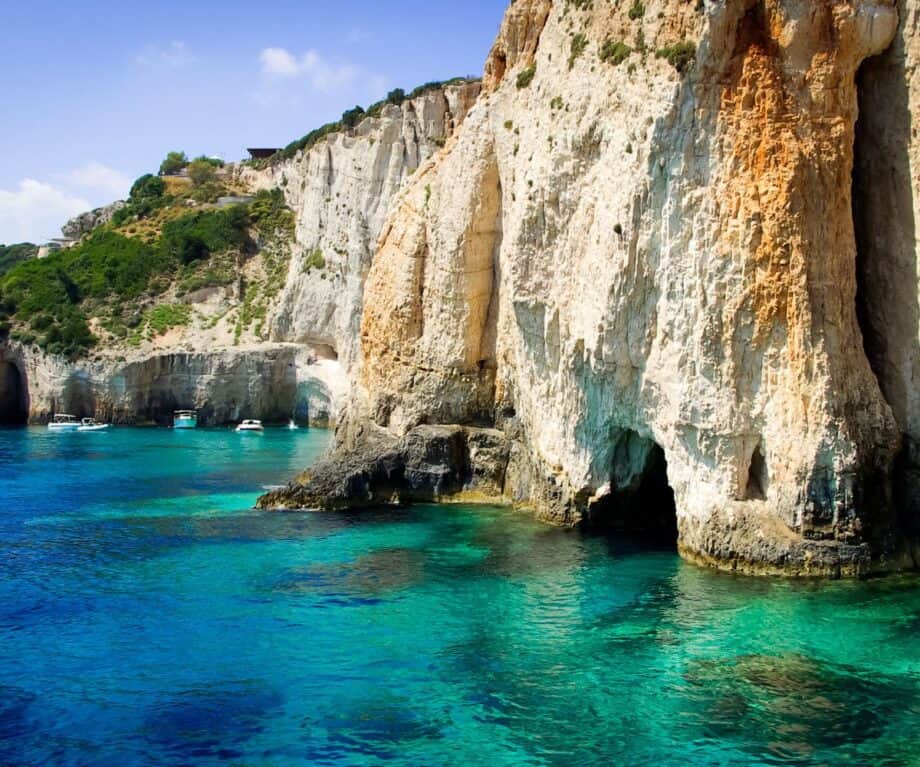
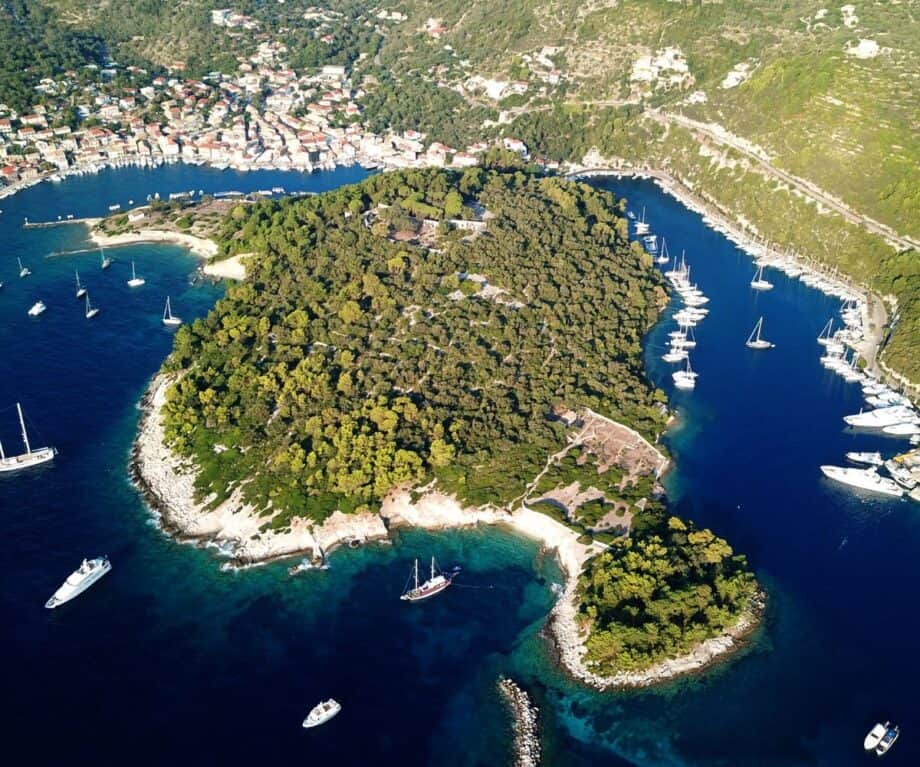
Instead of the sun-bleached, blue-and-white image many travellers associate with Greece, the Ionian is lush, with green hills and pine trees running close to the water.
The sea can look almost illuminated in the shallows, especially around the smaller islands where sandy bottoms throw the light back up through the water.
Corfu, Lefkas and the value of an easy start
Corfu is the Ionian island most international guests tend to recognise, and it works well as a northern gateway.
Its old town brings Venetian and Georgian influences together in a way that feels quite separate from the Cycladic postcard, while the northeast coast around Kassiopi has some of the region’s most attractive small coves.
Corfu is also useful logistically, with an airport capable of handling large private jets.
From there, Paxos can be reached in a couple of hours, making it possible to move quickly from arrival formalities to proper charter mode.
There is one caveat in high summer.
In July and August, day boats from mainland resorts can fill the same bays that yacht guests want, so timing becomes important.
An early start helps, but for a quieter experience, June and September are often the better months.
Lefkas is less famous internationally, which is part of its appeal.
It sits at the top of the southern Ionian and gives a week-long itinerary immediate access to Meganisi, Kalamos, Kefalonia and Ithaca without committing guests to long open-water runs.
The marina is also a strong practical base for provisioning and turnarounds, the sort of detail that becomes noticeable when a yacht is preparing for guests on a tight schedule.
The small-island rhythm of Paxos, Antipaxos and Meganisi
Paxos and Antipaxos are the kind of places that explain the Ionian better than any sales pitch.
Paxos has the harbour life, particularly in Gaios, where pastel shutters and waterfront tavernas give the island an easy, lived-in charm.
Antipaxos is simpler and, in many ways, more memorable.
Voutoumi and Vrika have the kind of turquoise water that looks exaggerated in photographs until you see it from the swim platform.
There isn’t much to do beyond swimming, eating and letting the day stretch out, which is often exactly what a charter guest actually wants.
Meganisi plays a similar role in the southern Ionian.
It is a short hop from Lefkas, lightly developed and lined with coves that can still feel private if the captain knows where and when to go.
Kalamos adds another quiet note to this part of the itinerary, helping create a route that feels intimate rather than over-scheduled.
Kefalonia and Ithaca add history to the itinerary
Kefalonia is the largest island in the Ionian and still feels surprisingly low-key from a yacht.
Fiskardo is the standout harbour, not least because it survived the 1953 earthquake that damaged much of the island, leaving its Venetian buildings largely intact.
That architectural texture gives the stop more depth than a simple lunch anchorage.
It is also a good reminder that the Ionian has a cultural identity of its own, shaped by a different history from the Aegean islands.
Ithaca sits close by and carries the enduring association with Odysseus.
For families, that connection can land unexpectedly well, particularly with teenagers who have encountered Homer at school and suddenly find the coastline more compelling from the deck of a yacht.
How to shape a one-week Ionian charter
A seven-day charter out of Lefkas can comfortably include Meganisi and Kalamos before continuing toward Kefalonia and Ithaca.
That route works because the distances are manageable and the anchorages don’t require constant compromise.
From Corfu, the natural pairing is Paxos and Antipaxos, either at the beginning or end of the week depending on flight times and yacht positioning.
The key is not to overload the itinerary.
The Ionian is at its best when the schedule leaves room for a captain to adjust around light, crowds and the day’s conditions.
May through October is the broad season, with August the busiest month.
Travellers who care more about quiet water than peak heat should look closely at June or September, when the weather remains attractive but the pressure on the best bays is lower.
The Ionian won’t replace the Cyclades for guests who want the full Mykonos and Santorini circuit.
But for anyone who has already done that version of Greece, or simply wants a calmer and more flexible superyacht charter, the western islands make a persuasive case.