Luxury travel in the Caribbean is being quietly redrawn.
The region still has the beaches, the villas and the polished hospitality, but the most interesting shift is less visible at first glance. High-end travellers are increasingly looking for places that feel rooted, responsible and genuinely connected to their surroundings.
That gives the Caribbean a timely advantage, because many of its strongest destinations are no longer treating sustainability as an add-on.
At a glance
- The Caribbean is positioning sustainable luxury as a defining part of its next chapter in premium tourism.
- Eco-certifications, renewable energy, marine protection and nature-led hospitality are becoming key markers of quality.
- Dominica, Barbados, Tobago and Saint Lucia show how environmental responsibility can strengthen the region’s appeal to discerning travellers.
Conscious travel becomes the new status signal
The old language of luxury was built around scale and access.
Today’s affluent traveller is more likely to ask how a resort was built, whether marine life is protected nearby and how much of their stay benefits local communities.
That doesn’t mean luxury has become austere.
It means the best experiences now have to carry more intelligence, from low-impact architecture and renewable energy to wellness programmes, local food culture and a lighter environmental footprint.
For the Caribbean, this shift is especially important.
The region’s appeal has always depended on natural beauty, but its future competitiveness will increasingly depend on how carefully that beauty is protected.
Eco-labels are becoming a luxury credential
Environmental certification has moved into the foreground of premium travel.
Programmes such as Green Key, Blue Flag, EarthCheck and Green Globe are no longer just operational badges for hoteliers and tourism boards.
For guests, they offer a shorthand for cleaner beaches, stronger environmental management and more responsible hospitality.
That matters in a market where trust is part of the experience.
A five-star setting carries more weight when it is backed by visible care for coastlines, energy use, waste practices and community impact.
Four islands shaping a more purposeful Caribbean
Tobago has become one of the region’s clearest examples of understated sustainable luxury.
Its appeal lies in lower-density tourism, unspoiled landscapes and internationally recognised Blue Flag coastal standards, which reinforce the island’s reputation for environmental quality and marine care.
Dominica is taking a different but equally compelling path.
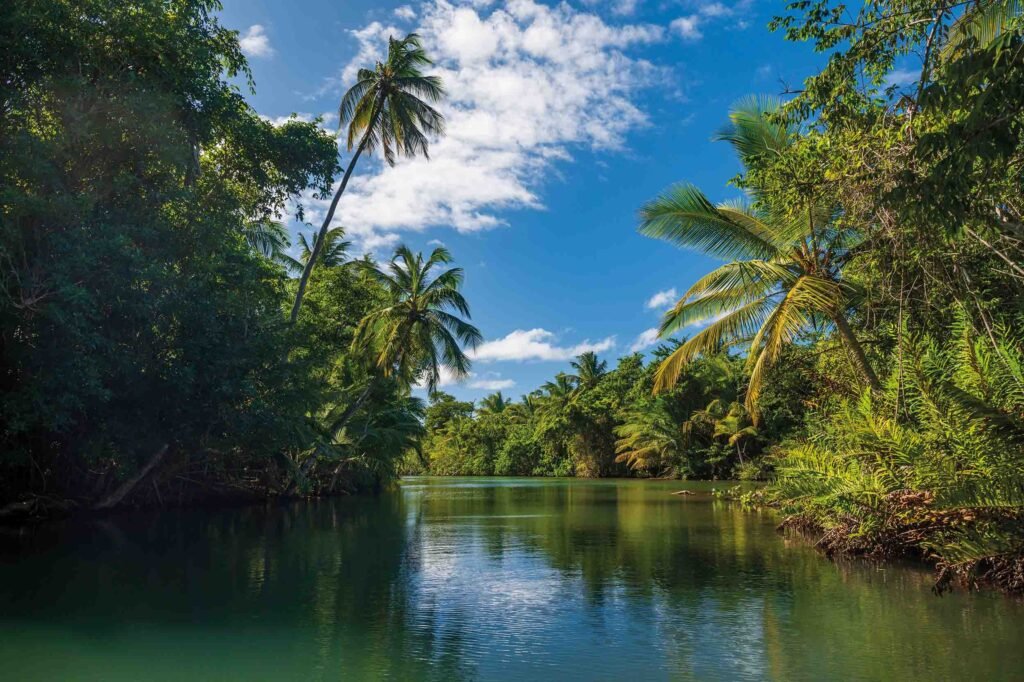
With more than 60 percent of its land area still forested, the island has built its identity around biodiversity, wellness and low-impact immersion rather than conventional resort spectacle.
After Hurricane Maria, Dominica committed to becoming the world’s first climate-resilient nation, a goal that continues to influence tourism through eco-lodges, geothermal energy ambitions, resilient infrastructure and nature-based travel.
Barbados shows how sustainability can sit inside a more established luxury market.
Its solar water heating programme saves an estimated 130,000 barrels of oil annually and reduces national carbon emissions by more than 4 percent, while the island’s hospitality sector increasingly folds in marine conservation, wellness, local cuisine and more environmentally aware operations.
Saint Lucia brings the conversation into wellness and regenerative travel.
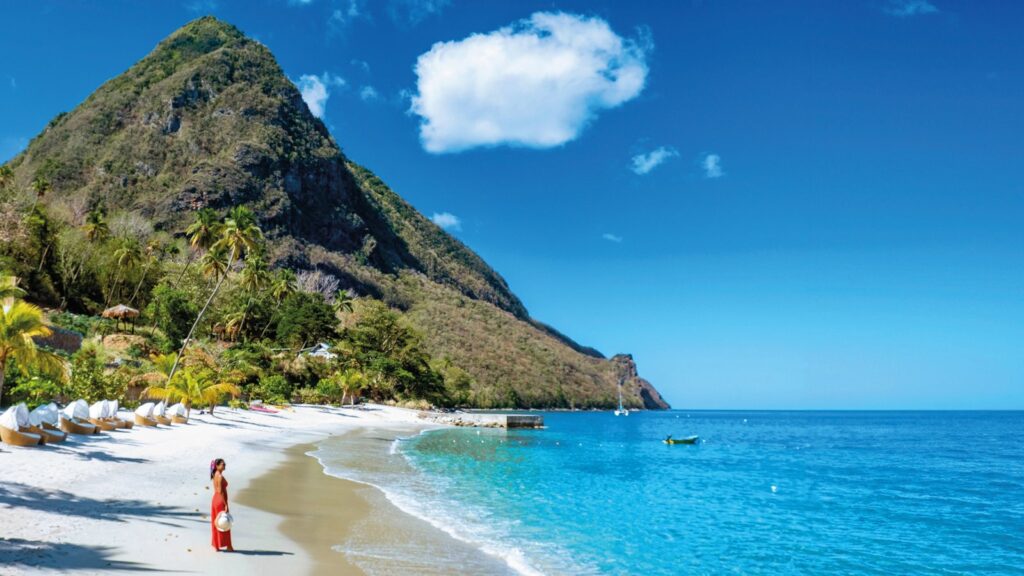
Rainforest retreats, boutique eco-stays, marine conservation and community-linked experiences around the Pitons give the island a strong position among travellers who want beauty with a deeper sense of place.
Climate pressure is changing the business of paradise
The Caribbean faces some of the world’s most urgent climate risks.
Sea-level rise, stronger storms, coral bleaching and coastal erosion are not abstract concerns for islands whose economies rely heavily on tourism.
That vulnerability is also pushing innovation.
Climate-smart tourism now means renewable energy, resilient buildings, protected ecosystems, better coastal management and hospitality models that can withstand environmental change.
For luxury travellers, these details increasingly shape where they choose to go.
A destination that protects its reefs, invests in clean energy and supports local livelihoods can feel more exclusive precisely because it is more carefully managed.
The Caribbean’s strongest tourism story is no longer simply about escape.
It is about a more considered version of paradise, where privacy, beauty and service are matched by stewardship, resilience and a lasting connection to place.