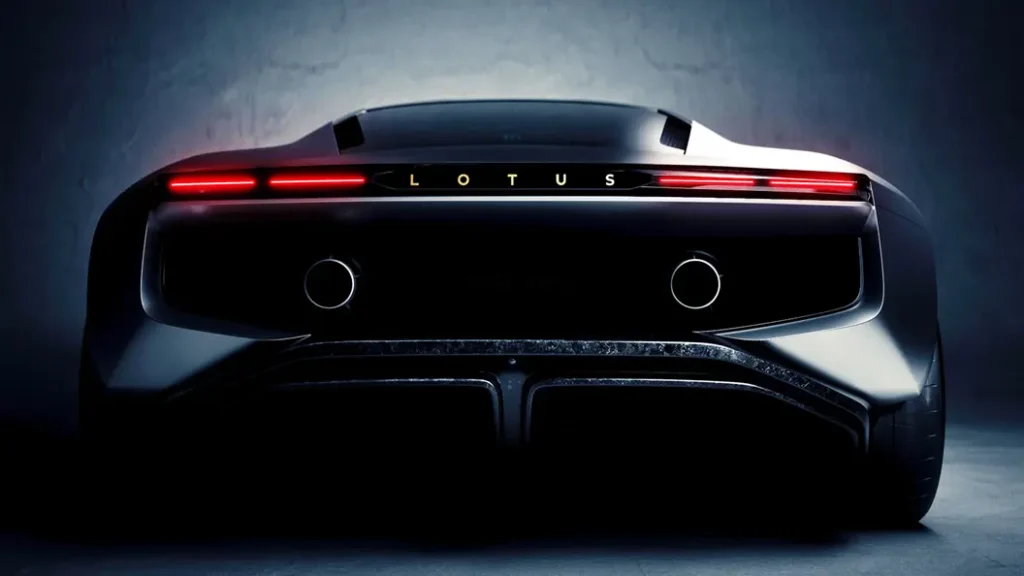
Lotus has an interesting gap to fill, and it’s not a small one.
The Emira remains the brand’s accessible, analogue-feeling sports car, while the Evija exists in another orbit as a 2,011 hp electric hypercar. The next step is a new flagship sports car codenamed Type 135, and it could bring the Esprit name back into the conversation.
At a glance
- Lotus is developing the Type 135 to sit between the Emira and the all-electric Evija.
- A hybrid V8 is planned, with output expected to exceed 1,000 hp and a target weight of around 1,500 kg.
- A lighter, more accessible V6 version is also expected, giving the new flagship a broader role in the lineup.
A modern flagship shaped around the Esprit idea
Group Lotus vice president of design Ben Payne has described the Type 135 as the car that will “fill the gap between the Emira and the Evija.”
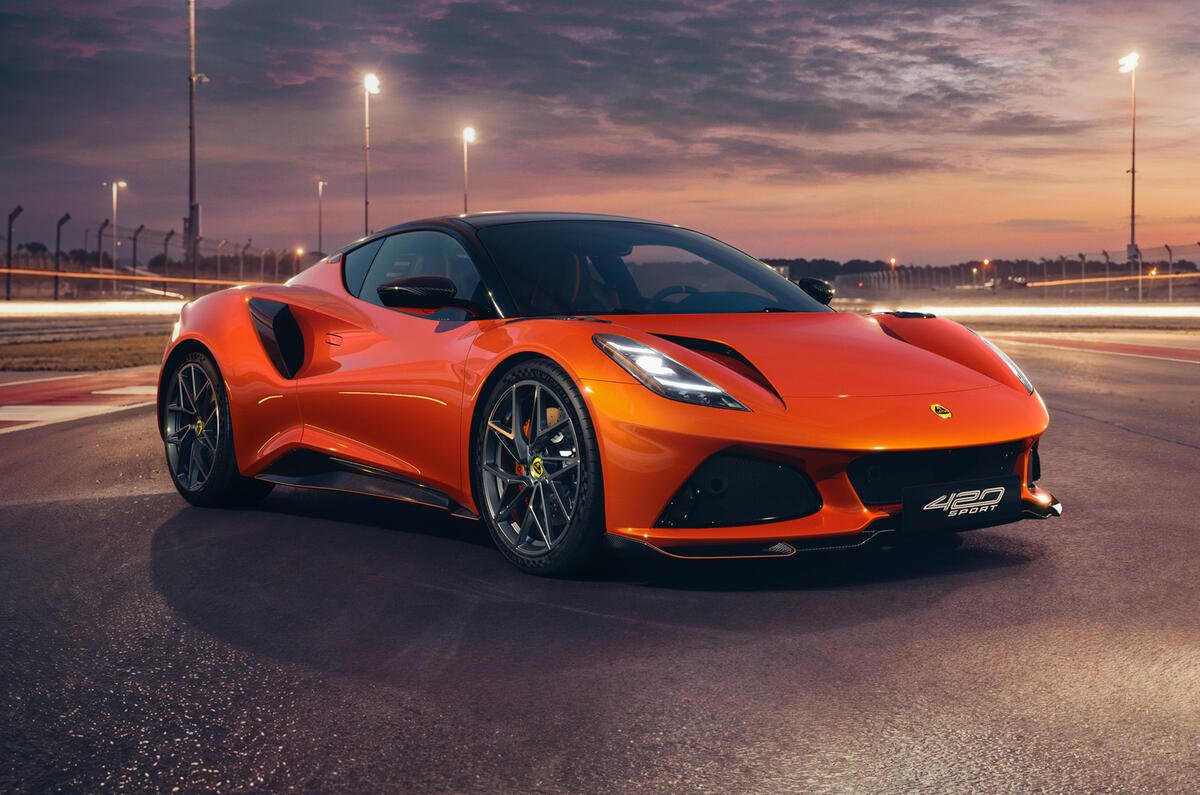
That positioning matters because Lotus doesn’t need another Emira and can’t simply scale down the Evija’s electric hypercar brief.
The Type 135 is being shaped as something more nuanced, a high-performance flagship that brings hybrid power into the traditional Lotus world of response, feedback and low mass.
If the Esprit name returns, it would be a natural fit for a car intended to reconnect Lotus with its mid-engined supercar past while giving the brand a new performance ceiling below the Evija.

Hybrid V8 power with a lighter V6 in the plan
The headline version is expected to use a hybrid V8 producing more than 1,000 hp.
Lotus is also targeting a weight of around 1,500 kg, which would give the car a very different character from heavier electrified supercars if the development target is met.
An 800V electrical architecture is part of the programme, as is an eight-speed dual-clutch transmission.
The more intriguing detail may be the planned V6 version, which is expected to be lighter and more accessible than the V8 hybrid.
That would give Lotus two distinct ways to position the car, with one aimed at headline performance and the other likely closer in spirit to the brand’s long-running obsession with feel and agility.
Between Emira feel and Evija performance
The current Emira 420 Sport makes 416 hp from a 2.0-litre turbocharged four-cylinder, which puts the new car in a much more serious performance category.
At the far end of the Lotus range, the Evija uses four electric motors to produce 2,011 hp.
The Type 135 won’t simply split those two numbers on a spreadsheet.
Lotus is working to preserve the emotional connection and mechanical handling character associated with the Emira while using hybrid V8 technology to move closer to the Evija’s technical benchmark.
That is the delicate part of the brief.
A modern Lotus flagship has to be fast enough to stand in the supercar conversation, but it also has to avoid becoming remote, numb or defined only by power output.
Details & Specifications
| Brand | Lotus |
|---|---|
| Programme codename | Type 135 |
| Possible name | Esprit |
| Positioning | Between Emira and Evija |
| Powertrains | Hybrid V8 planned, with a V6 version also expected |
| V8 output | Expected to exceed 1,000 hp |
| Target weight | Around 1,500 kg |
| Electrical architecture | 800V |
| Transmission | Eight-speed dual-clutch |
| Current Emira 420 Sport output | 416 hp |
| Evija output | 2,011 hp from four electric motors |
For Lotus, the Type 135 is more than a new performance model.
It’s a test of whether the brand can move into electrified supercar territory while keeping the tactile, driver-led character that still defines its best cars.