
Rudis Sylva is marking its 20th anniversary with the RS11, a 41mm square-cased watch that puts the brand’s patented Harmonious Oscillator into one of its most architectural designs to date.
The watch was first conceived in 2011 but arrives now as a confident anniversary piece, not a sentimental one.
A square case built for movement depth
The RS11 comes in titanium or pink gold, with a 14mm profile and three sapphire crystals that turn the case into a viewing frame for the calibre.
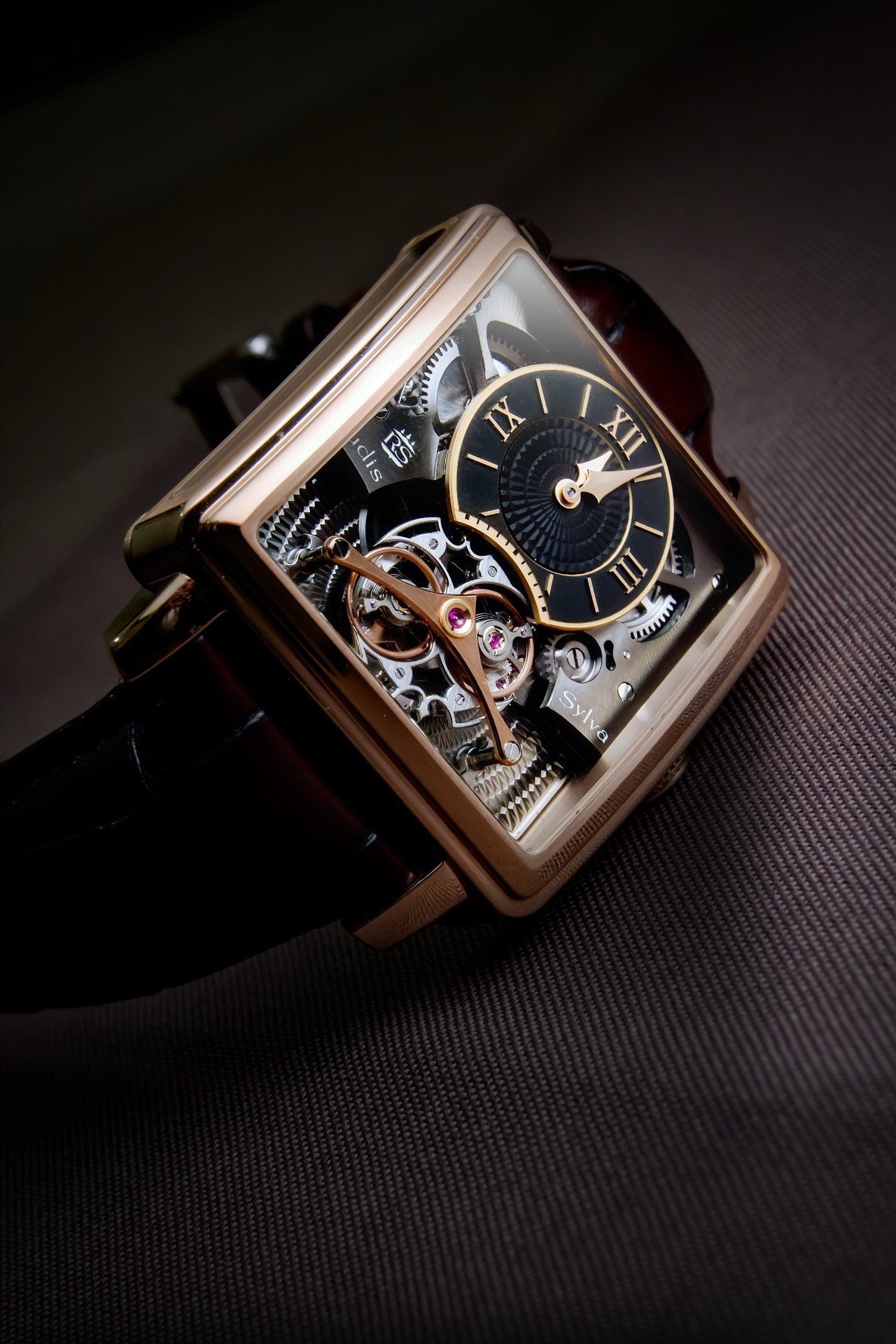
The front crystal is curved, while the caseback and side crystal are flat, each treated with anti-reflective coating on both faces.
That side crystal gives the watch much of its character, letting the wearer see the regulator and bridge architecture from the edge of the wrist.
The case finishing mixes horizontal brushing, polished accents and satin surfaces, with polished horns spaced 25mm apart for a strong strap stance.
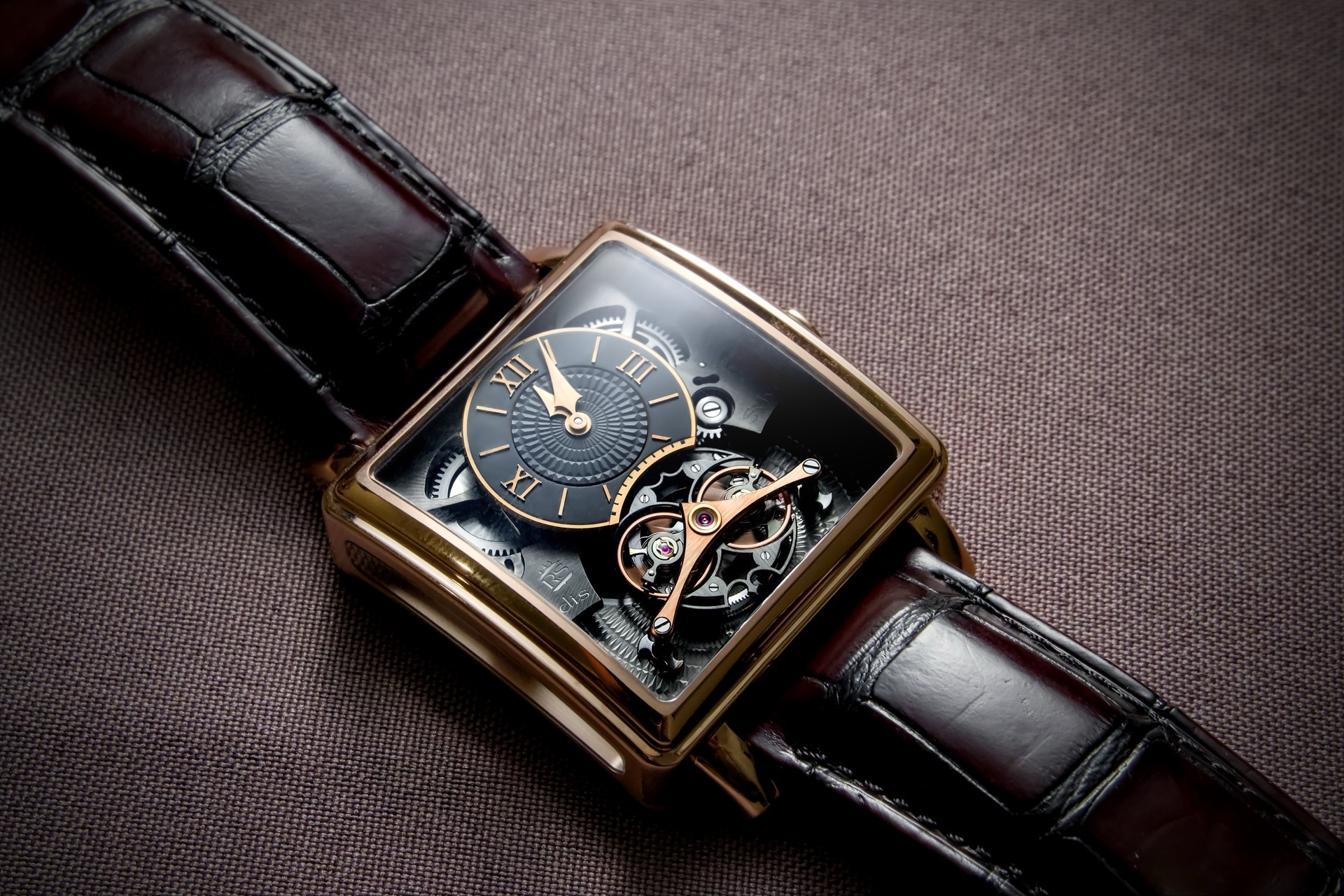
The watch is delivered on a large-scale alligator strap with leather lining, while a non-alligator option is also offered.
Purple dial architecture in titanium
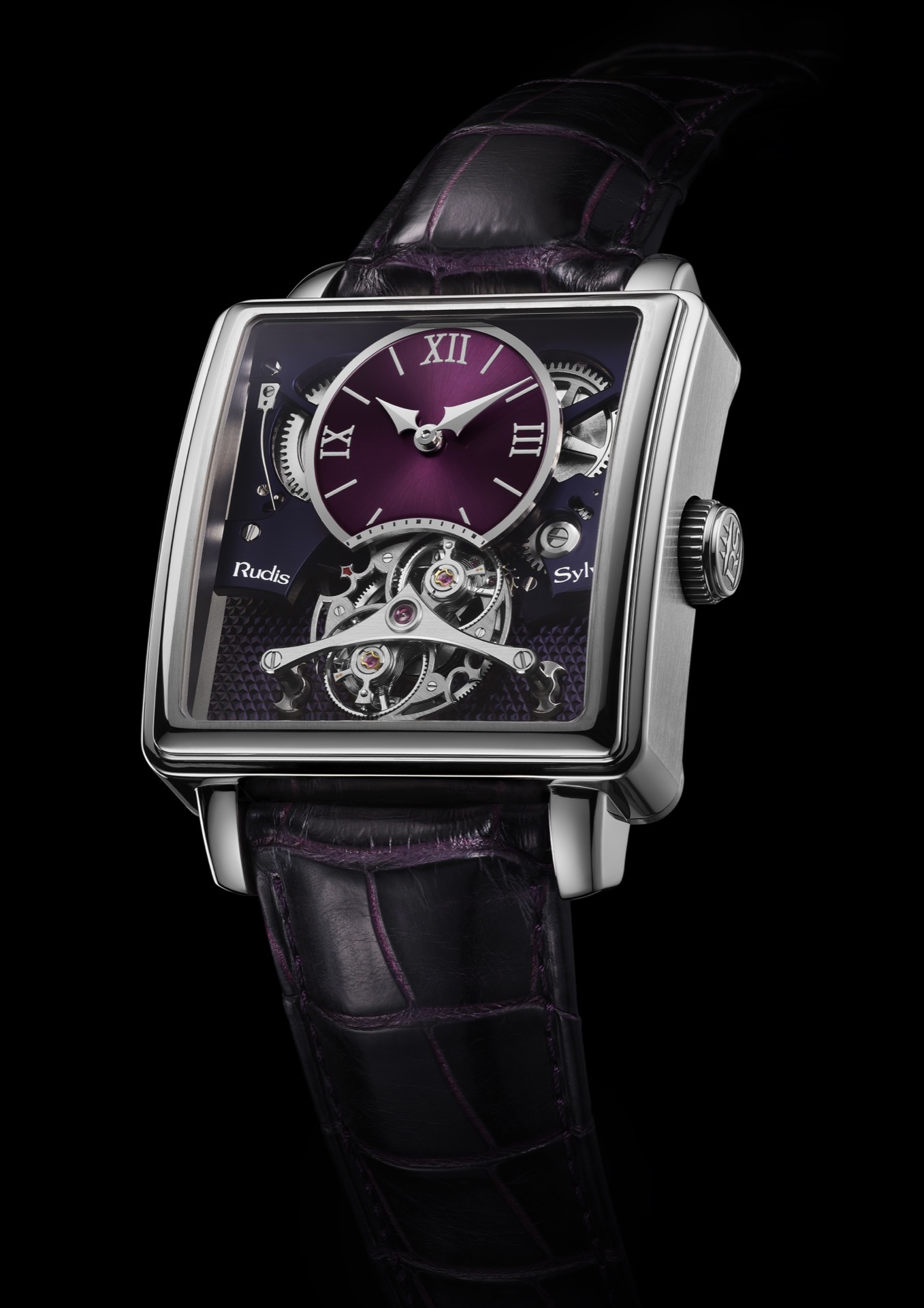
The titanium model uses a layered purple dial that moves from near-black violet at the lower section to brighter fuchsia tones toward the top.
A guilloché main plate receives a black-purple PVD treatment, while the time display and three-quarter bridge extend the same colour language across the dial.
The hours and minutes sit high on the dial with Roman numerals and rhodium-treated hands, keeping the time display visually tied to the exposed gear train below.
It is a bold use of colour, but not a decorative afterthought, as the gradient helps structure the entire front of the watch.
The gold RS11 leans into engine turning
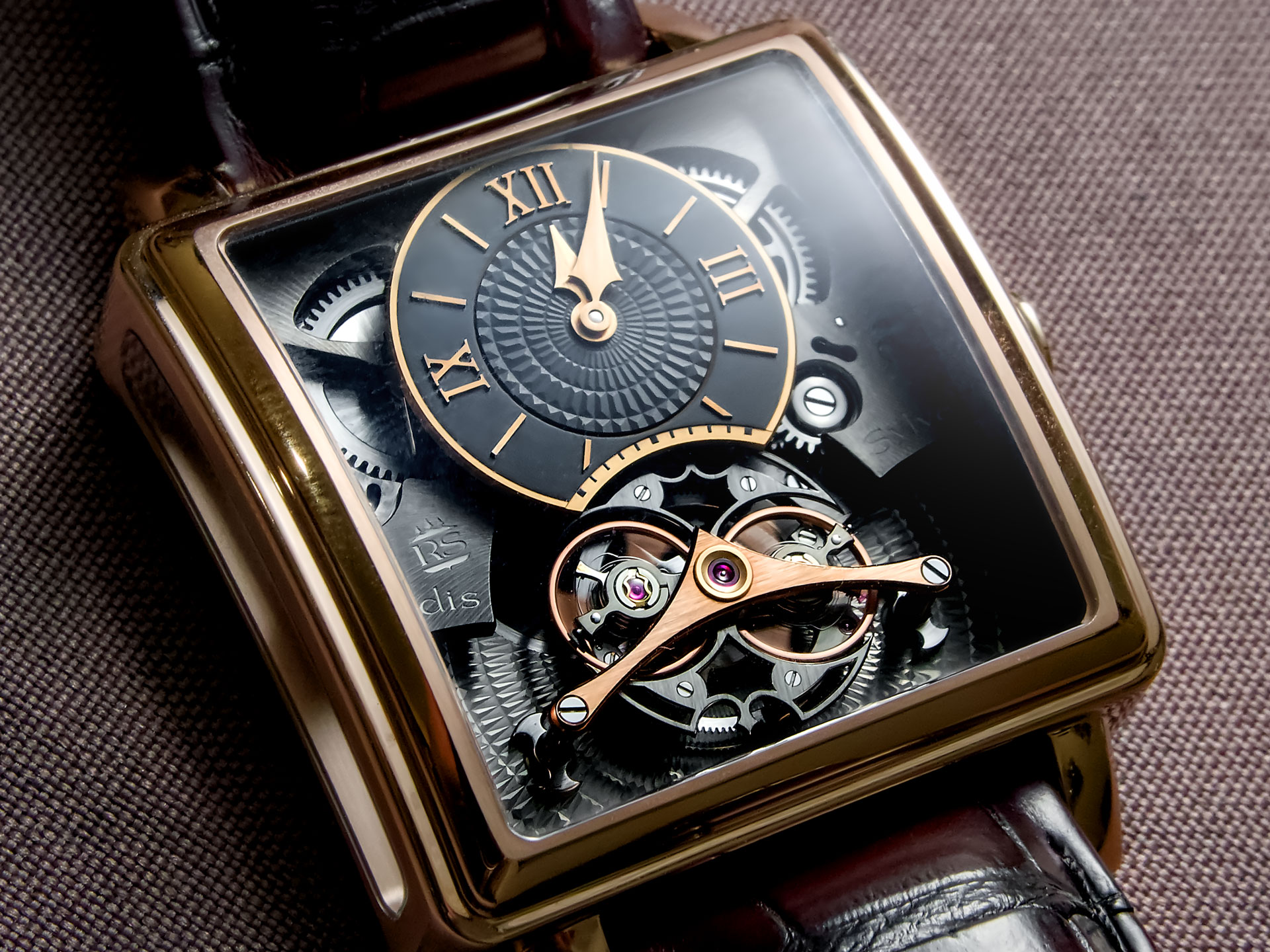
The pink gold model shifts the emphasis toward hand guilloché, with a progressive circular pyramid pattern cut into the main plate.
The prototype plates shown in Geneva were made by Georges Brodbeck, the Gaïa Prize laureate known for traditional engine-turning at the highest level.
The technique is unusually demanding, with the pattern requiring simultaneous control of two spindles and repeated passes that remove only tiny amounts of material at a time.
The Harmonious Oscillator remains the technical centre
The RS11 is powered by Rudis Sylva’s hand-wound in-house calibre with the Harmonious Oscillator, a regulating system the brand introduced in 2009.
Rather than using a conventional tourbillon approach to average positional error over time, the system uses two complete toothed balances mechanically linked together and driven by a single escapement.
The two balances sit with their flat, asymmetric balance springs constantly opposed, producing equal amplitude while the cage completes one full rotation every 60 seconds.
The movement runs at 21,600 vibrations per hour and offers about 70 hours of power reserve, reached after 49 turns of the crown.
Its purpose is immediate gravity correction, which remains one of the more distinctive technical ideas in contemporary independent watchmaking.
Hand finishing at the collector end of watchmaking
Much of the RS11’s appeal is in work that is difficult to communicate through specifications alone, especially on the titanium oscillator bridge.
That component can require up to 25 hours of hand finishing, including 28 interior angles in a metal that resists conventional anglage techniques.
Rudis Sylva uses gentian wood for mirror polishing the bevels, alongside line finishing, pearlage, sand-blasting, hand-polished gear-train recesses and circular-grained train passages.
Public pricing has not been announced, but the RS11 clearly sits in the small-volume, six-figure independent space where hand labour and rarity carry as much weight as complication.
It will appeal less to someone looking for a discreet dress watch than to collectors drawn to visible mechanical experimentation, traditional finishing and independent Jura watchmaking with a strongly defined point of view.