Shin Ohno’s Fuyu-Geshiki has won the 2026 F.P. Journe Young Talent Competition, and it is the kind of watch that makes independent watchmaking feel less like a profession than a test of will.
Created by the 27-year-old watchmaker from Matsumoto in Nagano, Japan, Fuyu-Geshiki means “Winter Landscape” and translates a local scene of mountains, spring water and melting snow into a 395-component mechanical watch.
A sonnerie watch without a base movement
The watch combines a grande and petite sonnerie, quarter repeater and tourbillon, an ambitious set of complications by any standard, and especially so for a young maker working without a base calibre.
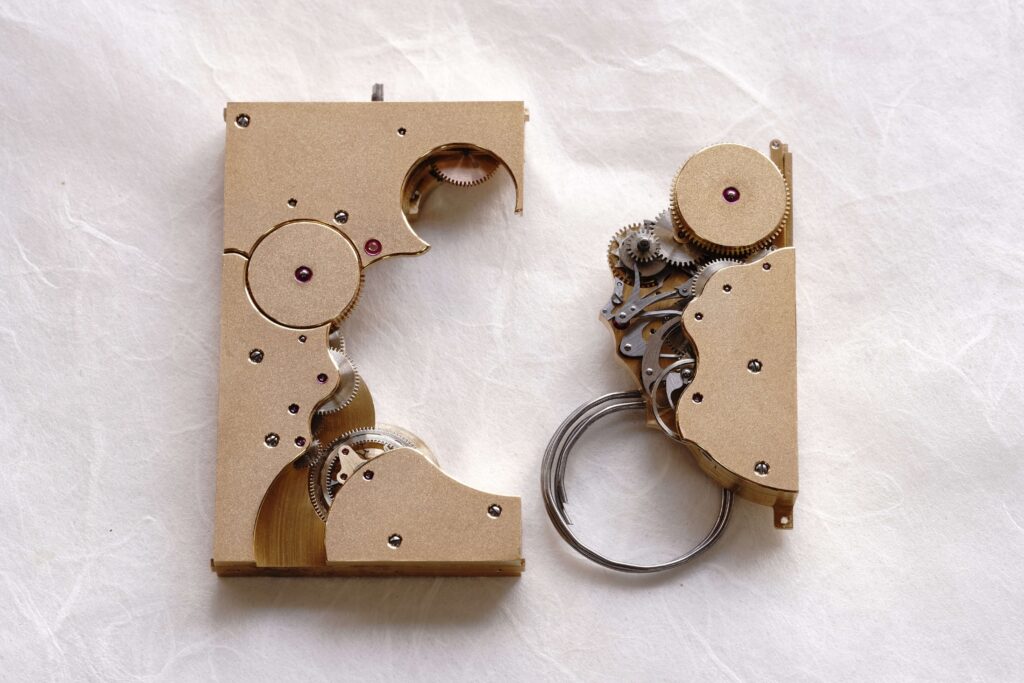
Ohno designed and made nearly everything himself, with the exceptions limited to 68 rubies, 11 ball bearings, the crystal, three mainsprings and the hairspring.
The project took roughly 11 months, beginning with research into striking mechanisms before moving through design, manufacturing and the difficult final stage of stabilising the chiming system.
Snow, water and sound in mechanical form
The watch’s emotional centre is the winter landscape of Nagano, with the acoustic works intended to suggest moving water and the tourbillon standing in for the constant motion of a stream.
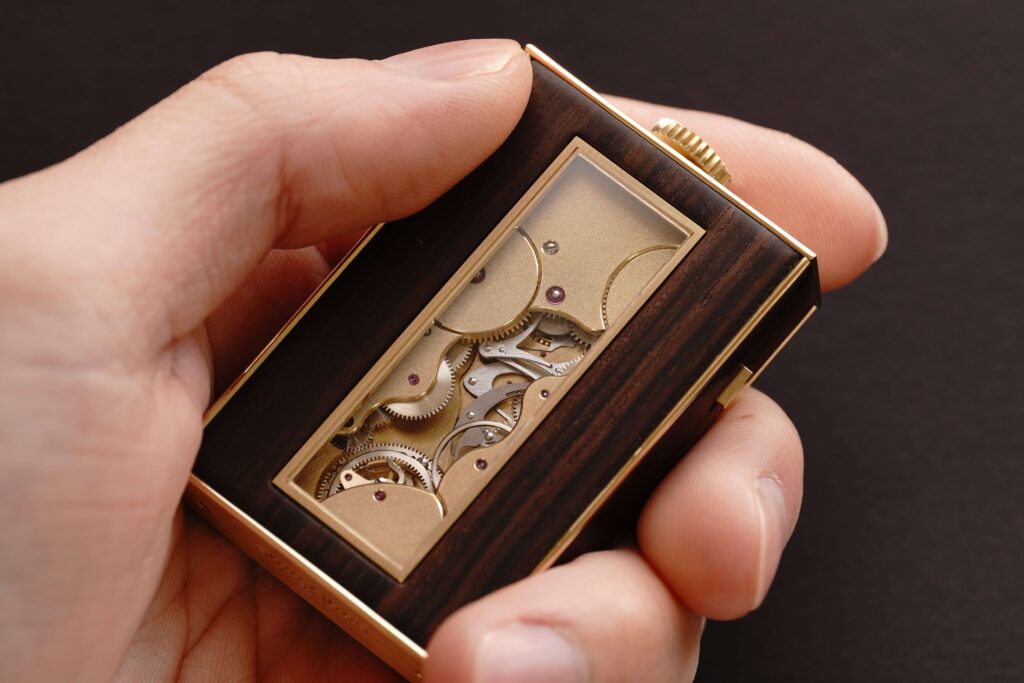
Its dial and bridges are emery blasted to create a soft, snow-like texture, while satin-finished plates and wheels evoke flowing water.
Ohno also hand-polished the tips of the wheel teeth to a mirror finish, a small but obsessive gesture meant to recall light catching on the surface of a stream.
An ebony and brass frame for the view
The case is made of ebony and brass, giving the watch the idea of a house or room from which the winter scene is viewed.
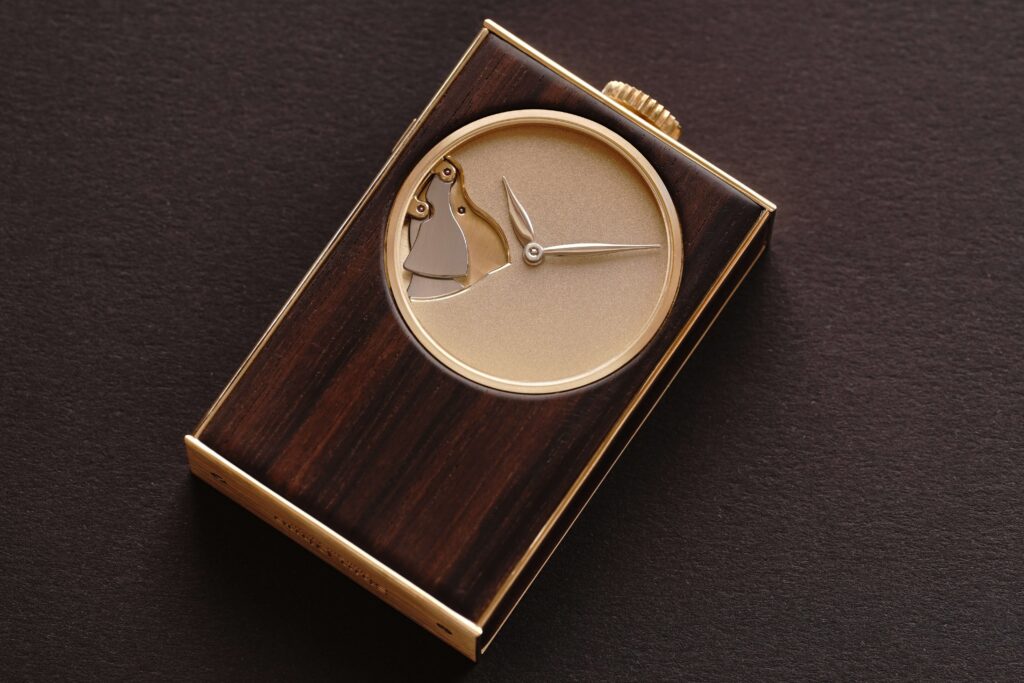
That framing concept is reinforced by the construction of the movement, which separates the timekeeping and striking works into a modular architecture.
The quarter repeater is operated through the crown rather than a separate pusher, preserving the purity of the case and allowing the chiming mechanism to be used while the watch is resting on a desk.
The practical intelligence behind the poetry
Fuyu-Geshiki is not only decorative or conceptual, as Ohno built in safeguards that stop the striking mechanism when the power reserve is too low and prevent pressure from being applied to the crown when the system is engaged.
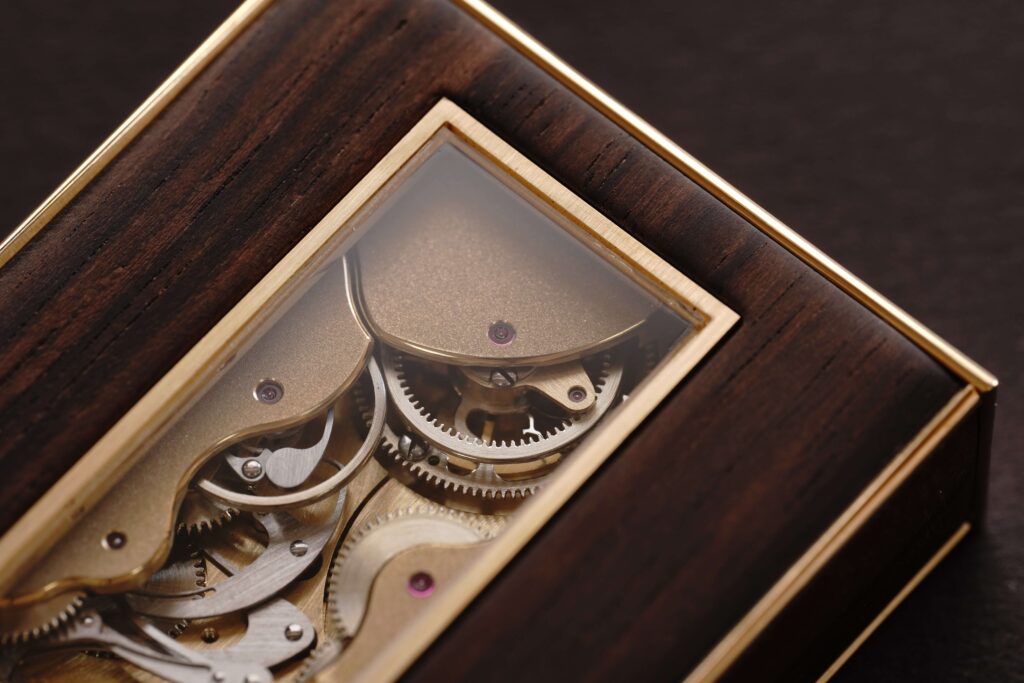
The sound itself was tuned with piano wire gongs, chosen for their calm tone, though Ohno found that the character of the chime changed significantly depending on hammer motion, gong mounting and even how the watch was held.
One of the hardest technical problems sat at the centre of the movement, where more than 10 components share the same axis, including the hour snail cam, quarter snail cam, surprise piece and star wheel.
The competition win places Ohno among the most compelling young independent watchmakers to watch, with the CHF 50,000 prize from the F.P. Journe Young Talent Competition, organised with the support of The Hour Glass, intended to help fund tools or a future horological project.
Fuyu-Geshiki is not interesting because it is loud or extravagant; it matters because it shows how far a young watchmaker can push craft, engineering and personal memory when compromise is treated as the real enemy.