LVMH has added another encouraging signal to a luxury watch market that’s been looking for steadier ground.
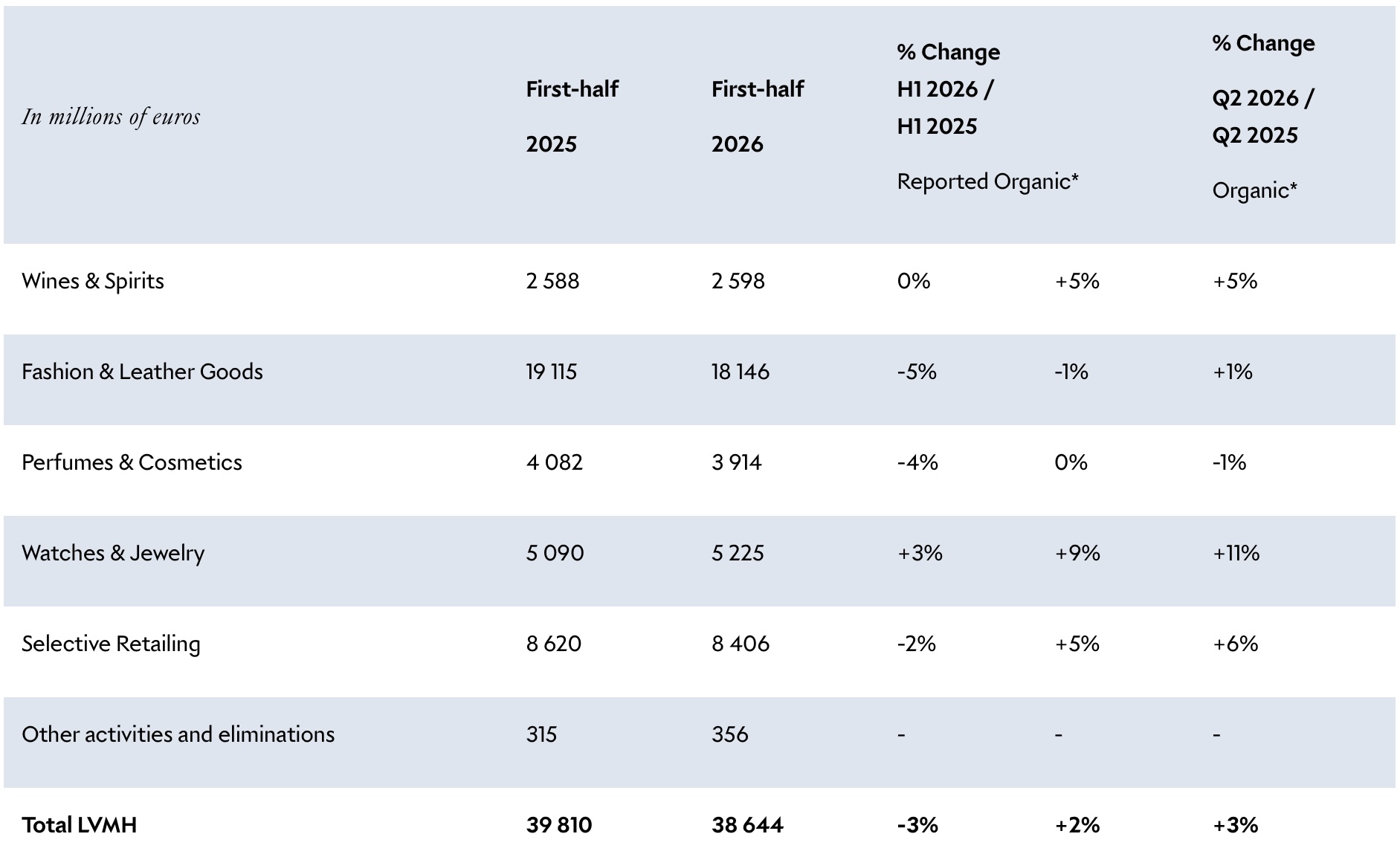
The French luxury group posted first-half revenue of €38.6 billion for 2026, with its Watches & Jewellery division standing out as the strongest performer across the business.
For collectors and industry watchers, the numbers matter because LVMH sits behind several of the sector’s most visible names, including Bulgari, Hublot, Zenith, TAG Heuer and Tiffany.
At a glance
- LVMH recorded €38.6 billion in first-half 2026 revenue, with organic growth of 3 percent.
- Watches & Jewellery revenue reached €5.225 billion, up 9 percent organically year on year.
- The division was LVMH’s best-performing business area in the first half, despite a disrupted geopolitical and economic backdrop.
Watches and jewellery lead the group
LVMH’s Watches & Jewellery division delivered €5.225 billion in sales for the first half of 2026.
That represents organic growth of 9 percent compared with the same period in 2025, making it the group’s top-performing division so far this year.
The momentum became more visible in the second quarter, when Watches & Jewellery sales rose 11 percent year on year.
Profit from recurring operations for the division also increased by 9 percent, giving the performance more weight than a simple revenue rebound.
The result is notable because LVMH’s watch portfolio covers a wide range of positioning, from TAG Heuer’s sports-watch focus to Zenith’s movement-led watchmaking, Hublot’s contemporary case architecture and Bulgari’s jewellery-watch authority.
A broader luxury recovery with regional differences
Across the full group, LVMH posted organic revenue growth of 3 percent in the first half of 2026.
Excluding the impact linked to the conflict in the Middle East, that figure would have been 4 percent.
The company pointed to improving conditions across several major markets.
The United States saw growth accelerate and delivered a strong first half, while Asia excluding Japan continued the improvement that began in the second half of 2025.
Japan also posted growth for the half-year period, and Europe showed resilience.
The second quarter brought stronger momentum than the first, suggesting the recovery was not evenly distributed but did improve as the half progressed.
What the numbers say about watch demand
LVMH’s results arrive after other major luxury and watch groups showed signs of renewed growth in 2026.
Richemont posted a 20 percent sales increase for its first quarter of 2026, while Swatch Group recorded an 8.5 percent rise in its first-half sales.
For LVMH, the strength of Watches & Jewellery suggests demand for high-end hard luxury remains more robust than some other parts of the luxury market.
It also reinforces how important watches and jewellery have become within diversified luxury groups, where brand equity, retail control and global client relationships can help cushion difficult macro conditions.
The division’s performance doesn’t mean every watch brand is benefiting equally, but it does show that LVMH’s mix of jewellery, high watchmaking and accessible luxury sports watches is currently working in its favour.
LVMH’s outlook for the rest of 2026
LVMH remains cautious about the wider environment, with geopolitical and economic uncertainty still present.
Even so, the group says it will continue focusing on strengthening the desirability of its brands.
For the watch division, that likely means the usual balance of product discipline, controlled distribution and careful brand positioning rather than chasing volume for its own sake.
After several unsettled years for the watch industry, LVMH’s first-half performance gives the market another data point that points toward recovery, with Watches & Jewellery playing a central role in the group’s 2026 momentum.