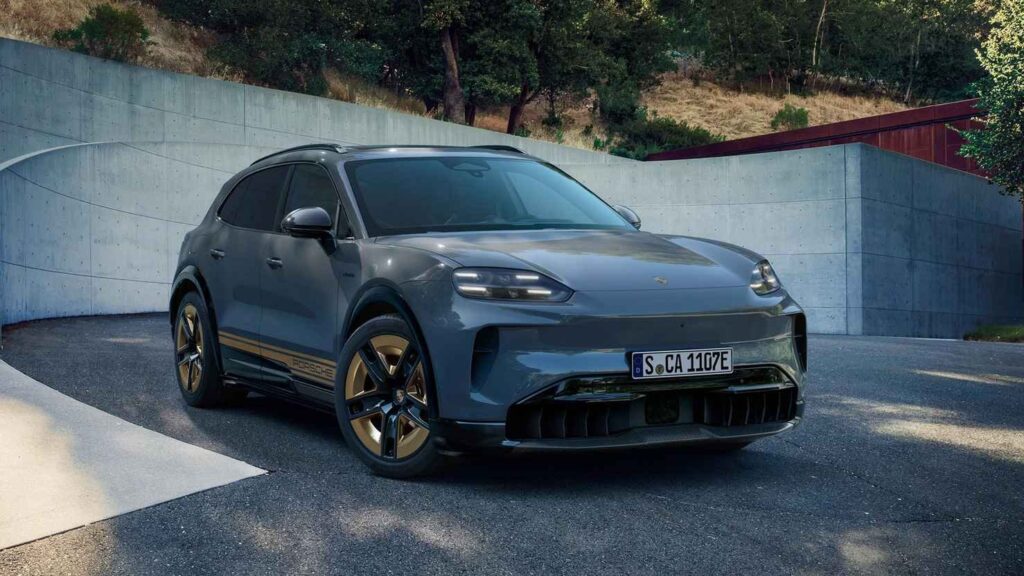
Porsche appears to be looking at a more tactile future for electric performance cars.
A newly published patent describes a manual-style transmission concept for EVs, not to add a traditional gearbox in the usual sense, but to give electric driving some of the rhythm and involvement associated with combustion-era Porsches.
It’s a curious idea because EVs don’t need multi-speed gearboxes in the same way petrol cars do, yet Porsche clearly sees value in how shifting changes the way a car feels.
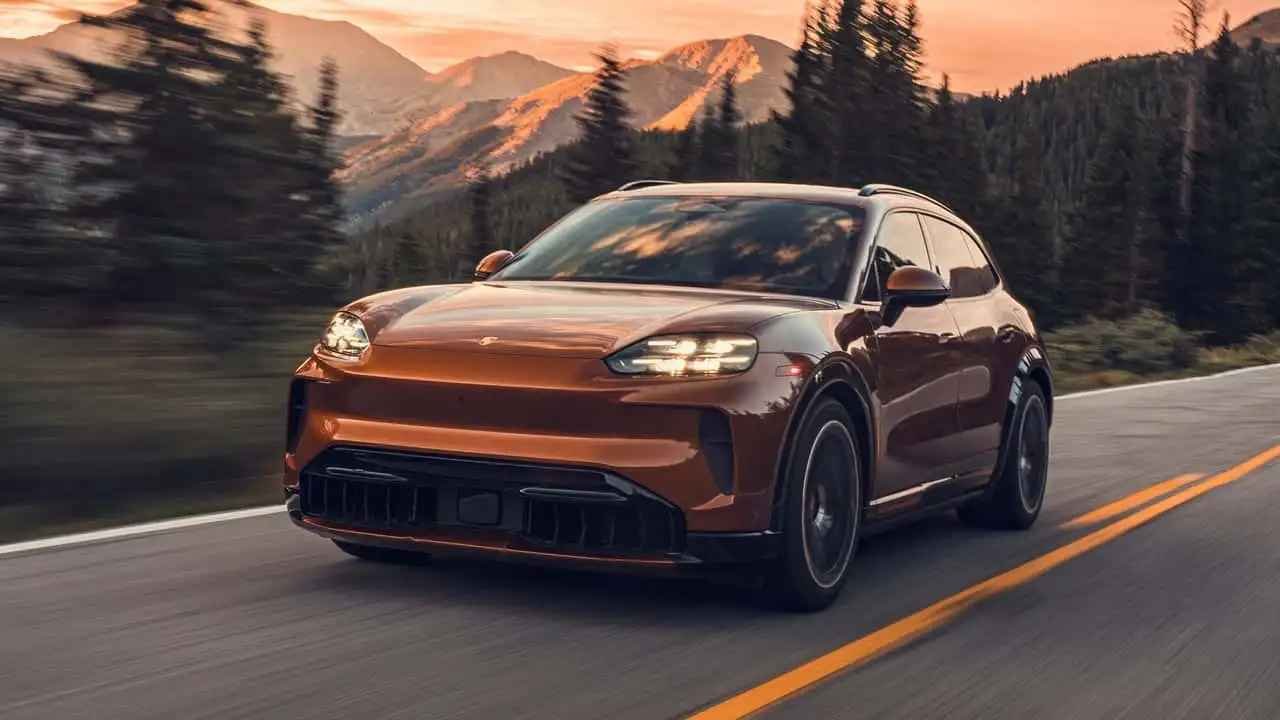
At a glance
- Porsche has patented an EV driving concept that simulates manual and automatic gear changes.
- The system would use motor torque and regenerative braking to mimic the behaviour of conventional transmissions.
- An off-road mode is also described, though there’s no guarantee the technology will reach production.
A manual feel without a conventional gearbox
Electric motors deliver power differently from combustion engines, which is why most EVs simply don’t need a driver-operated manual transmission.
Porsche’s idea takes a different route by focusing on feel rather than necessity.
The patent describes a system that could alter the behaviour of the electric drivetrain to imitate gear changes, using software to shape torque delivery and regenerative braking.
In other words, the car wouldn’t be shifting cogs in the traditional sense, but it could make acceleration and deceleration feel more familiar to someone used to petrol-powered performance cars.
Automatic and manual modes would change the character
In automatic mode, the system would be able to simulate the behaviour of a conventional automatic transmission.
The car’s control systems would manage motor output and energy recuperation to create the impression of gear changes without requiring the driver to intervene.
The more interesting part is the manual mode.
Here, Porsche appears to be considering a setup that behaves somewhat like one of its PDK-equipped cars, but with a key difference in how much control remains with the driver.
The system would not automatically shift at the simulated redline, and it would not carry out low-rpm downshifts in the same way a conventional automatic might.
That detail matters because it suggests Porsche is exploring a more committed manual-style experience rather than a simple sound-and-shift gimmick.
The off-road setting is the unexpected twist
The most unusual part of the patent is the inclusion of an off-road mode.
When selected, the simulated gear-change behaviour could be adjusted to mimic the characteristics of a petrol-powered SUV using an off-road setting.
That opens the door to a different kind of EV calibration, one where the drivetrain doesn’t only chase smoothness or outright speed.
Instead, Porsche could tune the sensation of torque delivery, deceleration and shift timing to make an electric SUV feel more familiar in loose-surface or low-speed conditions.
It’s especially interesting in the context of Porsche’s expanding electric ambitions, where performance increasingly has to mean more than silent acceleration.
Patent ambition and production reality
Patents often show where a company’s engineers are thinking rather than what’s guaranteed for a showroom.
This system may never appear in a production Porsche, and the brand has not confirmed a model, timeline or launch plan for the technology.
Still, the idea fits neatly into a broader challenge facing performance EVs.
Electric cars can be brutally quick, but many drivers still miss the mechanical theatre of choosing gears, timing shifts and feeling the car respond in distinct steps.
Porsche has spent decades turning transmission behaviour into part of the driving experience, from manual sports cars to PDK-equipped performance models.
Translating that involvement into an EV without compromising the advantages of electric propulsion is exactly the kind of problem the brand would be expected to study.
If Porsche can make simulated shifting feel authentic rather than artificial, it could give future electric sports cars and SUVs a more distinctive personality.
For now, it remains an intriguing engineering direction, and one that shows Porsche is still thinking hard about how an electric car should feel from the driver’s seat.