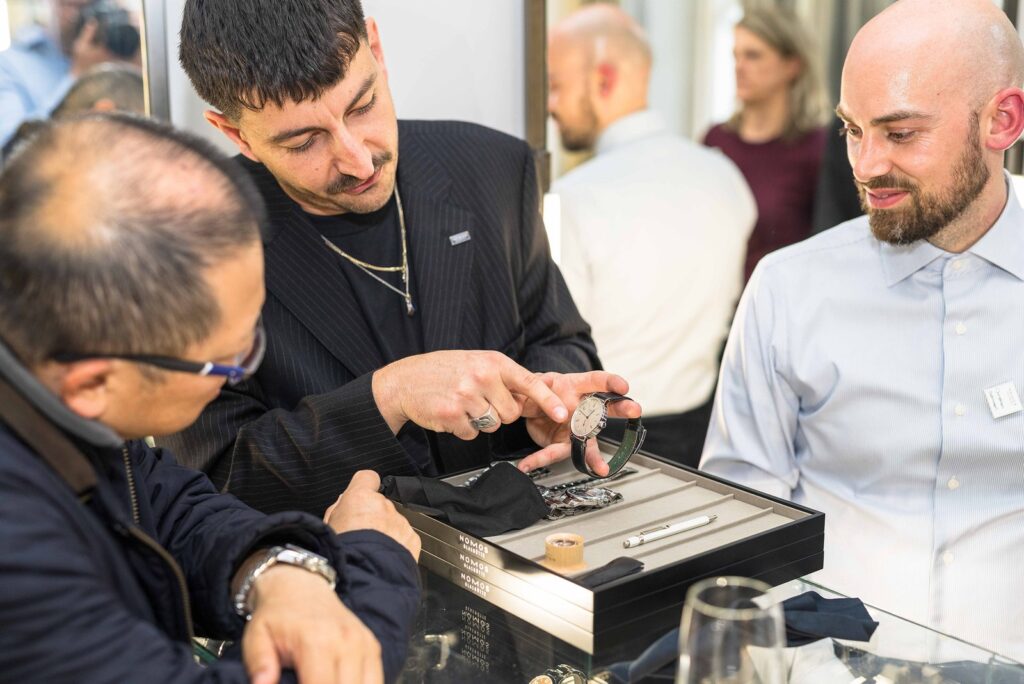
London Watch Week 2026 felt less like a niche industry gathering and more like a city deciding it has a serious role to play in modern watch culture.
Held from 2 to 6 June, the second edition brought more than 1,000 guests to 14 events across London, linking Mayfair boutiques, collector spaces and multi-brand showcases into one unusually energetic horological week.
For collectors, press and brands, it offered something London has been building toward for years, a watch calendar moment with its own character rather than an imitation of Geneva or Dubai.
At a glance
- London Watch Week 2026 ran from 2 to 6 June, drawing more than 1,000 guests across 14 events.
- Highlights included a High Complication Showcase at James Purdey & Sons, a ZENITH gala at BMW Park Lane and a four-storey Townhouse Showcase at Electric Space.
- The event returns from 8 to 12 June 2027 as London continues to strengthen its position on the global watch calendar.
Mayfair became the week’s technical centre
The programme opened with Bremont bringing “The Wing” to its Mayfair boutique, where guests saw new pieces including the Altitude Chronograph Pulsograph and the Val Joux 23.
Christopher Ward added a more informal rhythm with breakfast sessions at its Mayfair showroom, giving visitors time with the wider collection and particular attention to the Bel Canto and C12 Loco.
The most concentrated display of serious watchmaking came at James Purdey & Sons, where A. Lange & Söhne, IWC Schaffhausen, Montblanc, Panerai, Piaget and Vacheron Constantin gathered for the High Complication Showcase.
That setting mattered.
Purdey’s Mayfair flagship gave the complications a quietly British backdrop, away from the usual trade-fair environment and closer to the way many collectors actually want to encounter important watches.
Collector culture carried the week beyond the boutique
London Watch Week’s strength was its ability to move between formal presentation and enthusiast energy without making either feel secondary.
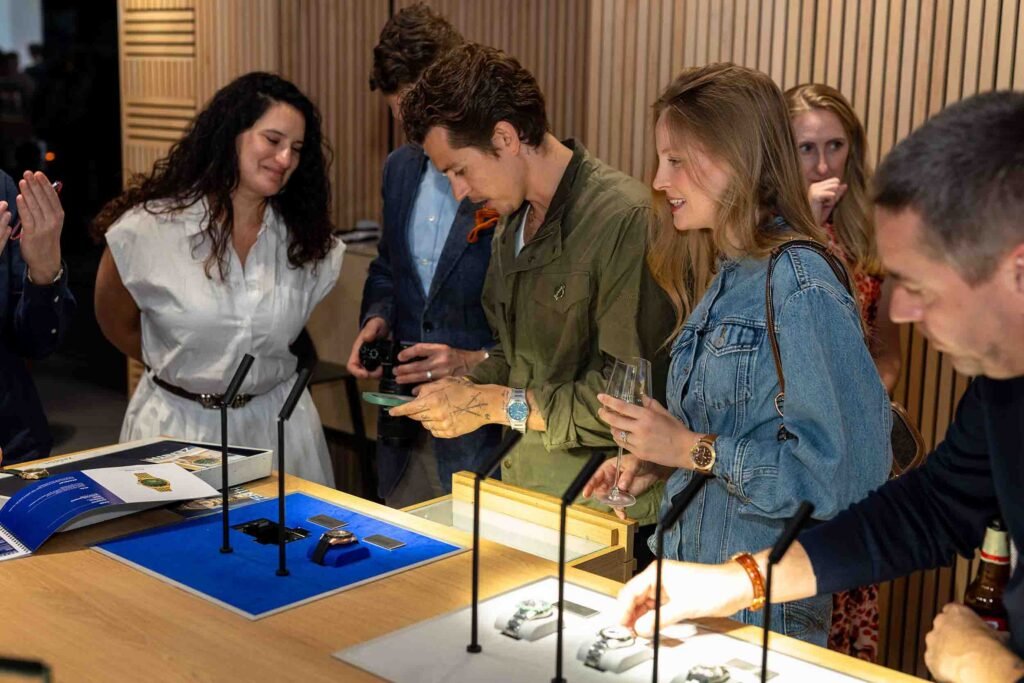
The Subdial Clubhouse in Farringdon hosted the opening party in collaboration with Subdial as part of its Summer Watch Meet, bringing together a collector crowd built as much around conversation as acquisition.
At Pragnell on Mount Street, the emphasis shifted toward horological history and craft.
The Pragnell Bray Origins Clock, designed by Charlie Pragnell and featuring more than 3,450 handmade components, anchored a display that paid tribute to Harrison’s H1 Marine Chronometer.
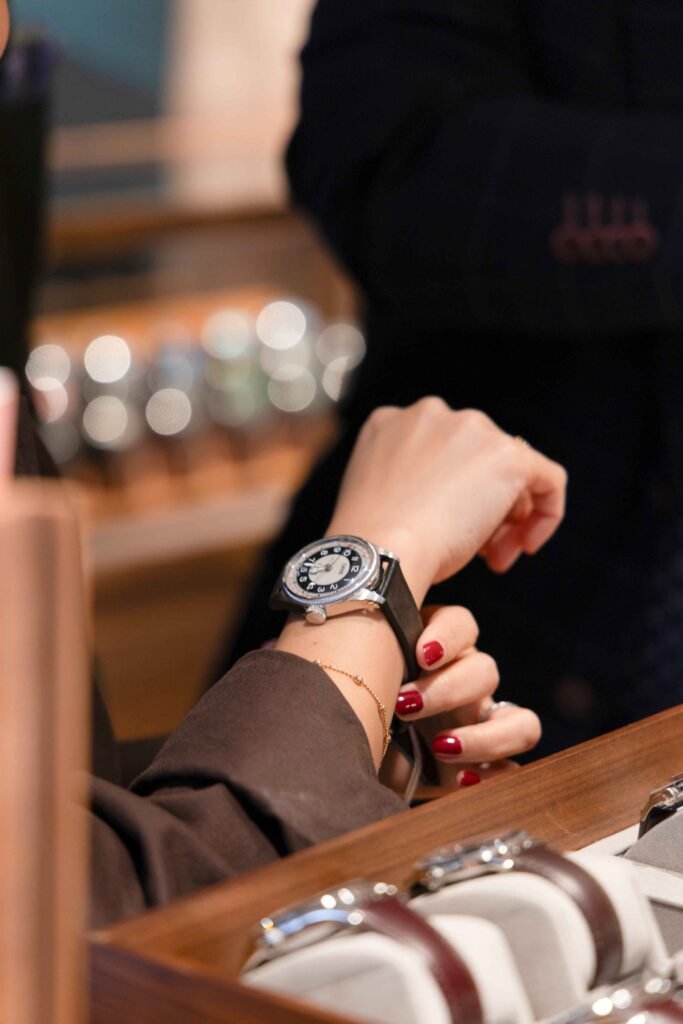
Alongside it sat pieces from Laurent Ferrier, Ludovic Ballouard, Lederer, Greubel Forsey and Ferdinand Berthoud, with Bob Bray and Hugo Blott closing the programme in conversation with Tim Barber.
ZENITH gave the gala its headline moment
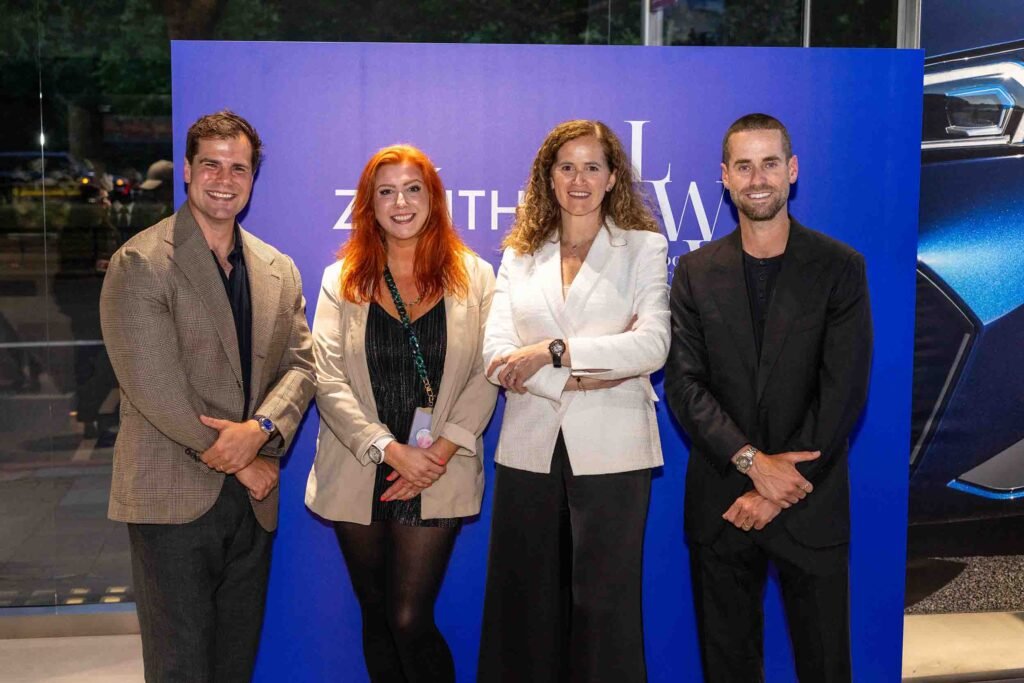
The week’s largest social gathering arrived at BMW Park Lane, where the London Watch Week Gala Reception in association with ZENITH brought more than 200 guests together.
ZENITH used the evening to present recent novelties and storytelling installations, but the standout introduction was the G.F.J. Bloodstone.
Presented by ZENITH Chief Marketing Officer Sarah Zaouk, the limited-edition dress watch honours founder Georges Favre-Jacot and is restricted to 161 pieces.
Its bloodstone dial gives the watch a distinctive presence, while the Calibre 135 connects it to one of the most celebrated movements from the golden age of observatory chronometer competitions.
The Townhouse showed the breadth of independent watchmaking
Across Friday and Saturday, the London Watch Week Townhouse at Electric Space became the event’s most open-ended format.
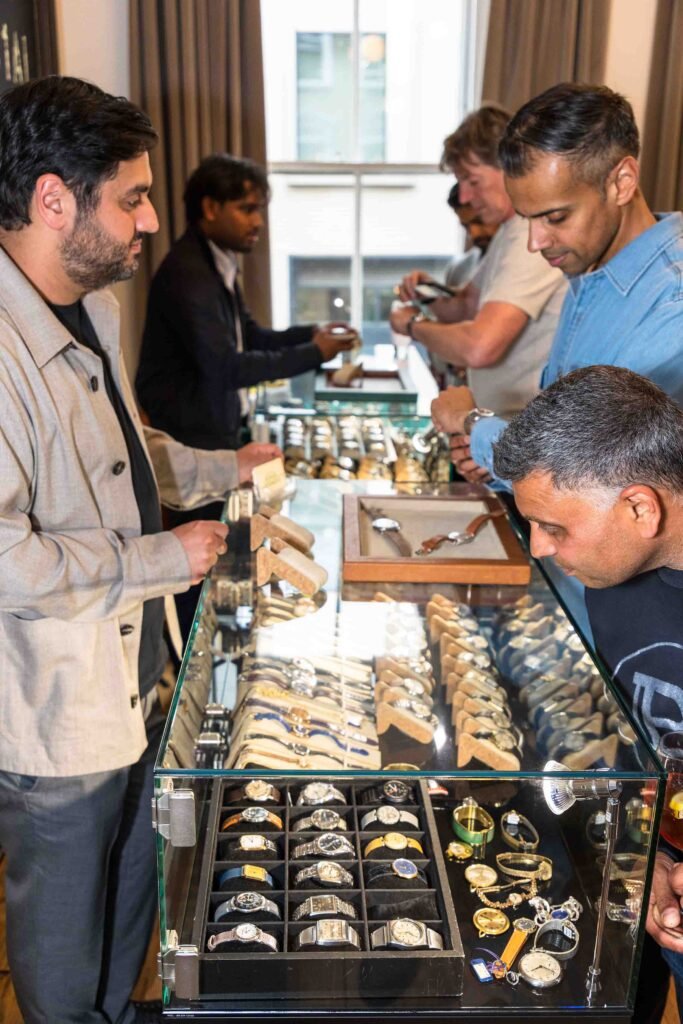
The four-storey showcase combined exhibition, retail and cultural programming, creating space for independents, vintage specialists and collector services to sit in the same conversation.
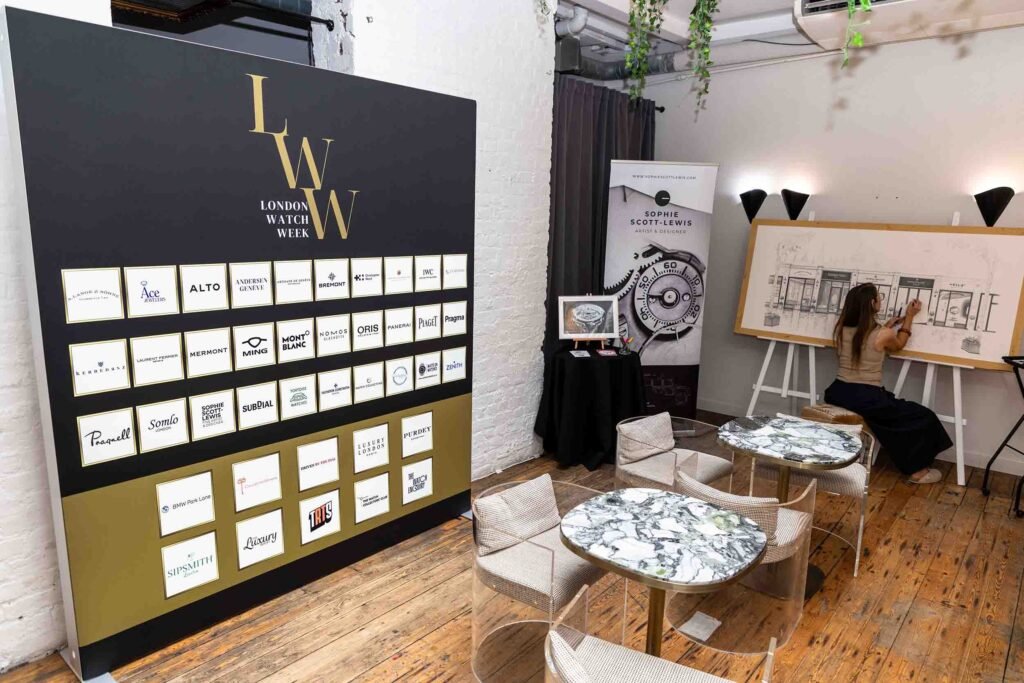
Participating independent brands included Andersen Genève, Laurent Ferrier, NOMOS Glashütte, Kerbedanz, Mermont, Artisans de Genève, Ace Jewelers, Pragma, ALTO, Christiaan van der Klaauw, MING and J.N. Shapiro.
They were joined by Somlo London, Watch Collecting, Tortoise Watches, Watts on Watches and Watch Concierge Services from the pre-owned and vintage side of the market.
Talks curated by Tim Barber and Chris Hall of The Watch Enquiry added depth, moving through CEO interviews, brand histories, the practical realities of independent watchmaking and the changing shape of the collector market.
Friday evening shifted into Cocktail Time with Sipsmith, while Saturday delivered the strongest attendance of the week.
That closing surge said plenty about the appeal of a watch event where collectors can move from haute horlogerie to independents, from new releases to vintage, without leaving the city’s wider cultural orbit.
London’s watch calendar is no longer a side note
Lucy Mackenzie-Cheesewright, co-founder of London Watch Week, described the response to the second edition as confirmation that London has “a rightful place at the heart of the global horology calendar.”
It’s a fair reading of what happened across the five days.
The 2026 edition had established maisons, ambitious independents, collector-led programming and the kind of social texture that can’t be manufactured by brand presence alone.
Partners for the edition included BMW, Sipsmith, Purdey, CollectorSphere, Luxury London, The Real Time Show and others, helping give the week a broader lifestyle and cultural frame.
London Watch Week will return from 8 to 12 June 2027, and the challenge now is a welcome one.
After a second edition with real momentum, the next chapter has to prove that London’s horological confidence is becoming a permanent fixture rather than a seasonal highlight.