Qatar’s relationship with the sea has always carried a certain grandeur, but the character of yacht ownership is changing fast.
What was once a rarefied world led by royal vessels and ultra-private superyachts is becoming a more active lifestyle market, shaped by younger owners, affluent families and regional buyers who want the water to feel less ceremonial and more lived-in.
The result is a yachting culture that still values prestige, but now gives equal weight to comfort, personalisation, smart technology and time well spent with family.

At a glance
- Yacht ownership in Qatar is broadening beyond royalty and ultra-high-net-worth circles into a younger, lifestyle-led buyer base.
- Modern owners are prioritising family-friendly layouts, tailored interiors, advanced navigation and more efficient onboard systems.
- Qatar’s marina development and rising luxury leisure demand are helping position the country as a key Gulf yachting market.
A younger generation is changing the ownership brief
For years, Qatari yachting culture was defined by scale, privacy and unmistakable symbolism.
The 124-metre Katara, widely associated with the country’s ruling elite and valued at around USD 400 million, remains one of the clearest examples of the superyacht as a statement of national and personal stature.
That world still matters, but it no longer tells the whole story.

A younger generation of Qatari elites, many globally educated and deeply familiar with international luxury culture, is approaching yacht ownership as an extension of lifestyle rather than a trophy held at a distance.
These buyers are interested in how a yacht works over a long weekend, how easily it can host friends, whether the layout suits children and extended family, and how much of the vessel can be tailored to their own routines.
That shift has changed the conversation around size and specification.

Grand entertaining still has its place, but a growing number of owners are asking for flexible spaces, generous lounges, multiple cabins, strong climate comfort, reliable navigation systems and interiors that feel personal rather than purely formal.
Family leisure is becoming the centre of gravity
In Qatar, the yacht is increasingly being treated as a private family retreat.
That makes sense in a culture where hospitality, privacy and family connection are central to social life.

Instead of thinking only in terms of prestige, buyers are looking at a yacht as a controlled, comfortable setting for weekends, small gatherings and time away from the city.
Contemporary models with multiple cabins, indoor and outdoor dining zones, shaded decks and recreation areas speak directly to that demand.
The best layouts allow adults to entertain while children have space to relax, creating the kind of separation and ease that turns a vessel into a second home on the water.

There’s also a wellness dimension to the trend.
For owners with demanding schedules, the ability to step from marina to sea without the logistics of air travel gives yachting a practical appeal that goes beyond luxury theatre.
Marinas and waterfront districts are making ownership easier
Qatar’s yachting growth is closely tied to the country’s investment in waterfront infrastructure.

Lusail Marina, The Pearl-Qatar and other maritime developments have made ownership more convenient by improving access to berthing, maintenance, concierge support and leisure services.
That infrastructure matters because yacht ownership is never only about the vessel.
The quality of the marina experience, the reliability of service networks and the ease of entertaining guests all influence whether an owner uses a yacht regularly or lets it become an occasional indulgence.

Qatar’s broader economic context strengthens the picture.
With GDP per capita above USD 60,000 and continued investment aligned with Qatar National Vision 2030, the country has the financial base and leisure strategy to support further growth in marine luxury.
Industry forecasts place Qatar’s luxury yacht charter market at around USD 50.7 million in 2025, with expected annual growth of 5.4 percent through 2033.

That charter activity is important because it can introduce new clients to the lifestyle before they commit to ownership, while also creating demand for crews, maintenance, brokerage and training.
Gulf Craft fits the regional mood
Among the builders benefiting from this shift, Gulf Craft has a particularly strong regional position.
The Ras Al Khaimah shipyard is one of the few yacht manufacturers able to handle design, engineering, construction and finishing in-house, giving it meaningful control over quality and customisation.

That matters in Qatar, where buyers often want vessels adapted to local lifestyle habits rather than imported as one-size-fits-all expressions of luxury.
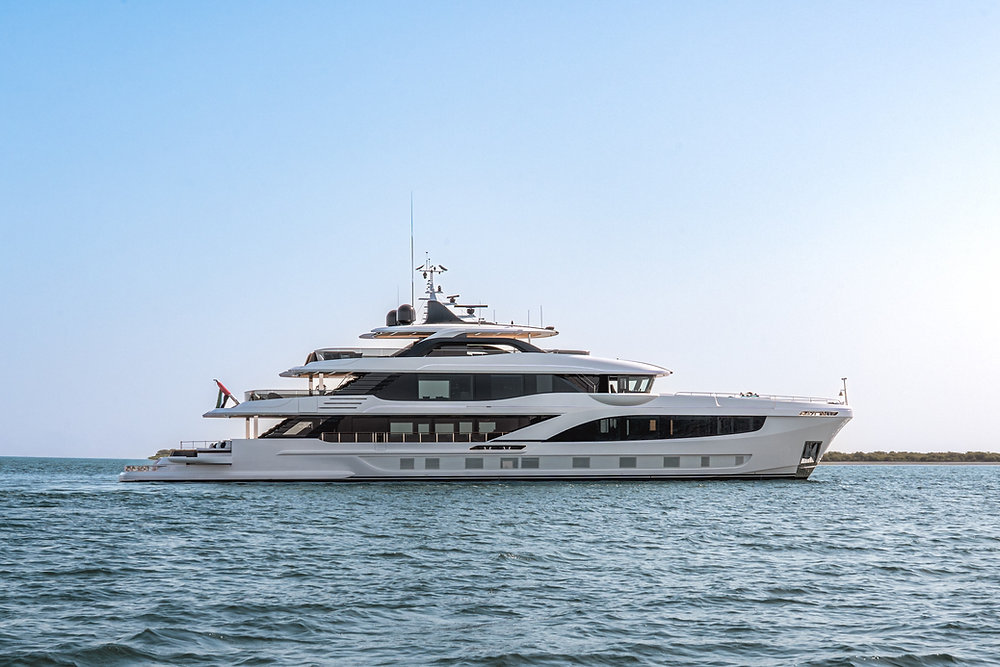
Gulf Craft’s Majesty range caters to owners who want larger, more formal entertaining spaces, while its Nomad explorer yachts are aimed at families interested in longer Gulf passages and more adventurous cruising.
Its Oryx sport cruisers and Silvercraft models offer smaller and more versatile options for day trips, informal gatherings and first-time owners who want access to the water without stepping immediately into superyacht territory.

The common thread is personalisation.
For Qatar’s newer buyers, the appeal lies in choosing a yacht around real use, whether that means family weekends, business hosting, cross-border cruising or quiet time away from the city.
Sustainability is entering the luxury conversation
The next phase of Qatari yacht ownership won’t be defined by size alone.

Younger owners are increasingly aware of efficiency, emissions and the long-term responsibility that comes with marine leisure.
Energy-efficient systems, more conscious material choices and smarter onboard technology are becoming part of the purchase discussion, sitting alongside interior finish, deck space and performance.
That doesn’t mean Qatari buyers are abandoning luxury.

It means the definition of luxury is widening to include ease of use, lower waste, quieter operation and systems that feel current rather than excessive for its own sake.
The global luxury yacht market is expected to exceed USD 23.5 billion by 2026, with the Gulf playing an increasingly important role in that expansion.
Qatar has the coastline, capital, marina infrastructure and cultural appetite to remain one of the region’s most closely watched yachting markets.
For owners, the sea is no longer just a stage for status.
It is becoming a private extension of home, hospitality and identity, which may be the clearest sign that Qatar’s yachting culture has entered a more mature and interesting chapter.