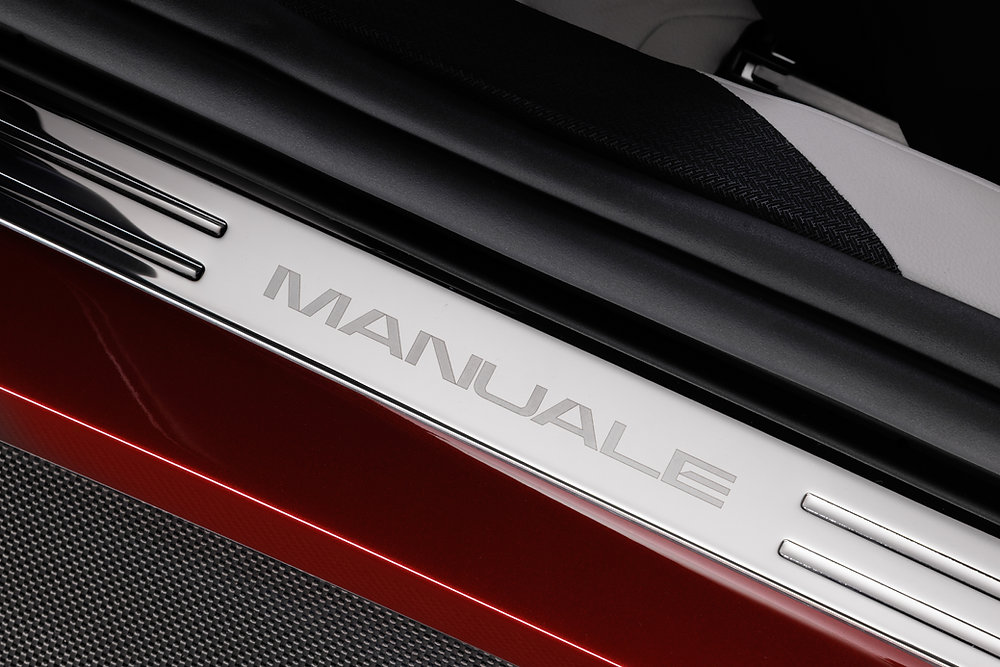
Ferrari has given the 12Cilindri a very deliberate twist, one aimed at drivers who still want their hands and feet to be part of the conversation.
The new Ferrari 12Cilindri Manuale is a limited-edition special series built around a fresh interpretation of the manual gearbox, not by returning to old hardware wholesale, but by rethinking the experience through modern by-wire engineering.
It’s a car that speaks to the long shadow of Ferrari’s front-engined Gran Turismo models from the 1950s, 60s and 70s, while keeping the usability and precision expected from a contemporary Maranello flagship.

At a glance
- Ferrari has unveiled the 12Cilindri Manuale as a limited-edition special series of its front-engined V12 GT.
- The car uses a new Manuale by-wire system with a clutch pedal and gated lever linked to Ferrari’s 8-speed DCT gearbox.
- Production is limited to 1,499 cars, with the number nodding to the displacement of Ferrari’s first twelve-cylinder engine from 1947.
A manual Ferrari for the by-wire era
The headline is not simply that Ferrari has added a lever and a clutch pedal to the 12Cilindri.
The more interesting story is how it has done it.
The Manuale by-wire system was engineered entirely at Maranello and is designed to preserve the physical rhythm of a traditional manual shift while translating driver input into electronic signals.

In practical terms, the 12Cilindri Manuale can be driven manually in the first six gears and reverse, or left in automatic mode when comfort takes priority.
That dual character matters, because Ferrari is positioning this as an involving GT rather than a purist car with narrow everyday usefulness.
The naturally aspirated V12 is central to the idea, with a rev range extending to 9,500 rpm and the high-rev character needed to make manual timing feel meaningful rather than decorative.

The gated lever has real mechanical theatre
Ferrari’s new gear selector is a compact mechanical module with sensors and advanced kinematic mechanisms that reproduce the loads associated with manual Ferrari gearboxes.
The system creates clicks and load variations during synchronisation, engagement and disengagement, giving the driver a clear sense of whether a gear has been properly selected.
If the clutch is not depressed or an unauthorised gear is chosen, the mechanism can physically inhibit engagement.

When that lock is not active, the lever is free to move in a way intended to feel natural rather than simulated.
The module uses two angle sensors to read lever position and includes a knob and backlit button panel for legibility and cabin integration.
Ferrari says the compact mechanism is machined from solid blocks and weighs less than 3.5 kg, with even its acoustic character tuned to heighten the sense of mechanical interaction.
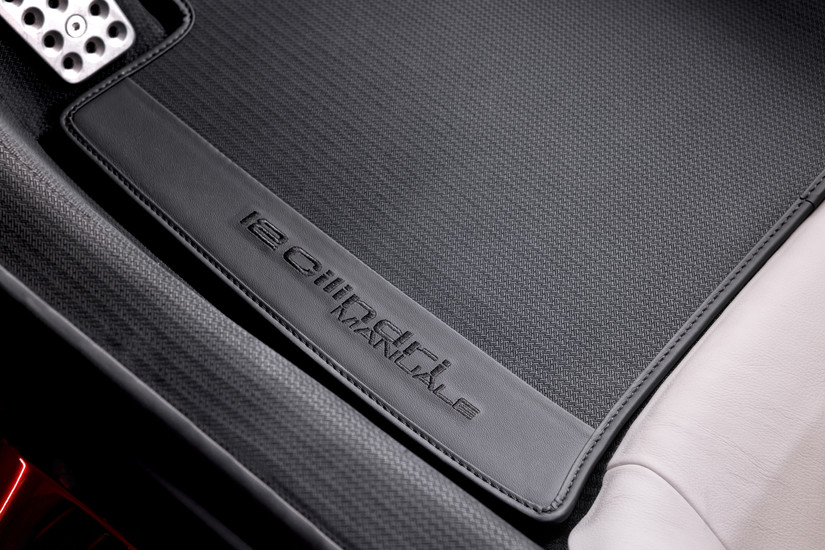
The clutch pedal is part of the character
The three-pedal layout is not cosmetic.
The clutch-by-wire pedal reads the driver’s input through a position sensor, then translates that movement into hydraulic actuation of the DCT clutch.
Ferrari has developed the pedal to recreate the load-travel curve of a mechanically linked manual gearbox using a passive mechanical system.

That means good timing should result in a smooth, precise change, while a poorly coordinated shift can feel more difficult, jerky or even lead to a stall.
It’s an unusually candid decision for a modern super-GT, because it allows imperfection back into the driving process.
The car also includes specific transition logic between manual and automatic modes, plus coasting management that keeps behaviour fluid down to idle and consistent with clutch use during deceleration.
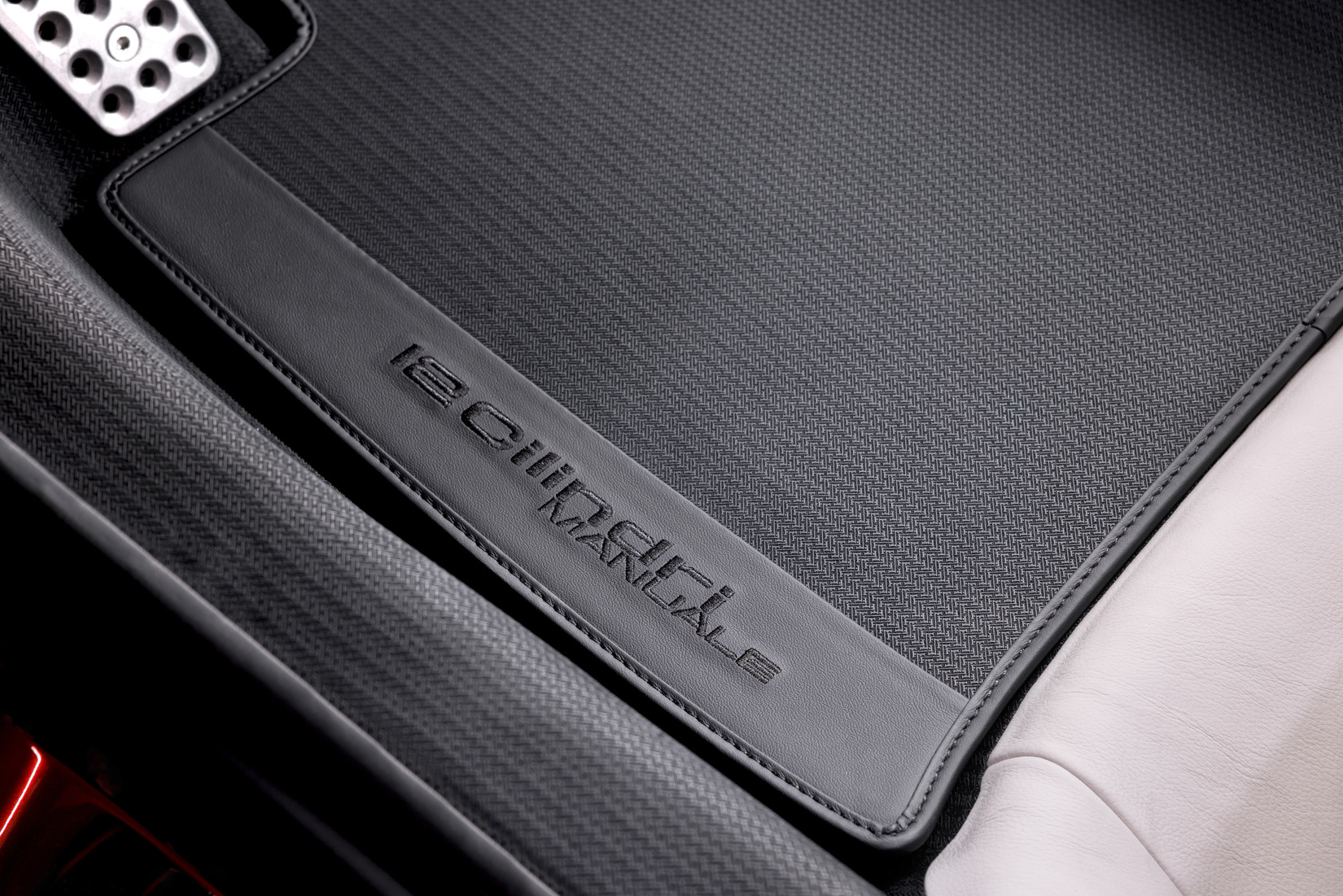
A cabin built around the return of the gate
Inside, the 12Cilindri Manuale reworks the centre tunnel, gear lever, knob, shift gate and pedals around the familiar ceremony of a lever-operated Ferrari.
The shift gate uses a six-speed pattern with reverse positioned at the top left.
The round aluminium gear knob carries a backlit screen print showing the six gears and the active driving mode, whether automatic or manual.

The centre tunnel has also been redesigned for better ergonomics when shifting manually, while still making sense when the car is driven in automatic mode.
The pedal assembly is arranged in a triangular relationship with the steering wheel and seat, reinforcing the driver-focused layout without turning the cabin into a retro pastiche.
One of the most distinctive details is the steel shift plate, which is accented by an anodised aluminium sculpture shaped like a tuning fork and incorporating the control panel and key housing.

The leather-upholstered console has been designed to sit naturally within the 12Cilindri’s contemporary interior rather than make the manual hardware look like an aftermarket homage.
Limited production and collector appeal
Ferrari will build 1,499 examples of the 12Cilindri Manuale.
The figure is not arbitrary, as it recalls the displacement of the first Ferrari twelve-cylinder engine produced in 1947.

That historical reference gives the car a neat identity, but its appeal is more than symbolic.
For committed Ferraristi, this is a rare chance to combine the response and sound of a front-engined naturally aspirated V12 with a deliberately tactile shift process.
It also reflects a broader reality in high-performance motoring, where analogue sensations increasingly need to be engineered rather than simply inherited.

Details & Specifications
| Brand | Ferrari |
|---|---|
| Model | 12Cilindri Manuale |
| Body style | Front-engined Gran Turismo special series |
| Engine | Naturally aspirated V12 |
| Maximum engine speed | 9,500 rpm |
| Transmission | Ferrari 8-speed DCT with Manuale by-wire control |
| Manual operation | First six gears and reverse |
| Driving modes | Manual and automatic |
| Clutch | Clutch-by-wire pedal with hydraulic DCT clutch actuation |
| Gear selector | Mechanical module with sensors and kinematic feedback mechanism |
| Gear selector weight | Less than 3.5 kg |
| Production | 1,499 cars |
The Ferrari 12Cilindri Manuale is less a return to the past than a carefully engineered argument for keeping driver technique alive.
In a world where speed is easy to automate, Ferrari has made a V12 GT that asks its owner to participate.