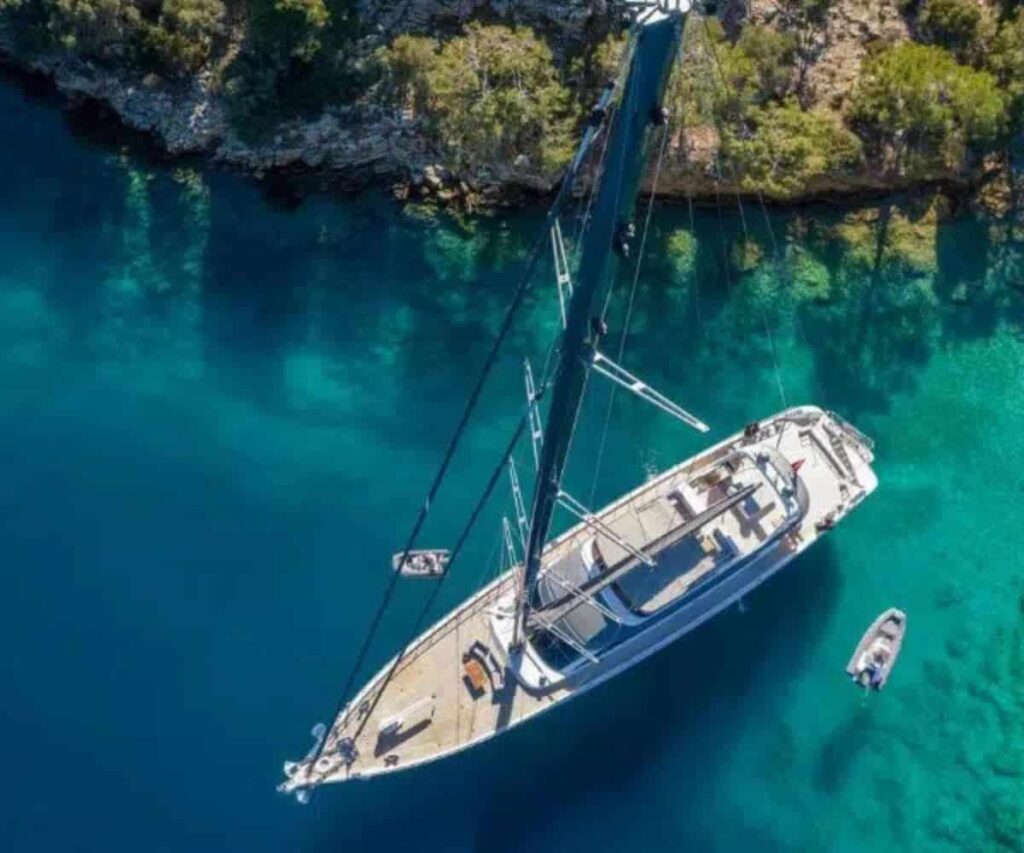
A gulet charter in Turkey is often sold by the names on the route, from Göcek and Fethiye to Kekova and the Gulf of Gökova.
Those places matter, of course, but they’re not what defines the trip.
The real difference is the yacht beneath your feet, the captain reading the coast, and the crew who make a day of swimming, lunch and unhurried anchoring feel completely effortless.
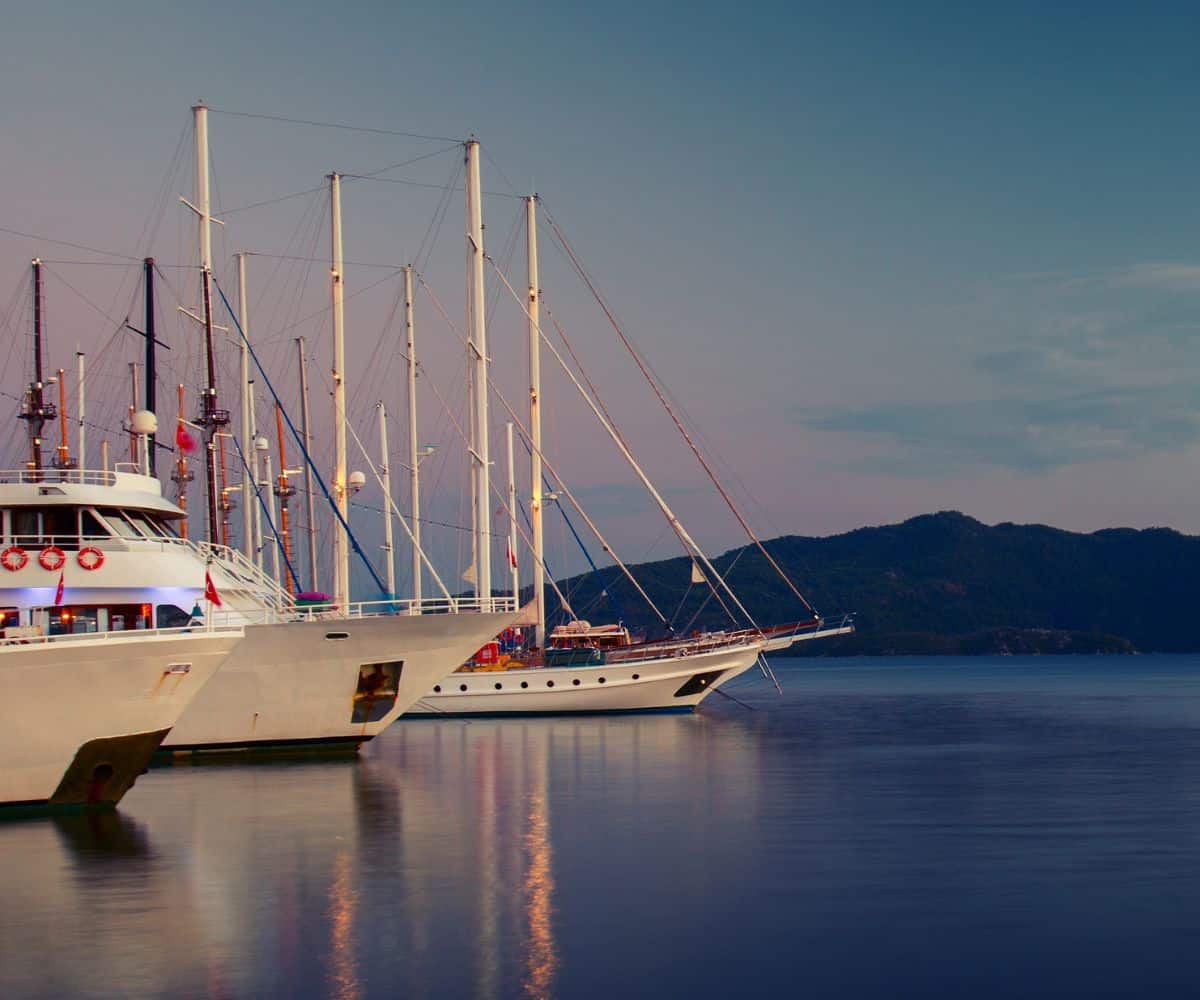
At a glance
- Turkey’s gulet charters pair traditional wooden yachts with the relaxed rhythm of the Turquoise Coast.
- The best modern gulets offer generous deck space, en-suite cabins, air conditioning and, on some boats, spa areas, water toys and cinema rooms.
- May to October is the main season, with June and September especially appealing for warm water, softer light and fewer boats in the bays.
The Blue Voyage still sets the pace
The gulet belongs to the Turkish coast in a way few yachts belong to any destination.
Traditionally built in wood around Bodrum and Marmaris, these broad-beamed boats were shaped for sociable days at anchor rather than formal cruising.
That makes them a natural fit for the Blue Voyage, the slow sailing culture associated with Turkey’s southwestern coast.
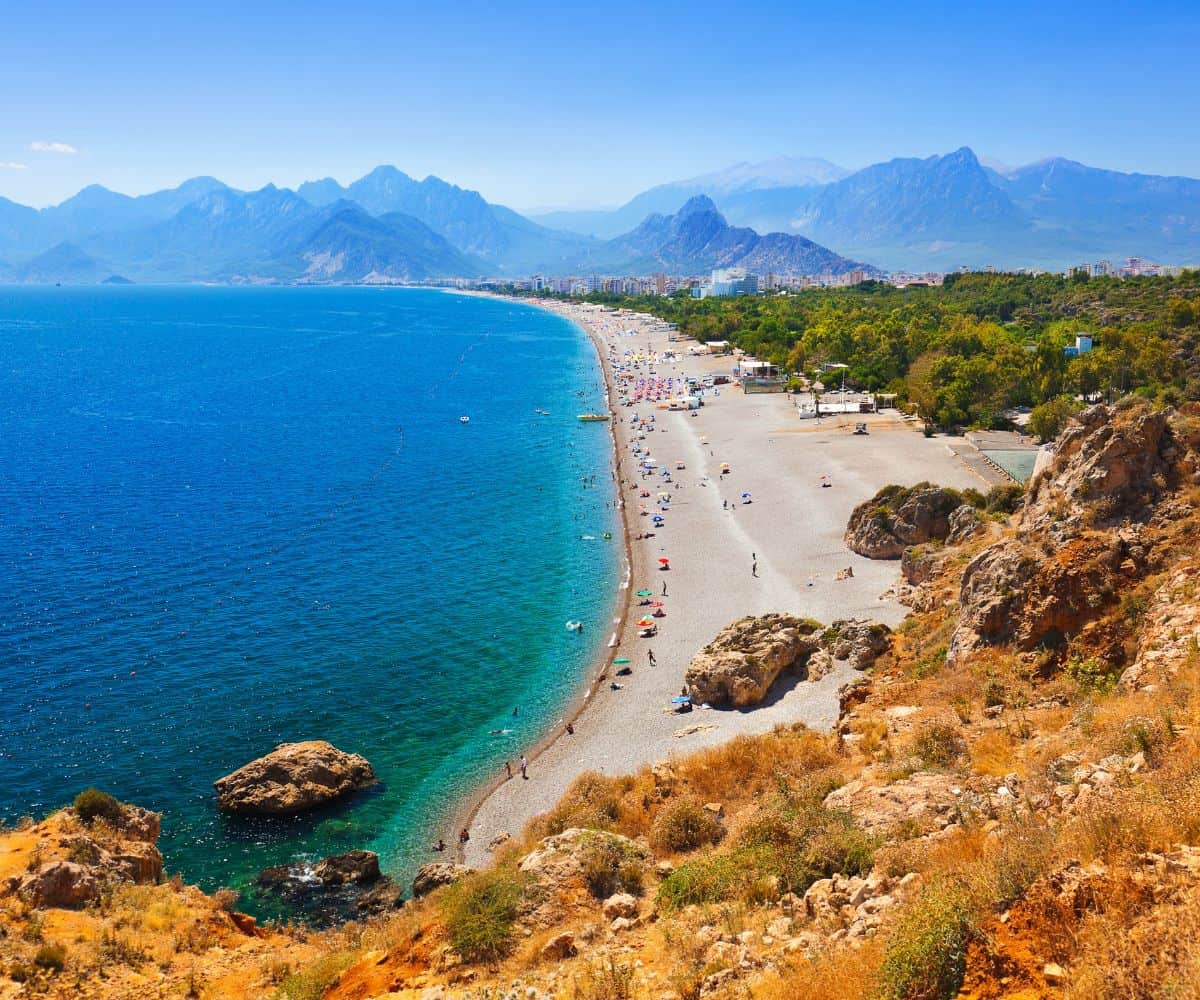
Its modern idea dates back to the early twentieth century, when an exiled writer in Bodrum began exploring nearby bays by local boat and helped turn the coastline into a literary and travel legend.
The rhythm remains simple.
You anchor in the morning, swim from the stern, eat lunch under shade, then decide later in the day whether to move on or stay exactly where you are.
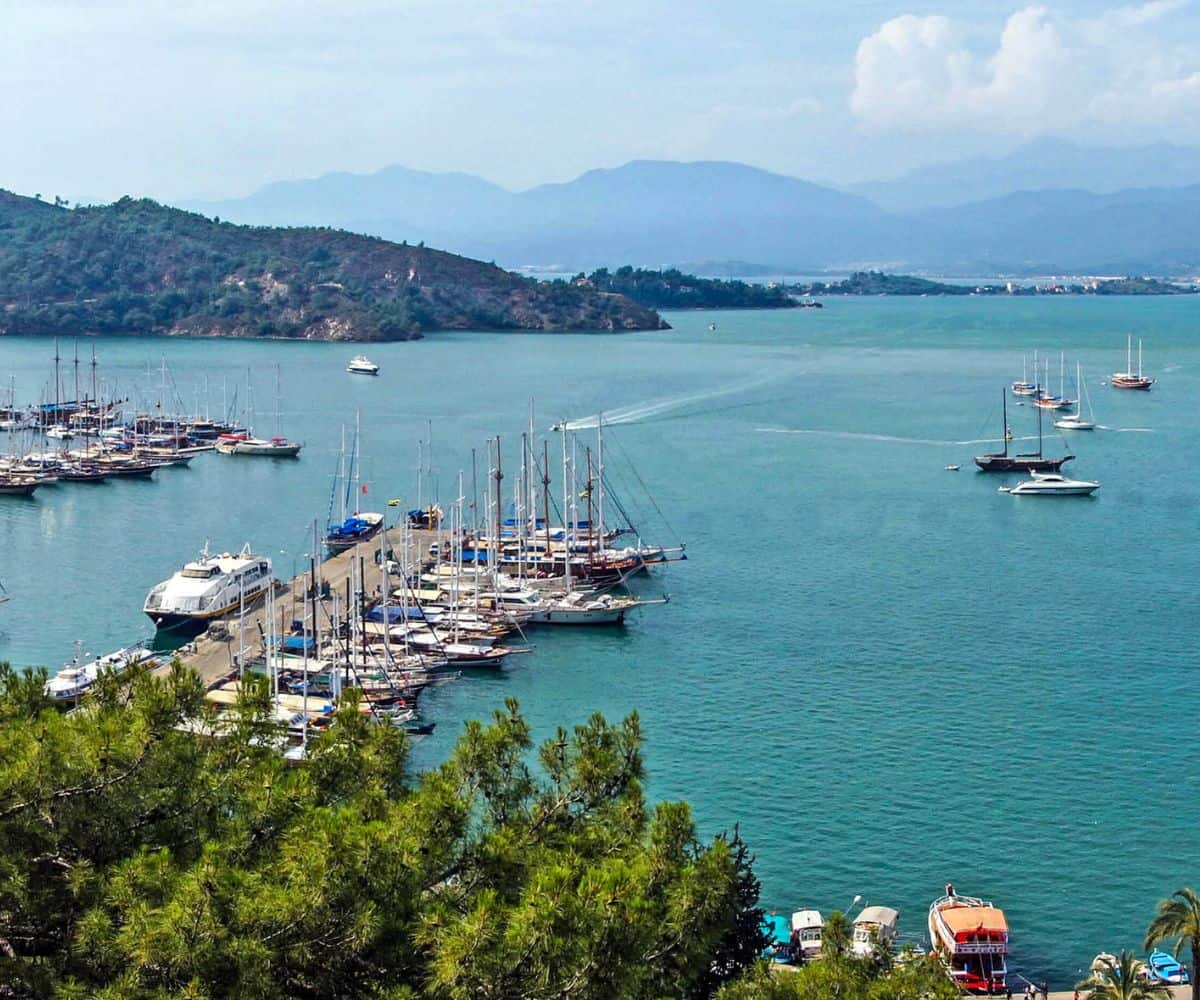
A good gulet is built around that kind of day.
The deck is the centre of life, with shaded dining, sunpads, lounging areas and enough space for families or friends to spread out without feeling managed.
The Turquoise Coast rewards flexibility
Most Turkish gulet itineraries focus on the Turquoise Coast, particularly the stretch from Marmaris and Fethiye towards Kaş.
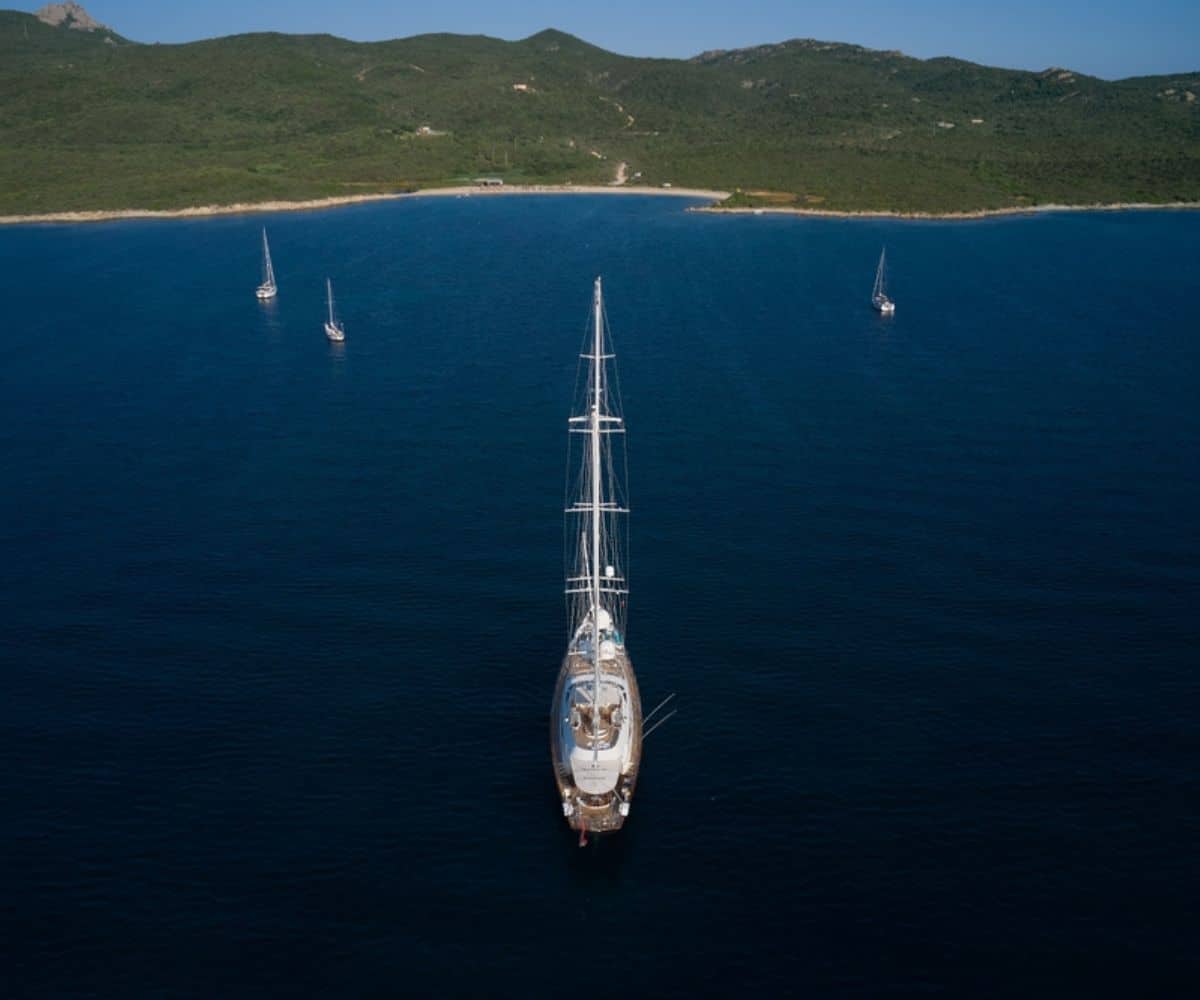
Göcek is a popular starting point thanks to its sheltered gulf and cluster of small islands.
Butterfly Valley near Ölüdeniz is a steep cove best appreciated from the water, while Kekova offers the haunting sight of Lycian ruins partly submerged beneath the sea.
Around Dalyan, cliff-cut tombs rise above the river and a long beach is known as a nesting area for turtles.
Further west, the Gulf of Gökova brings in places such as Cleopatra Island, where local legend links the sand to Egypt.
These names look good on an itinerary, but the smartest captains don’t treat the route as fixed.
Wind, water and crowding can change the day, and the best charters often come from a quiet decision to skip the obvious anchorage and choose the bay that works better right now.
The boat and crew make the charter
From a photograph, a strong gulet and an average one can look deceptively similar.
The meaningful differences are in maintenance, refits, cabin comfort, ventilation, headroom, deck layout and how long the crew has worked together.
On a well-run boat, the captain knows the coast intimately, the cook treats the galley as central to the experience, and the deck team is present without hovering.
Food is one of the quiet pleasures of a Turkish gulet charter.
Expect mezze, grilled fish, market vegetables and generous breakfasts, with the menu often changing as the boat moves and the cook shops locally along the coast.
Cabin arrangements vary widely, so there are gulets suited to couples, families and larger groups marking a birthday, reunion or summer gathering.
What matters is not simply the cabin count, but whether the layout fits the group and whether the yacht has been set up for real living rather than just good photography.
Modern comforts without losing the character
The best gulets today are far removed from the rough-and-ready image some travellers still carry.
Air conditioning and en-suite cabins are common on serious charter boats, while newer or more extensively refitted gulets can include a full water-toy setup, jacuzzi, spa corner, massage room, cinema room, beach club or even a pool.
Not every boat has every feature, so the details need to be checked before booking.
Water toys are also only as enjoyable as the crew running them.
When boards, towables and tenders are ready without fuss, the day feels spontaneous rather than scheduled.
The softer amenities matter in a different way.
A massage room might be a post-swim treat for one guest and the defining ritual of the week for another, while a cinema room can be especially useful on family charters when children gather after dinner and the boat settles into the evening.
When to go and what to ask before booking
The main gulet season runs from May to October.
June and September are particularly attractive, with warm water, gentler light and fewer boats competing for the same anchorages.
July and August suit travellers who want real summer heat, but the most desirable gulets tend to book early for peak dates.
The meltemi is generally softer here than in some parts of the Aegean, though the Bodrum area can still be breezy in July and August.
For calmer water, late spring and September are often the more comfortable choices.
Before committing, it’s worth asking whether the charter is under a MYBA agreement, an industry standard contract that sets out inclusions, payment terms and what happens if plans change.
It’s also sensible to ask whether the person recommending the yacht has been aboard, met the captain and crew, and understands how the boat actually runs during a charter.
Other useful questions are practical rather than glamorous.
How long has the crew worked together, does everyone speak English comfortably, when was the boat last refitted, and how is the deck arranged for meals, shade and lounging?
A Turkish gulet charter works because it doesn’t try too hard.
Choose the right boat and crew, and the itinerary becomes secondary to the rhythm of the week, with swimming, long lunches, quiet bays and a wooden yacht that feels completely at home on this coast.